Author: Jinfiniti Science

Best magnesium for sleep

The Best Magnesium for Sleep, According to the Research

What You Should Know

  • Magnesium glycinate is the most studied form for sleep and stress-related sleeplessness
  • The form determines how well magnesium absorbs and where it works in your body
  • A 2021 meta-analysis found magnesium supplementation reduced time to fall asleep by over 17 minutes in older adults
  • Most adults fall short of daily magnesium targets through food alone

Nearly half of American adults don’t get enough magnesium from food, and poor sleep is one of the first signs. But adding just any magnesium supplement to your nightstand won’t necessarily fix it.

There are more than a dozen forms on the market, and they absorb differently, work through different pathways, and target different sleep problems.

Magnesium glycinate is the most recommended type for sleep — but whether it’s the right choice for you depends on what’s actually keeping you awake.


Vital Minerals Complex

Dual-form magnesium for sleep and cellular recovery

Jinfiniti Vital Minerals Small CTA

Why Magnesium Matters for Sleep

Magnesium does not work like a sleeping pill. It helps your body use its own calming systems more effectively.

It supports GABA, a neurotransmitter that helps quiet brain activity, and helps regulate NMDA receptors, which can keep the nervous system overstimulated when they are too active. Magnesium also plays a role in melatonin production.

Research suggests this matters in real life, not just on paper. In one double-blind clinical trial, older adults who took 500 mg of magnesium daily for 8 weeks fell asleep faster, slept longer, and showed higher melatonin with lower nighttime cortisol than the placebo group.[1]

Why So Many Adults Are Running Low

Many adults do not get enough magnesium from food alone. Men generally need 400 to 420 mg per day, while women need 310 to 320 mg.

Older adults absorb less magnesium from food, and the kidneys excrete more of it with age. Risk of magnesium deficiency is also higher in people with type 2 diabetes, digestive conditions like Crohn’s or celiac disease, and regular alcohol use.

That gap may affect sleep. A large long-term study (CARDIA) found that people with higher magnesium intake were more likely to have improved sleep quality and get the recommended 7 to 9 hours per night.[2]

The Best Forms of Magnesium for Sleep

Not all forms absorb equally, and not all forms help with sleep the same way. The type of magnesium you choose will largely determine whether it helps you fall asleep, stay asleep, or does very little at all. Here’s how the most common ones break down.

Magnesium Glycinate

This is the form most practitioners recommend for sleep. Glycinate is magnesium bound to glycine, an amino acid that has its own calming effect on the nervous system. The chelated structure — meaning the mineral is bonded to an amino acid — allows it to pass through the intestinal wall more efficiently without triggering digestive upset.

Magnesium glycinate supports GABA activity and promotes relaxation in the nervous system, reducing nighttime muscle tension. It’s gentle enough for daily use and unlikely to cause the loose stools associated with other forms.

In the largest placebo-controlled trial on magnesium bisglycinate for sleep to date — 155 adults over 28 days — insomnia severity scores dropped 28% in the glycinate group versus 18% in the placebo group, with most of the improvement taking hold within the first two weeks.[3]

If stress or anxiety is what keeps you from falling asleep, glycinate is the type of magnesium best for sleep in that context.

Magnesium L-Threonate

Threonate is a newer form developed to cross the blood-brain barrier — something most other forms can’t do as effectively. It was created by binding magnesium to threonic acid, a metabolite of vitamin C. This form is best suited for people whose sleep problems are cognitive in nature: the racing thoughts, the inability to quiet mental activity before bed.

In a randomized double-blind trial of 80 adults with self-reported sleep problems, three weeks of magnesium L-threonate produced measurable improvements in deep sleep and REM sleep scores on objective Oura ring measurements, along with better daytime alertness and mood — outperforming placebo on both fronts.[4]

Notably, MgT didn’t speed up how quickly participants fell asleep; its benefits were more about the quality of sleep once it arrived and how people felt the next morning. It’s typically more expensive and lower in elemental magnesium per capsule, so it’s not the best option if you’re trying to address a deficiency.

Magnesium Citrate

Citrate is well-absorbed and widely available. Mayo Clinic notes it has more supporting evidence for sleep than several other forms, but its notable laxative effects make it a poor choice for people with sensitive stomachs. If you also deal with constipation and need a cost-effective option, citrate can work. If you’re taking it purely for sleep without wanting digestive consequences, glycinate is the cleaner choice.

Magnesium Malate

Malate is bound to malic acid and absorbs reasonably well. It tends to support cellular energy production, which makes it popular for daytime use. That said, it isn’t stimulating the way caffeine is, and some formulas pair it with glycinate because malate supports mitochondrial energy production without disrupting sleep — while glycinate handles the calming side.[5]

Magnesium Taurate

Taurate combines magnesium with taurine, an amino acid that acts as an inhibitory neurotransmitter in the brain — meaning it works similarly to GABA, calming neural activity and reducing excitability. That dual action is what makes taurate interesting from a sleep angle: both magnesium and taurine support the same calming pathway, potentially reinforcing each other.

Magnesium Oxide

This is what most cheap, generic supplements use. Magnesium oxide has poor bioavailability — only around 4% is absorbed — and its primary effect is as a stool softener. Cleveland Clinic sleep specialists advise against it for insomnia. It’s not a useful form for sleep.

Quick Comparison

FormAbsorptionBest ForDigestive Effects
GlycinateHighStress, anxiety, muscle tensionMinimal
L-ThreonateHigh (brain-specific)Racing mind, cognitive loadMinimal
TaurateModerateCardiovascular health + calmMinimal
CitrateModerate-HighGeneral use, constipationLaxative
MalateModerate-HighEnergy + sleep comboMinimal
OxideVery LowNot recommended for sleepStrong laxative

Matching the Right Form to Your Sleep Problem

The form that works best depends on what’s keeping you awake.

If you struggle with…Try this form
Anxiety or stress at nightMagnesium glycinate
Racing thoughts, mental overloadMagnesium L-threonate
Muscle cramps or restless legsMagnesium glycinate or malate
Constipation affecting sleepMagnesium citrate
General deficiency + sleep supportGlycinate or dual-form formula

What Does the Research Actually Show?

The evidence for magnesium and sleep is promising — and worth reading with appropriate expectations.

A 2021 systematic review and meta-analysis pooled data from three randomized controlled trials involving 151 older adults. Magnesium supplementation reduced sleep onset latency — the time it takes to fall asleep — by an average of 17.36 minutes compared to placebo. Total sleep time also improved, though that difference didn’t reach statistical significance on its own.[6]

The authors noted the overall quality of evidence is low-to-moderate and called for better-designed trials. The benefits are real in the data, but they tend to be modest — and most consistent in older adults and people with low baseline magnesium levels.

“What we see in practice is that magnesium supplementation works best when it’s addressing an actual deficit,” says Dr. Jin-Xiong She, founder of Jinfiniti Precision Medicine. “For people running low, the results can be noticeable. For people who already have adequate levels, the effect is less predictable — which is why testing your biomarker status gives you a real foundation to work from.”

For context on the cortisol side of the equation, research on magnesium’s stress and cortisol lowering effects shows that consistent supplementation at 350mg daily can measurably reduce 24-hour urinary cortisol — one more pathway through which it may support sleep.

🧬 MORE SUPPLEMENT READS

  • Poor sleep and low energy often trace back to the same root causes. See what the research shows about supplements for chronic fatigue and how to address both at once.
  • Andrew Huberman puts magnesium threonate front and center in his sleep stack. Read the full breakdown of Huberman’s supplement protocol and what the science says about each pick.
  • Inflammation disrupts sleep more than most people realize. These are the top anti-inflammatory supplements backed by clinical research.

Dosage, Timing, and Safety

Timing matters more than most people realize. Taking magnesium 30–60 minutes before bed gives it time to begin supporting GABA and melatonin activity before you need it.

For sleep, practitioners typically suggest 200–350mg of elemental magnesium per day. The NIH sets the tolerable upper limit for magnesium from supplements at 350mg daily for adults — amounts above that raise the risk of digestive side effects.

Magnesium is generally safe for healthy adults with normal kidney function. People with kidney disease should consult a doctor before supplementing, since the kidneys regulate magnesium excretion. Magnesium can also interact with certain antibiotics (tetracyclines and fluoroquinolones) and bisphosphonates, so check with a healthcare provider if you take those medications.

Topical magnesium sprays and gels are worth skipping for sleep purposes. Transdermal absorption of magnesium is low and unlikely to raise blood levels in any meaningful way.

What About Combination Formulas?

Single-form supplements are straightforward, but multi-form products have a practical advantage: different forms absorb through different pathways and address different aspects of sleep and recovery at once.

Jinfiniti’s Vital Minerals Complex uses 240mg of dual-form magnesium — both malate and glycinate — alongside chelated calcium citrate and selenium glycinate. The malate supports mitochondrial energy metabolism during recovery; the glycinate targets nervous system calm and muscle relaxation at night. Both forms are chelated, meaning they’re bonded to amino acids for better absorption without digestive side effects.

If you want sleep support alongside broader mineral replenishment — without stacking three separate products — a dual-form formula is a reasonable approach.

Referenced Sources

  1. Abbasi B, Kimiagar M, Sadeghniiat K, Shirazi MM, Hedayati M, Rashidkhani B. The effect of magnesium supplementation on primary insomnia in elderly: A double-blind placebo-controlled clinical trial. Journal of Research in Medical Sciences. 2012;17:1161–1169.
  2. Zhang Y, Chen C, Lu L, Knuston K, Carnethon M, Fly A, et al. Association of Magnesium Intake With Sleep Duration and Sleep Quality: Findings From the CARDIA Study. Elsevier BV; 2021. https://doi.org/10.1093/cdn/nzab053_102
  3. Schuster J, Cycelskij I, Lopresti A, Hahn A. Magnesium Bisglycinate Supplementation in Healthy Adults Reporting Poor Sleep: A Randomized, Placebo-Controlled Trial. Informa UK Limited; 2025. https://doi.org/10.2147/nss.s524348
  4. Hausenblas HA, Lynch T, Hooper S, Shrestha A, Rosendale D, Gu J. Magnesium-L-threonate improves sleep quality and daytime functioning in adults with self-reported sleep problems: A randomized controlled trial. Elsevier BV; 2024. https://doi.org/10.1016/j.sleepx.2024.100121
  5. Qiang F. Effect of Malate-oligosaccharide Solution on Antioxidant Capacity of Endurance Athletes. Bentham Science Publishers Ltd.; 2015. https://doi.org/10.2174/1874120701509010326
  6. Mah J, Pitre T. Oral magnesium supplementation for insomnia in older adults: a Systematic Review & Meta-Analysis. Springer Science and Business Media LLC; 2021. https://doi.org/10.1186/s12906-021-03297-z

Best joint supplements for knees

Best Joint Supplements for Knees: What Actually Works

Glucosamine is likely the first supplement people think of when it comes to knee pain. For years it’s been the gold standard, found on every drugstore shelf and written about in every article on joint health.

Here’s the issue: clinical research supporting glucosamine is much weaker than you’ve been led to believe — and there are far better alternatives backed by consistent research.

In this guide, we cover the best supplements for joint pain that actually have research supporting them, what the research says for each supplement, and the importance of absorption.

What You Should Know

  • Curcumin combined with Boswellia has the strongest clinical backing of any natural joint supplement, with multiple meta-analyses showing it outperforms NSAIDs for knee osteoarthritis pain.
  • Glucosamine and chondroitin remain the most popular knee supplements, but the evidence is mixed, and the American College of Rheumatology no longer recommends them for knee or hip osteoarthritis.
  • Results with joint supplements take time; curcumin may show effects within weeks, while structural-support compounds like collagen typically need 2 to 4 months of consistent use.

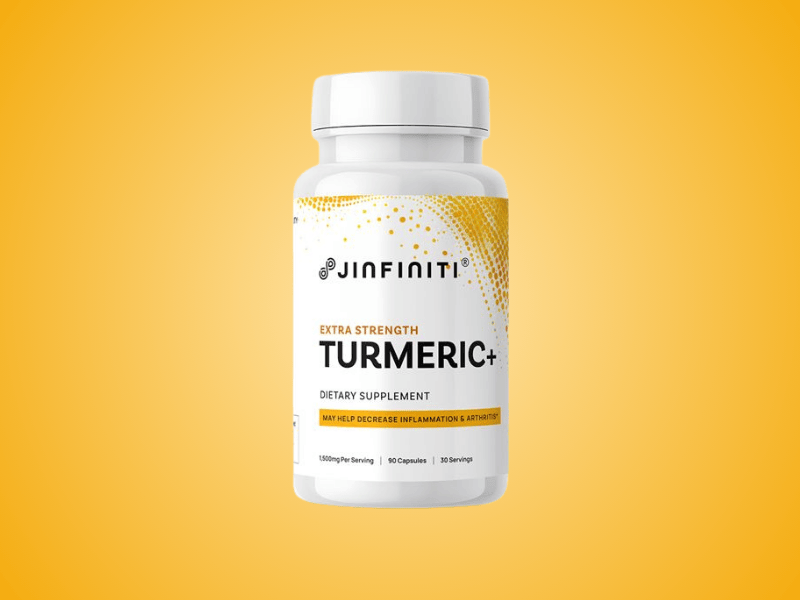
Joint Health Support Formula

Extra strength Turmeric + Boswellia for joint health.

Shop Turmeric+
Jinfiniti Turmeric Supplement

What Causes Knee Pain and Inflammation?

Your knees are the most load-bearing joints in the body. Every pound of body weight translates to roughly 3 to 4 pounds of force across the knee joint when you walk, and up to 8 times your body weight when you run or climb stairs. That mechanical stress, layered on top of age-related decline in cartilage repair and increasing systemic inflammation, is why knee pain is the most common joint complaint in adults over 40.

Cartilage has no blood supply of its own, which makes it slow to repair and especially vulnerable to cumulative damage. Supplements that target inflammation, support cartilage structure, or slow degradation work best as a consistent, long-term strategy — not a quick fix.

The Best Supplements for Knee Joint Pain — Ranked

The supplements below are ranked by the quality and consistency of clinical evidence. Research strength matters more than popularity here.

1. Curcumin and Boswellia

Curcumin — the active compound in turmeric — has more peer-reviewed research behind it for knee osteoarthritis than any other natural supplement. A 2021 meta-analysis of 11 randomized controlled trials involving 1,258 participants found curcuminoids were more effective than comparators on both pain and function scores — and produced fewer GI side effects than ibuprofen.[1]

Boswellia serrata (Indian frankincense) adds a different mechanism. It directly inhibits 5-LOX, an enzyme that produces a class of inflammatory molecules called leukotrienes. A 2025 meta-analysis of 21 studies confirmed curcumin lowered CRP and TNF-alpha — two key inflammation markers — at statistically significant levels compared to placebo.[2]

The combination matters. One randomized trial involving 210 osteoarthritis patients found curcumin alone produced a 3.6-fold improvement in WOMAC joint scores compared to placebo — and the curcumin-plus-Boswellia group produced a 2.7-fold improvement through a different but complementary anti-inflammatory pathway.[3]

The catch with curcumin is absorption. Standard curcumin has poor bioavailability — less than 1% gets absorbed without help. Piperine, the active compound in black pepper, increases curcumin absorption by up to 2,000%.

Learn more about turmeric dosage and absorption strategies that actually make a difference.

2. Methylsulfonylmethane (MSM)

Methylsulfonylmethane (MSM) is a sulfur compound found naturally in plants, animals, and humans. Sulfur is a building block of connective tissue, including the collagen and proteoglycans that make up cartilage. Research on MSM for knee osteoarthritis shows consistent reductions in pain and swelling, typically at doses of 1,000 to 3,000 mg daily.[4]

Unlike curcumin, MSM doesn’t need a bioavailability enhancer — it absorbs reasonably well on its own. It’s also well-tolerated, with side effects limited to mild GI discomfort at higher doses. It pairs well with other anti-inflammatory compounds and is often included in combination joint formulas.

3. Type II Collagen

Collagen is the primary structural protein in cartilage. Type II collagen specifically comes from cartilage tissue, making it more targeted for joint health than the more common Type I found in skin supplements. Clinical studies show it can reduce joint stiffness and improve function, with benefits typically appearing after 2 to 3 months of consistent use.[5]

The mechanism is somewhat counterintuitive. Oral collagen undergoes digestion, but research suggests that small peptides reach the joint tissue and may stimulate chondrocytes (the cells that maintain cartilage) to increase their own collagen production. The evidence is modest but consistent, particularly in people with early-to-moderate osteoarthritis.

4. Glucosamine and Chondroitin

These two are the most widely sold joint supplements in the world — and arguably the most misrepresented. Glucosamine is a cartilage-building molecule; chondroitin helps maintain its structure and retain water. The theory is sound. The clinical results are inconsistent.

The American College of Rheumatology now recommends against glucosamine and chondroitin for knee or hip osteoarthritis, citing the quality of available evidence.[6]

Some studies do show modest benefit for moderate-to-severe pain specifically, and the combination may slow cartilage breakdown over periods longer than 3 years. But as a first-line recommendation, the evidence doesn’t support their widespread use.[7]

If you’ve been taking glucosamine for years and feel it helps, there’s no strong reason to stop. But if you’re starting fresh, the options above have clearer clinical support.

5. Omega-3 Fatty Acids

EPA and DHA from fish oil don’t target cartilage directly, but they address the systemic inflammation that accelerates joint breakdown. Omega-3s reduce the production of prostaglandins and cytokines — the upstream inflammatory messengers that drive joint pain and stiffness.[8]

For knee pain specifically, fish oil works better as a foundation than a primary treatment. It reduces morning stiffness and may lower NSAID requirements over time. Doses of 2 to 3 grams of combined EPA + DHA daily appear in most positive trials.[9]

It’s worth noting that the ACR does not recommend fish oil as a standalone treatment for knee osteoarthritis — but as part of a broader anti-inflammatory strategy, it adds meaningful support.

Knee Joint Health Supplement Comparison

Here’s how these supplements compare on the factors that matter most.

SupplementPrimary BenefitEvidence LevelTime to Effect
Curcumin + BoswelliaReduces inflammation and painStrong (multiple meta-analyses)2-6 weeks
MSMReduces pain and swellingModerate4-6 weeks
Type II CollagenSupports cartilage structureModerate2-3 months
Glucosamine + ChondroitinMay slow cartilage breakdownMixed2-4 months
Omega-3 Fatty AcidsReduces systemic inflammationModerate (indirect)4-8 weeks

The Supplement Absorption Problem

The best ingredients on paper can still fail in practice if your body can’t absorb them. This is especially true for curcumin, which has notoriously poor standalone bioavailability. It metabolizes and gets eliminated quickly, meaning a high-dose supplement without a delivery system may produce very little effect at the tissue level.

Piperine (black pepper extract) is the most well-studied solution, shown to increase curcumin absorption by up to 2,000% by slowing liver metabolism. Fat co-ingestion also helps, since curcumin is fat-soluble. The same principle applies across joint supplements — formulas designed with absorption in mind outperform equivalent-dose single ingredients. You can read more about what drives this at the cellular level in our overview of supplements for inflammation.

“Getting the dose right is only half the equation,” says Dr. Jin-Xiong She, founder of Jinfiniti Precision Medicine and professor of genomic medicine. “A joint supplement that your body can’t absorb doesn’t matter how good the ingredients are on paper — bioavailability is the bridge between the research and the actual result you feel.”

🧬 MORE JOINT HEALTH

  • Curcumin gets most of the attention for joint pain, but creatine and joint health is a connection worth understanding — especially if you’re also dealing with muscle weakness around the knee.
  • Knee pain rarely lives in isolation. Explore natural remedies for muscle pain that work alongside a joint supplement routine.
  • If you’re trying to reduce reliance on ibuprofen or naproxen, see how the supplements in this article stack up against other NSAID alternatives backed by research.

How Long Before You Notice Results?

Anti-inflammatory supplements like curcumin and MSM tend to work faster — many people notice a difference within 2 to 6 weeks. Structural-support supplements that work on cartilage, like Type II collagen or glucosamine, require at least 2 to 4 months before you’re likely to see meaningful change.

This is one of the more common reasons people quit joint supplements too soon. Consistent daily use at an adequate dose matters more than high-dose occasional use. If you’ve been at a consistent dose for 3 months without any improvement, that’s a reasonable point to reassess.

Frequently Asked Questions

Here are answers to the questions that come up most often about joint supplements for knees.

Can you take multiple joint supplements together?

Yes, and combination approaches often work better than single ingredients. Curcumin + Boswellia is a well-studied pairing. Adding MSM or collagen doesn’t create known interactions. The main thing to watch is blood-thinning effects — both curcumin and omega-3s have mild anticoagulant properties, so those taking warfarin or other blood thinners should check with their doctor first.

Are joint supplements safe for long-term use?

The supplements listed here have good long-term safety profiles. Curcumin studies extend beyond 12 months without significant adverse events. MSM, collagen, and omega-3s are considered safe for ongoing use at standard doses. Glucosamine may affect blood sugar in some people with diabetes. As with any supplement, start at a lower dose and work up gradually.

Do joint supplements work for knee osteoarthritis?

Most of the strongest research is specifically in knee osteoarthritis populations. For general exercise-related knee discomfort or inflammation without structural damage, anti-inflammatory supplements like curcumin and omega-3s likely still help through the same pathways. Understanding the difference between acute inflammation and chronic joint degeneration can help you choose the right approach — read more about the mechanisms in our piece on turmeric vs ginger.

Referenced Sources

  1. Hsiao AF, Lien YC, Tzeng IS, Liu CT, Chou SH, Horng YS. The efficacy of high- and low-dose curcumin in knee osteoarthritis: A systematic review and meta-analysis. Elsevier BV; 2021. https://doi.org/10.1016/j.ctim.2021.102775
  2. Hsueh HC, Ho GR, Tzeng SI, Liang KH, Horng YS. Effects of curcumin on serum inflammatory biomarkers in patients with knee osteoarthritis: a systematic review and meta-analysis of randomized controlled trials. Springer Science and Business Media LLC; 2025. https://doi.org/10.1186/s12906-025-04951-6
  3. Ameyde MV, Hodgden J. In patients with osteoarthritis, is curcumin, compared to placebo, effective in reducing pain? The Journal of the Oklahoma State Medical Association. 2022;115(1):28–30.
  4. Toguchi A, Noguchi N, Kanno T, Yamada A. Methylsulfonylmethane Improves Knee Quality of Life in Participants with Mild Knee Pain: A Randomized, Double-Blind, Placebo-Controlled Trial. MDPI AG; 2023. https://doi.org/10.3390/nu15132995
  5. Carrillo-Norte JA, Gervasini-Rodríguez G, Santiago-Triviño MÁ, García-López V, Guerrero-Bonmatty R. Oral administration of hydrolyzed collagen alleviates pain and enhances functionality in knee osteoarthritis: Results from a randomized, double-blind, placebo-controlled study. Elsevier BV; 2025. https://doi.org/10.1016/j.conctc.2024.101424
  6. Kolasinski SL, Neogi T, Hochberg MC, Oatis C, Guyatt G, Block J, et al. 2019 American College of Rheumatology/Arthritis Foundation Guideline for the Management of Osteoarthritis of the Hand, Hip, and Knee. Wiley; 2020. https://doi.org/10.1002/art.41142
  7. Reginster JY, Neuprez A, Lecart MP, Sarlet N, Bruyere O. Role of glucosamine in the treatment for osteoarthritis. Springer Science and Business Media LLC; 2012. https://doi.org/10.1007/s00296-012-2416-2
  8. Kar A, Ghosh P, Patra P, Chini DS, Nath AK, Saha JK, et al. Omega-3 fatty acids mediated Cellular signaling and its regulation in Human Health. Elsevier BV; 2023. https://doi.org/10.1016/j.nutos.2023.10.004
  9. Rajaei E, Mowla K, Ghorbani A, Bahadoram S, Bahadoram M, Dargahi-Malamir M. The Effect of Omega-3 Fatty Acids in Patients With Active Rheumatoid Arthritis Receiving DMARDs Therapy: Double-Blind Randomized Controlled Trial. Canadian Center of Science and Education; 2015. https://doi.org/10.5539/gjhs.v8n7p18
NAD Injection Side Effects

NAD Injections Side Effects: Common Reactions and Red Flags

NAD injections (and NAD IV therapies) are marketed as a fast track to higher NAD+, but the delivery method can come with a very specific kind of discomfort. Think cramping, nausea, flushing, and a “this is intense” sensation that often improves as soon as the infusion slows or stops.

This guide breaks down what side effects are common, what’s a red flag, and how to lower risk if you choose to proceed. The big idea is simple: test your NAD+ level first, because the safest intervention is the one you actually need.

What You Should Know

  • Most NAD injection side effects are dose and timeframe related, and improve when dosing slows.
  • Chest pressure, rapid heartbeat, or severe nausea are common reasons clinics reduce infusion rate.
  • Injections and IVs add procedure risks (infection, vein irritation) that oral options avoid.
  • Testing your baseline NAD level helps you pick the safest, most effective next step.

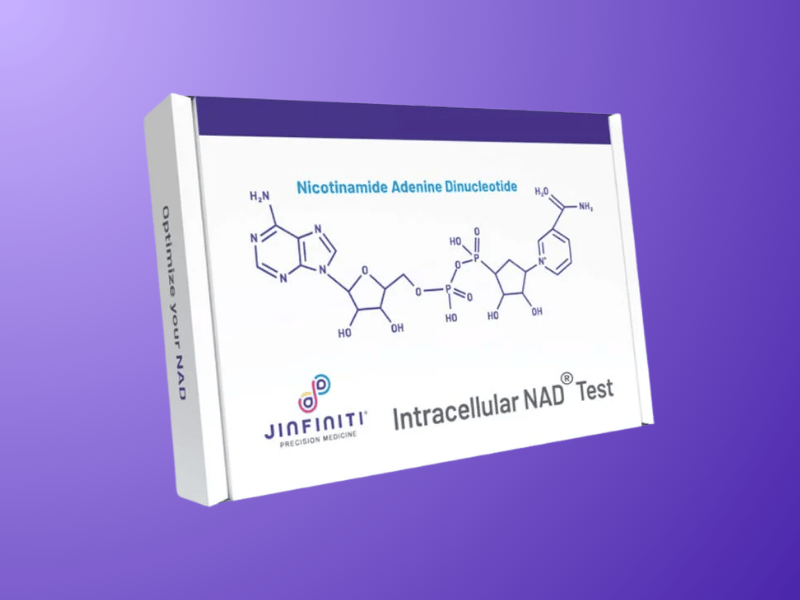
CLIA-Certified NAD Test Kit

Test your cellular NAD+ levels from home.

Get the NAD+ Test
Jinfiniti Intracellular NAD Test on purple background

What Counts as an “NAD Injection” (and Why Side Effects Vary)

People use “NAD injections” to mean a few different things, and the side effects can look different depending on the route.

SubQ vs IM vs IV: three routes, three experiences

  • SubQ (subcutaneous): injected into the fatty layer under the skin. Often described as “less dramatic” than an IV, but still capable of causing nausea, flushing, or fatigue.
  • IM (intramuscular): injected into muscle. Tends to sting more at the site and can leave soreness.
  • IV (intravenous): infused into a vein over time. This route is most associated with infusion related symptoms like cramping and chest pressure.

If you want a broader primer on the pros, cons, and costs, see our NAD injections guide.

NAD+ vs NAD precursors (why the molecule matters)

NAD+ is a large molecule, and human data suggests it can be rapidly processed in the bloodstream during IV infusion.[1]

Oral supplements usually use precursors (building blocks) like NMN and NR that your cells convert into NAD+. That difference helps explain why oral strategies often feel gentler day to day.

To see how NMN and NR compare, read NMN and NR compared.

Common NAD Injection Side Effects (and How to Manage Them)

Most side effects fall into two buckets: infusion related symptoms (often speed dependent) and local injection site reactions.

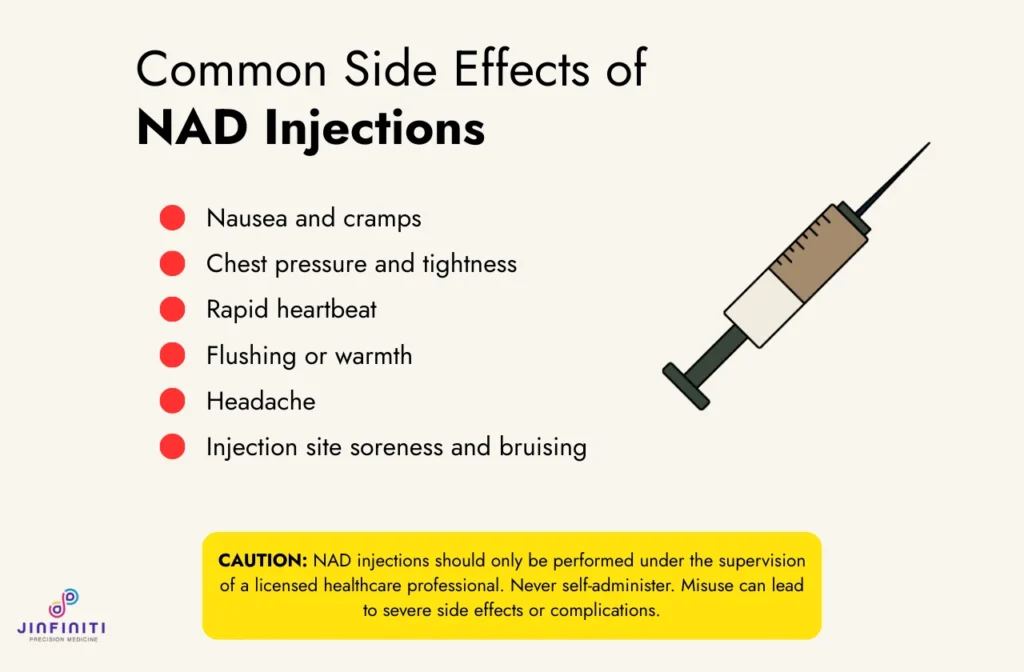
Common side effects

Side effectWhen it shows upWhy it happens (plain English)What may helpWhen to stop and seek care
Nausea or stomach crampsDuring IV, especially faster ratesSmooth muscle and autonomic response to rapid infusionSlow the infusion, sip water, restPersistent vomiting, severe pain, dehydration
Chest pressure or tightnessDuring IVSensation often linked to rate and physiologic stress responseSlow or pause infusionChest pain, shortness of breath, fainting
Rapid heartbeat or “wired” feelingDuring IVStress response, rate sensitivitySlow infusion, deep breathing, monitoringPalpitations with dizziness or chest pain
Flushing or warmthDuring or shortly afterBlood vessel responsePause, cool room, hydrationSwelling of lips/face, hives, wheezing
HeadacheSame dayDehydration, blood pressure changes, stress responseFluids, restWorst headache of your life, neuro symptoms
Fatigue the next day6–24 hoursStress load, sleep disruption, hydration shiftsPrioritize sleep, electrolytesSevere weakness, confusion
Injection site soreness0–48 hoursLocal tissue irritationWarm compress, gentle movementSpreading redness, pus, fever
BruisingSame daySmall blood vessel injuryPressure after injection, avoid heavy liftingLarge expanding bruise, severe pain

A real world tolerability review of NAD+ IV reported that people commonly experienced moderate to severe gastrointestinal symptoms, increased heart rate, and chest pressure during infusion.[2]

One line from the paper captures what clinics see in practice:

“Participants that received NAD+ IV reported moderate to severe gastrointestinal symptoms, increased heart rate, and chest pressure.” (Frontiers, 2026) Symptoms resolved when the infusion ended.

Managing infusion discomfort

Clinics often adjust side effects by adjusting rate, dose, and monitoring.

  • Start lower than your ego wants. The goal is tolerability first.
  • Ask about infusion speed. Faster infusions tend to feel rougher.
  • Hydrate before and after. Dehydration makes everything louder.
  • Track symptoms in real time. If nausea spikes, tell the clinician immediately.

Here’s a useful mental rule: if the plan relies on “push through it,” the plan needs editing.

Managing injection site reactions

For SubQ or IM shots, local discomfort is common.

  • Keep the area clean and avoid scratching.
  • Use a warm compress for soreness.
  • Watch for spreading redness, warmth, or drainage.

If you develop fever, expanding redness, or increasing pain, treat it like an urgent medical issue.

Adverse Reactions and Red Flags: When to Stop

A little discomfort is one thing. A true adverse reaction is another.

Seek urgent medical care if you have

  • Chest pain, shortness of breath, fainting, or confusion
  • Swelling of the lips, tongue, or face
  • Hives, wheezing, or trouble breathing
  • High fever or rapidly worsening injection site redness
  • Severe one sided leg swelling or calf pain (possible clot)

If you have any cardiac history, clotting risk, or complex medical conditions, do not treat NAD injections like a casual wellness add on.

Infographic showing the most common NAD injections side effects with a warning

Procedure Risks That Aren’t “NAD Side Effects”

Even if the NAD itself were perfectly tolerated, injections and IVs come with their own risks.

Infection risk is about technique

Safe injection practice depends on sterile technique. CDC guidance emphasizes using aseptic technique and a new sterile syringe and needle for each injection.

If a clinic cannot clearly explain their sterile process, that’s your answer.

Compounding and quality control matter

Some clinics add ingredients to IV bags or compound products in house. The FDA has warned about adverse events associated with drug products compounded under insanitary conditions in medical office settings.

Ask directly where the product comes from and how sterility is ensured.

Vein irritation and thrombophlebitis

Any IV catheter can irritate a vein. In some cases that inflammation is tied to clot formation, a condition called thrombophlebitis.

Most people never experience this, but the risk is unique to needles and IVs.

🧬 More NAD Reading

Who Should Be Extra Cautious with NAD Injections

This is the section where “talk to your clinician” stops being boilerplate and becomes practical.

Consider extra caution if you

  • Are pregnant or breastfeeding
  • Take blood thinners or have a bleeding disorder
  • Have uncontrolled high blood pressure or unstable heart rhythm
  • Have immune suppression or a history of frequent infections
  • Have a history of severe allergies or anaphylaxis

If your clinic is willing to treat these as non issues, find a more careful clinic.

Do NAD Injections Actually Raise Intracellular NAD?

This is the part most marketing skips. Your goal is not “NAD in a bag.” Your goal is NAD inside cells.

Human data on IV NAD+ suggests it can be rapidly removed from plasma during infusion and metabolized into other compounds. That doesn’t prove injections never help, but it does mean the relationship between infusion and intracellular NAD is not guaranteed.[1]

That uncertainty is why we recommend measuring intracellular NAD directly instead of assuming.

Test First: The Simplest Way to Reduce Risk

If you don’t know your baseline, you don’t know if you’re correcting a deficiency or chasing a feeling.

Dr. She’s NAD level ranges (quick reference)

CategoryIntracellular NAD (μM)What it usually implies
Optimal40–100Generally the “target zone” for cellular support
Suboptimal30–40May benefit from a structured plan
Deficient20–30Often worth addressing intentionally
Severely deficient0–20Consider more careful follow up and retesting
Too high>100More is not always better, and may not add benefit (consider homocysteine testing with your clinician)

Dr. Jin-Xiong She, PhD, puts it simply:

“If you can’t measure your NAD, you’re guessing at both need and dose.”

To learn the practical steps, see how to test your NAD levels.

If you want a baseline plus clinical grade reporting, our Intracellular NAD® Test measures NAD from an at home finger prick sample.

Oral Supplementation: A Safer First Line for Most People

For most people, oral NAD precursor supplementation is the easiest way to start, because you can titrate slowly and stop easily.

Human safety data is stronger for oral precursors

In a randomized controlled trial, nicotinamide riboside (NR) at 2,000 mg per day for 12 weeks showed no serious adverse events and supported safety labs.[3]

A randomized, double blind trial of NMN at 1,250 mg daily for 4 weeks in healthy adults also evaluated repeated dosing safety.[4]

That doesn’t mean oral is perfect for everyone. It does mean the evidence base is clearer and the risk profile is generally simpler.

A practical upgrade: multi pathway oral support

Our Vitality ↑® NAD+ Booster combines NMN, niacinamide, creatine monohydrate, and D ribose in a multi pathway formula.

In our clinical data, 22 of 26 participants (85%) reached optimized NAD levels in 4 weeks, and average NAD levels doubled (using our intracellular NAD testing approach). (See the clinical results PDF summary in the Vitality materials.)

If you want a guide to dosing logic, our NAD dosage and frequency guide is a helpful companion.

NAD Injections vs Oral NAD: Side Effects and Safety Compared

If you’re choosing between routes, the most useful comparison is “risk and control,” not hype.

ApproachHow It WorksDownsidesDosing ControlFirst Step
NAD IVRapid infusion into bloodstreamCramping, nausea, chest pressure, heart rate changes; procedure risksInfusion rate and monitoring, but harder to self adjustTest baseline, then decide if it’s worth it
NAD injections (SubQ or IM)Bolus dose into tissueSite pain, bruising, infection riskDose size, but limited monitoringTest baseline and start conservative
Oral precursors (NMN, NR, blends)Give cells building blocksMild GI symptoms at higher doses in some peopleEasy titration and stoppingStart low, retest and adjust
Lifestyle (sleep, exercise, diet)Support NAD metabolism indirectlyTakes time, needs consistencyFully under your controlPair with testing for feedback

If you want more context, our guide on NAD injections vs oral supplements lays out the bigger picture.

A Simple Plan to Manage Side Effects and Reduce Risk

Here’s the approach we use internally because it keeps you out of guessing games.

  1. Test: Get a baseline intracellular NAD level.
  2. Act: Start with oral support first (or lifestyle foundations) unless there’s a clear clinical reason to escalate.
  3. Optimize: Retest after a few weeks and adjust dose based on data.

If you want the whole workflow in one bundle, the NAD Optimization® Starter Package pairs two NAD tests with Vitality and a consultation.

Frequently Asked Questions

Questions pop up fast with this topic. Here are the ones we see most.

Are NAD injections FDA approved?

NAD is a molecule your body makes naturally, but “NAD injection therapy” is not a single FDA approved standardized treatment the way a prescription drug is. Delivery, sourcing, and protocols vary by clinic.

How long do NAD injection side effects last?

Infusion related symptoms often calm down as soon as the infusion stops or slows. Site soreness from injections can last 1–2 days.

What’s the most common reason people feel awful during an NAD IV?

In the tolerability review, NAD+ IV was linked with GI symptoms, increased heart rate, and chest pressure, which often led to longer infusion times.

Can I do NAD shots at home?

While home administration is possible with a prescription, it requires strict adherence to sterile techniques and verified sourcing. Improper self-injection increases the risk of localized infection, vascular issues, and incorrect dosing. It is highly recommended to receive your first few doses in a clinical setting to monitor for adverse reactions.

Is oral NAD “as good” as injections?

Oral precursors have more human safety data and are easier to dose and stop. If your goal is intracellular NAD optimization, testing makes the decision much clearer.

Should I take niacin instead?

Niacin can raise NAD, but it comes with its own side effect profile (including flushing) and dosing nuance. If you’re considering it, see our niacin dosage guide.

Referenced Sources

  1. Grant R, Berg J, Mestayer R, Braidy N, Bennett J, Broom S, et al. A Pilot Study Investigating Changes in the Human Plasma and Urine NAD+ Metabolome During a 6 Hour Intravenous Infusion of NAD+. Frontiers Media SA; 2019. https://doi.org/10.3389/fnagi.2019.00257
  2. Reyna K, Heinzen G, Patel N, Ritter M, Siojo A, Legere H, et al. Intravenous infusion of nicotinamide adenine dinucleotide (NAD+) versus nicotinamide riboside (NR): a retrospective tolerability pilot study in a real-world setting. Frontiers Media SA; 2026. https://doi.org/10.3389/fragi.2026.1652582
  3. Dollerup OL, Christensen B, Svart M, Schmidt MS, Sulek K, Ringgaard S, et al. A randomized placebo-controlled clinical trial of nicotinamide riboside in obese men: safety, insulin-sensitivity, and lipid-mobilizing effects. Elsevier BV; 2018. https://doi.org/10.1093/ajcn/nqy132
  4. Fukamizu Y, Uchida Y, Shigekawa A, Sato T, Kosaka H, Sakurai T. Safety evaluation of β-nicotinamide mononucleotide oral administration in healthy adult men and women. Springer Science and Business Media LLC; 2022. https://doi.org/10.1038/s41598-022-18272-y
Joe Rogan Supplement List 2026 - featured image

Reviewing Joe Rogan’s Supplement List in 2026

Joe Rogan’s supplement stack is less a fixed “shopping list” and more a living organism. It shifts with training blocks, travel, guests, and whatever topic is lighting up his curiosity that month.

This guide is a definitive review of the supplements Rogan has discussed using on The Joe Rogan Experience, plus a safety-first sidebar on the non-supplement performance tools he’s mentioned publicly.

Below, each supplement is broken down the same way: what it’s best for, what to watch out for, and who should skip it.

A clear pattern emerges: the most useful supplements Joe Rogan uses tend to fall into two buckets:

  1. Foundational basics (nutrients and performance staples that correct common gaps).
  2. Goal-driven add-ons (sleep, cognition, longevity, recovery).

Your needs are not Joe’s needs. Use this Joe Rogan supplement stack like a menu, not a mandate. The best results come from matching supplements to your goals, your baseline, and real feedback like labs, symptoms, and performance markers.

What to Know Before Copying Any Celebrity Stack

  • More pills doesn’t equal better outcomes. Supplements are most useful when they’re correcting a measurable gap or supporting a specific goal.
  • Dose and form matter as much as the ingredient. Magnesium oxide and magnesium glycinate are very different experiences.
  • Testing beats guessing. If you’re using longevity or metabolic supplements, consider biomarker-based decisions instead of vibes.
  • Supplements can interact with medications and health conditions. If you’re pregnant, immunocompromised, managing kidney disease, or on blood thinners, talk to a clinician.

CLIA-Certified Health Panel

Complete biomarker profile to guide your supplement stack.

Discover AgingSOS®
Jinfiniti AgingSOS green gradient background

The “Confidence Tiers” We Use in This Review

To keep this grounded, each item is labeled by evidence strength and real-world usefulness:

  • Tier 1 (Strong): Consistent benefits across multiple studies and real-world use.
  • Tier 2 (Good but contextual): Helpful in the right person, the right dose, the right situation.
  • Tier 3 (Promising but early): Some human evidence, but outcomes are inconsistent or limited.
  • Tier 4 (Mostly anecdote/marketing): Benefits are plausible, but evidence is thin.
  • Clinician territory: Not really a supplement; medical supervision recommended.

Joe Rogan Supplement List (2026)

SupplementCategoryBest forEvidence tierTypical dose rangeWho should be cautious
Vitamin D (often paired with K2)FoundationCorrecting deficiency, bone/immune supportTier 1–2600–2000 IU/day (higher if deficient per clinician)High-dose without labs; hypercalcemia risk
Omega‑3 (EPA/DHA)FoundationTriglycerides, heart/brain supportTier 1–2~1–4 g/day EPA+DHA depending on goalBlood thinners, surgery planning
CreatinePerformanceStrength, power, training volumeTier 13–5 g/dayKidney disease requires clinician input
MagnesiumRecovery/sleepSleep quality, cramps, stress supportTier 2100–400 mg elemental/dayKidney disease, GI sensitivity
ProbioticsGutTargeted digestive supportTier 2Strain-specificImmunocompromised (case-by-case)
Greens powder (AG1)Convenience“Nutrition insurance” (sometimes)Tier 3–4Product-specificSubstituting for whole food
NMN / NRLongevityNAD support (personalized)Tier 1–2Product-specificComplex medical history; clinician input
ResveratrolLongevityMetabolic/inflammatory endpoints (mixed)Tier 3100–500 mg/day in many trialsBlood thinners
Alpha BRAIN (Onnit)CognitionShort-term focus experimentsTier 3Product-specificSensitive to stimulants/herbs
L‑theanineSleep/calmCalm focus, sleep supportTier 2–3100–400 mgLow BP, sedatives
Lion’s maneCognitionEarly evidence for mood/cognitionTier 3500–3000 mg/day (varies)Allergy to mushrooms
Zinc / Vitamin CImmuneCold duration support (contextual)Tier 2–3Zinc 50–100 mg/day short-termNausea; copper depletion if chronic
Curcumin / TurmericInflammationJoint discomfort, sorenessTier 2–3500–1500 mg curcuminoidsBlood thinners
BerberineMetabolicGlucose/lipids supportTier 2–3500 mg 2–3x/dayMed interactions, pregnancy

Note: This list is based on Joe’s own on-air comments and recurring JRE discussions. Like any routine, details can change over time.

The Foundation: Where Most People Actually Benefit

If you’re going to borrow anything from this supplement routine, borrow the basics. These aren’t flashy, but they tend to offer the best return on effort.

Vitamin D (and why K2 is often mentioned)

Best for: People with low vitamin D status, limited sun exposure, darker skin tones, winter months, or bone health goals.

Vitamin D is one of those “silent gap” nutrients: many people don’t realize they’re low until a lab shows it. Correcting deficiency can meaningfully support bone health and normal immune function. But higher and higher doses aren’t automatically better.

  • Pros: Strong rationale for deficiency correction; common gap.
  • Cons: Over-supplementation without labs can cause problems.
  • Not for / caution: High-dose vitamin D without monitoring; conditions affecting calcium metabolism.

For a clinician-friendly overview of dosing, deficiency, and safety, see the NIH Office of Dietary Supplements vitamin D fact sheet.

If you’d rather not play “supplement label detective,” pick one simple, well-formulated D3+K2 and stick with it.

Jinfiniti’s Vitamin D3 + K2 combines D3 with MK‑7 K2 in an oil base, which is a practical setup when you’re correcting low levels under clinician guidance.

Omega‑3 fish oil (EPA/DHA)

Best for: Triglyceride support, people who rarely eat fatty fish, and those building a cardio-metabolic foundation.

Omega‑3s are one of the most researched supplement categories. The biggest “slam dunk” outcome is triglyceride reduction, while other outcomes depend on dose, population, and baseline diet.

  • Pros: Good evidence for triglycerides; supports overall dietary pattern.
  • Cons: Product quality varies; “fish oil” on a label doesn’t tell you the EPA+DHA content.
  • Not for / caution: High doses around surgery, or with blood thinners unless guided.

NIH’s omega‑3 overview is useful for evidence and dosing context: omega‑3 fatty acids.

Creatine

Best for: Strength and power training, higher training volume, and anyone who wants a well-supported performance staple.

Creatine has earned its reputation. In sports nutrition circles, it’s one of the most consistently effective supplements for improving strength and high-intensity performance.

  • Pros: Strong evidence, relatively low cost, widely studied.
  • Cons: Some people experience mild water retention.
  • Not for / caution: People with kidney disease should consult a clinician.

A widely cited consensus view comes from the International Society of Sports Nutrition position stand.

If you’re already sold on creatine and want an easy “one scoop” option, Creatine + ATP pairs the gold-standard creatine monohydrate with disodium ATP for a research-backed performance boost.

If you prefer to keep it simple with plain creatine, that’s fine too. The biggest performance win is consistency.

If you want the deeper biology behind why this works, see our breakdowns on creatine and ATP and ATP supplements.

Magnesium (sleep, stress, and muscle support)

Best for: People with low dietary magnesium intake, frequent cramps, sleep disruption, or higher training stress.

Magnesium is foundational, but it’s also a category where form matters. Some forms are more likely to cause digestive upset, while others are better tolerated.

  • Pros: Supports normal muscle and nerve function; often under-consumed.
  • Cons: Too much can cause GI distress.
  • Not for / caution: Kidney disease; high-dose supplementation without guidance.

Here’s the NIH magnesium fact sheet for safety and context.

Gut Health + Daily Convenience Supplements

This is where stacks can get noisy. The goal is to match the tool to the problem.

Probiotics

Best for: Specific, targeted digestive goals where the strain and dose match the evidence.

The probiotic story is not “take any probiotic and become a new person.” It’s more like: certain strains can help in certain contexts, and many products aren’t specific enough.

A helpful clinical stance comes from the American Gastroenterological Association’s guidance.

  • Pros: Can be useful when matched to the right use case.
  • Cons: Hard to evaluate quality; strain specificity is often missing.
  • Not for / caution: Immunocompromised individuals should consult a clinician.

Greens powders (AG1 and the “nutrition insurance” idea)

Best for: People who want convenience and understand what it can’t replace.

Greens powders can be a “better than nothing” habit for some people. The trap is thinking they replace fiber-rich whole foods, protein, or a diet with adequate micronutrients.

McGill University published a grounded critique that helps calibrate expectations.

You can also check out our comparisons of AG1 vs IM8 and Grüns vs AG1 for more detailed breakdowns.

  • Pros: Convenient, may help some people be more consistent.
  • Cons: Marketing often implies benefits that aren’t directly proven.
  • Not for / caution: Anyone using it as a substitute for meals.

Greens powder vs real-food alternatives (quick comparison)

OptionFiberProteinMicronutrientsBest use
Greens powderLow–moderateLowVariableConvenience add-on
Fruits + veggiesHighLow–moderateStrongFoundation
Greek yogurt + berriesModerateHighStrongRecovery + gut support
Beans/lentilsVery highModerateStrongMetabolic + gut support

Longevity and Cellular Energy Supplements

This is the most tempting part of Rogan-style stacks: the promise of more energy, better aging, sharper output. It’s also where personalization matters most.

NMN and NR (NAD precursors)

Best for: People exploring cellular energy support, especially if they plan to measure response.

NAD precursors such as NMN and NR have human studies, but outcomes depend on context and study design. NMN has randomized trial data in specific endpoints like fatigue and sleep quality in certain populations. NR also has human trial data in specific research settings.

  • Pros: Promising research area; plausible mechanism.
  • Cons: Not everyone responds the same; product quality matters.
  • Not for / caution: Pregnancy/breastfeeding; complex medical conditions without clinician input.

Here’s the move that keeps this category grounded: choose one NAD strategy, then verify you’re responding.

Jinfiniti’s Intracellular NAD® Test measures NAD inside your cells, so you can see whether you’re low to start and whether NMN/NR is actually moving the needle. Jinfiniti founder Dr. Jin-Xiong She considers 40–100 μM an optimized intracellular NAD range.

If you want an NAD approach that’s built as a system instead of a single-ingredient experiment, Vitality ↑® NAD+ Booster combines NMN with niacinamide, creatine, and D‑ribose to support multiple pathways involved in NAD metabolism.

If you’re specifically considering NMN, these guides can help you set expectations on dosing and safety: NMN dosage and what NMN is.

Resveratrol

Best for: People interested in cardiometabolic and inflammatory endpoints, with realistic expectations.

Resveratrol research is mixed. Some meta-analyses show modest improvements in certain markers depending on population, baseline health, and dose, while others show limited impact.

A recent meta-analysis found no clinical improvements in metabolic outcomes.

  • Pros: Some signals in metabolic/inflammatory pathways.
  • Cons: Effects aren’t consistently strong across populations.
  • Not for / caution: People on anticoagulants/antiplatelet medications should get clinician input.

Brain, Focus, and Sleep: Joe’s Nootropics Stack

Cognitive supplements are where expectations get dramatic and results get subtle. The best approach: treat them like a personal experiment with clear metrics.

Alpha BRAIN (Onnit)

Best for: People who want to test a finished-product nootropic for short-term focus.

There is a randomized, placebo-controlled trial on the finished product in healthy adults (not the same as proving each ingredient individually).

  • Pros: Some evidence exists for the finished-product category.
  • Cons: Results can be modest; individuals vary widely.
  • Not for / caution: Anyone sensitive to herbal blends or stimulants.

L‑theanine

Best for: Calm focus, smoothing caffeine edges, and sleep support for some people.

A newer systematic review/meta-analysis reports potential sleep-related benefits in some populations.

  • Pros: Generally well tolerated; fits well with caffeine routines.
  • Cons: Not a universal sleep fix.
  • Not for / caution: Low blood pressure or sedative medications (ask a clinician).

Lion’s mane

Best for: People exploring early evidence for cognition/mood support.

Lion’s mane has growing interest and some RCT evidence, but it’s still early and not definitive.

  • Pros: Interesting early human data.
  • Cons: Not a guaranteed cognitive upgrade.
  • Not for / caution: Mushroom allergy.

If you like the “brain” category but want something more comprehensive than a single ingredient, RejuvenAid® layers cognitive support (like Alpha‑GPC) with cellular defense nutrients (like ergothioneine and carnosine).

It’s a good fit if your goal is steady clarity plus long-term cellular protection, not a short-lived nootropic spike.

🧬 IF YOU LIKE THIS, YOU’LL LOVE THESE

If you found this guide helpful, you’ll also like:

Immune + Antioxidant Picks

Zinc (colds)

Best for: Short-term use when you feel a cold coming on.

The most consistent zinc story is about potentially shortening cold duration in some contexts. A Cochrane review summarizes the evidence and limitations.

  • Pros: Can be useful short-term.
  • Cons: Nausea and taste issues are common.
  • Not for / caution: Long-term high-dose zinc can contribute to copper imbalance.

Vitamin C

Best for: People who want modest, short-term support, not miracle prevention.

Vitamin C doesn’t reliably prevent colds for most people, but it may modestly shorten duration in some cases. NIH’s overview is a good reference.

Inflammation and Recovery Support

This is a powerful category when it’s matched to the right goal: joint comfort, soreness, metabolic health, and systemic inflammation.

Curcumin / Turmeric

Best for: Joint discomfort and soreness support, especially in osteoarthritis contexts.

Curcumin research includes multiple trials and meta-analyses, particularly in joint-related outcomes.

  • Pros: Good evidence in some joint discomfort contexts.
  • Cons: Absorption varies widely by formulation.
  • Not for / caution: Blood thinners; GI sensitivity.

If you want a joint-and-recovery option that’s more than “just curcumin,” Extra Strength Turmeric+ stacks turmeric with boswellia, ginger, and quercetin.

It also includes black pepper extract, which is often used to support curcumin bioavailability.

Berberine

Best for: Metabolic support (glucose and lipid markers), especially when paired with diet changes.

Berberine has a growing body of evidence, including meta-analyses in type 2 diabetes markers.

  • Pros: Useful metabolic signals in some studies.
  • Cons: GI side effects and interactions are possible.
  • Not for / caution: Pregnancy; people on glucose-lowering medications should consult a clinician.

If berberine fits your metabolic goals, formulation details matter more than most people realize.

Natural Berberine+ pairs high-potency berberine with a botanical blend and black pepper extract, which is useful if you want one product instead of layering five.

For a bigger-picture overview of where berberine sits in the metabolic conversation, read about natural alternatives to metformin.

Senolytics (fisetin/quercetin category)

Best for: People interested in emerging longevity pathways who understand evidence is early.

Senolytics are an exciting longevity concept, but most of the strong data is still preclinical or early-stage human work. It’s a “promising but early” bucket.

If you want a broader inflammation context that includes these compounds, start here with our guide to the best supplements for inflammation.

If you’re curious about senolytics but not interested in building a DIY stack, SenoAid™ Senolytic Complex combines quercetin and fisetin in one formula, with supportive ingredients like bromelain and piperine.

This category works best when you treat it like an experiment with a clear goal and timeframe, not a forever-daily habit.

Other Non-Supplement Compounds (Clinician Territory)

Rogan has openly talked about TRT (including why he started and how much difference it makes) in official JRE clips, and he’s also discussed peptides like BPC‑157 in the context of recovery and regulation (see JRE #2079).

These aren’t over-the-counter supplements in the normal sense, and their risk/benefit profile depends heavily on medical context. If you’re considering anything in this lane, treat it as a clinician-led decision, not a podcast-inspired impulse.

The Smarter Way to Borrow from Joe’s Stack

Instead of asking “What does Joe take?” ask:

  1. What’s my goal?
  2. What’s my baseline?
  3. What’s the smallest set of changes that moves the needle?

Goal-based mini-stacks (examples)

GoalStarter stack (3–5 items)Best biomarker to check first
Training performanceCreatine, magnesium (if low), omega‑3 (if low fish intake)Lipids, diet quality; hydration
Sleep + stressMagnesium (form matters), L‑theanine, targeted routineSleep tracking, stress + caffeine timing
Longevity focusNAD support (if testing), omega‑3, lifestyle foundationIntracellular NAD® + metabolic markers
Metabolic supportBerberine (contextual), omega‑3, fiber-rich dietA1c, fasting glucose, triglycerides

If longevity is a priority, you’ll get far more clarity by measuring first. Start with testing your NAD levels and learn the context of normal NAD levels by age.

FAQ

What supplements does Joe Rogan take in 2026?

Here’s the core stack Joe has personally described on-air, plus the add-ons he returns to again and again in health-focused episodes.

  • Vitamin D (often paired with K2): Joe explicitly says he takes 5,000 IU daily in JRE #1474 with Rhonda Patrick
  • Omega‑3 fish oil: Joe says he takes Carlson’s liquid fish oil in JRE #1178, also with Rhonda Patrick

Beyond that foundation, the show repeatedly circles back to performance staples (like creatine and magnesium), gut support (probiotics), immune-season add-ons (vitamin C and zinc), and longevity compounds (NMN/NR, resveratrol).

Does Joe Rogan take NMN or NR?

On JRE, NMN and NR are the NAD boosters Joe investigates most deeply, especially in his longevity conversations with researchers like David Sinclair in JRE #1234.

The practical takeaway for readers is simple: if you’re going to experiment with NAD precursors, treat it like an experiment you can verify. Measure your baseline, run a plan, then retest.

Is Alpha BRAIN actually studied?

There is a randomized, placebo-controlled trial of the finished product in healthy adults.

Are greens powders worth it?

They can be a convenience tool, but they shouldn’t replace whole food foundations.

What are the safest “first three” supplements for most people?

It depends on diet and labs, but common “foundation” candidates include vitamin D (if deficient), omega‑3 (if low fish intake), and creatine (if training). Magnesium is also common if intake is low.

Final Takeaway

Joe Rogan’s stack is a useful mirror, not a map. The best use of it is to notice which categories keep showing up and then make them personal:

  • Foundation first (nutrients and performance staples).
  • Goal-driven add-ons (sleep, cognition, longevity).
  • Test and iterate rather than stacking endlessly.

If you want the “precision” version of the longevity category, start with Intracellular NAD® testing and consider the NAD optimization approach instead of blind copying.

Best Supplements for Gut Health - Featured Image

Best Supplements for Gut Health (Evidence-Based Guide)

If your goal is better digestion and long-term digestive health, the best gut health supplement picks are usually simpler than the hype.

Gut health is a few concrete jobs inside your digestive system: moving food through on time, keeping your gut lining resilient, and maintaining a microbiome (your community of gut microbes) that plays nicely with your immune system.

The best supplements depend on what you want to change: constipation, gas, diarrhea risk after antibiotics, stress-triggered cramps, or chronic low-grade inflammation.

Some people reach first for a digestive enzyme blend or the strongest probiotic supplement they can find. Those can help in specific situations, but for most people the biggest levers to support gut health are fiber, a few targeted botanicals, and consistency.

What You Should Know

  • The most reliable “daily driver” for gut health is often a soluble fiber supplement, used consistently for at least 4 weeks.
  • For bloating and cramping tied to IBS, enteric-coated peppermint oil is one of the best-supported options.
  • “Probiotics” are strain-specific and situation-specific; they are not automatically helpful for everyday IBS symptoms, per the ACG IBS guideline.
  • Start low, go slow. A supplement that helps your gut should not make your gut miserable.

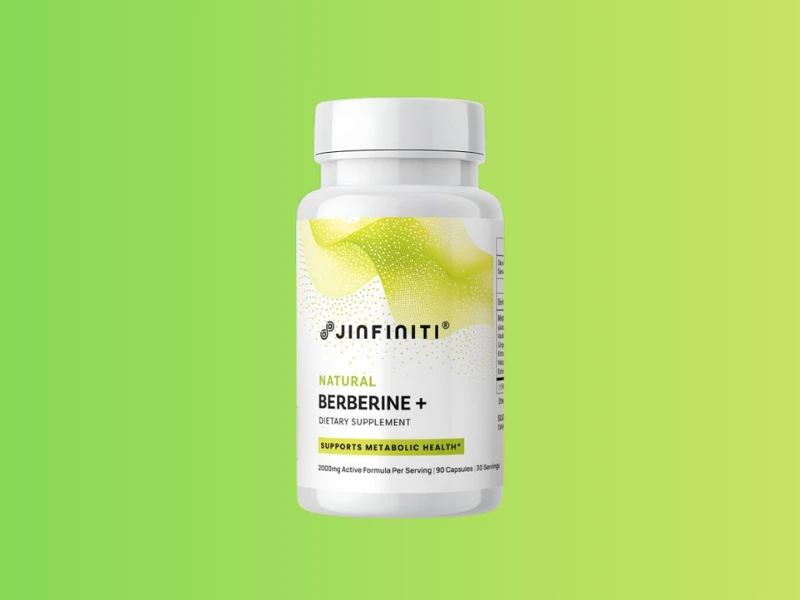
Gut-Metabolism Support

Natural Berberine+ for gut health support and metabolism.

Shop Now
Natural Berberine+ product mockup

Quick Picks: Best Gut Health Supplement for Your Goals

Use this table like a shortcut, then scroll to the deeper sections for how to choose and how to take each option.

GoalBest-supported supplementsTypical dose rangeBiggest cautions
Constipation, hard stoolsSoluble fiber (psyllium), PHGG (gentler prebiotic fiber)Psyllium often works best when total fiber is >10 g/day for 4+ weeks; PHGG is often studied around 5–6 g/dayGas and bloating if you ramp too fast; separate from meds by 2 hours
Bloating and crampingEnteric-coated peppermint oilOften 180–225 mg 2–3x/day (product-dependent)Can worsen reflux in some people
Stool quality, microbiome supportSelected probioticsStrain and dose vary widelyAvoid if immunocompromised unless clinician-guided
Inflammation or gut discomfortCurcumin/turmeric extracts, gingerCurcumin studies vary widely; ginger often 0.5–1 g/day equivalentBlood thinners, gallbladder issues, reflux (individual)
Metabolic-gut support (blood sugar swings, appetite)BerberineCommonly 500 mg 2–3x/day with meals (product-dependent)Can cause GI upset; medication interactions; avoid in pregnancy unless clinician-guided
IBS with increased permeabilityL-glutamine5 g three times daily for 8 weeks in one RCTNot a casual add-on; talk with a clinician if symptoms persist
Mucosal supportZinc L-carnosineCommonly 75 mg twice daily (product-dependent)Nausea in some; check zinc totals across supplements

What Supporting Gut Health Means

It helps to translate “gut health” into a few plain outcomes you can track.

Your gut microbiome

Your microbiome is the ecosystem of gut bacteria living in your gut, including strains often described as good bacteria.

Fiber and prebiotics feed helpful bacteria, which can produce short-chain fatty acids (metabolites that support the gut lining and immune balance).

A healthy gut tends to have enough diversity and resilience to bounce back after travel, stress, or antibiotics.

Your gut barrier

Your gut barrier is the lining that decides what gets absorbed and what stays out.

Some nutrients may support this barrier under specific conditions, but “leaky gut cures” are usually oversold.

Motility and the gut-brain axis

Motility is how food moves through you.

Stress, sleep, and the nervous system can change motility fast, which is why cramps and urgency can flare on high-stress weeks.

The Best-Studied Supplements for Gut Health

Here are the supplements for gut health with the strongest mix of guideline support, randomized trials, and practical usefulness.

1. Soluble Fiber (Psyllium)

Fiber is the least glamorous supplement on this list.

It’s also one of the most reliable tools for digestion and everyday regularity.

It also has some of the most reliable evidence.

In an updated meta-analysis of randomized trials, fiber supplementation improved constipation, with higher response rates than control, and the best results showing up with higher daily fiber doses and at least 4 weeks of use.[1]

How to use it (simple plan):

  • Start with 3–5 g once daily for 3–4 days.
  • Move to 3–5 g twice daily if tolerated.
  • Pair it with water. Fiber without water can backfire.

Who it’s best for:

  • Hard stools, infrequent stools, “I feel like I’m not emptying” constipation.

What can go wrong:

  • Gas and bloating are common when you ramp too fast.
  • Fiber can bind meds, so separate by about 2 hours.

If you prefer a food-first approach, your baseline diet still matters.

2. PHGG (Partially Hydrolyzed Guar Gum)

PHGG is a prebiotic fiber, meaning it feeds beneficial microbes.

Some people tolerate PHGG better than classic psyllium, especially if they get bloated easily.

A randomized, double-blind, placebo-controlled trial studied PHGG in IBS andtrackedsymptomscores over time. PHGG led to a significant improvement of bloating.[2]

How to use it:

  • Many studies use about 5–6 g/day.
  • Start with half that for a week if you are sensitive.

Who it’s best for:

  • Constipation with bloating.
  • IBS patterns where “more fiber” usually feels like a bad joke.

3. Enteric-Coated Peppermint Oil

Peppermint oil is one of the best-researched herbal options for IBS-type symptoms.

The American College of Gastroenterology guidelinestates: “We suggest the use of peppermint to provide relief of global IBS symptoms.”

NCCIH summarizes the evidenceplainly and notes a 2022 review where peppermint oil outperformed placebo for overall IBS symptoms and abdominal pain, with mostly mild side effects.[3]

How to choose peppermint oil:

  • Look for enteric-coated capsules (they dissolve lower in the gut).
  • Avoid products that are not coated if you are prone to reflux.

Who it’s best for:

  • Crampy pain, bloating, “my gut clenches under stress” patterns.

Who should be cautious:

  • People with significant GERD or frequent heartburn.

4. Probiotics

Probiotics are living microorganisms, and a probiotic supplement is essentially a delivery system for them.

They can be helpful in some situations, but they are not a guaranteed daily gut fix.

The ACG IBS guideline has a clear line here: “We suggest against probiotics for the treatment of global IBS symptoms.”

Where probiotics may have more practical value is around antibiotic use.

A large Cochrane reviewfound that in people prescribed antibiotics, probiotics may reduce antibiotic-associated diarrhea and may reduce risk of C. difficile-associated diarrhea in some settings.

How to think about probiotics (without the hype):

  • Treat “probiotic” like a category, not a product.
  • Match it to your situation (antibiotics vs everyday symptoms).
  • Track whether it helps within 2–4 weeks, then keep or drop.

Caution:

  • If you are immunocompromised or have a central line, talk to a clinician before using probiotics.

6. Berberine

Berberine shows up in gut conversations for two reasons.

First, it has research on metabolic markers like glucose.

Second, studies suggest it can influence gut microbiota composition and metabolites, which may be part of how it works.

A multi-center randomized, double-blind trial explored berberine’s effects alongside gut microbiome changes in people with hyperglycemia. The trial found that Berberinecould regulate the structure and function of the human gut microbiota.[4]

A separate meta-analysis focused on berberine’s positive glucose-lowering outcomes across randomized trials.[5]

Who it’s best for:

  • People thinking about gut health through a metabolic lens (blood sugar swings, appetite dysregulation, belly fat gain).

How it can feel in real life:

  • Some people notice less post-meal heaviness.
  • Some people get GI upset at higher doses.

If you want a deeper overview of berberine in metabolic support, see our guide on natural alternatives to metformin.

6. Turmeric (Curcumin)

Curcumin is the most-studied active compound in turmeric.

In ulcerative colitis research, curcumin has been studied as an adjunct, and a recent review concluded it showed promise for improving clinical and endoscopic outcomes, while noting limitations and the need for larger trials.[6]

That does not mean turmeric “treats” inflammatory bowel disease.

It does suggest that curcumin’s anti-inflammatory biology is relevant to gut tissue in clinical contexts.

Practical takeaways for everyday gut support:

  • Absorption matters. Curcumin is notoriously hard to absorb.
  • Many studies use standardized extracts plus bioavailability support.

If you want a simple how-to, see turmeric dosage and absorption tips.

7. Ginger

Ginger is best known for nausea, but research also explores it in functional dyspepsia (upper abdominal discomfort, early fullness, post-meal heaviness).

A randomized, double-blind, placebo-controlled clinical trial evaluated steamed ginger extract for functional dyspepsia over 12 weeks and found it to be safe and effective.[7]

If your gut symptoms are mostly upper GI and meal-related, ginger may be a better match than probiotics.

For a broader, food-and-supplement view, see our breakdown of ginger root benefits.

8. L-Glutamine

Glutamine is an amino acid that gut cells can use as fuel.

It is not a universal “gut repair” supplement.

In a randomized, double-blind, placebo-controlled trial, adults with post-infectious IBS-D and increased intestinal permeability took 5 g of glutamine three times daily for 8 weeks. The study found glutamine dramatically and safely reduced all major IBS-related symptoms.[8]

This is a specific population with a specific study design.

If your diarrhea started after an infection and never really normalized, this is worth discussing with a clinician.

9. Zinc L-Carnosine

Zinc L-carnosine (also called polaprezinc in some literature) is studied for mucosal protection.

A review summarizes research and potential applications across GI contexts, including gastrointestinal mucosal disease and impaired permeability.[9]

This is not a first-line gut health supplement.

It’s a “consider if the basics failed and you have a clear reason” option.

🧬 MORE ON GUT HEALTH

A Simple Way to Choose the Right Supplement

You do not need a 10-supplement stack to improve your gut.

You need one good match, used consistently, with a clear way to judge results.

Step 1: Identify your pattern

Pick one primary issue for 14 days:

  • Constipation
  • Bloating/cramping
  • Loose stools
  • Reflux-like discomfort
  • Post-antibiotic disruption

Step 2: Choose one intervention

Use the table above.

If you want constipation support, start with a fiber strategy.

If you want cramp and bloating relief, peppermint oil is often the first herbal pick.

Step 3: Track what matters

Keep it easy:

  • Stool frequency (days/week)
  • Stool consistency (soft, formed, hard)
  • Pain or bloating score (0–10)
  • Tolerance (heartburn, nausea, gas)

Step 4: Make a keep-or-drop decision

  • If you see no signal by 2–4 weeks, change the approach.
  • If you see a clear benefit, keep the smallest dose that still works.

Where Jinfiniti Fits: Targeted Formulas for Gut-Linked Inflammation and Metabolism

Some gut issues are really inflammation or metabolic issues wearing a gut costume.

That’s where botanicals like berberine, turmeric, and ginger are a practical bridge.

Jinfiniti supplement comparison

ProductWhat it targetsKey actives (per serving)Benefits
Natural Berberine+Gut-metabolism axis1200 mg berberine (95%) plus ginger, cinnamon, artichoke, astragalus, Panax notoginsengSupports metabolic pathways alongside gut comfort. Built-in botanicals can improve tolerance and broader effects.
Extra Strength Turmeric+Inflammation tone and digestive comfortTurmeric extract (95% curcuminoids) plus boswellia, ginger, quercetin, and piperineCurcumin absorption support plus complementary botanicals for whole-body inflammation response.

If you want a gut-focused starting point, many people do well beginning with turmeric plus ginger support, then layering in fiber.

Test, Act, Optimize (So You Don’t Guess Forever)

Gut symptoms can be driven by things you can’t see: inflammation, metabolic strain, nutrient gaps, or stress physiology.

At Jinfiniti, our approach is TAO: Test, Act, Optimize.

It’s the same idea we use across biomarkers: define what “optimal” looks like, act with a focused plan, then retest and adjust.

Dr. Jin-Xiong She puts it bluntly in the NAD context: “NAD values over 100μM may not have additional benefits and can potentially be harmful.”

That one sentence is a good gut-health lesson too.

More is not always better. Better is better.

If you want a testing overview that includes gut microbiome options and blood biomarker platforms, start with our at-home health test comparison.

Safety Notes (Read This Before You Start)

Supplements are still biologically active.

A few quick guardrails keep things sensible.

  • Persistent diarrhea, blood in stool, unexplained weight loss, fever, anemia, or night-time symptoms deserve medical evaluation.
  • If you are pregnant, breastfeeding, or on prescription medications, check interactions before starting berberine or high-dose curcumin.
  • If you are prone to reflux, peppermint oil and even ginger can worsen heartburn in some people.

FAQ

What is the best supplement for gut health overall?

For most people, a soluble fiber supplement is the most consistently helpful starting point. It improves regularity and supports a healthier gut environment over time.

What’s best for bloating and gas?

If bloating comes with cramps and an IBS pattern, enteric-coated peppermint oil has some of the strongest evidence. If bloating is mainly “fiber intolerance,” try PHGG and ramp slowly.

Are probiotics worth it?

Sometimes. They are most convincing around antibiotics and certain specific situations, not as a guaranteed everyday fix for IBS.

How long do gut supplements take to work?

Some work fast (peppermint oil can be noticeable within days). Others are slower (fiber and prebiotics often need 2–4 weeks).

Can turmeric upset your stomach?

Yes. Curcumin can cause GI upset at higher doses in some people, especially on an empty stomach. If you have symptoms, try taking with food.

Should I take multiple supplements at once?

If you start three things on the same day, you won’t know what worked. Pick one main intervention for 2–4 weeks, then add a second if needed.

Referenced Sources

  1. van der Schoot A, Drysdale C, Whelan K, Dimidi E. The Effect of Fiber Supplementation on Chronic Constipation in Adults: An Updated Systematic Review and Meta-Analysis of Randomized Controlled Trials. Elsevier BV; 2022. https://doi.org/10.1093/ajcn/nqac184
  2. Niv E, Halak A, Tiommny E, Yanai H, Strul H, Naftali T, et al. Randomized clinical study: Partially hydrolyzed guar gum (PHGG) versus placebo in the treatment of patients with irritable bowel syndrome. Springer Science and Business Media LLC; 2016. https://doi.org/10.1186/s12986-016-0070-5
  3. Ingrosso MR, Ianiro G, Nee J, Lembo AJ, Moayyedi P, Black CJ, et al. Systematic review and meta-analysis: efficacy of peppermint oil in irritable bowel syndrome. Wiley; 2022. https://doi.org/10.1111/apt.17179
  4. Ming J, Yu X, Xu X, Wang L, Ding C, Wang Z, et al. Effectiveness and safety of Bifidobacterium and berberine in human hyperglycemia and their regulatory effect on the gut microbiota: a multi-center, double-blind, randomized, parallel-controlled study. Springer Science and Business Media LLC; 2021. https://doi.org/10.1186/s13073-021-00942-7
  5. Xie W, Su F, Wang G, Peng Z, Xu Y, Zhang Y, et al. Glucose-lowering effect of berberine on type 2 diabetes: A systematic review and meta-analysis. Frontiers Media SA; 2022. https://doi.org/10.3389/fphar.2022.1015045
  6. Peng Z, Li D, Wu N, Wang XY, Sun GX, Gao HB, et al. Safety and efficacy of curcumin in the treatment of ulcerative colitis: An updated systematic review and meta-analysis of randomized controlled trials. Elsevier BV; 2025. https://doi.org/10.1016/j.explore.2024.103083
  7. Baek HI, Ha NR, Kim C, Im TJ, Kim YY, Hwang SH, et al. Efficacy and safety of steamed ginger extract for gastric health: a randomized, double-blind, placebo-controlled multi-center clinical trial. Royal Society of Chemistry (RSC); 2025. https://doi.org/10.1039/d5fo01172h
  8. Zhou Q, Verne ML, Fields JZ, Lefante JJ, Basra S, Salameh H, et al. Randomised placebo-controlled trial of dietary glutamine supplements for postinfectious irritable bowel syndrome. BMJ; 2018. https://doi.org/10.1136/gutjnl-2017-315136
  9. Efthymakis K, Neri M. The role of Zinc L-Carnosine in the prevention and treatment of gastrointestinal mucosal disease in humans: a review. Elsevier BV; 2022. https://doi.org/10.1016/j.clinre.2022.101954
A patient receiving an eGFR blood test in a clinic

eGFR Blood Test: What It Means, Normal Range, and Next Steps

Reading your lab report and wondering “what does eGFR mean?” Trust us, you’re not alone. It stands for estimated glomerular filtration rate and it’s one of the primary numbers clinicians look at to understand how well your kidneys are filtering your blood.

It’s also a number that gets misunderstood quickly. eGFR is an estimate derived from your other lab values. A single “low” value does not definitively mean you have chronic kidney disease.

What You Should Know

  • eGFR is a calculated estimate of kidney filtration, not a direct measurement.
  • “Normal” depends on your age, trends over time, and whether there’s kidney damage on urine testing.
  • One low eGFR can be temporary from illness, dehydration, or medications.
  • The most helpful next test is usually a repeat eGFR plus a urine albumin-to-creatinine ratio (uACR).

CLIA-Certified Biomarker Panel

Test your eGFR with other markers of kidney function.

Discover AgingSOS®
Jinfiniti AgingSOS green gradient background

What is eGFR in a Blood Test?

eGFR stands for estimated glomerular filtration rate, which is a way to approximate how much blood your kidneys filter each minute. The “glomeruli” are tiny filtering units inside your kidneys, and the “filtration rate” describes how efficiently they clear waste and extra fluid.

Most routine kidney panels do not “measure GFR” directly. Instead, your lab report lists an eGFR number that’s calculated from other values in your blood sample.

When people search “eGFR meaning” or “what is eGFR in blood test,” the simplest answer is this: it’s a quick snapshot of kidney filtration that helps flag reduced kidney function early.

How eGFR Is Calculated (and Why It’s an Estimate)

Your eGFR is usually calculated from serum creatinine level, plus factors like age and sex. Creatinine is a waste product made when your body uses creatine for energy, so it tends to rise when filtration slows.[1]

That calculation is useful, but it has blind spots. Anything that changes creatinine without changing filtration can nudge your eGFR up or down.

Creatinine: Helpful, but Easy to Skew

Creatinine is influenced by muscle mass, diet, supplements, and even last night’s workout. That’s why two people with the same kidney function can show different creatinine values.

If you’ve ever wondered whether supplements can confuse lab results, our guide to creatine vs creatinine breaks down what’s normal and what’s not.

CKD-EPI and the 2021 Update You May See on Your Report

Many laboratories now report eGFR using the 2021 CKD-EPI creatinine equation, which removed race from the calculation. A 2021 paper helped validate newer approaches, and some people saw their reported eGFR shift slightly after their lab switched formulas.[2]

If your report says “eGFR CKD-EPI,” it usually refers to the equation used, not a separate test.

When Cystatin C Can Make eGFR More Accurate

If creatinine is likely to mislead (very high muscle mass, low muscle mass, older age, or unusual diets), clinicians sometimes add cystatin C. Cystatin C is a protein produced by your cells at a steadier rate, and it can improve accuracy when creatinine is “noisy.”

If you want a plain-English deep dive, see our guide to cystatin C levels and normal ranges.

Infographic showing normal ranges for eGFR on a blood test

Normal eGFR Range (and Why Age Matters)

People often search “eGFR normal range” hoping for one clean cutoff. The reality is messier, because eGFR tends to decline as you get older, even in otherwise healthy adults.

Most labs flag an eGFR below 60 as “low,” but interpretation depends on your trend and whether there’s evidence of kidney damage. The National Kidney Foundation explains this age and context issue well, and even offers a handy eGFR calculator for professionals.

eGFR Test Results and Next Steps

Here’s a practical way to interpret common eGFR ranges (assuming the result is confirmed and not from an acute illness).

eGFR (mL/min/1.73m²)What it can meanWhat’s usually checked next
≥90Often normal filtrationLook for kidney damage on urine testing if there are risk factors (diabetes, high blood pressure)
60–89Mildly reduced or age-related declineRepeat labs and check urine albumin (uACR) if risk factors are present
45–59Moderately reduced filtrationConfirm persistence, check uACR, review meds, assess blood pressure and diabetes control
30–44More significant reductionSame as above, with closer follow-up and possible nephrology input
15–29Severe reductionUrgent evaluation and specialist care is common
<15Kidney failure rangeSpecialist-led care and planning is typical

That “1.73m²” is a standardized body surface area used for comparison across people, which is why eGFR is not a perfect individualized measurement.

Low eGFR: Common Causes (Not All Are Chronic Kidney Disease)

Seeing “eGFR low” on your results can feel like a siren. The key question is whether this is a one-time dip or a persistent pattern.

A single low number can happen when your body is under temporary stress, even if your kidneys are structurally fine.

Temporary Reasons eGFR Can Drop

These are some of the most common “false alarms” that can lower eGFR on a laboratory test:

  • Dehydration or poor fluid intake before the blood draw.
  • Recent vomiting, diarrhea, fever, or other acute illness.
  • Some medications, especially NSAIDs (like ibuprofen) in higher or frequent doses.
  • Intense exercise shortly before testing.
  • Recent creatine supplementation that raises creatinine without true damage in healthy people (context matters).

If any of these were true for you, repeating the test once you’re back to baseline is often more informative than spiraling over a single report.

Ongoing Causes of Reduced eGFR

When eGFR stays low, the most common long-term drivers are metabolic and vascular. The big ones include diabetes, high blood pressure, and underlying kidney diseases.

That’s one reason kidney results are often interpreted alongside blood sugar and inflammation markers, such as HbA1c and CRP.

eGFR Stages and How CKD Is Actually Diagnosed

It’s tempting to map one lab result to one diagnosis. Kidney guidelines do not work that way.

Chronic kidney disease is defined by either reduced eGFR or evidence of kidney damage that persists for at least 3 months.

Why Urine Albumin Matters as Much as eGFR

Kidney risk is staged using both eGFR and albuminuria (protein leakage into urine). A urine albumin-to-creatinine ratio (uACR) helps detect kidney damage even when eGFR is still “normal.”[3]

A urine albumin-to-creatinine ratio (uACR) is a key companion test because it changes long-term risk and follow-up decisions.

If you’re trying to connect related labs, it can also help to understand what albumin levels in blood can suggest about overall health and inflammation (even though urine albumin is the kidney-specific piece).

What To Do If Your eGFR Is Low

The best next step is usually not a supplement or a cleanse. It’s a clearer answer.

A repeat test plus the right companion labs often tells you whether you’re seeing a temporary fluctuation or a real trend.

A Simple Next-Step Checklist

  • Repeat creatinine and eGFR when you’re well hydrated and not acutely ill.
  • Add urine albumin-to-creatinine ratio (uACR) to look for kidney damage.
  • Review medications with your clinician, especially frequent NSAID use.
  • Check blood pressure and long-term glucose control (often with HbA1c).
  • Consider cystatin C if creatinine-based eGFR doesn’t fit your body type or situation.

When It’s Worth Calling a Clinician Quickly

Seek prompt medical advice if you see a rapid drop from your usual results, if your eGFR is very low, or if you have symptoms like swelling, shortness of breath, confusion, or very low urine output.

Those scenarios can signal an acute kidney problem that needs immediate evaluation.

How To Support Kidney Health (Without Guessing)

Kidney protection is mostly boring, which is good news. The habits that help are the same ones that reduce cardiovascular and metabolic risk.

Here’s what tends to matter most, based on guideline-level consensus.

  • Keep blood pressure in a healthy range and treat hypertension when present.
  • Control blood sugar if you have prediabetes or diabetes, since high glucose drives kidney damage over time.
  • Avoid frequent high-dose NSAIDs unless a clinician advises otherwise.
  • Aim for a balanced diet and adequate hydration, especially around testing.
  • Don’t “protein panic” without context. Protein targets should be personalized if CKD is confirmed.

If you’re tracking uric acid because of kidney stones or gout risk, our guide to uric acid test ranges can help you interpret that number alongside kidney function.

A Practical Perspective from Dr. Jin-Xiong She

Dr. Jin-Xiong She, PhD (genomic medicine researcher and founder of Jinfiniti), often reminds patients that kidney numbers need context.

“Your kidneys don’t wake up one morning and decide to ‘be low.’ If eGFR drops, your job is to find out whether it’s a temporary stress signal or a persistent pattern, then act on the cause.”

That’s also why Jinfiniti leans on the Test, Act, Optimize approach. You measure first, you respond based on data, and you retest to confirm what’s working.

If You Want a Bigger Health Picture

eGFR is a kidney-focused number, but it rarely exists in isolation. Blood pressure, glucose control, inflammation, and cardiovascular risk all push on kidney outcomes over time.

If you want to track kidney-relevant markers alongside a broader set of longevity biomarkers, the AgingSOS Essential Panel includes common kidney function markers like creatinine and cystatin C as part of a multi-system view.

All testing is processed through Jinfiniti’s high-complexity CLIA laboratory in Augusta, Georgia, which matters when you’re making health decisions based on lab results.

Frequently Asked Questions

What is eGFR in a blood test?

eGFR is an estimate of kidney filtration calculated from blood markers like creatinine plus age and sex.

What is a normal eGFR?

Many healthy adults fall above 90, but “normal” depends on age and whether there’s kidney damage on urine albumin testing.

Is eGFR 60 bad?

An eGFR below 60 is often flagged as low, yet CKD usually requires persistence for at least 3 months or evidence of kidney damage.

Can dehydration cause low eGFR?

Yes. Dehydration can raise creatinine temporarily, which lowers the calculated eGFR until you rehydrate and recover.

What does “eGFR CKD-EPI” mean?

It typically refers to the equation your lab used to calculate eGFR.

How often should eGFR be checked?

It depends on your risk factors and prior results. If a result is abnormal, repeating eGFR and adding uACR is a common next step.

What’s the difference between eGFR and GFR?

GFR is the concept (true filtration rate). eGFR is a calculated estimate used in routine laboratory testing.

Should I worry if creatinine is normal but eGFR is low?

Sometimes labs calculate eGFR in a way that creates borderline values, especially in older adults. Trends and urine albumin often matter more than one isolated number.

What tests help confirm chronic kidney disease?

A repeat eGFR plus urine albumin-to-creatinine ratio is foundational, along with evaluation of underlying causes.

Can you improve your eGFR levels?

Yes, especially if a low result was driven by dehydration, acute illness, or a medication effect. Long-term improvement depends on the underlying cause and risk-factor control.

Referenced Sources

  1. Mula-Abed WAS. Estimated Glomerular Filtration rate (eGFR): A Serum Creatinine-based Test for the Detection of Chronic Kidney Disease and its Impact on Clinical Practice. Oman Medical Journal; 2012. https://doi.org/10.5001/omj.2012.87
  2. Inker LA, Eneanya ND, Coresh J, Tighiouart H, Wang D, Sang Y, et al. New Creatinine- and Cystatin C–Based Equations to Estimate GFR without Race. Massachusetts Medical Society; 2021. Available from: https://doi.org/10.1056/nejmoa2102953
  3. Inoue K, Streja E, Tsujimoto T, Kobayashi H. Urinary albumin-to-creatinine ratio within normal range and all-cause or cardiovascular mortality among U.S. adults enrolled in the NHANES during 1999–2015. 2021.
Featured image showing the best at-home health test kits

The Best At-Home Health Test Kits in 2026: Full Comparison

At-home health testing got a glow-up. In 2026, the market spans everything from single-biomarker finger-prick kits to 100+ marker panels paired with dashboards, wearable integrations, and AI-assisted insights.

The important thing is that the good options don’t “do the testing” in your home. They use home-friendly collection and then send your sample to a regulated clinical lab, often a CLIA-certified laboratory in the U.S., for processing. That’s the line between a useful health signal and a glorified fortune cookie.

This guide compares the best home health test kits across three categories: comprehensive blood biomarker platforms, targeted single-purpose kits, and gut microbiome tests. You’ll also see how Jinfiniti’s AgingSOS Ultimate Panel fits as a longevity-first option processed at Jinfiniti’s high-complexity CLIA-certified lab.

Medical note: At-home tests can be powerful for screening and trend tracking. They don’t diagnose disease on their own or replace medical care.

What You Should Know

  • The most trustworthy kits send your sample to a CLIA-certified lab for analysis, not a mystery “instant” reader.
  • If you want longevity data, look for panels that include advanced aging markers, not just cholesterol and glucose.
  • Venous blood draws tend to be most precise, but high-quality capillary testing can still be useful for tracking trends.
  • The “best” kit depends on your goal: longevity, hormones, metabolic health, gut symptoms, or convenience.

Quick Picks (Best Home Tests by Goal)

  • Best longevity panel (deep aging markers): AgingSOS Ultimate Panel
  • Best for maximum biomarker breadth (big annual snapshot): Function Health
  • Best for frequent, at-home blood monitoring (convenience): SiPhox Health
  • Best all-in-one optimization bundle (data + action tools): OneTwenty
  • Best for integrating blood + DNA + wearables (data dashboard): InsideTracker
  • Best targeted tests on a budget (wide menu): Everlywell
  • Best targeted tests with clinician support: LetsGetChecked
  • Best for peer-reviewed validation focus: imaware
  • Best gut microbiome platform (actionable recommendations): Viome

Head-to-Head Comparison Table

PlatformTypical Price StyleWhat You TestSample TypeTurnaroundSupportBest For
Jinfiniti AgingSOS Ultimate PanelPer test + subscription options48 advanced longevity biomarkersBlood draw (mobile phlebotomy available)VariesExpert interpretation + consultationLongevity tracking, advanced aging markers
Function HealthAnnual membership~100 unique biomarkers, 2 rounds/yearVenous draw at labFast dashboard, notes laterClinician notes + action planBroadest blood snapshot
SiPhox HealthPer-test or membershipUp to ~60 biomarkersAt-home (finger-prick or EasyDraw upper-arm device)~1 weekDashboard + AI insightsFrequent tracking from home
OneTwentyAnnual membership tiers100+ biomarkers + wearable metricsLab draw, some at-home optionsDays to a weekCoaching + clinical support (model varies)“Done-for-you” optimization
InsideTrackerPlatform membership + add-on tests40+ biomarkersLab draw or mobile add-onDaysAction plan, strong integrationsBlood + DNA + wearables in one place
EverlywellPer testTargeted tests (30+ options)Finger-prick or saliva (varies)DaysPhysician-reviewed resultsNarrow questions, low entry cost
LetsGetCheckedPer testTargeted testsFinger-prick/saliva/urine (varies)DaysPhysician consults, treatment pathways for some testsResults plus clinical guidance
imawarePer testTargeted testsFinger-prickDaysData + limited telehealth (context dependent)Validation-forward testing
ViomePer test + subscription optionsGut microbiome, sometimes add-onsStool (and sometimes blood/saliva)WeeksFood guidance + supplements (optional)Gut-focused personalization
Tiny HealthPer test or membershipGut microbiomeStoolWeeksCoaching add-onsDeep DNA-based microbiome profile

Pricing and features can change. Treat this as a structured comparison, then confirm the exact current plan before you buy.

How We Ranked the Best At-Home Health Test Kits

We prioritized five things.

  • Lab standards: CLIA-certified lab processing when applicable, plus clear reporting.
  • Coverage: breadth of biomarkers (or depth in a specific domain like gut).
  • Sample quality: venous draw vs capillary, and how error-prone collection is.
  • Actionability: do you get next steps, not just red and green dots.
  • Support: clinician notes, consults, coaching, or treatment pathways.

Comprehensive Blood Biomarker Platforms

These are the heavy hitters. They’re designed for prevention, longevity tracking, and finding issues before you feel them.

Jinfiniti AgingSOS Ultimate Panel


CLIA-Certified Biomarker Panel

48 longevity biomarkers including NAD+ and Klotho.

Discover AgingSOS®
Jinfiniti AgingSOS green gradient background

Most at-home platforms are built around “general wellness labs.” AgingSOS is built around aging biology. If your goal is healthspan optimization, you want markers that map to longevity mechanisms like inflammation, metabolic resilience, cardiovascular risk, oxidative stress, nutrient status, senescence signaling, and hormone balance.

At a glance

  • Panel depth: 48 advanced biomarkers designed for longevity and prevention
  • Sample: Blood draw (mobile phlebotomy available)
  • Processing: Run through Jinfiniti’s high-complexity CLIA-certified laboratory in Augusta, Georgia
  • Guidance: Free expert consultation included, plus personalized supplement and lifestyle recommendations
  • Two alternative panels at lower price points: Advanced Panel and Essential Panel

What it measures (and why that’s different):

  • Cellular resilience markers that are rarely available in mainstream DTC testing, including intracellular NAD+ and Klotho
  • Cardiovascular risk beyond basic cholesterol, including ApoB and Lp(a), plus expanded lipid fractions
  • Inflammation and senescence signaling, including multiple inflammatory cytokines and senescence markers (for example β-gal)
  • Metabolic depth, including insulin resistance and broader metabolic health markers
  • Oxidative stress and micronutrients, to help connect symptoms and performance issues to actionable drivers

Why the CLIA lab point matters:
Your sample is only as trustworthy as the lab that processes it. AgingSOS is processed inside Jinfiniti’s own high-complexity CLIA-certified lab, which is a meaningful quality signal for test performance, quality systems, and ongoing oversight.

Best for:

  • People who want a longevity-first baseline that goes beyond standard labs
  • Anyone running a serious “test, act, optimize” loop and planning to retest after interventions
  • Optimizers who want rare markers to validate whether their protocol is actually moving the needle

What to keep in mind:

  • A blood draw adds a little friction compared to mail-only kits, but it improves sample quality and expands what you can measure.
  • This is intentionally comprehensive. If you only need one answer (like vitamin D), a targeted test can cost less.

How to get more value from your results:

  • Pick one priority lever (lipids, insulin resistance, inflammation, micronutrients, hormones)
  • Make one meaningful change for 8–12 weeks
  • Retest on a schedule that matches the lever you’re pulling, then adjust

Function Health

Function Health is the “big snapshot” membership. It’s built for people who want broad, clinic-style bloodwork, twice a year, with a clean dashboard and clinician-reviewed guidance.

What you get:

  • Two rounds of testing per year, typically an annual panel around ~100 unique biomarkers plus a mid-year panel around ~60 tests
  • Coverage across heart health, hormones, thyroid, liver and kidney markers, heavy metals, nutrients, inflammation, and more

Collection experience:

  • Requires venous blood draws through partner lab locations
  • Many members report that the draw can be split into two appointments because of the number of vials

Results and interpretation:

  • Results often populate quickly in the dashboard
  • Clinician notes typically arrive later, so you get the numbers first and the narrative after

Who it’s best for:

  • People who want a wide, twice-yearly baseline and are comfortable doing in-lab blood draws
  • Anyone who prefers a dashboard and clinician notes over coaching calls and programs

Strengths:

  • Among the broadest biomarker coverage available in DTC memberships
  • Designed for longitudinal tracking so you can see trends, not just one-off values

Limitations:

  • Blood draw logistics and extra fees can add friction
  • Implementation support is lighter than coaching-heavy platforms

Tip: If you’re doing two rounds per year, plan your timing around life cycles that actually change biomarkers (training blocks, weight loss phases, diet shifts). That way your “before and after” is meaningful, not random.

SiPhox Health

SiPhox is the convenience-first option for people who want repeatable testing without living at a lab appointment desk. It’s designed around frequent cadence and at-home collection.

What you get:

  • Panels that can cover up to ~60 biomarkers, depending on the plan
  • A dashboard built for tracking trends, with wearable integrations and guided insights

Collection experience:

  • Uses at-home collection options, including a proprietary, needle-free upper-arm device (“EasyDraw”) for certain panels
  • Because at-home collection can be more error-prone, following prep and collection instructions matters more here than with venous draws

Results and interpretation:

  • Results are typically delivered in about 5–7 days
  • The platform leans into AI-assisted explanations, plus practical next steps and supplement recommendations

Who it’s best for:

  • People who want frequent trend tracking (monthly or quarterly style rhythms)
  • Anyone optimizing training, metabolism, sleep, or recovery who wants regular feedback loops

Strengths:

  • Convenience and cadence, which is what actually makes most people stick with testing
  • Often a strong value proposition when you want multiple tests per year

Limitations:

  • At-home collection can be less forgiving if you rush the process
  • If your goal is a single, ultra-deep yearly snapshot, some venous-based platforms may feel more complete

Tip: Treat it like a lab day. Hydrate, follow fasting instructions, avoid a brutal workout right before collection, and keep conditions consistent across retests.

OneTwenty (formerly Outlive.bio)

OneTwenty is the “full system” approach. Instead of stopping at results, it bundles testing with action tools like coaching, supplements, and clinical pathways.

What you get:

  • Multiple comprehensive blood panels per year (often positioned as 2–4 rounds depending on plan)
  • AI-driven insights, plus coaching support through chat
  • Personalized supplement packs and additional tools (for example, a smart scale)
  • Access to prescriptions in certain cases (for example, GLP-1s, HRT, TRT) when clinically appropriate

Collection experience:

  • Blood draws through a wide network of lab locations
  • Some plans offer at-home draw add-ons for convenience

Who it’s best for:

  • People who want “data plus execution,” not just dashboards
  • Anyone overwhelmed by biomarker results who wants a guided path from numbers to decisions

Strengths:

  • One of the most implementation-forward models in this space
  • Bundling can reduce decision fatigue because it packages testing and follow-through

Limitations:

  • It’s a newer platform, so feature sets and workflows may evolve
  • As with any bundled model, value depends on whether you’ll actually use the coaching and action tools

Tip: If you choose an all-in-one platform, commit to one measurable outcome per quarter (ApoB down, fasting insulin down, hs-CRP down, ferritin normalized). Otherwise you’re just collecting pretty graphs.

InsideTracker

InsideTracker is for the “quantified self” crowd. It shines when you already have data, or you want to combine blood testing with genetics and wearables in one ecosystem.

What you get:

  • Blood testing that typically covers 40+ biomarkers depending on the package
  • Membership options that range from uploading existing lab work to recurring in-lab testing tiers
  • An action plan oriented around nutrition, lifestyle, and supplement suggestions

Data integrations (the differentiator):

  • Optional genetic testing through InsideTracker’s kit or uploaded genetic data from consumer providers
  • Wearable integration through common platforms so labs can be interpreted in context (sleep, activity, HRV)
  • An “InnerAge” style biological age estimate, designed to translate lab patterns into something more intuitive

Who it’s best for:

  • People who want a strong analysis layer over time
  • Anyone with existing labs who wants a system to consolidate and interpret them

Strengths:

  • Excellent for integrating multiple data sources
  • Flexible entry point, from “upload only” to frequent testing

Limitations:

  • Coaching and clinical support are not the core of the product
  • Higher tiers can get expensive if you want frequent testing

Tip: If you’re using a platform like this, upload at least 12 months of labs if you have them. Trendlines reveal far more than a single measurement.

Targeted At-Home Test Kits (Lower Cost, Narrower Scope)

Targeted kits are best when you have one specific question.

Think “Is my thyroid off?” not “Give me a complete longevity map.” They tend to be cheaper, easier to collect (often finger-prick, saliva, or urine), and faster to act on. The tradeoff is you’re seeing a narrow slice of the health picture, so interpretation depends heavily on context, symptoms, and what else is going on.

If you’re new to testing, targeted kits can be a smart first step. If you’re optimizing for longevity or prevention, a comprehensive panel usually gives you better leverage.

Everlywell

Everlywell is the “big menu” brand. It’s best when you want an affordable entry point and the ability to pick from a wide range of tests without committing to a full biomarker membership.

What you can test:

  • Hormone and reproductive health panels
  • Thyroid screening
  • Cholesterol and lipid markers
  • HbA1c and diabetes screening style tests
  • Vitamin and nutrient checks
  • Additional specialty tests depending on the current catalog

Collection and processing:

  • Most kits use finger-prick blood or saliva, depending on the marker
  • Samples are processed through CLIA-certified labs and results are generally delivered in a few business days
  • Results are typically physician-reviewed, with a dashboard designed for easy interpretation

Who it’s best for:

  • People with a single goal (thyroid check, lipid check, A1c check)
  • Anyone who wants a low-friction first step into biomarkers

Strengths:

  • One of the widest test selections and lowest barriers to entry
  • User-friendly experience and straightforward ordering

Limitations and watch-outs:

  • These are generally “results plus guidance,” not full physician consultations
  • Certain test types in the industry (for example some IgG-based food sensitivity formats) are scientifically controversial, so treat them as signals for experimentation, not a medical verdict

Tip: Use targeted kits as a decision filter. If something flags, follow up with repeat testing or clinician-directed labs before making big health decisions.

LetsGetChecked

LetsGetChecked is the targeted testing pick for people who want clinical support baked in. The headline difference is that physician consultations are included, which can reduce the “Now what?” feeling after you open results.

What you can test:

  • A broad targeted menu, including hormone panels, general health markers, and STI testing

Collection and processing:

  • Kits can use finger-prick blood, saliva, or urine depending on the test
  • Samples are processed in a CLIA-certified laboratory and results are typically returned in a few days

Support model (why people choose it):

  • Physician consultations included on results
  • For certain positive STI results, treatment pathways may be available depending on the service area and clinical eligibility
  • Many users value the added nursing support layer for reassurance and follow-through

Who it’s best for:

  • People who want a targeted test but also want a clinician in the loop
  • Anyone who wants help deciding whether a result needs retesting, treatment, or deeper workup

Strengths:

  • Strong support infrastructure compared to results-only kits
  • Clinically oriented workflow that focuses on next steps

Limitations:

  • Fewer à la carte options than the biggest menu brands
  • Pricing can be higher, especially for more comprehensive targeted panels

Tip: If you’re choosing LetsGetChecked, write down your questions before you test. The consult is most valuable when you show up with context, symptoms, and goals.

imaware

imaware is the validation-forward choice. It’s known for being one of the few at-home blood testing platforms with peer-reviewed validation published in a clinical chemistry journal, which is rare in this category.

What you can test:

  • A curated set of clinically oriented tests, including testosterone, heart health panels, thyroid, vitamin D, diabetes screening, celiac disease, STI testing, and allergy-style panels

Collection and processing:

  • Typically finger-prick blood collection for many panels
  • Samples are processed through CLIA-certified and CAP-accredited labs, which adds another layer of quality signaling

Who it’s best for:

  • People who prioritize method rigor and validation over having the biggest test catalog
  • Anyone who wants targeted labs but wants to avoid the “wellness score” vibe

Strengths:

  • Strong scientific credibility relative to most consumer testing brands
  • Focused, clinical-style panels

Limitations:

  • Smaller menu than mass-market competitors
  • Less emphasis on personalized recommendations or lifestyle programming

Tip: If you care about accuracy, consistency still matters. Retest under similar conditions (fasted state, time of day, training load) so changes reflect biology, not noise.

Gut Microbiome Tests

Microbiome testing is best viewed as a structured experimentation tool. It can help you form hypotheses about food tolerance, fiber response, and gut ecosystem balance, then run a cleaner “test and learn” loop.

A quick decoder ring for the tech:

  • 16S sequencing is older and cheaper. It’s useful for broad bacterial patterns, but has limited resolution.
  • Shotgun metagenomics (DNA) is deeper. It can identify a wider range of organisms, but DNA doesn’t tell you whether microbes are active.
  • Metatranscriptomics (RNA) aims to show what microbes are doing right now, which can be more actionable.

No matter the method, results are not diagnoses. They’re directional signals that can inform diet experiments, symptom tracking, and follow-up care.

Viome

Viome is one of the most technology-forward microbiome platforms. It uses AI-driven metatranscriptomics (RNA sequencing), which aims to capture not only which microbes are present, but which ones are actively producing metabolites. That “activity” layer is the key reason people choose it over DNA-only options.

What you get:

  • A gut microbiome report paired with food guidance designed around your microbial activity signals
  • Optional upgraded packages that add additional sample types (depending on the current offering)
  • Subscription paths that can include custom-formulated supplements and periodic retesting

Who it’s best for:

  • People who want actionable food guidance and are willing to iterate
  • Anyone who prefers a more “systems” interpretation rather than a list of bacteria

Strengths:

  • One of the most advanced sequencing approaches in consumer gut testing
  • Recommendations tend to be framed as practical, experimentable steps

Limitations and watch-outs:

  • Subscription models can add up over time
  • Microbiome recommendations are probabilistic. The best outcomes come from pairing them with symptom tracking and disciplined re-testing

Tip: Don’t change everything at once. Pick 1–2 variables (fiber target, fermented foods, polyphenol intake) and retest after 8–12 weeks.

Tiny Health

Tiny Health uses deep shotgun metagenomics (DNA-based sequencing) to profile bacteria and other organisms in the gut. It originally built its reputation in pregnancy and infant microbiome testing, then expanded into adult gut options.

What you get:

  • A deep microbiome profile designed to surface patterns you can act on through diet and lifestyle
  • Optional coaching add-ons depending on the package

Who it’s best for:

  • People who want a DNA-deep microbiome profile and are comfortable waiting longer for results
  • Anyone interested in microbiome changes across life stages (for example pregnancy, postpartum, early childhood, then adult tracking)

Strengths:

  • Deeper sequencing than 16S-style tests
  • Strong fit for families who want consistent testing across stages

Limitations and watch-outs:

  • Turnaround can be slower than many competitors
  • DNA-based profiles can identify microbes that are present but not necessarily active

Tip: Microbiome testing is most useful when you pair it with a simple tracker (stool consistency, bloating, energy, skin, cravings). Otherwise you’re looking at a map with no compass.

Other Microbiome Options (Quick View)

BrandMethodTypical StrengthTradeoff
Ombre16S sequencingOften cheaper entryLess depth than shotgun methods
BIOHMDNA-based approachIncludes fungi angleLess standardized across the space
FloréWhole genome + custom blendsCustom probiotic formulationsPremium pricing

Accuracy, Regulation, and the “Can I Trust This?” Question

There’s a big difference between a cheap retail self-test and a lab-processed kit.

CLIA-Certified Processing

CLIA (Clinical Laboratory Improvement Amendments) is the U.S. framework that regulates clinical lab testing to support accurate, reliable, and timely results.

In practice, it means a lab has to meet standards for quality systems, personnel qualifications, and ongoing performance monitoring.

That’s why it’s a good sign when your kit is processed through a CLIA-certified laboratory, including Jinfiniti’s high-complexity CLIA lab.

The 2025 BMJ Warning About DIY Tests

In 2025, two BMJ papers raised concerns about many over-the-counter self-tests sold in retail settings.[1][2]

The key takeaway was not “all at-home testing is bad.” It was simpler: cheap, off-the-shelf tests often had weak evidence, confusing instructions, or poor guidance on what to do next.

Lab-processed platforms are different because you’re relying on regulated lab systems, not only a consumer-operated strip test.

Finger-Prick vs Venous Draw

Venous draws are often the precision leader.

Capillary tests can still be useful for trend tracking, especially when you repeat under similar conditions.

If you’re comparing results over time, consistency is your best friend.

  • Test at the same time of day when possible
  • Follow fasting instructions
  • Avoid heavy training right before the draw
  • Retest borderline results instead of spiraling over one number

How to Choose the Best At-Home Health Test Kit for You

Start with your goal. Everything gets easier after that.

If Your Goal Is Longevity and Aging Tracking

Pick a panel that includes advanced cardiovascular risk markers and aging-related signals.

  • Jinfiniti AgingSOS Ultimate Panel is built for this use case.
  • Broad wellness panels can still help, but they may miss the rarer longevity markers.

If You Want a Big Annual Health Snapshot

Choose a comprehensive blood platform.

  • Function Health is often chosen for breadth.
  • OneTwenty can be appealing if you want bundled action tools.

If You Want Frequent Tracking Without Lab Visits

At-home recurring testing models can make compliance easier.

  • SiPhox Health is built around repeatable at-home collection.

If You Have One Specific Question

Go targeted.

  • Everlywell and LetsGetChecked are often used for narrow testing needs.
  • imaware can be a strong fit if validation is your top concern.

If Your Symptoms Are Gut-Centered

Microbiome testing can help you build a structured elimination and reintroduction plan.

  • Viome emphasizes activity-based insights.
  • Tiny Health emphasizes deep DNA-based profiling.

What to Do After You Get Your Results

The real win is not the PDF. It’s the loop.

  1. Pick one focus area (metabolic health, inflammation, lipids, micronutrients, hormones).
  2. Make one meaningful change you can stick to for 6 to 12 weeks.
  3. Retest strategically, not impulsively.
  4. Escalate to a clinician if you see red flags or symptoms that need medical evaluation.

If you’re using a longevity panel like AgingSOS, the best approach is simple: baseline, intervene, and retest on a schedule that matches your goals.

FAQ

Are at-home health test kits accurate?

They can be, especially when the sample is processed by a CLIA-certified laboratory and you follow collection instructions carefully.

What does “CLIA-certified lab” mean?

CLIA is the U.S. regulatory program that sets standards for clinical lab testing quality. CLIA-certified labs are required to meet defined requirements for reliability and oversight.

Is finger-prick blood as accurate as a venous blood draw?

Venous draws typically have higher precision. Finger-prick data can still be useful for screening and trend tracking when you test consistently.

How often should you retest biomarkers?

Many people retest every 3 to 12 months depending on the goal. If you’re making a focused intervention, 8 to 12 weeks is often enough to see direction.

Which at-home test is best for longevity tracking?

Look for panels that include advanced cardiovascular risk markers and aging-related signals. Jinfiniti’s AgingSOS Ultimate Panel is built specifically for longevity and prevention.

Can these tests diagnose disease?

No. They can highlight risk signals or abnormal values, then guide follow-up with a clinician.

What should you do if a result is out of range?

Retest if the result is borderline or unexpected, and talk with a clinician if it’s meaningfully abnormal or you have symptoms.

Are gut microbiome tests actually useful?

They can be useful for structured experimentation with diet and lifestyle. Treat them as directional tools, not definitive diagnoses.

Why are some cheap retail self-tests unreliable?

Some rely on weaker evidence, unclear instructions, or poor guidance on interpretation and next steps. Lab-processed testing tends to be more robust.

Do you need to fast before at-home blood testing?

Often yes, especially for lipids, glucose, and insulin-related markers. Always follow the kit’s instructions.

Bottom Line

If you want the most longevity-relevant picture, you’ll get more value from panels built around aging mechanisms and processed at a regulated lab, not a basic retail test.

If you want a broad annual snapshot, comprehensive blood platforms can cover a lot of ground.

If you want to track change week-to-week or month-to-month, convenience matters more than perfect comprehensiveness.

Referenced Sources

  1. Davenport C, Richter A, Hillier B, Scandrett K, Agarwal R, Baldwin SW, et al. Direct-to-consumer self-tests sold in the UK in 2023: cross sectional review of information on intended use, instructions for use, and post-test decision making. BMJ; 2025. https://doi.org/10.1136/bmj-2025-085546
  2. Hillier B, Deeks JJ, Alderman J, Kale AU, Macdonald T, Baldwin SW, et al. Direct-to-consumer self-tests sold in the UK in 2023: cross sectional review of regulation and evidence of performance. BMJ; 2025. https://doi.org/10.1136/bmj-2025-085547
The Best Supplements for Inflammation

The Best Anti-Inflammatory Supplements for Calming Inflammation

Inflammation is your body’s built-in fire alarm. It’s useful when you cut your finger or fight off a virus. It’s less useful when the alarm keeps chirping all night with no clear emergency.

That “low-grade, always-on” inflammation is linked with common modern issues like joint stiffness, metabolic slowdown, brain fog, and cardiovascular risk.

If you’re searching for anti-inflammatory supplements or natural anti-inflammatory options, the goal is not to “turn off” immunity. It’s to support a balanced inflammatory response, then measure whether it’s actually moving in the right direction.

What You Should Know

  • The best supplement for inflammation depends on the source, because gut, joints, and metabolic inflammation respond to different tools.
  • Curcumin, omega-3s, vitamin D, and magnesium are some of the supplements with the best evidence.
  • Look for standardized extracts and absorption support, because many popular ingredients are poorly absorbed in basic forms.
  • If you can, track a marker like high-sensitivity CRP, because “I feel better” and “my inflammation is lower” are not always the same thing.

CLIA-Certified Biomarker Panel

Test your inflammation markers before supplementing.

Discover AgingSOS®
Jinfiniti AgingSOS green gradient background

What Counts as “Anti-Inflammatory” in a Supplement?

A supplement is “anti-inflammatory” when it helps your body dial down excessive inflammatory signaling or oxidative stress while maintaining normal immune system function.

Most evidence-backed supplements work through a few repeatable pathways to reduce inflammation:

  • Modulating inflammatory messengers (like NF-κB, COX enzymes, and certain cytokines)
  • Supporting antioxidant defenses
  • Improving gut barrier function and microbiome balance
  • Correcting nutrient gaps that push inflammation higher over time

If you want a simple starting point, learn your baseline. High-sensitivity C-reactive protein (hs-CRP) is one of the most common blood markers used to estimate systemic inflammation.

“In primary prevention of ASCVD, an hsCRP ≥2 mg/L is considered a risk-enhancing factor.” (American College of Cardiology)

You can read what typical hs-CRP ranges look like in our guide on C-reactive protein levels.

The Best Anti-Inflammatory Supplements, Based on Studies

The list below is a practical “short shelf” of supplements that show up repeatedly in human research, clinical practice, or guideline discussions. The best option for you depends on the pattern you’re dealing with.

SupplementBest ForWhat to Look ForTypical Dosage Range in StudiesCautions
Curcumin (turmeric extract)Joint discomfort, exercise recovery, general inflammatory toneStandardized curcuminoids + absorption enhancer (piperine, phospholipids, etc.)Often 500–1,500 mg/day of extract (varies by formula)May interact with anticoagulants; can upset stomach in some people
Omega-3s (EPA/DHA)Cardiometabolic inflammation, triglycerides, recoveryLabel shows EPA + DHA amounts (not just “fish oil”)~1 g/day EPA+DHA in some heart guidance; higher doses used under medical careHigher doses can increase bleeding tendency; some trials note atrial fibrillation risk at 4 g/day
BerberineMetabolic inflammation (insulin resistance, fatty liver patterns)95% standardized extract; split dosesCommonly 1,000–1,500 mg/day split with mealsCan lower glucose; interacts with meds; avoid in pregnancy unless clinician approves
Magnesium (glycinate, malate)Stress-related inflammation, sleep, muscle recoveryWell-absorbed forms; dose that fits your gut toleranceOften 100–400 mg/day elemental (depends on diet and needs)Too much may cause loose stools; caution with kidney disease
Vitamin D (with K2)Immune balance when levels are lowD3 dose matched to labs; K2 MK-7 for calcium routingVaries widely; monitor 25(OH)D with labsToo much D can raise calcium; monitor if using high doses
Ginger extractDigestive inflammation, soreness, recoveryStandardized gingerols; concentrated extractOften 500–2,000 mg/day equivalentBlood-thinner caution in high doses; heartburn in some people
Boswellia serrataJoint-focused inflammation and stiffnessStandardized boswellic acids (check % on label)Trials use a wide range, sometimes up to ~1,000 mg/dayGI upset possible; quality varies a lot
Senolytics (fisetin, quercetin)“Inflammaging” support (emerging)Cautious dosing strategy + quality sourcingHuman evidence is still developing; many trials use intermittent “pulse” dosingNot a substitute for medical care; avoid if pregnant/breastfeeding; review meds with a clinician

How We Ranked “Best Supplement for Inflammation”

“Best” means different things to different bodies. We used criteria that reflect both research quality and real-world practicality.

  1. Evidence: human trials and meta-analyses matter more than mechanistic hype
  2. Bioavailability: does the formula actually absorb at meaningful levels
  3. Fit: does it match the inflammation pattern you’re trying to support
  4. Safety: interactions, tolerability, and dose realism
  5. Transparency: standardized extracts and clear Supplement Facts

If you are shopping for supplements to fight inflammation, these five rules remove a surprising amount of noise.

1. Curcumin

Curcumin is the best-known active compound in turmeric, Its anti-inflammatory properties are among the strongest of any nutraceutical. An umbrella meta-analysis of 10 systematic reviews across 5,870 participants found curcumin produced consistent reductions in CRP, IL-6, and TNF-α.[1]

A 2024 review of 19 meta-analyses confirmed protective effects across chronic inflammatory and metabolic conditions. Its primary mechanisms include NF-κB inhibition, COX-2 suppression, and NLRP3 inflammasome modulation.[2]

The catch is absorption. Many low-cost turmeric powders are the nutritional version of tossing confetti in the wind. Two things tend to separate stronger curcumin supplements from weaker ones:

  • Standardization (extracts standardized to high curcuminoid content)
  • An absorption strategy (piperine, liposomal/phospholipid forms, or thoughtful ingredient pairing)

If you want a deeper guide on dosing and timing, see our breakdown on how to take turmeric.

Curcumin Formulas You’ll See Most Often

FormulaProsConsWho It Fits
Plain turmeric powderCheap, easy to findLow curcumin content, weak absorptionMostly culinary use
Standardized curcumin extractMore potent than powderStill needs absorption supportPeople targeting joint and recovery support
Curcumin + piperineBetter absorptionNot ideal for everyone (drug interactions)Most people wanting a straightforward “upgrade”
Curcumin + synergistic botanicalsMultiple pathways covered (joint + gut + oxidative stress)More complex, higher costPeople who prefer a “stack” in one formula

2. Ginger

Ginger is one of those rare “natural anti-inflammatory” ingredients that is both kitchen-friendly and research-friendly. Its bioactive compounds, gingerols and shogaols, inhibit COX-2, 5-LOX, and NF-κB, giving it a mechanism similar to both NSAIDs and Boswellia.

Across randomized trials, ginger supplementation has been evaluated for effects on CRP, hs-CRP, TNF-α, and IL-6, with pooled data suggesting meaningful improvements when baseline inflammation is elevated.[3]

What to look for: a standardized ginger extract (often labeled by % gingerols), not just generic “ginger root powder.”

Where it fits best: digestive irritation, post-exercise soreness, and as a complementary add-on when you’re already using foundational tools like curcumin or omega-3s.

3. Boswellia

Boswellia serrata has a uniquely specific mechanism. Its active compound, AKBA (3-O-acetyl-11-keto-β-boswellic acid), is a selective inhibitor of 5-lipoxygenase (5-LOX), a pathway that NSAIDs don’t target. This makes it particularly effective for joint pain and inflammation driven by leukotriene signaling, including in conditions like osteoarthritis and rheumatoid arthritis.[4]

A 2024 double-blind, placebo-controlled RCT in 105 osteoarthritis patients showed reductions in TNF-α and hs-CRP within just five days of treatment.[4]

What to look for: a standardized extract listing boswellic acids. The 30% AKBA extracts (5-Loxin® and Aflapin®) have the most RCT data behind them, and two bottles labeled “Boswellia” can behave like entirely different products if the standardization isn’t there.

Senolytics

If chronic inflammation is the background static, senescent cells are one potential source of the noise. Senescent cells are aged or damaged cells that stop dividing but keep secreting inflammatory signals, a process researchers call the senescence-associated secretory phenotype (SASP).[5]

If you’re curious which compounds fall into this category, see our overview of natural senolytic supplements.

Human data is still early but promising. A first-in-human pilot study using a senolytic strategy showed reductions in senescent cell burden and SASP markers.[5]

Fisetin is currently being studied in a Phase II RCT (TROFFi trial) targeting frailty and physical decline, and other protocols are examining it in high-inflammation settings in older adults.[6][7]

Two important clarifications:

  • A prescription-drug senolytic combo is not the same thing as a dietary supplement. The best-supported human studies often involve prescription agents, so supplement claims need to stay in the lane of supporting healthy aging and inflammatory balance.
  • The goal is smarter experimentation, not hype. Intermittent “pulse dosing” (a few days per week rather than daily) is a distinguishing feature of how this category is used in trials.

If you’re interested in a senolytic-support supplement approach, our SenoAid™ Senolytic Complex combines quercetin + fisetin with supportive co-ingredients, designed for a more practical “stack in one” approach.

4. Omega-3s (Fish Oil)

Omega-3s (EPA and DHA) are partly a supplement story and partly a diet story. Their mechanism goes beyond simple cytokine suppression: EPA and DHA drive the production of resolvins and protectins, specialized molecules that actively resolve inflammation rather than just dampen it.[8]

Meta-analyses including tens of thousands of participants confirm that omega-3 fatty acids reduce levels of IL-1β, IL-6, TNF-α, and CRP across cardiometabolic, autoimmune, and joint contexts, including rheumatoid arthritis.[9]

For people with established coronary heart disease, the AHA recommends about 1 g/day of EPA + DHA, preferably from oily fish, with supplements considered under clinician direction.[10]

What to look for: products that list EPA and DHA amounts clearly (not just “fish oil”), plus freshness and third-party testing to reduce oxidation concerns.

Where it fits best: cardiometabolic inflammation patterns, triglyceride support, and recovery when your diet is light on fatty fish.

5. Berberine

If inflammation is traveling with insulin resistance, belly fat gain, or blood sugar swings, berberine is worth a serious look. Mechanistically, it directly inhibits IKKα at its ligand binding site, blocking NF-κB from translocating to the nucleus.

A meta-analysis of 17 clinical trials covering 1,670 patients found berberine reduced hs-CRP, IL-6, and macrophage migration inhibitory factor alongside improvements in glycemic control. It also modulates gut microbiota, suppressing intestinal pro-inflammatory cytokines including IL-1β and TNF-α, which makes it particularly relevant when metabolic inflammation overlaps with gut or digestive issues like inflammatory bowel disease.[11]

Berberine tends to work best when taken with meals and when sleep, protein intake, and movement are not being ignored.

Our Natural Berberine+ provides 1,200 mg of 95% berberine extract per serving, paired with complementary botanicals for improved absorption.

6. Vitamin D and Minerals

Not every inflammation plan needs another exotic botanical. Sometimes the lever is boring.

Vitamin D exerts anti-inflammatory properties via VDR (vitamin D receptor) receptors on immune cells, reducing pro-inflammatory mediators like IL-6, TNF-α, and IL-17 while increasing anti-inflammatory cytokines. Research also suggests it can help lower inflammation related to immune dysregulation, particularly when deficiency is the root issue.[12]

A 2025 study found that even small regular doses effectively corrected deficiency and produced measurable decreases in pro-inflammatory cytokine concentrations. Like magnesium, the effects are strongest when baseline levels are actually low.[13]

Optimal mineral status is also associated with anti-inflammatory effects. A meta-analysis confirmed that dietary magnesium intake is inversely associated with serum CRP. Selenium supports antioxidant enzymes that keep inflammatory stress from escalating.[14][15]

If you suspect a deficiency pattern, bloodwork can help identify them. A complete panel like AgingSOS Advanced can track vitamin D status alongside other cardiometabolic markers that tend to move alongside inflammation.

Evidence Strength at a Glance

CompoundMechanismStrongest Evidence LevelBiomarkers Reduced
CurcuminNF-κB, COX-2, NLRP3Umbrella meta-analysis (5,870 pts)CRP, IL-6, TNF-α
Omega-3Resolvins/protectins, cytokine suppressionMultiple large RCTs & meta-analysesCRP, IL-6, LTB4
Boswellia5-LOX, NF-κB, NLRP3Multiple RCTs (OA, IBD, asthma)TNF-α, CRP, LTB4
BerberineNF-κB (IKKα), gut microbiotaMeta-analysis (17 trials, 1,670 pts)hs-CRP, IL-6, MIF
MagnesiumInnate immune cytokine suppressionMeta-analysis (CRP inverse association)CRP, TNF-α, IL-6
Vitamin DVDR, Treg, macrophage polarizationMultiple RCTs & meta-analysesCRP, IL-6, TNF-α
GingerCOX-2, 5-LOX, NF-κBMechanistic + small RCTsIL-6, PGE2, LTB4
Senolytics (Q/F)SASP clearance, apoptosis in senescent cellsEarly pilot trials + Phase II ongoingp16, SASP factors

Choosing the Right Supplement for Your Goal

Here are three simple “if this, then that” matchups that work for most people.

If Your Main Issue Is Joints and Stiffness

Start with a curcumin strategy. Prioritize standardized extract plus absorption support. Consider adding omega-3s if recovery is slow or if diet is low in fatty fish.

If Your Main Issue Is Metabolic Inflammation

Berberine can be a strong fit, especially alongside protein-forward meals and daily walking. Omega-3s often pair well here too.

If Your Main Issue Is “General Inflammation” With No Clear Target

Start with the basics: omega-3s, vitamin D status, magnesium adequacy, sleep, and stress load. Then add curcumin if joint discomfort, soreness, or gut irritability is part of the picture.

If Your Main Issue Is “Inflammaging” (Age-Related Inflammation)

If your inflammation feels tied to aging patterns (slower recovery, rising hs-CRP over time, more aches with less provocation), the emerging category to watch is senolytics.

The evidence is still developing and many human studies involve prescription combinations, but the premise is compelling: reducing senescent-cell burden may help reduce inflammatory signaling.

If you explore this category, consider an intermittent approach and pair it with measurement, like baseline and follow-up hs-CRP, and broader cardiometabolic markers through a panel such as AgingSOS Advanced.

Safety, Side Effects, and Interactions to Respect

Supplements can be powerful. That also means they can be interactive. Here is what to watch out for:

  • If you take anticoagulants or antiplatelet medications, talk to your clinician before using high-dose curcumin, fish oil, ginger, or combination products with piperine.
  • If you use glucose-lowering medications, berberine can compound the effect. Monitor.
  • If you are pregnant, breastfeeding, or managing a chronic condition, get medical guidance before starting a new supplement stack.

A Practical 30-Day Plan to Try

This is the simplest “clean test” approach. Change as few variables as possible so you can learn what is actually helping.

  • Week 1: Choose one primary supplement based on your main goal
  • Week 2: Add only one supporting supplement if needed (often omega-3s or magnesium)
  • Weeks 3–4: Keep the plan steady, then reassess symptoms and consider a lab marker (like hs-CRP) if you want objective feedback

Dr. Jin-Xiong She, PhD, puts it like this: “Inflammation is measurable. When you track it, you stop guessing and start adjusting with purpose.”

FAQs

These are the most common questions we hear when people compare supplements for inflammation.

What is the best anti-inflammatory supplement overall?

Curcumin and omega-3s are the most common “first picks,” but the best choice depends on whether your inflammation is joint, gut, or metabolically driven.

How long do supplements for inflammation take to work?

Some people notice changes in soreness or digestion within a week or two. Biomarker shifts often take 4–8 weeks, especially for omega-3s and vitamin D.

Can I take multiple anti-inflammatory supplements together?

Often yes, but stack intentionally. Choose ingredients that cover different pathways, and avoid doubling up on blood-thinning effects if you take related medications.

What should I avoid when buying anti-inflammatory supplements?

Avoid products with unclear dosing, no standardization, and no absorption strategy for poorly absorbed ingredients like curcumin.

Should I test inflammation before supplementing?

If you can, yes. Even one baseline hs-CRP result makes your plan more grounded and helps you see whether your changes are working.

Referenced Sources

  1. Naghsh N, Musazadeh V, Nikpayam O, Kavyani Z, Moridpour AH, Golandam F, et al. Profiling Inflammatory Biomarkers following Curcumin Supplementation: An Umbrella Meta‐Analysis of Randomized Clinical Trials. Wiley; 2023. https://doi.org/10.1155/2023/4875636
  2. Lee YM, Kim Y. Is Curcumin Intake Really Effective for Chronic Inflammatory Metabolic Disease? A Review of Meta-Analyses of Randomized Controlled Trials. MDPI AG; 2024. https://doi.org/10.3390/nu16111728
  3. Sonkusare SG, Bhure BS. A Review of Herbal Gel with Anti-Inflammatory Action Using Aloe Vera, Turmeric, Ginger, Onion, Omega-3 Fatty Acids and Green Tea. International Journal of Innovative Science and Research Technology; 2026. https://doi.org/10.38124/ijisrt/26jan987
  4. Majeed A, Majeed S, Satish G, Manjunatha R, Rabbani SN, Patil NVP, et al. A standardized Boswellia serrata extract shows improvements in knee osteoarthritis within five days-a double-blind, randomized, three-arm, parallel-group, multi-center, placebo-controlled trial. Frontiers Media SA; 2024. https://doi.org/10.3389/fphar.2024.1428440
  5. Kirkland JL, Tchkonia T. Senolytic drugs: from discovery to translation. Wiley; 2020. https://doi.org/10.1111/joim.13141
  6. Ji J, Lipsyc-Sharf MD, Baclig NV, Zektser YA, Al Saleem A, Olivera JD, et al. Abstract CT238: Treatment of frailty with fisetin (TROFFi) in postmenopausal breast cancer survivors: A phase II randomized double-blind placebo-controlled study. American Association for Cancer Research (AACR); 2025. https://doi.org/10.1158/1538-7445.am2025-ct238
  7. Zhu Y, Doornebal EJ, Pirtskhalava T, Giorgadze N, Wentworth M, Fuhrmann-Stroissnigg H, et al. New agents that target senescent cells: the flavone, fisetin, and the BCL-XL inhibitors, A1331852 and A1155463. Impact Journals, LLC; 2017. https://doi.org/10.18632/aging.101202
  8. Duvall MG, Levy BD. DHA- and EPA-derived resolvins, protectins, and maresins in airway inflammation. Elsevier BV; 2016. https://doi.org/10.1016/j.ejphar.2015.11.001
  9. Kavyani Z, Musazadeh V, Fathi S, Hossein Faghfouri A, Dehghan P, Sarmadi B. Efficacy of the omega-3 fatty acids supplementation on inflammatory biomarkers: An umbrella meta-analysis. Elsevier BV; 2022. https://doi.org/10.1016/j.intimp.2022.109104
  10. Kris-Etherton PM, Harris WS, Appel LJ. Omega-3 Fatty Acids and Cardiovascular Disease. Ovid Technologies (Wolters Kluwer Health); 2003. https://doi.org/10.1161/01.atv.0000057393.97337.ae
  11. Luo D, Yu B, Sun S, Chen B, Harkare HV, Wang L, et al. Effects of adjuvant berberine therapy on acute ischemic stroke: A meta‐analysis. Wiley; 2023. https://doi.org/10.1002/ptr.7920
  12. Su ST, Shih PC, Wu MC. High-dose Vitamin D supplementation for immune recalibration in autoimmune diseases. Frontiers Media SA; 2025. https://doi.org/10.3389/fimmu.2025.1625769
  13. Walawska-Hrycek A, Hrycek E, Galus W, Jędrzejowska-Szypułka H, Krzystanek E. Does Systematic Use of Small Doses of Vitamin D Have Anti-Inflammatory Effects and Effectively Correct Deficiency Among Healthy Adults? MDPI AG; 2025. https://doi.org/10.3390/nu17020352
  14. Dibaba DT, Xun P, He K. Dietary magnesium intake is inversely associated with serum C-reactive protein levels: meta-analysis and systematic review. Springer Science and Business Media LLC; 2014. https://doi.org/10.1038/ejcn.2014.7
  15. Huang Z, Rose AH, Hoffmann PR. The Role of Selenium in Inflammation and Immunity: From Molecular Mechanisms to Therapeutic Opportunities. SAGE Publications; 2012. https://doi.org/10.1089/ars.2011.4145
Grüns vs AG1 supplement bags on a kitchen table

Grüns vs AG1: Gummies or Greens Powder, Which Is Worth It?

If you are trying to “cover your bases” with one daily supplement, Grüns and AG1 are two of the loudest options on the shelf. One is a grab-and-go gummy pack. The other is a scoopable greens supplement powder built like a “kitchen-sink multivitamin.”

They can both be useful. They are not interchangeable.

What You Should Know

  • Grüns is a daily pack of gummies designed to fill nutrient gaps with 20+ vitamins and minerals plus plant-based ingredients.
  • AG1 is a daily greens powder with 75+ ingredients that combines vitamins, minerals, greens, herbs, probiotics, and more.
  • Both brands cite clinical research, but the studies are company-sponsored and focus on biomarkers and short-term outcomes.
  • Neither replaces whole foods, especially for fiber and the “food matrix” benefits you do not get from supplements.

Medical note: This article is for education, not medical advice. If you are pregnant, nursing, under 18, on prescription meds, or managing a medical condition, talk with your clinician before starting a new supplement.

Grüns vs AG1: Quick Comparison

Here’s the big picture before we zoom in.

CategoryGrüns (Gummies)AG1 (Greens Powder)
Format1 single-serve pack of gummies daily1 scoop daily, mixed with water or smoothie
“Big idea”Multivitamin-style coverage in a snack packBroad “all-in-one” blend (vitamins, superfoods, probiotics, herbs)
Calories, fiber, sugar (as stated)Fiber highlighted at 6g prebiotic fiber on brand materials50 calories, 2g fiber, <1g naturally occurring sugar, 7.2B probiotics
ProbioticsNot a core emphasis on the main ingredient summary7.2B probiotics per serving
Clinical claims (brand-reported)12-week double-blind, placebo-controlled study, with blood nutrient changes reported (folate, vitamin C)12-week triple-blind randomized placebo-controlled trial in 105 adults (biomarkers and microbiome)
Subscription price (typical)From $59.99/mo for low-sugar 28-pack subscription (and higher for sugar-free tiers)$79/mo subscription for 30 servings
Guarantee30-day money back guarantee90-day money back guarantee
Best fitYou want a no-mess habit and you hate powdersYou want a “one scoop” routine and you like powders, smoothies, or morning shakers

What is Grüns?

Grüns is designed to look and feel like a daily “nutrition backstop.” You get a single-serve pack, chew, and move on.

It is positioned as a way to fill nutrient gaps and support things like digestion, energy, immunity, recovery, beauty, and focus.

What You Get Per Day

Grüns uses a daily “pack” format and sells in 28-pack increments (one person) with subscription options.

It also offers low-sugar and sugar-free variants.

What’s Inside Grüns

The brand lists 20+ vitamins and minerals (including vitamins A, C, D3, E, K2, multiple B vitamins, zinc, iron, selenium, iodine, and more).

It also lists a long set of plant ingredients such as kale, spinach, broccoli, spirulina, chlorella, astragalus, wheatgrass, berries, inulin, and shiitake mushroom powder.

Grüns also highlights 6g of prebiotic fiber for digestion support.

Quality and Testing Notes

Grüns says it conducts lot testing for label claims, heavy metals, and microbial contaminants, and also cites Eurofins testing across label claims and a set of pesticides and contaminants.

Grüns also states it is gluten-free, dairy-free, nut-free, vegan, non-GMO, and uses pectin instead of gelatin.

CLIA-Certified Biomarker Panel

See what your body actually needs.

Discover AgingSOS®
Jinfiniti AgingSOS green gradient background

What is AG1?

AG1 (Athletic Greens) is a daily powder with a wide ingredient spread. It is built to be mixed into water and taken like a daily drink.

AG1 calls itself a “Daily Health Drink” with 75+ ingredients spanning vitamins, minerals, pre and probiotics, superfoods, greens, adaptogens, mushrooms, antioxidants, and digestive support.

What You Get Per Scoop

AG1’s product detail page lists these per-scoop highlights: 50 calories, 6g carbs, 2g fiber, <1g naturally occurring sugar, 2g protein, and 7.2B probiotics.

It also quantifies blend weights like “>7g nutrient dense superfoods” and “>2g potent herbal extracts and antioxidants.”

AG1 also notes the pouch should be refrigerated after opening.

Quality and Certifications Notes

AG1 states it is NSF Certified for Sport, and positions that as a safeguard for athletes and banned substance concerns.

AG1 also markets a 90-day money back guarantee and subscription pricing.

Gummies vs Powder: Why The Format Changes The “Worth It” Math

This is the part most comparisons skip. The delivery format shapes how the product fits your life.

A powder is flexible. You can stack it into smoothies, take it while traveling, or sip it slowly.

A gummy pack is frictionless. No shaker bottle. No taste inconsistencies. No kitchen cleanup.

Fiber Is The Sneaky Differentiator

Many greens powders fall short on fiber because processing strips away a lot of the original plant structure. UCLA Health puts it bluntly: “When those fruits and vegetables are dried and pulverized into a powder, you lose most of that fiber.”

In this specific matchup, Grüns leans into fiber (6g prebiotic fiber), while AG1 lists 2g fiber per scoop.

If your main goal is regularity or appetite support, that gap matters.

If digestion is the main reason you are buying greens, our guide to vitamin C benefits for digestion and gut health is another easy win, because it pairs well with a fiber-first approach.

“All-In-One” Can Mean “Hard To Evaluate”

Both formulas bundle a lot of ingredients. That can be convenient.

It also makes it harder to know what is actually helping you.

Dietary supplements are not required by federal law to be tested for safety and effectiveness before marketing, so the evidence quality varies ingredient by ingredient.

Ingredients Breakdown

Both products are “broad-spectrum,” but they emphasize different levers.

Here is a practical way to compare them without drowning in 60 to 75 ingredient lists.

Ingredient Categories

Ingredient categoryGrünsAG1
Vitamins and minerals20+ vitamins and minerals listed (includes D3, K2, multiple Bs, zinc, iron, etc.)Vitamins and minerals are a major pillar (exact list is extensive)
Greens and plant powdersMultiple greens and plant ingredients listed (kale, spinach, broccoli, spirulina, chlorella, wheatgrass, etc.)“Superfoods & mushrooms” and “greens & superfoods” are core pillars
Mushrooms and adaptogensShiitake mushroom powder and astragalus listed, plus “adaptogens” positioning“Stress adaptogens” and “superfoods & mushrooms” are explicit pillars
Prebiotic fiber6g prebiotic fiber highlightedPre and probiotics included, fiber is 2g per scoop
ProbioticsNot a primary callout in the ingredient summary7.2B probiotics per serving
Digestive enzymesNot highlighted on the ingredient summaryDigestive enzymes are a pillar on AG1 pages

Nutrition Snapshot

MetricGrünsAG1
CaloriesBrand notes 20 calories for sugar-free version50 calories
Fiber6g prebiotic fiber highlighted2g fiber
SugarLow-sugar vs sugar-free options are offered<1g naturally occurring sugar, “no sugar added” positioning
ProbioticsNot a headline metric in their summary7.2B

What About Clinical Evidence?

This is where you should be a little picky.

Both brands cite studies. Both brands also fund their own research.

That is not disqualifying. It does mean you should interpret results like an informed adult, not like a fan.

Grüns: What The Brand Reports

Grüns reports a 12-week, double-blind, placebo-controlled clinical study, and says participants saw blood-level increases in folate (+20.5%) and vitamin C (+40%).

A trial partner summary also describes a 12-week study in 120 participants using a daily serving of 8 gummies.

AG1: What The Brand Reports

AG1 has published a triple-blind, randomized, placebo-controlled parallel trial in 105 healthy adults over 12 weeks, focused on nutrient biomarkers and microbiome shifts.

AG1 also describes a smaller 2-week crossover placebo-controlled trial in 20 active adults on microbiome and nutrient gap outcomes.

Evidence Comparison

QuestionGrünsAG1
Study design (brand-reported)Double-blind, placebo-controlledTriple-blind randomized placebo-controlled parallel trial
Duration12 weeks12 weeks (plus a 2-week crossover study)
Sample sizeTrial partner summary: 120 participants105 adults for the main RCT
OutcomesBlood nutrient changes (folate, vitamin C)Nutrient biomarkers and microbiome shifts
Sponsor influenceCompany-sponsored materialsCompany-sponsored materials

A useful rule: biomarker improvements are more trustworthy than “I felt amazing” testimonials. They still do not prove long-term outcomes.

Side Effects and Safety Considerations

You can use these products safely. You can also make yourself miserable if you ignore basics.

Common, Boring Side Effects That Still Matter

  • GI changes (gas, bloating, stool changes) are common with fibers, probiotics, enzymes, and concentrated plant extracts.
  • If you already take a multivitamin, stacking another “foundational” blend can push certain nutrients higher than you think.

Who Should Be More Cautious

AG1 states it is not intended for individuals under 18 or pregnant or nursing women.

If you are on blood thinners, thyroid medication, or have a sensitive gut, talk to your clinician before jumping into complex blends.

Read More: Compare AG1 vs IM8 daily powders in our full breakdown.

Which One Should You Choose?

This is the “worth it” moment. Pick the product that solves the real problem you have.

Choose Grüns If…

  • You will not consistently drink a greens powder.
  • You want fiber support in the formula and you like the daily pack habit.
  • You want a lower monthly subscription price, especially in the low-sugar tier.

Choose AG1 If…

  • You want probiotics, digestive enzymes, and a broad powder formula in one scoop.
  • You care about sport-focused third-party certification.
  • You prefer a 90-day guarantee window.

Pros and Cons Compared

ProductProsCons
GrünsEasiest habit to keep, travel-friendly packs, strong fiber emphasisLess transparent “dose-by-dose” evaluation for every plant ingredient, shorter guarantee window
AG1Strong category coverage in one scoop, probiotics and enzymes included, NSF Certified for SportHigher monthly price, powder routine is not for everyone

The Most Honest Way To Decide If Either Works For You

You are not buying “ingredients.” You are buying an outcome.

That outcome should show up in your data.

If cellular energy is the theme, the AgingSOS Ultimate Panel gives you a baseline you can actually track.

Here’s how we frame it at Jinfiniti:

“When a supplement has dozens of ingredients, you do not guess your way to ‘worth it.’ You measure what changed, then you adjust.”
Dr. Jin-Xiong She, founder of Jinfiniti Precision Medicine

If your goal is energy, nutrient sufficiency, and longevity support, a test-first approach keeps you out of the endless supplement carousel.

A good starting point is our guide on longevity biomarker testing, because it helps you decide what to measure before you spend another month’s budget on a new tub of powder.

If your routine includes NAD precursors or you are thinking about “cellular energy” supplements, you can also read how to test your NAD levels and why that matters more than guessing based on how you feel.

If niacin is part of your stack, a vitamin B3 test can help you spot low stores or unnecessary megadosing.

FAQs

Can Grüns or AG1 replace vegetables?

No. Whole foods deliver fiber and a broader nutrition “package” that supplements cannot fully copy.

Are these supplements FDA-approved?

Dietary supplements are not required to be tested for safety and effectiveness before being marketed.

Which is better for gut health?

Grüns leans on prebiotic fiber. AG1 leans on pre and probiotics plus digestive enzymes.

Which is better value?

On subscription, Grüns low-sugar can come in lower per month, while AG1 has a higher monthly cost and a longer guarantee window.

What if I already take a multivitamin?

Be careful stacking. “Foundational” blends can overlap on fat-soluble vitamins and minerals, so it is smart to review totals with your clinician.

IM8 vs AG1 product comparison featured image

IM8 vs AG1: Ingredients, Testing, Price, and Which Daily Powder Makes Sense

If you have ever stared at a tub of green powder thinking, “Is this nutrition… or just expensive lawn clippings?” you are definitely not alone. IM8 and AG1 both promise a simpler way to cover foundational nutrients in one daily scoop.

They are in the same aisle, but they are not the same kind of product. IM8 leans “all in one plus extras” (hydration, joint support, heart support). AG1 leans “daily foundation” (vitamins, minerals, superfoods, adaptogens, gut support).

Below is a practical comparison, written for people who want fewer opinions and more signal.

What You Should Know

  • Both IM8 and AG1 are daily drink mixes that can help cover common nutrient gaps, but neither replaces a diet built on whole foods.
  • If you care about banned substance testing for sport, both brands list NSF Certified for Sport status.
  • IM8 is more “label forward” on many nutrients, while AG1 often summarizes ingredient buckets as complexes.
  • Your best “which one” answer usually comes from your routine and your labs, not from marketing.

Medical note: This article is for education, not medical advice. If you are pregnant, nursing, under 18, on prescription meds, or managing a medical condition, talk with your clinician before starting a new supplement.

IM8 vs AG1: At-a-Glance Comparison

CategoryIM8 Daily Ultimate EssentialsAG1 (Athletic Greens)
What it isAll-in-one drink mix with vitamins/minerals plus hydration, joint, heart, gut complexesFoundational daily drink with vitamins/minerals plus superfoods, adaptogens, gut support
Ingredient count92 ingredients (brand stated)75+ ingredients (brand stated)
Calories per serving40~50 (varies by formula/serving)
Probiotics10 billion CFU (label listed)7.2 billion CFU (brand stated)
CertificationNSF Certified for Sport (listed)NSF Certified for Sport (listed)
Taste profileAcai and mixed berries stylePineapple-vanilla style (Original), plus other flavor options
StorageShelf stable sachetsOften recommended to refrigerate after opening (live cultures)
Price rangePremium tierPremium tier

What Is IM8?

IM8’s flagship product is Daily Ultimate Essentials, an all-in-one powder marketed as a way to replace a long list of separate supplements. It includes a broad vitamin and mineral panel, then layers in several “support complexes” such as:

  • Hydration electrolytes
  • Joint and muscle support (including MSM)
  • Heart support (including CoQ10)
  • Digestive enzymes
  • Probiotics plus postbiotics

IM8 also highlights clinical research in its marketing for Daily Ultimate Essentials. If you like products that try to cover a lot of categories in one scoop, that is the core IM8 pitch.

What Is AG1?

AG1 is positioned as a daily “foundational nutrition” drink. It blends:

  • Vitamins and minerals
  • Prebiotics and probiotics
  • “Greens and superfoods”
  • Herbal extracts and adaptogens
  • Digestive enzymes

AG1 also emphasizes its manufacturing and testing standards, and it publishes a research narrative around its “Next Gen” formula.

What These Powders Can and Cannot Do

A daily all-in-one powder can be helpful when your real life looks like this:

  • Breakfast is optional.
  • Vegetables happen in bursts, not daily.
  • Travel and training disrupt routines.
  • You take “a few things” and want to simplify.

A powder is not a substitute for:

  • Protein adequacy
  • Fiber adequacy (most powders provide some, but not a full day)
  • Omega-3 intake
  • Sleep, sunlight, and stress management (sadly, no scoop solves those)

Think of IM8 and AG1 as a nutritional safety net, not a nutrition plan.

CLIA-Certified Biomarker Panel

See what your body actually needs.

Discover AgingSOS®
Jinfiniti AgingSOS green gradient background

Ingredient Transparency: How Easy Is It to Evaluate the Formula?

IM8

IM8 provides a detailed Supplement Facts panel and ingredients library for many vitamins and minerals, plus named complexes with amounts. That makes it easier to answer practical questions like:

  • Are the B vitamins high-dose or modest?
  • Is there meaningful magnesium, or a “label sprinkle” amount?
  • Are key add-ons (like MSM or CoQ10) present in recognizable doses?

On the current label, IM8 includes items such as:

  • Vitamin C listed at 900 mg
  • MSM listed at 1,000 mg
  • CoQ10 listed at 100 mg
  • A probiotic complex listed at 10 billion CFU

That is useful if you want to sanity-check dosing.

AG1

AG1 lists many ingredients, but for certain categories it often communicates totals as “buckets” (for example, a total grams amount for superfoods or herbal extracts). That approach can still be reasonable, yet it makes it harder to evaluate whether specific botanicals are present at doses used in published studies.

If you are the kind of person who reads labels like a detective reads a ransom note, IM8 will likely feel easier to audit.

Vitamins and Minerals: Similar Foundation, Different Emphasis

Both products aim to cover the common “nutrient gap” basics, especially if your diet is inconsistent. In most all-in-one powders, the headline value is not one miracle ingredient. The value is a steady baseline.

Where differences show up:

  • Dose levels: Some formulas lean high-dose on certain vitamins. That can matter if you are already taking a multivitamin.
  • Forms: More bioavailable forms can improve tolerance and uptake for some nutrients.
  • Overlap with your stack: If you already take magnesium, vitamin D, omega-3, or a multivitamin, you can end up doubling up.

Quick caution: Both IM8 and AG1 include vitamin K forms in some versions. If you take warfarin or other anticoagulants, you should only change vitamin K intake with clinician guidance.

Gut Support: Probiotics, Prebiotics, and Enzymes

Both IM8 and AG1 include probiotics and digestion-related ingredients. That can be helpful, or it can be the reason you quit on day three.

What tends to happen in the real world:

  • If you are low-fiber and suddenly add a prebiotic-rich powder, you may feel bloated for a week or two.
  • If you are sensitive to inulin, chicory root, sugar alcohols, or certain mushroom extracts, symptoms can show up fast.

IM8’s gut angle

IM8 lists a probiotic complex at 10 billion CFU, plus postbiotics and digestive enzymes. If your main goal is digestive support, that is the part to focus on.

AG1’s gut angle

AG1 emphasizes clinically studied probiotic strains and also suggests refrigeration after opening due to live cultures. If you have used probiotic products before and tolerate them well, AG1 can fit smoothly.

Tip: Start with a half serving for several days if you are sensitive, then increase.

🧬 MORE SUPPLEMENT GUIDES

Energy, Performance, and Recovery: What’s Realistic

Both brands market “energy.” In supplement reality, energy usually improves when one of these is true:

  • You were low on a key nutrient (iron, B12, folate, vitamin D, magnesium).
  • Your gut tolerance improves and you absorb food better.
  • Your routine becomes more consistent, so sleep and hydration improve.

Neither powder is a stimulant product. If you want a caffeine-like effect, these are not designed for that.

Where IM8 may stand out

IM8 includes hydration electrolytes and adds ingredients like MSM and CoQ10. People who train, sweat heavily, or run low-carb diets sometimes notice hydration support more quickly than they notice “micronutrients.”

Where AG1 may stand out

AG1’s edge is the “daily foundation” habit plus its broad mix of superfoods and adaptogens. Some people report steadier digestion and fewer cravings when they commit to it daily.

Quality and Safety: Testing Matters More Than Ingredient Count

The supplement aisle has a trust problem. Quality varies and “natural” does not automatically mean “clean.” Two quality signals matter most:

  1. Third-party certification (not just “we test in-house”).
  2. Transparent manufacturing standards (GMP, traceability, contaminant testing).

NSF Certified for Sport

Both IM8 and AG1 list NSF Certified for Sport. This certification is designed to reduce the risk of banned substances and requires testing for contaminants and label verification.

If you compete in tested sport, NSF Certified for Sport is one of the few labels that actually changes your risk profile.

Manufacturing and traceability

AG1 states it is manufactured in a TGA-registered facility in New Zealand and describes full batch manufacturing records and traceability as part of its quality program.

IM8 positions itself as third-party tested and also lists NSF Certified for Sport status. If you want to go deeper than badges, look for batch testing details and contaminant standards (heavy metals, pesticides, microbes).

Heavy metals and contaminants

Greens powders can concentrate plant material, and with it, whatever was in the soil. That is why contaminant testing (heavy metals, pesticides, microbes) matters. If a brand offers batch-level testing or clear contaminant standards, it is worth paying attention.

What About Clinical Evidence?

AG1 vs IM8

This is the part that gets messy, fast, because these are multi-ingredient products. When a powder contains dozens of vitamins, minerals, botanicals, enzymes, and microbes, it becomes hard to prove which piece did what.

A good way to think about evidence for “all-in-one” powders is that it usually comes in three layers:

  1. Ingredient-level evidence (vitamin D supports blood levels, magnesium supports adequacy, certain strains support gut outcomes, etc.)
  2. Product-level trials (a study on the actual formula people are buying)
  3. Real-world experience (tolerance, routine adherence, “do I actually keep doing this?”)

IM8 markets results from a 12-week randomized, controlled clinical trial conducted by the San Francisco Research Institute, and the headline numbers they share (energy, gut health, sleep, focus) are presented as participant-reported outcomes. IM8 also has a registered trial listing but the results have yet to be published..

That is a positive signal, but it is worth reading with the right “decoder ring”: until the full methods and results are publicly available (ideally peer-reviewed), treat it as company-sponsored early evidence, not the final word.

AG1 positions its “Next Gen” formula as having been evaluated in multiple randomized, placebo-controlled trials, focused on things like nutrient biomarkers and gut-related outcomes.

There is also at least one peer-reviewed placebo-controlled trial exploring AG1’s effects on the gut microbiome and clinical safety markers. Popular longevity influencer Bryan Johnson called the study into question in a recent Facebook post.

AG1 also published a “Foundational Nutrition” paper. That kind of review can be useful context, but it is not the same thing as a trial proving the product improves outcomes. Pay attention to author affiliations and disclosures, because nutrition reviews can be influenced by funding and conflicts of interest.

Taste, Mixability, and Convenience

Taste is not a minor detail. Taste is compliance.

  • AG1 tends to be described as pineapple-vanilla “greens,” not grassy, with multiple flavor options depending on region.
  • IM8 leans acai and mixed berry.

Convenience differences:

  • IM8 sachets can be easy for travel and consistent dosing.
  • AG1 often includes travel packs on subscription tiers and may require refrigeration after opening.

If you will not measure scoops or you travel often, sachets can win on friction alone.

Price and Value: What Are You Actually Paying For?

Both are premium products. That is the honest truth.

Typical pricing (what you will usually see)

Pricing changes, bundles appear, and promos come and go. Still, here is the general shape:

  • AG1 commonly lists $79 for a subscription pouch (30 servings) and $99 for a one-time purchase.
  • IM8 Daily Ultimate Essentials commonly lists from $89 on subscription pricing, with multi-month options that change the effective per-month cost.

If you want a cleaner comparison, convert everything to cost per serving using your exact plan.

What you are really buying

When you evaluate value, compare them to what you would otherwise buy:

  • Multivitamin
  • Probiotic
  • Greens blend
  • Electrolytes
  • Digestive enzymes
  • “Extras” (adaptogens, mushrooms, CoQ10, joint support)

If you already own half of that stack, an all-in-one may not save money. It may save decisions.

A useful lens: cost per day is not the only number. Ask, “Does this replace things I already take?” If the answer is yes, premium pricing can still make sense. Ask, “Does this replace things I already take?” If the answer is yes, premium pricing can still make sense.

AG1 vs IM8: Pros and Cons (Who Each Is Best For)

Here is the quick, practical version. No poetry, just tradeoffs.

ProductProsConsBest for
IM8 Daily Ultimate EssentialsMore “label-forward” dosing for many nutrients and several complexes; includes hydration electrolytes plus add-ons like MSM and CoQ10; travel-friendly sachets; NSF Certified for Sport positioningBigger “kitchen sink” formula can overlap with your existing stack; higher-dose vitamins may not suit everyone (especially if you already take a multivitamin); fewer taste optionsPeople who want one product to cover foundation plus hydration/recovery-style add-ons, and who prefer clearer label detail
AG1 (Athletic Greens)Strong “daily foundation” habit; widely used; flavor options (by region); manufacturing/quality narrative; NSF Certified for Sport positioningLess transparency on exact dosing for some botanicals (often grouped as blends); some users prefer refrigerating after opening; taste is distinctive and not universalPeople who want a consistent, simple daily baseline and like the AG1 taste/format

Quick Picks

  • Choose IM8 if you want hydration + extras baked in (and you like the idea of sachets and a more “auditable” label).
  • Choose AG1 if you want a foundational daily habit with a long track record and you are fine with more ingredients being grouped into blends.

Who Should Skip Both?

Skipping both can be the smartest move if:

  • You have a strong whole-food routine and only need one or two targeted nutrients
  • You are managing a medical condition where supplement interactions matter
  • You get digestive symptoms from prebiotics, probiotics, or adaptogens

In those cases, the better path is usually:

  1. Get basic labs, then
  2. Add targeted supplements to correct what is actually off

For example, if “energy” is your real goal, it helps to confirm whether you are dealing with a nutrient issue, a thyroid issue, iron status, blood sugar swings, or low intracellular NAD. (Our guide on testing your NAD+ levels is a good starting point for the NAD conversation.)

That is where at-home panels like our AgingSOS Ultimate Panel (48 biomarkers) and the Intracellular NAD test can turn guesswork into a plan.

If your data suggests NAD support is a fit, a targeted formula like Jinfiniti Vitality NAD+ Booster can be a cleaner next step than stacking dozens of ingredients “just in case.”

As Dr. Jin-Xiong She, founder of Jinfiniti Precision Medicine, puts it: “Supplements can support the plan, but biomarkers tell you what the plan should be.”

If your goal is energy, resilience, and healthy aging, consider pairing any supplement habit with real measurement.

A Smarter Way to Decide: Use a 5-Step Checklist

  1. Define the job. Nutrient gaps? Gut support? Travel routine? Training recovery?
  2. Check overlap. List what you already take. Look for duplicates.
  3. Prioritize certification. If you are an athlete, look for NSF Certified for Sport.
  4. Start small. Half servings reduce digestive surprises.
  5. Measure outcomes. If you care about results, use labs and track symptoms, sleep, and training.

FAQ

Is IM8 better than AG1?

“Better” depends on what you need. IM8 is easier to evaluate on the label and adds hydration and joint/heart extras. AG1 is a simpler foundational habit with strong brand infrastructure and a long track record.

Can I take IM8 or AG1 with a multivitamin?

You can, but you may double up on certain nutrients. If you already take a multivitamin, consider using a half serving or pausing the multi while you test tolerance and results.

Do these powders help with bloating?

Sometimes. Some people feel better digestion with probiotics and enzymes. Others feel worse at first due to prebiotics and fiber. Start low and increase gradually.

Are IM8 and AG1 safe?

Most healthy adults tolerate them, but safety depends on your meds, conditions, and sensitivity. If you are pregnant, nursing, under 18, immunocompromised, or on prescription meds, check with a clinician.

Should athletes use greens powders?

If you do, choose products with strong third-party testing and certification, especially if you compete in tested sport.

The Bottom Line

IM8 and AG1 are both premium “daily foundation” powders with third-party certification for sport. Your best choice hinges on two things:

  • Transparency and extras (IM8) versus habit simplicity and broad foundation (AG1)
  • Your personal tolerance, goals, and the rest of your routine

If you want a shortcut that cuts through the noise, do this: pick one, commit for 30 days, track how you feel, and confirm with labs.