Estradiol (E2) is the main estrogen doctors measure in a standard blood test to evaluate estrogen levels and overall reproductive health. It plays a huge role in ovulation, menstrual cycle timing, bone health, and many “why do I feel off?” hormone questions.
The tricky part is that estradiol is supposed to change. A normal result on day 3 of your cycle can look “low” on day 14, and a normal result during ovulation can look “high” compared to most lab printouts.
What You Should Know
Estradiol changes a lot across the menstrual cycle, so timing matters.
“Normal” ranges depend on your sex, age, cycle phase, pregnancy status, and hormone medications.
At very low levels (often in men and postmenopause), test method matters and some assays read higher than reality.
Estradiol makes the most sense when you interpret it with FSH, LH, and symptoms, not as a single number.
Estradiol is the most biologically active form of estrogen circulating in your blood. In premenopausal women, most estradiol is produced by the ovaries, with smaller contributions from the adrenal glands and fat tissue.
In men and postmenopausal women, estradiol is usually made by converting testosterone and other hormones into estrogen through an enzyme called aromatase. That’s why body composition, medications, and liver health can influence levels.
How the Estradiol Blood Test Works
An estradiol blood test is a simple blood draw. A laboratory measures the amount of estradiol in serum (the liquid portion of a blood sample). Results are commonly reported in pg/mL (picograms per milliliter). Some labs report pmol/L, and a rough conversion is pg/mL × 3.67 = pmol/L.
Immunoassay vs LC-MS/MS (why it matters)
Not all estradiol tests measure low levels equally well.
Immunoassays are widely used and work well for higher estradiol concentrations (common in reproductive-age peaks).
LC-MS/MS (mass spectrometry) is often preferred when estradiol is expected to be low, such as in men, postmenopause, or people using aromatase inhibitors (see ARUP Consult’s comparison of estrogen testing methods).
If you are tracking small changes at low levels, it’s worth asking which method your lab uses.
Why You Might Need an E2 Test
Estradiol is ordered for more than fertility. It’s also a “context clue” in broader hormone evaluation.
Common reasons clinicians check estradiol include:
Cycle timing and ovulation questions, especially with irregular periods
Fertility evaluation, infertility workups, and IVF monitoring, often paired with FSH and LH
Amenorrhea (missing periods) or very infrequent periods
Menopause transition questions when symptoms and timing are unclear
Gynecomastia (breast tissue in men) or unexpected feminizing symptoms
Puberty evaluation concerns, including precocious puberty (early puberty) in children, when clinically indicated
Therapy monitoring: hormone therapy (including estrogen therapy) or medications that block estrogen production
If you’re also looking at thyroid and adrenal factors that can affect cycles, you may see estradiol ordered alongside a TSH blood test, a T4 (thyroxine) test, or a DHEA-S test.
Normal Estradiol Levels (E2)
As noted by UCSF Health, estradiol reference ranges vary by lab. They also vary by cycle phase, which is the biggest reason people get confused by their results.
Here are typical estradiol ranges you’ll see in many lab references. Treat these as general guideposts, then use your lab’s flagged range and your timing to interpret the result.
Group / timing
Typical estradiol range (pg/mL)
What that usually means
Adult male
~10–50
Lower baseline production, mostly from aromatization
Premenopausal, early follicular (roughly day 2–5)
~20–150
Baseline level before a dominant follicle ramps up
Premenopausal, mid-cycle peak (around ovulation)
~150–650
Often the highest point of the cycle
Premenopausal, luteal phase (after ovulation)
~30–450
Supported by the corpus luteum, then falls before a period
Postmenopausal
~0–30 (often <10 on sensitive assays)
Ovarian production has largely shut down
A simple way to think about cycle changes
Early in the cycle, estradiol starts relatively low. It rises as follicles grow, then peaks around ovulation.
After ovulation, estradiol typically dips and rises again during the luteal phase, then falls before menstruation if pregnancy does not occur.
When to Test (Timing is Everything)
Before you interpret estradiol, pin down the timing. A number without context is like a timestamp without a date.
Common timing choices
Cycle baseline: Many fertility workups measure estradiol early in the cycle (often around day 2–3) with FSH.
Ovulation tracking: Estradiol can be checked around the expected ovulation window, usually alongside LH.
Luteal phase questions: If symptoms suggest low luteal support, clinicians may focus on progesterone and sometimes estradiol after ovulation.
If you’re not cycling regularly, your clinician may use ultrasound or additional labs to interpret where you are in the cycle.
How to Prepare for an Estradiol Blood Test
Most of the time you do not need to fast. The bigger issue is making sure your provider and lab know what could skew interpretation.
Before your blood draw, consider this checklist:
List hormone meds and contraceptives. Oral estrogen, patches, injections, and some fertility meds can raise estradiol.
Mention testosterone or DHEA use. These can change estradiol through conversion.
Ask about high-dose biotin. Some immunoassays can be affected by biotin supplements. If you take it, ask your lab whether you should pause before testing (see AACC guidance on biotin interference).
Try to use the same lab and method if you are trending results over time.
High Estradiol vs Low Estradiol (What Test Results Mean)
Estradiol is a “why” hormone. Your test results are the start of the story, not the ending.
High estradiol
High estradiol can be normal, especially at mid-cycle or in pregnancy. Outside of expected contexts, a high result can be linked to:
Estrogen therapy or fertility medications
Higher aromatase activity (often influenced by body fat)
Liver conditions that change hormone metabolism
Rarely, estrogen-producing tumors (evaluated with imaging and other labs)
A single high result is not a diagnosis. Timing, symptoms, and repeat testing matter.
Low estradiol
Low estradiol is common after menopause. In premenopausal women, low estradiol can be seen with:
This is where pairing estradiol with other hormones helps. A high FSH with low estradiol can point toward ovarian causes, while low or normal FSH/LH with low estradiol can point toward hypothalamic or pituitary suppression.
If prolactin is part of your workup (common in irregular cycles), see our guide to the prolactin blood test.
Accuracy Notes (Why Two E2 Tests Might Not Match)
Estradiol testing is not perfectly standardized across all labs. One reason is that different assays and calibration approaches can produce slightly different numbers, which is why efforts like the CDC’s Hormone Standardization (HoSt) Program for steroid hormones exist. That’s why you can see slightly different numbers when you switch locations, methods, or reference ranges.
Low-level estradiol is where differences show up the most. If you are postmenopausal, male, or using an estrogen-blocking medication, consider asking whether LC-MS/MS is available for more reliable low-level measurement.
Dr. Jin-Xiong She, founder of Jinfiniti Precision Medicine, puts it simply: “Estradiol is a context hormone. The number tells a better story when you know the timing and the assay.”
Frequently Asked Questions
What’s the difference between estrogen and estradiol?
“Estrogen” is a family of hormones. Estradiol (E2) is the most active and the most commonly measured in blood testing.
Can I test estradiol on any day of my cycle?
Yes, but interpretation depends on timing. If you don’t know your cycle day or you have irregular cycles, your clinician may pair estradiol with FSH, LH, and other markers to estimate what’s happening.
What is a normal estradiol level in menopause?
Postmenopausal estradiol is typically low, often under 30 pg/mL, and sometimes under 10 pg/mL on sensitive assays. Your lab’s reference range is the best guide.
Why would estradiol be high but FSH is normal?
Timing is the first thing to check. Mid-cycle estradiol can be high while FSH stays within a reference interval. Medications, body composition, and lab method can also play a role.
Which estradiol test is best?
For many routine checks, standard immunoassays are fine. If very low levels matter (men, postmenopause, aromatase inhibitors), LC-MS/MS is often the better choice.
The Bottom Line
Estradiol is one of the most useful hormone tests, but only when you interpret it in context. Match the result to your cycle timing (or life stage), use your lab’s reference range, and consider method differences if you are tracking low levels.
If your symptoms and results don’t line up, the next best step is usually a repeat test with better timing and a fuller hormone picture.
Progesterone is the hormone that quietly runs the second half of your menstrual cycle. After ovulation, it rises to prepare the uterine lining for a possible pregnancy, then drops again if pregnancy doesn’t happen.
Because of this on-off pattern with progesterone, your number from a progesterone blood test isn’t inherently “good” or “bad.” It’s often just a timestamp.
What You Should Know
A progesterone blood test measures progesterone in your bloodstream (serum progesterone).
In cycling women, progesterone is low before ovulation and higher after ovulation.
The “normal range” depends on your cycle phase or pregnancy trimester.
If timing is off by a few days, the result can look “abnormal” even when your hormones are working normally.
CLIA-Certified Longevity Testing
Understand your hormones with the Ultimate Longevity Panel.
A progesterone test measures the level of progesterone (a steroid hormone) circulating in your blood.
Clinicians use serum progesterone lab testing to evaluate ovulation timing and support early pregnancy assessment when symptoms or history suggest it may be helpful.
Why Doctors Order a Progesterone Test
Progesterone testing is most useful when your clinician is trying to answer a specific question. These are the most common ones.
Did you ovulate?
If you’re trying to conceive, the test is often used as an ovulation confirmation. Progesterone should rise after ovulation because the corpus luteum (the structure left behind after the egg is released) starts producing progesterone.[1]
This is why many fertility clinics test progesterone about 7 days after ovulation (often around cycle day 21 for a 28-day cycle).
Is progesterone high enough to support early pregnancy?
In early pregnancy, progesterone supports implantation and helps maintain the uterine lining.
Low progesterone can show up in several situations, including:
threatened miscarriage (bleeding/cramping)[2]
suspected ectopic pregnancy[3]
pregnancy after fertility treatment, where clinicians are monitoring support therapy
If pregnancy symptoms overlap with thyroid symptoms (fatigue, mood changes, sleep disruption), pairing this context with thyroid markers can be helpful. Our TSH blood test ranges guide explains why thyroid labs can look “normal” even when you feel off.
Why are cycles irregular or bleeding abnormal?
Progesterone helps stabilize the uterine lining after ovulation. If you don’t ovulate regularly, progesterone often stays low, and you may see:
irregular cycles
mid-cycle spotting
heavier or unpredictable bleeding
Because hormones rarely act alone, it can be useful to look at related markers of inflammation and nutrient status that can influence cycles and ovulation.
For example, chronic inflammation shows up in labs like CRP levels and sometimes broader immune markers like cytokine testing.
When Should You Get a Progesterone Test?
Progesterone changes quickly. Timing is the difference between a useful result and a misleading one.
If you’re testing for ovulation
Ask your clinician which method you’re using to time the draw:
Cycle-day timing (commonly day 21 in a 28-day cycle)
“7 days after ovulation” timing (more accurate if your cycle isn’t 28 days)
LH surge timing if you use ovulation predictor kits
Progesterone typically peaks in the mid‑luteal window, which is why timing the draw to your ovulation day (not just calendar day 21) matters.
If you’re testing during pregnancy
Progesterone is sometimes checked in early pregnancy when there’s bleeding, a history of miscarriage, or a need to monitor progesterone therapy.
Because levels vary widely, clinicians usually interpret results with symptoms, ultrasound findings, and other labs rather than relying on a single number.
Normal Progesterone Levels (Chart)
Progesterone reference ranges vary by lab and test method. The table below shows the most common clinical reference intervals.
Units: ng/mL (nanograms per milliliter)
Group / timing
Typical reference range (ng/mL)
Men
0.0–0.5
Women, follicular phase (before ovulation)
0.1–0.9
Women, ovulatory phase
0.1–12.0
Women, luteal phase (after ovulation)
1.8–23.9
Pregnancy, 1st trimester
11.0–44.3
Pregnancy, 2nd trimester
25.4–83.3
Pregnancy, 3rd trimester
58.7–214.0
Postmenopause
0.0–0.1
(These intervals vary by lab and method. Use the reference range shown on your report as the final authority.)
A quick reality check about “normal”
If your blood draw happened too early (before progesterone rises) or too late (after it starts falling), your result may sit outside the expected range even if you ovulated.
That’s why many clinicians repeat progesterone or pair it with other tracking data (LH surge, basal body temperature, ultrasound, or a full hormone panel).
What High Progesterone Levels Can Mean
High progesterone is most common in pregnancy, where it naturally rises by trimester.
Outside pregnancy, elevated progesterone can sometimes be associated with:
ovarian cysts
adrenal gland disorders[4]
rarer hormone-producing tumors
High progesterone outside pregnancy is uncommon, but it can show up with certain ovarian cysts or adrenal hormone disorders.
If a “high” result surprises you, ask two questions first:
Were you pregnant or possibly pregnant?
Was the blood draw done after ovulation (when progesterone is supposed to be higher)?
What Low Progesterone Levels Can Mean
Low progesterone can mean very different things depending on context.
If you’re not pregnant
A low mid-luteal progesterone can suggest:
you did not ovulate that cycle (anovulation)
ovulation happened later than expected and the test was early
a short luteal phase (progesterone drops earlier than expected)
Symptoms that often travel with chronically low progesterone include:
irregular periods
spotting before a period
sleep disruption
hot flashes (in perimenopause)
If you are pregnant
In early pregnancy, low progesterone can be one sign clinicians consider when evaluating:
ectopic pregnancy
threatened miscarriage
That doesn’t mean the test alone can diagnose those conditions. It’s one data point, and it needs to be interpreted alongside symptoms, ultrasound, and other labs.
What Affects Progesterone Levels (and Test Results)
Even with perfect timing, these factors can shift progesterone or how it reads.
Cycle variability: stress, travel, illness, and perimenopause can delay ovulation.
Medications: progesterone or progestin-containing therapy (including some fertility protocols) can raise levels.
Body composition and energy balance: extreme calorie restriction or heavy training can disrupt ovulation.
Nutrient status: cholesterol is the building block for steroid hormones, and B-vitamin status can influence hormone metabolism and methylation pathways.
Progesterone testing is simple. Interpreting it can be tricky.
Consider a medical review if you have:
cycles that are consistently irregular
repeated early pregnancy loss
bleeding with pregnancy symptoms
severe pelvic pain, dizziness, or shoulder pain (possible ectopic emergency)
If you’re working with a clinician, bring the timing details with you:
first day of your last period
estimated ovulation day or LH surge day
whether you’re using hormonal medications
That context makes the lab far more useful.
Hormone Testing and Beyond with Jinfiniti
Too often clinicians focus on one lab value without seeing the forest through the trees.
Here’s how Jinfiniti founder Prof. Jin-Xiong She, PhD, frames it:
“A progesterone result is only as smart as the timing behind it. If you don’t know where you are in your cycle, the number can’t tell the right story.”
That mindset matches the way we at Jinfiniti approach biomarkers across the board: test with precision, interpret with context, then act on the insights.
Looking for a comprehensive overview of hormones? The AgingSOS® Ultimate Panel includes several crucial hormone biomarkers into one easy-to-read report.
If reproductive health is your focus, you may also like our article on NAD and NMN supplements and fertility, which walks through research on cellular energy and egg quality.
3. Mol BW, Lijmer JG, Ankum WM, van der Veen F, Bossuyt PM. The accuracy of single serum progesterone measurement in the diagnosis of ectopic pregnancy: a meta-analysis. Oxford University Press (OUP); 1998. https://doi.org/10.1093/humrep/13.11.3220
4. Eldar-Geva T, Margalioth EJ, Brooks B, Algur N, Gal M, Zylber-Haran E, et al. Elevated serum progesterone levels during pituitary suppression may signify adrenal hyperandrogenism. Elsevier BV; 1997. https://doi.org/10.1016/s0015-0282(97)81416-1
The T3 thyroid function test measures thyroid hormone levels. Your doctor orders it when they suspect hyperthyroidism or are monitoring treatment. However, using the test to diagnose hypothyroidism is strongly discouraged.
If your doctor ordered this blood test, here’s what it measures and what your results mean.
What You Should Know
T3 is the active thyroid hormone, but 80% of it is produced outside your thyroid gland through conversion from T4
Normal ranges vary by age and laboratory, with children having higher levels than adults
This test is mainly used to diagnose and monitor hyperthyroidism, not hypothyroidism
Biotin supplements can cause false results and should be stopped 2-3 days before testing
CLIA-Certified Longevity Testing
Check your thyroid health with our Ultimate Longevity Panel.
T3 (triiodothyronine) is your body’s most active thyroid hormone. It governs metabolism, energy production, and many other cellular functions.
Here’s a fun fact about T3 that most people don’t know: although your thyroid produces both T4 and T3, the vast majority of T4 gets converted to T3 by enzymes known as deiodinases.
20% of your circulating T3 comes directly from secretion by your thyroid gland.
That’s why we say that T3 is “downstream” from T4. Your thyroid makes mostly T4 and uses it like a storage form to convert to T3 where it’s needed in your tissues.
Over 99% of circulating T3 is bound to proteins. Only 0.3% remains as Free T3 available to enter cells and cause a biological effect.
When Do Doctors Order a T3 Test?
The primary indication for T3 testing is to diagnose and classify hyperthyroidism (overactive thyroid). It’s ordered when TSH is suppressed and your doctor wants more information about your thyroid status.
The classic scenario is called T3-toxicosis. This happens when TSH is low or undetectable, free T4 is normal, but T3 is elevated.
Patients with T3-toxicosis frequently have early Graves disease or an autonomously functioning thyroid nodule. Without ordering a T3 test, these patients would be undiagnosed for thyroid disease.
Hyperthyroidism affects about 1.2% of the U.S. population, split between overt (0.5%) and subclinical (0.7%) cases.[1]
T3 testing also helps monitor hyperthyroidism treatment. Some patients normalize their free T4 sooner than T3 during antithyroid drug therapy or after radioiodine treatment.
Persistent T3 elevation can indicate ongoing thyrotoxicosis even when other markers improve.
When T3 Testing Doesn’t Help
Major endocrine guidelines give a Grade A recommendation against using T3 to diagnose hypothyroidism. The American Association of Clinical Endocrinologists and American Thyroid Association are explicit about this.[2]
Why? T3 often remains normal in mild primary hypothyroidism.
Your body compensates by increasing TSH-driven stimulation and ramping up deiodinase activity. This preserves T3 levels even as T4 falls.
Low T3 is also common in severe illness without any actual thyroid disorder. This pattern, called non-thyroidal illness syndrome (NTIS), can confuse diagnosis and lead to inappropriate treatment.
Total T3 vs Free T3: Which Test Do You Need?
Most clinical guidelines prefer total T3 over free T3 testing for routine practice. The reason comes down to test reliability.
Free T3 immunoassays are less well-validated than free T4 assays. They’re more vulnerable to method-dependent bias and interference from medications or supplements.
Total T3 measures both bound and free hormone combined. It’s widely available, relatively stable, and supported by decades of clinical validation.
Free T3 reflects only the unbound, biologically active fraction. In theory, this should be more meaningful than total T3.
But in practice, the assay limitations often outweigh the theoretical advantage.
What About Reverse T3?
Reverse T3 (rT3) is an inactive form produced when T4 is broken down along an inactivation pathway. It rises during severe illness and stress.
The American Thyroid Association’s patient guidance states clearly that rT3 measurement is not clinically useful in healthy, non-hospitalized people for determining whether hypothyroidism exists.[3]
Some practitioners order rT3 to evaluate “adrenal fatigue” or chronic fatigue syndrome. Current evidence doesn’t support this use.
What Are Normal T3 Levels?
T3 reference ranges vary by laboratory, testing method, and age group. There are no universal cutoffs.
The ranges below come from major clinical laboratories and population studies.
Total T3 Normal Ranges
Age Group
Normal Range (ng/dL)
Children
100-260
Adults (general)
75-200
Women
70-180
Free T3 Normal Ranges by Age
Age Group
Normal Range (pg/mL)
Newborns
1.5-4.2
1-5 years
2.6-5.1
6-10 years
2.7-5.2
11-18 years
2.8-4.4
18-30 years
2.3-4.2
31-60 years
2.3-4.1
60+ years
2.0-3.8
Free T3 levels decline naturally with age. This physiological change is normal and doesn’t necessarily indicate thyroid disease.
TSH levels also tend to rise slightly in older adults.
Why Your Lab Might Use Different Ranges
Reference intervals depend on the assay platform, calibration method, and population studied. Until testing methods are standardized across laboratories, you’ll see variation.
Always interpret your results using the reference range printed on your lab report.
More importantly, T3 should never be interpreted in isolation. Doctors evaluate it alongside TSH and free T4 to understand the complete picture.
A high T3 with suppressed TSH and normal free T4 tells a different story than high T3 across the board.
🧬 MORE BIOMARKER TESTING
T4 converts to T3 in your tissues. Learn about T4 (thyroxine) testing and how it works with T3.
Hormone imbalances affect each other. See how prolactin levels interact with thyroid function.
Complete hormone assessment reveals the full picture. Discover what DHEAS testing shows about adrenal and metabolic health.
How to Prepare for a T3 Test
A T3 test requires a blood sample drawn from your arm. No fasting is required.
The most important preparation happens before you reach the lab.
Understanding how T3 works with other thyroid markers helps put your results in context. TSH testing serves as the first-line screening for thyroid problems.
Stop Biotin Supplements
Biotin (vitamin B7) is the leading cause of misleading thyroid test results. It interferes with many immunoassays and can make results appear falsely normal or abnormal.
The American Thyroid Association recommends stopping biotin for at least 2 days before thyroid testing. Some laboratories recommend 72 hours or longer, especially for high-dose supplements.
Studies show that even 10mg daily can interfere with TSH, free T4, and T3 measurements.[4]
If you take a multivitamin, check the label. Many contain biotin at doses high enough to cause interference.
Time Your Thyroid Medication
If you take levothyroxine (T4), have your blood drawn before taking your morning dose. Levels can rise transiently after ingestion, which skews results.
If you take liothyronine (T3) or combination preparations, timing matters even more. Serum T3 can spike 2-5 hours after taking thyroid extract.
The half-life of liothyronine varies widely among individuals, from 6 to 22 hours.
Standardize your blood draw timing. Drawing just before your morning dose (a trough level) gives the most consistent results for monitoring.
Disclose Pregnancy and Illness
Pregnancy changes thyroid hormone binding proteins, which shifts total T3 levels even when thyroid function is normal. Tell your doctor if you’re pregnant or taking estrogen therapy.
Recent serious illness can lower T3 through non-thyroidal illness syndrome. This doesn’t mean your thyroid is failing.
Your doctor needs this context to interpret results correctly.
When T3 Results Can Be Misleading
Several factors can cause T3 results that don’t match your true thyroid status.
Biotin Interference
This deserves repeating because it’s so common. High-dose biotin supplements can cause falsely low or falsely high results depending on the assay design.
If your results don’t make clinical sense and you take biotin, repeat the test after stopping the supplement for at least 72 hours.
Non-Thyroidal Illness Syndrome
Severe illness, surgery, or critical care hospitalization can lower T3 without true hypothyroidism. Reverse T3 often rises while T3 falls.
This represents a metabolic adaptation to stress. Treatment with thyroid hormone hasn’t shown clear benefit in this setting.
The pattern usually resolves as you recover from the underlying illness.
Binding Protein Changes
Pregnancy, liver disease, and certain medications change the proteins that bind thyroid hormones. This shifts total T3 levels.
Free T3 measurements are supposed to avoid this problem. But as mentioned earlier, free T3 assays have their own reliability issues.
This is why doctors prefer total T3 but interpret it in clinical context.
Medication Effects
Beyond thyroid medication timing, other drugs can affect T3 levels. Steroids, beta-blockers, and amiodarone all influence thyroid hormone metabolism.
Bring a complete medication list to your appointment.
Understanding Your Test Results
Your doctor will interpret T3 alongside other thyroid markers. Here’s what different patterns mean:
TSH
Free T4
T3
What It Means
Low
Normal
High
Classic T3-toxicosis pattern requiring workup for Graves disease or toxic nodules
Low
High
High
Overt hyperthyroidism from multiple possible causes
Normal or High
Low
Low
Could be hypothyroidism (check free T4) or non-thyroidal illness (T3 drops first during illness)
Normal
Normal
Low
Often non-thyroidal illness or medication effect rather than true thyroid disease
Dr. Jin-Xiong She, founder of Jinfiniti Precision Medicine, emphasizes the importance of comprehensive testing. “Thyroid function exists on a spectrum,” he explains. “A single marker rarely tells the complete story. We need to see how TSH, T4, and T3 work together to understand cellular health.”
When results don’t align with symptoms or other lab values, your doctor might order retesting using a different assay method or recommend specialist evaluation.
The Bigger Picture: Thyroid Health and Longevity
T3 is one piece of your thyroid puzzle. Complete thyroid assessment includes TSH, free T4, thyroid antibodies, and sometimes additional markers depending on your clinical picture.
Understanding your thyroid status matters because thyroid hormones affect every cell in your body. They regulate metabolism, energy production, body temperature, heart rate, and cognitive function.
Jinfiniti’s AgingSOS Ultimate Panel includes comprehensive thyroid markers as part of a complete longevity assessment. These panels measure NAD+, inflammatory markers, cardiovascular risk factors, and metabolic health alongside thyroid function.
This integrated approach lets you see how different biological systems interact and identify areas for optimization before symptoms develop.
Referenced Sources
Ross DS, Burch HB, Cooper DS, Greenlee MC, Laurberg P, Maia AL, et al. 2016 American Thyroid Association Guidelines for Diagnosis and Management of Hyperthyroidism and Other Causes of Thyrotoxicosis. SAGE Publications; 2016. https://doi.org/10.1089/thy.2016.0229
Garber JR, Cobin RH, Gharib H, Hennessey JV, Klein I, Mechanick JI, et al. Clinical Practice Guidelines for Hypothyroidism in Adults: Cosponsored by the American Association of Clinical Endocrinologists and the American Thyroid Association. Elsevier BV; 2012. https://doi.org/10.4158/ep12280.gl
Leung AM. A High Proportion of Serum rT3 Tests Are Ordered by a Relatively Small Number of Providers in a U.S.-Wide Sample. SAGE Publications; 2018. https://doi.org/10.1089/ct.2018;30.337-339
Ylli D, Soldin SJ, Stolze B, Wei B, Nigussie G, Nguyen H, et al. Biotin Interference in Assays for Thyroid Hormones, Thyrotropin and Thyroglobulin. SAGE Publications; 2021. https://doi.org/10.1089/thy.2020.0866
A T4 blood test measures thyroxine, the main hormone your thyroid gland produces. Doctors use this thyroid function test to diagnose thyroid disorders, monitor treatment, and catch problems that TSH testing alone might miss.
Your thyroid makes T4 as an inactive storage form that must convert to active T3 before your cells can use it. Testing both TSH and T4 together gives a complete picture of thyroid health.
Low T4 levels can explain persistent fatigue, brain fog, weight gain, and metabolic problems even when TSH looks normal. High T4 levels signal an overactive thyroid that needs treatment.
What You Should Know
Free T4 tests measure usable thyroid hormone, while total T4 includes inactive, protein-bound hormone
Normal ranges shift dramatically from infancy through old age and during pregnancy
A T4 test measures thyroxine, the primary hormone your thyroid gland produces. Your thyroid makes T4 using iodine and the amino acid tyrosine through a process orchestrated by an enzyme called thyroid peroxidase.
About 90% of what your thyroid secretes is T4. However, T4 isn’t active. It’s a storage hormone that needs to be converted into the active hormone T3 (triiodothyronine) in your liver, kidneys and other tissues before being used by cells throughout your body.
Your blood contains two forms of T4:
Bound T4: Between 99.9% and 99.97% is bound to transport proteins like thyroxine-binding globulin (TBG), transthyretin, and albumin. This bound pool acts as a reservoir, protecting your body from sudden hormone swings.
Free T4: Only the tiny free (unbound) fraction can enter cells or convert to active T3.
That’s why measuring free T4 gives a more accurate picture of thyroid function than measuring total T4.
Think of bound T4 as money in a savings account and free T4 as cash in your wallet. You need savings for stability, but only the cash you can actually spend affects your day-to-day life.
Free T4 vs. Total T4: Which Test Is Better?
Your doctor can order two different T4 tests, and the distinction matters for accurate diagnosis.
Total T4 measures everything, both protein-bound and free hormone. Free T4 measures only the unbound, biologically active fraction. Free T4 is preferred for diagnosing hypothyroidism because it reflects the hormone available to your tissues.
Here’s why that preference exists:
Test Type
What It Measures
Affected by Protein Changes?
Best Use
Total T4
Bound + free hormone
Yes, highly sensitive to TBG fluctuations
Screening when free T4 unavailable
Free T4
Unbound hormone only
Minimally, reflects true tissue status
Diagnosis and monitoring
Why protein binding matters:
Pregnancy, birth control pills, liver disease, and certain medications dramatically change TBG levels. This shifts total T4 up or down while free T4 stays normal. Testing the wrong marker leads to misdiagnosis.
A pregnant woman might have total T4 that looks high but free T4 that’s perfectly normal. Her body simply made more binding protein to support the pregnancy. Treating her for hyperthyroidism based on total T4 alone would be dangerous.
The 2021 ASCO guidelines specifically recommend free T4 over total T4 for this reason. You want to know how much hormone your cells can actually use, not how much is sitting in storage.
Why Your Doctor Orders a T4 Test
Doctors typically order T4 testing for four main reasons:
1. Follow up on an abnormal TSH result
TSH tells you something is wrong with your thyroid axis, but T4 reveals the severity and helps pinpoint where the problem lives.
2. Monitor thyroid medication
If you’re taking levothyroxine for hypothyroidism, your doctor checks both TSH and free T4 every 6 weeks after dose changes and annually once you’re stable. The T4 level shows whether your replacement dose is working.
3. Diagnose the type and severity of thyroid dysfunction
High TSH with low free T4 = primary hypothyroidism (underactive thyroid)
Low TSH with high free T4 = hyperthyroidism (overactive thyroid)
The T4 number tells your doctor how aggressive treatment needs to be.
4. Catch central hypothyroidism
This is the overlooked one. When your pituitary or hypothalamus fails to produce enough TSH or TRH (thyrotropin-releasing hormone), your thyroid gets no signal to make hormone. TSH might be low, normal, or only slightly elevated while free T4 is severely deficient.
You might also get T4 testing if you’re on immune reconstitution therapy for multiple sclerosis or being monitored for thyroid cancer recurrence.
Normal T4 Ranges by Age and Life Stage
Thyroid hormone needs change dramatically from birth through old age. Using a one-size-fits-all reference range leads to misdiagnosis at both ends of life.
Pediatric ranges:
Newborns experience a TSH surge after birth that temporarily elevates T4. This is a necessary part of brain development. These levels are highest in the first month and decline continuously through childhood and adolescence.[1]
Age
Free T4 (ng/dL)
TSH (mU/L)
At birth
1.1 – 4.2
3.84 – 11.75
1 month
0.8 – 2.8
1.18 – 3.57
1 year
0.8 – 2.8
1.17 – 3.55
5 years
0.8 – 2.8
1.15 – 3.47
12 years
0.8 – 2.1
1.09 – 3.31
16-17 years (male)
0.8 – 2.8
1.05 – 3.16
16-17 years (female)
0.8 – 1.5
1.05 – 3.16
Adult (>18 years)
0.9 – 1.7
0.4 – 4.1
Pregnancy ranges:
Pregnancy creates its own set of complications. Your body needs 40% to 100% more thyroid hormone to support both you and your developing baby.
Key changes during pregnancy:
Estrogen surges increase TBG, raising total T4
Human chorionic gonadotropin (hCG) acts as a weak TSH mimic, temporarily suppressing TSH while elevating T4
Trimester-specific reference ranges are required to avoid misdiagnosis:[2]
Pregnancy Stage
TSH (mIU/L)
Free T4 (pmol/L)
Total T4 (μg/dL)
First Trimester
0.1 – 2.5
12.2 – 20.8
5.9 – 12.9
Second Trimester
0.2 – 3.0
10.8 – 20.7
7.4 – 15.2
Third Trimester
0.3 – 3.0
9.5 – 16.0
7.9 – 14.9
Thyroid hormone deficiency during the first trimester increases risks of low fetal intelligence, nervous system problems, and stillbirth.
Elderly ranges:
Older adults present another diagnostic challenge. Analysis of the NHANES III database shows the upper limit of normal TSH increases from 3.5 mIU/L in 20-29-year-olds to 7.5 mIU/L in those over 80.[3]
This rise may be adaptive. Studies suggest that as TSH declines within the normal range in elderly people, mortality risk actually increases.
Treating a mildly elevated TSH in an 85-year-old with normal free T4 might do more harm than good.
How to Prepare for Your T4 Test
Most T4 tests require no fasting, but several preparation steps are critical for accurate results. Your doctor will order a blood sample drawn from a vein in your arm, typically at a lab or medical office.
Stop biotin supplements 2 to 5 days before testing:
This is not optional. Biotin (vitamin B7) interferes with laboratory assays that use biotin-streptavidin technology. Hair, skin, and nail supplements often contain 5,000 to 10,000 mcg of biotin, well above the 30 mcg recommended daily allowance.[4]
Excess biotin disrupts the binding of immune complexes to magnetic microparticles in the lab test. This creates:
Falsely low TSH
Falsely high free T4 and free T3
A biochemical pattern that perfectly mimics hyperthyroidism or Graves’ disease
Patients have been wrongly diagnosed with serious thyroid conditions and even scheduled for surgery based on biotin-skewed results. Some researchers suggest even a single 10 mg dose can produce inaccurate results for up to 24 hours.
Additional preparation steps:
Delay your morning levothyroxine dose until after the blood draw (taking it before causes a transient free T4 peak that doesn’t reflect your steady-state level)
Use the same laboratory for repeated tests when possible (different labs use different assays with slightly different reference ranges)
Tell your doctor about all medications and supplements you take
🧬 MORE BIOMARKER TESTING
TSH testing reveals pituitary function. Understanding TSH blood test ranges helps you interpret T4 results correctly.
Prolactin affects thyroid hormone balance. High prolactin can interfere with thyroid function—learn about prolactin blood test levels.
Hormone imbalances often occur together. Check your DHEAS levels alongside thyroid tests for complete endocrine health.
What Can Affect Your T4 Results?
A vast array of medications and health conditions can interfere with T4 testing.
Medications that reduce thyroid hormone absorption:
If you take levothyroxine with any of these, your body gets less hormone than the dose suggests, potentially elevating TSH:
Proton pump inhibitors (PPIs)
Calcium carbonate
Ferrous sulfate
Sucralfate
Medications that change binding protein levels:
These affect total T4 while free T4 stays normal:
Increase TBG (raising total T4): Estrogens, birth control pills, tamoxifen, methadone
Decrease TBG (lowering total T4): Androgens, anabolic steroids, glucocorticoids
Medications that displace T4 from proteins:
These create falsely elevated free T4 readings:
Heparin
High-dose salicylates (over 2 grams daily)
High-dose furosemide (over 80 mg IV)
NSAIDs
Special medication considerations:
Amiodarone, a common heart rhythm medication, deserves special mention. It contains 37% iodine by weight and blocks the conversion of T4 to T3 in tissues. This creates complex patterns, either amiodarone-induced hypothyroidism or thyrotoxicosis, that confuse diagnosis.
Anticonvulsants like phenytoin and carbamazepine speed up how fast your liver metabolizes thyroid hormones. This drops both total and free T4 even though you’re clinically euthyroid (normal thyroid function).[5]
How liver disease affects T4:
Your liver converts most T4 to T3 and makes TBG. In cirrhosis:
Free T3 drops significantly
Free T4 and TSH often stay normal or slightly elevated
Some patients need higher levothyroxine doses because impaired bile secretion reduces tablet absorption
Impaired kidney function means less iodine excretion, which can trigger hypothyroidism through the Wolff-Chaikoff effect (iodine overload)
CKD reduces deiodinase enzyme production, causing “low T3 syndrome” where T4 doesn’t convert properly
Lower free T4 levels in CKD patients are associated with worse kidney function and higher mortality risk[6]
Severe illness effects:
Non-thyroidal illness syndrome (NTIS) or “euthyroid sick syndrome” occurs during critical illness, starvation, or trauma. Your body downregulates the thyroid axis to conserve energy.
The most common finding is low T3, but when T4 drops too, the prognosis is grim. When total T4 falls below 3 μg/dL, mortality risk is about 50%. Below 2 μg/dL, the risk exceeds 80%.
Understanding Your T4 Test Results
Free T4 results make sense only in the context of TSH levels.
Common test result patterns:
TSH Level
Free T4 Level
Diagnosis
What It Means
Common Symptoms
High
Low
Primary hypothyroidism
Your thyroid gland isn’t making enough hormone, so your pituitary pumps out more TSH trying to stimulate it
Fatigue, cold intolerance, low heart rate, weight gain
Low or normal
Low
Central hypothyroidism
Your pituitary or hypothalamus isn’t signaling properly, so your thyroid doesn’t get the message to produce hormone
Same as primary hypothyroidism, but often missed if only TSH is checked
Low
High
Hyperthyroidism
Your thyroid is overproducing hormone, so your pituitary shuts down TSH to try slowing it
Unexplained weight loss, rapid or irregular heartbeat, increased bowel movements
Normal
Abnormal
Early disease or binding issues
Can happen early in disease or during recovery from illness; may signal protein binding problems rather than true thyroid dysfunction
Variable depending on underlying cause
The T4 to T3 conversion problem:
“T4 is not an active substance. It needs to be activated in the body by conversion into T3,” explains Dr. Antonio Bianco, a leading thyroid researcher at the University of Chicago. About 15% of hypothyroid patients on standard levothyroxine therapy have T3 levels below the normal range despite “normal” TSH and T4. This happens because their bodies don’t convert T4 to T3 efficiently.
A genetic polymorphism in the DIO2 gene makes it harder for some people to convert T4 to T3. “This deficiency can be aggravated, in some people, because the deiodinase does not function well due to a genetic polymorphism,” notes Dr. Bianco. These patients need combination T4/T3 therapy, not just T4 alone.
Reverse T3 considerations:
Some practitioners also measure reverse T3 (rT3), an inactive byproduct of T4 metabolism. Under high stress, fasting, or chronic illness, your body preferentially converts T4 into rT3 rather than active T3. High rT3 can compete with T3 at cellular receptors, creating hypothyroid symptoms even when TSH and T4 look normal.
When “Normal” Isn’t Optimal
The debate over optimal versus normal thyroid ranges continues to evolve.
Conventional labs use reference ranges like 0.9 to 1.7 ng/dL for free T4 and 0.4 to 4.5 mIU/L for TSH. Functional medicine practitioners often aim for narrower targets:
Free T4 in the upper third of the range (1.2 to 1.8 ng/dL)
TSH between 1.0 and 2.0 mIU/L
They argue that many patients at the low-normal end of conventional ranges still suffer brain fog, fatigue, and metabolic dysfunction.
Recent research complicates the picture. A systematic review in Lancet Diabetes Endocrinology found that people with free T4 in the 20th to 40th percentile of normal had the least risk of death and heart disease.[7] Those in the 80th to 100th percentile (high-normal) showed:
57% higher risk of heart disease-related death
22% higher risk of heart disease
34% higher risk of death from any cause
This suggests that pushing free T4 into the high-normal range, especially in older adults, may be counterproductive.
Normal ranges represent population averages, not individual optimization. Some people feel great at the low end. Others need levels in the upper third. Testing, symptoms, and individual response matter more than hitting an arbitrary target.
Test Your Thyroid Health with AgingSOS
Your thyroid controls energy production, metabolism, brain function, and cellular repair. A comprehensive thyroid panel reveals the complete picture.
The AgingSOS® Ultimate Panel includes TSH, free T3, and free T4—the three markers you need to understand thyroid function fully. You’ll also get 45 additional biomarkers covering inflammation, metabolic health, cardiovascular risk, and cellular aging.
This is the most complete longevity assessment available. You get precise NAD+ measurement, rare markers like Klotho, senescence indicators, and advanced cardiovascular testing—all from a single blood draw.
Every panel includes a free expert consultation to interpret your results and create a personalized optimization plan. Mobile phlebotomy is available if you prefer testing at home.
Referenced Sources
Soldin OP, Jang M, Guo T, Soldin SJ. Pediatric Reference Intervals for Free Thyroxine and Free Triiodothyronine. SAGE Publications; 2009. https://doi.org/10.1089/thy.2009.0037
Alexander EK, Pearce EN, Brent GA, Brown RS, Chen H, Dosiou C, et al. 2017 Guidelines of the American Thyroid Association for the Diagnosis and Management of Thyroid Disease During Pregnancy and the Postpartum. SAGE Publications; 2017. https://doi.org/10.1089/thy.2016.0457
Sheehan MT. Biochemical Testing of the Thyroid: TSH is the Best and, Oftentimes, Only Test Needed – A Review for Primary Care. Marshfield Clinic Research Institute; 2016. https://doi.org/10.3121/cmr.2016.1309
Effraimidis G, Maria Hilsted L, Feldt-Rasmussen U. Biotin Use Can Interfere with the Management of Thyroid Diseases, Including Thyroid Cancer. SAGE Publications; 2021. https://doi.org/10.1089/ct.2021;33.520-522
Xu Y, Derakhshan A, Hysaj O, Wildisen L, Ittermann T, Pingitore A, et al. The optimal healthy ranges of thyroid function defined by the risk of cardiovascular disease and mortality: systematic review and individual participant data meta-analysis. Elsevier BV; 2023. https://doi.org/10.1016/s2213-8587(23)00227-9
The TSH test is the most sensitive test for diagnosing thyroid disease. TSH stands for thyroid stimulating hormone, which is secreted by your pituitary gland to signal your thyroid how much thyroid hormone to produce. When your thyroid is under stress your TSH levels change significantly, sometimes before you have any other symptoms.
What You Should Know
TSH is far more sensitive than other thyroid tests, detecting problems that T4 tests miss 87% of the time
Normal TSH ranges from 0.4 to 5.0 mIU/L, but optimal levels may sit between 0.45 and 2.5 mIU/L
High TSH (above 5.0) signals an underactive thyroid, while low TSH (below 0.5) indicates an overactive thyroid
Your TSH naturally fluctuates throughout the day by up to 2.0 mIU/L, peaking in early morning
CLIA-Certified Longevity Testing
Measure your TSH with our Ultimate Longevity Panel.
A TSH test measures thyroid-stimulating hormone (TSH), a signal made by your pituitary gland (a small gland at the base of your brain).
Think of it as your thyroid’s “thermostat.” When your body senses thyroid hormone is running low, the pituitary sends out more TSH to tell your thyroid to make more.
TSH is often the first test doctors order because it changes fast when thyroid hormone levels start to drift. Even a small dip in free T4 (one of your main thyroid hormones) can trigger a much bigger jump in TSH. That “amplifier effect” is why TSH can catch early thyroid slowdown before other numbers look clearly abnormal.
Studies comparing TSH to T4 testing have found TSH is generally more sensitive for picking up mild thyroid dysfunction. For example, when T4 drops by about 20%, TSH can rise sharply (one analysis estimated around a 466% increase). That big swing is the clue your clinician is looking for.[1]
As endocrinologist Michael T. Sheehan, MD (Marshfield Clinic) puts it: “A rise in TSH from 1.0 mIU/mL to 5.0 mIU/mL reflects a drop in free T4 from 1.0 ng/dL to just 0.9 ng/dL.”
In other words, in people without pituitary or hypothalamic disease, TSH is often the earliest, most sensitive marker that thyroid function is shifting.
What Are Normal TSH Levels?
Most labs use a reference range of roughly 0.4 to 4.5 mIU/L for TSH (some use 0.4 to 5.0 mIU/L). But “normal” simply means your result falls within a broad population range, not necessarily the level where you feel your best.
Research also suggests that about 95% of healthy adults without thyroid disease have a TSH below ~2.5 mIU/L, which is why some clinicians consider the lower end of the lab range a more “optimal” target for well-being, especially when symptoms are a concern.
TSH Levels (mIU/L) and What Results Mean
TSH Level (mIU/L)
Interpretation
What It Means
Below 0.1
Overt hyperthyroidism
Thyroid signaling is very low, often because thyroid hormone levels are too high.
0.1–0.4
Subclinical hyperthyroidism
Mildly low TSH while thyroid hormone levels may still be normal.
0.4–1.9
Often “optimal” (many people feel best here)
Commonly associated with the lowest rates of thyroid dysfunction in population data.
1.0–2.0
Common “target” zone (often cited)
Frequently used as a practical symptom-management target, especially for people on thyroid medication.
Up to ~2.5
Typical for most healthy adults
Many healthy people without thyroid disease fall below this level.
0.4–4.5 (or 5.0)
Normal (standard lab range)
The broad reference range most labs report. “In range” doesn’t always match symptoms.
2.5–4.5
High-normal (watch zone for some)
Still “normal,” but can overlap with early thyroid issues in some people, especially if symptoms or thyroid antibodies are present.
4.6–8.0
Subclinical hypothyroidism
Mildly high TSH while thyroid hormone levels may still be normal.
8.0 and above
Overt hypothyroidism
TSH is high, often because thyroid hormone levels are too low.
Up to ~7.5 (age 80+)
Age-adjusted normal (in some labs)
The upper “normal” limit can rise with age depending on the lab and clinician.
TSH can also vary from day to day (often 40–50% within your personal range) based on time of day, sleep, illness, stress, and certain medications or supplements. That’s why clinicians often confirm results and look at patterns over time, along with free T4 (and sometimes free T3 and thyroid antibodies), rather than relying on a single test.
What Does High TSH Mean?
TSH above 5.0 mIU/L signals hypothyroidism (an underactive thyroid). Your pituitary gland pumps out extra TSH trying to compensate for sluggish thyroid hormone production.
The severity breaks down into two categories:
Subclinical hypothyroidism: TSH between 4.6 and 8.0 mIU/L with normal free T4 levels. You might not have obvious symptoms yet, but your thyroid is starting to struggle.
Overt hypothyroidism: TSH at or above 8.0 mIU/L. At this point, you’ll likely notice symptoms like persistent fatigue, weight gain, cold sensitivity, and brain fog.
Between 3.9% and 8.5% of the population has subclinical hypothyroidism. About 52% of people with mildly elevated TSH (5.0-9.9 mIU/L) see their levels normalize on their own without treatment.
The risk of progression to overt hypothyroidism runs about 2.6% per year. That risk jumps to 4.3% per year if you also test positive for anti-TPO antibodies (thyroid peroxidase antibodies).
Common symptoms of high TSH include:
Unexplained weight gain despite normal eating habits
Chronic fatigue that doesn’t improve with rest
Feeling cold when others feel comfortable
Dry skin and brittle hair
Constipation and slow digestion
Depression or mood changes
Brain fog and memory problems
What Does Low TSH Mean?
TSH below 0.5 mIU/L indicates hyperthyroidism (an overactive thyroid). Your thyroid produces too much hormone, so your pituitary gland cuts back on TSH production.
Like hypothyroidism, hyperthyroidism has subclinical and overt forms:
Subclinical hyperthyroidism: TSH between 0.1 and 0.4 mIU/L with normal thyroid hormone levels. Only 0.2% to 0.9% of people have this condition.
Overt hyperthyroidism: TSH below 0.1 mIU/L. Your metabolism runs in overdrive, burning through energy faster than you can replace it.
The progression rate from subclinical to overt hyperthyroidism stays relatively low at 0.5-0.7% over five years. Low TSH becomes more concerning in elderly patients due to increased risks for heart problems and bone loss.
Common symptoms of low TSH include:
Unexplained weight loss despite eating normally or more
Racing heart or irregular heartbeat
Anxiety, nervousness, or irritability
Hand tremors
Difficulty sleeping
Feeling hot and sweating excessively
Frequent bowel movements
TSH Blood Test vs Thyroid Panels
In patients with subclinical hypothyroidism, 87% of TSH measurements fell outside the normal range. Only 3% of T4 measurements showed abnormalities.[1]
TSH showed less than 10% overlap between healthy people and those with mild hypothyroidism. T4 showed more than 90% overlap. That massive difference means T4 testing misses most cases of early thyroid dysfunction.
The positive predictive value (the likelihood that an abnormal result means you actually have a thyroid problem) reached 100% for TSH compared to 87.5% for T4.
Dr. Sheehan puts it simply: “The increasingly maligned TSH is still the best, and often only, thyroid function test that is needed in the assessment of most patients.”
That said, TSH isn’t perfect. Some people need additional testing for free T4, free T3, and thyroid antibodies. Your doctor might order these tests if your TSH doesn’t match your symptoms or if you’re already on thyroid medication.
Dr. Antonio C. Bianco from the University of Chicago notes a limitation: “Treatment with LT4 that normalizes serum TSH levels does not restore thyroid hormone economy in all patients with hypothyroidism. There is always a relative insufficiency of T3 and, in about 15% of the patients, T3 levels are below the normal reference range.”
Your TSH follows a daily rhythm, peaking in the early morning hours and dropping to its lowest point in late afternoon and evening. This circadian pattern can cause variations of 0.95 to 2.0 mIU/L throughout the day.
Testing your TSH in the morning gives the most consistent results. If you’re monitoring levels over time, try to test at the same time of day each time.
Pregnancy requires different reference ranges for each trimester. Your thyroid works harder during pregnancy to support fetal development, shifting normal TSH ranges lower than usual.
Acute illness can temporarily suppress or elevate TSH even when your thyroid functions normally. Wait until you’ve recovered from major illness or surgery before drawing conclusions from thyroid tests.
Certain medications affect TSH levels:
Biotin supplements can interfere with test accuracy (stop taking 2-3 days before testing)
Lithium and amiodarone can alter thyroid function
Steroids and dopamine can suppress TSH temporarily
When Should You Test Your TSH?
Test your TSH if you experience unexplained symptoms like persistent fatigue, unexpected weight changes, mood shifts, or temperature sensitivity. Many people blame aging for these symptoms when thyroid dysfunction is the real culprit.
Women should consider testing more frequently. Thyroid problems affect women 5-8 times more often than men, especially during and after menopause.
Screening recommendations suggest testing every 5 years starting at age 35. Test more often if you have:
A family history of thyroid disease
Other autoimmune conditions
Type 1 diabetes
Previous thyroid problems
Radiation exposure to your neck or head
If you already take thyroid medication, test every 6-12 months or whenever your dose changes. Your body’s needs shift over time, and your medication might need adjustment.
Track Your Thyroid With AgingSOS
TSH tells you about thyroid function, but it’s just one piece of your metabolic health puzzle. Thyroid problems rarely occur in isolation.
Your thyroid, hormones, inflammation markers, and cellular energy systems all work together. Tracking just TSH misses the bigger picture of what’s happening inside your cells.
“Testing single biomarkers gives you single answers,” says Dr. Jin-Xiong She, founder of Jinfiniti Precision Medicine. “Your body doesn’t work in isolation. Thyroid function affects and is affected by dozens of other metabolic processes. We need to see the complete picture to make informed decisions.”
Jinfiniti’s AgingSOS Ultimate Panel measures 48 biomarkers including TSH, free T4, and free T3. This comprehensive view shows how your thyroid fits into your overall health status.
Referenced Sources
Karar N, Datta S, Datta S, Biswas S, Hussain S, Sen P, et al. Comparison of fasting versus postprandial thyroid function test and growth hormone status in known subclinical hypothyroid patients based on hormonal changes in medical college and hospital, Kolkata. ScopeMed; 2024. https://doi.org/10.5455/njppp.2024.13.072842024202082024
A prolactin blood test measures the amount of prolactin in the blood to check for hormone imbalances.
Men and women of all ages need prolactin in balance to support metabolism, immune health, and reproductive function. Low prolactin and high prolactin can indicate anything from pituitary tumors to medication side effects or metabolic disorders that put you at risk for disease.
To make sense of your prolactin test results, you’ll want to know what’s normal for your sex, age and during pregnancy.
What You Should Know
Normal prolactin is less than 20 ng/mL for men and less than 25 ng/mL for women
Levels above 250 ng/mL usually mean a pituitary tumor (prolactinoma)
Common medications like antipsychotics can raise prolactin 2-10 times normal
Low prolactin (under 3-5 ng/mL) increases diabetes and heart disease risk in men
CLIA-Certified Longevity Testing
Measure your prolactin with our Ultimate Longevity Panel.
Your prolactin reference range depends on your sex, whether you’re pregnant, your age, and even what time of day you get tested. Lab methods also affect the numbers you see on your results.
Most laboratories define the upper normal limit between 15-25 ng/mL for adults.
Normal Ranges for Adults
Population
Normal Range
Typical Average
Men
Less than 20 ng/mL
~5 ng/mL
Nonpregnant women
Less than 25 ng/mL
~13 ng/mL
Pregnant women
80-400 ng/mL
Up to 500 ng/mL
The Canadian Medical Association offers practical guidance for primary care:[1]
“Normal prolactin levels are less than 25 μg/L in females and less than 20 μg/L in males. Measurement is indicated for erectile or ejaculatory dysfunction in males, as well as infertility, low libido, or galactorrhea outside pregnancy or nursing.”
Prolactin Levels During Pregnancy
Prolactin rises steadily throughout pregnancy as your body prepares for breastfeeding. The increases are dramatic.
Children have lower prolactin levels than adults. The ranges shift as kids grow into their teenage years.
Age Group
Male Range
Female Range
Infants (0-1 year)
3-25 ng/mL
3-25 ng/mL (newborn girls 0-1 month: 1-90 ng/mL)
Children (1-10 years)
3-20 ng/mL
3-20 ng/mL
Teen boys (11-19 years)
3-16 ng/mL
—
Teen girls (11-19 years)
—
4-30 ng/mL
Newborn girls can show higher levels in their first month due to exposure to maternal hormones.
How Prolactin Changes During Your Menstrual Cycle
Your prolactin levels fluctuate throughout your cycle. The changes are moderate but measurable.
Follicular phase: 12.1 µg/L
Luteal phase: 13.9 µg/L
Mid-cycle: 17 µg/L
Peak levels happen mid-cycle around ovulation. These variations are normal and don’t require treatment.
Prolactin also declines with age in men. A 21-year-old averages 9.2 µg/L, while a 61-year-old averages 6.9 µg/L.
What Do High Prolactin Levels Mean?
High levels of prolactin (hyperprolactinemia) disrupt your reproductive system and can signal a pituitary tumor. The severity depends on how high your levels climb.
Doctors classify hyperprolactinemia into three categories based on your test results:
Physiologic
Pharmacologic
Pathologic
Understanding Hyperprolactinemia Severity
Level
Interpretation
33-94 ng/mL
Mild hyperprolactinemia
94-236 ng/mL
Significant hyperprolactinemia
>236 ng/mL
Severe hyperprolactinemia
A level above 250 µg/L usually means you have a prolactinoma (a prolactin-producing pituitary tumor). Levels above 500 µg/L are diagnostic of a macroprolactinoma (a large tumor over 1 cm).[2]
Most non-tumor causes won’t push your prolactin above 200 ng/mL. Higher numbers point to a pituitary problem that needs imaging.
Symptoms of High Prolactin
The symptoms differ between men and women, but both sexes experience reproductive problems.
In women:
Irregular or absent periods
Milk production when not pregnant or nursing (galactorrhea)
Infertility and trouble conceiving
Vaginal dryness during sex
Decreased sex drive
Acne and excess facial or body hair
In men:
Erectile dysfunction
Decreased sex drive and interest in sex
Infertility and low sperm count
Decreased body and facial hair
Enlarged breast tissue (rare)
From pituitary tumors in both sexes:
Persistent headaches
Vision problems or loss of peripheral vision
Other hormone deficiencies if the tumor affects nearby hormone-producing cells
High prolactin comes from three main sources: natural body processes, pituitary or brain problems, or medications.
Normal physiological causes:
Pregnancy and breastfeeding (the most common cause)
Sleep (levels rise during sleep)
Stress and anxiety
Vigorous exercise
Nipple stimulation including from sex
Eating (mild increases after meals)
Disease-related causes:
Prolactinomas (most common pathological cause)
Other pituitary tumors that compress the stalk
Hypothyroidism (low thyroid function)
Kidney failure
Liver disease
Chest wall injuries or surgery
Medication-induced hyperprolactinemia is the most common cause of elevated prolactin outside of pregnancy. We’ll cover this in detail below.
What Do Low Prolactin Levels Mean?
Low prolactin (hypoprolactinemia) gets less attention than high levels, but it causes real problems. Men with low prolactin face higher risks of diabetes and heart disease.
Medical guidelines define hypoprolactinemia as levels below 3 µg/L in women and 5 µg/L in men.
Symptoms of Low Prolactin
The symptoms vary by sex and can be subtle.
In women:
Inability to produce breast milk after childbirth (agalactia)
Irregular menstrual periods
Difficulty getting pregnant
Fatigue and low energy
Mood changes and depression
In men:
Erectile dysfunction
Reduced sperm count and sperm movement
Decreased body and facial hair
Depression and anxiety
Increased risk of diabetes and heart disease
Research on European men aged 40-86 found that prolactin levels below 3 ng/mL predicted type 2 diabetes risk. The cardiometabolic effects are real and measurable.[3]
Causes of Low Prolactin
Several conditions can suppress prolactin production:
Hypopituitarism (underactive pituitary gland)
Excessive treatment with dopamine agonist medications
Sheehan syndrome (pituitary damage after childbirth bleeding)
Growth hormone deficiency
Pituitary radiation or surgery damage
Rare genetic mutations affecting prolactin production
Low prolactin often signals broader pituitary problems that affect multiple hormones.
🧬 MORE BIOMARKER TESTING
Hormones rarely work alone. Your DHEA-S levels interact with prolactin to regulate stress response and aging.
Your body’s defense system needs monitoring too. Check total antioxidant capacity to see how well you fight cellular damage.
How the Prolactin Blood Test Works
The prolactin blood test is straightforward. A healthcare worker draws blood from a vein in your arm, and the lab measures your prolactin concentration.
The ideal time to test is 3-4 hours after waking in the morning. This catches your levels after they’ve dropped from the early morning peak but before daily activities affect them.
You can get tested any time of day if needed. Just know that timing affects your results, which is why your doctor might retest you at the same time of day.
Do You Need to Fast?
Fasting is not required for a prolactin test. You can eat and drink normally before your blood draw.
Some doctors might ask you to fast for 9-12 hours if your first test shows elevation. This helps confirm the diagnosis and rules out temporary increases from meals.
The blood draw itself should be quick and stress-free. Stress from a difficult blood draw can temporarily raise your prolactin levels and give false results.[2]
What Can Affect Your Prolactin Test Results?
Many factors beyond disease states can change your prolactin levels. Understanding these helps you and your doctor interpret results correctly.
Multiple factors can temporarily raise your prolactin without indicating a health problem.
Everyday Factors That Raise Prolactin
Your daily activities and body states influence prolactin release:
Sleep patterns
Stress and anxiety
Physical exercise
Nipple stimulation
Sexual activity
Recent meals
These are normal responses. They’re why doctors often retest if your first result is mildly elevated.
Medications That Increase Prolactin
Drug-induced hyperprolactinemia is the most common cause of elevated prolactin in people without pituitary tumors. Some medications have dramatic effects.[4]
Drug Class
Examples
Effect on Prolactin
Typical antipsychotics
Haloperidol, phenothiazines, fluphenazine
2-10x increase; 40-90% of users develop high prolactin
Atypical antipsychotics
Risperidone (80-100% affected), paliperidone
Most common medication cause overall
Antiemetics
Metoclopramide, domperidone
5-fold increase in healthy people
SSRIs
Fluoxetine, sertraline, citalopram
8-fold increased risk of milk production
Tricyclic antidepressants
Amitriptyline, clomipramine
Rarely cause problems
Blood pressure drugs
Verapamil (8.5% affected), methyldopa, reserpine
Variable effects
Opioids
Methadone, morphine
Temporary increase after dosing
Estrogens
High-dose oral contraceptives
Less than 1% with modern low-dose pills
Drug-induced increases rarely push prolactin above 118 ng/mL. Levels up to 280 ng/mL occasionally happen, but higher numbers suggest a tumor rather than medication effects.
Risperidone and metoclopramide deserve special mention. These drugs can raise prolactin above 200 ng/mL in people without pituitary adenomas.[2]
Medications That Decrease Prolactin
Some medications lower prolactin levels:
Dopamine agonists (bromocriptine, cabergoline, pergolide) — used to treat high prolactin
Amphetamines and stimulants — through dopamine release
Certain epilepsy medications
These are less common causes of abnormal results.
Macroprolactinemia: When High Levels Don’t Mean Much
Macroprolactinemia shows up in almost 20% of blood samples with elevated prolactin. This condition sounds scary but usually isn’t.
Macroprolactin is a form of prolactin that’s bound to antibodies. These large complexes have low biological activity, meaning they don’t cause typical symptoms even though your total prolactin appears high.[5]
You might show elevated prolactin on paper but have no milk production, no menstrual problems, and no fertility issues. That’s macroprolactinemia.
Most people with macroprolactinemia don’t need treatment. Your doctor can screen for it using an inexpensive test called polyethylene glycol (PEG) precipitation.
The Hook Effect
The hook effect is a rare lab problem that makes very high prolactin look falsely low. It happens with giant pituitary tumors (usually over 4 cm).
When prolactin is extremely high, it can overwhelm the lab test and produce falsely low results in the 30-120 ng/mL range. The tumor is huge, but the lab report shows moderate elevation.
Your doctor should suspect this when you have a large pituitary mass on MRI but unexpectedly low prolactin. They’ll rerun the test with your blood sample diluted 1:100 to get the true value.[2]
When to Repeat Testing
Not every elevated result needs extensive workup. The degree of elevation and your symptoms guide next steps.
Mildly elevated results (20-40 ng/mL) should be confirmed with at least two tests on different days. Prolactin varies throughout the day and can spike temporarily.
Markedly elevated levels (more than 5 times the upper normal limit) are reliable. A single test is enough to diagnose hyperprolactinemia.
If you have high prolactin but no symptoms, your doctor should screen for macroprolactin before ordering expensive imaging or starting treatment.
What Your Doctor Will Do Next
For elevated prolactin, your doctor will:
Rule out pregnancy
Check thyroid function
Review all medications
Test kidney and liver function
Screen for macroprolactin
Order pituitary MRI
For low prolactin, expect testing for other pituitary hormones to check overall pituitary function.
The Bigger Picture
Your prolactin level is one piece of your hormone health puzzle. Understanding the normal ranges for your situation helps you interpret results without panic.
Most mildly elevated results come from stress, medications, or normal body processes. Levels above 250 ng/mL demand attention and imaging.
Low prolactin matters more than doctors once thought, especially for men’s metabolic health. Testing other pituitary hormones reveals whether low prolactin signals broader endocrine problems.
“Prolactin testing exemplifies precision medicine,” says Dr. Jin-Xiong She, founder of Jinfiniti Precision Medicine. “A single biomarker, interpreted correctly within the right clinical context, can reveal problems ranging from medication effects to serious pituitary disease. The key is knowing what the numbers mean for each individual patient.”
Track your prolactin over time if you’re treating high or low levels. Serial testing shows whether your treatment works and helps your doctor adjust your care.
At Jinfiniti, our AgingSOS Ultimate Panel includes prolactin testing along with 47+ other biomarkers that measure everything from your hormone balance and metabolic health to your cellular aging rate. Testing prolactin along with your other hormones can identify patterns that may go unnoticed when looking at a single test.
Melmed S, Casanueva FF, Hoffman AR, Kleinberg DL, Montori VM, Schlechte JA, et al. Diagnosis and Treatment of Hyperprolactinemia: An Endocrine Society Clinical Practice Guideline. The Endocrine Society; 2011. https://doi.org/10.1210/jc.2010-1692
Han TS, Antonio L, Bartfai G, O’Neill TW, Punab M, Rastrelli G, et al. Evidence-based definition of hypoprolactinemia in European men aged 40–86 years: the European male ageing study. Springer Science and Business Media LLC; 2024. https://doi.org/10.1007/s11154-024-09890-0
Torre DL, Falorni A. Pharmacological causes of hyperprolactinemia. Therapeutics and Clinical Risk Management. 2007;3:929–951.
Koniares K, Benadiva C, Engmann L, Nulsen J, Grow D. Macroprolactinemia: a mini-review and update on clinical practice. Elsevier BV; 2023. https://doi.org/10.1016/j.xfre.2023.05.005
The DHEA-S test measures dehydroepiandrosterone sulfate (DHEA-S), the most abundant steroid hormone circulating in your bloodstream. Healthcare providers use the test diagnose conditions ranging from adrenal tumors to polycystic ovary syndrome (PCOS), often well before symptoms become severe.
While most hormone tests require fasting or careful timing, the DHEA-S test works on your schedule. No empty stomach needed. No specific time window. Just a simple blood sample that indicates how well your adrenal glands are working and if your hormone production is out of balance.
What You Should Know
The DHEA-S test measures adrenal hormone production and serves as a precursor to testosterone and estrogen
The test requires no fasting, and timing doesn’t matter since levels stay stable throughout the day
Results help diagnose adrenal disorders, PCOS, hormonal imbalances, and puberty-related issues
Reference ranges decline with age, dropping to just 10-20% of peak levels by your 70s
What is the DHEA-S Test?
The DHEA-S test measures the level of dehydroepiandrosterone sulfate in your blood. This steroid hormone comes primarily from your adrenal glands, the small glands sitting on top of your kidneys.
DHEA-S is the sulfated, more stable form of DHEA. Small amounts also come from the ovaries in women and testes in men.
Your body converts DHEA-S into sex hormones like testosterone and estrogen. Think of it as raw material your cells transform into the hormones you need.
What makes DHEA-S an excellent biomarker is its stability. Unlike cortisol, which fluctuates throughout the day, DHEA-S levels remain steady with no diurnal variation. This consistency makes testing straightforward and reliable.
The Journal of Clinical Endocrinology & Metabolism notes: “DHEA-S is a promising marker of hypothalamic-pituitary-adrenal axis function. Additionally, DHEA-S has a long half-life, lacks diurnal variation, and can be measured with widely available assays, which makes it an attractive potential diagnostic test.”[1]
DHEA-S levels peak during young adulthood, between ages 20-30. After that, they decline at a steady rate of about 2-3% per year. By age 70-80, your levels may be only 10-20% of what they were at their peak.
CLIA-Certified Longevity Testing
Measure your DHEA-S with our Ultimate Longevity Panel.
Healthcare providers order the DHEA sulfate test when they suspect adrenal gland problems or an imbalance of hormones.
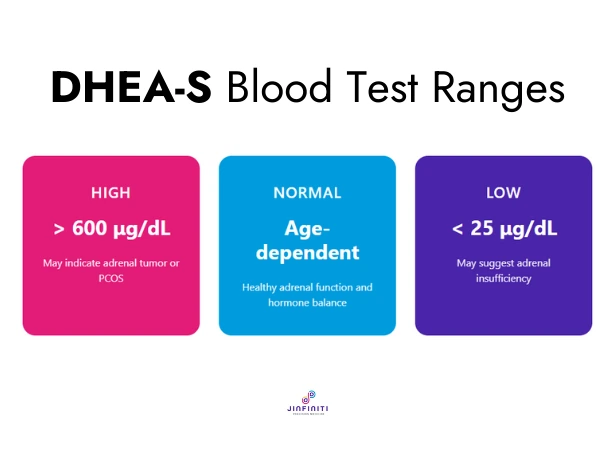
Specifically, the test can diagnose adrenal tumors (adenomas or carcinomas), Cushing syndrome, Addison disease (primary adrenal insufficiency), and congenital adrenal hyperplasia.
It also helps diagnose women who have too many male hormones. About 20 to 30% of women with PCOS have high DHEA-S levels even though their other androgens are normal.[2]
The most common symptoms that lead women to be tested are:
Body or facial hair growth (hirsutism)
Severe acne
Male-pattern baldness/thinning of hair on crown of head
Irregular or missed menstrual periods
Trouble becoming pregnant
In children, the DHEA-S test helps diagnose premature adrenarche. This condition shows up when signs of puberty like pubic or underarm hair appear earlier than expected, typically before age 6-8.
Dr. Robert Rosenfield, Professor Emeritus at the University of Chicago and a leading authority on adrenal development, describes adrenarche as “the maturational increase in adrenal androgen production that normally begins in early childhood. It results from changes in the secretory response to ACTH that are best indexed by dehydroepiandrosterone sulfate (DHEA-S) rise.”[3]
The test also helps distinguish between different causes of Cushing’s syndrome. Low DHEA-S typically suggests adrenal Cushing’s from a single adrenal adenoma, while normal DHEA-S levels point toward pituitary Cushing’s disease.
The Test Procedure: What to Expect
The DHEAS test is a quick blood draw (usually under five minutes) with no fasting required, so you can eat normally and book it anytime. DHEA-S levels stay stable throughout the day, unlike cortisol.
A few things can skew results:
High-dose biotin (over 5 mg/day) may falsely raise levels, so pause it 8–12 hours beforehand (regular multivitamin amounts are fine)[4]
Nicotine can increase DHEA-S, and some medications or supplements may raise or lower it, so review what you take with your healthcare provider[5]
Labs typically measure DHEA-S by immunoassay (often 1–4 hours for results), while some use LC-MS/MS for higher accuracy. It’s also commonly ordered with other hormone tests like testosterone, estrogen, cortisol, ACTH, or SHBG.
Understanding Your DHEA-S Blood Test Results
DHEA-S reference ranges vary significantly based on your age and biological sex. Your results must be interpreted within the context of these age-specific ranges.
Reference Ranges by Age and Sex
Women:
Age Group
Range (μg/dL)
20-29 years
65-380
30-39 years
45-270
40-49 years
32-240
50-59 years
26-200
60-69 years
13-130
Men:
Age Group
Range (μg/dL)
20-29 years
280-640
30-39 years
120-520
40-49 years
95-530
50-59 years
70-310
60-69 years
42-290
Men typically maintain higher DHEA-S levels than women throughout their lifespan. Both sexes experience similar patterns of decline after peak levels in the third decade of life.
Reference ranges can differ slightly between laboratories due to different testing methods and reference populations. Always compare your results to the specific range provided by your testing lab.
What Do High DHEA-S Levels Mean?
If your DHEA-S result is high, it usually means one thing: your adrenal glands are making extra androgen hormones.
A DHEA-S level above 600 μg/dL strongly suggests an androgen-secreting adrenal tumor. Studies report that over 90% of patients with these tumors have elevated DHEA-S, often far above that cutoff.
What high hormone levels can point to:
Adrenal carcinoma (cancer): Often causes very high DHEA-S because the tumor may not convert hormones into other androgens like testosterone.
Benign adrenal adenoma: Can raise testosterone too, and may cause a moderate DHEA-S rise.
In PCOS, DHEA-S is elevated in a smaller number of patients. Around 20-30% of women with PCOS have high DHEA-S even when other androgen tests look normal. In one study of 643 young PCOS patients, 33% had elevated DHEA-S (above 3 μg/mL) and also had higher testosterone and androstenedione.[2]
Researcher Dr. Andrea Dunaif (Mount Sinai) has described PCOS as “a major metabolic disorder and a leading risk factor for type 2 diabetes mellitus,” with hyperandrogenism (high androgens) as a defining feature.
In children, DHEA-S around 40 to 130 μg/dL can mean premature adrenarche (early adrenal hormone activity). Dr. Rosenfield notes these kids often grow faster and have advanced bone age, but that usually does not limit adult height.[3]
CAH (congenital adrenal hyperplasia) often shows markedly elevated DHEA and DHEA-S, especially in 21-hydroxylase deficiency, the most common form.
What Do Low DHEA-S Levels Mean?
Low DHEAS levels usually means your adrenal glands are making less of their androgen hormones.
The most serious possibility is adrenal insufficiency, where the adrenal glands don’t make enough hormones. This can be:
Primary adrenal insufficiency (Addison’s disease)
Secondary adrenal insufficiency (problems in the pituitary or hypothalamus affecting adrenal signaling)
One study by Dr. Irina Bancos and colleagues found that when people had baseline cortisol under 5 μg/dL and DHEA-S under 25 μg/dL, 72.2% were correctly diagnosed with adrenal insufficiency.[1]
Dr. Bancos also notes an important point for women: because the adrenal glands are a major source of androgens, adrenal insufficiency in women is typically linked to marked androgen deficiency.[6]
Some forms of Cushing’s syndrome (excess cortisol) can come with low DHEA-S. In particular, unilateral adrenal adenomas causing Cushing’s often produce low DHEA-S, which can help differentiate an adrenal cause from a pituitary cause.
Low DHEA-S has been linked with a range of chronic conditions, including:
diabetes
osteoporosis
dementia
chronic fatigue syndrome
inflammatory disorders
DHEA-S naturally declines with age. Many older adults have levels near the bottom of the reference range (or slightly below). In that context, a low result may reflect normal aging, not disease.
Blood sugar control affects hormone balance. You can track long-term glucose exposure with a glycated serum protein test.
Inflammation disrupts adrenal function. Measure cardiovascular risk and methylation status with homocysteine testing.
When DHEA-S Testing Matters Most
DHEA-S is most useful when you interpret it with other hormones, especially morning (baseline) cortisol.
Dr. Irina Bancos’s research supports a simple two-step approach that makes adrenal insufficiency screening faster and more efficient:
Step 1: Check baseline cortisol
Cortisol ≥ 10 μg/dL: adrenal insufficiency is ruled out in 98.8% of patients.
Step 2: Use DHEA-S when cortisol is borderline or low
Cortisol 5 to 9.9 μg/dL: adrenal insufficiency was rare, and only 1.3% had it when DHEA-S ≥ 60 μg/dL.
Cortisol < 5 μg/dL + DHEA-S < 25 μg/dL: about a 72.2% chance of adrenal insufficiency.
Because this narrows down who truly needs more testing, it can reduce the need for cosyntropin stimulation tests in many cases, saving time and cost.
When to Consider Getting Tested
DHEA-S testing tends to be most helpful for:
women with unexplained hormonal symptoms
anyone with suspected adrenal dysfunction
people with chronic fatigue plus other hormonal changes
“Hormone testing only gives you a glimpse into what’s going on inside your cells,” says Jin-Xiong She, PhD, founder of Jinfiniti Precision Medicine. “We have our clients get a full panel of biomarker tests to paint a complete picture of cellular health, in addition to their hormones, and that’s where we see the most success.”
Jinfiniti’s CLIA-Certified AgingSOS Ultimate Panel measures DHEA-S alongside markers of inflammation, oxidative stress, metabolic function, and cellular aging. This broader view aligns with the Test, Act, Optimize approach we use in precision medicine.
The Bottom Line
Testing your DHEA-S offers insight into your adrenal glands and hormone function. DHEA-S levels stay relatively stable throughout the day, and testing is easy.
Results must be interpreted within age-specific reference ranges and in context with your symptoms and other test findings. High levels of DHEA-S can indicate adrenal tumors, PCOS or congenital adrenal hyperplasia. Low levels could signal adrenal insufficiency or some cases of Cushing’s syndrome.
Your DHEA-S level is just one piece of your complete health picture. Discuss your results with your healthcare provider, who can interpret them alongside your medical history and symptoms to determine the best next steps.
Frequently Asked Questions
What are the symptoms of DHEA deficiency?
Low DHEA often shows up as chronic fatigue that doesn’t improve with rest. You might notice decreased muscle mass, reduced bone density, or low libido.
Women may experience vaginal dryness, irregular periods, or difficulty getting pregnant. Depression, brain fog, and difficulty handling stress are also common signs. Many people with low DHEA also struggle with unexplained weight gain, especially around the midsection.
How can I increase DHEA naturally?
Quality sleep is one of the most effective ways to support healthy DHEA production. Your adrenal glands need 7-9 hours of consistent sleep to function optimally.
Regular exercise, particularly resistance training and high-intensity interval training, can help maintain DHEA levels. Managing chronic stress through meditation, yoga, or other relaxation techniques protects your adrenal function. Eating enough protein, healthy fats, and micronutrients like zinc and magnesium gives your body the raw materials it needs for hormone production.
Some people benefit from DHEA supplements, though you should test your levels first and work with a healthcare provider.
What does DHEA do for women?
DHEA serves as the primary source of androgens (male hormones) in women. Your body converts it into testosterone and estrogen as needed.
This matters for maintaining muscle mass, bone density, and healthy libido. DHEA also supports vaginal health, skin elasticity, and energy levels. Women with low DHEA often experience reduced sexual desire, vaginal dryness, and accelerated signs of aging.
After menopause, when ovarian hormone production drops, DHEA becomes even more important as your body’s main androgen source.
What are the benefits of DHEA for men?
Men’s bodies convert DHEA into testosterone, making it valuable for maintaining muscle mass and strength. Healthy DHEA levels support bone density, which becomes increasingly important with age.
DHEA also plays a role in metabolic health, helping regulate insulin sensitivity and body composition. Some research suggests it may support cardiovascular health and cognitive function. While testosterone gets more attention, DHEA provides the raw material your body uses to make testosterone naturally.
Men with low DHEA often notice decreased energy, reduced muscle mass, and difficulty recovering from exercise.
Referenced Sources
Han AJ, Suresh M, Gruber LM, Algeciras-Schimnich A, Achenbach SJ, Atkinson EJ, et al. Performance of Dehydroepiandrosterone Sulfate and Baseline Cortisol in Assessing Adrenal Insufficiency. The Endocrine Society; 2024. https://doi.org/10.1210/clinem/dgae855
Carmina E, Longo RA. Increased Prevalence of Elevated DHEAS in PCOS Women with Non-Classic (B or C) Phenotypes: A Retrospective Analysis in Patients Aged 20 to 29 Years. MDPI AG; 2022. https://doi.org/10.3390/cells11203255
Motahari H, Thumma S, Menon L. Biotin Supplementation Creates the Misleading Diagnosis of Secondary Adrenal Insufficiency. The Endocrine Society; 2021. https://doi.org/10.1210/jendso/bvab048.242
Van Voorhees EE, Dennis MF, McClernon FJ, Calhoun PS, Buse NA, Beckham JC. The Association of Dehydroepiandrosterone and Dehydroepiandrosterone Sulfate With Anxiety Sensitivity and Electronic Diary Negative Affect Among Smokers With and Without Posttraumatic Stress Disorder. Ovid Technologies (Wolters Kluwer Health); 2013. https://doi.org/10.1097/JCP.0b013e3182968962
You pop vitamin C. You munch blueberries. You may even spend hundreds of dollars on antioxidant supplements. But do you know if any of it is actually doing anything?
The TAC test scores your body’s overall ability to fight free radicals from all antioxidant sources together (what your body produces and what you get from food/supplements). Rather than testing each antioxidant individually, the TAC test will show you your overall antioxidant status with just one number.
What You Should Know
TAC measures your body’s total capacity to neutralize harmful free radicals from all antioxidant sources combined
Normal ranges are 0.5-1.5 mM, with men typically higher than women
Low TAC suggests depleted defenses; high TAC can mean strong protection or compensatory stress response
Testing reveals whether your antioxidant supplements and diet actually work
What is Total Antioxidant Capacity (TAC)?
TAC measures the moles of oxidants neutralized by one liter of body fluids. Think of it as your combined defensive power against oxidative stress—the cellular damage that drives aging and disease.
Unlike testing individual antioxidants separately, TAC captures your entire defense system working together. This includes endogenous antioxidants your body produces (like uric acid, bilirubin, and albumin) plus dietary antioxidants from food and supplements (vitamins C and E, carotenoids, polyphenols). The test captures total antioxidant activity regardless of source.
Research published in BMC Veterinary Research shows uric acid alone accounts for up to 60% of total plasma TAC. The rest comes from dozens of other compounds acting synergistically—which is exactly why measuring the total matters more than individual components.[1]
Your TAC score represents the cumulative effect of every antioxidant molecule in your blood. It’s your body’s collective answer to the question: how well can you handle oxidative damage right now?
CLIA-Certified Longevity Testing
Measure your TAC with our Ultimate Longevity Panel.
TAC testing uses standardized laboratory methods that expose your blood sample to controlled oxidative stress. The test measures how well your plasma or serum resists that stress.
The most common method is TEAC (Trolox Equivalent Antioxidant Capacity), which uses ABTS radical—a stable free radical that changes color when neutralized by antioxidants. Other methods include FRAP (Ferric Reducing Ability of Plasma), which measures your sample’s reducing power.
Labs typically use a total antioxidant capacity assay kit that standardizes the testing process for consistent, reliable results.
The process starts with a simple blood draw. The lab separates your plasma or serum and runs the colorimetric analysis, comparing your results against a standard curve.
Results come back in Trolox equivalents—Trolox being a water-soluble vitamin E analogue used as the reference standard. You typically get results within a week.
What Are Normal TAC Levels?
Studies show healthy adults average 1.175 millimolar (mmol/L), with a normal range of 0.5 to 1.5 mM Trolox equivalents. But these numbers need context.[2]
Gender makes a difference. Research using 96-well microplate assays found men show TAC levels around 569 µM Trolox equivalent, while women average 430 µM. That’s roughly 30% higher in men.[3]
These are descriptive averages, not necessarily optimal targets. Your ideal TAC depends on your age, health status, diet, and oxidative stress load.
TAC naturally declines as you age. But several factors can dramatically shift these numbers:
Eating antioxidant-rich foods can double your baseline TAC values
Exercise intensity affects both acute oxidative stress and long-term antioxidant adaptation
Hormonal status influences antioxidant enzyme production
Disease states can either deplete or elevate TAC depending on the condition
The key question isn’t whether you hit a specific number. It’s whether your TAC matches your needs and responds appropriately to interventions.
Why TAC Matters for Aging and Disease
Your TAC score connects directly to how fast you age and your risk for chronic diseases.
The Oxidative Stress Connection
Oxidative stress happens when free radicals (unstable molecules that damage cells) overwhelm your antioxidant defenses. This imbalance accelerates aging at the cellular level and drives chronic disease development.
TAC reflects your capacity to combat that damage. Research analyzing NHANES data from 16,395 participants found higher TAC associates with reduced phenotypic age acceleration—meaning people with stronger antioxidant capacity show slower biological aging.[4]
Low TAC suggests your defenses can’t keep up with oxidative damage. Your cells take more hits, DNA accumulates more errors, and age-related decline accelerates.
TAC and Chronic Disease Risk
The relationship between TAC and disease isn’t simple, but the patterns are clear.
Type 2 diabetes shows an interesting twist. A study of 90 patients found diabetics with complications actually show elevated TAC—not because they’re protected, but because their bodies are compensating for severe oxidative stress. Their fasting blood glucose was 2.05 times higher than controls, and TAC rose as a defensive response.[5]
Cardiovascular health shows clearer benefits. Meta-analysis research demonstrates higher dietary TAC significantly reduces systolic blood pressure by 1.08 mmHg, diastolic blood pressure by 0.85 mmHg, and fasting blood sugar by 2.4 mg/dL. These may seem like small numbers, but population-wide they translate to meaningful risk reduction.[6]
Cognitive function also responds to TAC. Higher levels protect against dysfunction, particularly in diabetic patients where oxidative stress hits the brain hard.
Metabolic syndrome and obesity often show elevated TAC from chronic inflammation and oxidative stress. Again, the elevation signals compensation, not necessarily protection.
The pattern matters: low TAC indicates vulnerability, while high TAC requires interpretation based on context.
What Do Your TAC Results Actually Mean?
Interpreting TAC isn’t as simple as “higher is better.” Context determines whether your results signal strength or stress.
When TAC Is Low
Low TAC points to depleted antioxidant reserves. Possible causes include:
Poor dietary intake of antioxidant-rich foods
Excessive oxidative stress consuming antioxidants faster than you replenish them
Ineffective supplementation that doesn’t actually raise your levels
Low TAC increases disease risk and suggests accelerated aging. Your cells face oxidative damage without adequate protection. DNA, proteins, and lipids take more hits.
If you’re taking antioxidant supplements and still showing low TAC, either the supplements aren’t absorbing well or your oxidative stress load overwhelms them.
When TAC Is High
Elevated TAC has two very different interpretations.
The protective scenario:
Robust dietary intake from colorful vegetables, berries, and quality supplements
Resources available to neutralize free radicals before they cause damage
The compensatory scenario:
Body responding to excessive oxidative stress by ramping up antioxidant production
Common in conditions like uncontrolled diabetes, obesity, and chronic inflammation
Elevation signals the body fighting back, not necessarily winning
Research on metabolic syndrome shows TAC often rises in overweight individuals—not from better health, but from the body’s attempt to manage inflammation and metabolic stress.[7]
The Importance of Context
“TAC is one piece of a larger puzzle,” explains Dr. Jin-Xiong She, founder of Jinfiniti Precision Medicine. “We see elevated TAC in some people because their bodies are fighting back against severe oxidative damage. You need to look at inflammatory markers, NAD+ levels, and metabolic health to understand what TAC is really telling you.”
What high TAC means depends on your other biomarkers:
High TAC + elevated CRP + poor glucose control + low NAD+ = compensatory response to stress
Once you know your baseline, targeted interventions can shift your TAC in the right direction.
Dietary sources provide the foundation. The highest-impact antioxidant foods include:
Berries (blueberries, strawberries, blackberries) consistently rank at the top for TAC contribution
Colorful vegetables (leafy greens, bell peppers, beets) deliver diverse antioxidant compounds
Polyphenol-rich foods like dark chocolate, green tea, and extra virgin olive oil add significant capacity
Clinical research demonstrates antioxidant-rich diets can double TAC values—from around 1.175 mmol/L to over 2.0 mmol/L in just weeks. That’s not a subtle change.[2]
Strategic supplementation works when you choose multi-pathway formulations instead of single antioxidants.
Your body uses multiple metabolic routes to generate and regenerate antioxidants. Supporting those pathways together produces better results than flooding one pathway alone.
NAD+ (nicotinamide adenine dinucleotide) plays a particularly important role because it powers the cellular machinery that regenerates antioxidants like glutathione.[8]
As NAD+ declines with age, so does your capacity to maintain antioxidant defenses. Restoring NAD+ through targeted supplementation supports the entire antioxidant system.
Chronic stress depletes antioxidant reserves and should be managed proactively
Poor sleep reduces your body’s capacity to regenerate defenses overnight
The key is testing first, intervening strategically, and retesting to confirm effectiveness. Don’t supplement blindly.
Test Your TAC Levels with AgingSOS
TAC gives you an idea of your antioxidant defense levels, but in isolation it doesn’t tell you the whole story.
Our AgingSOS Ultimate Panel includes TAC and 47 other biomarkers that work together to show you your full aging profile. Markers of inflammation like CRP that can tell you if high TAC levels are truly protective or just compensation. NAD+ to assess your ability to regenerate antioxidants. Metabolites that help you pinpoint causes of oxidative stress. Senescence markers that measure how much of an aging load your cells are under.
This holistic analysis approach is the core of our TAO (Test, Act Optimize) method. Get a baseline measurement for every crucial aspect of aging. Take action on the things that your body is actually telling you to. Retest to make sure what you’re doing is working for you.
Single biomarkers leave you guessing. Complete panels give you answers.
Referenced Sources
Rubio CP, Hernández-Ruiz J, Martinez-Subiela S, Tvarijonaviciute A, Ceron JJ. Spectrophotometric assays for total antioxidant capacity (TAC) in dog serum: an update. Springer Science and Business Media LLC; 2016. https://doi.org/10.1186/s12917-016-0792-7
Kampa M, Nistikaki A, Tsaousis V, Maliaraki N, Notas G, Castanas E. A new automated method for the determination of the total antioxidant capacity (TAC) of human plasma, based on the crocin bleaching assay. Springer Science and Business Media LLC; 2002. https://doi.org/10.1186/1472-6890-2-3
Kambayashi Y, Binh NT, W. Asakura H, Hibino Y, Hitomi Y, Nakamura H, et al. Efficient assay for total antioxidant capacity in human plasma using a 96-well microplate. The Society for Free Radical Research Japan; 2009. https://doi.org/10.3164/jcbn.08-162
Wu Y, Xiang M, Zhao Y, Zhang Y, Cheng W, Deng J. The L-shaped link between total antioxidant capacity and phenotypic age acceleration: evidence from NHANES 2003–2010. Springer Science and Business Media LLC; 2025. https://doi.org/10.1007/s10522-025-10223-0
Pieme CA, Tatangmo JA, Simo G, Biapa Nya PC, Ama Moor VJ, Moukette Moukette B, et al. Relationship between hyperglycemia, antioxidant capacity and some enzymatic and non-enzymatic antioxidants in African patients with type 2 diabetes. Springer Science and Business Media LLC; 2017. https://doi.org/10.1186/s13104-017-2463-6
Farhangi MA, Mohammad-Rezaei A. Higher dietary total antioxidant capacity (TAC) reduces the risk of cardio-metabolic risk factors among adults: an updated systematic review and meta-analysis. IMR Press; 2023. https://doi.org/10.1024/0300-9831/a000708
Silvestrini A, Meucci E, Ricerca BM, Mancini A. Total antioxidant capacity: biochemical aspects and clinical significance. MDPI AG; 2023. https://doi.org/10.3390/ijms241310978
Poljšak B, Kovač V, Špalj S, Milisav I. The central role of the NAD+ molecule in the development of aging and the prevention of chronic age-related diseases: strategies for NAD+ modulation. MDPI AG; 2023. https://doi.org/10.3390/ijms24032959
Disclaimer: This article is for informational purposes only and does not constitute medical advice. The products reviewed have not been evaluated by the FDA and are not intended to diagnose, treat, cure, or prevent any disease. Always consult a qualified healthcare professional before starting any new supplement regimen.
Your body runs on NAD+, a critical molecule that fuels everything from your mitochondria to DNA repair. The problem? Your NAD+ levels decline by about 50% from ages 40-60.
Low NAD+ shows up as tiredness that caffeine won’t shake, workouts that exhaust you for days, and a brain foggy AF. NMN is one of the direct precursors to NAD+, which your body can turn into cellular fuel in minutes.
Supplementing with the right NMN product can help boost your NAD+ back to healthy levels to fuel your cells, brain, and aging process. We’ve researched the best NMN supplements of 2026, and based on factors such as formulation, dosage, bioavailability, and third-party testing we’ve determined which brands actually work.
This guide was reviewed by Dr. Jin-Xiong She, PhD, genomic medicine researcher. Dr. She has published 400+ papers and leads the CLIA-certified laboratory at Jinfiniti Precision Medicine.
Best NMN Supplements of 2026 Reviewed
Best Overall: Jinfiniti Vitality NAD+ Booster
NMN per serving: Part of proprietary 4-ingredient formula Additional ingredients: Niacinamide, Creatine Monohydrate, D-Ribose Form: Powder or Lozenge Certifications: CLIA-certified lab, third-party tested, cGMP manufacturing
Jinfiniti Vitality NAD+ Booster earns our top pick because it takes a multi-pathway approach that outperforms single-ingredient NMN supplements. The patent-pending formula combines four synergistic ingredients that work through different metabolic routes to raise NAD+ levels.
In a clinical trial with 80 participants, 85% reached optimal NAD+ levels (40-100 μM) within four weeks. The average NAD+ increase was 100%, with participants showing improved six-minute walking distance and better SF-36 health scores compared to baseline.
This multi-pathway strategy matters because relying on a single NAD+ precursor leaves you vulnerable to genetic variations and metabolic bottlenecks. Vitality works through the salvage pathway (NMN), the amide pathway (niacinamide), and provides the building blocks your mitochondria need (creatine, D-ribose).
The formula is created by Dr. Jin-Xiong She, a genomic scientist with over 400 published papers and $100 million in research funding. Manufacturing occurs in a CLIA-certified laboratory with pharmaceutical-grade ingredients and third-party testing for purity.
Available in both powder and sublingual lozenge formats, Vitality allows you to choose your preferred delivery method. The lozenge provides faster absorption through oral mucosa, while the powder dissolves easily in water.
✓ Pros
✗ Cons
Clinical trial showing 85% of users reached optimal NAD+ in 4 weeks
Premium pricing compared to basic NMN
Multi-pathway formula 3x more effective than standalone precursors
Requires consistent daily use for best results
Created by scientist with 400+ published papers
Two servings daily (morning and evening)
Available in powder and lozenge forms
CLIA-certified lab testing and manufacturing
5+ years of safety data
Best for: People seeking clinically validated NAD+ restoration with a scientifically designed formula that addresses multiple metabolic pathways rather than relying on NMN alone.
Best Powder: Jinfiniti Pure NMN Powder
NMN per serving: Customizable (product available in 30g and 120g sizes) Additional ingredients: None Form: Powder Certifications: Third-party tested, pharmaceutical-grade purity (99.5%+)
Jinfiniti Pure NMN Powder provides pharmaceutical-grade NMN at 99.5%+ purity for those who prefer single-ingredient supplementation with complete dosing control. The powder format allows you to customize your dose based on your individual needs and NAD+ testing results.
Third-party testing verifies purity, with each batch screened for heavy metals, microbial contaminants, and impurities. The powder dissolves easily in water or can be taken sublingually for potentially faster absorption.
This option makes sense if you want to control exactly how much NMN you take without fixed capsule doses. You can start with 250mg and adjust up to 500-900mg based on how your body responds.
Pure NMN works best when paired with Jinfiniti’s Intracellular NAD+ Test, which measures your actual NAD+ levels before and after supplementation. This takes the guesswork out of dosing and lets you verify that your supplement is working.
✓ Pros
✗ Cons
99.5%+ pharmaceutical-grade purity
Single-ingredient formula without synergistic compounds
Flexible dosing for personalization
Requires measuring for accurate dosing
Third-party tested for quality and safety
No absorption enhancers included
Available in 30g and 120g sizes
Sublingual or oral administration options
Best for: People who want pure, single-ingredient NMN with complete control over their dosing, especially those using NAD+ testing to optimize their supplementation.
Renue By Science LIPO NMN uses powdered liposomal technology to protect NMN through the digestive system, potentially increasing absorption up to 90% compared to 10-30% for standard NMN.
A double-blind, placebo-controlled trial with 15 healthy men aged 40+ showed that 350mg liposomal NMN increased blood NAD+ levels by 84% in four weeks. NAD+ rose from 28.6 μM at baseline to 52.5 μM after supplementation, with levels remaining elevated at 36 μM four weeks after stopping.
The liposomal encapsulation works by wrapping NMN in phospholipid “bubbles” that fuse with intestinal cell membranes. This allows NMN to enter your bloodstream without relying solely on dedicated transporters, bypassing some of the metabolic degradation that reduces standard oral NMN effectiveness.
Renue uses triple-lab testing across raw materials, in-process verification, and finished product analysis. Testing occurs in ISO/IEC 17025-accredited laboratories and covers heavy metals, microbial contaminants, and NMN purity verification (>99%).
The powdered liposome format provides better stability than liquid liposomes, maintaining structural integrity for 24+ months versus 6-12 months for liquid versions.
✓ Pros
✗ Cons
Clinical study showing 84% NAD+ increase
Higher cost per milligram than standard NMN
Triple-lab testing with ISO accreditation
Small clinical trial (15 participants)
Liposomal delivery may enhance absorption
Two capsules per serving
24+ month stability (vs 6-12 months for liquids)
Can take with or without food
Best for: Those willing to invest in bioavailability enhancement technology, particularly people with digestive issues that may impair standard NMN absorption.
Best Sublingual NMN: NeuroganHealth NMN Drops
NMN per serving: 250mg per 1ml Additional ingredients: Flavoring (sour apple/mint) Form: Liquid drops Certifications: cGMP-certified, third-party tested, non-GMO, vegan
NeuroganHealth NMN Drops provides sublingual delivery designed to absorb NMN through oral mucosa for faster entry into the bloodstream. The liquid format allows for dose flexibility and theoretically bypasses some first-pass metabolism in the liver.
The recommended protocol involves holding the liquid under your tongue for 40-60 seconds before swallowing. This sublingual absorption can occur within approximately 3 minutes, compared to 5-10 minutes for capsules.
Manufactured in a family-owned, cGMP-certified facility in San Diego, NeuroganHealth emphasizes domestic production and third-party testing for purity and contaminants. The formulation is non-GMO, vegan, and gluten-free.
The 60ml bottle provides 60 servings at 250mg per serving. The label recommends 1-2 servings morning and evening “for best results,” though starting with 250mg daily is reasonable for most people.
✓ Pros
✗ Cons
Sublingual delivery for potentially faster absorption
Mid-tier pricing without confirmed absorption advantage
Third-party tested
Ambiguous dosing recommendations on label
Best for: People who prefer liquid supplements over capsules and want the convenience of adjustable dosing, though taste sensitivity may be a consideration.
Doctor’s Best NMN+ takes a synergistic approach by combining 400mg NMN with three complementary compounds that support energy metabolism and cellular health through different pathways.
The 200mg resveratrol dose activates sirtuins (longevity proteins) that depend on NAD+ for function. Research shows NMN combined with resveratrol increases NAD+ levels in heart tissue by 1.6-fold and skeletal muscle by 1.7-fold compared to NMN alone. Resveratrol can also activate NMNAT1 (the NAD+ synthesis enzyme) to increase NAD+ levels up to 5-fold.
Rhodiola rosea functions as an adaptogen that increases resistance to physical and mental stress while reducing fatigue. Clinical evidence shows 200mg rhodiola improves reaction time by 5.7-9.5%, increases correct responses in cognitive tests by 16%, and enhances time-to-exhaustion in endurance tests by 21-24%.
American ginseng (Panax quinquefolius) provides ginsenosides that enhance cellular energy production and mitochondrial function. The 50mg dose provides sustained energy effects without overstimulation.
The four-ingredient formula creates a metabolic cascade: NMN elevates NAD+ levels, resveratrol activates sirtuins that depend on NAD+, while rhodiola and ginseng enhance mitochondrial efficiency and stress resilience.
Doctor’s Best manufactures in cGMP-certified, FDA-registered facilities with a 30+ year track record. The formulation is vegan-friendly and free from common allergens.
✓ Pros
✗ Cons
Lowest cost per milligram ($0.075/mg)
Does not include absorption enhancers
Research-backed synergistic ingredients
Moderate NMN dose (400mg)
Combines NAD+ support with adaptogens
Herbal ingredients may interact with medications
Suitable for vegan and allergen-restricted diets
Resveratrol requires caution with blood thinners
Well-established supplement brand
Best for: Cost-conscious users seeking a multi-ingredient formula that addresses NAD+ elevation, energy metabolism, and stress adaptation in one supplement.
Pricing subject to change. Click links for current pricing and availability.
What is NMN?
NMN (nicotinamide mononucleotide) is a molecule your body uses to create NAD+ (nicotinamide adenine dinucleotide), a coenzyme present in every living cell. NAD+ powers hundreds of metabolic processes, from converting food into energy to repairing damaged DNA.
Your body makes NMN naturally, but production declines with age. Between ages 40 and 60, NAD+ levels drop by approximately 50%. This decline correlates with many symptoms people associate with aging: decreased energy, slower recovery, cognitive changes, and reduced metabolic function.
You can get trace amounts of NMN from foods like broccoli, cabbage, cucumber, and edamame. The problem is that you’d need to eat several pounds of these foods daily to reach the doses used in research (250-900mg). Supplementation provides a practical way to restore NAD+ levels to more youthful ranges.
NMN is one of several NAD+ precursors, including nicotinamide riboside (NR), niacin, and niacinamide. Research suggests NMN may have advantages because it converts directly to NAD+ through the salvage pathway without requiring conversion to other intermediates first.
NMN enters your cells and converts to NAD+ within 2.5-10 minutes through the salvage pathway. This pathway uses the enzyme NAMPT (nicotinamide phosphoribosyltransferase) to recycle NAD+ building blocks into fresh NAD+.
Your small intestine contains a dedicated NMN transporter called Slc12a8 that recognizes and shuttles NMN molecules across the intestinal lining into your bloodstream. Once circulating, NMN can enter cells directly or convert to NAD+ in the bloodstream.
The key mechanisms include:
NAD+ restoration: Replenishes declining NAD+ levels to support cellular energy production and hundreds of enzymatic reactions
Sirtuin activation: Provides the NAD+ substrate that sirtuins (longevity proteins) require to function, supporting gene expression, DNA repair, and cellular stress responses
PARP support: Supplies NAD+ for PARP enzymes that repair DNA damage and maintain genome stability
Mitochondrial function: Boosts NAD+ in mitochondria where it’s needed for ATP (cellular energy) production
Circadian rhythm regulation: Supports the molecular clock proteins that depend on NAD+ for proper 24-hour cycle function
Research using isotope-labeled NMN confirms that NMN increases NAD+ levels throughout the body, including in muscle tissue, liver, heart, and brain. The effects are dose-dependent, with higher doses (up to 900mg) producing greater NAD+ elevation.
Health Benefits of NMN
Research into NMN’s health benefits spans animal studies, laboratory research, and human clinical trials. Human studies are the most relevant but also the most limited, with most examining short-term supplementation (4-12 weeks).
Energy and Metabolism
A randomized controlled trial with 80 middle-aged adults found that 300mg NMN daily for 60 days improved six-minute walking distance and SF-36 physical health scores. Participants taking 600mg showed even greater improvements in aerobic capacity.
NAD+ powers the mitochondria that generate ATP (adenosine triphosphate), your cells’ energy currency. When NAD+ levels drop, energy production becomes less efficient. Restoring NAD+ can support the metabolic processes that convert food into usable energy.
Research shows NMN supplementation may improve insulin sensitivity and glucose metabolism in both animal models and preliminary human studies. One trial found that 250mg NMN daily for 10 weeks improved insulin sensitivity in prediabetic women.
Cognitive Function
Animal research demonstrates that NMN supplementation supports memory, learning, and overall cognitive function in aging mice. These studies show NMN crosses the blood-brain barrier and increases NAD+ levels in brain tissue.
A human trial published in 2024 found that 900mg NMN daily for 60 days improved cognitive function scores in older adults compared to placebo. Participants reported better mental clarity and processing speed.
The cognitive benefits likely stem from multiple mechanisms: improved neuronal energy production, reduced oxidative stress, enhanced DNA repair in brain cells, and support for neurotransmitter synthesis that depends on NAD+.
Cardiovascular Health
Research in older adults shows that NMN supplementation may improve markers of vascular health. One study found that 250mg NMN daily for 12 weeks reduced arterial stiffness (a measure of cardiovascular aging) in middle-aged and older adults.
Animal studies demonstrate that NMN supplementation can improve blood vessel function, reduce oxidative stress in cardiovascular tissue, and support healthy blood pressure in aging animals. The mechanism appears to involve improved endothelial function (the lining of blood vessels) and reduced inflammation.
These cardiovascular effects make sense given that the heart is one of the most metabolically active organs in your body, requiring massive amounts of NAD+ for energy production.
Healthy Aging Support
The most compelling research on NMN comes from studies examining its effects on biological markers of aging. While human lifespan studies aren’t practical, research can measure biomarkers associated with healthspan (years of healthy living).
Animal research shows that NMN supplementation in older mice extends both lifespan and healthspan, with treated animals showing improved physical activity, better glucose metabolism, enhanced bone density, improved immune function, and better eye function compared to untreated aging mice.
Human studies demonstrate improvements in physical performance, metabolic health, and muscle function with NMN supplementation. These suggest that restoring NAD+ levels may support healthy aging at the cellular level.
Exercise Performance
Several studies examine NMN’s effects on exercise capacity and muscle function. Research in middle-aged runners found that NMN supplementation improved aerobic capacity during training, with the NMN group showing greater improvements in VO2 max compared to placebo.
NAD+ plays a role in muscle energy metabolism, mitochondrial biogenesis (creating new mitochondria), and muscle fiber composition. Supplementation may support exercise adaptation and recovery by ensuring muscles have adequate NAD+ for energy production and repair.
Animal studies show NMN supplementation increases endurance capacity, improves muscle strength, and enhances recovery from exercise. Human research is catching up, with recent trials confirming benefits for physical performance.
How to Choose an NMN Supplement
When evaluating NMN supplements, several factors separate products backed by research and quality testing from those making unsupported claims.
NMN Dosage
Human clinical trials typically use NMN doses between 250mg and 900mg daily. Research suggests a dose-response relationship, with higher doses (up to 900mg) producing greater NAD+ elevation.
Starting doses of 250-300mg daily allow you to assess tolerance. Most people can gradually increase to 500-900mg based on age, health goals, and individual response. Doses above 1000mg haven’t been extensively studied for long-term safety.
Age-based dosing considerations: Under 35 years (250-500mg daily), 35-60 years (500-750mg daily), over 60 years (750-1000mg daily). These ranges align with natural NAD+ decline rates.
Purity and Quality
High-quality NMN should be at least 99% pure, verified through high-performance liquid chromatography (HPLC). Lower purity means you’re paying for filler or potentially contaminated material.
Look for products that test for heavy metals (lead, mercury, arsenic, cadmium), microbial contaminants (bacteria, yeast, mold), and residual solvents from manufacturing. Certificates of Analysis (COAs) should be available showing these test results.
Pure NMN is white and odorless. Discoloration suggests oxidation or contamination. Reputable brands typically use pharmaceutical-grade ingredients and can document their sourcing.
Delivery Method
NMN supplements come in several formats, each with trade-offs:
Capsules are convenient with precise dosing. Standard capsules rely on your small intestine’s Slc12a8 transporters to absorb NMN. Absorption is limited by transporter capacity and gut bacterial degradation.
Powder allows flexible dosing and can be taken sublingually (under the tongue) or mixed in water. Sublingual administration may provide faster absorption through oral mucosa, though research on this method is limited.
Liposomal formulations encapsulate NMN in phospholipid carriers that protect it through digestion and may enhance absorption. Clinical data suggests liposomal NMN produces greater NAD+ elevation than standard NMN, though it costs more.
Sublingual lozenges or drops attempt to bypass digestive absorption by delivering NMN through oral mucosa. This can work for smaller doses but becomes less efficient at higher amounts due to capillary saturation.
Additional Ingredients
While pure NMN works independently, some formulations include synergistic compounds:
Resveratrol activates sirtuins that depend on NAD+ for function. Research shows the combination may produce greater effects than either compound alone.
Creatine and D-Ribose support ATP production alongside NAD+, providing complementary support for cellular energy.
Niacinamide works through a different NAD+ synthesis pathway, ensuring NAD+ production even if one pathway is limited.
Piperine (black pepper extract) may enhance absorption of various compounds, though specific research on NMN absorption enhancement is limited.
Multi-pathway formulas that combine different NAD+ precursors may provide more consistent results across different genetic backgrounds and metabolic states.
Third-Party Testing
Because supplements aren’t pre-approved by the FDA, independent verification provides quality assurance. Look for brands that:
Test every batch for purity and potency
Publish Certificates of Analysis showing test results
Use ISO/IEC 17025-accredited laboratories
Manufacture in cGMP-certified facilities
Screen for contaminants (heavy metals, microbes, pesticides)
Reputable brands make this testing information accessible on their website or provide it upon request. Lack of testing transparency is a red flag.
Manufacturing Standards
All U.S. supplement manufacturers must follow FDA cGMP (current Good Manufacturing Practices) regulations. These set minimum standards for quality control, documentation, and contamination prevention.
Beyond basic cGMP compliance, look for:
CLIA certification (for companies that also do laboratory testing)
NSF International or USP verification marks
ISO certifications for quality management
Documented quality control procedures
Manufacturing location matters less than certifications and testing, though domestic production often provides better transparency and accountability.
How We Tested
We evaluated these NMN supplements using systematic methodology designed to identify formulas aligned with current NAD+ research and quality standards.
Formula Analysis
We examined each product’s formulation including NMN dosage (does it fall within research-studied ranges?), delivery technology (what methods enhance bioavailability?), complementary ingredients (are additions supported by research?), and ingredient purity (unnecessary additives or allergens?).
We compared formulations against published clinical trials to verify that doses and combinations reflect studied protocols.
Quality Verification
We checked each brand’s commitment to quality through third-party testing status, COA availability, manufacturing standards (cGMP certification), and contamination screening protocols.
Preference went to brands making testing data readily accessible rather than requiring customer requests.
Value Assessment
We considered cost-effectiveness accounting for absorption enhancement technologies that may affect dosing requirements, beneficial ingredients beyond NMN alone, actual supply duration based on recommended dosing, and available bulk or subscription discounts.
Brand Reputation
We evaluated years in business and track record, customer reviews across multiple platforms, scientific expertise in formulation, sourcing and manufacturing transparency, and return policies and satisfaction guarantees.
Research Alignment
We assessed whether formulas reflect current longevity research including single-ingredient versus multi-pathway approaches, dosing strategies studied in clinical trials, mechanisms of action examined in research, and evidence supporting formula design choices.
The TAO Standard
At Jinfiniti, our TAO philosophy emphasizes Test, Act, Optimize as the most effective approach to cellular health and longevity.
While we couldn’t conduct biomarker testing on every product, we evaluated how well each formula’s design might support measurable NAD+ improvements based on existing research literature.
We believe effective supplementation works best as part of a data-driven approach that includes NAD+ testing to verify whether supplements are supporting your individual health goals. Testing eliminates guesswork and confirms you’re getting actual results rather than relying on how you feel.
Frequently Asked Questions
What is the optimal NMN dosage?
Most clinical trials use 250-900mg daily. Start with 250-300mg to assess tolerance, then adjust based on age, health goals, and individual response. Research shows dose-dependent effects, with 600-900mg producing greater NAD+ elevation than lower doses.
Studies haven’t found a clear upper limit, though doses above 1000mg lack extensive long-term safety data. Work with your healthcare provider to determine the right dose for your situation.
When should I take NMN?
Take NMN in the morning to align with your body’s natural circadian NAD+ metabolism. NAD+ levels follow daily rhythms, peaking during active hours and declining at night. Morning supplementation supports this natural cycle.
Some people split their dose between morning and early afternoon if taking 600mg or more daily. Avoid taking NMN late in the day, as it may interfere with sleep in sensitive individuals.
How long does it take to see benefits from NMN?
Individual responses vary widely. Some people report increased energy within 1-2 weeks. Most clinical trials show measurable improvements in physical performance, metabolic markers, and NAD+ levels after 4-8 weeks of consistent supplementation.
Cellular benefits likely develop over longer periods. NAD+ testing provides objective data on your individual response timeline rather than relying on subjective assessment.
Can I take NMN with other supplements?
Yes, NMN has been studied alongside various compounds, particularly resveratrol, which may enhance its effects. You can take NMN with most other supplements without concern.
Check with your healthcare provider before combining NMN with prescription medications, especially blood thinners. If you take multiple NAD+ precursors (NMN, NR, niacin), be mindful of total NAD+ precursor intake.
What’s the difference between NMN and NR?
Both NMN (nicotinamide mononucleotide) and NR (nicotinamide riboside) are NAD+ precursors, but they follow slightly different metabolic pathways. NMN is one step closer to NAD+ in the conversion pathway and may be absorbed directly through dedicated transporters.
NR must convert to NMN before becoming NAD+. Both raise NAD+ levels in human studies. NMN has gained attention recently due to emerging research, while NR has more extensive published human trials. Some people respond better to one or the other, which is why testing your NAD+ levels helps determine what works for you.
Are there side effects of NMN?
NMN appears well-tolerated at doses up to 1250mg daily based on published human trials. No serious adverse events have been reported in clinical studies.
Some people experience mild digestive discomfort when first starting NMN, especially at higher doses or on an empty stomach. This typically resolves within a few days. Rarely, some report trouble sleeping if taken too late in the day.
Stop taking NMN and consult your doctor if you experience persistent side effects. Pregnant or nursing women should avoid NMN due to lack of safety data in these populations.
Does NMN need to be taken with food?
Research shows NMN absorbs effectively with or without food. Taking it on an empty stomach may speed absorption slightly, while taking it with food can reduce digestive discomfort for sensitive individuals.
If your supplement includes fat-soluble compounds like resveratrol, taking it with a meal containing healthy fats improves absorption of those ingredients. Liposomal NMN formulations don’t require food for optimal absorption.
Should I cycle NMN or take it daily?
Most research examines continuous daily supplementation rather than cycling. Daily dosing provides consistent NAD+ support and aligns with how most clinical trials are conducted.
Some people use pulse dosing (higher doses for 2-3 days per month) based on senolytic research protocols, though this approach is more common with other compounds like fisetin. Daily dosing makes more sense for NMN given that NAD+ levels fluctuate daily and require consistent replenishment.
Can I get enough NAD+ from food?
No. While foods like broccoli, cabbage, cucumber, and edamame contain trace amounts of NMN, you’d need to consume several pounds daily to reach the 250-900mg doses used in research.
For example, broccoli contains approximately 0.25-1.12mg NMN per 100g. You’d need to eat 22-89 pounds of broccoli daily to get 250mg NMN. Supplementation is the only practical way to reach research-supported doses.
How do I know if NMN is working?
The gold standard is NAD+ testing before and after supplementation. Jinfiniti’s Intracellular NAD+ Test measures your actual cellular NAD+ levels, showing whether supplementation moves you into the optimal range (40-100 μM).
Without testing, you’re guessing based on subjective feelings like energy and recovery. Testing removes uncertainty and allows you to optimize your dose. Many people feel “fine” but have suboptimal NAD+ levels that could be improved with proper dosing.
Important Medical Disclaimer
This article is intended for informational and educational purposes only and should not be construed as medical advice. The information provided is based on currently available research and product specifications, but individual results may vary.
Consult Your Healthcare Provider: Always consult with a qualified healthcare professional before starting any new supplement regimen, especially if you:
Have existing medical conditions
Take prescription medications
Are pregnant, nursing, or planning pregnancy
Are scheduled for surgery
Have any concerns about supplement interactions
Not FDA Evaluated: The dietary supplements discussed in this article have not been evaluated by the Food and Drug Administration. These products are not intended to diagnose, treat, cure, or prevent any disease.
Research Limitations: Much of the NMN research referenced involves animal studies or short-term human trials. Long-term human studies are limited, and results from animal research may not translate directly to human health outcomes. More research is needed to fully understand NMN’s long-term effects in humans.
Brand Independence: This article provides independent product analysis based on publicly available information. Except for Jinfiniti products, we have no affiliation with the manufacturers mentioned. Product inclusion does not constitute brand endorsement beyond our own products or medical recommendation.
Individual Results Vary: Responses to supplementation can vary significantly based on individual factors including age, health status, genetics, diet, lifestyle, and baseline NAD+ levels. Results mentioned in research studies represent group averages and may not reflect your personal experience.
Testing Recommended: We recommend working with a healthcare provider and using NAD+ testing before and during supplementation to monitor your individual response and ensure supplements are appropriate for your health situation.
Pricing and Availability: Prices and product availability are subject to change. Please verify current pricing and product specifications on manufacturer websites before purchasing.
For personalized health advice and supplement recommendations tailored to your individual needs, please consult a licensed healthcare professional.
You’ve probably seen the warnings online: creatine causes acne, triggers breakouts, or wrecks your skin. The claims spread fast through fitness forums and social media, leaving many people second-guessing one of the most studied supplements on the market.
Here’s what the science actually shows: no direct link between creatine and acne exists in the research. Not a single study has documented that taking creatine supplements causes breakouts.
If you’re experiencing skin issues while you use creatine, the real culprits are likely whey protein (which does have strong evidence for triggering acne breakouts), increased sweating from harder workouts, or changes to your overall diet.
What You Should Know
Creatine clears from your bloodstream within 24 hours but remains stored in muscles for 4 to 8 weeks after you stop
Your muscle stores decline gradually, not immediately, so performance benefits persist for weeks
Individual factors like muscle mass and training intensity affect how long creatine stays active in your system
You don’t need to cycle off creatine for safety reasons since continuous use is well-tolerated
Does Creatine Cause Breakouts or Pimples?
The short answer is no. Decades of research on creatine supplementation have found no connection to acne development.
Creatine is a naturally occurring compound your body produces in the liver, kidneys, and pancreas. It’s stored in your muscles and brain, where it helps regenerate ATP (adenosine triphosphate), your cells’ primary energy source. When you supplement with creatine, you’re simply adding more of what your body already makes and uses daily.
This matters because people often confuse creatine with anabolic steroids. Steroids are synthetic hormones that can absolutely cause acne by increasing oil production and clogging pores. Creatine works through completely different mechanisms related to energy metabolism, not hormonal manipulation.
More than 30 years of safety research backs this up. There’s no evidence that creatine use causes acne across hundreds of studies involving thousands of participants.
The timing creates confusion. People start taking creatine when they ramp up their workout routines, change their diets, and add other supplements to their regimen. When acne breakouts appear, creatine gets blamed by association rather than evidence.
The DHT Study Everyone Talks About
One study keeps appearing in these discussions. In 2009, researchers at Stellenbosch University studied 20 college rugby players who took creatine for three weeks.[1]
The team found that DHT (dihydrotestosterone, a hormone that can increase oil production) rose by 56% during the loading phase and remained 40% above baseline during maintenance.
That sounds concerning until you look closer. The study had just 20 participants and lasted only three weeks. The researchers measured hormone levels in blood, not actual acne breakouts or skin changes. Nobody in the study developed acne or reported skin problems.
Most telling: no other study has replicated these findings. Twelve subsequent studies examining the effects of creatine on testosterone found no hormonal changes.
A 2025 randomized controlled trial specifically measured DHT levels, testosterone, and actual hair follicle health over 12 weeks. The results showed no differences between creatine and placebo groups.[2]
The scientific consensus is clear. Creatine supplementation does not increase DHT or testosterone in ways that would trigger skin problems.
Dr. She’s Creatine Formula
Pure creatine with ATP for total body performance.
Based on current research, creatine doesn’t cause facial or body acne through any known biological mechanism.
Acne forms when four things happen together: excess sebum (oil) production, dead skin cells building up, pores getting clogged, and bacteria multiplying in those clogged pores. Hormones like testosterone and DHT can increase oil production, which is why the DHT study got so much attention.
But here’s the thing: even if creatine did affect DHT levels (which research shows it doesn’t consistently), those changes would need to be large enough and sustained enough to alter your skin’s oil production significantly.
The 2009 study showed temporary hormone fluctuations within normal clinical ranges, not the dramatic shifts seen with actual acne-causing substances like anabolic steroids.
Creatine helps your muscles store energy by increasing phosphocreatine availability. Your skin doesn’t even rank among the top tissues for creatine storage. The compound concentrates in muscles and brain tissue, where energy demands run highest.
Some research suggests topical creatine might actually benefit your skin. We’ll get to that in a moment.
What About Eczema and Other Skin Conditions?
Zero evidence connects creatine to eczema flare-ups or other inflammatory skin conditions. Eczema stems from immune system dysfunction and skin barrier problems, not the energy metabolism pathways that creatine affects.
If you notice skin changes after starting creatine, look at what else changed. Many creatine products contain additives, artificial sweeteners, or fillers that could trigger sensitivities. Some people mix creatine with drinks containing ingredients they’re actually reacting to.
Consider getting tested for specific allergens if you’re experiencing persistent skin issues. The problem likely isn’t the creatine molecule itself.
What Actually Causes Breakouts in Gym-Goers?
If creatine isn’t causing acne, what is? The answer usually involves factors that have nothing to do with your supplement choice.
Whey Protein Is the Real Problem
Unlike creatine, whey protein has solid scientific evidence linking it to acne development. Multiple studies document this connection clearly.
Research published in Health Promotion Perspectives followed six male patients who developed trunk acne after starting whey protein supplements.[3]
A case-control study in Jordan examined 201 male teenagers and young adults, finding strong associations between whey consumption and acne risk.[4]
A study in João Pessoa tracked 30 gym-goers for two months. Every single participant developed or worsened acne while using protein-calorie supplements containing whey.[5]
The mechanism is well understood. Whey protein increases levels of IGF-1 (insulin-like growth factor 1), a hormone that stimulates sebum production and accelerates skin cell growth. This combination clogs pores and creates perfect conditions for acne-causing bacteria.[6]
Most people mix creatine with whey protein shakes. When breakouts appear, they blame the creatine instead of the whey. If you’re using both supplements and experiencing skin problems, the whey is almost certainly the culprit.
Plant-based proteins don’t trigger the same IGF-1 response. Switching from whey to pea, rice, or hemp protein often clears up skin issues completely.
Sweat, Bacteria, and Poor Hygiene
Creatine helps you train harder and longer. That means more sweating. When sweat sits on your skin mixed with oil and bacteria, you’re setting up ideal conditions for breakouts.
The problem isn’t the sweat itself. It’s what happens when you don’t shower promptly after your workout. Bacteria multiply in the warm, moist environment. Dead skin cells accumulate. Pores get clogged.
Common mistakes that trigger gym acne:
Waiting hours to shower after working out
Touching your face with unwashed hands during sets
Using gym equipment without wiping it down first
Wearing the same workout clothes multiple times between washes
Sleeping in your gym clothes (yes, people do this)
Your creatine supplement doesn’t cause any of these problems. Your hygiene habits do.
Creatine helps you push harder during workouts, which can improve energy and performance. That increased training intensity means more sweating, but the sweat itself isn’t the issue.
Dietary Changes That Come with Supplementation
When people start taking creatine seriously, their entire eating pattern often shifts. They consume more dairy, eat more protein bars loaded with sugar, drink more milk-based shakes, and generally increase their intake of processed foods.
These dietary changes affect your skin more than creatine ever could. Dairy consumption is linked to acne through multiple pathways. High-glycemic foods spike insulin levels, which triggers a cascade of hormonal changes that increase oil production. Even the timing of meals can affect skin health through circadian rhythm disruptions.
Track what you’re eating, not just what supplements you’re taking. The answer to your skin problems probably sits on your plate, not in your supplement stack.
While people worry about creatine causing acne, research shows it might actually help your skin when applied topically.
A study published in the Journal of Cosmetic Dermatology followed 43 men who applied a creatine-containing face cream for six weeks. The results showed reduced sagging in the jowl area, fewer crow’s feet wrinkles, and less pronounced under-eye wrinkles compared to baseline measurements.[7]
Research shows topical creatine can:
Rapidly penetrate the dermis and boost collagen
Reduce wrinkle depth and improve overall skin texture
Boost production of glycosaminoglycans (molecules that keep skin hydrated)
Support ceramide synthesis (lipids that protect your skin barrier)
Provide photoprotection against UV damage
The mechanism makes sense. Your skin cells need energy to function properly, repair damage, and synthesize proteins like collagen. Creatine provides that cellular energy by supporting ATP production. As you age, your skin’s natural creatine levels decline, which may contribute to visible aging signs.
Dr. Jin-Xiong She, founder of Jinfiniti Precision Medicine, notes: “Cellular energy is the foundation of healthy tissue function throughout the body. When we optimize energy metabolism at the cellular level through compounds like creatine and NAD+ precursors, we often see beneficial effects that extend far beyond the muscles. Skin health is no exception.”
Here’s the irony: people avoid creatine supplements because they fear acne, when topical creatine formulations are being studied for anti-aging skincare benefits.
How to Prevent Acne While Taking Creatine
If you want clear skin while you use creatine supplements, focus on the factors that actually matter.
Post-workout hygiene is non-negotiable:
Shower within 30 minutes after finishing your workout
Use a gentle, non-comedogenic cleanser on your face and body
Pay extra attention to areas where you sweat heavily (back, chest, shoulders)
Change out of sweaty clothes immediately after training
Wash gym clothes after every single use
Evaluate your protein source:
Switch from whey to plant-based proteins if you’re experiencing breakouts
Read labels carefully. Many “creatine” products contain whey or dairy additives
Consider using pure creatine monohydrate without added ingredients
Track your dairy intake separately from supplement use
Optimize your training environment:
Wipe down equipment before and after use
Avoid touching your face during workouts
Use a clean towel for wiping sweat
Consider bringing face wipes to the gym for quick cleaning between exercises
Support skin health through nutrition:
Stay well-hydrated (at least 8-10 glasses of water daily)
Reduce high-glycemic foods that spike insulin
Get enough sleep (poor sleep affects skin healing and oil production)
Consider getting your NAD+ levels tested to optimize cellular energy metabolism
Eat foods rich in omega-3 fatty acids for skin barrier support
Consider products that combine creatine with ATP for enhanced cellular energy
Track changes systematically:
Take photos of your skin before starting any new supplement
Keep a food and supplement journal
If problems develop, remove one variable at a time (don’t stop everything at once)
Give each change at least 2-3 weeks before evaluating results
When to Be Concerned About Skin Changes
Most skin changes aren’t related to creatine directly. If you experience any of these symptoms, they may point to additives or contaminants in low-quality products rather than creatine itself:
Sudden severe acne appearing within days of starting a new supplement
Hives, rashes, or other allergic reactions
Skin changes combined with digestive issues or other symptoms
Check your product labels for artificial sweeteners, dyes, or flavoring agents that can trigger sensitivities. If you’re experiencing persistent problems, stop all supplements for two weeks and reintroduce them one at a time.
A dermatologist can help determine whether you’re dealing with acne, folliculitis, contact dermatitis, or another condition that requires specific treatment.
The Final Scoop
Three decades of research involving thousands of participants show no link between creatine and acne. If you’re experiencing breakouts while you take creatine supplements, the real causes are whey protein, poor post-workout hygiene, or dietary changes that came with your new fitness routine.
Creatine remains one of the safest and most studied supplements available. Don’t let unfounded myths prevent you from using an effective performance enhancer. Focus on what actually matters: showering after workouts, choosing quality supplements without unnecessary additives, and paying attention to your overall diet and cellular health.
Referenced Sources
van der Merwe J, Brooks NE, Myburgh KH. Three Weeks of Creatine Monohydrate Supplementation Affects Dihydrotestosterone to Testosterone Ratio in College-Aged Rugby Players. Ovid Technologies (Wolters Kluwer Health); 2009. https://doi.org/10.1097/jsm.0b013e3181b8b52f
Lak M, Forbes SC, Ashtary-Larky D, Dadkhahfar S, Robati RM, Nezakati F, et al. Does creatine cause hair loss? A 12-week randomized controlled trial. Informa UK Limited; 2025. https://doi.org/10.1080/15502783.2025.2495229
Cengiz FP, Cevirgen Cemil B, Emiroglu N, Gulsel Bahali A, Onsun N. Acne located on the trunk, whey protein supplementation: Is there any association? Maad Rayan Publishing Company; 2017. https://doi.org/10.15171/hpp.2017.19
Muhaidat J, Qablan A, Gharaibeh F, Albataineh GH, Abdo N, Alshiyab D, et al. The Effect of Whey Protein Supplements on Acne Vulgaris among Male Adolescents and Young Adults: A Case-Control Study from North of Jordan. Wiley; 2024. https://doi.org/10.1155/2024/2158229
Pontes T de C, Fernandes Filho GMC, Trindade A de SP, Sobral Filho JF. Incidence of acne vulgaris in young adult users of protein-calorie supplements in the city of João Pessoa – PB. FapUNIFESP (SciELO); 2013. https://doi.org/10.1590/abd1806-4841.20132024
Kim H, Moon SY, Sohn MY, Lee WJ. Insulin-Like Growth Factor-1 Increases the Expression of Inflammatory Biomarkers and Sebum Production in Cultured Sebocytes. Korean Dermatological Association and The Korean Society for Investigative Dermatology; 2017. https://doi.org/10.5021/ad.2017.29.1.20
Peirano RI, Achterberg V, Düsing HJ, Akhiani M, Koop U, Jaspers S, et al. Dermal penetration of creatine from a face-care formulation containing creatine, guarana and glycerol is linked to effective antiwrinkle and antisagging efficacy in male subjects. Wiley; 2011. https://doi.org/10.1111/j.1473-2165.2011.00579.x