Is Creatine Safe for MS Patients?
Living with multiple sclerosis and thinking about creatine? Your biggest concern is probably safety. It’s a common question: can this popular supplement help, or will it hurt?
Good news: present research points to creatine being safe for most MS patients, as long as it’s used properly. Still, you need to consider important things before starting any supplement routine.
Key Takeaways
- Creatine appears safe for most MS patients at 3-5 grams daily with no serious side effects reported in clinical studies.
- MS patients may have altered creatine metabolism, potentially limiting effectiveness compared to healthy individuals.
- Kidney function monitoring is recommended, especially for those with pre-existing kidney issues.
- Medical supervision is important before starting any creatine supplementation with MS.
What Is Multiple Sclerosis?
What if your body accidentally declared war on itself? That’s a bit what it’s like with Multiple Sclerosis. It’s a pretty complex autoimmune disease that affects your central nervous system.
Essentially, your immune system, which is supposed to protect you, gets confused and starts attacking the “insulation” around your nerve fibers, called myelin.
This attack leads to inflammation and scarring, which can make it hard for your brain to send messages clearly to the rest of your body. Symptoms can range from fatigue and mobility issues to cognitive changes. Supporting brain health becomes an important consideration for many patients.
MS is a real individual journey. You might know someone with MS who has mild symptoms, while someone else could be facing much bigger challenges every single day. It’s a reminder that everyone’s experience is unique.

Understanding Creatine Metabolism in MS Patients
Creatine metabolism presents a critical area of focus for people with MS. Evidence indicates a frequent occurrence of dysfunctional creatine processing in this population. Simply put, their bodies might not manage or use creatine the way healthy individuals do.1
Studies show that creatine levels are notably altered in the brains and other tissues of MS patients. This metabolic disruption could very well explain the profound energy drain so common in MS.
To power themselves, cells depend on creatine to produce ATP, their primary energy source. When creatine metabolism goes awry, the consequences can cascade, affecting everything from how muscles work to brain performance.
This isn’t a small detail, the research implies. The extent of this metabolic impairment appears substantial enough to play a role in the fatigue and other debilitating symptoms linked to MS.
Current Research on Creatine Safety for MS
The safety profile of creatine supplementation has been extensively studied across many populations. Multiple clinical trials demonstrate that creatine monohydrate is safe and well-tolerated.
Research shows that both short and long-term supplementation (up to 30 grams per day for 5 years) poses no serious health risks in healthy individuals and various patient populations.2
The International Society of Sports Nutrition confirms that creatine supplementation appears to pose no serious health risks when taken at appropriate doses. Multiple systematic reviews have found no evidence of adverse effects on major organ systems.
But what about MS patients specifically? The research here is more limited but still reassuring.

Clinical Studies in MS Patients
Several important studies have examined creatine use specifically in people with MS. The results provide valuable insights into both safety and effectiveness.
Primary Clinical Trial Evidence
The most significant study was a randomized, double-blind, placebo-controlled trial involving 16 individuals with relapsing-remitting MS. Researchers used a high-dose protocol of 20 grams per day for 5 days.3
The study found no adverse effects or safety concerns during the intervention period. While the supplement didn’t significantly improve muscle creatine stores or exercise capacity, it didn’t cause harm either.
A follow-up study using a longer intervention period (14 days) also reported no safety concerns.4 This crossover trial with 11 MS subjects used 5 grams four times daily for one week, then 2.5 grams twice daily for the second week.
Key Safety Findings
| Study Duration | Dose Used | Participants | Safety Concerns |
|---|---|---|---|
| 5 days | 20g/day | 16 MS patients | None reported |
| 14 days | 5g 4x daily, then 2.5g 2x daily | 11 MS patients | None reported |
The research suggests that impaired creatine transport mechanisms in MS patients might explain the limited efficacy rather than any safety issues.
Potential Benefits for MS Patients
While safety appears good, could creatine actually help MS patients? Preclinical research suggests some promising possibilities.
Laboratory studies show that creatine enhances oligodendrocyte survival and promotes remyelination after demyelinating injury. This matters because oligodendrocyte loss is a hallmark of MS.
Research indicates that creatine supplementation increases mitochondrial ATP production and protects against oxidative damage.5 Given the energy metabolism is dysfunctional in MS, this could theoretically provide benefit.
Some studies suggest creatine may have anti-inflammatory properties. Since MS involves chronic inflammation, this could potentially help manage the disease process.
It’s important to note that these benefits remain theoretical for MS patients. The clinical studies haven’t demonstrated clear improvements in MS symptoms or disease progression.

Safety Considerations and Contraindications
While creatine appears safe for most MS patients, certain factors require careful consideration.
Kidney Function Monitoring
The primary safety concern with any creatine supplement relates to kidney function. Extensive research shows that creatine doesn’t impair kidney function in healthy individuals.
Still, creatine might be unsafe for people with pre-existing kidney problems. This is important for MS patients to consider.6
Regular monitoring of kidney function may be advisable for long-term use. Most MS patients without kidney complications should be able to safely use creatine supplements.
Drug Interactions
MS patients typically take various disease-modifying therapies (DMTs). The good news? No specific interactions have been documented between creatine and common MS medications.
This includes interferons, glatiramer acetate, or newer oral DMTs. Creatine doesn’t appear to interact with caffeine or other common supplements, though caution is always wise.
Still, it’s important to discuss any new supplement with your healthcare team before starting.

Recommended Dosing Guidelines for MS Patients
Based on available research and general safety guidelines, here are the recommended approaches for MS patients considering creatine.
Standard Maintenance Dose
The European Food Safety Authority supports 3-5 grams per day of creatine monohydrate as safe for healthy adults. This provides up to 3 grams of pure creatine daily.
For MS patients, starting with the lower end of this range (3 grams daily) makes sense. This approach allows you to assess tolerance before increasing the dose.
Loading Phase Considerations
Some studies used loading doses of 20 grams per day for 5-7 days. However, this approach showed limited benefits in MS patients and may not be necessary.
The research suggests that MS patients may not respond to creatine the same way healthy individuals do. A gradual approach with maintenance dosing might be more appropriate.
Long-Term Use
Studies suggest that doses up to 5-10 grams per day have shown no harmful effects in long-term studies. However, more research is needed specifically in MS populations.
If you’re considering long-term supplementation, regular monitoring and healthcare supervision become even more important.
Who Should Avoid Creatine Supplements?
Certain MS patients should avoid creatine or use it with extreme caution. These contraindications are important to understand before starting supplementation.
Absolute Contraindications
- Pre-existing kidney disease or dysfunction
- History of kidney stones
- Concurrent use of medications that can harm the kidneys
- Severe dehydration or electrolyte imbalances
Relative Contraindications
- Pregnancy or breastfeeding
- Children and adolescents (unless under medical supervision)
- Anyone taking multiple medications without physician approval
If any of these apply to you, discuss alternatives with your healthcare provider before considering creatine supplementation.

Monitoring and Best Practices for MS Patients
If you and your healthcare team decide creatine supplementation is appropriate, proper monitoring helps ensure safety.
Before Starting Supplementation
1.Consult with your neurologist or healthcare provider
2. Undergo kidney function testing to establish baseline values
3. Review current medications for potential interactions
4. Start with lower doses (3-5 grams daily) rather than loading protocols
During Supplementation
Regular monitoring should include periodic kidney function tests, especially serum creatinine and estimated glomerular filtration rate. Pay attention to any new symptoms or side effects.
Evaluate whether you’re experiencing any benefits or if the supplementation seems ineffective. Given the research showing limited efficacy in MS patients, this assessment is particularly important. Many people experience chronic fatigue symptoms that might benefit from a broader approach to energy support.
Supporting Your Cellular Energy Naturally
While you’re exploring creatine options for energy support, consider that cellular energy production involves multiple pathways. Jinfiniti’s Creatine + ATP provides both creatine monohydrate and additional ATP support in one formula.
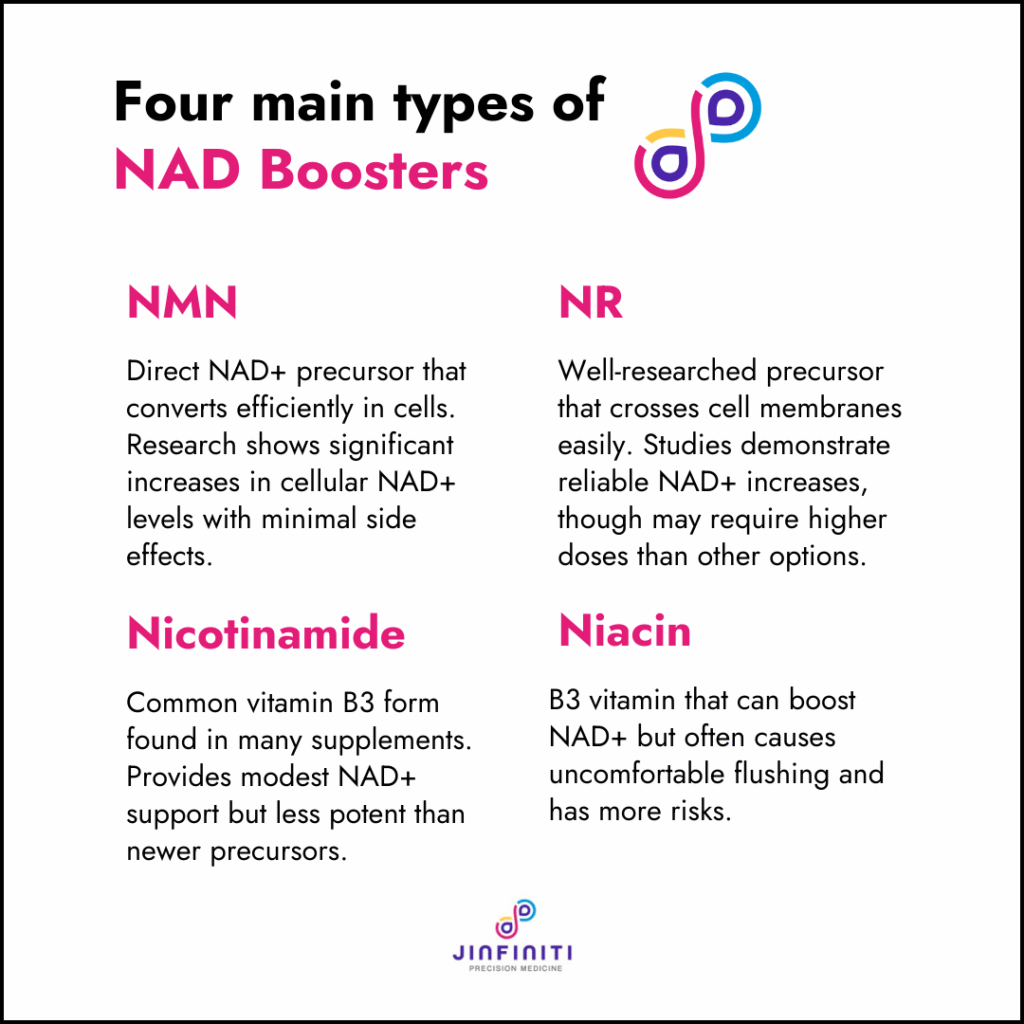
Many MS patients also find that supporting NAD+ levels helps with overall energy. Our Vitality↑® NAD+ Booster targets cellular energy at a different level. Since NAD+ levels naturally decline with age, this approach may complement other energy-focused strategies.

The Final Scoop
Based on current clinical evidence, creatine appears safe for most MS patients when used at recommended doses of 3-5 grams daily. The limited studies conducted specifically in this population show no significant safety concerns.
However, the research also suggests that creatine may be less effective in MS patients due to altered metabolism. This raises important questions about the cost-benefit ratio of supplementation.
The extensive safety database from studies in other populations, combined with specific research in MS patients, suggests minimal risk for most individuals with MS. Still, the limited efficacy observed means realistic expectations are important.
The key recommendation? Work closely with your healthcare providers to determine if creatine supplementation is appropriate for your individual situation. Pay particular attention to kidney function monitoring and maintain realistic expectations about potential benefits.
MS affects everyone differently, and what works for one person may not work for another. A personalized, medically supervised approach gives you the best chance of making an informed decision about creatine supplementation.
Remember, managing MS effectively often involves multiple strategies. Whether or not you choose creatine, focus on evidence-based treatments, healthy lifestyle choices, and regular medical care as your foundation for optimal health outcomes.
Referenced Sources:
- https://pubmed.ncbi.nlm.nih.gov/32912105/ ↩︎
- https://www.tandfonline.com/doi/full/10.1186/s12970-021-00412-w ↩︎
- https://pubmed.ncbi.nlm.nih.gov/12917861/ ↩︎
- https://pmc.ncbi.nlm.nih.gov/articles/PMC5469049/ ↩︎
- https://pmc.ncbi.nlm.nih.gov/articles/PMC5299567/ ↩︎
- https://www.mayoclinic.org/drugs-supplements-creatine/art-20347591 ↩︎