
Secure • Private • Science-backed
Dark circles under the eyes caused by vitamin deficiency

Can a Vitamin Deficiency Cause Dark Circles Under the Eyes?

You’ve tried sleeping more. You’ve tried the expensive eye creams. You’ve convinced yourself it’s just genetics, or aging, or the fact that you’ve been staring at screens since 2008. And still, the dark circles under the eyes are there every morning.

For a lot of people, that explanation is frustrating precisely because it’s incomplete. Sleep deprivation is the story we tell, but persistent dark circles — the kind that stick around even when you’re well-rested — can be a visible signal of something happening beneath the skin.

Specifically, certain vitamin and mineral deficiencies have been clinically linked to periorbital hyperpigmentation (the medical term for dark discoloration under the eyes), and the mechanisms are real, if still being studied.

The short answer to which deficiency is most to blame isn’t simple. But it’s worth knowing.

The Short Summary

  • Persistent dark circles that don’t improve with sleep may be pointing to a vitamin or mineral deficiency rather than a lifestyle issue.
  • Iron deficiency is the most clinically documented nutritional cause, present in roughly half of patients with periorbital hyperpigmentation in some studies.
  • Vitamins B12, K, C, and D are each associated with dark circles — but through different mechanisms, and with varying levels of research support.
  • The most reliable path forward is testing your nutrient levels rather than guessing which supplement to add.

CLIA-Certified Blood Panel

Uncover deficiencies with a complete blood test from home.

Jinfiniti AgingSOS green gradient background

Why the Skin Under Your Eyes Is So Fragile

Before jumping to deficiencies, it helps to understand what makes this particular area of your face so sensitive to internal changes.

The skin beneath the eyes is among the thinnest on the entire body — significantly thinner than skin on the cheeks or forehead. It has very little subcutaneous fat to buffer what lies underneath, and the capillary network directly beneath it is dense.

When circulation is compromised, oxygenation is low, or collagen is depleted, the result is visible: dilated blood vessels, pooled blood, and increased pigmentation all show up more easily here than anywhere else on the face.

What Makes Periorbital Skin So Vulnerable

A 2019 clinical assessment published in Clinical, Cosmetic and Investigational Dermatology confirmed that under-eye dark circles correlate with measurably thinner skin, higher hemoglobin index (a marker of vascular prominence), and a higher melanin index — all pointing to both vascular and pigmentary contributors rather than just one single cause.[1]

That’s the important thing to know: dark circles are rarely due to one thing alone. Which means identifying the most correctable cause matters more than defaulting to the nearest eye cream.

Vitamin and Mineral Deficiencies Linked to Dark Circles Under the Eyes
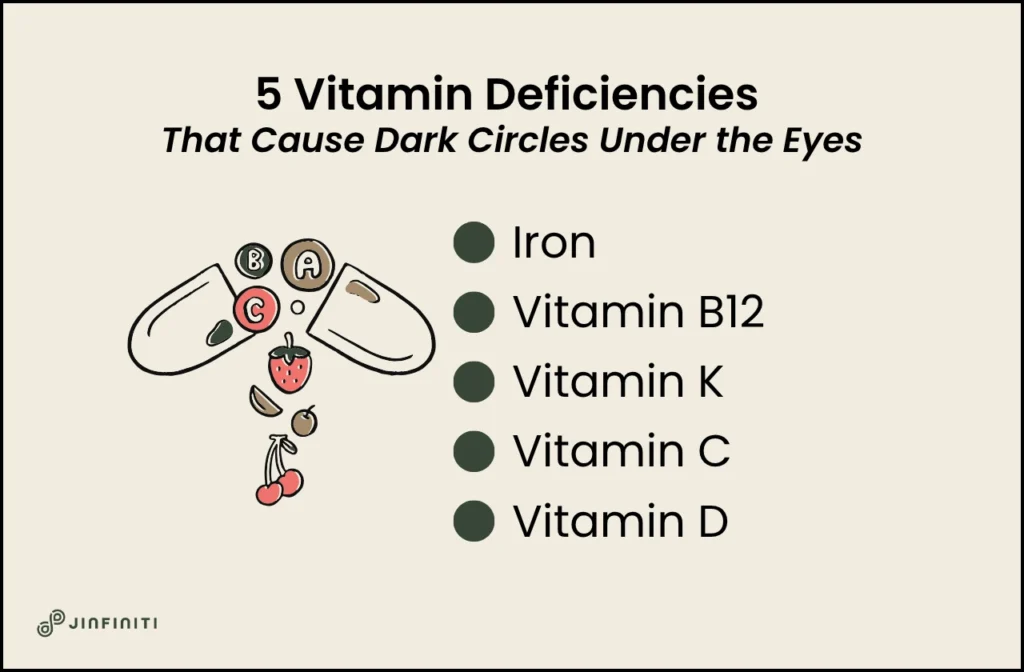
Infographic showing vitamin deficiencies that cause dark circles under the eyes

The research on nutritional causes of periorbital hyperpigmentation is still catching up to how common the condition actually is. Still, several deficiencies have meaningful clinical and mechanistic support.

1. Iron: The Strongest Clinical Link

Iron is essential for producing hemoglobin — the protein in red blood cells that carries oxygen to every tissue in your body, including the delicate skin around your eyes. When iron levels are low, tissues don’t receive adequate oxygen, small blood vessels dilate to compensate, and skin becomes paler overall. Under thin periorbital skin, that combination makes dark underlying vessels far more visible.

The clinical data here is more robust than for any other nutrient. A 2014 study of 200 patients with periorbital hyperpigmentation found that 50% had iron deficiency anemia — and many of those patients reported that their dark circles improved significantly once the anemia was treated. Iron deficiency is worth ruling out early, particularly in women during reproductive years, vegetarians and vegans, and anyone with heavy menstrual periods.[2]

One important nuance: iron deficiency anemia is distinct from simply having low-normal iron stores. Standard blood panels may not catch early functional iron depletion. A full iron panel — including ferritin — gives a more complete picture.

2. Vitamin B12: Pigmentation and Skin Cell Renewal

Vitamin B12 plays a central role in red blood cell production, nerve health, and the renewal of skin cells. When B12 is deficient, the skin can lose its normal turnover rate and develop increased pigmentation — including in the periorbital area.

A cross-sectional study of patients with periorbital pigmentation found a significant association between dark circles and low B12 levels, noting that B12 supplementation could serve as an adjunctive treatment in affected patients.[3]

The connection makes mechanistic sense: slowed cell turnover allows pigmented cells to accumulate, and decreased red blood cell production compounds the oxygenation problem.

B12 deficiency is particularly common in vegans, older adults (absorption decreases with age), and people taking metformin long-term. It’s also worth noting that niac — a form of vitamin B3 — has separately been studied for its effects on skin pigmentation and barrier function, though its relationship to periorbital hyperpigmentation specifically is still emerging.

3. Vitamin K: Blood Pooling Beneath the Eyes

Vitamin K is perhaps the most specifically targeted nutrient when it comes to dark circles. It plays a key role in blood clotting and vascular integrity — and when K levels are low, blood is more prone to pooling in the small capillaries beneath the eyes rather than clearing efficiently.

A study on topical application of phytonadione (vitamin K), retinol, and vitamins C and E found that the combination, applied twice daily, produced meaningful reductions in dark circle intensity — with vitamin K’s vascular effects considered a key mechanism.[4]

While this was a topical study rather than a supplementation trial, it supports the idea that vitamin K status has a direct bearing on periorbital blood dynamics.

Vitamin K comes in two main dietary forms: K1 (found in leafy greens) and K2 (found in fermented foods and animal products). K2 in its MK-7 form stays active in the body significantly longer than other forms — a relevant distinction when evaluating whether supplementation would be meaningful.

4. Vitamin C: Collagen and Capillary Strength

Vitamin C is required for collagen synthesis — the structural protein that gives skin its thickness and resilience. Under the eyes, adequate collagen is what prevents the vascular network from showing through. When vitamin C is deficient, periorbital skin thins and capillary walls weaken, making blood vessels more visible and more prone to minor leakage.

The direct evidence linking vitamin C deficiency to dark circles is still emerging rather than definitive. The mechanistic case is plausible and supported by vitamin C’s well-established role in skin biology — but direct clinical trials isolating vitamin C deficiency as a cause are limited.

5. Vitamin D: An Association Worth Monitoring

Low vitamin D has been noted more frequently in women over 40 with persistent dark circles, and some clinical observation suggests a possible connection. The mechanism isn’t fully established — vitamin D receptors are present in skin tissue and vitamin D plays a role in skin cell differentiation, but the direct periorbital link hasn’t been proven in controlled trials.

This is an area where the evidence is still insufficient for confident claims. What can be said: widespread vitamin D deficiency affects an estimated 50 to 70% of adults, and addressing it has enough supporting evidence across other health domains that testing is reasonable regardless of whether dark circles are your primary concern.[5]

Dark Circles Are Multifactorial and One Fix Rarely Works

A woman with dark circles under her eyes

Here’s where the picture gets more honest. Even in studies focused specifically on nutritional causes, periorbital hyperpigmentation is consistently described as multifactorial — meaning genetics, chronic sun exposure, allergies, vascular anatomy, hormonal changes, and nutritional gaps all interact.

One study found that family history was positive in over 60% of patients with the condition, meaning some degree of structural predisposition is common.[2]

This doesn’t mean nutrition doesn’t matter. It means that correcting a deficiency will help more for some people than others, and that addressing underlying inflammation alongside specific nutrient gaps gives a more complete picture than targeting any single variable.

If your dark circles appeared or worsened over time, rather than being a lifelong constant, that’s a better signal that an internal cause — including nutrient deficiency — is playing a role.

How to Know If a Deficiency Is Causing Dark Circles

The difference between guessing and knowing is a blood test.

Most standard panels include hemoglobin and basic B12 — but they often miss ferritin (the storage form of iron that depletes before anemia becomes clinically apparent), detailed vitamin D levels, or comprehensive micronutrient profiles.

If you suspect a deficiency is contributing to what you’re seeing, asking specifically for a full iron panel with ferritin, serum B12, 25-hydroxyvitamin D, and a comprehensive metabolic panel gives you a more useful starting point than standard routine labs.

For a broader picture of where your nutrient status actually stands, at-home testing panels have made comprehensive biomarker assessment significantly more accessible — without requiring a specialist referral for each individual marker.

“A visible symptom like dark circles is almost always downstream of something measurable,” says Dr. Jin-Xiong She, founder of Jinfiniti Precision Medicine. “The question we always ask is: what is actually driving this? You don’t fix the symptom without understanding the root cause — and you don’t find the root cause without measuring.”

The AgingSOS® Advanced Panel measures 28 biomarkers including full nutrient status, inflammatory markers, and cellular health indicators — giving a comprehensive baseline that goes beyond what standard blood work typically captures. For those who want to understand the full picture before making any supplementation decisions, it’s a more useful starting point than addressing one nutrient at a time.

What to Do Once You Know the Cause

Identifying the deficiency is step one. What comes next depends on what you find — and a conversation with your clinician before starting any supplementation is always the right first move.

DeficiencyDietary SourcesSupplementation Notes
IronRed meat, lentils, spinach, fortified cerealsSupplement only with confirmed deficiency; iron overload is also problematic
Vitamin B12Meat, fish, eggs, dairyParticularly important for vegans, older adults, metformin users
Vitamin KLeafy greens (K1), fermented foods, animal products (K2)K2 (MK-7 form) has superior bioavailability and longer activity
Vitamin CCitrus, bell peppers, strawberries, broccoliDietary priority first; topical forms also studied for periorbital use
Vitamin DSunlight, fatty fish, fortified foodsPair with K2 for proper calcium metabolism; absorption varies widely

Vitamins D3 and K2 are a particularly well-studied combination — D3 supports calcium absorption, while K2 directs that calcium appropriately to bones rather than soft tissues. Taking them together is mechanistically sound, and products pairing both in bioavailable forms address two common deficiencies with one approach.

If mineral gaps are part of the picture, absorption quality matters as much as dose. Chelated mineral forms — bound to amino acids for better uptake — are significantly more bioavailable than standard mineral salts, and dual-form magnesium (glycinate plus malate) addresses both sleep quality and cellular energy support simultaneously.

Frequently Asked Questions

Which vitamin deficiency is most commonly linked to dark circles?

Iron deficiency has the strongest clinical evidence, appearing in roughly half of patients with periorbital hyperpigmentation in published studies. Vitamin B12 deficiency has the next strongest association, particularly through its effect on skin pigmentation and red blood cell production. Vitamins K, C, and D each have plausible mechanistic links, though the direct clinical evidence is more limited.

Can taking supplements fix dark circles?

Supplements can help if a documented deficiency is the underlying cause. They’re unlikely to produce visible change if the root cause is structural (thin skin, genetics, anatomical shadowing) or primarily vascular without a nutritional driver. Testing before supplementing is the most reliable path to knowing whether it’s worth trying.

How long does it take for dark circles to improve once a deficiency is treated?

This varies by deficiency and severity. Iron deficiency anemia typically takes 6–8 weeks of treatment before hemoglobin levels normalize meaningfully — visible skin changes may follow. B12 replenishment timelines depend on the severity and form of supplementation. Realistic expectation: several months of consistent treatment before drawing conclusions.

Are dark circles always caused by a vitamin deficiency?

No. Dark circles are multifactorial, and nutritional deficiency is one of several possible causes. Genetics, aging, skin thinning, vascular anatomy, allergies, and chronic sun exposure all contribute in different proportions for different people. If your dark circles have been present since childhood or run in your family, a structural or genetic component is more likely. If they appeared or worsened over time, an internal cause — including nutrition — deserves investigation.

What blood tests should I ask for if I suspect a nutritional deficiency?

Ask your clinician for a complete blood count (CBC), a full iron panel including serum ferritin, serum B12, 25-hydroxyvitamin D, and a comprehensive metabolic panel. These go beyond what most routine labs include and give a more complete picture of nutrient status. If you want a broader baseline assessment, comprehensive biomarker panels can measure many of these simultaneously alongside inflammatory and metabolic markers.

  1. Mac-Mary S, Zornoza Solinis I, Predine O, Sainthillier JM, Sladen C, Bell M, et al. Identification Of Three Key Factors Contributing To The Aetiology Of Dark Circles By Clinical And Instrumental Assessments Of The Infraorbital Region. Informa UK Limited; 2019. https://doi.org/10.2147/ccid.s217956
  2. Sheth P, Shah H, Dave J. Periorbital hyperpigmentation: A study of its prevalence, common causative factors and its association with personal habits and other disorders. Medknow; 2014. https://doi.org/10.4103/0019-5154.127675
  3. Rana S, Mendiratta V, Jassi R, Chander R. Study of causative factors and clinical patterns of periorbital pigmentation. Medknow; 2019. https://doi.org/10.4103/idoj.idoj_158_18
  4. Mitsuishi T, Shimoda T, Mitsui Y, Kuriyama Y, Kawana S. The effects of topical application of phytonadione, retinol and vitamins C and E on infraorbital dark circles and wrinkles of the lower eyelids. Wiley; 2004. https://doi.org/10.1111/j.1473-2130.2004.00070.x
  5. Cui A, Zhang T, Xiao P, Fan Z, Wang H, Zhuang Y. Global and regional prevalence of vitamin D deficiency in population-based studies from 2000 to 2022: A pooled analysis of 7.9 million participants. Frontiers Media SA; 2023. https://doi.org/10.3389/fnut.2023.1070808
Niacinamide benefits - featured image showing serum dropper

8 Niacinamide Benefits Beyond the Serum Bottle

Niacinamide has become the go-to ingredient for sensitive skin, and for good reason. Clinical trials show real improvements in skin conditions ranging from acne to hyperpigmentation to signs of aging. What most people don’t realize is that niacinamide benefits extend far beyond healthy skin maintenance — all the way down to how your cells produce energy and repair DNA.

What You Should Know

  • Niacinamide is one of the direct precursors to NAD+, which your cells use to create energy, repair DNA damage, and regulate metabolism.
  • When applied topically at a concentration of 4–5%, it has clinical efficacy at improving fine lines, dark spots, and acne.
  • It doesn’t cause flushing like niacin, which makes niacinamide one of the most well-tolerated forms of vitamin B3
  • Supplementation can increase blood levels of NAD+, but less efficiently than NMN or NR if your goal is long-term NAD+ optimization.

NMN + Niacinamide Formula

Four ingredients. One formula. Clinically validated.

Jinfiniti Vitality small CTA

What Is Niacinamide? A Type of Vitamin B3, Explained

Niacinamide — also called nicotinamide — is the amide form of vitamin B3. Your body creates it when it converts excess niacin or metabolizes tryptophan. It’s well tolerated by most people because, unlike niacin, it doesn’t cause flushing.

At the cellular level, it serves as a direct precursor to NAD+ (nicotinamide adenine dinucleotide), the coenzyme every cell depends on for energy production, DNA repair, and metabolic regulation.

Niacinamide Benefits for Skin

Niacinamide is one of the most studied ingredients in clinical dermatology, with evidence going back decades. Here are the four skin benefits with the strongest research behind them.

1. Stronger Skin Barrier

Your skin’s outermost layer holds together through a combination of proteins and lipids called ceramides. When this barrier weakens, moisture escapes and environmental irritants get in.

Research published in the Journal of Cosmetic Dermatologyconfirmed that topical niacinamide stimulates ceramide synthesis, reduces transepidermal water loss (TEWL), and increases moisture in the stratum corneum (the skin’s outer surface). It also accelerates keratinocyte differentiation, the process by which your skin continuously renews healthy cells.[1]

Skin that gets regular niacinamide holds onto moisture better and handles cold air, harsh cleansers, and pollution with less reactivity.

2. Less Hyperpigmentation

Dark spots and uneven skin tone are among the most common reasons people reach for niacinamide, and the clinical data supports this use at concentrations of 4–5%.

A 12-week double-blind, placebo-controlled trial published in Dermatologic Surgeryapplied 5% niacinamide to half the face in 50 women with signs of facial photoaging. Niacinamide produced measurable reductions in hyperpigmented spots, red blotchiness, and skin sallowness (yellowing) compared to the untreated side. It works by blocking the transfer of melanin from pigment-producing cells to the skin surface, cutting off the process that creates visible dark spots.[2]

A 2025 review published in Medicina confirmed these findings across multiple clinical settings, including melasma and post-inflammatory dark spots, at concentrations of 2–5%.[3]

3. Fewer Breakouts

Niacinamide does not kill acne-causing bacteria. It reduces the inflammation that makes breakouts angrier and slower to heal.

A 2017 review of 10 clinical studies found that 6 of 8 topical niacinamide studies showed a meaningful reduction in acne versus baseline, and both oral supplement studies did too. Niacinamide calms inflammation by suppressing the release of pro-inflammatory signaling molecules, which helps with inflammatory acne, rosacea, and contact dermatitis.[4]

Two open-label studies with 198 and 235 patients respectively found that oral niacinamide produced visible improvement in inflammatory acne, with results comparable to concurrent antibiotic treatment.

4. Reduced Fine Lines and Photoaging

The same Bissett trial found improvements in fine lines, wrinkles, and skin elasticity over the 12-week period, making it easy to compare the treated side of the face directly to the untreated side.

Research in Skin Pharmacology and Physiologyconfirmed that topical niacinamide also helps protect against the DNA damage that accumulates in skin from repeated UV exposure. These protective properties, combined with barrier strengthening and collagen support, explain why niacinamide turns up in so many anti-aging formulations.[5]

Niacinamide Benefits Beyond Skin

The four benefits above come primarily from topical use. Oral niacinamide products work differently, with effects that extend well beyond what you can see or feel at the surface.

5. NAD+ Precursor Activity

Every cell in your body depends on NAD+ (nicotinamide adenine dinucleotide) to produce energy, carry out metabolic reactions, and repair DNA damage. NAD+ levels drop steadily with age, and that decline tracks closely with the functional changes most people associate with getting older.

Niacinamide feeds into what researchers call the salvage pathway, the main route by which cells recycle and replenish their NAD+ supply. Once absorbed, it converts to NMN (nicotinamide mononucleotide) via the enzyme NAMPT, then to NAD+.

A 2021 clinical trial found that a single oral dose of 500mg niacinamide raised blood NAD+ levels measurably within 12 to 48 hours in healthy adults.[6]

As a standalone, niacinamide is less efficient than NMN or NR at raising NAD+. Both of those precursors are structurally closer to NAD+ and require fewer conversion steps. Niacinamide still contributes, and it works especially well when paired with other precursors and cofactors that support the same pathways.

6. DNA Repair Support

One of NAD+’s most important jobs is fueling the enzymes that repair damaged DNA. PARP-1, for example, responds to breaks in your DNA by calling in the cellular repair team. Every cycle of that repair process uses up NAD+, which means your cells’ ability to fix DNA damage is only as good as the NAD+ available to power it.

By contributing to NAD+ levels, niacinamide helps keep that repair capacity running. A landmark randomized controlled trial found that 500mg daily oral niacinamide significantly reduced the incidence of new non-melanoma skin cancers and actinic keratoses (precancerous skin lesions) in high-risk patients.[7]

A separate study by Drago et al. found that 88% of patients on 500mg daily niacinamide saw a reduction in actinic keratosis size, 42% experienced complete regression, and no new lesions developed during the study period. In the placebo group, 91% saw their lesions worsen.[8]

Research in this area is still early, and not every trial has shown the same results across populations. The consistent thread is that niacinamide’s contribution to NAD+ shows up in measurable reductions in UV-related skin damage over time.

7. Anti-Inflammatory Effects

The same anti-inflammatory action that makes niacinamide useful for acne and rosacea operates throughout the body when taken orally. It dials down activity in a key inflammatory signaling pathway, reducing the output of pro-inflammatory molecules across multiple tissues, not just the skin.

The 2025 review in Medicina compiled research showing niacinamide supplementation reduced brain inflammation in animal models of diabetes and Alzheimer’s disease.[3]

In separate human research, oral NR supplementation (another vitamin B3 form) reduced circulating inflammatory markers alongside improved muscle NAD+ levels in older men, pointing to the anti-inflammatory effects of B3 compounds as a class when they raise NAD+.[9]

At 250–500mg daily, niacinamide is well-tolerated. Doses up to 3g/day show a strong safety record, with occasional nausea or mild digestive effects that typically resolve when taken with food.

8. Joint Health Support

Most people taking niacinamide for joint health are doing it for osteoarthritis, and there is a small but notable clinical trial worth knowing.

A double-blind, placebo-controlled trial published in Inflammation Research (Jonas et al., 1996) randomized 72 osteoarthritis patients to niacinamide or placebo for 12 weeks. The niacinamide group showed a 29% improvement in global arthritis impact, compared to a 10% worsening in the placebo group. Joint mobility improved by 4.5 degrees over controls. The niacinamide group also reduced erythrocyte sedimentation rate (an inflammation marker) by 22% and cut their use of standard anti-inflammatory medications by 13%.[10]

The same mechanism at work in skin appears to be at work in joints, with niacinamide reducing inflammatory signaling at the cellular level wherever it lands.

Niacinamide vs. Other NAD+ Precursors

Niacinamide is one of several routes to raising NAD+, but it is not the most direct. It has a longer history, a lower cost, and stronger clinical evidence for skin health than most other NAD+ precursor forms.

NMN and NR raise NAD+ more efficiently because they sit closer to the end of the biosynthesis chain and require fewer steps to get there.

The most practical approach is using them together. Jinfiniti’s Vitality NAD+ Booster combines niacinamide with NMN, creatine monohydrate, and D-ribose, a four-ingredient formula working through multiple metabolic pathways at once. In a clinical setting, 85% of participants reached optimal NAD+ levels (40–100 μM) within four weeks, with an average doubling of baseline NAD+ levels.

“Niacinamide is one of the four ingredients in our Vitality formula for a reason,” says Dr. Jin-Xiong She, founder of Jinfiniti Precision Medicine. “It feeds the salvage pathway, which is how most of your cells replenish NAD+. But whether that actually translates to optimal intracellular levels — that’s something you can only confirm by testing.”

How to Use Niacinamide

For topical use, look for formulas with 4–5% niacinamide. That concentration has the best clinical backing for hyperpigmentation, barrier repair, and anti-aging. It pairs well with retinol, hyaluronic acid, and vitamin C, and is generally well-tolerated for daily morning and evening use.

For oral use, niacinamide is found naturally in meat, fish, eggs, legumes, and whole grains. Clinical studies have used doses from 250mg to 3g/day depending on the application. Because it skips the flushing reaction that comes with niacin, it is one of the easier B3 forms to take consistently.

If you are taking niacinamide supplements to raise NAD+ specifically, niacinamide alone is unlikely to get you to optimal intracellular levels (40–100 μM). The Intracellular NAD+ Test is the only way to know where you stand.

Frequently Asked Questions

Can you use niacinamide every day?

Yes. It is one of the few actives that tolerates daily use without irritating the skin barrier, which is why most clinical trials testing it for skin conditions like acne and hyperpigmentation used it twice daily for 8–12 weeks straight.

Is niacinamide a B vitamin?

Niacinamide is a form of vitamin B3, one of eight water-soluble B vitamins. Because it is water-soluble, excess amounts are excreted rather than stored, which contributes to its strong safety profile at typical doses.

Does niacinamide work for all skin types?

Clinical research has tested it across oily, acne-prone, dry, and aging skin, and it performs consistently across all of them. People with very sensitive skin should patch test first, but niacinamide is better tolerated than most actives with comparable benefits.

Does niacinamide help with fine lines and wrinkles?

Yes, with topical use at 4–5%. A 12-week clinical trial found measurable reductions in fine lines and wrinkles, improved elasticity, and reduced skin yellowing. It works more gradually than retinol but causes far less irritation.[2]

Can you add niacinamide to an existing skin care routine?

It layers cleanly with hyaluronic acid, vitamin C, retinol, SPF, and peptides. Apply it after lighter serums and before moisturizer. The older concern about combining it with vitamin C has not held up in more recent research.

Are there risks to taking niacinamide at high doses?

At 250–500mg/day, the safety record is strong. Doses up to 3g/day are generally well-tolerated, with occasional mild digestive effects. Above 3.5g/day, some studies have documented liver enzyme elevation and headache. If you are considering higher therapeutic doses, monitor liver health with a healthcare provider.[11]

Can niacinamide affect liver health?

At standard doses it poses no known risk to liver health. The concern arises above 3.5g/day, where elevated liver enzymes have been documented in some research. This is well above typical supplementation levels, and unlike niacin, niacinamide does not carry liver risk within its normal therapeutic range.

Does niacinamide affect blood sugar or help with diabetes?

Early research explored niacinamide for protecting insulin-producing cells in type 1 diabetes, with mixed results. For type 2 diabetes, animal studies have shown improved blood sugar markers, but human evidence at meaningful doses is still limited. It is not a substitute for any prescribed diabetes treatment.

Referenced Sources

  1. Gehring W. Nicotinic acid/niacinamide and the skin. Wiley; 2004. https://doi.org/10.1111/j.1473-2130.2004.00115.x
  2. Bissett DL, Oblong JE, Berge CA. Niacinamide. Ovid Technologies (Wolters Kluwer Health); 2005. https://doi.org/10.1111/j.1524-4725.2005.31732
  3. Camillo L, Zavattaro E, Savoia P. Nicotinamide: A Multifaceted Molecule in Skin Health and Beyond. MDPI AG; 2025. https://doi.org/10.3390/medicina61020254
  4. Walocko FM, Eber AE, Keri JE, AL-Harbi MA, Nouri K. The role of nicotinamide in acne treatment. Wiley; 2017. https://doi.org/10.1111/dth.12481
  5. Wohlrab J, Kreft D. Niacinamide – Mechanisms of Action and Its Topical Use in Dermatology. S. Karger AG; 2014. https://doi.org/10.1159/000359974
  6. Ito TK, Sato T, Takanashi Y, Tamannaa Z, Kitamoto T, Odagiri K, et al. A single oral supplementation of nicotinamide within the daily tolerable upper level increases blood NAD+ levels in healthy subjects. Elsevier BV; 2021. https://doi.org/10.1016/j.tma.2021.09.001
  7. Chen AC, Martin AJ, Choy B, Fernández-Peñas P, Dalziell RA, McKenzie CA, et al. A Phase 3 Randomized Trial of Nicotinamide for Skin-Cancer Chemoprevention. Massachusetts Medical Society; 2015. https://doi.org/10.1056/nejmoa1506197
  8. Drago F, Ciccarese G, Cogorno L, Calvi C, Marsano LA, Parodi A. Prevention of non-melanoma skin cancers with nicotinamide in transplant recipients: a case-control study. JLE; 2017. https://doi.org/10.1684/ejd.2017.3025
  9. Biţă A, Scorei IR, Ciocîlteu MV, Nicolaescu OE, Pîrvu AS, Bejenaru LE, et al. Nicotinamide Riboside, a Promising Vitamin B3 Derivative for Healthy Aging and Longevity: Current Research and Perspectives. MDPI AG; 2023. https://doi.org/10.3390/molecules28166078
  10. Jonas WB, Rapoza CP, Blair WF. The effect of niacinamide on osteoarthritis: A pilot study. Springer Science and Business Media LLC; 1996. https://doi.org/10.1007/bf02252945
  11. Knip M, Douek IF, Moore WPT, Gillmor HA, McLean AEM, Bingley PJ, et al. Safety of high-dose nicotinamide: a review. Springer Science and Business Media LLC; 2000. https://doi.org/10.1007/s001250051536
Creatine and acne

Can Creatine Cause Acne or Skin Problems?

You’ve probably seen the warnings online: creatine causes acne, triggers breakouts, or wrecks your skin. The claims spread fast through fitness forums and social media, leaving many people second-guessing one of the most studied supplements on the market.

Here’s what the science actually shows: no direct link between creatine and acne exists in the research. Not a single study has documented that taking creatine supplements causes breakouts.

If you’re experiencing skin issues while you use creatine, the real culprits are likely whey protein (which does have strong evidence for triggering acne breakouts), increased sweating from harder workouts, or changes to your overall diet.

What You Should Know

  • Creatine clears from your bloodstream within 24 hours but remains stored in muscles for 4 to 8 weeks after you stop
  • Your muscle stores decline gradually, not immediately, so performance benefits persist for weeks
  • Individual factors like muscle mass and training intensity affect how long creatine stays active in your system
  • You don’t need to cycle off creatine for safety reasons since continuous use is well-tolerated

Does Creatine Cause Breakouts or Pimples?

The short answer is no. Decades of research on creatine supplementation have found no connection to acne development.

Creatine is a naturally occurring compound your body produces in the liver, kidneys, and pancreas. It’s stored in your muscles and brain, where it helps regenerate ATP (adenosine triphosphate), your cells’ primary energy source. When you supplement with creatine, you’re simply adding more of what your body already makes and uses daily.

This matters because people often confuse creatine with anabolic steroids. Steroids are synthetic hormones that can absolutely cause acne by increasing oil production and clogging pores. Creatine works through completely different mechanisms related to energy metabolism, not hormonal manipulation.

More than 30 years of safety research backs this up. There’s no evidence that creatine use causes acne across hundreds of studies involving thousands of participants.

The timing creates confusion. People start taking creatine when they ramp up their workout routines, change their diets, and add other supplements to their regimen. When acne breakouts appear, creatine gets blamed by association rather than evidence.

The DHT Study Everyone Talks About

One study keeps appearing in these discussions. In 2009, researchers at Stellenbosch University studied 20 college rugby players who took creatine for three weeks.[1]

The team found that DHT (dihydrotestosterone, a hormone that can increase oil production) rose by 56% during the loading phase and remained 40% above baseline during maintenance.

That sounds concerning until you look closer. The study had just 20 participants and lasted only three weeks. The researchers measured hormone levels in blood, not actual acne breakouts or skin changes. Nobody in the study developed acne or reported skin problems.

Most telling: no other study has replicated these findings. Twelve subsequent studies examining the effects of creatine on testosterone found no hormonal changes.

A 2025 randomized controlled trial specifically measured DHT levels, testosterone, and actual hair follicle health over 12 weeks. The results showed no differences between creatine and placebo groups.[2]

The scientific consensus is clear. Creatine supplementation does not increase DHT or testosterone in ways that would trigger skin problems.

Dr. She’s Creatine Formula

Pure creatine with ATP for total body performance.

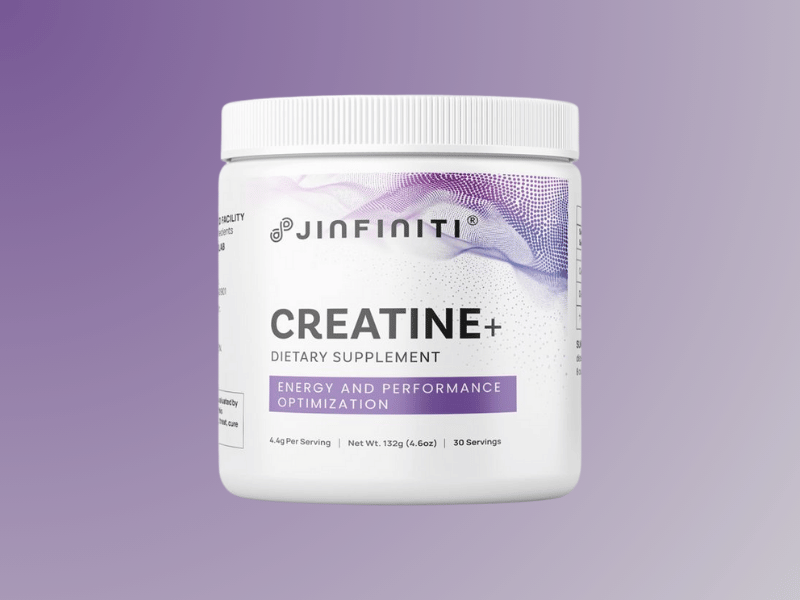
Creatine+ by Jinfiniti

Can Creatine Cause Acne on Your Face or Body?

Based on current research, creatine doesn’t cause facial or body acne through any known biological mechanism.

Acne forms when four things happen together: excess sebum (oil) production, dead skin cells building up, pores getting clogged, and bacteria multiplying in those clogged pores. Hormones like testosterone and DHT can increase oil production, which is why the DHT study got so much attention.

But here’s the thing: even if creatine did affect DHT levels (which research shows it doesn’t consistently), those changes would need to be large enough and sustained enough to alter your skin’s oil production significantly.

The 2009 study showed temporary hormone fluctuations within normal clinical ranges, not the dramatic shifts seen with actual acne-causing substances like anabolic steroids.

Creatine helps your muscles store energy by increasing phosphocreatine availability. Your skin doesn’t even rank among the top tissues for creatine storage. The compound concentrates in muscles and brain tissue, where energy demands run highest.

Some research suggests topical creatine might actually benefit your skin. We’ll get to that in a moment.

What About Eczema and Other Skin Conditions?

Zero evidence connects creatine to eczema flare-ups or other inflammatory skin conditions. Eczema stems from immune system dysfunction and skin barrier problems, not the energy metabolism pathways that creatine affects.

If you notice skin changes after starting creatine, look at what else changed. Many creatine products contain additives, artificial sweeteners, or fillers that could trigger sensitivities. Some people mix creatine with drinks containing ingredients they’re actually reacting to.

Consider getting tested for specific allergens if you’re experiencing persistent skin issues. The problem likely isn’t the creatine molecule itself.

What Actually Causes Breakouts in Gym-Goers?

If creatine isn’t causing acne, what is? The answer usually involves factors that have nothing to do with your supplement choice.

Whey Protein Is the Real Problem

Unlike creatine, whey protein has solid scientific evidence linking it to acne development. Multiple studies document this connection clearly.

Research published in Health Promotion Perspectives followed six male patients who developed trunk acne after starting whey protein supplements.[3]

A case-control study in Jordan examined 201 male teenagers and young adults, finding strong associations between whey consumption and acne risk.[4]

A study in João Pessoa tracked 30 gym-goers for two months. Every single participant developed or worsened acne while using protein-calorie supplements containing whey.[5]

The mechanism is well understood. Whey protein increases levels of IGF-1 (insulin-like growth factor 1), a hormone that stimulates sebum production and accelerates skin cell growth. This combination clogs pores and creates perfect conditions for acne-causing bacteria.[6]

Most people mix creatine with whey protein shakes. When breakouts appear, they blame the creatine instead of the whey. If you’re using both supplements and experiencing skin problems, the whey is almost certainly the culprit.

Plant-based proteins don’t trigger the same IGF-1 response. Switching from whey to pea, rice, or hemp protein often clears up skin issues completely.

Sweat, Bacteria, and Poor Hygiene

Creatine helps you train harder and longer. That means more sweating. When sweat sits on your skin mixed with oil and bacteria, you’re setting up ideal conditions for breakouts.

The problem isn’t the sweat itself. It’s what happens when you don’t shower promptly after your workout. Bacteria multiply in the warm, moist environment. Dead skin cells accumulate. Pores get clogged.

Common mistakes that trigger gym acne:

  • Waiting hours to shower after working out
  • Touching your face with unwashed hands during sets
  • Using gym equipment without wiping it down first
  • Wearing the same workout clothes multiple times between washes
  • Sleeping in your gym clothes (yes, people do this)

Your creatine supplement doesn’t cause any of these problems. Your hygiene habits do.

Creatine helps you push harder during workouts, which can improve energy and performance. That increased training intensity means more sweating, but the sweat itself isn’t the issue.

Dietary Changes That Come with Supplementation

When people start taking creatine seriously, their entire eating pattern often shifts. They consume more dairy, eat more protein bars loaded with sugar, drink more milk-based shakes, and generally increase their intake of processed foods.

These dietary changes affect your skin more than creatine ever could. Dairy consumption is linked to acne through multiple pathways. High-glycemic foods spike insulin levels, which triggers a cascade of hormonal changes that increase oil production. Even the timing of meals can affect skin health through circadian rhythm disruptions.

Track what you’re eating, not just what supplements you’re taking. The answer to your skin problems probably sits on your plate, not in your supplement stack.

🧬 MORE CREATINE INSIGHTS

Creatine’s Surprising Benefits for Skin Health

While people worry about creatine causing acne, research shows it might actually help your skin when applied topically.

A study published in the Journal of Cosmetic Dermatology followed 43 men who applied a creatine-containing face cream for six weeks. The results showed reduced sagging in the jowl area, fewer crow’s feet wrinkles, and less pronounced under-eye wrinkles compared to baseline measurements.[7]

Research shows topical creatine can:

  • Rapidly penetrate the dermis and boost collagen
  • Reduce wrinkle depth and improve overall skin texture
  • Boost production of glycosaminoglycans (molecules that keep skin hydrated)
  • Support ceramide synthesis (lipids that protect your skin barrier)
  • Provide photoprotection against UV damage

The mechanism makes sense. Your skin cells need energy to function properly, repair damage, and synthesize proteins like collagen. Creatine provides that cellular energy by supporting ATP production. As you age, your skin’s natural creatine levels decline, which may contribute to visible aging signs.

Dr. Jin-Xiong She, founder of Jinfiniti Precision Medicine, notes: “Cellular energy is the foundation of healthy tissue function throughout the body. When we optimize energy metabolism at the cellular level through compounds like creatine and NAD+ precursors, we often see beneficial effects that extend far beyond the muscles. Skin health is no exception.”

Here’s the irony: people avoid creatine supplements because they fear acne, when topical creatine formulations are being studied for anti-aging skincare benefits.

How to Prevent Acne While Taking Creatine

If you want clear skin while you use creatine supplements, focus on the factors that actually matter.

Post-workout hygiene is non-negotiable:

  • Shower within 30 minutes after finishing your workout
  • Use a gentle, non-comedogenic cleanser on your face and body
  • Pay extra attention to areas where you sweat heavily (back, chest, shoulders)
  • Change out of sweaty clothes immediately after training
  • Wash gym clothes after every single use

Evaluate your protein source:

  • Switch from whey to plant-based proteins if you’re experiencing breakouts
  • Read labels carefully. Many “creatine” products contain whey or dairy additives
  • Consider using pure creatine monohydrate without added ingredients
  • Track your dairy intake separately from supplement use

Optimize your training environment:

  • Wipe down equipment before and after use
  • Avoid touching your face during workouts
  • Use a clean towel for wiping sweat
  • Consider bringing face wipes to the gym for quick cleaning between exercises

Support skin health through nutrition:

  • Stay well-hydrated (at least 8-10 glasses of water daily)
  • Reduce high-glycemic foods that spike insulin
  • Get enough sleep (poor sleep affects skin healing and oil production)
  • Consider getting your NAD+ levels tested to optimize cellular energy metabolism
  • Eat foods rich in omega-3 fatty acids for skin barrier support

These dietary choices help prevent acne breakouts whether you’re taking creatine for performance or other health benefits.

Choose quality supplements:

  • Buy creatine from reputable manufacturers with third-party testing
  • Avoid products with long ingredient lists full of additives
  • Pure creatine monohydrate remains the gold standard for safety and effectiveness
  • Consider products that combine creatine with ATP for enhanced cellular energy

Track changes systematically:

  • Take photos of your skin before starting any new supplement
  • Keep a food and supplement journal
  • If problems develop, remove one variable at a time (don’t stop everything at once)
  • Give each change at least 2-3 weeks before evaluating results

When to Be Concerned About Skin Changes

Most skin changes aren’t related to creatine directly. If you experience any of these symptoms, they may point to additives or contaminants in low-quality products rather than creatine itself:

  • Sudden severe acne appearing within days of starting a new supplement
  • Hives, rashes, or other allergic reactions
  • Skin changes combined with digestive issues or other symptoms

Check your product labels for artificial sweeteners, dyes, or flavoring agents that can trigger sensitivities. If you’re experiencing persistent problems, stop all supplements for two weeks and reintroduce them one at a time.

A dermatologist can help determine whether you’re dealing with acne, folliculitis, contact dermatitis, or another condition that requires specific treatment.

The Final Scoop

Three decades of research involving thousands of participants show no link between creatine and acne. If you’re experiencing breakouts while you take creatine supplements, the real causes are whey protein, poor post-workout hygiene, or dietary changes that came with your new fitness routine.

Creatine remains one of the safest and most studied supplements available. Don’t let unfounded myths prevent you from using an effective performance enhancer. Focus on what actually matters: showering after workouts, choosing quality supplements without unnecessary additives, and paying attention to your overall diet and cellular health.

Referenced Sources

  1. van der Merwe J, Brooks NE, Myburgh KH. Three Weeks of Creatine Monohydrate Supplementation Affects Dihydrotestosterone to Testosterone Ratio in College-Aged Rugby Players. Ovid Technologies (Wolters Kluwer Health); 2009. https://doi.org/10.1097/jsm.0b013e3181b8b52f
  2. Lak M, Forbes SC, Ashtary-Larky D, Dadkhahfar S, Robati RM, Nezakati F, et al. Does creatine cause hair loss? A 12-week randomized controlled trial. Informa UK Limited; 2025. https://doi.org/10.1080/15502783.2025.2495229
  3. Cengiz FP, Cevirgen Cemil B, Emiroglu N, Gulsel Bahali A, Onsun N. Acne located on the trunk, whey protein supplementation: Is there any association? Maad Rayan Publishing Company; 2017. https://doi.org/10.15171/hpp.2017.19
  4. Muhaidat J, Qablan A, Gharaibeh F, Albataineh GH, Abdo N, Alshiyab D, et al. The Effect of Whey Protein Supplements on Acne Vulgaris among Male Adolescents and Young Adults: A Case-Control Study from North of Jordan. Wiley; 2024. https://doi.org/10.1155/2024/2158229
  5. Pontes T de C, Fernandes Filho GMC, Trindade A de SP, Sobral Filho JF. Incidence of acne vulgaris in young adult users of protein-calorie supplements in the city of João Pessoa – PB. FapUNIFESP (SciELO); 2013. https://doi.org/10.1590/abd1806-4841.20132024
  6. Kim H, Moon SY, Sohn MY, Lee WJ. Insulin-Like Growth Factor-1 Increases the Expression of Inflammatory Biomarkers and Sebum Production in Cultured Sebocytes. Korean Dermatological Association and The Korean Society for Investigative Dermatology; 2017. https://doi.org/10.5021/ad.2017.29.1.20
  7. Peirano RI, Achterberg V, Düsing HJ, Akhiani M, Koop U, Jaspers S, et al. Dermal penetration of creatine from a face-care formulation containing creatine, guarana and glycerol is linked to effective antiwrinkle and antisagging efficacy in male subjects. Wiley; 2011. https://doi.org/10.1111/j.1473-2165.2011.00579.x
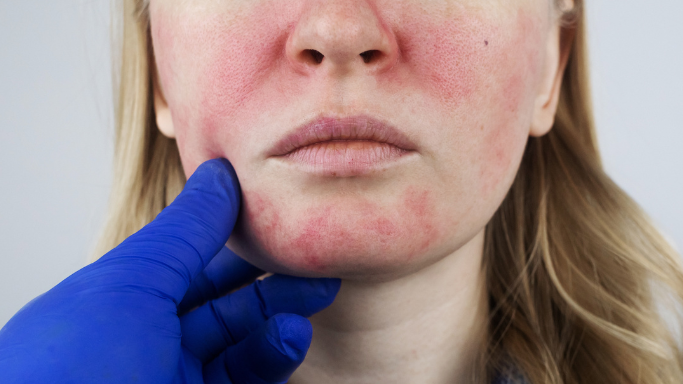
Close-up of a woman’s face showing redness on the cheeks and nose, resembling a niacin skin flush.

Niacin Flushing: Causes, Sensitivity, Is It Dangerous?

If you’ve ever taken a niacin supplement and suddenly felt like your skin was on fire, you’re not alone. Up to 90% of people experience this uncomfortable reaction called niacin flush when taking high doses of this vitamin B3 form.

Niacin flushing isn’t dangerous, though it can be quite uncomfortable. Understanding why it happens and how to manage it can help you make informed decisions about niacin supplementation.

Key Takeaways

  • Niacin flush is harmless but uncomfortable, affecting up to 90% of people taking high-dose niacin
  • Most people adapt quickly and tolerance develops within just one week of consistent use
  • Aspirin and omega-3 fatty acids may prevent flushing symptoms
  • High doses carry risks of liver damage and other serious side effects

What Causes Niacin Flush?

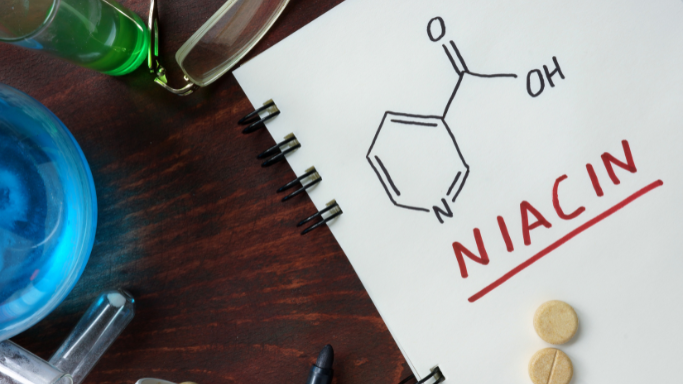
An image of a notebook written with "Niacin"

Niacin flush occurs through a specific chain reaction in your body. When you take niacin (nicotinic acid), it binds to specialized receptors called GPR109A in your skin cells.

This binding may cause a cascade of events:

  • Calcium levels increase inside skin cells
  • An enzyme called phospholipase A₂ gets activated
  • Arachidonic acid is released from cellular stores
  • Your body converts this acid into prostaglandins (PGD₂ and PGE₂)
  • These prostaglandins cause blood vessels to dilate and increase blood flow

The result is the characteristic flushing, warmth, and redness you feel across your face, neck, and chest.

Why Different Types of Niacin Cause Flushing Symptoms

Understanding the different types of niacin helps explain why some forms cause more intense flushing. Immediate-release niacin gets absorbed quickly, reaching peak blood levels within 30-60 minutes.1

This rapid absorption creates a sudden surge in prostaglandin production. That’s why immediate-release niacin typically causes more intense flushing compared to extended-release formulations.

Common Symptoms of Niacin Flush

A close-up image of a woman face with red flushed skin

Niacin flush occurs typically within 15-30 minutes of taking the supplement. This temporary side effect causes most people to experience:

  • Intense warmth and burning sensation
  • Red, flushed skin on face, neck, and chest
  • Tingling or itching sensations
  • Mild headache in some cases

These symptoms usually last 30 minutes to 2 hours. The intensity is often strongest after your first few doses, then gradually decreases as your body develops tolerance.

Who Gets Hit Hardest?

Data reveals that niacin sensitivity varies substantially between individuals. Women typically experience stronger flush responses than men.2

Genetic factors influence sensitivity, with about 47-54% of variation in niacin flush response within families attributed to inherited traits.3

Certain populations show altered sensitivity:

  • People with schizophrenia often have reduced flush responses
  • Family members of affected individuals also show modified reactions

Niacin deficiency is relatively rare in developed countries, so most people taking niacin do so for therapeutic rather than deficiency-related reasons.

Is Niacin Flush Dangerous?

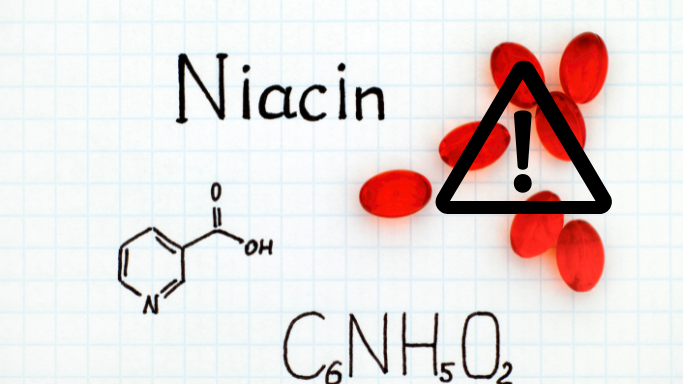
A graphic image about NIACIN

The flush itself poses no direct health risks and represents a temporary, non-allergic response to normal blood vessel dilation.

Here’s the short answer: the flush itself isn’t dangerous. The flushing represents normal blood vessel dilation in response to prostaglandins.

When Large Doses of Niacin Become Risky

While flushing is harmless, niacin can cause serious problems at therapeutic doses. Doses of 1,000-3,000 mg daily can damage your liver, particularly with sustained-release formulations.4

High doses of niacin may trigger concerning side effects that healthcare providers monitor carefully:

  • Low blood pressure (hypotension)
  • Blood sugar problems
  • Vision issues
  • Increased bleeding risk
  • Muscle damage (especially when combined with statins)

Many people turn to niacin hoping to boost their NAD+ levels for longevity benefits. However, evidence demonstrates this approach can backfire.

Niacin may also push NAD levels dangerously high, causing insomnia and other health issues. Rather than guessing with high-dose niacin, consider testing your baseline NAD levels before supplementation.

Your Body Builds Tolerance Fast

An image of a matured woman taking supplement

One of the most important things to understand about niacin flushing is that it doesn’t last forever. Your body develops tolerance very quickly.

Clinical trials demonstrate that substantial reduction in flushing occurs within just one week of consistent dosing. This happens because your body decreases prostaglandin production with repeated niacin exposure.5

The tolerance mechanism involves:

  • Reduced prostaglandin D₂ production over time
  • Depletion of prostaglandin precursors in skin cells
  • Maintained niacin blood levels without increased prostaglandin response

This means that short-term discomfort leads to long-term tolerance for most people.

Proven Ways to Prevent Niacin Flush

A close-up image of a woman's hand pouring out supplements from a cannister

Multiple strategies can achieve effective reduction of niacin-induced flushing. These approaches range from simple timing adjustments to pharmaceutical interventions.

Aspirin Prevents Niacin Flush Symptoms

Taking 325 mg of aspirin 30 minutes before niacin is the most effective prevention method. Clinical data reveals 90% effectiveness in reducing flush symptoms.6

Aspirin works by blocking cyclooxygenase enzymes that produce prostaglandins. The flushing-specific discontinuation rate drops from 9.4% to just 1.8% with aspirin pretreatment.

Choose the Right Form of Niacin Supplement

Different niacin formulations produce varying levels of flushing intensity:

Niacin TypeFlush IntensityDurationTherapeutic Effect
Immediate-ReleaseHigh30-60 minutesFull
Extended-ReleaseModerate15-30 minutesFull
No-Flush (Inositol)NoneNoneMinimal

Extended-release niacin (like Niaspan®) reduces flushing substantially compared to immediate-release forms. Clinical trials reveal 42% reduction in flush intensity and 43% reduction in duration.7

Start Low and Go Slow

Gradual dose escalation helps your body adjust. Start with 500 mg daily for the first week, increase to 1,000 mg for week two, then advance to 2,000 mg from weeks three through six.

Smart Timing and Food Strategies

Simple adjustments can reduce symptoms:

  • Take niacin with food or at bedtime
  • Eating an apple with niacin provides flush reduction comparable to aspirin
  • Avoid hot beverages, spicy foods, and hot showers around dosing time

For those seeking NAD+ optimization benefits without niacin’s risks, oral NAD supplements like NMN or NR offer a safer alternative.

Omega-3s May Help Too

Emerging data suggests omega-3 fatty acids may reduce niacin-induced flushing by reducing arachidonic acid availability and decreasing receptor expression.8

While more research is needed, adding omega-3s to your regimen might provide additional protection.

Bottom Line: Is Niacin Flush Harmful?

Niacin flush is uncomfortable but harmless. The real concern lies with high-dose niacin’s potential for serious side effects, particularly liver damage.

Niacin may provide cholesterol benefits, but the risks often outweigh advantages for most people. If you’re considering niacin for health benefits, especially NAD+ optimization, safer alternatives exist.

Instead of guessing with high-dose niacin, testing your current NAD levels with Jinfiniti’s precision NAD testing provides a safer starting point.

When to See a Doctor

Contact your healthcare provider if you experience:

  • Persistent nausea or fatigue
  • Abdominal pain
  • Yellowing of skin or eyes
  • Unusual muscle pain

These could indicate liver problems or other serious complications.

Making Smart Supplement Choices

Understanding niacin flush helps you make informed decisions about vitamin B3 supplementation. While the flush itself won’t harm you, the high doses needed for therapeutic effects carry real risks.

Modern NAD precursor supplements offer a more targeted approach to cellular health without the uncomfortable side effects or safety concerns of traditional niacin therapy.

Referenced Sources:

  1. https://pmc.ncbi.nlm.nih.gov/articles/PMC2779993/ ↩︎
  2. https://www.sciencedirect.com/science/article/abs/pii/S0022395604000238 ↩︎
  3. https://pmc.ncbi.nlm.nih.gov/articles/PMC2632299/ ↩︎
  4. https://www.ncbi.nlm.nih.gov/books/NBK559137/ ↩︎
  5. https://pubmed.ncbi.nlm.nih.gov/19691622/ ↩︎
  6. https://onlinelibrary.wiley.com/doi/10.1111/j.1742-1241.2009.02099.x ↩︎
  7. https://nypep.nysdoh.suny.edu/wp-content/uploads/2021/09/DIResponse_NicotinicacidERvsIR_final_6-26-18-FIN-201810171121.pdf ↩︎
  8. https://pmc.ncbi.nlm.nih.gov/articles/PMC3308705/ ↩︎
A healthy older woman in a gray top performs arm exercises with dumbbells at home.

What to Expect Before and After Taking NMN Supplements

You’re curious about NMN supplements and wondering what changes you might see. Smart thinking.

NMN has gained tons of attention as a promising anti-aging supplement. But what should you realistically expect before and after taking it?

This guide walks you through everything. From getting ready to start to tracking the real changes over time.

Key Takeaways

  • Consult your doctor before starting NMN, especially if you take medications or have health conditions.
  • Most people notice meaningful changes around 4-8 weeks.
  • Quality matters enormously – choose NMN supplements with 98%+ purity and third-party testing.
  • Individual results vary based on age, NAD+ status, and lifestyle factors.

What is Nicotinamide Mononucleotide?

Before diving into expectations, let’s cover the basics.

NMN is a molecule your body uses to make NAD+. Think of it as fuel for your cellular power plants.

NAD+ is vital for over 500 cellular activities1. Energy production, DNA repair, and activating longevity proteins called sirtuins.

Your NAD levels naturally drop as you age. By your 50s, you have about half the NAD+ you had in your 20s2.

This decline connects to many age-related health issues. That’s why NAD boosters like NMN have become popular.

When you understand what NAD+ does in your body, it’s easy to see why this molecule matters so much.

Before You Take NMN

Getting ready matters for the best results.

Health Assessment and Safety

Talk to your doctor first. This is especially important if you take medications or have health conditions.

NMN might not play nice with certain drugs:

  • Blood sugar medications (insulin, metformin)
  • Blood pressure medications
  • Blood thinners
  • Cancer treatments

Some people should be extra careful:

  • Those with kidney disease
  • People with cancer history
  • Anyone with known allergies

Clinical studies show NMN is generally safe3. But individual responses vary.

Choosing the Best NMN Supplement

Quality makes all the difference with NMN supplements.

Here’s what to look for:

  • At least 98% purity
  • Third-party testing certificates
  • GMP certified manufacturing
  • Clear ingredient lists

Skip supplements without proper testing. The market is flooded with low-quality options. Our guide on how to choose the best NMN supplement covers quality factors in detail.

“We’ve tested NMN products from different manufacturers, and the purity differences are frankly concerning,” says Dr. She. “Some products contained less than 70% real NMN. When you’re investing in your health, you want to know exactly what you’re taking.”

Looking for Research-Grade NMN?

Jinfiniti’s Vitality↑® NAD+ Booster contains over 99% pure NMN with cellular energy-boosting ingredients like creatine and D-ribose. Instead of hoping your supplement works, you get a formula created by scientists who test NAD levels on a daily basis.

NMN Dosage Guidelines

Clinical trials have tested various doses safely4. Here’s what research shows:

Dosage LevelAmountBest For
Beginner250mg dailyFirst-time users
Standard300-600mg dailyMost adults
Higher900-1200mg dailyAs studied in trials

Start low and work your way up. This gives your body time to adjust.

Most people take NMN first thing in the morning on an empty stomach. This timing works with your body’s natural rhythm. For detailed guidance, check our NMN dosage guide on optimal amounts and timing.

What to Expect When Starting NMN

Your journey begins with realistic expectations.

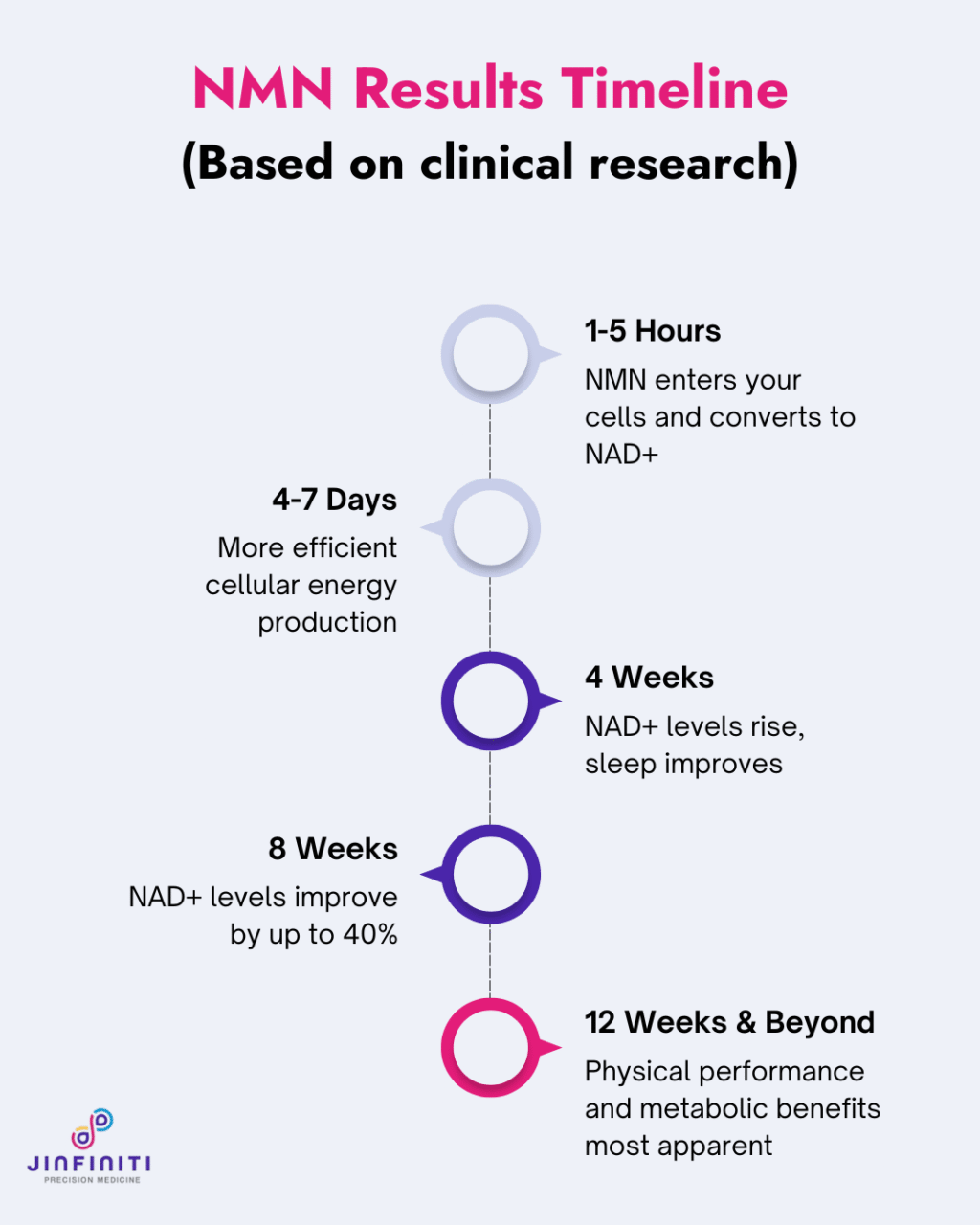
Timeline for NMN Results

NMN work happens gradually, not instantly. Here’s what typically happens based on the latest research:

  • Hour 1: NMN gets to work converting to NAD+ in your cells
  • 4-7 Days: Your cells start producing energy more efficiently5
  • 4 Weeks: NAD+ levels start to rise in your system. You might notice better endurance and sleep quality6
  • 8 Weeks: NAD+ levels jump by about 40% compared to where you started7. Health scores improve across multiple measures8
  • 12 Weeks: Physical performance and metabolism continue improving with faster walking speed and better muscle function9

This timeline varies between individuals. Your age, current health, and lifestyle all play roles.

Don’t worry if your experience looks different. Everyone responds uniquely.

“In our clinical research, we’ve observed that people typically need 4-6 weeks of consistent supplementation before they notice meaningful changes,” notes Dr. Jin-Xiong She, founder of Jinfiniti. “The timeline really depends on your starting NAD levels and baseline health.”

Graphic showing timeline of expected results after taking NMN supplements based on clinical studies

Early Effects of NMN Supplements

Those first few weeks often bring subtle but noticeable changes.

Here’s what many people experience:

  • More energy when you wake up
  • Clearer thinking during the day
  • Feeling more motivated to do things
  • Bouncing back faster from workouts

Some people notice changes within days. Others need several weeks. Athletes and fitness enthusiasts may find our guide on NMN for athletic performance particularly helpful.

Don’t get discouraged if results take time. Your cells are doing important work behind the scenes.

NMN Before and After Results

Real results develop over months, not days.

Short-Term Benefits of NMN

During your first 1-3 months, research suggests several potential improvements.

Energy and Performance

  • Improved walking distance and endurance
  • Better overall energy throughout the day
  • Faster recovery from physical activities

Metabolic Changes

  • Better insulin sensitivity in some individuals10
  • Improved quality of life scores in studies
  • More stable energy levels without crashes

Many people report feeling more like their younger selves. The changes might be subtle, but they feel meaningful.

Learn more about the most promising benefits of NMN supplementation backed by research.

An older couple with walking poles exercises together on a modern bridge walkway.

Long-Term Health Benefits

Consistent use over 3+ months may bring more significant benefits.

Research shows potential improvements in:

  • Muscle strength, particularly grip strength
  • Walking speed and overall mobility
  • Cardiovascular health markers11

The key word is “potential.” Individual results vary significantly.

Your genetics, lifestyle, and starting health all influence outcomes. Some people see dramatic changes. Others notice subtle improvements.

“What I find interesting from our testing data is how much individual responses vary,” explains Dr. She. “Two people taking the same dose might have completely different NAD increases. That’s why we always recommend testing before and after supplementation.”

Anti-Aging Effects

NMN’s anti-aging potential comes from supporting cellular health.

The supplement may help with:

  • Maintaining cellular energy production
  • Supporting DNA repair processes
  • Activating longevity-related proteins

These cellular changes might translate to feeling more energetic and resilient over time.

Remember, NMN isn’t a fountain of youth. It’s one tool in a broader healthy aging approach.

For more context on supplement benefits, explore our guide on NAD+ supplement benefits and safety considerations.

A smiling woman with wet hair poses with arms raised outdoors looking into the horizon.

Tips for Maximizing NMN Benefits

Smart strategies can boost your results.

Take NMN in the morning for best results. Evening doses might interfere with sleep.

Daily use works better than sporadic supplementation. Your cells need steady NAD+ support.

Lifestyle Support

  • Eat a balanced diet rich in whole foods
  • Exercise regularly (both cardio and strength training)
  • Prioritize 7-9 hours of quality sleep
  • Manage stress through relaxation techniques

These habits work together with NMN. There are also many ways to increase NAD+ levels naturally through lifestyle changes. You can also include natural food sources of NMN in your diet.

Using NMN with Other Supplements

Some researchers like Harvard’s Dr. David Sinclair combine NMN with complementary supplements.

Popular Combinations:

  • NMN and resveratrol for better sirtuin activation
  • NAD+ precursors in rotation
  • Antioxidants for additional cellular support

Always research interactions before combining supplements. Start with one at a time. Understanding NAD vs NMN differences can help you choose the right approach.

NMN and Resveratrol Combination

This pairing has gained popularity in longevity circles.

Resveratrol may activate sirtuins more effectively when NAD+ levels are higher. The combination could provide synergistic benefits.

Some studies suggest taking them together improves both supplements’ effects. But more research is needed.

If you’re considering other NAD+ precursors, our NMN vs NR comparison explains the differences between these popular options.

NMN Supplement Benefits You Can Track

Monitoring your progress helps assess effectiveness.

Energy Levels and Performance

Track these markers:

  • Morning energy upon waking
  • Afternoon energy stability
  • Exercise performance and recovery
  • Mental clarity throughout the day

Keep a simple daily log. Rate each area on a 1-10 scale.

Recommended Testing Consider testing your actual NAD levels before and after supplementation. This provides objective data about NMN’s effects.

Jinfiniti offers the first-of-its-kind at-home intracellular NAD+ test to measure your baseline and track improvements.

NMN Skin Benefits

Some people report skin improvements with NMN use.

Potential changes include:

  • Better skin texture and appearance
  • Improved healing from minor cuts or irritation
  • More youthful-looking skin over time

These effects likely relate to improved cellular repair and energy production. Your skin cells need NAD+ for optimal function.

Document skin changes with photos if you’re tracking this benefit.

A smiling Asian woman with closed eyes touches her neck with yellow flowers by her face.

Potential Side Effects of Taking NMN Supplements

NMN is well-tolerated by most people. But some experience mild side effects.

Common Initial Side Effects:

  • Mild stomach discomfort
  • Temporary headaches
  • Increased alertness (if taken late)
  • Minor digestive adjustments

These usually resolve within a few days to weeks.

When to Contact Your Doctor:

  • Persistent digestive issues
  • Severe headaches
  • Allergic reactions
  • Significant changes in blood sugar or pressure

Studies show excellent safety profiles for NMN. But individual responses vary.

Stop use and consult your healthcare provider if you experience concerning symptoms.

NMN Powder vs Other Forms

Most people wonder about the best form of NMN supplementation.

NMN Powder Advantages:

  • Often more cost-effective per dose
  • Flexible dosing options
  • Fast absorption when taken sublingually
  • No unnecessary fillers or binders

Other Forms:

  • Capsules offer convenience
  • Lozenges provide sublingual delivery
  • Liquid forms may absorb quickly

Pure NMN powder gives you the most control over your dosing. You can start small and adjust based on your response.

Choose the form that fits your routine best. Consistency matters more than the specific format.

Making the Most of Your NMN Supplementation

Success with NMN supplementation requires the right approach.

Invest in properly tested, pure NMN supplements. Poor quality products won’t deliver expected results.

For those seeking a complete approach, consider products like Vitality↑® NAD+ Booster. This clinically validated formula combines NMN with complementary ingredients like creatine and D-ribose for better cellular energy support.

Real cellular changes take time. Most people need 6-12 weeks to see meaningful benefits.

Monitor energy levels, sleep quality, exercise performance, and overall well-being. This helps you assess whether NMN is working.

NMN could support healthy aging, but it’s not magic. Combine it with proven lifestyle strategies for best results.

Starting NMN: Your Next Steps

Ready to begin your NMN journey? Here’s what to do:

  1. Consult your healthcare provider
  2. Choose a high-quality supplement
  3. Start with a lower dose
  4. Track your baseline energy and performance
  5. Be patient with results

The research on NMN continues expanding. Current studies show promise for supporting cellular health and energy production.

Your experience with NMN will be unique. Some people see dramatic improvements. Others notice subtle but meaningful changes.

The key is approaching NMN supplementation thoughtfully. Choose quality products, start slowly, and track your response over time.

Remember that NAD+ deficiency symptoms can include fatigue, brain fog, and reduced physical performance. If you experience these issues, NMN might help restore optimal cellular function.

Whether you’re just starting to research NMN benefits and basics or ready to begin supplementation, understanding realistic expectations sets you up for success.

Take time to prepare properly. Choose quality supplements. Track your progress consistently. And remember that the best anti-aging approach combines smart supplementation with healthy lifestyle choices.

Referenced Sources

  1. https://pmc.ncbi.nlm.nih.gov/articles/PMC9735188/ ↩︎
  2. https://pmc.ncbi.nlm.nih.gov/articles/PMC7442590/ ↩︎
  3. https://pmc.ncbi.nlm.nih.gov/articles/PMC9400576/ ↩︎
  4. https://pubmed.ncbi.nlm.nih.gov/36482258/ ↩︎
  5. https://pmc.ncbi.nlm.nih.gov/articles/PMC8328278/ ↩︎
  6. https://www.frontiersin.org/journals/nutrition/articles/10.3389/fnut.2021.756243/full ↩︎
  7. https://pmc.ncbi.nlm.nih.gov/articles/PMC9261366/ ↩︎
  8. https://www.mdpi.com/1422-0067/25/5/2594 ↩︎
  9. https://pmc.ncbi.nlm.nih.gov/articles/PMC9158788/ ↩︎
  10. https://pmc.ncbi.nlm.nih.gov/articles/PMC11336149/ ↩︎
  11. https://www.mdpi.com/1422-0067/25/17/9526 ↩︎
A wooden bowl of indian gooseberries (amla fruit) on a kitchen island

Indian Gooseberry (Amla): Benefits, Nutrition & Side Effects

Indian Gooseberry, known as Amla, has earned its reputation as nature’s vitamin C powerhouse. This small, tart fruit contains more vitamin C than 20 oranges combined.

For thousands of years, Ayurvedic medicine has called Amla a “Rasayana” or rejuvenator. Modern science is now proving what ancient healers always knew. The health benefits of Amla fruit extend far beyond basic nutrition.

You’ll discover how Amla can support your immune system, heart health, and blood sugar control. We’ll also explore the practical ways to add this superfruit to your daily routine.

Key Takeaways

  • Amla contains 300-900mg of vitamin C per 100g (3-10 times daily needs), with unique compounds that keep it stable during processing
  • Scientific studies show Amla supports immune function, heart health, blood sugar control, and may improve cholesterol by 15-25%
  • Available as fresh fruit, juice, powder, or supplements and best taken on empty stomach in morning for optimal absorption
  • Well-tolerated by most people, but can interact with blood thinners and diabetes medications – consult healthcare providers before use

The Science Behind the Superfruit

Amla (Emblica officinalis or Phyllanthus emblica) grows naturally across India and Southeast Asia. The small, round fruit has a distinctive sour and astringent taste that many find challenging at first.

What makes Amla special isn’t just its taste. The fruit contains unique compounds called tannins that actually protect its vitamin C from breaking down. This means Amla retains its nutritional power even after processing.

Different varieties of Amla trees produce fruits with varying sizes, colors, and nutrient levels. This natural diversity contributes to the wide range of health benefits researchers continue to discover.

Amla Fruit Nutritional Value

Amla’s impressive nutritional profile helps explain why this small fruit delivers such powerful health benefits.

Vitamin C Content That Rivals Citrus

Fresh Amla contains an extraordinary 300-900 mg of vitamin C per 100 grams. That’s 3-10 times your daily needs in just half a cup of fruit.

Unlike synthetic forms of vitamin C, Amla’s vitamin C comes packaged with protective compounds. These natural partners help your body absorb and use the vitamin more effectively.

The vitamin C in Amla remains stable even when the fruit is dried or processed. This stability makes Amla powder and juice reliable sources of this essential nutrient.

Essential Minerals for Daily Health

MineralAmount per 100gBenefits
Calcium17-28 mgBone and teeth health
Iron1.7-3.1 mgOxygen transport, energy
Potassium44-64 mgHeart health, blood pressure
PhosphorusPresentBone health, energy metabolism

Powerful Plant Compounds

Amla contains over 30 different beneficial plant compounds. The most important include:

  • Tannins like emblicanin A and B that provide antioxidant protection
  • Flavonoids such as quercetin and kaempferol that fight inflammation
  • Phenolic acids including gallic acid and ellagic acid for cellular protection
  • Alkaloids that contribute to immune system support

These compounds work together to create effects that no single nutrient could achieve alone.

Health Benefits of Amla (Indian Gooseberry)

Scientific research has validated many of Amla’s traditional uses, revealing impressive benefits for multiple body systems.

Infographhic showing five benefits of Indian gooseberry (Amla fruit)

1. Immune System Support

Amla works as an immunomodulator1, helping regulate your immune system rather than simply boosting it. This balanced approach supports optimal immune function without overstimulation.

The fruit’s rich vitamin C content2 combines with polyphenols like gallic acid and ellagic acid to provide antioxidant protection. These compounds help reduce oxidative stress, which directly supports healthy immune function.

The high vitamin C content in Amla supports your immune system during challenging seasons. Regular consumption may help reduce the duration and severity of common colds.

Animals given 5 grams of Amla powder daily3 showed improved antioxidant capacity and better resistance to infections. Another study4 found similar benefits with Amla extract enhancing immune markers and disease resistance.

Traditional Ayurvedic medicine has long used Amla to treat colds, fevers, and infections. Modern research confirms these antimicrobial and anti-inflammatory properties work through multiple pathways5.

Natural Vitamin C + Zinc Mini CTA

2. Heart Health and Cholesterol Management

Multiple clinical studies demonstrate Amla’s ability to improve cholesterol profiles. Participants taking 500-1000 mg daily for 12 weeks6 showed significant improvements.

The research revealed impressive results:

  • LDL (“bad”) cholesterol decreased by 15-25%
  • Total cholesterol dropped significantly
  • HDL (“good”) cholesterol increased
  • Triglyceride levels improved

One study found Amla extract worked as effectively as the prescription drug simvastatin7 for improving lipid profiles.

Amla’s potassium content helps regulate blood pressure naturally. The fruit also contains compounds that support healthy blood vessel function and may help prevent arterial damage over time.

3. Blood Sugar Control and Diabetes Support

A person looking at blood sugar results

Amla’s soluble fiber content helps slow down how quickly your body absorbs sugar from meals. This leads to smaller blood sugar spikes after eating.

The chromium naturally present in Indian gooseberry may enhance insulin sensitivity. Better insulin function means your cells can use glucose more effectively.

Studies show both fasting and post-meal blood sugar levels improve8 with regular Amla consumption.

Amla helps prevent the formation of advanced glycation end-products (AGEs)9. These harmful compounds contribute to diabetic complications like nerve damage and eye problems.

4. Digestive Health and Gut Support

Traditional medicine has long used Amla as a digestive tonic. The fruit stimulates digestive enzyme production10, helping your body break down food more efficiently.

Amla’s fiber content supports healthy bowel movements. This can help relieve constipation and support overall digestive regularity.

The fruit also has gastroprotective properties. Studies show Amla extracts can help heal gastric ulcers11 and protect the stomach lining from damage.

The prebiotic fiber in Amla feeds beneficial gut bacteria. A healthy gut microbiome supports both digestive health and overall immunity.

5. Brain and Liver Protection

Amla’s vitamin C content supports neurotransmitter production, particularly norepinephrine12. This brain chemical is essential for cognitive function and mood regulation.

The antioxidants in Amla help protect brain cells from free radical damage. This protection may help maintain memory and cognitive function as you age.

Traditional medicine recognizes Amla as a liver tonic. Modern research confirms its hepatoprotective properties by helping protect liver cells from toxin damage13.

Studies show Amla extracts can help reverse certain types of liver damage in animal models.

6. Hair and Skin Health

Woman with healthy hair wearing white scoop-neck top showing left shoulder

Amla has a centuries-old reputation for supporting skin and hair health. Recent clinical research supports these traditional claims.

A 2024 study14 found that women with hair loss who took Amla syrup daily showed significant improvement in hair growth and thickness.

Amla oil applied topically may help:

  • Strengthen hair follicles
  • Reduce premature graying
  • Add natural shine and luster
  • Minimize hair loss

Amla’s vitamin C content supports collagen production. Collagen keeps your skin firm, elastic, and youthful-looking. The antioxidants help protect skin cells from UV damage and environmental toxins.

Potential Side Effects and Precautions

While Amla is generally safe for most people, understanding potential side effects and interactions helps you use it responsibly.

Common Side Effects to Know

Most people tolerate Amla well, but some may experience mild digestive upset. Starting with smaller amounts can help your body adjust.

Possible side effects include:

  • Mild stomach irritation
  • Loose stools (due to fiber content)
  • Skin dryness with very high doses
  • Rare allergic reactions

Important Drug Interactions

Amla can enhance the effects of blood-thinning medications like warfarin or aspirin. This increases bleeding risk, especially during surgery.

If you take diabetes medications, monitor your blood sugar closely when adding Amla. The fruit may enhance your medication’s effects.

People taking chemotherapy or radiation should consult their oncologist before using Amla supplements. High-dose antioxidants might interfere with certain cancer treatments.

Special Population Considerations

GroupRecommendation
Pregnant womenAvoid medicinal doses; food amounts likely safe
Breastfeeding mothersInsufficient safety data; consult healthcare provider
ChildrenFood amounts safe; supplement use requires guidance
Surgery patientsStop 2 weeks before scheduled procedures
Bleeding disordersUse with extreme caution or avoid

How to Add Amla to Your Daily Routine

A bowl of Indian gooseberries on a kitchen counter

Adding Amla to your wellness routine is easier than you might think, with multiple forms and timing options to fit your lifestyle.

Available Forms and Their Uses

  • Fresh Fruit: The most natural option, though the taste can be challenging. Try adding a pinch of salt or honey to make it more palatable.
  • Amla Juice: Mix 1-2 tablespoons with water daily. Morning consumption on an empty stomach is traditionally recommended.
  • Amla Powder: Versatile and convenient. Mix ¼ to ½ teaspoon with warm water, honey, or add to smoothies.
  • Capsules and Tablets: Standardized doses ranging from 500-1000 mg daily. Follow manufacturer recommendations.

Optimal Timing for Maximum Benefits

Morning consumption on an empty stomach allows for optimal nutrient absorption. This timing also supports natural detoxification processes.

Taking Amla before meals may help with digestion and blood sugar control. The fiber content helps slow sugar absorption from your meal.

Some people prefer splitting their daily dose between morning and evening for sustained benefits throughout the day.

Dosage Guidelines by Form

FormTypical Daily AmountBest Timing
Fresh fruit1-2 fruitsMorning or before meals
Juice15-20 ml (diluted)Empty stomach, morning
Powder¼-½ teaspoonMixed with water/honey
Capsules500-1000 mgAs directed on label

Choosing Quality Amla Supplements

Not all Amla supplements are created equal, so knowing what to look for ensures you get a product that delivers real benefits.

What to Look for on Labels

Look for products that verify their vitamin C content through analytical testing like HPLC (High-Performance Liquid Chromatography). This ensures you’re getting the stated amount of active nutrients.

Quality supplements will clearly state the amount of vitamin C per serving and may mention additional beneficial compounds from Amla, such as flavonoids and antioxidants.

Third-party testing certifications from organizations like NSF, USP, or ConsumerLab provide additional quality assurance.

Jinfiniti’s Natural Vitamin C + Zinc provides 1000mg of vitamin C sourced from Amla fruit extract, with HPLC verification ensuring accurate potency.

Avoiding Common Quality Issues

The supplement industry isn’t as strictly regulated as pharmaceuticals. This means product quality can vary significantly between manufacturers.

Choose reputable companies that follow Good Manufacturing Practices (GMP). These companies are more likely to produce consistent, pure products.

Avoid products with excessive fillers, artificial colors, or unnecessary additives. The ingredient list should be simple and focused.

Working with Healthcare Providers

Always inform your healthcare provider about any supplements you’re taking. This is especially important if you take prescription medications.

Your doctor can help determine if Amla is appropriate for your specific health situation. They can also monitor for potential interactions or side effects.

Consider working with a qualified nutritionist or integrative medicine practitioner for personalized guidance on supplement use.

Supplement Safety Note

The Promising Future of Amla

Researchers continue studying Amla’s potential anti-cancer properties15. While early results are promising, more human studies are needed to confirm these effects.

Scientists are also investigating Amla’s role in protecting against neurodegenerative diseases. The fruit’s antioxidant properties show particular promise for brain health.

Future research may help identify which Amla varieties provide the most potent health benefits for specific conditions.

Making Amla Part of Your Wellness Journey

Amla represents a bridge between ancient wisdom and modern science. Thousands of years of traditional use, combined with growing scientific evidence, support its role in promoting health and longevity.

The fruit’s unique combination of vitamin C, antioxidants, and bioactive compounds offers benefits that extend far beyond basic nutrition. From immune support to heart health, Amla provides a natural approach to wellness.

Remember that Amla works best as part of a comprehensive approach to health. Combine it with a balanced diet, regular exercise, adequate sleep, and stress management for optimal results.

Start slowly with small amounts to allow your body to adjust. Pay attention to how you feel and adjust your intake accordingly. With patience and consistency, you may discover why this ancient “wonder berry” has maintained its reputation for thousands of years.

Always consult with a qualified healthcare provider before starting any new supplement regimen, especially if you have existing health conditions or take medications.

Referenced Sources

  1. https://pmc.ncbi.nlm.nih.gov/articles/PMC3733846/ ↩︎
  2. https://www.mdpi.com/2223-7747/13/5/574 ↩︎
  3. https://www.mdpi.com/2079-7737/11/12/1753 ↩︎
  4. https://www.sciencedirect.com/science/article/pii/S2352513421003707 ↩︎
  5. https://pubmed.ncbi.nlm.nih.gov/27320046/ ↩︎
  6. https://bmccomplementmedtherapies.biomedcentral.com/articles/10.1186/s12906-019-2430-y ↩︎
  7. https://pmc.ncbi.nlm.nih.gov/articles/PMC3326920/ ↩︎
  8. https://www.mdpi.com/1661-3821/3/3/26 ↩︎
  9. https://www.mdpi.com/2076-3417/11/19/8819 ↩︎
  10. https://pmc.ncbi.nlm.nih.gov/articles/PMC9137578/ ↩︎
  11. https://pubmed.ncbi.nlm.nih.gov/12169398/ ↩︎
  12. https://pmc.ncbi.nlm.nih.gov/articles/PMC10934303/ ↩︎
  13. https://pubs.rsc.org/en/content/articlelanding/2013/fo/c3fo60237k ↩︎
  14. https://onlinelibrary.wiley.com/doi/10.1155/2017/4395638 ↩︎
  15. https://journals.lww.com/eurjcancerprev/abstract/2011/05000/amla__emblica_officinalis_gaertn_,_a_wonder_berry.11.aspx ↩︎
A young woman examines her skin in a handheld mirror

Should Women Take NAD+ Supplements?

Nicotinamide adenine dinucleotide (NAD+) has become a buzzword in anti-aging and wellness circles.

The essential molecule plays a crucial role in hundreds of metabolic processes throughout your body. But what does it mean specifically for women’s health?

As we age, our NAD+ levels naturally decline. This decrease may contribute to various health challenges women face throughout their lives – from fertility issues to menopausal symptoms and beyond.

Let’s explore what science tells us about NAD+ for women, potential benefits, risks to consider, and who might benefit most from dietary supplements.

Key Takeaways

  • NAD+ levels naturally decline with age in women, affecting energy, hormones, and cellular health
  • Supplementation shows strongest evidence for fertility and menopause support, potentially improving egg quality and reducing hot flashes
  • Test your NAD+ levels first – dosing varies greatly between individuals, and what’s optimal for one person could be ineffective or toxic for another
  • Timing matters by life stage – perimenopause/menopause may be the most beneficial time to start, while pregnancy requires medical supervision

Why NAD+ Matters for Women’s Health

NAD+ is a coenzyme found in all living cells. Think of it as a tiny helper molecule that works behind the scenes to keep your body running smoothly – like the perfect foundation that balances your skin and creates a flawless canvas without anyone noticing it’s there.

This powerful molecule is involved in:

  • Cellular energy production
  • DNA repair
  • Metabolic regulation
  • Cellular resilience
  • Activation of sirtuins (proteins linked to longevity)

For women specifically, NAD+ influences processes affecting hormonal balance, energy metabolism, and cellular health1 – factors that all impact healthy aging.

Research shows NAD+ levels decline with age in various tissues, including female reproductive organs like the ovaries and uterus.

This decline may contribute to age-related health challenges that uniquely or disproportionately affect women.

Potential Benefits of NAD Supplements for Women

Three smiling women in a sunflower field

Remember how energetic you felt in your twenties? Or how quickly your skin bounced back from a late night? NAD+ plays a role in all of these processes.

Research has found that maintaining healthy NAD+ levels can potentially benefit women’s health in several areas.

1. Fertility and Reproductive Health

NAD+ shows clear benefits for women’s fertility and reproductive health.

Studies show that NAD+ levels in oocytes (eggs) decline with age. A study in Cell Reports found that restoring NAD+ using precursors like nicotinamide mononucleotide (NMN) can improve egg quality, increase ovulation rates, and boost fertility2.

In older female mice, NAD+ precursor supplements improved:

  • Time to first live birth
  • Percentage of mice having live births
  • Egg quality
  • Ovulation rate

These benefits occur because NAD+ supports energy production and mitochondrial function in reproductive cells.

Women with PCOS may also benefit from NAD+. Research found that PCOS patients have lower NAD+ levels in ovarian cells, causing oxidative stress and mitochondrial problems3.

In animal studies, the NAD+ precursor nicotinamide riboside (NR) produced several improvements:

2. Relief from Menopausal Symptoms

If you’re in the throes of perimenopause or menopause, you know it can feel like your body has staged a revolt.

Hot flashes strike during important meetings, sleep becomes elusive, and your once-sharp mind sometimes feels foggy.

Studies suggest that restoring levels of NAD may help with common menopausal symptoms including:

  • Hot flashes
  • Night sweats
  • Mood changes
  • Sleep disturbances
  • Brain fog and cognitive issues

The benefits appear related to how NAD+ helps cells produce energy and regulate metabolism when hormonal shifts cause significant physical changes.

3. Better Bone Health

Bone health is crucial for women, especially after menopause when estrogen decreases. Remember leaping off swings as a kid? That bodily resilience doesn’t completely disappear with age.

NAD+ may protect bone density and fight osteoporosis in older adults. Research indicates that increasing NAD levels can slow bone breakdown while promoting new bone cell formation4.

Bones stay healthy through a process called remodeling. As we age, bone-building cells decline, leading to too much bone removal without enough new growth. NAD+ helps maintain this balance, potentially offering protection against age-related bone loss.

4. Improved Skin Health

A young woman with radiant skin health

Seeing new lines or sagging skin in the mirror? That’s your skin’s NAD+ levels declining right before your eyes. This natural process causes fine lines, wrinkles, and elasticity loss5.

Boosting NAD+ through supplements or specialized skincare products can:

  • Support DNA repair
  • Help cells regenerate
  • Fight sun-related aging
  • Reduce uneven skin tone
  • Protect your skin barrier

Sirtuins, enzymes that depend on NAD+, play a central role in maintaining skin health and youthfulness. NAD+ helps these enzymes keep your skin’s structure strong and bouncy.

5. Mood Balance and Mental Wellbeing

Women’s mental health can benefit from optimal NAD+ levels. Ever had those days when your brain just won’t cooperate? Research suggests NAD+ plays a key role in:

  • Neurotransmitter function (regulating mood)
  • Cognitive function
  • Cellular energy for brain cells6

NAD+ supplements may help reduce anxiety and depression by promoting balanced neurotransmitters. The energy boost can also improve focus and mental clarity, helping you handle life’s demands more effectively.

6. Energy and Metabolism Boost

Remember powering through your day without needing coffee refills? NAD+ is essential for your mitochondria – your cellular energy generators – making it key for your energy and metabolism.

Research in the journal Science tested nicotinamide mononucleotide (NMN) on 25 postmenopausal women with prediabetes over 10 weeks7. They found improvements in:

  • Insulin sensitivity
  • Insulin signaling
  • Healthy muscle tissue changes

This suggests NAD+ precursors may help fight the metabolic decline that often accelerates after menopause.

NAD+ also helps regulate your circadian rhythm8 – your internal body clock. Healthy NAD+ levels can improve your sleep-wake patterns, leading to better sleep, balanced hormones, and improved vitality.

Imagine enjoying that deep, refreshing sleep you had when you were younger!


Vitality Mini CTA

Common Side Effects

The most commonly reported side effects of NAD+ precursors include:

  • Diarrhea
  • Nausea
  • Rashes
  • Hot flashes
  • Leg cramps

These side effects appear to be relatively rare and minor for most users. Still, it’s worth starting with lower doses to see how your body responds.

Dosage Recommendations

Current dosage recommendations based on available research include:

Supplement TypeDaily Dosage RangeTypical Study DoseNotes
NR (Nicotinamide Riboside)100-1000mg250-500mgMost studies use mid-range doses
NMN (Nicotinamide Mononucleotide)150-1200mg250-900mgNAD+ improvements seen in this range
NAM (Nicotinamide)100-500mg500mgNAD+ increases observed at higher end
Niacin (Nicotinic Acid)14-35mg (general), 100-1000mg (therapeutic)VariableTherapeutic doses require medical supervision due to potential side effects

Important Notes:

  • These are general recommendations, not gender-specific
  • Individual factors (health status, age, medical conditions) should guide dosing
  • Consult with a healthcare provider before starting any supplement regimen

Considerations for Different Life Stages

A pregnant woman in a pink dress holds her belly in a heart shape

Your body’s relationship with NAD+ changes throughout your life, just like your cooking preferences evolve from instant ramen to more sophisticated flavors. Understanding these shifts helps you make better choices about supplementation timing.

Reproductive Years

If you’re in your childbearing years, the fertility benefits we discussed earlier become especially relevant. NAD+ supports egg quality and cellular energy in reproductive tissues.

Women planning to delay childbearing might find this particularly valuable. However, always consult your healthcare provider before starting any supplement regimen while trying to conceive.

Pregnancy and Postpartum

Research remains limited here, though emerging studies show promise. 

One study found NAM may protect developing eggs from acetaminophen effects9. In animal models, NR prevented pregnancy-related high blood pressure and fetal growth issues10.

Given the limited human data, pregnant women should only consider NAD+ supplements under medical supervision.

Perimenopause and Menopause

This life stage may offer the most compelling case for the benefits of NAD+ supplementation. As we covered earlier, research shows significant benefits for hot flashes, sleep, energy, and metabolism during hormonal transitions.

The metabolic improvements seen in postmenopausal women with prediabetes make this timing particularly strategic for many women.

Practical Ways to Support NAD+ Levels

Beyond supplementation, several lifestyle factors can influence your NAD+ levels. Many of these approaches are beneficial for your overall health too.

Diet

Your grandmother’s advice to “eat your vegetables” turns out to be NAD+-boosting wisdom! Consume foods rich in NAD+ precursors, including:

  • Lean meats
  • Fish
  • Legumes
  • Nuts and seeds
  • Whole grains
  • Leafy greens

These foods support your body’s natural NAD+ production.

Exercise

Regular physical activity may support NAD+ production. Even moderate exercise several times a week can deliver some benefit. Find movement you enjoy – whether it’s dancing in your kitchen, swimming laps, or taking a brisk walk with a friend – and you’ll be supporting your NAD+ production naturally.

Stress Management

Chronic stress depletes NAD+. Practices like meditation, yoga, and adequate sleep help preserve your NAD+ stores. Taking even five minutes a day for deep breathing can make a difference.

Limiting Alcohol

Excessive alcohol consumption places demands on NAD+ resources as your body metabolizes alcohol. Moderating intake helps protect your NAD+ levels. Think of it this way: every glass of wine requires your body to use some of its precious NAD+ stores for processing.

Should Women Take NAD+ Supplements?

An accomplished woman holds her glasses on a modern sofa

There’s no one-size-fits-all answer about taking NAD+ supplements. Just like you wouldn’t purchase shoes without trying them on first, your supplement decisions should be tailored to your individual health goals.

Women who might benefit most include:

  • Those experiencing menopause symptoms
  • Women with metabolic concerns, particularly postmenopausal women with insulin resistance
  • Those interested in supporting reproductive health and fertility
  • Women concerned about age-related cognitive changes
  • Those looking for support with energy production and overall vitality

Jinfiniti’s Vitality↑® NAD+ Booster contains a science-backed blend shown to optimize NAD+ levels through several metabolic pathways. Our well-researched formulation of NMN, creatine monohydrate, niacinamide and D-ribose work together to support cellular energy needs that many women face during hormonal changes.

However, important cautions exist:

  • Women with cancer, cancer history, or strong family history of cancer should approach supplementation with caution
  • Women with autoimmune or inflammatory conditions should discuss potential risks with healthcare providers
  • Pregnant women should only consider NAD+ supplementation under medical supervision

Before taking any NAD+ supplement, measure your baseline NAD+ levels with our Intracellular NAD® Test. This helps personalize your dosing and track your progress—following our TAO approach (Test, Act, Optimize) to precision health.

Bottom Line

NAD+ supplements show promise for women’s health across several areas – fertility, mental clarity, bone health, and energy levels. Since NAD+ naturally decreases with age, supplements may help combat age-related health issues that women often face.

The evidence for reproductive and menopausal health benefits looks good, while research in other areas continues to grow. As scientists better understand how NAD+ affects women’s health, this coenzyme could become a key part of health optimization.

Referenced Sources

  1. https://www.nature.com/articles/s41392-020-00311-7 ↩︎
  2. https://pmc.ncbi.nlm.nih.gov/articles/PMC7063679/ ↩︎
  3. https://www.ncbi.nlm.nih.gov/pmc/articles/PMC11749135/ ↩︎
  4. https://www.nature.com/articles/s41514-021-00058-7 ↩︎
  5. https://pmc.ncbi.nlm.nih.gov/articles/PMC9512238/ ↩︎
  6. https://pmc.ncbi.nlm.nih.gov/articles/PMC6787556/ ↩︎
  7. https://pmc.ncbi.nlm.nih.gov/articles/PMC8376945/ ↩︎
  8. https://pmc.ncbi.nlm.nih.gov/articles/PMC8130408/ ↩︎
  9. https://www.sciencedirect.com/science/article/pii/S095528632300044X ↩︎
  10. https://www.life-science-alliance.org/content/7/12/e202302505 ↩︎
An image of a woman looking at the mirror applying skin care

The Regenerative Benefits of NAD+ for Aging Skin

What if the secret to younger, more radiant skin lies not in a bottle of cream but within your cells? 

NAD+ (Nicotinamide Adenine Dinucleotide) is emerging as a game-changer in the world of anti-aging, hailed by dermatologists and longevity experts alike. This powerful molecule works behind the scenes, fueling your body’s ability to repair DNA, produce energy, and combat the visible signs of aging. 

Yet, as we age, NAD+ levels naturally plummet, leaving skin dull, dehydrated, and prone to wrinkles. 

The good news? Cutting-edge research suggests that replenishing NAD+ may not just slow the clock but turn back its hands, rejuvenating your skin from within.

Intrigued? Let’s dive into the science and discover how NAD+ could redefine your skincare routine.


In this article, we’ll discuss…

  • The science behind NAD+ and its crucial role in slowing the aging process of your skin.
  • The top benefits of NAD+ for radiant skin, including its ability to support cellular repair, boost hydration, and enhance overall skin vitality.
  • The pros and cons of using topical NAD+ skincare products.

NAD+ and Skin Aging

An image of a matured woman depicting aging

Think of NAD+ as the fuel behind your skin’s natural glow and resilience. This vital coenzyme powers cellular repair and energy production, but with the decline of NAD+ levels with age, your skin begins to show signs of wear and tear.One of the first signs is a slowdown in collagen production. Collagen is the protein responsible for keeping your skin firm and elastic.1 When NAD+ levels decline, collagen synthesis weakens,2 leading to sagging skin, fine lines, and wrinkles—the hallmarks of aging.

But the effects go beyond structure. NAD+ is crucial for activating DNA repair mechanisms in your skin cells. Sun exposure and UV damage can accelerate aging and increase the risk of skin cancers, but with adequate NAD+, your cells can combat these effects. Unfortunately, when NAD+ levels are low, your skin’s ability to repair itself diminishes, leaving it more vulnerable to environmental damage.

NAD+ also powers your skin’s mitochondria3—the energy generators of cells. Mitochondria produce ATP, the energy necessary for regeneration and repair. Declining NAD+ levels mean less energy for skin cells to renew themselves, leading to a dull, tired complexion and slower recovery.

Key Takeaway: NAD+ helps maintain skin health by powering collagen production, DNA repair, and cellular energy, but its decline with age leads to visible signs of aging.

NAD+ Benefits for Skin Health

An image of a matured woman with a healthy skin

When it comes to maintaining radiant, youthful skin, NAD+ is nothing short of a powerhouse. This essential coenzyme fuels critical processes like cellular energy production and repair, making it integral to skin health. 

Here are the top health benefits of NAD+ for skin health and how it supports a vibrant complexion:

1. Boosts DNA Repair

NAD+ plays a pivotal role in activating enzymes, such as PARPs (poly(ADP-ribose) polymerases),4 which are essential for repairing DNA damage caused by harmful UV rays and environmental pollutants. This repair process helps maintain the structural integrity of skin cells, reducing the risks of photoaging, pigmentation issues, and even skin cancers. By restoring damaged DNA, NAD+ promotes smoother, healthier skin.

2. Enhances Cellular Energy Production

Your mitochondria, known as the powerhouses of cells, rely on NAD+ to generate ATP, the energy currency of cells. Adequate NAD+ levels ensure efficient energy production,5 allowing skin cells to regenerate more effectively and repair damage. This energy boost rejuvenates the skin, resulting in a glowing, refreshed appearance.

3. Activates Sirtuins for Cellular Longevity

Sirtuins are proteins that regulate stress responses, inflammation, and aging processes in cells. These proteins depend on NAD+ to function. By activating sirtuins, NAD+ minimizes inflammation, enhances skin elasticity,6 and delays cellular aging. The result? Skin that looks and feels younger, longer.

4. Strengthens the Skin Barrier

NAD+ supports the synthesis of vital proteins and lipids that fortify the skin’s natural barrier. This barrier plays a crucial role in locking in moisture and protecting against environmental aggressors like toxins and bacteria. By maintaining a robust skin barrier, NAD+ helps prevent dryness, irritation, and premature aging, ensuring a smoother, more resilient complexion.

5. Reduces Oxidative Stress

Environmental factors, including pollution and UV exposure, produce free radicals that damage skin cells. NAD+ aids in neutralizing these free radicals7 by supporting antioxidant pathways. This reduces oxidative stress, a key contributor to wrinkles, dullness, and other signs of aging.

These benefits make it clear: NAD+ is a cornerstone for maintaining a radiant, youthful complexion as you age. By supporting cellular repair, energy production, and overall skin health, NAD+ empowers your skin to look and feel its best, no matter your stage in life.

Does Topical NAD+ Work for Skincare?

An image of a matured woman applying skin care

The potential benefits of topical NAD+ in skincare have sparked interest, but research shows mixed results primarily due to its large molecular size. NAD+ is a relatively large molecule, making it difficult to penetrate the skin barrier effectively when applied topically.

The skin’s barrier is highly selective, meaning that only smaller molecules can typically pass through to deeper layers where they can exert their benefits. This limitation raises questions about whether topical formulations of pure NAD+ can truly deliver the anti-aging and skin health benefits often attributed to NAD+ supplementation.

On the other hand, NAD+ precursors, particularly niacinamide (also known as nicotinamide), have shown more promise in topical applications. Niacinamide is smaller in size and can penetrate the skin more easily,8 making it a more viable option for skincare formulations. 

Studies have demonstrated that niacinamide offers numerous benefits for the skin,9 including enhancing the skin’s barrier function by building keratin, reducing inflammation, and improving overall skin texture. These properties make niacinamide an effective ingredient for treating conditions like acne, redness, and hyperpigmentation. Additionally, as a precursor to NAD+, niacinamide helps promote cellular energy and repair, indirectly boosting NAD+ levels in skin cells.

Despite the potential of topical NAD+ and its precursors, clinical studies specifically assessing the effectiveness of topical NAD+ formulations remain limited. More research is needed to explore how to improve skin penetration and determine the best delivery systems to maximize the benefits of NAD+. Until then, niacinamide remains a more reliable option for those seeking the skin-enhancing benefits associated with NAD+.

Key Takeaway: While topical NAD+ struggles with skin absorption, its smaller precursor niacinamide offers proven skincare benefits through better penetration.

How to Boost NAD+ Levels for Healthier Skin

An image of a woman taking supplement

Maintaining optimal NAD+ levels is crucial for youthful, glowing skin as we age. As NAD+ naturally declines over time, it’s important to adopt strategies that boost NAD+ levels to support skin vitality and reduce visible signs of aging.

Here are effective ways to naturally boost NAD+ levels for healthier, radiant skin:

NAD+ Precursors:

Incorporating NAD+ precursors into your daily routine is one of the most effective ways to raise NAD+ levels. These precursors help stimulate NAD+ production within the body, directly benefiting skin health. Key NAD+ precursors include:

  • Niacin (Vitamin B3): Niacin is a direct precursor to NAD+ and helps in its synthesis. It is widely known for its ability to support skin repair and combat inflammation,10 making it an important nutrient for maintaining smooth, youthful skin.
  • Nicotinamide Riboside (NR):Research has shown that NR supplementation can significantly boost NAD+ levels in the body, which helps enhance mitochondrial function,11 improve skin cell turnover, and support overall skin health. NR has been linked to increased cellular energy, which helps skin cells regenerate faster, contributing to a healthier complexion.
  • Nicotinamide Mononucleotide (NMN): NMN, another powerful NAD+ precursor, works similarly to NR but has unique benefits. Studies indicate that NMN supplementation not only increases NAD+ levels but also enhances mitochondrial function and boosts skin cell metabolism.12 NMN has shown promise in improving the elasticity and resilience of the skin, helping it maintain a youthful appearance.

Our Vitality ↑® NAD+ Booster contains a blend of key NAD+ precursors, including nicotinamide and NMN to help raise NAD+ levels and efficiently support cellular health for skin cell renewal.

Lifestyle Modifications:

Certain lifestyle changes can also naturally boost NAD+ levels and promote skin health. These strategies not only help elevate NAD+ but also support overall well-being:

  • Regular Exercise:Physical activity is a proven way to enhance NAD+ levels. Exercise increases NAD+ in muscles and other tissues, promoting better metabolic health and vibrant skin. Studies have shown that regular exercise can improve skin elasticity, reduce wrinkles, and enhance the skin’s appearance.
  • Intermittent Fasting: This dietary approach has been linked to increased NAD+ production, likely due to its impact on mitochondrial health and reduced oxidative stress. Research suggests that intermittent fasting promotes the activation of longevity genes and boosts NAD+ levels,13 which can improve skin health and vitality.

Sun Protection:

Protecting your skin from harmful UV radiation is critical in maintaining NAD+ levels and preventing premature aging. UV exposure depletes NAD+ by increasing oxidative stress and causing DNA damage. To combat these effects, it is essential to apply broad-spectrum sunscreen daily, which helps preserve NAD+ levels and protects the skin from photoaging and DNA damage.

Stress Management:

Chronic stress can lower NAD+ levels14 by increasing inflammation and oxidative damage in the body. Engaging in stress-reducing practices such as yoga, meditation, and deep-breathing exercises can help mitigate these negative effects. These activities can not only support your overall health but also help maintain adequate NAD+ levels for healthy, radiant skin.

By adopting a combination of these strategies—incorporating NAD+ precursors like NMN, engaging in regular exercise, protecting your skin from UV rays, and managing stress—you can effectively naturally boost NAD+ levels and promote healthier skin. These steps support the body’s natural processes, helping skin cells regenerate and repair more effectively, ultimately contributing to a smoother, more youthful complexion.

Referenced Sources

  1. https://pmc.ncbi.nlm.nih.gov/articles/PMC6835901/ ↩︎
  2. https://pmc.ncbi.nlm.nih.gov/articles/PMC9512238/ ↩︎
  3. https://www.sciencedirect.com/science/article/abs/pii/S1568786414001165 ↩︎
  4. https://pmc.ncbi.nlm.nih.gov/articles/PMC6740200/ ↩︎
  5. https://pmc.ncbi.nlm.nih.gov/articles/PMC7973386/ ↩︎
  6. https://www.jinfiniti.com/what-are-sirtuins/ ↩︎
  7. https://pubmed.ncbi.nlm.nih.gov/24794404/ ↩︎
  8. https://www.mdpi.com/2076-3921/13/4/425 ↩︎
  9. https://pubmed.ncbi.nlm.nih.gov/17147561/ ↩︎
  10. https://pubmed.ncbi.nlm.nih.gov/17147561/ ↩︎
  11. https://pmc.ncbi.nlm.nih.gov/articles/PMC7352172/. ↩︎
  12. https://pmc.ncbi.nlm.nih.gov/articles/PMC10721522/ ↩︎
  13. https://pubmed.ncbi.nlm.nih.gov/20148352/ ↩︎
  14. https://pmc.ncbi.nlm.nih.gov/articles/PMC9917998/ ↩︎

nad deficiency symptoms

NAD Deficiency Symptoms: 6 Common Signs of Low NAD Levels

Feeling sluggish, mentally foggy, or struggling to keep up with your routine lately?

While it’s quite normal to feel this way from time to time, you shouldn’t take these frustrating signs for granted.

What seems like just another bad day could be a telltale sign that your NAD+ levels are running low.

Nicotinamide adenine dinucleotide (NAD+) is an essential coenzyme that plays a critical role in energy production, DNA repair, and overall health.

Unfortunately, NAD+ levels naturally decline with age and can be further affected by lifestyle factors, leading to a range of symptoms that are often overlooked.

So, what are these warning signs, and how can you optimize your NAD+ levels to stay healthy and active as you age?


In this article, we discuss:

  • Why your NAD levels are dropping faster than you think—and it’s not just because you’re getting older.
  • 7 subtle signs of NAD deficiency that many people dismiss as “just part of aging,” but shouldn’t.
  • The red flags of severe NAD deficiency you can’t afford to ignore.
  • How to accurately detect low NAD levels in your body and the easiest, most effective ways to boost them naturally.

Understanding NAD+ and Why It Declines

p1 2

Nicotinamide adenine dinucleotide, or NAD+, is an essential coenzyme found in every cell of our body. It plays a key role in several critical processes, including energy metabolism, DNA repair, and cellular signaling.1

Essentially, NAD+ acts like a shuttle for electrons during metabolic reactions, helping to transform the food we consume into usable energy and supporting the production of ATP, which is the main energy currency for our cells.

Beyond just energy production, NAD+ also maintains the integrity of our DNA and regulates various cellular functions that keep us healthy.

Unfortunately, by the time we reach our 30s, our NAD+ levels start to decline. In fact, NAD+ can decrease by up to 50% as we age,2 with noticeable reductions in the skin and other tissues.

This decline can be accelerated by factors like oxidative stress,3 unhealthy diets, and lifestyle choices, leading to symptoms that are often mistaken for the typical signs of aging.

But in reality, these may be early signs of low NAD+ levels, indicating that it’s time to take action and make necessary lifestyle changes to support your health and longevity.

Vitality NAD+ Booster promotional image

Common Symptoms of NAD+ Deficiency

Below are six common health symptoms that indicate you may be deficient in NAD.

Fatigue and Low Energy

NAD is essential for energy metabolism. Think of it as the engine that powers your body, helping convert the food you eat into usable energy. However, when your NAD+ levels drop, it can disrupt your metabolism and may result in fatigue and low energy.

Your body might also struggle to produce ATP (adenosine triphosphate), which is your main source of energy. The result? You might feel sluggish and worn out. NAD+ also supports the proper functioning of enzymes that protect against oxidative damage.

When these protective enzymes can’t do their job because of low NAD levels, it creates an imbalance between harmful reactive oxygen species and protective antioxidants4 that can further drain your energy and leave you feeling even more fatigued.

Moreover, NAD+ is important in metabolizing carbohydrates, fats, and proteins. When your NAD+ levels are low, these metabolic pathways can become inefficient, leading to even more tiredness. For instance, if your body can’t break down fatty acids properly, it can accumulate unused substrates that sap your energy.

Not to mention, during physical activity, your muscles depend heavily on NAD+ for energy.5 If you’re low on NAD+, you might experience muscle weakness and decreased endurance, making even simple tasks feel much more challenging.

Cognitive Symptoms

NAD is also important for maintaining healthy cognitive function. When your levels drop, you might start to notice some cognitive symptoms, such as mental fog, memory lapses, and a general decline in sharpness.

This is because NAD+ is crucial for energy metabolism and mitochondrial function, both of which are essential for your brain to perform at its best. When NAD+ levels are low, the brain struggles to produce adenosine triphosphate (ATP)6—the energy that powers our cells—leading to sluggish thinking and that frustrating feeling of mental cloudiness or fatigue.

Research shows that a deficiency in NAD+ can worsen neuroinflammation and oxidative stress, both of which are harmful to cognitive health, potentially leading to increased neuronal damage and cognitive issues,7 such as forgetfulness and decreased mental agility.

Skin and Appearance Changes

Is your skin looking dry and dull despite your diligent skincare routine and healthy lifestyle? One hidden culprit could be low NAD+ levels.

Research shows that low NAD+ levels can hinder your skin’s ability to repair itself, particularly from damage caused by sun exposure. This impairment can result in more visible signs of aging, such as wrinkles and loss of elasticity.

Additionally, because NAD+ plays a key role in supporting mitochondrial function—the process that provides the energy your skin cells need to regenerate and stay vibrant8—low NAD+ levels can impede cell renewal. This leaves your skin looking tired, dull, and less radiant.

Poor Sleep Quality

Having trouble getting a restful night’s sleep? It could be more than just stress or a racing mind—it might actually be a deficiency in NAD+ levels.

As a coenzyme, NAD+ supports energy production and maintains healthy cells, including those involved in regulating your sleep cycle. When NAD+ levels decline, especially as we age, this drop can disrupt your sleep patterns.

Since NAD+ helps regulate key “clock” genes that control your sleep-wake cycle, it can throw off your body’s internal clock, or circadian rhythm,9 making it harder to fall asleep or stay asleep through the night.

Research also reported that NAD+ is essential for the synthesis of serotonin from tryptophan, a precursor amino acid.10 If NAD+ levels drop, this metabolic pathway can become inefficient, potentially leading to reduced serotonin and subsequently lower melatonin levels.

Therefore, you may experience sleep disturbances and increased fatigue due to inadequate melatonin production.

Mental Health and Mood Swings

Low NAD+ levels can significantly affect your mood and mental health, often manifesting as mood swings, irritability, anxiety, or even depression.

This occurs because NAD+ deficiency disrupts the balance of crucial neurotransmitters like serotonin, dopamine, and norepinephrine,11 which are essential for regulating mood and emotional responses. As a result, you may experience persistent feelings of anxiety or sadness.

NAD+ is also important in activating sirtuins—proteins that help cells manage stress.12 When NAD+ levels are low, sirtuins become less effective, which can contribute to mental health challenges like anxiety and irritability.

This makes it harder for your brain to cope with stress, intensifying emotional imbalances.

Metabolic Health Issues

NAD+ deficiency can lead to various metabolic problems,13 including weight gain, insulin resistance, and a higher risk of metabolic disorders.

NAD+ underpins key metabolic processes like glycolysis, the TCA cycle, and oxidative phosphorylation. When NAD+ levels drop, these processes become less efficient, disrupting energy metabolism and contributing to issues such as weight gain and insulin resistance.

Low NAD+ also affects enzymes involved in energy production, leading to reduced ATP synthesis and increased fat storage, particularly in the liver and fat tissue. This buildup of fat triggers inflammation, further worsening insulin resistance.

Moreover, NAD+ activates sirtuins, proteins that help regulate glucose and fat metabolism. When NAD+ levels are low, sirtuin activity declines, making it harder for the body to control blood sugar and insulin sensitivity,14 which raises the risk of type 2 diabetes.

People with low NAD+ levels are also more prone to developing metabolic conditions like diabetes and non-alcoholic fatty liver disease (NAFLD).

Severe NAD+ Deficiency Symptoms

an image of a man holding his arm

People with NAD+ deficiency may also experience severe symptoms similar to pellagra, a condition caused by niacin deficiency.15

These symptoms indicate a critical lack of NAD+.

Dermatitis typically manifests as a scaly rash that worsens with sun exposure, indicating the body’s diminished capacity for healing due to low NAD+ levels. Diarrhea stems from impaired gut function and disrupted metabolism, which can lead to dehydration and poor nutrient absorption. Cognitive issues like memory loss and confusion arise because NAD+ is integral for brain cell energy production and neuronal health.

If left untreated, NAD+ deficiency can result in severe metabolic dysfunction,16 increasing the risk of serious conditions such as cardiovascular disease, diabetes, neurodegenerative disorders, and even death.

Cardiovascular Impact of NAD+ Deficiency

nad deficiency symptoms

Low NAD+ levels can greatly increase the risk of cardiovascular diseases,17 hypertension, and reduced heart function. When NAD+ levels decline, vital processes like energy metabolism, DNA repair, and oxidative stress management become compromised, leading to a range of cardiovascular issues, especially hypertension.

Research published in the Signal Transduction and Targeted Therapy shows that hypertensive patients have a 44% lower NAD+ level in their peripheral blood mononuclear cells18 compared to those with normal blood pressure. This reduction is closely linked to impaired vascular function and elevated arterial pressure.

Additionally, NAD+ deficiency can cause mitochondrial dysfunction, which is crucial for maintaining cardiac energy metabolism.19 This leads to reduced ATP production and increased oxidative stress, both of which contribute to heart failure and other cardiovascular problems.

The enzyme CD38, which depletes NAD+, is often overactive in hypertensive individuals, further draining NAD+ levels and negatively affecting vascular health and heart function.

Beyond hypertension and weakened heart function, chronically low NAD+ levels can increase the risk of severe cardiovascular diseases like atherosclerosis and coronary artery disease,20 which, if not addressed, can result in life-threatening events such as heart attacks and strokes.

NAD+ Deficiency in Specific Populations

nad deficiency symptoms

While it’s common knowledge that NAD+ levels decline after the age of 30, certain groups are at a higher risk of experiencing a deficiency.

Obese individuals, for example, tend to have significantly lower NAD+ levels21 than those with a healthy weight. This is because excess fat triggers chronic inflammation and metabolic imbalances, which further deplete NAD+ levels.

Obesity is also associated with impaired NAD+ metabolism, increasing insulin resistance,22 and elevating the risk of type 2 diabetes and related conditions.

Genetic disorders also contribute to NAD+ deficiency risk. Individuals with conditions like congenital NAD deficiency disorder (CNDD)23 experience inadequate NAD+ production, leading to developmental abnormalities and other health complications.

Genetic mutations that interfere with enzymes responsible for NAD+ synthesis reduce the availability of this vital coenzyme, contributing to congenital defects and increased health risks.

Given all these factors, the important question is: Are you NAD+ deficient? The only way to find out is to test.

How to Test if Your NAD Levels Are Low

Now that you understand the signs of NAD deficiency, how do you find out if your NAD levels are truly suboptimal?

At Jinfiniti, we prioritize precision over guesswork. That’s why we recommend the most reliable approach: testing your NAD+ levels directly.

Our Intracellular NAD Test gives you a clear picture of what’s happening inside your cells. We measure your actual NAD+ levels to help you see where you stand – whether they’re running low, sitting at a healthy baseline, or higher than average. With these insights, you can make smarter decisions about your NAD+ supplements and know if they’re really working for you.

How to Treat Low NAD Levels

An image of a man and woman exercising

If you suspect your NAD+ levels are low or have confirmed a deficiency through testing, there are several evidence-based approaches to increase your NAD+ levels naturally and through supplementation. The key is finding the right combination of lifestyle modifications and targeted support for your individual needs.

Research shows that regular exercise, particularly high-intensity training, naturally boosts NAD+ production. Combining this with a diet rich in B3 vitamins and stress management techniques can help optimize your body’s NAD+ levels while preventing excessive depletion of existing stores.

For those seeking intensive support, medical NAD+ therapies like IV infusions are available at specialized clinics. While these treatments can rapidly elevate extracellular NAD+ levels, they are costly and may cause side effects like flushing and headaches, requiring close medical supervision.

A more accessible and scientifically-validated approach is supplementation with NAD+ precursors.

Our High Purity NAD+ Precursor powder offers a premium-grade, pure form of NAD+ as a building block that your body can efficiently convert into active NAD+. 

For those seeking enhanced results, our breakthrough Vitality ↑® NAD+ Booster takes supplementation to the next level by combining a clinically proven NAD+ precursor with synergistic ingredients. The strategic inclusion of creatine monohydrate helps stabilize cellular energy systems, while D-ribose and nicotinamide work together to optimize NAD+ synthesis pathways.

This unique formulation has been shown to increase NAD+ levels more effectively than single-ingredient supplements, providing total support for your cellular health and energy production.

With these strategies in hand, you’ll be on the right track to treating NAD deficiency and promoting longevity.

Referenced Sources:

  1. https://pmc.ncbi.nlm.nih.gov/articles/PMC7963035/ ↩︎
  2. https://pmc.ncbi.nlm.nih.gov/articles/PMC7442590/ ↩︎
  3. https://www.nature.com/articles/s41598-019-46120-z ↩︎
  4. https://www.nature.com/articles/s41392-023-01577-3 ↩︎
  5. https://onlinelibrary.wiley.com/doi/10.1155/2020/8819627 ↩︎
  6. https://pmc.ncbi.nlm.nih.gov/articles/PMC8444613/ ↩︎
  7. https://pmc.ncbi.nlm.nih.gov/articles/PMC9370773/ ↩︎
  8. https://pmc.ncbi.nlm.nih.gov/articles/PMC9512238/ ↩︎
  9. https://pmc.ncbi.nlm.nih.gov/articles/PMC10665902/ ↩︎
  10. https://www.wikipathways.org/pathways/WP4210.html ↩︎
  11. https://pmc.ncbi.nlm.nih.gov/articles/PMC2612120/ ↩︎
  12. https://pmc.ncbi.nlm.nih.gov/articles/PMC9437461/ ↩︎
  13. https://www.nature.com/articles/s41392-020-00311-7 ↩︎
  14. https://pmc.ncbi.nlm.nih.gov/articles/PMC5686634/ ↩︎
  15. https://www.ncbi.nlm.nih.gov/books/NBK557728/ ↩︎
  16. https://www.frontiersin.org/journals/cardiovascular-medicine/articles/10.3389/fcvm.2021.716989/full ↩︎
  17. https://www.ahajournals.org/doi/full/10.1161/CIRCULATIONAHA.121.056589 ↩︎
  18. https://www.ncbi.nlm.nih.gov/pmc/articles/PMC10505611/ ↩︎
  19. https://elifesciences.org/articles/59828 ↩︎
  20. https://www.sciencedirect.com/science/article/pii/S2667089524000142 ↩︎
  21. https://academic.oup.com/jcem/article/101/1/275/2806840?login=false ↩︎
  22. https://pmc.ncbi.nlm.nih.gov/articles/PMC5469033/ ↩︎
  23. https://www.ncbi.nlm.nih.gov/books/NBK593504/ ↩︎

Account Access

Welcome back

Continue your health journey with a secure login.