
Secure • Private • Science-backed
An image of a man undergoing therapy for addiction

NAD Therapy for Addiction Recovery: Benefits and Risks

Addiction affects millions of people worldwide, leaving individuals and families searching for effective treatment options. NAD therapy has gained attention as a potential complementary approach to traditional addiction recovery methods.

This treatment involves administering nicotinamide adenine dinucleotide (NAD+), a coenzyme that plays a vital role in cellular energy production and brain chemistry. While some people report positive results, the therapy remains experimental and carries both promise and risks.

Key Takeaways

  • NAD therapy may help reduce cravings and withdrawal symptoms, but research is limited and the treatment isn’t FDA-approved
  • Oral NAD precursors like NMN appear safer than IV therapy while still supporting cellular NAD+ levels
  • The therapy should never replace proven addiction treatments but may complement complete recovery plans
  • Medical supervision is important since withdrawal from certain substances can be dangerous without proper protocols

What Is NAD Therapy for Addiction?

An image of a man undergoing therapy for addiction

NAD therapy for addiction involves administering NAD+ through IV infusion or oral supplementation to support recovery from substance abuse. The treatment aims to restore depleted NAD levels in people struggling with alcohol addiction, opioid dependency, and other forms of addiction.

Your body naturally produces NAD+, but chronic substance use can deplete these stores. This depletion affects cellular function and brain chemistry, potentially making withdrawal symptoms more severe and recovery more challenging.

How NAD Levels Impact Brain Function

Substance abuse disrupts the delicate balance of neurotransmitters in your brain, including dopamine pathways that control reward and motivation. When NAD in the body becomes depleted, neurons struggle to produce energy efficiently.

This cellular dysfunction can worsen withdrawal symptoms and make it harder to maintain sobriety. Understanding how NAD+ functions in your body helps explain why some practitioners believe this therapy may improve brain function and support addiction recovery.

Low NAD levels can impact DNA repair mechanisms and cellular regeneration processes that are vital for healing from the damage caused by long-term substance use.

Benefits of NAD Therapy for Addiction Recovery

An image of a woman undergoing therapy for addiction

Proponents of nad therapy claim it offers many benefits for people in addiction recovery. Research suggests several potential advantages, though more studies are needed to confirm these effects.

Reduce Cravings and Withdrawal Symptoms

A 2022 study of 50 patients with substance use disorder showed promising results. Participants who received NAD+ infusions experienced significant reductions in craving scores, anxiety, and depression.1

The study reported that 100% of urine samples from 40 patients tested negative for substances midway through treatment. This suggests nad therapy may help alleviate withdrawal symptoms during the detox process.

Participants reported improved mental clarity and reduced intensity of withdrawal discomfort. These effects could make the early stages of recovery more manageable for some individuals.

Symptom CategoryImprovement Reported
CravingsSignificant reduction
AnxietyNotable decrease
DepressionMeasurable improvement
Mental clarityEnhanced focus

Supporting Cellular Repair

NAD therapy may help replenish cellular energy stores that substance abuse has damaged. The therapy helps restore normal brain function by supporting cellular repair mechanisms and energy production.

When you receive nad therapy, it may help flush toxins from your system while supporting your body’s natural healing processes. This cellular support could alleviate some of the physical challenges experienced during recovery.

The treatment may also help restore normal energy levels, which often remain low during early recovery periods. Better energy can support your motivation to engage in other aspects of your treatment plan.

NAD Therapy and Addiction Treatment Research

An image of a woman lying on a sofa with a health professional beside her

The scientific evidence for NAD therapy in addiction treatment comes from small studies and historical case reports. While early results show promise, larger controlled trials are needed.

Clinical Evidence

Dr. Paul O’Hollaren’s early research documented treatment of 104 addiction cases using intravenous NAD+. His retrospective case series used doses of 500-1000 mg daily for specific treatment periods.2

More recent animal studies have shown that NAD+ pathways are involved in cocaine reward mechanisms in the brain. This research suggests targeting these pathways might provide therapeutic benefits against addiction.3

Most current research has significant limitations:

  • Small sample sizes
  • Lack of proper control groups
  • Limited long-term follow-up data
  • No FDA approval for addiction treatment

Risks and Side Effects of NAD Therapy

A matured woman vomitting

Like any medical treatment, NAD therapy carries potential risks and side effects. Understanding these concerns helps you make informed decisions about your addiction recovery approach.

Common Side Effects During Treatment

NAD IV therapy side effects can occur during and after infusion. Most people experience mild symptoms that resolve within 24 hours.

During infusion, you might experience:

  • Nausea and vomiting
  • Flushing of face and body
  • Dizziness and lightheadedness
  • Headaches
  • Muscle cramps
  • Chest pressure

Injection site reactions can include redness, swelling, or bruising. Serious complications like infection or phlebitis are rare but possible.

Safety Concerns for Addiction Recovery

A concerning investigation documented cases where individuals receiving NAD therapy experienced seizures during withdrawal. This occurred when people were required to stop substances abruptly without proper medical supervision.

This highlights a critical safety issue: nad therapy should never replace established medical protocols for withdrawal management. Sudden cessation of alcohol use or benzodiazepines can be fatal without proper medical tapering.

The therapy is not regulated by the FDA, leading to variable quality and safety standards across different providers. Always seek treatment from qualified healthcare professionals experienced in addiction medicine who offer nad therapy as part of complete care.

🧬 READ MORE HEALTH INSIGHTS

  • Weighing your treatment options? NAD IV therapy benefits sound impressive, but understanding what science actually supports is key to making smart decisions.
  • Wondering if the investment makes sense? Is NAD IV therapy really worth your time? We break down the cost-benefit analysis and help you decide if it fits your health goals.

NAD Levels Testing and Treatment Planning

Before starting any NAD-based treatment, testing your current NAD levels provides valuable baseline information. This follows Jinfiniti’s proven “Test, Act, Optimize” approach to personalized health.

Jinfiniti’s Intracellular NAD+ Test measures your cellular NAD+ levels through a simple at-home blood test. This information helps healthcare providers develop targeted treatment approaches based on your individual needs.

Understanding your specific nad levels allows for more precise interventions. Some people may benefit more from supplementation than others based on their baseline measurements.

The test takes the guesswork out of treatment planning. You can establish your starting point, implement interventions, then retest to measure progress and adjust your approach as needed.

Natural Ways to Increase NAD Levels

Beyond IV therapy, several natural approaches can help boost NAD+ levels safely. These methods may provide gentler support for your recovery journey.

Lifestyle changes that support NAD+ production include:

  • Regular exercise
  • Intermittent fasting,
  • Adequate sleep. 

These habits also support overall recovery by improving physical and mental health.

Foods that naturally boost NAD levels include fish, chicken, mushrooms, and green vegetables. Adding these to your diet provides nutrients your body needs to produce NAD+ naturally.

A Safer Alternative to IV Treatment

APRIL JF Blogs1 2025 08 13T111555.286

Oral NAD precursors like nicotinamide riboside (NR) and nicotinamide mononucleotide (NMN) may offer advantages over direct IV infusion. Choosing the best NAD supplements requires understanding your individual needs and goals.

Recent research shows that NR infusion was better tolerated than direct NAD+ IV therapy. Participants experienced 75% shorter infusion times and fewer inflammatory responses.4

Oral supplementation avoids injection-related risks while still supporting cellular NAD+ levels. NMN supplementation has shown promise in raising intracellular NAD+ by up to 70% in some studies.

Jinfiniti’s Vitality NAD+ Booster combines NAD+ precursors with supporting nutrients in a convenient powder form. This scientifically formulated blend provides cellular support without the risks associated with IV treatments.

The powder includes creatine monohydrate, D-ribose, and niacinamide alongside NAD+ precursors. This combination works across multiple pathways to support energy production and cellular repair.

Treatment MethodBenefitsConsiderations
IV NAD+Direct deliveryHigher side effects
Oral precursorsSafer profileSlower absorption
Combined approachBalanced benefitsRequires monitoring

Understanding NAD Dosage for Recovery

The right NAD dosage varies significantly between individuals. Factors like body weight, addiction severity, and baseline NAD levels all influence optimal dosing.

Starting with lower doses and gradually increasing allows you to assess tolerance and effectiveness. Working with healthcare providers experienced in NAD therapy helps ensure safe and effective dosing.

Regular testing helps track your response and adjust dosing as needed. This personalized approach maximizes benefits while minimizing potential side effects.

Making Informed Decisions About NAD Therapy

An image of a doctor explaining to a patient

NAD therapy remains an experimental treatment option that should complement, not replace, evidence-based addiction treatments. The FDA has approved specific medications for opioid and alcohol use disorders with extensive safety data.

If you’re considering NAD therapy for addiction recovery, work with healthcare providers experienced in both addiction medicine and NAD treatments. They can help you evaluate whether this therapy makes sense as part of your complete treatment plan.

Successful addiction recovery typically requires multiple approaches, including counseling, behavioral therapy, peer support, and sometimes medication-assisted treatment. NAD therapy, if appropriate for your situation, should be one component of a broader recovery strategy.

The therapy helps some people manage withdrawal symptoms and support cellular repair, but it’s not a cure for addiction. Long-term recovery success depends on addressing the psychological, social, and behavioral aspects of addiction alongside any biological interventions.

Testing your NAD levels before starting treatment provides valuable information for personalizing your approach. Consider starting with safer oral precursors rather than IV therapy, especially during the vulnerable early stages of recovery.

By following the “Test, Act, Optimize” methodology, you can make data-driven decisions about your recovery approach. This scientific method helps ensure you’re getting the most benefit from any interventions you choose to pursue.

Referenced Sources:

  1. https://pmc.ncbi.nlm.nih.gov/articles/PMC9474872/ ↩︎
  2. https://pmc.ncbi.nlm.nih.gov/articles/PMC7278809/ ↩︎
  3. https://pmc.ncbi.nlm.nih.gov/articles/PMC6971506/ ↩︎
  4. https://www.medrxiv.org/content/10.1101/2024.06.06.24308565v1.full-text ↩︎

NAD and Diabetes: What Should You Know?

Millions live with diabetes every day, but new studies have uncovered a fascinating tie to a molecule called NAD. This could shake up the way we manage blood sugar and keep diabetic complications at bay.

Grasping this link might guide smarter health choices. Here’s what the science says about NAD and its role in diabetes.

Key Takeaways

  • NAD depletion plays a central role in diabetes complications like nerve damage and heart problems
  • Both type 1 and type 2 diabetes drain NAD stores but through different mechanisms
  • NAD precursors like NMN show promise for improving insulin sensitivity and glucose control
  • Testing your NAD levels can help guide personalized treatment decisions

What is NAD and Why Does it Matter for Diabetics?

Nicotinamide adenine dinucleotide, or NAD, is a coenzyme present in every cell of the body. It fuels energy creation, mends broken DNA, and keeps metabolism steady.

NAD comes in two forms your body juggles. There’s NAD+, the oxidized version, and NADH, its reduced twin. Together, they power cellular tasks. When their harmony breaks, things go wrong.

As a helper, NAD teams up with countless enzymes. These enzymes tackle everything—breaking down glucose, lipid metabolism, or mending damaged DNA. If NAD runs low, cells lose their way.

A healthcare worker with a stethoscope taking a bloog sugar test for an elderly woman.

How NAD Metabolism Changes in Diabetes

Diabetes creates a perfect storm that disrupts your body’s NAD balance. High blood glucose levels trigger a cascade of problems that drain your NAD stores1.

The Pseudohypoxia Problem

When glucose levels stay high, your cells produce too much NADH2. This creates what scientists call “pseudohypoxia” – a state where cells act like they’re starving for oxygen even when they’re not.

This imbalance affects how your body processes both sugar and fat. Your cellular machinery starts working less efficiently, making diabetes symptoms worse.

Increased NAD Consumption

Diabetes also increases oxidative stress throughout your body. This damage activates repair enzymes called PARPs3, which consume large amounts of NAD to fix DNA damage.

The result? Your cells run out of NAD just when they need it most. This creates a vicious cycle where cellular damage leads to more NAD depletion.

A blue digital blood glucose meter displaying 9.6 with a drop of blood nearby.

Type 1 vs Type 2: Different NAD Problems

The way diabetes affects NAD depends on which type you have. Both conditions drain NAD stores, but through different mechanisms.

Type 1 Diabetes and NAD Depletion

In type 1 diabetes, your immune system attacks insulin-producing cells. This creates massive oxidative stress that activates PARP enzymes.

These enzymes rapidly consume NAD to repair DNA damage. The result is energy failure in pancreatic cells and other tissues throughout your body.

Type 2 Diabetes: A Complex Web

Type 2 diabetes mellitus involves a more complex mechanism. High glucose levels activate protein kinase pathways that reduce NAD production.

This happens because key enzymes like NAMPT become less active. Your body literally loses its ability to make enough NAD to meet cellular demands.

The resulting NAD depletion contributes to insulin resistance and worsening blood sugar control.

A woman in a gray tank top wearing a continuous glucose monitor.

The Role of NAD in Diabetic Complications

Research shows that NAD depletion contributes to many serious diabetic complications. Understanding these connections could lead to better treatments.

Diabetic Neuropathy

Nerve damage is one of the most common diabetic complications. Studies show that NAD deficiency in nerve cells leads to mitochondrial dysfunction and eventual nerve death4.

When NAD levels drop, protective proteins called sirtuins become less active. This leaves nerve fibers vulnerable to damage from high glucose levels.

Research shows that NAD deficiency symptoms often include nerve problems, fatigue, and reduced cognitive function. Studies demonstrate that NAD precursors can reverse experimental diabetic neuropathy5.

Kidney Disease in Diabetics

Diabetic nephropathy involves complex changes in kidney NAD metabolism6. Research reveals decreased NAD levels in diabetic kidneys, leading to inflammation and tissue damage.

The kidney’s ability to make new NAD becomes impaired. This creates a cycle where kidney function declines as NAD levels drop.

Heart Complications

Diabetic cardiomyopathy is closely linked to NAD imbalance in heart muscle7. The NAD+/NADH ratio becomes disrupted, impairing energy production in cardiac cells.

This leads to progressive heart dysfunction and increased risk of heart failure. Restoring NAD balance could protect heart health in diabetic patients.

Heart problems in diabetes often involve mitochondrial dysfunction, which NAD helps address at the cellular level.

NAD Precursors: A New Hope for Diabetics?

Scientists have discovered that boosting NAD levels might help treat diabetes and its complications. Special molecules called NAD precursors can increase cellular NAD stores.

Nicotinamide Mononucleotide (NMN)

NMN is a direct precursor that your body converts into NAD. Research shows remarkable results in diabetic animal models.

Studies found that NMN completely normalized glucose tolerance in diabetic female mice8. It also improved insulin sensitivity in male diabetic mice and restored NAD levels in key tissues.

Human clinical trials are showing promise too. In postmenopausal women, 250mg daily of NMN improved muscle insulin sensitivity by about 25%9.

Nicotinamide Riboside (NR)

NR is another NAD precursor that has shown benefits in metabolic disorders10. Animal studies demonstrate improved glucose tolerance and reduced liver damage.

But human trials with NR have shown mixed results. Some studies report no meaningful improvement in insulin sensitivity in healthy individuals.

Testing Your NAD Levels: Why It Matters

Understanding your personal NAD status could be key to managing diabetes effectively. NAD levels vary significantly between individuals, and this variation affects treatment response.

Dr. Jin-Xiong She, who led groundbreaking diabetes research at the University of Florida’s Diabetes Center, has pioneered methods to measure cellular NAD levels. His research contributed to major studies like TEDDY (The Environmental Determinants of Diabetes in the Young), which screened over 424,000 newborns11.

Optimal NAD Ranges

Research has established specific NAD level ranges that indicate optimal cellular function:

NAD Level RangeStatusHealth Implications
40-100 μMOptimalNormal cellular function
30-40 μMSuboptimalMild energy deficiency
20-30 μMDeficientIncreased disease risk
0-20 μMSeverely deficientSignificant health problems

Levels above 100 μM may not provide additional benefits and could potentially be harmful.

The Intracellular NAD+ Test offers a way to measure your cellular NAD levels accurately. This information can help guide supplement decisions and monitor treatment progress.

For those interested in learning more about the testing process, our guide on how to test your NAD levels provides detailed information.

NAD Supplementation Strategies for Diabetics

If you’re considering NAD supplementation for diabetes, several factors should guide your decision. Individual response varies widely, so personalized approaches work best.

Choosing the right supplement requires understanding what to look for in NAD supplements and potential safety considerations.

A hand holds a small green and white capsule between thumb and finger.

Dosage Considerations

Research suggests effective NMN doses range from 250-500mg daily. For NR, studies have used 300-1000mg daily with varying results.

Starting with lower doses and gradually increasing allows you to assess your response. Some people notice improvements in energy and glucose control within weeks.

Timing and Combination Therapy

Taking NAD precursors on an empty stomach may improve absorption. Some people prefer splitting doses throughout the day.

Combining NAD precursors with other supportive nutrients might boost benefits. Antioxidants can reduce oxidative stress, while exercise naturally boosts NAD production.

The Vitality↑® NAD+ Booster combines NMN with complementary compounds like creatine and D-ribose. This formulation addresses multiple pathways that support cellular energy production.

Lifestyle Factors That Boost NAD Naturally

While supplements can help, lifestyle changes also influence your NAD levels. These approaches work synergistically with supplementation.

Caloric Restriction and Fasting

Limiting calories naturally increases NAD levels and activates protective sirtuin proteins. Intermittent fasting can boost NAD production while improving insulin sensitivity.

Even modest calorie reduction can make a difference. Focus on reducing refined carbohydrates and processed foods rather than drastically cutting calories.

Exercise and NAD Production

Regular physical activity improves your body’s ability to make NAD. Both aerobic exercise and resistance training stimulate NAD biosynthesis pathways.

Exercise also improves insulin sensitivity independent of NAD effects. Physical activity enhances energy metabolism and creates powerful benefits for diabetes management.

A group of people participate in an indoor cycling class on stationary bikes.

The Future of NAD-Based Diabetes Treatment

Research into NAD and diabetes is rapidly advancing. New therapeutic approaches are being developed that target specific aspects of NAD metabolism.

Personalized Medicine Approaches

Future treatments may be tailored based on individual NAD metabolism patterns. Genetic testing could identify people most likely to benefit from specific interventions.

Biomarker development is advancing rapidly. Soon, doctors might routinely test NAD levels alongside traditional diabetes markers like HbA1c.

Combination Therapies

The most promising approaches combine NAD precursors with other interventions. This might include traditional diabetes medications, antioxidants, and lifestyle modifications.

Research is exploring how to optimize these combinations for maximum benefit. The goal is creating complete treatment plans that address multiple pathways simultaneously.

Safety and Considerations for Patients with Diabetes

While NAD precursors appear generally safe, people with diabetes should take certain precautions. Individual responses vary, and some people may experience side effects.

Monitoring and Interactions

Start with professional guidance, especially if you take diabetes medications. NAD precursors might affect blood sugar control and could interact with certain drugs.

Regular monitoring becomes even more important when adding new supplements. Track your blood glucose patterns and watch for any changes.

Who Should Be Cautious

People with advanced diabetic complications should be particularly careful. High doses of NAD precursors may cause adverse effects in some populations.

Pregnant women and people with certain genetic conditions should avoid NAD supplementation until more research is available.

Taking Action: Your Next Steps

Understanding the connection between NAD and diabetes opens new possibilities for managing your health. The research clearly shows that NAD depletion plays a central role in diabetic complications.

Consider starting with NAD level testing to understand your current status. The NAD Optimization® Starter Package includes testing and supplementation to help you get started.

Remember that NAD optimization works best as part of a complete approach. Combine testing, targeted supplementation, and lifestyle changes for the best results.

The future of diabetes care may well include NAD metabolism as a primary therapeutic target. By understanding and addressing NAD deficiency, we might be able to prevent complications and improve quality of life for millions of people with diabetes.

Your journey to better health starts with understanding your body’s unique needs. NAD testing and optimization could be the missing piece in your diabetes management puzzle.

  1. https://pmc.ncbi.nlm.nih.gov/articles/PMC7610120/ ↩︎
  2. https://www.dovepress.com/sources-and-implications-of-nadhnad-redox-imbalance-in-diabetes-and-it-peer-reviewed-article-DMSO ↩︎
  3. https://pmc.ncbi.nlm.nih.gov/articles/PMC2228261/ ↩︎
  4. https://www.nature.com/articles/s44324-025-00067-0 ↩︎
  5. https://www.mdpi.com/1422-0067/25/2/1102 ↩︎
  6. https://pmc.ncbi.nlm.nih.gov/articles/PMC8333862/ ↩︎
  7. https://www.ahajournals.org/doi/10.1161/CIRCHEARTFAILURE.120.008170 ↩︎
  8. https://pmc.ncbi.nlm.nih.gov/articles/PMC3204926/ ↩︎
  9. https://www.science.org/doi/10.1126/science.abe9985 ↩︎
  10. https://pmc.ncbi.nlm.nih.gov/articles/PMC4882590/ ↩︎
  11. https://link.springer.com/article/10.1007/s00125-015-3514-y ↩︎
Pink and blue capsules arranged in a repeating pattern on a teal background.

NAD Boosters: What Works and What Doesn’t

Millions of people hunt for the perfect anti-aging supplement. NAD boosters promise to turn back the clock on cellular aging.

But do these products actually work?

The answer isn’t black and white. Some NAD boosters can raise blood levels of this vital coenzyme. Whether those increases translate to real health benefits is another story.

Key Takeaways

  • NAD boosters are supplements that increase levels of nicotinamide adenine dinucleotide (NAD+) in the body
  • Individual responses to these compounds vary a lot, so baseline testing is crucial for personalized dosing and tracking real progress
  • Studies show NAD boosters can improve exercise performance, heart health markers, and may support DNA repair and fertility
  • Results tend to happen over 6-12 weeks with consistent use and some populations will see more results than others

Understanding NAD and Its Role in Your Body

Every cell needs nicotinamide adenine dinucleotide (NAD+) to survive. This coenzyme powers over 500 different cellular activities.

NAD+ fuels your mitochondria. It helps turn food into energy and supports DNA repair throughout your body.

Your NAD levels decline with age. Research shows levels can fall by about 50% between ages 40 and 601.

This decline might contribute to many signs of aging. Scientists think restoring youthful NAD levels could slow down aging and boost health.

“The challenge with NAD+ supplementation is that individual responses vary dramatically,” says Dr. Jin-Xiong She, founder of Jinfiniti Precision Medicine. “What works optimally for one person may be ineffective or even excessive for another, which is why we emphasize testing first.”

A white DNA double helix structure is rendered against a blue-green gradient background.

The Science Behind NAD Decline

Age-related NAD depletion hits multiple body systems. Lower levels hurt mitochondrial function and reduce your cells’ ability to fix damaged DNA2.

NAD also feeds sirtuins. These “longevity proteins” control cellular aging and metabolism.

Studies in mice show that falling NAD contributes to aging signs3:

  • Muscle weakness
  • Mental decline
  • Metabolic problems
  • Reduced energy production

Types of NAD Booster Supplements

The supplement market offers several precursor compounds that boost NAD levels. Each precursor works through different pathways in your body.

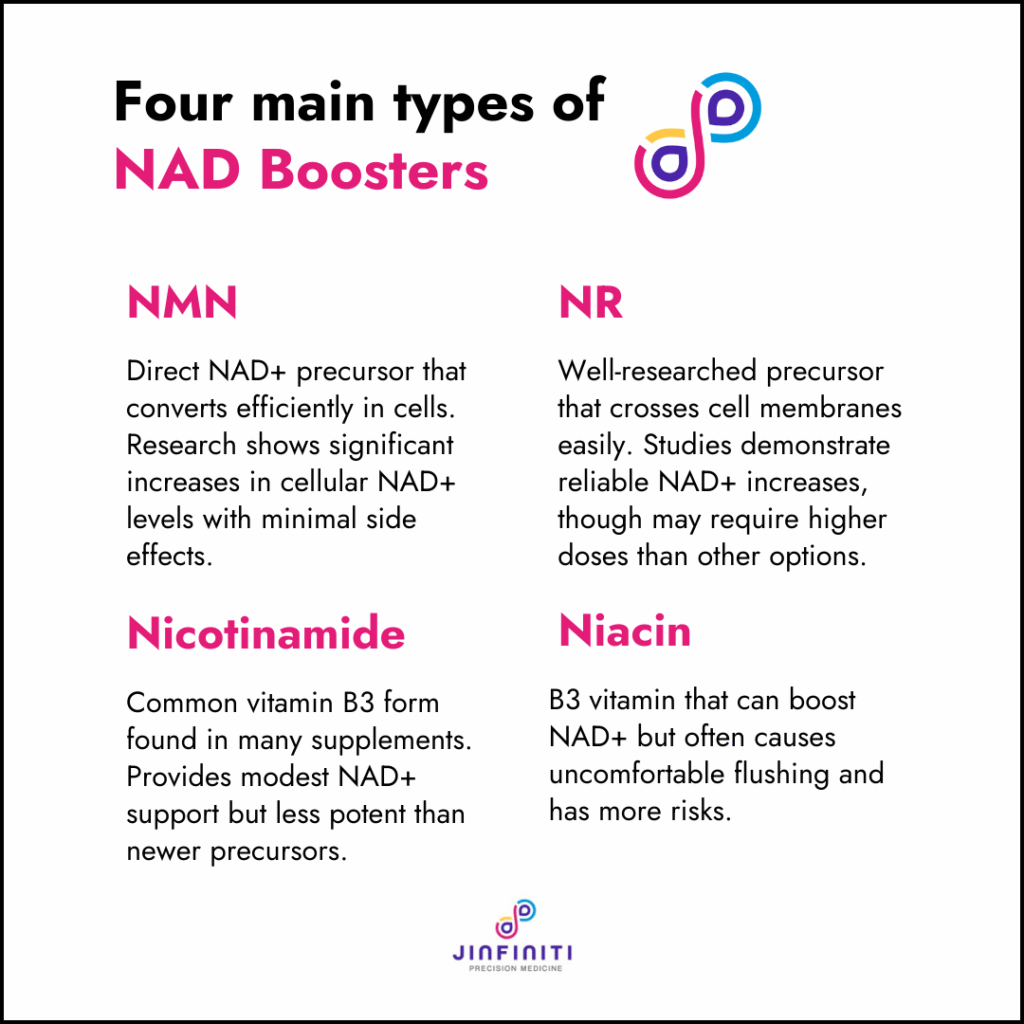
Graphic showing the four main types of NAD boosters

Nicotinamide Riboside (NR)

NR is the most studied NAD booster today. The FDA gave it Generally Recognized as Safe (GRAS) status.

Clinical trials show NR can increase blood NAD+ levels by 40-270%4. The increase depends on dose and individual factors.

Most studies use 300-1000mg daily. Higher doses don’t always work better.

NR shows good safety in healthy adults. Side effects are usually mild:

  • Occasional fatigue
  • Mild nausea
  • Temporary headaches

Nicotinamide Mononucleotide (NMN)

NMN became popular when famous researchers started taking it publicly. This molecule showed promise in early trials.

Some findings suggest NMN might better exercise endurance, improve sleep, and increase cellular energy5. Studies continue, looking into its promise for supporting healthy aging and metabolism.

NMN’s mechanism involves its direct conversion to NAD+ inside cells, making it an efficient precursor. Researchers such as Dr. David Sinclair and Dr. Jin-Xiong She judge it to be one of the most promising compounds for getting NAD+ to optimal levels.

Traditional Vitamin B3 Forms

Niacin and niacinamide are other popular approaches to NAD boosting. These vitamin B3 forms have long safety records.

But they can’t meaningfully raise NAD levels in healthy adults at safe dosages. Niacin also causes uncomfortable flushing at therapeutic doses.

Research shows niacin carries liver toxicity risks at high doses6. Most people can’t tolerate the amounts needed for NAD boosting.

Various colorful pills, capsules, and tablets scattered on a light blue surface.

Benefits of NAD Boosters That Really Work

Despite mixed results, certain benefits show consistent evidence. These effects are the most reliable outcomes you can expect.

Increased Blood NAD Levels

The most consistent finding is elevated blood NAD+ levels. Both NR and NMN reliably achieve this change.

Studies show effects typically plateau around 1000mg daily for NR7. Higher doses don’t produce bigger increases.

But higher blood levels don’t guarantee better tissue penetration. The link between blood NAD and cellular benefits remains unclear.

Cardiovascular and Exercise Performance Benefits

NAD boosters show promising results for heart health and physical performance. Benefits appear strongest in middle-aged adults.

A randomized study of 90 people with peripheral artery disease8 found impressive results:

MeasurementImprovement
6-minute walk distance17.6 meters vs placebo
High adherence groupOver 30 meters
Blood pressureReduced
Arterial stiffnessDecreased

Research also suggests NAD+ supplementation may help protect against vascular problems and metabolic issues9.

Limited Anti-Inflammatory Effects

NR supplementation can reduce certain inflammatory markers in older adults. Some studies show 50-70% reductions in inflammatory proteins like IL-610.

These anti-inflammatory effects might contribute to other health benefits. Chronic inflammation plays a role in many age-related diseases and can contribute to premature aging.

But these findings need testing in larger, more diverse groups before we can draw firm conclusions.

DNA Repair and Cellular Protection

NAD+ supports DNA repair mechanisms throughout your body. NAD+ feeds poly(ADP-ribose) polymerases (PARPs) and sirtuins.

These proteins are important for DNA damage response and cell survival.

This function becomes more important with age. DNA damage builds up and cellular repair capacity declines.

Research shows that NAD+ supplementation can partially restore DNA repair capacity in cells with damaged repair systems11.

In animal studies, NR supplementation dramatically improved genomic stability and extended lifespan.

Fertility and Reproductive Health Benefits

New research reveals promising uses for NAD+ boosters in reproductive health. Declining NAD+ levels contribute to age-related fertility decline.

Studies show NMN supplementation can rejuvenate egg quality and quantity in aged animals12. This led to improved fertility outcomes.

NAD+ and fertility research suggests potential benefits for both male and female reproductive health.

Key findings include:

  • Improved egg quality in aging
  • Better sperm function
  • Potential fertility preservation during cancer treatment
  • Enhanced reproductive lifespan

Immune System Enhancement

NAD+ plays an important role in immune function and regulation. NAD+ boosting shows anti-inflammatory effects and can help balance immune responses.

Studies show NR supplementation reduces inflammatory chemicals like IL-613. The immune benefits may extend to autoimmune conditions.

Research suggests NAD+ boosting may work best in people with higher inflammation14. This includes elderly individuals or those with chronic diseases.

Where NAD Boosters Need More Research

Many popular claims about NAD supplementation lack strong clinical support. Understanding these limits helps set realistic expectations.

Metabolic Health and Weight Management

Results for metabolic benefits show mixed outcomes across different studies. Some trials show metabolic improvements while others find minimal effects.

A detailed review of clinical trials15 found mixed results:

MeasurementResult
Total cholesterolReduced
TriglyceridesReduced
Insulin sensitivityVariable
Body compositionNo change

A 12-week trial in obese men taking 2000mg daily of NR showed no improvements in insulin sensitivity or body composition16.

The differences in results may relate to individual factors. Baseline NAD+ status, inflammation levels, and metabolic health all matter.

Cognitive Enhancement Claims

Human trials for cognitive benefits show mixed results. Completed human studies haven’t shown dramatic cognitive improvements.

Animal studies show NAD+ supplementation can reduce brain inflammation and support brain cell energy17. In Alzheimer’s models, NAD+ boosting improved stress response and reduced brain disruption18.

The gap between animal studies and human trials remains large for cognitive benefits. More human research is needed to see if these brain-protective effects translate to real cognitive improvements.

Mitochondrial Function Improvements

Results for mitochondrial function show mixed outcomes in human studies. Some research suggests improvements in mitochondrial health markers19.

But analyses of muscle biopsies from studies show minimal changes10.

The relationship between increased blood NAD levels and improved mitochondrial function in tissues remains unclear:

  • Some people experience better cellular energy
  • Others show little change
  • Blood biomarkers don’t always match tissue improvements
  • Individual responses vary widely

Safety Concerns You Should Know About

A young woman rests her head on her arms while sitting at a desk with stacked books.

Recent research has uncovered potential risks that challenge assumptions about NAD booster safety. The overall safety profile remains generally good in short-term studies.

Clinical Safety Profile

A study involving 489 participants showed NAD+ supplementation is generally well-tolerated20. Only mild side effects occur.

Common side effects include:

  • Muscle pain
  • Fatigue
  • Headaches

No serious adverse events have been reported in clinical trials. Research shows clinical safety at doses up to 900mg daily for most NAD+ precursors.

Quality Control Problems

Independent testing reveals some quality issues with commercial NAD supplements. One white paper apparently shows 87% of NR products fail to meet their label claims21.

Quality control problems include:

  • Much less active ingredient than advertised
  • Contamination with unwanted substances
  • Complete mislabeling of contents
  • No pre-market safety testing required

Unlike prescription medications, dietary supplements require no safety testing before sale. Quality control remains largely voluntary.

Drug Interactions and Side Effects of NAD

Certain NAD combinations pose interaction risks with common medications. Resveratrol, often paired with NR, blocks liver enzymes that break down drugs.

This can affect:

  • Blood thinners
  • Diabetes medications
  • Many other prescriptions

Research shows niacin carries the highest interaction risk22.

People with cancer history, autoimmune conditions, or inflammatory diseases should use extra caution. The immune system’s high energy demands during inflammation could be problematically increased.

How to Get NAD Benefits Safely

If you’re considering NAD supplementation, a thoughtful approach maximizes potential benefits while minimizing risks.

Testing Your Current NAD Status

Before starting any supplement, understanding your baseline NAD levels provides valuable guidance. Individually testing NAD levels can reveal whether you’re likely to benefit from supplementation.

“Too many people start supplementing blindly without knowing their baseline status,” explains Dr. Jin-Xiong She. “Testing allows us to personalize dosing and track real improvements instead of guessing.”

The Intracellular NAD+ Test measures your cellular NAD levels through a simple finger-prick blood collection. This clinical-grade testing helps determine the right dosage.

Testing also lets you monitor your response to supplementation. You can measure improvement and adjust doses based on actual results rather than guessing.

Testing BenefitsClinical Value
Baseline measurementIdentifies deficiency
Personalized dosingImproves effectiveness
Progress monitoringTracks improvement
Safety assessmentPrevents overdosing

Choosing Quality NAD Booster Products

Given the quality control crisis in the supplement industry, selecting third-party tested products becomes important. Look for supplements that provide certificates of analysis.

Vitality↑® NAD+ Booster combines multiple NAD precursors in a clinically validated formula. The powder format allows for precise dosing based on your individual needs.

The formulation includes:

  • NMN
  • Creatine monohydrate
  • D-ribose
  • Niacinamide

These ingredients work together across multiple metabolic pathways in ratios designed for maximum effectiveness.

Vitality Mini CTA

NAD IV Therapy Considerations

Some people explore NAD IV therapy as an alternative to oral supplements. This approach delivers NAD directly into your bloodstream.

NAD IV therapy claims to achieve higher blood levels more rapidly than oral supplements. Sessions typically last 2-4 hours and require medical supervision.

But IV therapy costs much more than oral supplements. Most insurance plans don’t cover these treatments.

Side effects of NAD IV can include chest tightness, nausea, and fatigue during infusion. The long-term safety profile remains unclear and most studies on NAD have been done with NMN or NR.

Natural Ways to Boost NAD Production

A woman with hair in a bun lifts blue dumbbells overhead from behind view.

Your lifestyle choices significantly impact NAD levels in the body. These approaches offer safer alternatives to supplementation.

Exercise and Physical Activity

Regular exercise naturally increases NAD production through multiple pathways. Research on NAD for athletic performance shows that both cardio and resistance training support cellular NAD levels.

Exercise activates enzymes that help boost NAD production. It also improves mitochondrial function independently of supplementation.

The food you eat also influences NAD production. Certain foods contain NAD precursors or compounds that support NAD creation.

Sleep and Stress Management

Quality sleep and stress reduction support healthy NAD levels naturally. Poor sleep and chronic stress deplete NAD through inflammatory pathways.

NAD and sleep quality show two-way relationships. Better NAD status may improve sleep while good sleep supports NAD production.

Meditation, yoga, and other stress-reduction techniques help preserve NAD levels. These approaches offer additional health benefits beyond NAD improvement.

Setting Realistic Expectations for NAD Boosters

NAD boosters can work, but the effects are more limited than marketing suggests. Understanding what to expect helps you make informed decisions.

Who May Benefit from NAD Supplementation

Certain groups show greater responses to NAD boosters:

  • Older adults with documented NAD deficiency
  • People with higher inflammation or metabolic problems
  • Those with specific health conditions

People with great health typically show minimal improvements. Individual genetic factors influence NAD metabolism. Some people naturally maintain higher levels and gain less from supplementation.

Realistic Timeline for Results

Most studies showing benefits use supplementation periods of 6-12 weeks. Don’t expect immediate dramatic changes from NAD boosters.

Energy improvements, if they occur, typically develop gradually over several weeks. Exercise performance gains follow a similar timeline.

“The science shows us that NAD+ optimization is a process, not a quick fix,” notes Dr. Jin-Xiong She. “Patients who understand this timeline and monitor their progress objectively tend to achieve the best long-term results.”

Monitor your response objectively rather than relying on feelings alone. Consider retesting NAD levels after 6-8 weeks of consistent supplementation.

A purple illuminated maze with a bright white ladder emerging from its center.

Making an Informed Decision About NAD Boosters

The evidence for NAD boosters reveals modest benefits, significant limitations, and emerging safety concerns.

When NAD Supplementation Makes Sense

Consider NAD boosters if you have documented deficiency through proper testing. Older adults with high inflammation or specific health conditions may see greater benefits.

Always talk with healthcare providers familiar with current research. This becomes particularly important if you have cancer history or take multiple medications.

Complementary Approaches to Consider

Lifestyle changes can amplify the benefits you get from NAD supplementation. Regular exercise, adequate sleep, stress management, and balanced nutrition work together with NAD boosters to support increased energy and healthy aging.

Other longevity supplements may complement your NAD optimization strategy. Consider a comprehensive approach that combines multiple evidence-based interventions for maximum benefit.

Bottom Line on NAD Boosters

NAD boosters are a emerging field in healthy aging. Some products can increase blood NAD levels but the translation of that to meaningful health benefits varies between people.

The evidence shows real benefits in specific areas like heart health, exercise performance and inflammation reduction. DNA repair and potential fertility benefits are added to the growing list of uses.

But more research is needed to understand optimal dosing, ideal candidates and long term safety. Individual responses are very different.

For most people looking for energy or longevity benefits a combined approach is best. Lifestyle changes like exercise, proper nutrition, adequate sleep and stress management provide proven benefits that complement any supplementation strategy.

If you choose to try NAD boosters start with proper testing to establish your baseline. Work with healthcare providers who understand the current research and can monitor your response.

Referenced Sources

  1. https://pmc.ncbi.nlm.nih.gov/articles/PMC7442590/ ↩︎
  2. https://pmc.ncbi.nlm.nih.gov/articles/PMC9512238/ ↩︎
  3. https://pmc.ncbi.nlm.nih.gov/articles/PMC5419884/ ↩︎
  4. https://www.nature.com/articles/s42255-019-0161-5 ↩︎
  5. https://pmc.ncbi.nlm.nih.gov/articles/PMC10721522/ ↩︎
  6. https://www.ncbi.nlm.nih.gov/books/NBK548176/ ↩︎
  7. https://www.mdpi.com/2076-3921/11/9/1637 ↩︎
  8. https://www.nature.com/articles/s41467-024-49092-5 ↩︎
  9. https://www.sciencedirect.com/science/article/pii/S2667089524000142 ↩︎
  10. https://journals.physiology.org/doi/pdf/10.1152/ajpendo.00242.2023 ↩︎
  11. https://www.tandfonline.com/doi/full/10.1080/15384101.2017.1285631 ↩︎
  12. https://pmc.ncbi.nlm.nih.gov/articles/PMC7063679/ ↩︎
  13. https://pmc.ncbi.nlm.nih.gov/articles/PMC9571518/ ↩︎
  14. https://pmc.ncbi.nlm.nih.gov/articles/PMC10346866/ ↩︎
  15. https://pubmed.ncbi.nlm.nih.gov/35303905/ ↩︎
  16. https://pmc.ncbi.nlm.nih.gov/articles/PMC10828186/ ↩︎
  17. https://pmc.ncbi.nlm.nih.gov/articles/PMC11877801/ ↩︎
  18. https://pmc.ncbi.nlm.nih.gov/articles/PMC11470026/ ↩︎
  19. https://pmc.ncbi.nlm.nih.gov/articles/PMC4076149/ ↩︎
  20. https://pubmed.ncbi.nlm.nih.gov/37971292/ ↩︎
  21. https://www.nutraingredients-usa.com/Article/2025/02/28/majority-of-nr-dietary-supplements-tested-by-chromadex-failing-to-meet-label-claims/ ↩︎
  22. https://www.sciencedirect.com/science/article/pii/S0006291X24001256 ↩︎
A photo of Dr. Jin-Xiong She, genomic medicine expert, seated outdoors with his hands clasped

Is NAD+ Worth It? Here’s What a Genomic Medicine Expert Says

The wellness world seems obsessed with NAD these days. Social media influencers tout it as the fountain of youth. Biohackers swear by its energy-boosting effects. Even celebrities credit NAD treatments for their youthful appearance.

But are NAD-boosting supplements really worth all this attention? As someone who has spent decades in genomic medicine research, Dr. Jin-Xiong She wanted to separate fact from fiction. The answer is more nuanced than most people realize.

Key Takeaways

  • NAD supplementation has solid scientific support for multiple health benefits
  • Individual testing provides the foundation for safe, effective use
  • Realistic expectations lead to better outcomes than hype-driven approaches

What is NAD and Why Does It Matter as We Age?

A headshot of Dr. Jin-Xiong She, PhD

Nicotinamide adenine dinucleotide (NAD) is a coenzyme found in every cell of your body. Think of it as cellular fuel that powers over 500 different biochemical reactions.

“NAD is absolutely important to cellular function,” explains Dr. Jin-Xiong She, founder of Jinfiniti Precision Medicine and genomic medicine researcher with over 400 peer-reviewed papers. “Without adequate NAD levels, your cells can’t make energy properly, fix DNA damage, or keep up with all the repair work they need to do.”

The problem starts around middle age. Research shows NAD levels decline by up to 50% by age 501. This decline contributes to mitochondrial dysfunction, impaired DNA repair, and reduced cellular energy production.

The NADH Connection

NADH is the reduced form of NAD. While both molecules play important roles, they serve different cellular functions. NAD acts as an electron acceptor in metabolic reactions, while NADH carries electrons to the mitochondria for energy production.

Your body maintains a delicate balance between these two forms. When this balance shifts, cellular metabolism suffers.

The Science Behind NAD Supplements Actually Working

Pink DNA helix spirals sharply in foreground with clear base pair rungs, while blurred blue and purple helixes float dreamily in soft background mist.

The research supporting NAD supplementation is genuinely impressive. A systematic review of six major clinical studies involving over 400 participants found consistent increases in blood NAD concentrations ranging from 10% to 150%2.

These weren’t small, poorly designed trials. Most studies used dosages between 250-900 mg daily over 8-12 week periods with proper placebo controls.

“What’s most encouraging is the consistency across different study populations,” notes Dr. She. “We’re seeing reproducible results in healthy adults and also those with age-related health concerns.”

Clinical Trial Results

Study TypeParticipantsNAD IncreaseDurationSafety Profile
NMN Studies200+10-150%8-12 weeksExcellent
NR Studies200+25-140%4-52 weeksExcellent
Combined Analysis400+SignificantVariableMinimal side effects

How NAD Supplement Benefits Compare to the Hype

A photo of Dr. Jin-Xiong She playing tennis

The most compelling evidence comes from physical performance studies3. NMN supplementation significantly improved aerobic capacity in amateur runners, with measurable increases in VO2 max and oxygen utilization efficiency.

But here’s where we need to be realistic about expectations.

“People expect immediate, dramatic changes,” observes Dr. She. “The reality is that NAD supplementation works at the cellular level. Benefits accumulate gradually over weeks and months, not days.”

What Research Actually Shows

Physical Performance:

  • Improved exercise capacity and muscle oxygen utilization
  • Enhanced grip strength and walking speed in older adults
  • Better recovery times in trained athletes

Metabolic Health:

  • Improved insulin sensitivity and glucose tolerance4
  • Reduced cholesterol and triglyceride levels
  • Enhanced mitochondrial health and cellular repair

Cognitive Function:

  • Faster brain penetration5 (NMN crosses blood-brain barrier in 15 minutes)
  • Improved spatial memory in animal studies
  • Preliminary human studies suggest better mental clarity

Do NAD Supplements Work for Longevity?

Image of Dr. Jin-Xiong She being interviewed

The longevity question is where the science becomes both exciting and complicated. The most significant breakthrough came from a recent 2025 clinical trial treating Werner syndrome6, a rare genetic disorder causing premature aging.

Patients receiving 500mg daily nicotinamide riboside (NR) for 52 weeks showed remarkable improvements. NAD levels increased by 140%, skin ulcers healed, arterial stiffness decreased, and kidney function markers improved.

“This trial really excited me because it shows NAD actually reversing aging damage in real people,” says Dr. She. “We’ve all been working toward this for years, but these researchers were the first to get clear proof that fixing NAD deficiency can actually turn back the clock on aging.”

Benefits of NAD: What Research Shows

The mechanisms behind these benefits involve several interconnected pathways:

  • Sirtuin Activation: NAD serves as fuel for sirtuins, enzymes that regulate metabolism and longevity signaling7
  • DNA Repair Enhancement: Adequate NAD levels support PARP enzymes responsible for fixing DNA damage8
  • Mitochondrial Biogenesis: NAD helps create new, healthy mitochondria9
  • Cellular Senescence Regulation: NAD may help clear dysfunctional “zombie” cells10

Should You Take NAD? A Genomic Medicine Perspective

Dr. Jin-Xiong She holding an intracellular NAD test kit

This is where individual testing becomes essential. NAD metabolism varies significantly between people due to genetic differences, age, lifestyle, and health status.

“I’ve seen two people of the same age have dramatically different baseline NAD levels,” notes Dr. She. “Without testing, you’re really just guessing at the right approach.”

NAD Precursors vs Direct Supplementation

Most supplements contain NAD precursors rather than NAD itself:

Nicotinamide Mononucleotide (NMN):

  • Direct precursor to NAD
  • Excellent safety profile up to 1250mg daily11
  • Rapid absorption and conversion

Nicotinamide Riboside (NR):

  • Alternative precursor pathway
  • Shown to be safe up to 2000mg daily12
  • Longer clinical trial history

NAD injections are another option, though the research supporting oral supplementation is more extensive for long-term use.

Who Should Consider NAD Supplementation?

The research suggests these groups may benefit most:

  • Adults over 40 experiencing age-related energy decline
  • Athletes seeking improved performance and recovery
  • Individuals with metabolic health concerns
  • Those interested in science-based anti-aging approaches

However, Dr. She emphasizes caution: “Supplementation should always be based on the actual need, not assumptions. Testing provides the roadmap for safe optimization.”

How to Boost NAD Safely and Effectively

Current evidence suggests optimal NAD dosing varies by individual goals:

General Health Support:

  • NMN: 250-500mg daily
  • NR: 250-500mg daily

Athletic Performance:

  • NMN: 300-600mg daily
  • NR: 300-500mg daily

Metabolic Health:

  • NMN: 300-900mg daily
  • NR: 500-1000mg daily

But these are general guidelines. Individual optimization requires knowing your starting point.

The Testing-First Approach

Jinfiniti’s Intracellular NAD Test measures actual cellular NAD levels through a simple finger-prick blood test. This provides the baseline data needed for personalized supplementation.

“The Test, Act, Optimize philosophy isn’t just our company motto,” explains Dr. She. “It’s the most scientifically correct approach to any intervention. You need data to make informed decisions about your health.”

Safety Considerations

The safety profile for NAD precursors is favorable across all published human studies. Side effects are typically mild and limited to occasional gastrointestinal discomfort11.

However, certain populations should exercise extra caution:

  • Pregnant or breastfeeding women
  • Individuals with active cancer (theoretical concerns about tumor cell NAD usage)
  • Those taking multiple medications (potential interactions)

The Verdict: Cautious Optimism Based on Science

Dr. Jin-Xiong She holding a jar of Vitality NAD+ Booster

After reviewing hundreds of studies and working with thousands of patients, Dr. She’s perspective on NAD supplementation is cautiously optimistic.

The research foundation is solid. Clinical trials consistently demonstrate safety and efficacy13. The mechanisms make biological sense. The Werner syndrome breakthrough provides compelling proof-of-concept.

But NAD isn’t a magic pill. It’s one tool in a comprehensive approach to healthy aging that should include proper nutrition, exercise, stress management and sleep.

“NAD supplementation really works – the science is solid,” says Dr. She. “But like anything that actually works, you need to be smart about how you use it. One size definitely doesn’t fit all.”

The NAD hype has some substance but the real value is in the details. Testing your levels, choosing good supplements and having realistic expectations will help you use this tool safely and effectively.

If you want to try NAD optimization start with baseline NAD+ testing to know your individual needs. The science supports NAD but personal data makes all the difference in getting results.

Want to learn more about NAD and longevity? Check out our comprehensive guides on NAD+ fundamentals and how to test your NAD levels for additional insights.

Referenced Sources

  1. https://pmc.ncbi.nlm.nih.gov/articles/PMC4112140/ ↩︎
  2. https://nnpub.org/index.php/MHS/article/view/2075 ↩︎
  3. https://www.tandfonline.com/doi/full/10.1186/s12970-021-00442-4 ↩︎
  4. https://pmc.ncbi.nlm.nih.gov/articles/PMC10692436/ ↩︎
  5. https://pubmed.ncbi.nlm.nih.gov/31015147/ ↩︎
  6. https://www.sciencedaily.com/releases/2025/06/250609020625.htm ↩︎
  7. https://www.sciencedirect.com/science/article/pii/S0092867413007551 ↩︎
  8. https://www.molbiolcell.org/doi/10.1091/mbc.E18-10-0650 ↩︎
  9. https://www.science.org/doi/10.1126/science.aaf2693 ↩︎
  10. https://onlinelibrary.wiley.com/doi/10.1111/acel.13920 ↩︎
  11. https://www.mdpi.com/2076-3921/11/9/1637 ↩︎
  12. https://pmc.ncbi.nlm.nih.gov/articles/PMC9495723/ ↩︎
  13. https://www.liebertpub.com/doi/10.1089/ars.2023.0354 ↩︎
An image of a capsule with a blurry woman in the background

What’s the Difference Between NMN vs NAD?

You’ve probably heard about NAD and NMN in health circles. Both molecules get mentioned together often. This sometimes creates confusion about their relationship.

Both molecules work closely together in your cells. But they have different roles and characteristics.

Let’s break down what each molecule does. You’ll learn how NMN and NAD work and why it matters for your health.

Key Takeaways

  • NMN offers superior bioavailability compared to direct NAD supplementation for oral use.
  • NMN converts directly to NAD through the enzyme NMN adenylyltransferase in your cells.
  • Testing your baseline NAD levels helps personalize supplementation for optimal results.
  • Both molecules support cellular energy, DNA repair, and healthy aging processes.

How NMN and NAD Work at the Cellular Level

DNA helix strands in blue and white

These molecules play connected but distinct roles in cellular function.

What is NMN?

NMN stands for nicotinamide mononucleotide. It’s a precursor to NAD that your body uses to make the essential coenzyme.

You can find tiny amounts in foods like broccoli and avocados. The concentrations are too low to provide therapeutic benefits through diet alone.

NMN has three main parts: phosphate, ribose sugar, and nicotinamide1. This structure allows easy cell entry and conversion into NAD.

What is NAD?

NAD is short for nicotinamide adenine dinucleotide. It’s a coenzyme that powers over 500 cellular reactions.

Your mitochondria (cellular powerhouses) depend on NAD for energy production. It acts like a shuttle that carries electrons between reactions.

NAD exists in two forms. NAD+ accepts electrons. NADH donates them back to fuel cellular processes.

This electron transfer system powers your cells. It supports DNA repair, gene expression, and cellular signaling pathways.

The Differences Between NMN and NAD

The main distinctions affect how your body processes and uses them.

Size and Structure

NMN is significantly smaller than NAD. It weighs about 334 grams per mole2. NAD weighs approximately 663 grams per mole.

This size difference matters. Smaller molecules typically cross cell membranes more easily.

NAD’s larger structure makes direct cell absorption harder.

How Your Body Absorbs Them

Your digestive system handles these molecules differently:

NMN Absorption:

  • Enters bloodstream within minutes3
  • Uses specific intestinal transporters
  • Reaches tissues in 10-30 minutes
  • Stays intact during transport

NAD Absorption:

  • Cannot cross cell membranes intact4
  • Gets broken down before absorption
  • Requires cellular reassembly
  • Less efficient for oral use
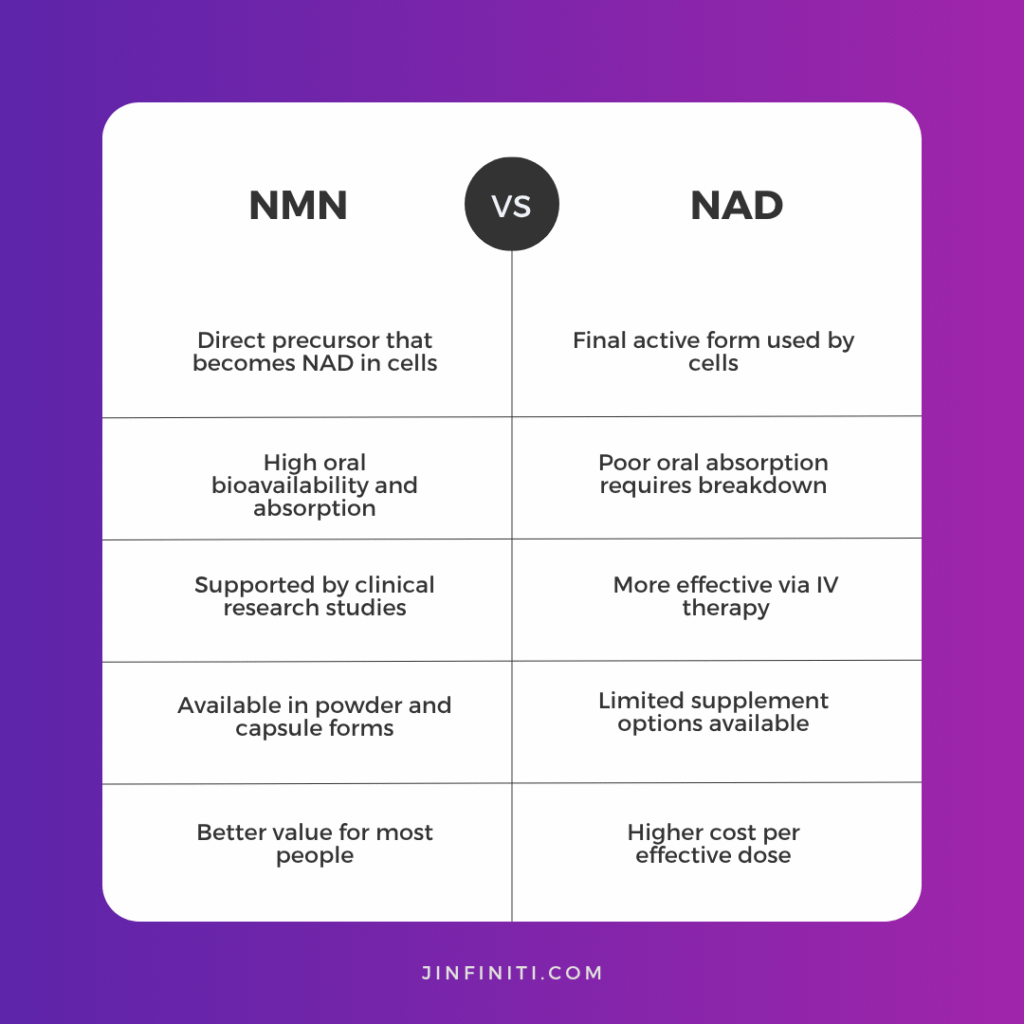
Infographic showing the differences between NMN and NAD

How NMN Converts Into NAD

NMN is converted to NAD through a direct cellular pathway.

The Conversion Process

Once NMN enters cells, the enzyme NMN adenylyltransferase converts it directly into NAD1. This happens through the “salvage pathway.”

Your cells prefer this efficient route. It requires fewer steps than other NAD precursors.

The process maintains steady NAD levels in your cellular environment.

Why Cellular NAD Levels Decline

Your NAD naturally decreases with age. By age 50, you typically have half the levels of NAD you had at 20.

Several factors contribute to this decline:

  • Increased cellular repair demands
  • Reduced precursor production
  • Higher enzyme activity that consumes NAD
  • Accumulated cellular damage

NAD deficiency symptoms become more common as levels drop.

Benefits of NAD and NMN Supplements

An older man looking at his watch on a jog outdoors

Both support similar outcomes because NMN becomes NAD in your cells.

Shared Health Benefits

Research shows that boosting NAD levels may support:

Energy and Metabolism:

Cellular Health and Longevity:

  • DNA repair processes
  • Better cellular signaling
  • Protection against oxidative stress
  • Support for overall cellular health and aging

Benefits of NMN Supplementation

Clinical studies show promising results. Participants taking 300-900mg daily for 60 days increased blood NAD levels5.

They also showed improved physical performance. Research indicates NMN may help insulin sensitivity in prediabetic individuals6.

Animal studies suggest NMN supports healthy aging. It improves energy metabolism and mitochondrial function.

Athletes taking NMN have also shown improved aerobic exercise capacity7 and recovery. NMN acts to support mitochondrial efficiency which is important for athletic performance.

People over 40 typically see the most benefits from NAD supplementation. Supporting cellular function becomes more important as natural production declines.

NMN vs NAD: Which Should You Choose?

Middle aged woman taking a supplement

Evidence suggests NMN offers advantages for oral supplementation compared to taking NAD directly.

Bioavailability Comparison

FactorNMNNAD
AbsorptionHighLimited
Cell transportDirectRequires breakdown
Conversion efficiencyExcellentVariable
Oral effectivenessStrongModerate

Cost and Practical Considerations

An NMN supplement typically costs less than direct NAD products. Manufacturing stable, bioavailable NAD requires more complex processes.

You’ll also find more NMN supplement options available. Quality varies between brands, so choosing products with third-party testing matters.

For optimal results, consider Jinfiniti’s Vitality NAD+ Booster. Our science-backed formulation combines NMN with energy-boosting compounds that work together to replenish NAD stores.

Should You Take NMN and NAD Together?

Women crossing a bridge in the forest

Taking both simultaneously usually isn’t necessary. NMN converts into NAD naturally.

Most people benefit more from quality supplements like NMN for health and well-being. Your cells will convert the NMN into the NAD they need for optimal health.

Some practitioners recommend NAD supplements for specific purposes. These are often administered through IV therapy rather than oral supplements.

Before starting any new supplement regimen, consult healthcare providers familiar with NAD metabolism.

Vitality Mini CTA

Choosing Quality NAD Supplements

Quality matters significantly when selecting products. Here’s what to look for:

Purity Standards:

  • Third-party contamination testing
  • Available certificates of analysis
  • Certified manufacturing facilities
  • Proper storage protocols

Formulation Quality:

  • Pharmaceutical-grade ingredients
  • Appropriate dosing per serving
  • Complementary absorption compounds
  • Stable, bioavailable forms

Testing Your Progress

The most accurate evaluation method is direct testing. Testing your NAD levels provides objective data about cellular function.

Our at-home Intracellular NAD Test measures actual cellular NAD concentrations. This is the world’s first test of its kind that can be conveniently taken wherever you are.

This follows Jinfiniti founder Dr. Jin-Xiong She’s “Test, Act, Optimize” methodology. Establish baseline levels. Implement targeted supplementation. Retest to confirm improvements.

Natural Ways to Boost NAD Levels

A woman doing dumbbell curls in her living room

Lifestyle strategies can also support raising NAD levels naturally alongside supplementation.

Dietary Approaches

Foods rich in NAD precursors help support baseline levels:

Lifestyle Factors

  • Exercise: Regular activity stimulates NAD-producing enzymes. It also supports mitochondrial health.
  • Sleep: Quality sleep allows cellular repair. It helps regenerate NAD stores effectively.
  • Stress Management: Chronic stress depletes NAD reserves. Managing stress supports healthy levels.
  • Intermittent Fasting: Research suggests fasting periods may naturally boost NAD levels through metabolic pathways.

Effects of NMN Supplementation: What to Expect

Image of an analog clock

NMN typically produces gradual improvements over several weeks.

Timeline of Benefits

Week 1-2:

  • Possible mild digestive adjustment
  • Subtle energy improvements
  • Better sleep quality for some

Week 3-4:

  • More noticeable energy increases
  • Improved exercise recovery
  • Enhanced mental clarity

Month 2-3:

  • Sustained energy improvements
  • Better metabolic function
  • Improved physical performance markers

Individual responses vary based on baseline NAD levels and overall health status.

Safety Profile: NAD vs NMN

An image of an older man consulting with his doctor

Both molecules appear safe for healthy adults at recommended doses.

Common Side Effects

Use of NMN supplementation may cause mild, temporary effects:

  • Slight digestive upset when starting
  • Occasional headaches during first week
  • Mild fatigue as cellular processes adjust

Research shows NMN may be safe at doses up to 900mg daily3 for extended periods.

Special Considerations

  • Cancer History: Consult oncologists before beginning supplementation.
  • Medication Interactions: NAD supplements may interact with blood sugar medications.
  • Pregnancy: Limited safety data exists. Avoiding supplementation is recommended.

Dosing Guidelines for Effective Results

Research supports specific dosing ranges for NMN supplementation.

Recommended Doses

GoalNMN Dose RangeTiming
General health250-500mg dailyMorning
Performance support500-750mg dailyPre-workout
Aging support500-900mg dailySplit doses

Start with lower doses. Gradually increase based on tolerance.

Clinical studies show benefits beginning around 250mg daily3. Higher doses may provide additional benefits for some people.

Timing Strategies

Take NMN supplements in the morning to align with natural rhythms. Your body’s NAD metabolism follows daily cycles.

Peak activity occurs during daylight hours. Some people benefit from splitting larger doses throughout the day.

Monitor your energy and sleep patterns. This helps find optimal timing for your needs.

Making Your Decision: A Summary

A contemplative young man looking out a window

For most people seeking cellular health support, NMN offers practical advantages.

NMN provides superior bioavailability and research support. Its ability to cross cell membranes efficiently makes it preferred for oral use.

Cost-effectiveness also favors NMN over direct NAD products. You get more value for your investment.

Direct NAD administration through IV therapy may benefit severe deficiency cases. Some medical conditions requiring rapid replenishment might warrant this approach.

Work with qualified healthcare providers for IV treatments.

Your Path to Better Cellular Health

NMN offers practical advantages for most people due to superior absorption. The research supporting NMN provides compelling evidence for maintaining cellular energy.

Whether you choose supplementation, lifestyle interventions, or both, supporting cellular energy systems can maintain vitality and optimal health as you age.

Work with knowledgeable healthcare providers who understand NAD metabolism. They can guide your strategy based on your individual health profile.

Testing your current NAD levels provides the best starting point. This data-driven approach ensures you’re addressing your actual needs rather than guessing.

Referenced Sources

  1. https://pmc.ncbi.nlm.nih.gov/articles/PMC7238909/ ↩︎
  2. https://pmc.ncbi.nlm.nih.gov/articles/PMC7198709/ ↩︎
  3. https://pmc.ncbi.nlm.nih.gov/articles/PMC5668137/ ↩︎
  4. https://pmc.ncbi.nlm.nih.gov/articles/PMC8612620/ ↩︎
  5. https://link.springer.com/article/10.1007/s11357-022-00705-1 ↩︎
  6. https://pmc.ncbi.nlm.nih.gov/articles/PMC10240123/ ↩︎
  7. https://www.tandfonline.com/doi/10.1186/s12970-021-00442-4 ↩︎
A young woman examines her skin in a handheld mirror

Should Women Take NAD+ Supplements?

Nicotinamide adenine dinucleotide (NAD+) has become a buzzword in anti-aging and wellness circles.

The essential molecule plays a crucial role in hundreds of metabolic processes throughout your body. But what does it mean specifically for women’s health?

As we age, our NAD+ levels naturally decline. This decrease may contribute to various health challenges women face throughout their lives – from fertility issues to menopausal symptoms and beyond.

Let’s explore what science tells us about NAD+ for women, potential benefits, risks to consider, and who might benefit most from dietary supplements.

Key Takeaways

  • NAD+ levels naturally decline with age in women, affecting energy, hormones, and cellular health
  • Supplementation shows strongest evidence for fertility and menopause support, potentially improving egg quality and reducing hot flashes
  • Test your NAD+ levels first – dosing varies greatly between individuals, and what’s optimal for one person could be ineffective or toxic for another
  • Timing matters by life stage – perimenopause/menopause may be the most beneficial time to start, while pregnancy requires medical supervision

Why NAD+ Matters for Women’s Health

NAD+ is a coenzyme found in all living cells. Think of it as a tiny helper molecule that works behind the scenes to keep your body running smoothly – like the perfect foundation that balances your skin and creates a flawless canvas without anyone noticing it’s there.

This powerful molecule is involved in:

  • Cellular energy production
  • DNA repair
  • Metabolic regulation
  • Cellular resilience
  • Activation of sirtuins (proteins linked to longevity)

For women specifically, NAD+ influences processes affecting hormonal balance, energy metabolism, and cellular health1 – factors that all impact healthy aging.

Research shows NAD+ levels decline with age in various tissues, including female reproductive organs like the ovaries and uterus.

This decline may contribute to age-related health challenges that uniquely or disproportionately affect women.

Potential Benefits of NAD Supplements for Women

Three smiling women in a sunflower field

Remember how energetic you felt in your twenties? Or how quickly your skin bounced back from a late night? NAD+ plays a role in all of these processes.

Research has found that maintaining healthy NAD+ levels can potentially benefit women’s health in several areas.

1. Fertility and Reproductive Health

NAD+ shows clear benefits for women’s fertility and reproductive health.

Studies show that NAD+ levels in oocytes (eggs) decline with age. A study in Cell Reports found that restoring NAD+ using precursors like nicotinamide mononucleotide (NMN) can improve egg quality, increase ovulation rates, and boost fertility2.

In older female mice, NAD+ precursor supplements improved:

  • Time to first live birth
  • Percentage of mice having live births
  • Egg quality
  • Ovulation rate

These benefits occur because NAD+ supports energy production and mitochondrial function in reproductive cells.

Women with PCOS may also benefit from NAD+. Research found that PCOS patients have lower NAD+ levels in ovarian cells, causing oxidative stress and mitochondrial problems3.

In animal studies, the NAD+ precursor nicotinamide riboside (NR) produced several improvements:

2. Relief from Menopausal Symptoms

If you’re in the throes of perimenopause or menopause, you know it can feel like your body has staged a revolt.

Hot flashes strike during important meetings, sleep becomes elusive, and your once-sharp mind sometimes feels foggy.

Studies suggest that restoring levels of NAD may help with common menopausal symptoms including:

  • Hot flashes
  • Night sweats
  • Mood changes
  • Sleep disturbances
  • Brain fog and cognitive issues

The benefits appear related to how NAD+ helps cells produce energy and regulate metabolism when hormonal shifts cause significant physical changes.

3. Better Bone Health

Bone health is crucial for women, especially after menopause when estrogen decreases. Remember leaping off swings as a kid? That bodily resilience doesn’t completely disappear with age.

NAD+ may protect bone density and fight osteoporosis in older adults. Research indicates that increasing NAD levels can slow bone breakdown while promoting new bone cell formation4.

Bones stay healthy through a process called remodeling. As we age, bone-building cells decline, leading to too much bone removal without enough new growth. NAD+ helps maintain this balance, potentially offering protection against age-related bone loss.

4. Improved Skin Health

A young woman with radiant skin health

Seeing new lines or sagging skin in the mirror? That’s your skin’s NAD+ levels declining right before your eyes. This natural process causes fine lines, wrinkles, and elasticity loss5.

Boosting NAD+ through supplements or specialized skincare products can:

  • Support DNA repair
  • Help cells regenerate
  • Fight sun-related aging
  • Reduce uneven skin tone
  • Protect your skin barrier

Sirtuins, enzymes that depend on NAD+, play a central role in maintaining skin health and youthfulness. NAD+ helps these enzymes keep your skin’s structure strong and bouncy.

5. Mood Balance and Mental Wellbeing

Women’s mental health can benefit from optimal NAD+ levels. Ever had those days when your brain just won’t cooperate? Research suggests NAD+ plays a key role in:

  • Neurotransmitter function (regulating mood)
  • Cognitive function
  • Cellular energy for brain cells6

NAD+ supplements may help reduce anxiety and depression by promoting balanced neurotransmitters. The energy boost can also improve focus and mental clarity, helping you handle life’s demands more effectively.

6. Energy and Metabolism Boost

Remember powering through your day without needing coffee refills? NAD+ is essential for your mitochondria – your cellular energy generators – making it key for your energy and metabolism.

Research in the journal Science tested nicotinamide mononucleotide (NMN) on 25 postmenopausal women with prediabetes over 10 weeks7. They found improvements in:

  • Insulin sensitivity
  • Insulin signaling
  • Healthy muscle tissue changes

This suggests NAD+ precursors may help fight the metabolic decline that often accelerates after menopause.

NAD+ also helps regulate your circadian rhythm8 – your internal body clock. Healthy NAD+ levels can improve your sleep-wake patterns, leading to better sleep, balanced hormones, and improved vitality.

Imagine enjoying that deep, refreshing sleep you had when you were younger!


Vitality Mini CTA

Common Side Effects

The most commonly reported side effects of NAD+ precursors include:

  • Diarrhea
  • Nausea
  • Rashes
  • Hot flashes
  • Leg cramps

These side effects appear to be relatively rare and minor for most users. Still, it’s worth starting with lower doses to see how your body responds.

Dosage Recommendations

Current dosage recommendations based on available research include:

Supplement TypeDaily Dosage RangeTypical Study DoseNotes
NR (Nicotinamide Riboside)100-1000mg250-500mgMost studies use mid-range doses
NMN (Nicotinamide Mononucleotide)150-1200mg250-900mgNAD+ improvements seen in this range
NAM (Nicotinamide)100-500mg500mgNAD+ increases observed at higher end
Niacin (Nicotinic Acid)14-35mg (general), 100-1000mg (therapeutic)VariableTherapeutic doses require medical supervision due to potential side effects

Important Notes:

  • These are general recommendations, not gender-specific
  • Individual factors (health status, age, medical conditions) should guide dosing
  • Consult with a healthcare provider before starting any supplement regimen

Considerations for Different Life Stages

A pregnant woman in a pink dress holds her belly in a heart shape

Your body’s relationship with NAD+ changes throughout your life, just like your cooking preferences evolve from instant ramen to more sophisticated flavors. Understanding these shifts helps you make better choices about supplementation timing.

Reproductive Years

If you’re in your childbearing years, the fertility benefits we discussed earlier become especially relevant. NAD+ supports egg quality and cellular energy in reproductive tissues.

Women planning to delay childbearing might find this particularly valuable. However, always consult your healthcare provider before starting any supplement regimen while trying to conceive.

Pregnancy and Postpartum

Research remains limited here, though emerging studies show promise. 

One study found NAM may protect developing eggs from acetaminophen effects9. In animal models, NR prevented pregnancy-related high blood pressure and fetal growth issues10.

Given the limited human data, pregnant women should only consider NAD+ supplements under medical supervision.

Perimenopause and Menopause

This life stage may offer the most compelling case for the benefits of NAD+ supplementation. As we covered earlier, research shows significant benefits for hot flashes, sleep, energy, and metabolism during hormonal transitions.

The metabolic improvements seen in postmenopausal women with prediabetes make this timing particularly strategic for many women.

Practical Ways to Support NAD+ Levels

Beyond supplementation, several lifestyle factors can influence your NAD+ levels. Many of these approaches are beneficial for your overall health too.

Diet

Your grandmother’s advice to “eat your vegetables” turns out to be NAD+-boosting wisdom! Consume foods rich in NAD+ precursors, including:

  • Lean meats
  • Fish
  • Legumes
  • Nuts and seeds
  • Whole grains
  • Leafy greens

These foods support your body’s natural NAD+ production.

Exercise

Regular physical activity may support NAD+ production. Even moderate exercise several times a week can deliver some benefit. Find movement you enjoy – whether it’s dancing in your kitchen, swimming laps, or taking a brisk walk with a friend – and you’ll be supporting your NAD+ production naturally.

Stress Management

Chronic stress depletes NAD+. Practices like meditation, yoga, and adequate sleep help preserve your NAD+ stores. Taking even five minutes a day for deep breathing can make a difference.

Limiting Alcohol

Excessive alcohol consumption places demands on NAD+ resources as your body metabolizes alcohol. Moderating intake helps protect your NAD+ levels. Think of it this way: every glass of wine requires your body to use some of its precious NAD+ stores for processing.

Should Women Take NAD+ Supplements?

An accomplished woman holds her glasses on a modern sofa

There’s no one-size-fits-all answer about taking NAD+ supplements. Just like you wouldn’t purchase shoes without trying them on first, your supplement decisions should be tailored to your individual health goals.

Women who might benefit most include:

  • Those experiencing menopause symptoms
  • Women with metabolic concerns, particularly postmenopausal women with insulin resistance
  • Those interested in supporting reproductive health and fertility
  • Women concerned about age-related cognitive changes
  • Those looking for support with energy production and overall vitality

Jinfiniti’s Vitality↑® NAD+ Booster contains a science-backed blend shown to optimize NAD+ levels through several metabolic pathways. Our well-researched formulation of NMN, creatine monohydrate, niacinamide and D-ribose work together to support cellular energy needs that many women face during hormonal changes.

However, important cautions exist:

  • Women with cancer, cancer history, or strong family history of cancer should approach supplementation with caution
  • Women with autoimmune or inflammatory conditions should discuss potential risks with healthcare providers
  • Pregnant women should only consider NAD+ supplementation under medical supervision

Before taking any NAD+ supplement, measure your baseline NAD+ levels with our Intracellular NAD® Test. This helps personalize your dosing and track your progress—following our TAO approach (Test, Act, Optimize) to precision health.

Bottom Line

NAD+ supplements show promise for women’s health across several areas – fertility, mental clarity, bone health, and energy levels. Since NAD+ naturally decreases with age, supplements may help combat age-related health issues that women often face.

The evidence for reproductive and menopausal health benefits looks good, while research in other areas continues to grow. As scientists better understand how NAD+ affects women’s health, this coenzyme could become a key part of health optimization.

Referenced Sources

  1. https://www.nature.com/articles/s41392-020-00311-7 ↩︎
  2. https://pmc.ncbi.nlm.nih.gov/articles/PMC7063679/ ↩︎
  3. https://www.ncbi.nlm.nih.gov/pmc/articles/PMC11749135/ ↩︎
  4. https://www.nature.com/articles/s41514-021-00058-7 ↩︎
  5. https://pmc.ncbi.nlm.nih.gov/articles/PMC9512238/ ↩︎
  6. https://pmc.ncbi.nlm.nih.gov/articles/PMC6787556/ ↩︎
  7. https://pmc.ncbi.nlm.nih.gov/articles/PMC8376945/ ↩︎
  8. https://pmc.ncbi.nlm.nih.gov/articles/PMC8130408/ ↩︎
  9. https://www.sciencedirect.com/science/article/pii/S095528632300044X ↩︎
  10. https://www.life-science-alliance.org/content/7/12/e202302505 ↩︎
Healthcare practitioner offering choice between two supplements in his office

Best NAD Supplement in 2025: What to Know Before You Buy

Step into the world of longevity supplements and you’ll quickly encounter NAD+, a molecule touted for its role in energy production and cellular repair throughout your body.

Consequently, the market is now flooded with NAD supplements, each claiming to be the most effective. This makes choosing the right one a confusing task for even the most health-conscious consumer.

To help you make sense of it all, this expert guide breaks down the science of NAD boosters and provides clear advice on what experts recommend to help you select the best NAD supplement in 2025.

Key Takeaways

  • NMN and NR supplements effectively boost NAD+ levels, with numerous studies supporting their benefits
  • Standard oral supplements (capsules, tablets, powders) are the forms most used in clinical research
  • Measuring your baseline NAD+ levels before supplementing allows you to track effectiveness and make informed dosage decisions
  • A combination approach with multiple NAD precursors and supporting compounds may boost NAD+ levels more effectively than single-ingredient formulations

NAD+: The Coenzyme That Declines With Age

Your body relies on nicotinamide adenine dinucleotide, or NAD+, for cellular energy metabolism and hundreds of vital processes like DNA repair. The molecule helps power your mitochondria and activates sirtuins, proteins that help regulate how your cells age.

NAD+ levels start declining with age. By middle age, you might have lost 50-80% of what you had in youth. DNA damage, chronic inflammation and cellular aging all contribute to this phenomenon.

When NAD+ drops, your cellular engines sputter. Maintenance slows down. Your body’s ability to bounce back from stress diminishes. These changes contribute to many familiar signs of aging, from decreased energy to cognitive changes.

Supplementation with NAD+ precursors (the raw materials your body uses to make NAD+) offers a potential strategy to fight back against this natural decline.

Benefits of Boosting NAD

Young Asian woman using devices for fitness in park

The benefits of NAD supplements appear strongest in people with specific conditions or naturally low NAD levels. This is why we recommend testing your NAD+ status as a first step.

So what specific benefits can you expect when you restore your NAD+ levels? The evidence is compelling.

Studies show that increasing NAD may improve metabolic health. One study of prediabetic women found that taking just 250 mg of NMN daily for 10 weeks improved muscle insulin sensitivity.1

For active individuals, NAD+ supplementation can improve aerobic capacity, with research showing performance benefits that increase with dosage.2

Your heart stands to gain significant protection too. Clinical research demonstrates that raising NAD+ levels helps combat various heart conditions, from atherosclerosis to cardiomyopathy and heart failure.

Brain health benefits are equally compelling. NAD+ supplementation reduces neuroinflammation, protects neurons, and improves cognitive function by supporting mitochondrial health in brain cells.3

Boosting NAD+ can also reduce chronic oxidative stress and inflammation, both of which are linked to aging and degenerative diseases.4

Supplement Safety Note

Types of NAD Precursors

NAD+ itself is too large to enter cells efficiently when taken orally. Instead, supplements use precursor molecules that your body converts into NAD+.

Nicotinamide Mononucleotide (NMN)

What is it? NMN is a direct precursor that’s just one step away from becoming NAD+. It’s found naturally in very small amounts in foods like broccoli, avocado, and edamame.

What does research say? Research shows NMN supplements safely improve physical performance, muscle function, and metabolic health, particularly in middle-aged and older adults.5

Is it effective? Several human trials show that taking NMN significantly boosts blood NAD levels in healthy adults over 4-12 weeks compared to placebo.6

Any downsides? Supplements tend to be more expensive. Despite strong safety data, most comes from small, short-duration studies.

Nicotinamide Riboside (NR)

What is it? NR is a form of vitamin B3 that efficiently converts to NMN and then to NAD+. It bypasses a rate-limiting enzyme called NAMPT that can slow down NAD+ production.

What does research say? Clinical trials show thatNR supplementation is safe and may offer benefits for inflammation7, body composition, and possibly neuroprotection.8

Is it effective? Multiple human trials show that oral NR supplements significantly raise NAD concentrations in blood and tissues.9

Any downsides? NR may be slightly less potent than NMN as a precursor to NAD that is one step further.

Nicotinamide (NAM)

What is it? Also called niacinamide, NAM is the most common form of vitamin B3 in both diet and supplements. It’s found in foods like fish, poultry, eggs, grains, meat, milk, and green vegetables.

What does research say? Clinical studies show nicotinamide helps prevent skin cancer10, improves skin health, and  reduces risk of heart failure.11

Is it effective? Evidence suggests NAM can increase NAD levels, but its effectiveness may vary by tissue type and context.12

Any downsides? NAM is generally considered less effective than NMN and NR. It may also come with more side effects in some people.

Niacin (Nicotinic Acid, NA)

What is it? Niacin is the original form of vitamin B3 that can be converted to NAD+ through the “salvage pathway.” It’s the most affordable NAD+ precursor and has been used medically for decades to manage cholesterol.

What does research say? Research shows niacin has well-documented benefits for improving cholesterol profiles by increasing HDL (“good” cholesterol) and lowering LDL (“bad” cholesterol).13

Is it effective? High-dose niacin has been shown to increase NAD levels up to 8-fold, which raises questions about optimal dosing for balanced cellular health.14

Any downsides? Niacin often causes an uncomfortable “flush” effect (temporary skin redness, warmth, and itching) and some users experience stomach issues. 

Tryptophan

What is it? Tryptophan is an essential amino acid found in protein-rich foods that can be converted to NAD+ through a lengthy process known as the “de novo pathway.”

What does research say? Studies indicate it may support mood regulation, sleep quality, and neurotransmitter balance due to its role in serotonin production.

Is it effective? As an NAD+ precursor, tryptophan requires multiple conversion steps and is less efficient than direct precursors like NMN.

Any downsides? The conversion rate from tryptophan to NAD+ is relatively low, requiring larger amounts to achieve meaningful NAD+ increases.

Comparison of NAD Precursors

PrecursorWhat is it?EffectivenessDownsides
NMNDirect NAD+ precursor found in small amounts in vegetablesSignificantly boosts NAD+ levels in clinical trialsMost expensive option
NRB3 form that bypasses rate-limiting enzymeWell-proven to raise NAD+ in blood and tissuesSlightly less potent than NMN
NAMCommon B3 form in everyday foodsVariable effectiveness by tissue typeLess effective, possible side effects
NiacinOriginal B3 form, most affordableCan increase NAD+ up to 8-foldCauses “flush” effect, GI discomfort
TryptophanEssential amino acid in protein foodsInefficient, requires multiple conversion stepsVery low conversion rate to NAD+

Forms of NAD Supplements

The effectiveness of your NAD+ supplement might depend on how well it’s absorbed and taken up by your cells.

Standard Oral Capsules/Tablets/Powders

Research consistently shows oral supplements are most reliable, with clinical studies preferring them for their consistent dosing, proven NAD+ elevation, and easy integration into daily routines.

Sublingual Delivery

Tablets or drops placed under the tongue claim to bypass digestion, but minimal independent research confirms superior bioavailability compared to quality oral supplements.

Liposomal Formulations

These encase precursors in microscopic lipid bubbles that protect them from digestive enzymes and potentially enhance cellular uptake. Manufacturer data suggests better bioavailability, but independent research is limited.

Other Forms

  • Nasal sprays provide rapid delivery through the nasal mucosa
  • Transdermal patches deliver precursors through the skin
  • IV administration delivers NAD+ directly into the bloodstream (clinical settings only)

While advanced delivery systems offer potential advantages, standard oral formulations still have the most extensive clinical research supporting their effectiveness.

Delivery MethodEffectivenessResearch Support
Oral Capsules/Tablets/PowdersReliable cellular uptake with consistent dosingExtensive clinical research support
Sublingual DeliveryClaims improved absorption by bypassing digestionLimited independent verification
Liposomal FormulationsEnhanced protection from digestive enzymesMostly manufacturer data, limited independent studies
Nasal SpraysRapid delivery through nasal mucosaMinimal clinical research
Transdermal PatchesGradual delivery through skinFew published studies
IV AdministrationDirect bloodstream delivery (clinical settings only)Used in specific therapeutic contexts

Dosages: How Much Should You Take?

Finding the right NAD+ precursor dosage means balancing research with your personal needs.

For NR, studies typically use 300-1000 mg daily. Higher doses (1000+ mg) may keep NAD+ levels elevated longer and are sometimes used for specific health conditions.

Research has tested daily NMN doses between 250-1200 mg. Some evidence suggests the higher end of this range (600-1200 mg) may work better for things like aerobic capacity.

Start low (250-500 mg daily of either NR or NMN) to check how your body responds before trying higher amounts.

For specific health concerns, talk to a healthcare professional who can guide you based on your health and goals.

PrecursorTypical NAD-Boosting Dosage
NMN250-1000 mg/day
NR300-1000 mg/day
NAM (Niacinamide)100-500 mg/day
Niacin15-50 mg/day
Tryptophan1000+ mg from dietary sources

Side Effects and Safety

NAD+ precursors have shown good safety records in human studies at common doses.

NR has been tested at up to 2000 mg daily for several months, with a recent study using even 3000 mg daily for 4 weeks in Parkinson’s patients without serious side effects.

NMN appears safe at doses up to 1250 mg daily in studies lasting several weeks to months.

Unlike niacin, neither NR nor NMN typically cause flushing, making them more comfortable for most people.

Mild side effects sometimes reported include:

  • Stomach discomfort
  • Headaches
  • Fatigue

These occur about as often as in placebo groups.

Safety data beyond several months is still limited. If you take medications, especially for metabolism-related conditions, check with your doctor before starting dietary supplements.

Choosing the Best NAD Supplement

Healthcare practitioner offering choice between two supplements in his office

To pick the best NAD supplement for your needs, focus on these core considerations:

  • Match to Your Goals: Align your choice with your health goals. NMN and NR are popular for longevity, with NMN often noted for metabolic support and NR for neurological aspects. NAM can be considered for skin health, while niacin has known cholesterol benefits.
  • Prioritize Quality: Don’t compromise on quality. Look for products with third-party testing seals (e.g., USP, NSF), GMP (Good Manufacturing Practices) certification, and transparency from established brands. 
  • Sensible Starting Doses: For NR or NMN, consider starting with 250-500 mg daily. For NAM, 100-250mg is a common initial range, and for niacin, lower doses like 15-50 mg are safer.
  • Consider Testing: For a personalized approach, testing your NAD+ levels before and after supplementation can help verify effectiveness and optimize your regimen.
  • Remember the Bigger Picture: Supplements achieve the best results as part of an overall healthy lifestyle, including good nutrition, regular exercise, and quality sleep.

Focusing on these elements will help you confidently select a high-quality NAD+ supplement that aligns with your individual health objectives.

A Science-Based Approach to NAD Supplementation

At Jinfiniti Precision Medicine, we approach NAD+ optimization through our unique “Test, Act, Optimize” (TAO) philosophy.

Our approach begins with measuring your actual NAD+ levels using our proprietary Intracellular NAD® Test. This clinical-grade test provides a precise baseline of your current NAD+ status through a simple finger-prick blood collection.

With this data, we can recommend personalized supplementation using our flagship product:

  • Vitality↑® NAD Booster – Our patent-pending, clinically validated formulation combines precursors NMN and niacinamide with creatine monohydrate and D-ribose in precise ratios that work synergistically across multiple metabolic pathways

Vitality↑® stands apart from generic supplements by targeting comprehensive cellular health. Its unique formula supports energy production, recovery, sleep quality, mental clarity, and reduced inflammation – all from a single, science-backed supplement.

Our complete system comes together in our NAD Optimization® Starter Package, which includes before-and-after testing plus Vitality↑® supplementation. This embodies our philosophy of continuous monitoring and adjustment for optimal results.

“The one-size-fits-all approach to NAD supplementation simply doesn’t work,” explains Dr. Jin-Xiong She, Jinfiniti founder and Chief Scientist. “People vary dramatically in their baseline levels and response to supplements. Without testing, you’re just guessing. Our Vitality↑® works through three distinct pathways to make NAD, making it more effective than single-ingredient options like NMN or NR alone. This approach leads to NAD+ increases you can actually measure and feel.”

Vitality Mini CTA

A Few More Practical Tips

Getting the most from your NAD+ supplementation might benefit from a holistic approach:

What Time to Take NAD Supplements

  • NAD+ metabolism follows circadian rhythms
  • Morning supplementation may align better with natural cycles
  • Consistency is key for maintaining levels

Lifestyle Factors

  • Regular exercise increases NAMPT enzyme activity, supporting NAD production
  • Intermittent fasting activates pathways that help boost NAD+ levels naturally
  • Quality sleep supports optimal NAD+ metabolism

Complementary Supplements

Remember that individual responses can be different based on genetics, age, activity level and overall health status.

Recap: What to Know Before You Buy

Finding your ideal NAD+ supplement requires balancing scientific research with your personal factors. Both NMN and NR effectively raise NAD+ levels, each with advantages for different situations.

Quality is crucial. Select products with independent verification and clear manufacturing practices to ensure you receive what’s advertised.

Keep in mind that NAD+ supplements perform best as part of a complete health strategy. No pill can substitute for quality sleep, regular physical activity, stress reduction, and nutritious eating.

For a truly personalized strategy, Jinfiniti’s system offers a way to test, supplement, and track your NAD+ optimization journey based on your unique biological response.

When you select products based on quality, evidence, and your specific needs, NAD+ supplementation provides a promising way to support cellular function throughout aging.

Referenced Sources

  1. https://www.science.org/doi/10.1126/science.abe9985 ↩︎
  2. https://pmc.ncbi.nlm.nih.gov/articles/PMC8265078/ ↩︎
  3. https://www.ahajournals.org/doi/10.1161/CIRCULATIONAHA.121.056589 ↩︎
  4. https://www.sciencedirect.com/science/article/abs/pii/S0531556519307582 ↩︎
  5. https://www.eurekaselect.com/article/142482 ↩︎
  6. https://link.springer.com/article/10.1007/s11357-024-01204-1 ↩︎
  7. https://www.cell.com/cell-reports/fulltext/S2211-1247(19)30940-4 ↩︎
  8. https://www.cell.com/cell-metabolism/fulltext/S1550-4131(22)00045-6 ↩︎
  9. https://www.nature.com/articles/s41467-018-03421-7 ↩︎
  10. https://www.mdpi.com/1422-0067/20/23/5946 ↩︎
  11. https://www.science.org/doi/10.1126/scitranslmed.abd7064 ↩︎
  12. https://www.sciencedirect.com/science/article/abs/pii/S0891584923004732 ↩︎
  13. https://link.springer.com/article/10.1007/s11883-001-0014-y ↩︎
  14. https://www.cell.com/cell-metabolism/fulltext/S1550-4131(20)30190-X ↩︎
Woman staring at wooden chess board, contemplating her next move

Science Backs These 11 Brain Health Supplements

Struggling to find brain supplements that actually work? We’ve been there too.

We wanted to know which supplements are worth your money and which are just expensive placebos.

So we rolled up our sleeves, dove into the research, and separated scientific fact from brain booster fiction. Here’s what actually works for your memory and brain, according to rigorous studies.

Key Takeaways

  • Scientific studies support several brain health supplements with notable evidence, including omega-3s, creatine, bioavailable curcumin and berry polyphenols.
  • Supplements work best when complementing healthy lifestyle foundations rather than as standalone solutions.
  • Testing biomarkers before supplementing creates a personalized approach that’s more effective than taking multiple supplements without direction.

Why Brain Health Matters

Have you noticed the gap between how long people live and how well they live?

Most of us will live to about 80 years, but many only enjoy good health until around 60. Those extra 20 years often include cognitive struggles that nobody wants to experience.

Your brain influences everything that makes life worth living. Good memory helps you treasure experiences. Mental clarity lets you solve problems. Focus keeps you productive. Mood stability maintains your relationships.

Taking care of your brain isn’t just about avoiding dementia. It’s about living fully right now and maintaining your independence and personality as you age.

The growing body of evidence suggests certain supplements might help you take a proactive stance toward brain health, though they’re most effective as companions to a brain-friendly lifestyle.

How We Evaluated These Supplements

We prioritized scientific evidence when analyzing these brain health and memory supplements. Our team examined peer-reviewed research including clinical trials, systematic reviews, and meta-analyses to determine which compounds truly support cognitive function.

Each supplement was evaluated based on strength of clinical evidence, safety profile, and mechanism of action. We considered both immediate cognitive effects and long-term potential for healthy brain function.

Supplement Safety Note

Top 11 Supplements for Brain Health

Here are the 11 best supplements for brain health supported by scientific studies.

Jump to section:

  1. Omega-3 Fatty Acids (EPA & DHA)
  2. Bacopa Monnieri
  3. Phosphatidylserine (PS)
  4. Creatine
  5. Curcumin (from Turmeric)
  6. Ginkgo Biloba
  7. Lion’s Mane Mushroom
  8. B Vitamins (Folate, B6, B12)
  9. Vitamin D
  10. NAD+ Precursors (NMN and NR)
  11. Berry Polyphenols

1. Omega-3 Fatty Acids (EPA & DHA)

A bottle of fish oil capsules

Omega-3 fatty acids are essential nutrients your body cannot produce on its own. The most important types for brain health are EPA and DHA, found in fatty fish, fish oil supplements, and algal oil supplements.

How it Works: DHA forms a major part of neuronal membranes, influencing their fluidity and the function of embedded proteins. Omega-3s have anti-inflammatory properties, creating compounds called resolvins and protectins that reduce brain inflammation. They also affect neurotransmitter systems, cerebral blood flow, and genes involved in brain cell growth.

The Science:

  • Observational studies link higher fish/omega-3 intake with lower risk of cognitive decline and dementia[1]
  • Supplementation helps individuals with Mild Cognitive Impairment (MCI) slow further decline[2]
  • Meta-analysis found benefits for executive function in adults without dementia[3]
  • High-dose EPA+DHA (3.36 g/day) slowed cognitive aging in people with coronary artery disease[2]

Typical Dosage:

  • Benefits for executive function seen with >500 mg combined EPA+DHA daily
  • Cardiovascular patient study used 3.36 grams per day
  • MCI trials used 1-2 grams daily
  • General health recommendations (250-500 mg/day) may be too low for brain benefits

Side Effects and Safety:

  • Generally safe at typical doses
  • May cause fishy aftertaste or mild digestive issues
  • Higher doses (>3 grams/day) can have blood-thinning effects
  • May increase bleeding risk with anticoagulant medications
  • Consult healthcare provider if on medications or have bleeding disorders

2. Bacopa Monnieri

Bacopa Monnieri (or Brahmi) is a perennial herb that holds a prominent place in Ayurvedic medicine, where it’s been used for centuries as a memory enhancer and nerve tonic. Its medicinal properties come from compounds in the leaves called bacosides, which are the primary active constituents responsible for its cognitive effects.

How it Works: Bacopa modulates the cholinergic system, which is crucial for learning and memory, by affecting acetylcholine release and receptor binding. It offers neuroprotective effects in the hippocampus (the brain’s memory center) and has adaptogenic properties that help the brain manage stress.

The Science:

  • Meta-analysis of nine randomized controlled trials found significant improvements in cognitive performance[4]
  • Studies show shortened completion time on the Trail Making Test Part B (executive function)[4]
  • Research demonstrates decreased choice reaction time (improved processing speed)[4]
  • Systematic review of six RCTs highlighted consistent improvements in memory free recall[5]
  • Beneficial effects observed in 9 out of 17 memory tests across reviewed studies[5]

Typical Dosage:

  • Standardized extracts: 300-450 mg per day, often in divided doses
  • Study in medical students used 150 mg twice daily of Bacognize® extract
  • Acute studies tested single doses of 320 mg or 640 mg of CDRI 08 extract
  • Most studies showing benefits involved dosing periods of at least 12 weeks

Side Effects and Safety:

  • Generally well-tolerated with a high therapeutic index
  • Most common side effects are mild and gastrointestinal
  • May cause nausea, abdominal cramps, bloating
  • Potential theoretical interactions with sedative medications
  • Possible interactions with thyroid hormones or drugs affecting the cholinergic system

3. Phosphatidylserine (PS)

Phosphatidylserine is a natural phospholipid highly concentrated in brain cell membranes, especially in the cerebral cortex. Your body produces some PS, but you also get small amounts from foods like fish and organ meats.

How it Works: PS maintains the fluidity and structure of neuronal cell membranes, which is essential for proper signaling between brain cells. This supports neurotransmitter release and receptor function, processes crucial for learning and memory.

The Science:

  • Systematic reviews and meta-analyses show PS improves memory performance in elderly individuals with cognitive decline[6]
  • A recent clinical trial with 190 older adults with MCI found significant improvements in short-term memory, arithmetic ability, and abstract reasoningl[7]
  • The FDA has authorized a qualified health claim that PS may reduce the risk of cognitive dysfunction in the elderly (though noting evidence is limited)[6]
  • Research using PS for subjective memory complaints shows promising results for memory abilities[8]
  • Studies suggest PS may help with symptoms of inattention in children with ADHD[9]

Typical Dosage:

  • For cognitive support in older adults: 100-300 mg daily
  • For children with ADHD: 200-300 mg daily
  • Most studies showing benefits used at least 6-12 weeks of consistent supplementation

Side Effects and Safety:

  • Generally well-tolerated with few reported adverse effects
  • Mild digestive discomfort possible but uncommon
  • Theoretical interaction with blood-thinning medications (due to effects on cell membranes)
  • Possible interaction with medications affecting the cholinergic system

4. Creatine

Creatine powder and scoop

Creatine is a naturally occurring compound formed from amino acids that your body produces and you get from meat and fish. Your brain contains significant amounts of creatine and depends on it for optimal energy production.

How it Works: Creatine functions as a cellular energy buffer in your brain, rapidly regenerating ATP during periods of high mental demand. This helps maintain optimal brain energy levels when you’re mentally fatigued, sleep-deprived, or performing challenging cognitive tasks.

The Science:

  • Meta-analyses show creatine supplementation enhances memory, particularly in older adults (aged 66-76 years)[10]
  • Clinical studies demonstrate that creatine significantly reduces cognitive decline during sleep deprivation[11]
  • A single high dose of creatine improved cognitive processing speed during sleep deprivation[11]
  • Creatine supplementation lessened declines in psychomotor skills, reaction time, and balance during 24 hours without sleep[12]
  • Creatine’s brain benefits appear most pronounced for tasks requiring prefrontal cortex resources[12]
  • Higher baseline brain creatine levels correlate with better recognition memory[13]

Typical Dosage:

  • Maintenance dose: 3-5 grams daily (standard for general health)
  • For cognitive benefits: 5-20 grams daily (higher end for acute situations)
  • Some studies used loading phases (20 grams daily for 5-7 days, often divided into 4 doses)
  • For brain effects, higher daily doses may be necessary (5+ grams) as the brain shows less efficient uptake than muscle

Side Effects and Safety:

  • Generally considered safe for healthy individuals
  • Most common side effect is water retention, causing slight weight gain
  • Higher doses may cause gastrointestinal discomfort, bloating, or diarrhea
  • Dividing the daily dose into smaller portions may reduce digestive issues
  • Pre-existing kidney disease, high blood pressure, or liver disease warrants caution
  • May interact with caffeine, NSAIDs, or diuretics

5. Curcumin (from Turmeric)

Curcumin is the primary active compound in turmeric, the bright yellow-orange spice common in curries. While turmeric contains multiple beneficial components, curcumin appears responsible for many of the cognitive benefits.

How it Works: Curcumin reduces neuroinflammation by blocking inflammatory pathways and neutralizing harmful free radicals that damage brain cells. Some research suggests it may also help clear amyloid-beta plaques and boost levels of brain-derived neurotrophic factor.

The Science:

  • Meta-analysis found significant improvement in working memory across various populations[14]
  • Showed borderline significant benefit for processing speed[14]
  • A trial using a highly bioavailable curcumin complex at 400mg twice daily for six months improved cognitive function in moderate Alzheimer’s disease patients[15]
  • Benefits primarily found with enhanced bioavailable formulations (standard curcumin has very poor absorption)[16]
  • Multiple systematic reviews confirm curcumin’s improvement of working memory across diverse adult groups[17]

Typical Dosage:

  • Highly dependent on the specific formulation used
  • Special formulations: 80-160mg (Longvida®), 180-360mg (Theracumin®), or 800mg daily (CurQfen®)
  • Standard curcumin extracts: Often need 1+ gram daily but with questionable bioavailability
  • Taking with a meal containing fat slightly enhances curcumin absorption
  • Black pepper extract increases curcumin bioavailability by blocking its breakdown

Side Effects and Safety:

  • Generally recognized as safe (GRAS) by the FDA
  • Gastrointestinal effects most common (stomach upset, nausea, diarrhea)
  • May have mild blood-thinning properties (caution with anticoagulants)
  • Allergic reactions possible in sensitive individuals
  • Potential drug interactions through effects on drug-metabolizing enzymes

Turmeric mini

6. Ginkgo Biloba

Ginkgo biloba extract comes from the leaves of one of the oldest living tree species on earth, used in traditional Chinese medicine for thousands of years. In modern times, it’s become one of the most researched herbal medicines for cognitive health.

How it Works: Ginkgo improves cerebral blood flow and has potent antioxidant properties that protect brain cells from damage. It may also influence neurotransmitter systems and block inflammatory factors affecting brain function.

The Science:

  • Meta-analysis of nine randomized controlled trials found moderate but significant cognitive benefits in Alzheimer’s, vascular, and mixed dementia patients[18]
  • Another systematic review showed significant improvements in cognition and activities of daily living[19]
  • Benefits primarily associated with the standardized extract EGb 761® at 240mg daily[19]
  • Particularly effective for patients with both cognitive decline and neuropsychiatric symptoms like depression or agitation[19]
  • Results distinguish between standardized extracts and generic preparations[20]

Typical Dosage:

  • 240mg daily of the standardized extract EGb 761® (the most consistently studied form)
  • Studies typically lasted 12-52 weeks
  • Results specifically tied to this standardized extract and dosage
  • Consistency in using a standardized product is important for potential benefits

Side Effects and Safety:

  • Generally well-tolerated with side effect rates similar to placebo in clinical trials
  • Blood-thinning properties may increase bleeding risk
  • May interact with anticoagulant medications (warfarin), antiplatelet drugs (aspirin), and NSAIDs
  • Potential interactions with antidepressants, anticonvulsants, or drugs metabolized by cytochrome P450 enzymes
  • Consultation with a healthcare provider recommended, especially if taking other medications

7. Lion’s Mane Mushroom

Lion's mane mushrooms

Lion’s Mane is an edible medicinal mushroom recognizable by its white, shaggy appearance resembling a lion’s mane. This unique fungus has a long history in traditional Chinese medicine for supporting nervous system health.

How it Works: Lion’s Mane contains compounds that stimulate Nerve Growth Factor production, supporting the survival and function of brain cells. It also has antioxidant and anti-inflammatory properties that may protect against neuroinflammation.

The Science:

  • Strong preclinical evidence shows NGF-stimulating activity and neuroprotective effects[21]
  • Study in older adults with Mild Cognitive Impairment (MCI) found significant cognitive improvements after 16 weeks of taking 250mg Lion’s Mane powder daily[22]
  • Another trial showed cognitive enhancements in participants consuming 2.4g daily for 12 weeks[22]
  • Acute study in young, healthy adults found improved performance on the Stroop task (measuring executive function) with a single 1.8g dose[22]
  • Research shows potential mood benefits – one study found improvements in anxiety and depression measures after 8 weeks[22]
  • High-dose acute study found improvements in fine motor skills but no significant global cognitive effects[22]

Typical Dosage:

  • Studies in MCI used 250mg of powder daily or 2.4g daily
  • Acute cognitive studies used single doses of 1.8g or 3g of a 10:1 extract
  • The distinction between raw mushroom powder and extracts is important (extracts are more concentrated)
  • Fruiting body extracts (high in hericenones) vs. mycelium extracts (high in erinacines) may have different effects
  • Optimal dosage not fully established – ranges from 250mg to 3g daily depending on form and concentration

Side Effects and Safety:

  • Generally considered safe as an edible mushroom with a history of culinary use
  • Clinical studies report minimal adverse effects
  • Mild digestive discomfort possible in sensitive individuals
  • Allergic reactions (such as skin rash) may occur rarely
  • Limited data on interactions with medications

8. B Vitamins (Folate, B6, B12)

Folate, B6, and B12 are essential water-soluble vitamins critical for brain function. These vitamins work together in crucial biochemical pathways affecting everything from DNA synthesis to neurotransmitter production.

How it Works: These B vitamins serve as vital cofactors in homocysteine metabolism, with elevated homocysteine strongly linked to cognitive decline. They also support neurotransmitter synthesis, myelin formation, and methylation reactions essential for neuronal health.

The Science:

  • Strong, consistent evidence shows B vitamin supplementation effectively lowers homocysteine levels[23]
  • Despite successfully reducing homocysteine, meta-analyses of RCTs show predominantly neutral results for cognitive function[24]
  • Several large reviews found no significant benefit on cognitive decline, global cognition, or specific cognitive domains[25]
  • A more recent 2021 meta-analysis found significant benefits for slowing cognitive decline with interventions longer than 12 months and in non-dementia populations with early intervention[26]
  • Strong observational link between lower folate levels (more than B12 or B6) and increased dementia risk[26]
  • Higher dietary folate intake associated with decreased dementia risk in cohort studies[26]

Typical Dosage:

  • Folic acid: 400 mcg to 2.5 mg daily
  • Vitamin B12: 20 mcg to 1000 mcg daily
  • Vitamin B6: 20 mg to 50 mg daily
  • Dosages for correcting deficiency may differ from cognitive enhancement goals
  • Higher doses may be necessary for those with absorption issues

Side Effects and Safety:

  • Generally safe at recommended doses
  • Very high B6 intake over prolonged periods can cause peripheral neuropathy
  • High folic acid can mask B12 deficiency, potentially delaying diagnosis of this serious condition
  • Important to assess B12 status before starting high-dose folic acid supplementation
  • Excess B vitamins typically excreted in urine

9. Vitamin D

Bright blue sunlit sky

Vitamin D is a unique nutrient that functions more like a hormone than a typical vitamin, produced when skin is exposed to sunlight. Your brain has extensive vitamin D receptors, suggesting important neurological functions beyond its well-known role in bone health.

How it Works: Vitamin D binds to receptors in brain cells and regulates hundreds of genes affecting neurotransmitter synthesis, neurotrophic factors, and inflammation. It also modulates calcium levels in neurons and may improve cerebral blood flow.

The Science:

  • Robust observational evidence consistently links lower vitamin D levels to poorer cognitive function[27]
  • Prospective studies show vitamin D deficiency (<50 nmol/L or <20 ng/mL) significantly increases risk of cognitive impairment, dementia, and Alzheimer’s disease[28]
  • A dose-response relationship exists – dementia risk increases as vitamin D levels fall[28]
  • Despite strong observational associations, intervention trials have been disappointing[29]
  • Meta-analysis of supplementation studies found no significant benefit on cognitive outcomes in adults without dementia[30]

Typical Dosage:

  • Targets based on blood levels rather than fixed dosing
  • Aim for levels associated with lower dementia risk: 77.5-100 nmol/L (31-40 ng/mL)
  • Supplementation needs vary dramatically based on baseline levels, age, weight, location, and genetics
  • Dosing should ideally be guided by blood testing and healthcare provider recommendations
  • Vitamin D3 (cholecalciferol) typically more effective than D2 (ergocalciferol)

Side Effects and Safety:

  • Generally safe at recommended doses
  • Toxicity possible but rare with typical supplements (usually requires >10,000 IU/day for extended periods)
  • Symptoms of toxicity include nausea, vomiting, weakness, frequent urination, and kidney problems
  • May interact with certain medications, including steroids and some weight-loss drugs
  • Regular blood level monitoring recommended with higher-dose supplementation

10. NAD+ Precursors (NMN and NR)

Nicotinamide mononucleotide (NMN) and nicotinamide riboside (NR) are naturally occurring molecules that convert to NAD+, a critical coenzyme involved in hundreds of metabolic reactions. While found in small amounts in foods like broccoli and avocado, supplemental NMN and NR aim to boost declining NAD+ levels that naturally fall with age.

How They Work: Both NMN and NR increase cellular NAD+ levels through slightly different pathways, powering mitochondrial health and activating enzymes like sirtuins that regulate metabolism and cellular repair. This supports cellular resilience against age-related damage and enhances brain energy metabolism.

The Science:

  • Animal studies show NMN effectively increases NAD+ levels in various tissues, including the brain[31]
  • In mouse models, NMN prevented cognitive impairment caused by chemotherapy drugs (“chemo brain”)[32]
  • NMN restored mitochondrial function in Alzheimer’s disease models and improved neurovascular coupling[33]
  • Protected against traumatic brain injury and improved outcomes in rodent models[34]
  • Multiple animal studies show that NR supplementation improves learning, memory, and overall cognitive function[35]
  • NR supplementation consistently reduced markers of neuroinflammation in animal studies[36]

Typical Dosage:

  • NMN: Human studies reporting increased blood NAD+ levels used NMN doses ranging from 250 mg to 900 mg daily
    NR: Clinical trials have used doses between 100mg and 2000mg daily, with 250-1000mg being most common
  • Optimal dosage for cognitive effects cannot be determined from current evidence

Side Effects and Safety:

  • Both compounds are generally well-tolerated in short-term human studies
  • Reported adverse events typically mild (abdominal discomfort, diarrhea, gas)
  • Long-term safety data from large populations is lacking

Vitality Mini CTA

11. Polyphenols and Berry-Based Supplements

Berry polyphenols are powerful plant compounds found abundantly in blueberries, strawberries, blackcurrants, and other berries.

How They Work: Berry polyphenols can cross the blood-brain barrier, fight harmful free radicals, reduce brain inflammation, and boost BDNF, a protein that helps brain cells form new connections. They also improve blood flow to your brain and help brain cells produce more energy.

The Science:

  • Controlled trials show freeze-dried blueberry or strawberry supplements improve executive function and memory in older adults[37]
  • Grape and blueberry polyphenol extracts enhance episodic memory in elderly with lower baseline memory performance[38]
  • Research in healthy young adults found berry polyphenol extracts improve working memory and attention during sustained cognitive effort[39]
  • Standardized grape-blueberry extracts improve processing speed and visuospatial learning in those with mild cognitive impairment[40]
  • Supplementation increases levels of BDNF and CREB proteins critical for neuroprotection[41]

Typical Dosage:

  • Studies typically use 400-600mg daily of standardized berry polyphenol extracts
  • Blueberry trials often use 12-24g of freeze-dried powder (equivalent to 1-2 cups of fresh berries)
  • Benefits observed with consistent supplementation for 3-6 months
  • Acute cognitive effects noted with single doses of 300-500mg in some studies
  • Combining multiple berry types may provide synergistic benefits through diverse polyphenol profiles

Side Effects and Safety:

  • Generally recognized as safe with minimal reported adverse effects
  • Mild digestive discomfort possible but uncommon at typical doses
  • Theoretical interaction with blood-thinning medications due to mild antiplatelet effects
  • May affect blood sugar levels slightly in sensitive individuals
  • Potential interaction with medications metabolized by cytochrome P450 enzymes

Building Your Brain Health Supplement Plan

Woman staring at wooden chess board, contemplating her next move

Brain health is personal. Your unique biology means what works for others might not work for you. This is where Jinfiniti’s precision approach makes all the difference.

Before adding supplements to your routine:

  • Establish healthy foundations – quality sleep, physical activity, and brain-supportive nutrition
  • Test your biomarkers with Jinfiniti’s AgingSOS and NAD+ Test kits to establish a baseline
  • Target specific concerns with evidence-based supplements rather than taking everything at once

Our science-backed formulations include key ingredients from our top 10 list:

  • Vitality↑® NAD+ Booster combines NMN and creatine in a formulation that supports both long-term cellular repair and immediate brain energy needs
  • Extra Strength Turmeric+ delivers curcumin with maximum bioavailability for working memory support

A Good Place to Start: Start with our NAD Optimization® Starter Package that includes two Intracellular NAD+ Tests plus Vitality↑® NAD+ Booster. This allows you to measure your baseline and track your progress.

Remember, extending your healthspan means keeping your brain vibrant and your mind sharp as you age. Testing first leads to better results.

Bottom Line on Brain Supplements

Evidence for brain health supplements varies widely, with some showing promising results for specific cognitive domains. The strongest science supports omega-3s, phosphatidylserine, bacopa, and properly formulated curcumin.

Testing your cellular biomarkers first, like NAD+ levels, creates a personalized approach that’s more likely to deliver meaningful results. Jinfiniti’s testing solutions paired with targeted supplements like Vitality↑® NAD+ Booster offer a comprehensive strategy for extending your cognitive healthspan.

Remember that supplements complement but don’t replace brain-healthy lifestyle fundamentals.

Referenced Sources

  1. https://pmc.ncbi.nlm.nih.gov/articles/PMC10498982/
  2. https://pubmed.ncbi.nlm.nih.gov/36637075/
  3. https://pubmed.ncbi.nlm.nih.gov/38468309/
  4. https://www.ncbi.nlm.nih.gov/books/NBK174753/
  5. https://pubmed.ncbi.nlm.nih.gov/22747190/
  6. https://www.researchgate.net/publication/359209165_Effect_of_phosphatidylserine_on_cognitive_function_in_the_elderly_A_systematic_review_and_meta-analysis
  7. https://pubmed.ncbi.nlm.nih.gov/39317299/
  8. https://koreascience.kr/article/JAKO202210261444695.page
  9. https://pmc.ncbi.nlm.nih.gov/articles/PMC9208377/
  10. https://pubmed.ncbi.nlm.nih.gov/35984306/
  11. https://pubmed.ncbi.nlm.nih.gov/38418482/
  12. https://pubmed.ncbi.nlm.nih.gov/16416332/
  13. https://pmc.ncbi.nlm.nih.gov/articles/PMC6093191/
  14. https://pmc.ncbi.nlm.nih.gov/articles/PMC8708668/
  15. https://www.frontiersin.org/journals/dementia/articles/10.3389/frdem.2023.1222708/full
  16. https://pmc.ncbi.nlm.nih.gov/articles/PMC5664031/
  17. https://pmc.ncbi.nlm.nih.gov/articles/PMC11421876/
  18. https://www.ncbi.nlm.nih.gov/books/NBK78804/
  19. https://pubmed.ncbi.nlm.nih.gov/25114079/
  20. https://pmc.ncbi.nlm.nih.gov/articles/PMC2846949/
  21. https://www.mdpi.com/2072-6643/17/8/1307
  22. https://pmc.ncbi.nlm.nih.gov/articles/PMC12018234/
  23. https://pmc.ncbi.nlm.nih.gov/articles/PMC4095663/
  24. https://pubmed.ncbi.nlm.nih.gov/30949983/
  25. https://pubmed.ncbi.nlm.nih.gov/32414424/
  26. https://pubmed.ncbi.nlm.nih.gov/34432056/
  27. https://pmc.ncbi.nlm.nih.gov/articles/PMC3448747/
  28. https://pubmed.ncbi.nlm.nih.gov/38461506/
  29. https://pubmed.ncbi.nlm.nih.gov/23008220/
  30. https://pubmed.ncbi.nlm.nih.gov/28758188/
  31. https://pmc.ncbi.nlm.nih.gov/articles/PMC7238909/
  32. https://pubmed.ncbi.nlm.nih.gov/33771896/
  33. https://pmc.ncbi.nlm.nih.gov/articles/PMC4358858/
  34. https://www.alzdiscovery.org/uploads/cognitive_vitality_media/Nicotinamide_Mononucleotide_(drug_in_development).pdf
  35. https://journals.lww.com/co-clinicalnutrition/abstract/2020/11000/can_nicotinamide_riboside_protect_against.8.aspx
  36. https://www.mdpi.com/1422-0067/20/17/4196
  37. https://cdn.nutrition.org/article/S2475-2991(23)11439-9/pdf
  38. https://academic.oup.com/biomedgerontology/article-abstract/74/7/996/5056005
  39. https://www.mdpi.com/2076-3921/8/12/650
  40. https://www.frontiersin.org/journals/psychology/articles/10.3389/fpsyg.2023.1144231/full
  41. https://www.mdpi.com/2077-0383/9/5/1598

How NAD+ Can Influence Arthritis and Support Joint Health

Recent research has uncovered fascinating connections between a molecule called NAD+ and joint health.

For the millions who struggle with arthritis, this emerging area of study offers new insights into managing joint discomfort and supporting overall joint function.

Key Takeaways

  • Multiple studies show people with arthritis have lower NAD+ levels, which may contribute to joint inflammation and damage
  • NAD+ powers key proteins that regulate inflammation pathways and help maintain joint health
  • NAD+ precursors have shown benefits in reducing arthritis symptoms and supporting joint function in research models
  • Individual responses to NAD+ supplementation vary widely, making testing and personalized dosing essential
  • Understanding your current NAD+ status helps determine the right approach for you

What Is NAD+ and Why Does It Matter for Joint Health?

NAD+ (nicotinamide adenine dinucleotide) is a vital molecule found in every cell of your body. Think of it as a cellular fuel that helps your cells:

  • Create energy from the food you eat
  • Fight off harmful oxidative stress
  • Repair damaged DNA
  • Support your immune system
  • Keep cells young and healthy

These functions are especially important for your joints, which need constant maintenance and protection.

Research shows that many factors can lower your NAD+ levels1, including:

  • Poor diet choices
  • Infections
  • Chronic diseases
  • Aging

When NAD+ levels drop, inflammation often increases – which can be a problem for arthritis sufferers.

NAD+ Levels in Arthritis: What Science Tells Us

A senior checking their hand for arthritis symptoms

Several studies have documented alterations in NAD+ metabolism in patients with various forms of arthritis. Rheumatoid arthritis (RA) patients show significantly reduced plasma NAD+ levels compared to healthy individuals.

This NAD+ deficiency appears driven by multiple factors.

Research shows that genes involved in NAD+ consumption—including PARPs (poly-ADP-ribose polymerases), sirtuins (SIRTs), and CD38—are upregulated in rheumatoid arthritis.2 Meanwhile, genes responsible for NAD+ biosynthesis are downregulated.

A multi-omics profiling study of collagen-induced arthritis in mice identified early metabolic changes characterized by oxidative stress and a significant drop in NAD+ levels. 3

This suggests that NAD+ depletion may precede and potentially contribute to the inflammatory cascade in arthritis, rather than merely being a consequence of inflammation.

How NAD+ Influences Inflammation and Joint Function

NAD+ impacts joint health through three key pathways:

The Sirtuin Anti-Inflammation Pathway

NAD+ powers proteins called sirtuins, which act as inflammation regulators in your body.

One sirtuin in particular, called SIRT1, works like a volume control for inflammation. When NAD+ levels are healthy, SIRT1 can help:

  • Turn down excessive inflammation
  • Regulate an important inflammation controller called NF-κB
  • Restore balance to your immune response

Studies show that when NAD+ levels drop in arthritis, SIRT1 can’t do its job properly.4 This leads to unchecked inflammation and ongoing joint damage.

The CD38 Consumer Problem

CD38 is like a hungry enzyme that eats up NAD+ in your body. People with rheumatoid arthritis often have too much CD38 activity, which means:

  • Less NAD+ available for important cellular functions
  • More inflammation signals being produced
  • Faster progression of joint damage

Research in mice shows that when CD38 is removed or blocked, arthritis symptoms improve significantly.5 A new compound called NTX-748 that blocks CD38 has shown promising results in reducing joint inflammation.

The Cellular Compartment Issue

NAD+ needs to be in the right place, not just at the right levels in your body.

Scientists discovered that in rheumatoid arthritis, NAD+ can build up abnormally in certain parts of cells due to a deficiency in an enzyme called QPRT.6 This leads to the release of harmful proteins that damage joints.

This finding shows that balancing NAD+ throughout all cellular compartments may be just as important as increasing NAD+ levels.

NAD+ Precursors: Promising Results in Arthritis Models

A woman being checked by her doctor for joint pain

NAD+ precursors are compounds that the body can use to create NAD+. Several of these have shown promising effects in arthritis research:

Nicotinamide Riboside (NR) in Osteoarthritis

Nicotinamide riboside (NR), a potent NAD+ precursor, has shown promising effects in multiple animal models of osteoarthritis.

In a murine model of monoiodoacetate-induced knee osteoarthritis, NR treatment decreased blood and serum levels of oxidative stress biomarkers. It also reduced histological lesions in a manner comparable to hydrolyzed collagen, a commonly prescribed supplement.7

Another study investigating the mitochondrial unfolded protein response (UPRmt) in osteoarthritis found that enhancement of UPRmt with NR significantly improved mitochondrial function and reduced chondrocyte death. It also attenuated osteoarthritis pain and ameliorated disease progression.8

Dihydronicotinamide Riboside and Post-Traumatic Osteoarthritis

Research shows that dihydronicotinamide riboside (NRH), another orally bioavailable NAD+ precursor, significantly inhibited post-traumatic osteoarthritis development and associated pain in mice.9

Similarly, nicotinamide riboside supplementation has been found to modulate pro-fibrotic gene expression in a murine model of post-traumatic osteoarthritis, as has CD38 loss of function.

NAD+ Boosters in Rheumatoid Arthritis

In rheumatoid arthritis models, NAD+ boosters have shown potential as novel anti-inflammatory tools.

When peripheral blood mononuclear cells from active RA patients were treated ex vivo with NAD+ boosters—including nicotinamide (NAM) and NR—anti-inflammatory effects were observed.2

Interestingly, estrogen’s protective effects against rheumatoid arthritis may be partially mediated through alterations in nicotinamide metabolism.

A study investigating the impact of 17β-estradiol (E2) on the metabolome of synovial fibroblasts from RA patients found that nicotinate and nicotinamide metabolism was highly correlated with E2 treatment.10

Vitality Mini CTA

Clinical Evidence: What We Know So Far

Despite promising preclinical findings, clinical evidence for the efficacy of NAD+ precursors in treating arthritis or supporting joint health in humans remains limited.

A comprehensive review of 25 published research articles on human nicotinamide riboside supplementation found that oral NR supplementation has displayed few clinically relevant effects overall.11

However, the review noted that nicotinamide riboside may play a role in reducing inflammatory states and has shown some potential in the treatment of diverse severe diseases.

A twin study investigating long-term NR supplementation found that NR improved systemic NAD+ metabolism, muscle mitochondrial number, myoblast differentiation, and gut microbiota composition.12

While this study did not specifically evaluate joint health, the improvements in mitochondrial function and systemic inflammation markers could indirectly benefit joint tissues.

Practical Considerations for NAD+ Supplementation

Currently, there are no official guidelines for NAD+ supplementation. The recommendations we have for vitamin B3 (a basic NAD+ building block) only focus on preventing deficiency diseases – not optimizing cellular health.

Scientists believe that NAD+ precursors like NR could become recommended supplements in the future13, but we more research will be helpful to determine:

  • The most effective NAD+ dosages
  • Who would benefit most
  • The best timing and delivery methods
  • Longer-term safety

Why might your response to NAD+ supplements differ from someone else’s? Several factors affect how your body uses these supplements:

  • Your current NAD+ levels (which most people don’t know without testing)
  • Your age and overall metabolic health
  • Other health conditions you may have
  • Medications you’re taking that might interact with NAD+ metabolism

If you have arthritis and are considering NAD+ supplementation, it’s best to:

  • Work with a healthcare provider familiar with NAD+ science
  • Consider testing your NAD+ levels before and after supplementation
  • Monitor your symptoms and inflammation markers to see if the approach is working for you

The Jinfiniti Approach to NAD+ Optimization

At Jinfiniti Precision Medicine, we follow our TAO philosophy—Test, Act, Optimize—to support healthy NAD+ levels:

Test

Our Intracellular NAD® Test is the first step to understanding your personal NAD+ status:

  • Simple finger-prick blood collection you can do at home
  • Clinical-grade testing of your actual cellular NAD+ levels
  • Personalized dosage recommendations based on your results

This test solves a critical problem: the same NAD+ dose that helps one person could be ineffective or even harmful for another.

Act

Based on your test results, you can choose from our science-backed NAD+ support options:

  • Vitality↑® NAD Booster: Our premier supplement containing a precise blend of NAD+ precursors, creatine monohydrate, D-ribose, and niacinamide in a patent-pending formulation.
  • Pure NMN Powder: A high-purity (99.5% verified) Nicotinamide Mononucleotide supplement for those who prefer a single-ingredient approach.

Optimize

To complete the cycle and ensure your supplementation is effective:

  • NAD Optimization® Starter Package: This complete solution includes two NAD+ tests (before and after supplementation), our Vitality↑® NAD Booster, and a personalized consultation to help interpret your results.

The Future of NAD+ in Joint Health

The relationship between NAD+ metabolism and joint health is complex but increasingly well-understood. Dysregulation of NAD+ levels, often characterized by systemic depletion and altered expression of NAD+-synthesizing and -consuming enzymes, appears to be a feature of arthritis conditions.

NAD+ precursors and inhibitors of NAD+-consuming enzymes have shown promise in preclinical models of arthritis, suggesting potential therapeutic applications. However, clinical evidence in humans is still limited, indicating a need for further research to translate these findings into effective treatments.

By taking a personalized, data-driven approach to NAD+ optimization, individuals may be able to support their joint health and overall cellular function.

The Jinfiniti TAO methodology—Test, Act, Optimize—provides a framework for this personalized approach, allowing for targeted interventions based on individual biomarker results.

As research in this field continues to evolve, we remain committed to staying at the forefront of NAD+ science and bringing evidence-based solutions to those seeking to optimize their healthspan.

Referenced Citations:

  1. https://www.ncbi.nlm.nih.gov/pmc/articles/PMC11176364/ ↩︎
  2. https://ard.eular.org/article/S0003-4967(24)64585-1/abstract ↩︎
  3. https://pmc.ncbi.nlm.nih.gov/articles/PMC9276706/ ↩︎
  4. https://pubmed.ncbi.nlm.nih.gov/38638042/ ↩︎
  5. https://ard.eular.org/article/S0003-4967(24)64574-7/abstract ↩︎
  6. https://www.medrxiv.org/content/10.1101/2024.10.27.24316032v1 ↩︎
  7. https://pmc.ncbi.nlm.nih.gov/articles/PMC10650314/ ↩︎
  8. https://pmc.ncbi.nlm.nih.gov/articles/PMC9723171/ ↩︎
  9. https://www.oarsijournal.com/article/S1063-4584(22)00474-5/fulltext ↩︎
  10. https://pmc.ncbi.nlm.nih.gov/articles/PMC11052502/ ↩︎
  11. https://pmc.ncbi.nlm.nih.gov/articles/PMC10361580/ ↩︎
  12. https://pmc.ncbi.nlm.nih.gov/articles/PMC9839336/ ↩︎
  13. https://cdn.nutrition.org/article/S2475-2991(23)11845-2/pdf ↩︎
Two brown supplement bottles labeled 'NR' and 'NAM' sitting on a clean white marble countertop with soft natural light coming through a window.

Nicotinamide Riboside vs. Niacinamide: Which is Better?

When it comes to Vitamin B3 supplements, the options can get confusing. You’ve probably heard about niacin, but what about nicotinamide riboside (NR) and niacinamide (NAM)?

These less-familiar forms of Vitamin B3 have been gaining attention for their potential health benefits. Research suggests they might support cellular energy, improve skin health, and potentially promote longevity.

But which one is right for you? Let’s break down the similarities and differences between these two NAD+ precursors to help you make an informed choice.

Key Takeaways

  • Both NR and NAM are forms of Vitamin B3 that boost NAD+ levels, but they work through different metabolic pathways
  • Niacinamide (NAM) has stronger clinical evidence for skin health benefits, with decades of research backing its effectiveness
  • Nicotinamide Riboside (NR) shows promising potential for anti-aging and metabolic health, but human clinical evidence is still emerging
  • Your choice should depend on your goals: NAM for established skin benefits at lower cost, NR for potential metabolic and anti-aging benefits at premium pricing

What Are NR and NAM?

Nicotinamide riboside and niacinamide are both forms of Vitamin B3. Your body uses these to make NAD+ (nicotinamide adenine dinucleotide), a molecule vital for energy production.

  • Niacinamide (NAM) is the amide form of nicotinic acid found naturally in foods like meat, fish, beans, nuts, and grains. “Niacinamide” and “nicotinamide” refer to the same molecule. Beauty products usually use “niacinamide,” while research papers and supplements use “nicotinamide.”
  • Nicotinamide Riboside (NR) is a more advanced form of Vitamin B3. It combines a nicotinamide molecule with a ribose sugar. Small amounts exist in cow’s milk, yeast, and beer, but most people get it from supplements.

The key difference is simple: NR contains that extra ribose component, which makes it structurally closer to NAD+.

Infographic showing the differences between Nicotinamide Riboside and Niacinamide

Why NAD+ Matters

Before comparing supplements, we should understand why NAD+ is important enough to consider boosting it.

NAD+ is a coenzyme found in every cell of your body and serves several key functions:

  • Energy Production: NAD+ helps your cells convert food into energy through processes like glycolysis and mitochondrial oxidative phosphorylation.
  • DNA Repair: NAD+ supports enzymes that repair DNA damage, helping maintain genetic stability.
  • Signaling and Regulation: NAD+ is used by enzyme families called sirtuins that regulate metabolism, stress responses, and possibly influence aging.

Research shows our NAD+ levels tend to drop as we get older. This decrease may contribute to various age-related conditions.

The decline happens because our bodies either produce less NAD+ or use more of it due to factors such as DNA damage and inflammation.

Vitality NAD+ Booster promotional image

How They Work: Different Paths to the Same Goal

NR and NAM both help create NAD+, but they follow different metabolic pathways to accomplish their goal.

Niacinamide Pathway

NAM creates NAD+ through what scientists call the “salvage pathway.”

This is how it happens:

  1. An enzyme called Nicotinamide Phosphoribosyltransferase (NAMPT) converts NAM to Nicotinamide Mononucleotide (NMN).
  2. Enzymes called Nicotinamide Mononucleotide Adenylyltransferases (NMNATs) then convert NMN to NAD+.

NAMPT is the rate-limiting enzyme in this process. This means it can become a bottleneck that slows down NAD+ production. This problem may get worse as we age because NAMPT activity often decreases over time.

Nicotinamide Riboside Pathway

NR follows a different route:

  1. Enzymes called Nicotinamide Riboside Kinases (NRKs) add a phosphate group to NR, creating Nicotinamide Mononucleotide (NMN).
  2. Like in the NAM pathway, NMNAT enzymes then convert NMN to NAD+.

The main advantage of NR is that it skips the NAMPT step, potentially offering a more direct path to NAD+.

However, it is important to know that NR can also be broken down into NAM in the body, which would then go through the standard NAM pathway.

Brown Wooden Path Surrounded With Green Grass Near Mountain

Benefits of Nicotinamide Riboside vs Niacinamide

Now for the big question: Which one is better? The answer isn’t straightforward and depends largely on what health goals you’re trying to achieve.

Nicotinamide Riboside Benefits

Research on NR has largely focused on cellular energy, mitochondrial function, and potential anti-aging effects:

  • NAD+ Boosting: Human studies consistently show that oral NR supplementation effectively increases NAD+ levels in the blood, with increases ranging from 40-90% with regular dosing.1
  • Mitochondrial Function: Studies highlight NR’s capacity to enhance mitochondrial function and potentially promote mitochondrial biogenesis (creation of new mitochondria).2
  • Sirtuin Activation: NR is associated with activation of sirtuins, particularly SIRT1 and SIRT3, which are involved in regulating metabolism and longevity pathways.3
  • Promising Preclinical Evidence: Animal studies suggest benefits for metabolic health, neurodegenerative diseases, muscle disorders, and even potential lifespan extension in some models.4
  • Mixed Human Evidence: While NR reliably increases blood NAD+ levels in humans, clinical evidence for downstream health benefits has been inconsistent. Some studies show modest improvements in blood pressure or aortic stiffness in specific populations5, potential neuroprotective effects in Parkinson’s disease6, and possible benefits for conditions like non-alcoholic fatty liver disease (NAFLD) when combined with other compounds.7

Niacinamide Benefits

NAM has a longer history of research and established applications, particularly in dermatology:

  • Skin Health: NAM has well-documented benefits for skin, supported by numerous clinical studies using both topical and oral forms:
    • Acne: Topical NAM (4% creams/gels) has shown effectiveness comparable to topical antibiotics.8
    • Rosacea: Its anti-inflammatory effects help manage redness and inflammation.9
    • Skin Aging: Topical application (5% concentration) improves various signs of photoaging, including reducing fine lines, wrinkles, and hyperpigmentation.10
    • Skin Cancer Prevention: A landmark clinical trial (ONTRAC) demonstrated that oral NAM (500mg twice daily) significantly reduced the rate of new non-melanoma skin cancers in high-risk individuals.11
  • Other Potential Benefits:
    • Osteoarthritis: Higher doses (3g/day) may improve joint flexibility and reduce pain and swelling.12
    • Type 1 Diabetes: May help slow disease progression in newly diagnosed individuals by preserving pancreatic beta-cell function.13
    • Hyperphosphatemia: Can help lower high blood phosphate levels in kidney failure patients on dialysis.14

A critical distinction emerges when comparing the evidence. NAM has established human clinical data, including large randomized controlled trials, supporting its use for specific conditions.

In contrast, while NR shows promising results in preclinical models and reliably boosts NAD+ in humans, strong clinical evidence confirming specific health outcomes in humans is often lacking or inconsistent.

Bioavailability and Safety Profiles

Bioavailability

Both NR and NAM are effective at increasing NAD+ levels, but there are some differences in how efficiently they do so:

  • NR: Human studies show that NR supplementation (100-1000 mg daily) effectively raises blood NAD+ levels, with increases ranging from 40-90%. However, a significant portion of orally ingested NR may be converted to NAM in the digestive tract or circulation.
  • NAM: Readily absorbed, primarily in the small intestine, and is generally considered more bioavailable than niacin (NA) due to its more direct pathway to NAD+.

One interesting finding is that NR supplementation leads to substantial increases in a molecule called NAAD, even when NAD+ levels don’t show a significant rise. This suggests NR undergoes unique metabolic processing, the implications of which are still being investigated.

Fit Woman Drinking from Thermos

Safety and Side Effects

Both supplements are generally considered safe, but they have different characteristics at higher doses:

NR:

  • Generally well-tolerated up to 1000-2000 mg/day in studies
  • Typical side effects, when they occur, include nausea, bloating, fatigue, headache, diarrhea, and skin discomfort
  • May lower blood pressure, requiring caution for those on antihypertensive medications
  • Long-term safety data in humans is still relatively limited compared to NAM

NAM:

  • Excellent tolerability, particularly at nutritional and common therapeutic doses
  • A major advantage over nicotinic acid (niacin) is the lack of the uncomfortable “niacin flush”
  • At typical supplement doses (up to 900-1500 mg/day), side effects are usually mild and may include stomach discomfort, dizziness, headache, or rash
  • High doses (>3 g/day) may cause reversible liver issues, increased blood sugar, or worsen gallbladder disease or peptic ulcers

Dosage Recommendations from Human Studies

The effective dosage depends on what you’re trying to achieve:

NR:

  • For NAD+ boosting: 250-1000 mg per day
  • 250 mg/day has been shown to increase blood NAD+ by about 40%
  • 500 mg/day increased blood NAD+ by approximately 90%
  • 1000 mg/day increased NAD+ in white blood cells by about 60%
  • Higher doses (2000 mg/day) have been used in studies on obesity/insulin resistance and heart failure

NAM:

  • Basic nutritional needs (RDA): 14-16 mg per day for adults
  • Skin cancer prevention: 500 mg once or twice daily (total 500-1000 mg/day)
  • Osteoarthritis: 3 grams per day, typically divided into multiple doses
  • Acne (oral): 750 mg per day
  • Topical applications: Usually 4-5% concentration in creams or serums

Making Your Choice: Which is Better for You?

The “better” option really depends on your specific health goals:

Consider NR if:

  • You’re primarily interested in boosting overall NAD+ levels for potential metabolic, mitochondrial, or “anti-aging” benefits
  • You’re specifically interested in sirtuin activation (NAM can actually inhibit sirtuins at higher doses)
  • You’re willing to pay more for a supplement with promising preclinical evidence but less established human clinical outcomes
  • You’re comfortable with a newer supplement that has less long-term safety data

Consider NAM if:

  • You’re focused on skin health (acne, rosacea, photoaging, hyperpigmentation)
  • You’re at high risk for non-melanoma skin cancers and looking for preventive measures
  • You’re seeking a more budget-friendly option with a longer history of use
  • You prefer a supplement with more established clinical evidence for specific conditions
  • You’re concerned about long-term safety and want a more extensively studied option

Takeaway on Niacinamide vs Nicotinamide Riboside

Both nicotinamide riboside and niacinamide are valuable forms of Vitamin B3 that can boost NAD+ levels, albeit through different pathways.

They share the fundamental goal of supporting cellular NAD+ pools but have distinct profiles regarding established benefits, research evidence, and cost.

NAM boasts a longer history of use, established clinical benefits (particularly for skin health), and a well-understood safety profile at a more affordable price point.

NR offers a theoretically more direct pathway to NAD+ and promising preclinical evidence for metabolic and anti-aging benefits, but at a higher cost and with less definitive human outcome data.

For those looking to optimize their NAD+ levels, a comprehensive approach may be most effective. Jinfiniti’s Vitality ↑® NAD+ Booster offers a clinically validated formula combining NMN (another NAD+ precursor) with niacinamide, D-ribose, and creatine monohydrate.

This synergistic blend is designed to support NAD+ levels, boost energy production, and improve sleep quality and overall cellular function.

What sets this approach apart is the combination of multiple pathways to NAD+ enhancement, rather than relying on a single precursor.

The inclusion of niacinamide provides the established benefits discussed throughout this article, while the additional ingredients work together to maximize cellular energy production.

Remember that supplements should complement, not replace, a healthy lifestyle. Proper nutrition, regular exercise, quality sleep, and stress management remain the foundations of health and may themselves support healthy NAD+ levels.

As with any supplement, it’s always advisable to consult with a healthcare professional before starting either NR or NAM, especially if you have existing health conditions or are taking medications.

FAQs

Are nicotinamide and niacinamide the same thing?

Nicotinamide and niacinamide refer to the exact same molecule. The terms are often used interchangeably, with “niacinamide” being more common in cosmetics and skincare products, while “nicotinamide” is more frequently used in research and supplement nomenclature.

Why is nicotinamide riboside so much more expensive than niacinamide?

Nicotinamide riboside is more expensive primarily because it’s a newer, more complex compound that requires special manufacturing processes. The higher cost also reflects marketing around NR’s potential anti-aging benefits and the costs of ongoing research.

Can I take both nicotinamide riboside and niacinamide together?

While the document doesn’t specifically address taking both supplements together, there’s no indication that combining them would be harmful. However, since NR can be converted to NAM in the body anyway, taking both might be redundant. As with any supplement combination, it’s best to consult with a healthcare provider before starting such a regimen.

Does niacinamide cause flushing like niacin?

No, unlike niacin (nicotinic acid), niacinamide does not cause the uncomfortable “niacin flush” – a skin reaction characterized by redness, warmth, and itching. This is one of the major advantages of niacinamide over niacin. Nicotinamide riboside also doesn’t cause flushing.

Which form of Vitamin B3 is best for anti-aging purposes?

Based on current research, nicotinamide riboside has more theoretical potential for overall “anti-aging” benefits due to its efficient NAD+ boosting capabilities and association with sirtuin activation.

However, for specific skin anti-aging benefits (reducing wrinkles, hyperpigmentation, etc.), topical niacinamide (at 4-5% concentration) has stronger clinical evidence.

For internal anti-aging effects, NR shows promise in animal studies, but conclusive human evidence is still emerging.

  1. https://www.nature.com/articles/s41514-017-0016-9 ↩︎
  2. https://pubmed.ncbi.nlm.nih.gov/24071780/ ↩︎
  3. https://pmc.ncbi.nlm.nih.gov/articles/PMC10459282/ ↩︎
  4. https://pmc.ncbi.nlm.nih.gov/articles/PMC7352172/ ↩︎
  5. https://www.nature.com/articles/s41467-018-03421-7 ↩︎
  6. https://www.nature.com/articles/s41467-023-43514-6 ↩︎
  7. https://www.sciencedirect.com/science/article/pii/S0925443919302029 ↩︎
  8. https://pubmed.ncbi.nlm.nih.gov/28220628/ ↩︎
  9. https://pubmed.ncbi.nlm.nih.gov/25399625/ ↩︎
  10. https://pmc.ncbi.nlm.nih.gov/articles/PMC11857428/ ↩︎
  11. https://pmc.ncbi.nlm.nih.gov/articles/PMC10050186/ ↩︎
  12. https://pubmed.ncbi.nlm.nih.gov/8841834/ ↩︎
  13. https://pubmed.ncbi.nlm.nih.gov/10097894/ ↩︎
  14. https://www.sciencedirect.com/science/article/pii/S1051227624000360 ↩︎

Account Access

Welcome back

Continue your health journey with a secure login.