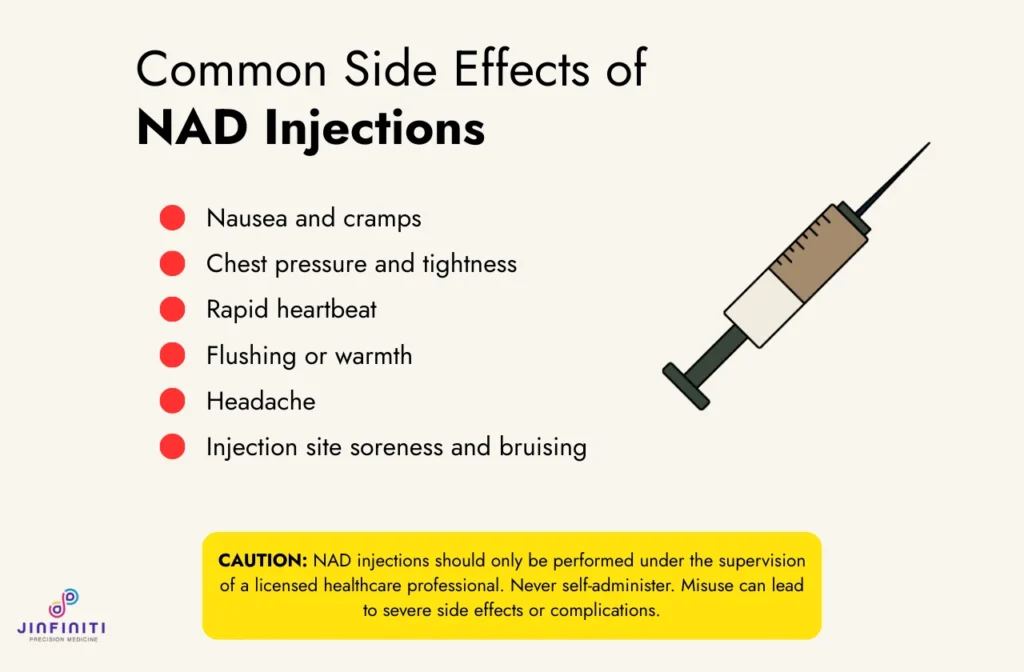
NAD injections (and NAD IV therapies) are marketed as a fast track to higher NAD+, but the delivery method can come with a very specific kind of discomfort. Think cramping, nausea, flushing, and a “this is intense” sensation that often improves as soon as the infusion slows or stops.
This guide breaks down what side effects are common, what’s a red flag, and how to lower risk if you choose to proceed. The big idea is simple: test your NAD+ level first, because the safest intervention is the one you actually need.
What You Should Know
Most NAD injection side effects are dose and timeframe related, and improve when dosing slows.
Chest pressure, rapid heartbeat, or severe nausea are common reasons clinics reduce infusion rate.
Injections and IVs add procedure risks (infection, vein irritation) that oral options avoid.
Testing your baseline NAD level helps you pick the safest, most effective next step.
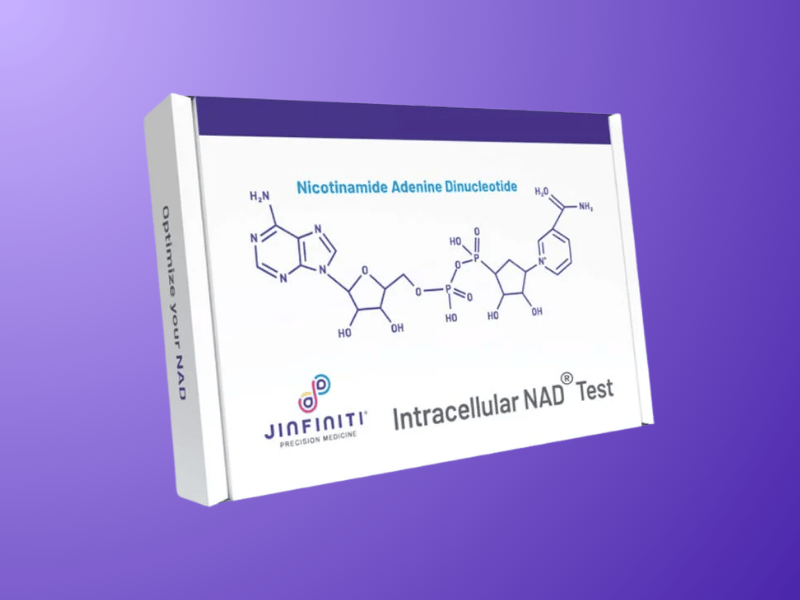
CLIA-Certified NAD Test Kit
Test your cellular NAD+ levels from home.
What Counts as an “NAD Injection” (and Why Side Effects Vary)
People use “NAD injections” to mean a few different things, and the side effects can look different depending on the route.
SubQ vs IM vs IV: three routes, three experiences
SubQ (subcutaneous): injected into the fatty layer under the skin. Often described as “less dramatic” than an IV, but still capable of causing nausea, flushing, or fatigue.
IM (intramuscular): injected into muscle. Tends to sting more at the site and can leave soreness.
IV (intravenous): infused into a vein over time. This route is most associated with infusion related symptoms like cramping and chest pressure.
If you want a broader primer on the pros, cons, and costs, see our NAD injections guide.
NAD+ vs NAD precursors (why the molecule matters)
NAD+ is a large molecule, and human data suggests it can be rapidly processed in the bloodstream during IV infusion.[1]
Oral supplements usually use precursors (building blocks) like NMN and NR that your cells convert into NAD+. That difference helps explain why oral strategies often feel gentler day to day.
A real world tolerability review of NAD+ IV reported that people commonly experienced moderate to severe gastrointestinal symptoms, increased heart rate, and chest pressure during infusion.[2]
One line from the paper captures what clinics see in practice:
“Participants that received NAD+ IV reported moderate to severe gastrointestinal symptoms, increased heart rate, and chest pressure.” (Frontiers, 2026) Symptoms resolved when the infusion ended.
Managing infusion discomfort
Clinics often adjust side effects by adjusting rate, dose, and monitoring.
Start lower than your ego wants. The goal is tolerability first.
Ask about infusion speed. Faster infusions tend to feel rougher.
Hydrate before and after. Dehydration makes everything louder.
Track symptoms in real time. If nausea spikes, tell the clinician immediately.
Here’s a useful mental rule: if the plan relies on “push through it,” the plan needs editing.
Managing injection site reactions
For SubQ or IM shots, local discomfort is common.
Keep the area clean and avoid scratching.
Use a warm compress for soreness.
Watch for spreading redness, warmth, or drainage.
If you develop fever, expanding redness, or increasing pain, treat it like an urgent medical issue.
Adverse Reactions and Red Flags: When to Stop
A little discomfort is one thing. A true adverse reaction is another.
Seek urgent medical care if you have
Chest pain, shortness of breath, fainting, or confusion
Swelling of the lips, tongue, or face
Hives, wheezing, or trouble breathing
High fever or rapidly worsening injection site redness
Severe one sided leg swelling or calf pain (possible clot)
If you have any cardiac history, clotting risk, or complex medical conditions, do not treat NAD injections like a casual wellness add on.
Procedure Risks That Aren’t “NAD Side Effects”
Even if the NAD itself were perfectly tolerated, injections and IVs come with their own risks.
Infection risk is about technique
Safe injection practice depends on sterile technique. CDC guidance emphasizes using aseptic technique and a new sterile syringe and needle for each injection.
If a clinic cannot clearly explain their sterile process, that’s your answer.
Compounding and quality control matter
Some clinics add ingredients to IV bags or compound products in house. The FDA has warned about adverse events associated with drug products compounded under insanitary conditions in medical office settings.
Ask directly where the product comes from and how sterility is ensured.
Vein irritation and thrombophlebitis
Any IV catheter can irritate a vein. In some cases that inflammation is tied to clot formation, a condition called thrombophlebitis.
Most people never experience this, but the risk is unique to needles and IVs.
This is the section where “talk to your clinician” stops being boilerplate and becomes practical.
Consider extra caution if you
Are pregnant or breastfeeding
Take blood thinners or have a bleeding disorder
Have uncontrolled high blood pressure or unstable heart rhythm
Have immune suppression or a history of frequent infections
Have a history of severe allergies or anaphylaxis
If your clinic is willing to treat these as non issues, find a more careful clinic.
Do NAD Injections Actually Raise Intracellular NAD?
This is the part most marketing skips. Your goal is not “NAD in a bag.” Your goal is NAD inside cells.
Human data on IV NAD+ suggests it can be rapidly removed from plasma during infusion and metabolized into other compounds. That doesn’t prove injections never help, but it does mean the relationship between infusion and intracellular NAD is not guaranteed.[1]
That uncertainty is why we recommend measuring intracellular NAD directly instead of assuming.
Test First: The Simplest Way to Reduce Risk
If you don’t know your baseline, you don’t know if you’re correcting a deficiency or chasing a feeling.
Dr. She’s NAD level ranges (quick reference)
Category
Intracellular NAD (μM)
What it usually implies
Optimal
40–100
Generally the “target zone” for cellular support
Suboptimal
30–40
May benefit from a structured plan
Deficient
20–30
Often worth addressing intentionally
Severely deficient
0–20
Consider more careful follow up and retesting
Too high
>100
More is not always better, and may not add benefit (consider homocysteine testing with your clinician)
Dr. Jin-Xiong She, PhD, puts it simply:
“If you can’t measure your NAD, you’re guessing at both need and dose.”
If you want a baseline plus clinical grade reporting, our Intracellular NAD® Test measures NAD from an at home finger prick sample.
Oral Supplementation: A Safer First Line for Most People
For most people, oral NAD precursor supplementation is the easiest way to start, because you can titrate slowly and stop easily.
Human safety data is stronger for oral precursors
In a randomized controlled trial, nicotinamide riboside (NR) at 2,000 mg per day for 12 weeks showed no serious adverse events and supported safety labs.[3]
A randomized, double blind trial of NMN at 1,250 mg daily for 4 weeks in healthy adults also evaluated repeated dosing safety.[4]
That doesn’t mean oral is perfect for everyone. It does mean the evidence base is clearer and the risk profile is generally simpler.
A practical upgrade: multi pathway oral support
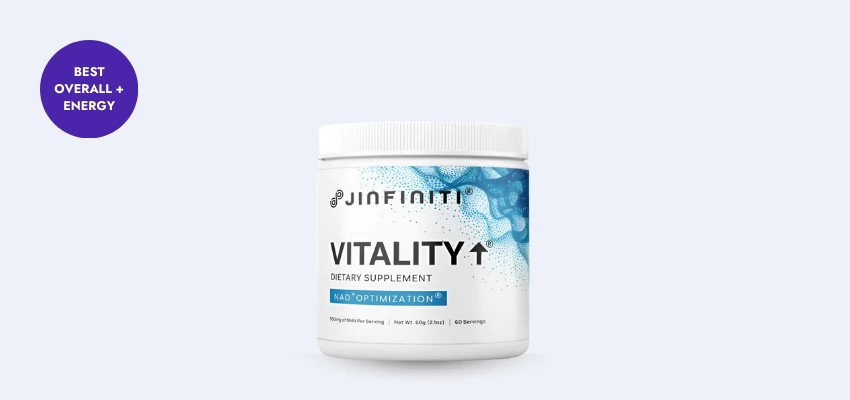
Our Vitality ↑® NAD+ Booster combines NMN, niacinamide, creatine monohydrate, and D ribose in a multi pathway formula.
In our clinical data, 22 of 26 participants (85%) reached optimized NAD levels in 4 weeks, and average NAD levels doubled (using our intracellular NAD testing approach). (See the clinical results PDF summary in the Vitality materials.)
Act: Start with oral support first (or lifestyle foundations) unless there’s a clear clinical reason to escalate.
Optimize: Retest after a few weeks and adjust dose based on data.
If you want the whole workflow in one bundle, the NAD Optimization® Starter Package pairs two NAD tests with Vitality and a consultation.
Frequently Asked Questions
Questions pop up fast with this topic. Here are the ones we see most.
Are NAD injections FDA approved?
NAD is a molecule your body makes naturally, but “NAD injection therapy” is not a single FDA approved standardized treatment the way a prescription drug is. Delivery, sourcing, and protocols vary by clinic.
How long do NAD injection side effects last?
Infusion related symptoms often calm down as soon as the infusion stops or slows. Site soreness from injections can last 1–2 days.
What’s the most common reason people feel awful during an NAD IV?
In the tolerability review, NAD+ IV was linked with GI symptoms, increased heart rate, and chest pressure, which often led to longer infusion times.
Can I do NAD shots at home?
While home administration is possible with a prescription, it requires strict adherence to sterile techniques and verified sourcing. Improper self-injection increases the risk of localized infection, vascular issues, and incorrect dosing. It is highly recommended to receive your first few doses in a clinical setting to monitor for adverse reactions.
Is oral NAD “as good” as injections?
Oral precursors have more human safety data and are easier to dose and stop. If your goal is intracellular NAD optimization, testing makes the decision much clearer.
Should I take niacin instead?
Niacin can raise NAD, but it comes with its own side effect profile (including flushing) and dosing nuance. If you’re considering it, see our niacin dosage guide.
Referenced Sources
Grant R, Berg J, Mestayer R, Braidy N, Bennett J, Broom S, et al. A Pilot Study Investigating Changes in the Human Plasma and Urine NAD+ Metabolome During a 6 Hour Intravenous Infusion of NAD+. Frontiers Media SA; 2019. https://doi.org/10.3389/fnagi.2019.00257
Reyna K, Heinzen G, Patel N, Ritter M, Siojo A, Legere H, et al. Intravenous infusion of nicotinamide adenine dinucleotide (NAD+) versus nicotinamide riboside (NR): a retrospective tolerability pilot study in a real-world setting. Frontiers Media SA; 2026. https://doi.org/10.3389/fragi.2026.1652582
Dollerup OL, Christensen B, Svart M, Schmidt MS, Sulek K, Ringgaard S, et al. A randomized placebo-controlled clinical trial of nicotinamide riboside in obese men: safety, insulin-sensitivity, and lipid-mobilizing effects. Elsevier BV; 2018. https://doi.org/10.1093/ajcn/nqy132
Fukamizu Y, Uchida Y, Shigekawa A, Sato T, Kosaka H, Sakurai T. Safety evaluation of β-nicotinamide mononucleotide oral administration in healthy adult men and women. Springer Science and Business Media LLC; 2022. https://doi.org/10.1038/s41598-022-18272-y
Disclaimer: This article is for informational purposes only and does not constitute medical advice. The products reviewed have not been evaluated by the FDA and are not intended to diagnose, treat, cure, or prevent any disease. Always consult a qualified healthcare professional before starting any new supplement regimen.
NAD supplements are marketed to help restore cellular energy levels, mental clarity, and slow down biological aging, but you have to pick formulas that have research to back up the claims.
The problem is figuring out which NAD+ boosters are clinically effective and which are expensive placebos. The vast majority of products rely on one precursor and hope for the best. The most effective formulas work on cellular energy from multiple angles.
Your cells need NAD+ (nicotinamide adenine dinucleotide), a coenzyme that helps drive energy production, DNA repair, and metabolic function. NAD levels in your body naturally decline by about 50% between the ages of 40 and 60. This decline is linked to chronic fatigue, brain fog, and delayed recovery from exercise and illness.
Our team tested and reviewed the best NAD supplements of 2025 to find out which formulas give real results. In this guide we cover the clinical research, third-party testing, and which ingredients actually boost cellular energy.
This guide was reviewed by Dr. Jin-Xiong She, PhD, genomic medicine researcher with over 400 published papers. Dr. She leads the CLIA-certified laboratory at Jinfiniti Precision Medicine, where his team processes 90% of the world’s NAD+ tests.
🧬Transparency note
This guide includes NAD+ supplements from Jinfiniti Precision Medicine alongside competitor products. We hold all formulas — including our own — to the same evaluation standards: clinical evidence, third-party testing, ingredient quality, and value. Our methodology and testing standards apply equally to every product reviewed.
Best NAD+ Supplements in 2025 Reviewed
Best Overall & Best for Energy: Jinfiniti Vitality ↑® NAD+ Booster
NAD+ precursor per serving: 900 mg (NMN, Niacinamide) Additional ingredients: Creatine Monohydrate, D-Ribose Form: Powder Certifications: Third-party tested, cGMP-certified, made in USA
Jinfiniti Vitality ↑® NAD+ Booster earns both our top overall pick and best for energy because it’s the only formula clinically shown to get 85% of users to optimal NAD+ levels in just 4 weeks while simultaneously supporting ATP production for sustained cellular energy.
Most NAD+ supplements rely on a single precursor and hope for the best. Vitality takes a different approach with a patent-pending 4-ingredient formula that works through multiple metabolic pathways simultaneously.
The formula combines 900mg of NAD+ precursors (NMN and niacinamide) with creatine monohydrate and D-ribose. This multi-pathway design addresses a problem most companies ignore: your cells need more than just NAD+ precursors to sustain elevated levels and maximize energy output.
Creatine supports ATP regeneration (adenosine triphosphate, the cellular energy currency), helping maintain the energy boost from increased NAD+. D-ribose provides the building blocks your cells need to produce both NAD+ and ATP efficiently. Together, they create sustained energy that doesn’t crash.
Clinical trials on this exact formula showed participants averaged a 100% increase in NAD+ levels alongside improvements in energy and mental clarity. The formula outperformed standalone NAD+ precursors by 3x and delivered results comparable to IV NAD+ therapy at a fraction of the cost.
Users report sustained mental clarity through the afternoon, better workout recovery, and the ability to handle stress without the usual energy drain. The energy boost appeared within the first two weeks and continued building through week 8.
Dr. Jin-Xiong She, who developed Vitality after years of dedicated research, explains, “Relying on a single NAD+ booster overlooks just how intricate cellular energy metabolism truly is. When we support several processes at once—such as NAD+ production, ATP generation, and the cell’s overall fuel supply—we see more consistent and lasting benefits, rather than short-lived increases.”
The powder format dissolves easily in water or your morning coffee. Two scoops daily (one morning, one evening) deliver the full clinical dose.
Jinfiniti backs the formula with over 5 years of safety data from hundreds of doctors and thousands of users. Third-party testing verifies purity and potency for every batch.
✓ Pros
✗ Cons
Clinical trial proving 85% reach optimal NAD+ in 4 weeks
Requires mixing (not grab-and-go like capsules)
Multi-pathway formula 3x more effective than single precursors
Premium pricing compared to basic NR supplements
Combines NAD+ precursors with ATP support
Two servings daily for full benefits
Created by scientist with 400+ published papers
Third-party tested with published results
Outperforms IV NAD+ at lower cost
Best for: People looking to boost NAD+ levels with proven results and full support for cellular energy, including both NAD+ and ATP production. This is especially helpful for those who often feel tired or experience low energy in the afternoon.
Best Budget Option: Life Extension NAD+ Cell Regenerator
Life Extension NAD+ Cell Regenerator offers a straightforward, clinically validated dose of Niagen (patented NR) without extras or inflated pricing.
This is pure NR supplementation done right. Each capsule delivers 300mg of Niagen, the specific form of nicotinamide riboside used in the majority of published NAD+ research.
NR converts to NAD+ through the salvage pathway (your body’s primary NAD+ recycling system responsible for 85% of production). Studies show 300mg daily can measurably increase blood NAD+ levels within weeks.
The formula’s simplicity is its strength. No proprietary blends, no underdosed “kitchen sink” ingredients, no unnecessary fillers. You get exactly what decades of research say works for NAD+ elevation.
This makes it ideal if you’re building your own supplement stack or want to avoid potential interactions with other formulas. You control what goes in your body beyond the NR.
Life Extension has operated since 1980 and maintains rigorous quality standards. The company provides Certificates of Analysis upon request and manufactures in GMP-compliant facilities.
The one-capsule serving makes dosing simple. Take it in the morning with breakfast for consistent absorption.
✓ Pros
✗ Cons
Clean, single-ingredient formula
No supporting ingredients for sustained NAD+ levels
Uses clinically studied Niagen brand NR
May plateau after 8-12 weeks without methyl donors
Accessible price point for daily use
Single pathway approach vs multi-pathway formulas
40+ years of company quality reputation
Lower precursor dose than some competitors
Easy one-capsule serving
Non-GMO certified
Best for: Budget-conscious people who want an affordable NAD+ supplement as a basic option, or those who like to add other ingredients to their routine on their own.
Best NAD+ Supplement for Women: Tru Niagen Beauty
NAD+ precursor per serving: 200 mg Nicotinamide Riboside (NR) Additional ingredients: Hyaluronic Acid, Astaxanthin, Biotin, Grape Seed Extract, Vitamin E Form: Capsules Certifications: NSF Certified for Sport, third-party tested by Alkemist Labs
Tru Niagen Beauty is our pick for women because it addresses cellular aging alongside the visible signs of aging that matter to many women—skin elasticity, hydration, and hair health.
Most NAD+ supplements only target cellular energy. Tru Niagen Beauty goes further by adding nutrients that support both NAD+ and healthy skin, hair, and nails.
The formula pairs 200mg of Niagen (the patented NR used in multiple clinical trials) with hyaluronic acid, a molecule that holds up to 1,000 times its weight in water. Your skin’s natural hyaluronic acid declines with age, leading to dryness and loss of volume.
Astaxanthin (a powerful antioxidant from marine algae) protects skin cells from oxidative stress and UV damage. Studies show it can improve skin texture and reduce fine lines when taken consistently.
Biotin supports hair growth and nail strength. Grape seed extract and vitamin E provide additional antioxidant protection against environmental stressors that accelerate skin aging.
The result is a supplement that works on two levels: boosting cellular NAD+ for energy and metabolic function while delivering compounds specifically chosen for skin, hair, and nail health.
The standard serving is 2 capsules (200mg NR), though you can take up to 4 capsules daily (400mg) for higher NAD+ support.
Tru Niagen maintains NSF Certified for Sport status across its product line, meaning every batch undergoes rigorous third-party testing for banned substances and label accuracy.
✓ Pros
✗ Cons
Combines NAD+ boosting with beauty-specific nutrients
Lower NR dose than dedicated NAD+ formulas
Hyaluronic acid for skin hydration and elasticity
Premium pricing for the category
NSF Certified for Sport testing standards
Multiple capsules per serving
Addresses both cellular and visible aging
Beauty benefits take 8-12 weeks to appear
Antioxidant protection from astaxanthin
Flexible dosing (2-4 capsules)
Best for: Women seeking cellular energy support who also want targeted benefits for skin hydration, elasticity, and overall radiance from a formula designed with beauty outcomes in mind.
Thorne ResveraCel is our top pick for resveratrol because it combines a robust NAD+ precursor dose with synergistic longevity compounds that work through complementary pathways.
Think of this as a complete aging support system in one formula. The 415mg of Niagen provides strong NAD+ elevation, while resveratrol and quercetin activate sirtuins (proteins that regulate cellular health and longevity).
Sirtuins require NAD+ to function. By boosting both NAD+ levels and sirtuin activity simultaneously, ResveraCel creates conditions for enhanced cellular repair and metabolic regulation.
The 150mg dose of trans-resveratrol matches amounts used in longevity research. Resveratrol has shown potential for cardiovascular protection, improved insulin sensitivity, and activation of genes associated with lifespan extension in animal models.
Quercetin phytosome (quercetin bound to phospholipids for better absorption) adds anti-inflammatory and antioxidant activity. Studies suggest quercetin may help clear senescent cells (damaged cells that refuse to die and contribute to aging).
Betaine serves as a methyl donor, supporting the methylation reactions needed to sustain NAD+ production. This addresses the plateau effect seen in some NAD+ supplementation where levels rise then fall after 8-12 weeks.
Thorne maintains exceptional quality standards with NSF Certified for Sport testing and TGA certification from Australia’s strict regulatory authority.
The two-capsule serving makes it easy to split the dose (one morning, one evening) or take together.
✓ Pros
✗ Cons
High-dose NR (415mg) plus longevity compounds
More expensive than single-ingredient options
Resveratrol activates sirtuins that work with NAD+
Two capsules per serving
Quercetin for senolytic and anti-inflammatory effects
Complex formula may make it harder to isolate benefits
Betaine supports sustained NAD+ production
NSF Certified for Sport and TGA certified
Targets multiple aging pathways simultaneously
Best for: Users looking for all-in-one longevity support from a single supplement, offered by a company recognized for clinical-grade formulations.
Codeage Liposomal NAD+ ULTRA uses a different method by providing real NAD+ molecules, not just precursors. These molecules are wrapped in liposomes to help your body absorb them better.
Most NAD+ supplements give you NMN or NR, which your body then converts to NAD+. This formula skips that conversion entirely and delivers 500mg of pure NAD+ directly.
The challenge with taking NAD+ orally has always been bioavailability. NAD+ molecules are large and break down quickly in the digestive system. That’s why precursors like NMN and NR became the standard approach.
Codeage addresses this through liposomal encapsulation. The NAD+ molecules are wrapped in phospholipid bubbles (derived from non-GMO sunflower oil) that protect them through digestion and allow cellular uptake.
Studies on liposomal delivery systems show they can increase bioavailability by 20-25% compared to standard formulations. Whether this advantage is enough to make direct NAD+ delivery superior to precursors remains debated, but the technology is promising.
The formula includes supporting ingredients that make sense: trans-resveratrol for sirtuin activation, quercetin for antioxidant support, betaine for methylation, and B vitamins that participate in NAD+ metabolism.
The three-capsule serving allows flexibility. You could start with two capsules and increase to three as needed.
Codeage manufactures in a cGMP-certified facility in the USA and subjects batches to third-party testing for purity and potency.
✓ Pros
✗ Cons
Delivers pure NAD+ directly (not precursors)
Three capsules per serving
Liposomal technology for enhanced absorption
Direct NAD+ approach has less research than precursors
Includes resveratrol, quercetin, and B vitamins
Higher price point
Non-GMO, vegan formulation
Effectiveness compared to precursors still debated
Made in USA cGMP facility
Third-party tested
Best for: People interested in cutting-edge NAD+ delivery technology who want to bypass the precursor conversion step, though this approach has less clinical validation than NMN/NR supplementation.
Best Sublingual: Jinfiniti Vitality ↑® NAD+ Lozenge
The Vitality ↑® Lozenge delivers the same clinically proven formula as the powder but in a sublingual format that may enhance absorption through oral mucosa.
Sublingual delivery (under the tongue) allows compounds to enter your bloodstream directly through the rich capillary network in your mouth. This bypasses first-pass metabolism in the liver, potentially increasing bioavailability.
While most NAD+ research uses oral capsules, there’s growing interest in sublingual formats. The theory is sound: NAD+ precursors absorbed through the mouth could reach cells faster and avoid degradation in the digestive tract.
The lozenge dissolves under your tongue in about 2-3 minutes. You get the same 4-ingredient, multi-pathway formula that proved 85% of users reached optimal NAD+ levels in 4 weeks.
The format offers convenience advantages. No mixing required, portable enough for travel, and easy to take at work or on the go. Just let it dissolve and you’re done.
Some users report noticing effects slightly faster with the lozenge compared to the powder, though this remains anecdotal rather than clinically proven.
The lozenge uses the same rigorous third-party testing and quality standards as all Jinfiniti products. Each batch is verified for purity and potency.
Two lozenges daily (one morning, one evening) deliver the full clinical dose.
✓ Pros
✗ Cons
Same proven formula as Best Overall pick
Limited research on sublingual NAD+ delivery
Sublingual absorption may enhance bioavailability
Takes 2-3 minutes to fully dissolve
No mixing required (grab-and-go convenience)
More expensive than powder per serving
Portable and travel-friendly
May not suit people who dislike lozenges
Backed by clinical trial showing 85% reach optimal levels
Third-party tested
Best for: People who want the clinically proven Vitality formula in a convenient sublingual format that doesn’t require mixing, ideal for busy schedules or frequent travel.
Top NAD+ Supplements Comparison Table
Product
NAD+ Precursor
Other Ingredients
Form
Third-Party Tested
Key Feature
Jinfiniti Vitality
900mg NMN + Niacinamide
Creatine, D-Ribose
Powder
Yes
Clinical validation: 85% reach optimal NAD+
Life Extension Cell Regenerator
300mg NR (Niagen)
None
Capsule
Yes
Clean single-ingredient formula
Tru Niagen Beauty
200mg NR (Niagen)
Hyaluronic Acid, Biotin, Astaxanthin
Capsule
Yes
Beauty-focused with skin nutrients
Thorne ResveraCel
415mg NR (Niagen)
Resveratrol, Quercetin, Betaine
Capsule
Yes
Complete longevity pathway support
Codeage Liposomal NAD+
500mg pure NAD+
Resveratrol, Quercetin, B vitamins
Liposomal Capsule
Yes
Direct NAD+ delivery (not precursor)
Jinfiniti Vitality Lozenge
900mg NMN + Niacinamide
Creatine, D-Ribose
Sublingual Lozenge
Yes
Sublingual absorption for convenience
Testing and formulations current as of December 2025. Always verify current specifications on product pages.
What is NAD+?
NAD+ (nicotinamide adenine dinucleotide) is a coenzyme found in every living cell. It’s a vital molecule that supports hundreds of cellular processes.
Your mitochondria (the cellular powerplants) need NAD+ to convert food into ATP, the energy currency your body runs on. Without adequate NAD+, energy production slows down[1].
NAD+ also controls DNA repair, circadian rhythms, and metabolic processes that keep cells functioning properly.
Research shows a 50% drop between ages 40 and 60. By age 80, some studies report 80% reductions from youthful levels.
Lower NAD+ means:
Less energy production
Slower DNA repair
Impaired metabolism
Reduced cellular cleanup (autophagy, the process cells use to remove damaged components)
Compromised mitochondrial health
NAD+ itself can’t be absorbed well as a supplement. It’s too big and breaks down in your stomach before it can help your cells.
That’s why NAD+ supplements use precursors—smaller molecules your body can turn into NAD+ through natural processes.
CLIA-Certified NAD Test Kit
Test your NAD+ levels from home.
How Do NAD+ Supplements Work?
NAD+ supplements give your body the building blocks it needs to make more NAD+.
You can’t take NAD+ directly because it breaks down in your stomach before reaching your cells. Instead, you take smaller molecules called precursors that your body converts into NAD+.
Think of it like this: you can’t deliver a fully assembled car to your cells, but you can deliver the parts and let your cells build it.
The two main precursors are:
NMN (nicotinamide mononucleotide): Converts directly to NAD+ inside your cells. This is a short, efficient path.
NR (nicotinamide riboside): Converts to NMN first, then to NAD+. This takes one extra step but works just as well.
Your body mainly produces NAD+ through recycling. About 85% of your NAD+ comes from breaking down and rebuilding old NAD+ molecules. This recycling system is where supplemental NMN and NR work.
Your body can also make NAD+ from vitamin B3 (niacin), but this often causes skin flushing at the doses needed to meaningfully raise NAD+.
Most NAD precursors use NMN or NR because they plug directly into your body’s main NAD+ production system. Both have proven effective in clinical trials.
NMN vs NR: Which Should You Choose?
Both NR and NMN raise NAD+ levels effectively. The differences are smaller than supplement companies want you to believe.
NMN (Nicotinamide Mononucleotide)
One step away from becoming NAD+
Slightly newer, with growing research
Effective dose: 300-900mg daily
Some studies show benefits for sleep quality
NR (Nicotinamide Riboside)
Two steps away from becoming NAD+ (converts to NMN first, then to NAD+)
More published human studies
Effective dose: 250-500mg daily
Research shows benefits for brain health markers
For specific guidance, see our detailed breakdown of optimal NMN dosage based on current research.
Which one wins?
Honestly, both work. Your cells convert either one into NAD+ efficiently.
The better questions are: What’s the dose? Is it third-party tested? Does the formula include supporting ingredients?
Studies show safe doses up to 2,000mg for NR and 1,200mg for NMN. Both have excellent safety records.
The best approach? Try both and see which your body responds to best.
Health Benefits of NAD+ Supplements
Studies on NAD+ supplements have found several possible benefits. However, most research in people has only lasted for a few weeks or months.
Energy and Metabolism Support
NAD+ is required for the electron transport chain in mitochondria—the process that converts nutrients into ATP.
Higher NAD+ levels improve mitochondrial efficiency, leading to better energy production[2].
Studies in middle-aged and older adults taking NMN or NR have reported improved fatigue scores and better physical endurance. One trial showed amateur runners taking 1,000mg NMN daily improved their aerobic capacity compared to placebo[3].
Your brain uses roughly 20% of your body’s energy despite making up only 2% of body weight.
This energy demand makes brain function particularly sensitive to NAD+ status.
Research shows NAD+ precursors may protect neurons from oxidative stress, support neurotransmitter production, and improve markers associated with cognitive decline.
A 2022 study found NR supplementation improved biomarkers related to neurodegenerative pathways in adults over 55[4].
Cellular Repair and Healthy Aging
NAD+ activates sirtuins, a family of proteins that regulate cellular health, DNA repair, and stress resistance.
Sirtuins can’t function without NAD+. Declining NAD+ levels may accelerate aging.
Animal research shows NAD+ supplementation can extend both lifespan and healthspan (years lived in good health). Human trials are shorter but show improvements in biological aging markers, inflammation levels, and cellular stress response[5].
Cardiovascular Health
NAD+ supports endothelial function (the health of blood vessel linings), blood pressure regulation, and vascular flexibility.
Studies in older adults have found NMN supplementation improved arterial stiffness and blood pressure readings.
Research published in 2024 examining adults over 40 found 250mg NMN daily for 12 weeks reduced blood pressure and arterial stiffness compared to baseline[6].
Exercise Performance and Recovery
NAD+ helps your muscles use energy, supports healthy mitochondria in muscle cells, and assists with recovery after exercise.
Athletes and active individuals often report faster recovery times and better workout performance with NAD+ supplementation.
A 2021 study in amateur runners showed NMN supplementation enhanced aerobic capacity during training, suggesting improved oxygen utilization and energy production in working muscles[7].
How to Choose a NAD+ Supplement
Selecting the right NAD+ supplement means understanding a few key factors that separate effective formulas from expensive placebos.
NAD+ Precursor Type and Dosage
Single vs. Multi-Pathway Formulas
Simple NMN or NR supplements work by feeding one pathway. Multi-ingredient formulas like Jinfiniti’s Vitality support NAD+ production through multiple pathways while also addressing ATP synthesis and methylation.
Research shows single-pathway supplements can plateau around 8-12 weeks as the body adapts or runs short on cofactors needed to sustain production.
Multi-pathway formulas help prevent this plateau.
Effective Dose Ranges
Clinical trials show 250-500mg daily for NR and 300-900mg for NMN as effective starting doses.
Higher doses up to 2,000mg NR and 1,200mg NMN have proven safe in studies. For detailed guidance on proper NAD+ dosage and frequency, research-backed recommendations can help you find your optimal intake.
Lower doses under 200mg may not provide enough precursor for meaningful NAD+ elevation, especially in people over 50 with depleted baseline levels.
Absorption Enhancement
Liposomal Technology: Wrapping NAD+ or precursors in lipid bubbles may increase absorption by protecting them through digestion. Research shows roughly 20-25% improvement in bioavailability. Learn more about liposomal NAD+ delivery and the science behind this technology.
Sublingual Formats: Lozenges and powders designed to dissolve under the tongue bypass digestive breakdown. They deliver precursors directly to the bloodstream through oral mucosa. The debate between sublingual NMN vs capsules continues as research emerges on optimal delivery methods.
With or Without Food: Some precursors absorb better with dietary fat. Check product recommendations, but many work well taken with morning meals.
The challenge with novel delivery methods? Limited clinical data. Most published NAD+ research uses standard capsules, so dosing guidance for liposomal or sublingual formats remains unclear.
Supporting Ingredients for Sustained NAD+ Elevation
TMG/Betaine (Trimethylglycine): Acts as a methyl donor. NAD+ production creates a byproduct called homocysteine that requires methyl groups to process safely. The combination of NMN and TMG hasbeen studied for supporting methylation.
Creatine Monohydrate: Supports ATP regeneration, complementing the energy boost from NAD+. When your cells have both elevated NAD+ and efficient ATP recycling, energy production remains high under stress.
D-Ribose: Provides the sugar backbone needed to build new ATP molecules. Research shows 5g daily can reduce fatigue and improve energy recovery[8].
Resveratrol and Quercetin: These polyphenols activate sirtuins and support antioxidant systems that work with NAD+ for cellular health. They don’t boost NAD+ directly but may enhance the benefits. Research on NAD+ combined with resveratrolshows potential synergistic effects for longevity.
Third-Party Testing and Quality
NAD+ precursors can degrade in heat or humidity. Quality manufacturers test every batch to verify:
Stability (product maintains potency through shelf life)
Look for companies that publish Certificates of Analysis or have NSF Certified for Sport testing, which screens for banned substances and verifies label accuracy.
Form and Convenience
Capsules: Most convenient, consistent dosing, easy to travel with. The most-researched format.
Powders: Allow flexible dosing, can be mixed into drinks, sometimes more cost-effective per serving.
Lozenges/Sublingual: Bypass digestive breakdown, convenient, may have faster absorption.
Liposomal Liquids: Enhanced absorption technology, though clinical dosing data remains limited.
How We Tested
We evaluated NAD+ supplements using a systematic methodology designed to identify formulas with clinical backing, quality manufacturing, and real-world effectiveness.
Formula Analysis
We examined each product’s ingredient list against published NAD+ research to verify:
Precursor dosing aligns with amounts shown effective in clinical trials (250-2,000mg for NR, 300-1,200mg for NMN)
Supporting ingredients have evidence for enhancing or sustaining NAD+ production
No proprietary blends that hide actual ingredient amounts
Absence of unnecessary fillers or underdosed “window dressing” ingredients
We gave preference to formulas addressing multiple aspects of cellular energy metabolism rather than relying on a single precursor alone.
Quality Verification
We checked each brand’s commitment to quality through:
Third-party testing status: Do they test batches independently for purity and potency?
Certificate of Analysis availability: Can customers access actual test results?
Manufacturing standards: GMP-certified facilities? NSF Certified for Sport?
Contamination screening: Testing for heavy metals, microbes, and other contaminants?
Brands that make test results publicly available or easily accessible scored highest for transparency.
Clinical Evidence Review
We researched whether product formulations matched research protocols:
Does the NMN or NR dose align with human clinical trials?
Are combination ingredients supported by NAD+ metabolism research?
Have the specific branded ingredients (like Niagen) been studied independently?
Does the company reference legitimate peer-reviewed research or rely on marketing claims?
Real-World Testing Factors
We considered practical use factors:
Serving size: Number of capsules/scoops required
Mixing requirements: For powders, how easily they dissolve
Taste: For flavored formats
Travel convenience: Can you easily take it on the go?
Dosing flexibility: Can you adjust intake based on your needs?
Value Assessment
We compared cost-effectiveness accounting for:
Actual precursor amount per dollar spent
Inclusion of supporting ingredients that may enhance or sustain results
Bulk purchasing or subscription discounts
Shipping costs and policies
The cheapest option isn’t always the best value if it requires higher doses or lacks ingredients for sustained effectiveness.
Frequently Asked Questions
What is the best NAD+ supplement?
Jinfiniti Vitality ↑® NAD+ Booster is our top pick because it’s the only formula with clinical data showing 85% of users reach optimal NAD+ levels in 4 weeks. The multi-pathway approach combining NMN, niacinamide, creatine, and D-ribose outperformed single-ingredient NAD+ boosters by 3x in trials.
Should I take NMN or NR?
Both NMN and NR effectively raise NAD+ levels in clinical trials. NMN is one metabolic step closer to NAD+, while NR has more published human research. Rather than choosing, consider formulas that combine both to potentially access a wider range of benefits.
What’s the optimal NAD+ dosage?
Clinical research shows effective daily doses of 250-500mg for NR and 300-900mg for NMN. Higher doses up to 2,000mg NR and 1,200mg NMN have proven safe in human trials. Start at the lower end and increase based on your response and healthcare provider guidance.
How long does it take to see results from NAD+ supplements?
Blood NAD+ levels typically increase within 1-2 weeks of consistent supplementation. Subjective energy improvements often appear by weeks 2-4. Full benefits for cellular health markers may take 8-12 weeks to develop. Results vary based on baseline NAD+ status, age, and overall health.
Users report noticeable improvements in energy, mental clarity, and recovery following a similar timeline in this NMN before and after analysis of real-world results.
Can I take NAD+ with other supplements?
NAD+ supplements generally combine safely with most other supplements. They pair well with antioxidants, B vitamins, omega-3s, and other longevity-focused nutrients. Always consult your healthcare provider before combining supplements, especially if you take prescription medications.
Are there side effects from NAD+ supplements?
NAD+ precursors (NMN and NR) are well-tolerated at research doses. Mild side effects reported in some studies include nausea, headache, or digestive discomfort, typically when starting at high doses. These effects are rare and usually resolve with continued use or dose adjustment.
Should NAD+ be taken with food?
Research protocols vary. Some studies used fasted dosing, others with meals. NAD+ precursors are fat-soluble, so taking them with food containing healthy fats may improve absorption. Follow product-specific recommendations or take with your morning meal for consistent absorption.
What time of day should I take NAD+?
Most research uses morning dosing to align with natural circadian rhythms and energy needs. Some formulas recommend split dosing (morning and evening) for sustained NAD+ elevation. Avoid taking close to bedtime as increased cellular energy might interfere with sleep for some users.
How does NAD+ compare to NMN?
NAD+ is the end product your cells need. NMN is a precursor your body converts to NAD+. Taking NMN orally is more effective than taking NAD+ directly because NMN has better bioavailability and cellular uptake. Your body efficiently converts NMN to NAD+ once absorbed.
Will NAD+ supplements help with weight loss?
NAD+ supports metabolism and mitochondrial function, which influence energy expenditure. Some research shows NAD+ precursors may improve insulin sensitivity and metabolic health markers.
NAD+ supplements aren’t weight loss drugs. Benefits for body composition appear as part of improved overall metabolic health.
Research examining NMN and weight loss shows the connection between NAD+ metabolism and body composition is more nuanced than simple calorie burning.
Important Medical Disclaimer
This article provides educational information about NAD+ supplements based on current scientific research. It should not replace medical advice from qualified healthcare professionals.
Consult Your Healthcare Provider
Always speak with your doctor before starting NAD+ supplementation, especially if you:
Have existing medical conditions
Take prescription medications
Are pregnant, nursing, or planning pregnancy
Have a personal or family history of cancer
Are scheduled for surgery
Take blood thinners or immunosuppressant drugs
Research Limitations
While human trials show NAD+ precursors safely increase NAD+ levels and cellular function markers, long-term studies (multiple years) remain limited. Most research examines weeks to months of supplementation.
Cancer research has shown tumor cells require NAD+ for growth, raising theoretical concerns about NAD+ supplementation in people with active cancer or high cancer risk. This relationship needs more research to fully understand.
FDA Status
Dietary supplements like NAD+ boosters are not evaluated by the FDA for safety or efficacy. These products are not intended to diagnose, treat, cure, or prevent any disease.
Individual Variation
Response to NAD+ supplementation varies based on age, baseline NAD+ status, genetics, overall health, and lifestyle factors. Results from research studies represent group averages and may not reflect your personal experience.
Testing Recommended
Consider testing your NAD+ levels before and during supplementation to verify the supplement is working for your biochemistry.
Jinfiniti offers the world’s only consumer NAD+ test processed in a CLIA-certified laboratory.
Learn how to test NAD+ levels accurately and what the results mean for your supplementation strategy.
For personalized guidance about NAD+ supplementation and dosing appropriate for your health status, consult a qualified healthcare provider familiar with longevity medicine.
Referenced Sources
Yusri K, Jose S, Vermeulen KS, Tan TCM, Sorrentino V. The role of NAD+ metabolism and its modulation of mitochondria in aging and disease. Springer Science and Business Media LLC; 2025. https://doi.org/10.1038/s44324-025-00067-0
Nasuhidehnavi A, Zarzycka W, Górecki I, Chiao YA, Lee CF. Emerging interactions between mitochondria and NAD+ metabolism in cardiometabolic diseases. Elsevier BV; 2025. https://doi.org/10.1016/j.tem.2024.07.010
Yi L, Maier AB, Tao R, Lin Z, Vaidya A, Pendse S, et al. The efficacy and safety of β-nicotinamide mononucleotide (NMN) supplementation in healthy middle-aged adults: a randomized, multicenter, double-blind, placebo-controlled, parallel-group, dose-dependent clinical trial. Springer Science and Business Media LLC; 2022. https://doi.org/10.1007/s11357-022-00705-1
Vreones M, Mustapic M, Moaddel R, Pucha KA, Lovett J, Seals DR, et al. Oral nicotinamide riboside raises NAD+ and lowers biomarkers of neurodegenerative pathology in plasma extracellular vesicles enriched for neuronal origin. Wiley; 2022. https://doi.org/10.1111/acel.13754
Fang EF, Lautrup S, Hou Y, Demarest TG, Croteau DL, Mattson MP, et al. NAD+ in aging: molecular mechanisms and translational implications. Elsevier BV; 2017. https://doi.org/10.1016/j.molmed.2017.08.001
Katayoshi T, Uehata S, Nakashima N, Nakajo T, Kitajima N, Kageyama M, et al. Nicotinamide adenine dinucleotide metabolism and arterial stiffness after long-term nicotinamide mononucleotide supplementation: a randomized, double-blind, placebo-controlled trial. Springer Science and Business Media LLC; 2023. https://doi.org/10.1038/s41598-023-29787-3
Liao B, Zhao Y, Wang D, Zhang X, Hao X, Hu M. Nicotinamide mononucleotide supplementation enhances aerobic capacity in amateur runners: a randomized, double-blind study. Informa UK Limited; 2021. https://doi.org/10.1186/s12970-021-00442-4
Teitelbaum JE, Johnson C, Cyr JSt. The Use of D-Ribose in Chronic Fatigue Syndrome and Fibromyalgia: A Pilot Study. Mary Ann Liebert Inc; 2006. https://doi.org/10.1089/acm.2006.12.857
NAD supplements are often sold with claims of reversing aging, boosting energy, and improving mental clarity. Many of these sound too good to be true.
Your body’s NAD+ levels drop byabout 50% between ages 40 and 60[1]. NAD is a coenzyme that metabolizes food, repairs damaged DNA, and converts nutrients into energy for your cells. Supplements like NMN or NR (nicotinamide mononucleotide or nicotinamide riboside) can boost your levels if you’re deficient.
Benefits are most apparent in people over 40 or with metabolic issues. A baseline test can also help you determine if you need them or not.
What You Should Know
NAD supplements show the most benefits in people with existing deficiencies or metabolic dysfunction
Studies suggest benefits for blood sugar control, heart health, brain function, physical performance, and DNA repair
Side effects are generally mild (nausea, bloating, headache) and resolve quickly in most people
Testing your NAD+ levels before and after supplementing removes all guesswork about effectiveness
NAD+ is the energy source for all the cells in your body. You can think of it as a rechargeable battery used for hundreds of different processes within your cells.
Your cells use NAD+ for two main jobs:
Turning food into ATP, the fuel your cells run on
Powering sirtuins and PARPs, enzymes that play key roles in DNA repair, stress response, and aging
An enzyme called CD38, which literally nibbles away at NAD+, increases as you age. This, along with a decline in your body’s own production of NAD+, results in a drop in levels as we get older[2].
The two most studied forms of NAD supplements are NMN and NR, which take slightly different paths to boosting your levels.
CLIA-Certified NAD Test Kit
Test your NAD+ levels from home.
5 Promising Benefits of NAD Supplements
Supplementing with NAD precursors can help replenish your body’s NAD levels when they’re low. Here are the 5 benefits of NAD supplements that have the most clinical support.
1. Better Blood Sugar Control and Insulin Sensitivity
Your muscle cells need to react to insulin so they can remove sugar from your blood. If this process stops working well, prediabetes or type 2 diabetes can develop.
A 2021 clinical trial published in Science gave 250 mg of NMN daily to postmenopausal women with prediabetes for 10 weeks. Using a standard test for insulin sensitivity, researchers saw clear improvements in how muscle responded to insulin[3].
Muscle samples showed that the cells were better at processing insulin signals. Genes related to muscle function were more active. These changes happened even though there was no weight loss.
NAD+ helps by turning on a protein called SIRT1, which helps cells respond to insulin and burn fat in the mitochondria. When NAD+ levels fall, this process weakens, and fat can build up in muscles and the liver, making it harder for insulin to work.
One thing to note: Studies in healthy young adults show little effect on blood sugar. The benefits seem to be greater when you already have problems with your metabolism[4].
2. Improved Heart Health and Blood Pressure
Stiff arteries and high blood pressure increase the risk of heart disease. When blood vessels become less flexible, the heart has to work harder to move blood through the body.
In a pilot study with 1000 mg of NR daily for 6 weeks, middle-aged adults with high blood pressure saw their systolic readings drop by an average of 8 mmHg[5]. This drop is similar to what some people get from blood pressure medications or major diet changes like sodium restriction.
The reason is that NR activates SIRT1 in the cells lining blood vessels. SIRT1 increases nitric oxide, which helps blood vessels relax. More NAD+ means more SIRT1 activity and better blood flow.
Other research shows NAD+ can lower inflammation markers like IL-6 and TNF-alpha in people with heart failure. These markers are linked to stiffer arteries[6].
3. Brain Function and Memory Support
Your brain uses about 20% of your body’s energy, even though it only makes up 2% of your body weight. Brain cells need a steady supply of energy and are easily affected by damage from oxidation.
NAD+ helps protect brain cells in several ways. SIRT1 and SIRT3, proteins activated by NAD+, help reduce oxidative stress and affect how certain brain proteins are processed, which may lower the risk of forming plaques linked to Alzheimer’s disease.
In animal studies on Alzheimer’s, NR supplements lowered brain inflammation, DNA damage, and tau tangles, while helping restore memory[7]. Early human studies show similar effects, with better cognitive scores and improved brain metabolism on scans[8].
A Phase I trial in people with Parkinson’s gave 3000 mg of NR daily for 4 weeks. Brain scans showed higher NAD+ levels in the brain[9].
NAD+ also regulates your sleep-wake cycle by helping control circadian rhythm. Studies in older adults found that NMN improved sleep quality and reduced daytime sleepiness, especially when taken in the afternoon[10].
4. Increased Energy and Physical Performance
As people get older, they often lose muscle, which can lead to weakness. NAD+ precursors may help the body in ways similar to exercise.
NAD+ turns on SIRT1, which then activates PGC-1alpha. This process helps the body make more mitochondria. It also changes muscle fibers from fast-twitch (which tire quickly) to slow-twitch (which last longer and burn fat better).
One study with amateur runners found that taking up to 1200 mg of NMN daily helped increase VO2 max (aerobic fitness) and the point where breathing becomes hard during exercise[11]. This happened because muscles used oxygen more efficiently, not because the heart pumped more.
For older adults, NMN supplements helped them walk faster and stand up from a chair more easily[10]. These improvements are linked to autonomy and longevity with age.
“We’ve seen that restoring NAD+ can help people feel more energetic,” says Dr. Jin-Xiong She, founder of Jinfiniti Precision Medicine. “How well it works depends on your baseline levels and overall health.”
5. DNA Repair and Cellular Protection
Your DNA is constantly getting damaged by things like sunlight, stress, and normal cell activity. To fix this damage, your cells need NAD+ to power their repair systems[12].
One of these repair helpers, PARP1, acts quickly when DNA strands break. It uses NAD+ to send out signals for other repair tools to come help. If your cells run low on NAD+, PARP1 can’t work properly, and DNA errors start to build up.
Research shows that when cells have less NAD+, they’re more easily harmed by radiation, but restoring NAD+ helps them fix DNA damage faster. This helps protect cells from stressors like environmental stress and medical scans[13].
Another enzyme, SIRT6, also relies on NAD+ to keep chromosome ends (telomeres) stable and to help fix serious DNA breaks. Sirtuins like SIRT6 also help keep the cell’s genetic instructions in order, which helps cells stay healthy as you get older.
Supplement Safety Note
Supplements receive minimal FDA regulation and may not be safe for everyone. They can interact with medications and other supplements. Always consult your doctor before starting any supplement regimen.
NAD Supplement Side Effects: What to Watch For
Clinical trials have shown that NAD supplements generally have a strong safety record. Most side effects tend to be mild and depend on the dose you take.
The most common side effects reported with NMN and NR supplements are:
Nausea
Bloating
Loose stools or diarrhea
Mild headache
Stomach discomfort
These symptoms usually show up at higher doses and often fade within a few days as your body gets used to the supplement. Unlike niacin, NMN and NR do not cause the skin flushing reaction that many find uncomfortable.
Clinical studies have tested NR in amounts up to 3000 mg daily for four weeks and NMN up to 1250 mg daily for twelve weeks. Even at these higher doses, participants did not experience serious adverse events. Liver enzyme levels and kidney function remained normal throughout the studies[14].
Before starting NAD supplements, we recommend talking with your healthcare provider if you:
Take medications for diabetes or blood sugar management
Use blood thinners
Have active cancer or a history of cancer
Are pregnant or breastfeeding
Have liver or kidney disease
NAD supplements can interact with certain medications, so it’s wise to share your full supplement list with your doctor to help prevent any unwanted interactions.
Some individuals with MTHFR genetic variants choose to combine NMN with TMG (trimethylglycine) to support methylation pathways. However, research using 1000 mg of NR daily found no significant change in homocysteine levels among healthy adults.
NMN vs NR: Which NAD Supplement Should You Choose?
Both NMN and NR will help you boost NAD levels, though they follow different pathways to reach that goal.
NR enters your cells using certain transporters. Once inside, it first becomes NMN and then converts to NAD+. NR research points to benefits for heart health, blood pressure regulation, and brain function.
NMN may enter cells directly thanks to a newly discovered transporter in the gut. Clinical studies here suggest especially strong outcomes for muscle health, physical performance, and sleep quality.
NR has been studied in humans for a longer period. NMN offers some unique benefits for metabolism, but it needs to be stored carefully so it doesn’t break down into plain nicotinamide, which can actually block the enzymes you want to support.
Whether you should take NAD+ supplements really depends on your current NAD+ levels. Clinical trials consistently show that the most significant benefits appear in individuals who already have a deficiency.
People with prediabetes, high blood pressure, older adults, or those with impaired metabolic function notice the greatest improvements. Healthy young adults tend to see minor changes.
Testing your NAD+ levels transforms supplementation from guesswork into precision health optimization:
Test your baseline NAD+ levelsto see if you actually have a deficiency. The optimal range is 40-100 basedon our clinical research. Many people over 40 fall into suboptimal or deficient ranges.
Supplement based on your resultswith targeted dosing if needed. Your NAD dosageshouldbe personalized based on your levels rather than following one-size-fits-all approaches.
Retest after 4-8 weeksto see if the intervention is working. This removes all uncertainty about whether your supplement is effective or if you need to adjust your approach.
As Dr. She notes, “Testing transforms supplementation from hope to data. We process 90% of the world’s NAD+ tests because people finally have access to this information. You can see exactly how your body responds.”
If you supplement without testing, you’re left relying on marketing claims, never truly knowing whether your NAD+ levels are increasing. You might end up spending money on supplements that have no effect — or taking doses too low to matter.
Testing gives you clear, objective data. You know where you started. You know if your supplement works. You know when you’ve reached optimal levels.
Understanding what to expect before and after helps you set realistic goals and track meaningful changes as your NAD+ levels improve.
Frequently Asked Questions About NAD Supplements
Can I boost NAD levels naturally without supplements?
Exercise, calorie restriction, and not overindulging in alcohol are some of the ways to preserve NAD+ levels. Consuming B vitamins (found in foods such as chicken, fish, and mushrooms) can also support your body’s natural NAD+ production.
Are NAD supplements better than NAD injections?
Oral supplements are the better choice for most people. NAD injections cost 3-10x more with less research supporting them.
What forms do NAD supplements come in?
NAD precursor supplements are available as:
Powder (mix with water or take sublingually)
Capsules (convenient for consistent dosing)
Lozenges (dissolve under tongue for sublingual absorption)
Powder and capsule forms have the most clinical research behind them. Sublingual NMN may offer some benefits but hasn’t been proven in head-to-head studies.
What happens if you take NAD supplements every day?
Daily NAD supplementation has been found to be safe in trials up to several months in duration. You will likely begin to plateau on benefits at 4-8 weeks as you enter your optimal level. Some people cycle their supplementation or lessen their dosage once their levels have been optimized. Repeat testing will allow you to know when you are in your desired range.
Who should avoid NAD supplements?
Do not take NAD supplements if you have active cancer, are pregnant or breastfeeding, or have severe liver or kidney disease. Consult with your doctor first if you take diabetes medications, blood thinners, or chemotherapy. Those with a personal or family history of cancer should consult their oncologist before supplementing.
Does NAD reverse aging?
NAD+ won’t make you 20 again. However, it may help restore some cellular functions that tend to decline with age. You might notice improvements in your energy levels, sleep quality, cognitive function and metabolic health.
Alegre GFS, Pastore GM. NAD+ precursors nicotinamide mononucleotide (NMN) and nicotinamide riboside (NR): potential dietary contribution to health. Springer Science and Business Media LLC; 2023. https://doi.org/10.1007/s13668-023-00475-y
Yoshino M, Yoshino J, Kayser BD, Patti GJ, Franczyk MP, Mills KF, et al. Nicotinamide mononucleotide increases muscle insulin sensitivity in prediabetic women. American Association for the Advancement of Science (AAAS); 2021. https://doi.org/10.1126/science.abe9985
Kuerec AH, Wang W, Yi L, Tao R, Lin Z, Vaidya A, et al. Towards personalized nicotinamide mononucleotide (NMN) supplementation: nicotinamide adenine dinucleotide (NAD) concentration. Elsevier BV; 2024. https://doi.org/10.1016/j.mad.2024.111917
Freeberg KA, Craighead DH, Martens CR, You Z, Chonchol M, Seals DR. Nicotinamide riboside supplementation for treating elevated systolic blood pressure and arterial stiffness in midlife and older adults. Frontiers Media SA; 2022. https://doi.org/10.3389/fcvm.2022.881703
Hou Y, Lautrup S, Cordonnier S, Wang Y, Croteau DL, Zavala E, et al. NAD+ supplementation normalizes key Alzheimer’s features and DNA damage responses in a new AD mouse model with introduced DNA repair deficiency. Proceedings of the National Academy of Sciences; 2018. https://doi.org/10.1073/pnas.1718819115
Alghamdi M, Braidy N. Supplementation with NAD+ precursors for treating Alzheimer’s disease: a metabolic approach. SAGE Publications; 2024. https://doi.org/10.3233/jad-231277
Berven H, Kverneng S, Sheard E, Søgnen M, Af Geijerstam SA, Haugarvoll K, et al. NR-SAFE: a randomized, double-blind safety trial of high dose nicotinamide riboside in Parkinson’s disease. Springer Science and Business Media LLC; 2023. https://doi.org/10.1038/s41467-023-43514-6
Kim M, Seol J, Sato T, Fukamizu Y, Sakurai T, Okura T. Effect of 12-week intake of nicotinamide mononucleotide on sleep quality, fatigue, and physical performance in older Japanese adults: a randomized, double-blind placebo-controlled study. MDPI AG; 2022. https://doi.org/10.3390/nu14040755
Benjamin C, Crews R. Nicotinamide mononucleotide supplementation: understanding metabolic variability and clinical implications. MDPI AG; 2024. https://doi.org/10.3390/metabo14060341
Svetlova M, Solovjeva L, Kropotov A, Nikiforov A. The impact of NAD bioavailability on DNA double-strand break repair capacity in human dermal fibroblasts after ionizing radiation. MDPI AG; 2023. https://doi.org/10.3390/cells12111518
Yamaguchi S, Irie J, Mitsuishi M, Uchino Y, Nakaya H, Takemura R, et al. Safety and efficacy of long-term nicotinamide mononucleotide supplementation on metabolism, sleep, and nicotinamide adenine dinucleotide biosynthesis in healthy, middle-aged Japanese men. Japan Endocrine Society; 2024. https://doi.org/10.1507/endocrj.ej23-0431
NAD+ and glutathione are two different molecules that both decrease as we age and have unique but supporting roles in cellular health.
NAD+ is your cellular fuel system. It helps produce ATP (the energy currency your cells run on) and activates repair proteins called sirtuins. Glutathione is your detox system. It binds to toxins and neutralizes free radicals before they damage your DNA.
Here’s what confuses people: they sound similar, they both decrease as you age, and they’re both promoted for longevity. But they work through entirely different mechanisms.
What You Should Know
NAD+ functions as a coenzyme for energy metabolism and activates repair proteins called sirtuins
Glutathione neutralizes free radicals and supports detoxification as your primary antioxidant defense
From ages 20 to 60, NAD+ drops by 50%, while glutathione synthesis decreases by 45%
The molecules support one another through NADPH production pathways that regenerate active glutathione.
What Are NAD+ and Glutathione?
NAD+ and glutathione are molecules that perform distinct functions in your cells — one generates energy while the other protects against oxidative damage.
NAD+: Your Cellular Energy Molecule
NAD+ (nicotinamide adenine dinucleotide) is a coenzyme that carries electrons during chemical reactions that produce ATP (adenosine triphosphate), your cells’ energy currency[1].
Your mitochondria — the cellular “powerhouses” — contain two to four times more NAD+ than other cellular areas. This concentration makes sense because energy production happens primarily in mitochondria[2].
NAD+ also fuels proteins called sirtuins that regulate DNA repair, inflammation, and metabolism. When NAD+ levels drop, these repair mechanisms slow down.
Glutathione: The Master Antioxidant
Glutathione is a tripeptide made from three amino acids: glutamic acid, cysteine, and glycine.
Your body produces glutathione naturally in your cells. It directly neutralizes reactive oxygen species (free radicals) before they damage DNA, proteins, and cell membranes. This protection prevents oxidative stress that accelerates aging.
Dr. John P. Richie Jr., professor at Penn State University College of Medicine, describes glutathione as “one of the most important molecules in all of biology.”
Glutathione also acts as a cofactor for detoxification enzymes that eliminate toxins and heavy metals[3].
How Do NAD+ and Glutathione Decline with Age?
Both molecules decrease as you age through different mechanisms and at different rates, with NAD+ dropping by approximately 50% and glutathione synthesis slowing by 45% between ages 20 and 60.
NAD+ Levels Drop by Half After 50
Muscle tissue experiences 15-65% NAD+ reductions with aging, while brain NAD+ decreases 10-25% between young adulthood and old age[4].
Studies on whole blood show approximately 40-50% reduction by age 50. Some research on plasma found steeper declines of 80-90% between young adults and elderly individuals, though that represents an extreme finding.
Dr. Shin-Ichiro Imai, NAD+ researcher at Washington University, notes that “NAD+ levels decline during the aging process and may be an Achilles’ heel, causing defects in nuclear and mitochondrial functions and resulting in many age-associated pathologies.”[5]
Glutathione Synthesis Slows Down Over Time
Glutathione doesn’t just decrease — your body loses the ability to make it efficiently.
A 2011 study found that elderly subjects had 44.9% slower glutathione synthesis rates compared to young adults[6]. The ratio of reduced glutathione (GSH) to its oxidized form (GSSG) dropped from 18.9 in young adults to 7.4 in elderly subjects. A lower ratio indicates more oxidative stress.
Liver glutathione declines 35-50% in aged animals[7], while brain glutathione drops by at least 50% over adult aging[8]. Red blood cells also show lower glutathione concentrations in older individuals.
CLIA-Certified NAD Test Kit
Test your NAD+ levels from home.
Do NAD+ and Glutathione Work Together?
NAD+ and glutathione support each other through interconnected biochemical pathways, with NAD+ metabolism producing NADPH that regenerates active glutathione from its oxidized form.
The NADPH Connection
The most direct link involves NADPH (the phosphorylated version of NAD+). An enzyme called glutathione reductase needs NADPH to regenerate active glutathione from its oxidized form.
The reaction works like this: NADPH + GSSG → NADP+ + 2GSH.
Without enough NADPH, your cells can’t keep glutathione in its active, protective form.
NAD+ metabolism supports NADPH production through several pathways. The pentose phosphate pathway generates NADPH from glucose, while mitochondrial enzymes produce NADPH to support glutathione recycling inside mitochondria[9].
The mitochondrial sirtuin SIRT3, which requires NAD+ to function, activates enzymes that generate NADPH for glutathione regeneration[10]. This creates a direct pathway from NAD+ availability to antioxidant defense.
Why You Need Both for Cellular Protection
The synergy operates bidirectionally—glutathione protects NAD+ by reducing oxidative DNA damage, which limits activation of PARP enzymes that are major consumers of NAD+.
When cells experience oxidative stress, PARPs consume NAD+ for DNA repair[11]. By preventing this damage, glutathione preserves cellular NAD+ pools.
A 2023 clinical trial demonstrated this relationship: high-dose nicotinamide riboside supplementation at 3,000 mg daily increased blood NAD+ levels five-fold while maintaining stable glutathione and GSSG levels[12]. This suggests that robust NAD+ repletion helps preserve antioxidant capacity.
Dr. Jin-Xiong She, founder of Jinfiniti Precision Medicine, explains: “When we optimize NAD+ levels through targeted supplementation, we’re not just supporting energy production but also enabling the entire antioxidant defense system to function properly. This is why our Vitality NAD+ Booster includes multiple pathway activators rather than just a single precursor.”
What Are the Big Differences Between NAD+ and Glutathione?
NAD+ and glutathione have different cellular functions, locations, mechanisms of action, and therapeutic applications, though both decline substantially with age.
Characteristic
NAD+
Glutathione
Function
Energy metabolism, DNA repair, cellular signaling
Antioxidant defense, detoxification
Main Cellular Location
Highest in mitochondria; also in nucleus and cytoplasm
Throughout cytosol, mitochondria, nucleus, endoplasmic reticulum
Mechanism of Action
Cofactor for redox reactions; substrate for sirtuins, PARPs, and CD38
Direct free radical scavenging; cofactor for detox enzymes; protein modification
Age-Related Decline
40-50% by age 50
35-50% in tissues with reduced synthesis capacity
What Depletes Them
Chronic inflammation, DNA damage, high PARP activity, poor diet
NAD+ precursor supplements (NR or NMN) and direct glutathione supplementation both increase their respective molecules, with clinical trials showing 40-90% increases in blood levels at appropriate doses.
NAD+ Precursor Supplements
You can’t effectively take NAD+ directly because it breaks down in your digestive system. Supplements use precursors like nicotinamide riboside (NR) or nicotinamide mononucleotide (NMN) that your cells convert into NAD+.
Clinical trials show NR at doses up to 2,000 mg daily is safe for up to 20 weeks and consistently increases blood NAD+ by 40-90%[13]. NMN supplementation at 250-1,000 mg daily increased whole blood NAD+ by 75% to six-fold in various trials[13].
Dr. Charles Brenner, who discovered nicotinamide riboside as an NAD+ precursor, conducted a 2016 clinical trial showing oral NR supplementation safely increased human blood NAD+ levels up to 2.7-fold[14].
Oral glutathione absorption is now supported by recent evidence when using appropriate formulations.
Dr. Richie’s 2015 randomized controlled trial found that daily oral glutathione supplementation at 250 mg or 1,000 mg for six months increased GSH levels by 30-35% in red blood cells, plasma, and immune cells[15]. Natural killer cell function increased more than two-fold in the high-dose group.
Liposomal glutathione shows 40% increases in whole blood GSH after two weeks[16]. Sublingual administration achieves superior absorption — over 80% direct entry versus less than 10% via oral routes[17].
You can also support glutathione production with precursors. GlyNAC (glycine plus N-acetylcysteine) supplementation improved multiple aging markers in elderly adults including oxidative stress and mitochondrial function[18].
What About NAD+ and Glutathione IV Therapies?
Both NAD+ and glutathione are available as intravenous (IV) treatments at wellness clinics, delivering molecules directly into your bloodstream and bypassing digestion.
NAD IV therapy coststypically range from $400-1,500 per session. Most protocols recommend weekly sessions for 4-8 weeks, then monthly maintenance. That adds up to $2,000-6,000+ annually.
Glutathione IV therapy usually runs $75-300 per session. Like NAD+, it requires regular visits to maintain levels.
Research on IV versus oral NAD+ precursors shows similar blood NAD+ increases. Some studies show NAD IV benefits for energy and cognitive function, but clinical trials comparing IV to oral NAD+ precursors found comparable results.
Glutathione IV therapy shows better absorption than standard oral capsules. The molecule breaks down in stomach acid, which is why liposomal or sublingual forms work better for oral supplementation.
The practical reality: IV therapy requires clinic visits, carries needle stick risks, and costs far more than oral options. Jinfiniti’s Vitality NAD+ Booster costs under $150 monthly and clinical trials show 85% of users reach optimal NAD+ levels in four weeks.
Test your NAD+ levels first, try oral supplementation, then retest to confirm it’s working. Save IV therapy for situations where oral options haven’t moved the needle.
Taking NAD+ and glutathione together creates a reinforcing cycle of cellular protection because NAD+ metabolism generates NADPH for glutathione recycling while glutathione protects against oxidative damage that depletes NAD+.
Since NAD+ metabolism generates NADPH for glutathione recycling, and glutathione protects against oxidative damage that depletes NAD+, maintaining both creates a reinforcing cycle of cellular protection.
Dr. She recommends practical strategies: consume sulfur-rich foods (cruciferous vegetables, onions, garlic), supplement with quality whey protein containing glutathione precursors, engage in regular exercise that boosts both NAD+ and glutathione, and consider targeted supplementation based on your individual needs.
Jinfiniti’s multi-pathway approach addresses this synergy directly. The Vitality NAD+ supplement combines NMN, niacinamide, creatine, and D-ribose to support NAD+ through multiple pathways while enabling your antioxidant systems to function optimally.
The scientific consensus recognizes that both NAD+ and glutathione decline are core aspects of the aging process. Understanding their distinct yet complementary roles gives you a roadmap for evidence-based interventions to support healthspan and longevity. The question isn’t NAD+ versus glutathione — it’s how to support both for maximum cellular resilience.
Referenced Sources
Ames BN. Prolonging healthy aging: Longevity vitamins and proteins. Proceedings of the National Academy of Sciences; 2018. https://doi.org/10.1073/pnas.1809045115
Carrara JE, Lehotay SJ, Lightfield AR, Sun D, Richie JP, Smith AH, et al. Linking soil health to human health: Arbuscular mycorrhizae play a key role in plant uptake of the antioxidant ergothioneine from soils. Wiley; 2023. https://doi.org/10.1002/ppp3.10365
Gründemann D, Harlfinger S, Golz S, Geerts A, Lazar A, Berkels R, et al. Discovery of the ergothioneine transporter. Proceedings of the National Academy of Sciences; 2005. https://doi.org/10.1073/pnas.0408624102
Sprenger HG, Mittenbühler MJ, Sun Y, Van Vranken JG, Schindler S, Jayaraj A, et al. Ergothioneine controls mitochondrial function and exercise performance via direct activation of MPST. Elsevier BV; 2025. https://doi.org/10.1016/j.cmet.2025.01.024
Petrovic D, Slade L, Paikopoulos Y, D’Andrea D, Savic N, Stancic A, et al. Ergothioneine improves healthspan of aged animals by enhancing cGPDH activity through CSE-dependent persulfidation. Elsevier BV; 2025. https://doi.org/10.1016/j.cmet.2024.12.008
Smith E, Ottosson F, Hellstrand S, Ericson U, Orho-Melander M, Fernandez C, et al. Ergothioneine is associated with reduced mortality and decreased risk of cardiovascular disease. BMJ; 2019. https://doi.org/10.1136/heartjnl-2019-315485
Wu LY, Kan CN, Cheah IK, Chong JR, Xu X, Vrooman H, et al. Low Plasma Ergothioneine Predicts Cognitive and Functional Decline in an Elderly Cohort Attending Memory Clinics. MDPI AG; 2022. https://doi.org/10.3390/antiox11091717
Shi C, Asaba S, Nakamura S, Matsui T. Ergothioneine Stimulates Ca2+-Mediated Brain-Derived Neurotrophic Factor Expression in NE-4C Nerve Cells. American Chemical Society (ACS); 2025. https://doi.org/10.1021/acsomega.4c09920
Fovet T, Guilhot C, Delobel P, Chopard A, Py G, Brioche T. Ergothioneine Improves Aerobic Performance Without Any Negative Effect on Early Muscle Recovery Signaling in Response to Acute Exercise. Frontiers Media SA; 2022. https://doi.org/10.3389/fphys.2022.834597
Okumura H, Araragi Y, Nishioka K, Yamashita R, Suzuki T, Watanabe H, et al. Estimation and Validation of an Effective Ergothioneine Dose for Improved Sleep Quality Using Physiologically Based Pharmacokinetic Model. Wiley; 2025. https://doi.org/10.1002/fsn3.70382
Hseu YC, Vudhya Gowrisankar Y, Chen XZ, Yang YC, Yang HL. The Antiaging Activity of Ergothioneine in UVA-Irradiated Human Dermal Fibroblasts via the Inhibition of the AP-1 Pathway and the Activation of Nrf2-Mediated Antioxidant Genes. Wiley; 2020. https://doi.org/10.1155/2020/2576823
D’Onofrio N, Servillo L, Giovane A, Casale R, Vitiello M, Marfella R, et al. Ergothioneine oxidation in the protection against high-glucose induced endothelial senescence: Involvement of SIRT1 and SIRT6. Elsevier BV; 2016. https://doi.org/10.1016/j.freeradbiomed.2016.04.013
Samuel P, Tsapekos M, de Pedro N, Liu AG, Casey Lippmeier J, Chen S. Ergothioneine Mitigates Telomere Shortening under Oxidative Stress Conditions. Informa UK Limited; 2020. https://doi.org/10.1080/19390211.2020.1854919
Hanayama M, Mori K, Ishimoto T, Kato Y, Kawai J. Effects of an ergothioneine-rich Pleurotus sp. on skin moisturizing functions and facial conditions: a randomized, double-blind, placebo-controlled trial. Frontiers Media SA; 2024. https://doi.org/10.3389/fmed.2024.1396783
Liu HM, Tang W, Wang XY, Jiang JJ, Zhang W, Wang W. Safe and Effective Antioxidant: The Biological Mechanism and Potential Pathways of Ergothioneine in the Skin. MDPI AG; 2023. https://doi.org/10.3390/molecules28041648
Kameda M, Teruya T, Yanagida M, Kondoh H. Frailty markers comprise blood metabolites involved in antioxidation, cognition, and mobility. Proceedings of the National Academy of Sciences; 2020. https://doi.org/10.1073/pnas.1920795117
Roda E, De Luca F, Ratto D, Priori EC, Savino E, Bottone MG, et al. Cognitive Healthy Aging in Mice: Boosting Memory by an Ergothioneine-Rich Hericium erinaceus Primordium Extract. MDPI AG; 2023. https://doi.org/10.3390/biology12020196
Tian X, Thorne JL, Moore JB. Ergothioneine: an underrecognised dietary micronutrient required for healthy ageing? Cambridge University Press (CUP); 2023. https://doi.org/10.1017/s0007114522003592
Until recently, ergothioneine was an obscure amino acid derivative hiding in plain sight in everyday foods. Now some leading scientists are calling it a potential “longevity vitamin” because of how specifically the body absorbs and distributes it.
New data suggest it doesn’t just act as an antioxidant — it may also elevate NAD+ in a unique way, linking it directly to multiple aging mechanisms.
What You Should Know
Your body can’t make ergothioneine and must get it entirely through diet, mostly from mushrooms
A dedicated transporter protein specifically moves ergothioneine to tissues most vulnerable to age-related damage
Recent studies show it boosts NAD+ levels, improves exercise endurance, and protects cognitive function
Studies link higher blood levels to 21% lower cardiovascular mortality and 50% reduced cognitive decline risk
What is Ergothioneine?
Ergothioneine (L-ergothioneine or EGT) is a naturally occurring, sulfur-containing amino acid derivative. It was originally extracted in 1909 from the fungus Claviceps purpurea. Unlike common vitamins, humans and animals cannot produce this compound internally.
Ergothioneine can only be taken in through food. It is produced naturally by specific fungi (particularly mushrooms), bacteria, and actinomycetes.
What makes ergothioneine different from thousands of other compounds you eat is that your body developed a specialized transporter protein for it called OCTN1 (also SLC22A4). This gives reason to believe it has evolutionary importance.
Why Scientists Consider It a “Longevity Vitamin”
Ergothioneine was proposed as a “longevity vitamin” by Dr. Bruce Ames, one of the most frequently cited biochemists in history, in his seminal 2018 paper on the Triage Theory[1]. His theory asserts that even adequate intake of known vitamins may not be sufficient for extending healthspan if certain compounds like ergothioneine are deficient.
Ergothioneine meets several criteria for longevity vitamin classification:
Diet-derived (cannot be synthesized by humans)
Has a dedicated evolutionary conserved transporter
Accumulates in stress-vulnerable tissues
Is inversely associated with markers of aging and disease risk
Dr. Linda May-Zhang, Vice President of Science & Innovation at Blue California, explained: “Inside our cells, ergothioneine helps neutralize harmful free radicals, bind to excess metals like iron and copper and activate Nrf2, the body’s master switch for antioxidant defenses. It also helps protect mitochondria, the ‘powerhouses’ of our cells, to keep energy and function strong.”
Food Sources of Ergothioneine
Mushrooms are by far the richest dietary source of ergothioneine. Concentrations vary significantly among species, with some varieties containing extraordinarily high amounts.
The highest ergothioneine content is found in:
Golden Oyster mushrooms: 2,010 μg/g (dry weight)
Porcini mushrooms: 1,812 μg/g
King Oyster mushrooms: 1,720 μg/g
Maitake mushrooms: 1,130 μg/g
Shiitake mushrooms: High levels (values vary by growing conditions)
Unlike plants and animals, mushrooms can naturally produce ergothioneine themselves. This makes them the most efficient dietary delivery system for obtaining meaningful amounts.
A single serving of oyster mushrooms can provide more ergothioneine than most people consume in an entire week from other sources.
Other Dietary Sources Worth Noting
While concentrations are considerably lower than in mushrooms, ergothioneine can also be found in:
Animal products:
Liver (especially kidney and red blood cells contain moderate amounts)
These levels reflect the ergothioneine animals consumed from their own diets
Legumes:
Black beans, kidney beans, and red beans (especially when grown with mycorrhizal fungi)
A 2023 study found black beans showed up to 72 times more ergothioneine when grown with beneficial soil fungi[2]
Grains and fermented foods:
Oat bran and wheat (particularly when cultivated with specific soil fungi)
Tempeh, natto, miso, kimchi, and sauerkraut contain small amounts
Spirulina contains relatively high amounts compared to other non-fungal sources
Typical dietary intake ranges from 5-20 mg per day depending on mushroom consumption patterns.
How Ergothioneine Works at the Cellular Level
In 2005 Dr. Dirk Gründemann, then at the University of Cologne, made a key discovery regarding the ergothioneine transporter OCTN1. He showed that OCTN1 transports ergothioneine with an efficiency that was nearly 100-fold higher than for previously thought possible substrates[3].
The transporter binds ergothioneine with high affinity (Km of 21 μM). A 1 μM concentration of ergothioneine increased OCTN1 expression by as much as 600-fold in terms of its capacity to increase cellular uptake.
This degree of specificity is quite extraordinary. Gründemann suggested naming OCTN1 the “ergothioneine transporter” (ETT) to reflect its predominant biological role.
It Concentrates Where You Need It Most
Once absorbed, ergothioneine is transported via OCTN1 and concentrates in tissues most vulnerable to oxidative stress:
Erythrocytes (red blood cells)
Eye lens
Liver and kidney
Brain (particularly mitochondria and nucleus)
Skin
Bone marrow and semen
This preferential accumulation in stress-vulnerable tissues strongly supports its protective role. Your cells can maintain millimolar concentrations of ergothioneine in certain tissues, suggesting they actively work to retain it.
The compound persists in tissues with relatively long residence times. After supplementation stops, whole blood levels remain elevated for weeks.
The Breakthrough NAD+ Discovery
One of the most significant recent discoveries came from 2024-2025 research that identified ergothioneine’s direct impact on mitochondrial function and NAD+ levels.
Research published in Cell Metabolism found that ergothioneine accumulates in muscle mitochondria during exercise training and binds to the enzyme 3-mercaptopyruvate sulfurtransferase (MPST)[4].
This binding activates MPST, which produces hydrogen sulfide (H₂S) and pyruvate, boosting mitochondrial respiration. The mechanism works as follows:
Ergothioneine binds to MPST with high affinity (Kd of 3.2 μM)
MPST activation increases H₂S production
H₂S causes persulfidation of glycerol-3-phosphate dehydrogenase (GPDH)
Persulfidated GPDH shows enhanced activity for NAD+ regeneration
Elevated NAD+ supports muscle vascularization and stem cell health
In middle-aged rats, three weeks of ergothioneine supplementation (20 mg/kg) nearly doubled exercise endurance and running distance while increasing muscle mass and NAD+ levels[5].
“The antioxidant potential of ergothioneine itself is not strong because it doesn’t readily gain or lose electrons,” researchers noted. “Instead, ergothioneine functions as an indirect antioxidant by activating cellular defense pathways.”
This challenges earlier assumptions about how ergothioneine provides its benefits.
CLIA-Certified NAD Test Kit
Test your NAD+ levels from home.
8 Research-Backed Benefits of Ergothioneine
1. Reduces Heart Disease and Mortality Risk
One of the most compelling human studies followed 3,236 participants in Sweden for a median of 21.4 years[6]. The results were striking:
21% lower cardiovascular mortality per 1 standard deviation increase in levels of ergothioneine in the blood
14% lower overall mortality
15% lower coronary disease risk
Ergothioneine emerged as “the metabolite most strongly connected to a healthy food pattern” among all measured compounds in the study. This long-term data suggests that maintaining adequate ergothioneine levels may be one of the most important dietary factors for heart health.
Blood ergothioneine levels above 462 ng/mL (90th percentile) were associated with the lowest disease risk.
2. Protects Cognitive Function as You Age
Multiple studies have linked ergothioneine levels to brain health. A Singapore-based study of 470 elderly subjects attending memory clinics found that low plasma ergothioneine predicted subsequent cognitive and functional decline[7].
Those with higher ergothioneine levels showed:
50% reduced risk of cognitive decline over five years
Better memory performance across all age groups
Brain activity patterns more similar to younger individuals on cognitive tasks
Professor Barry Halliwell, one of the world’s leading experts on antioxidants at the National University of Singapore, explained the mechanism: “Ergothioneine gets into mitochondria and preserves mitochondrial function in disease. It promotes neurogenesis and enhances the action of neurotrophic factors.”
An ongoing clinical trial (NCT03641404) testing ergothioneine supplementation (25 mg three times weekly) in elderly individuals with mild cognitive impairment shows promising preliminary results:
Significant increases in blood ergothioneine levels
Improvements in global cognitive performance scores
Trending improvements across multiple cognitive assessments
Reduction in neurofilament light protein (a marker of neuronal injury)
Recent 2025 research revealed that ergothioneine significantly increases brain-derived neurotrophic factor (BDNF) expression in nerve cells[8]. BDNF plays a key role in learning, memory, and overall brain function.
3. Doubles Exercise Endurance and Muscle Performance
The 2024 research on ergothioneine’s effects on NAD+ revealed remarkable improvements in physical performance[5]. In middle-aged rats, ergothioneine supplementation led to:
Nearly 100% increase in exercise exhaustion time
Nearly doubled running distance
Increased muscle mass and vascularization
Elevated muscle stem cell populations
A 2022 study found that ergothioneine supplementation improved aerobic performance in athletes without impairing muscle recovery signaling[9]. The mechanism involves Nrf2 pathway activation, which provides antioxidant benefits without blocking the beneficial stress signals needed for training adaptation.
A 2025 Japanese study found that 20 mg/day ergothioneine for four weeks significantly improved sleep quality in healthy adults[10]. The effective dose was lower than previously tested, suggesting benefits at moderate supplementation levels.
Sleep quality declines with age for many people, affecting everything from cognitive function to metabolic health. If ergothioneine can support better sleep through its effects on cellular energy and stress response, that adds another dimension to its longevity potential.
The mechanisms behind this sleep improvement likely involve ergothioneine’s effects on mitochondrial function, oxidative stress reduction, and cellular energy metabolism.
5. Activates Your Body’s Master Antioxidant Switch
The antioxidant ergothioneine activates the Nrf2 (nuclear factor erythroid 2-related factor 2) pathway, often called the master regulator of cellular antioxidant defenses[11]. This activation leads to:
Increased expression of antioxidant genes including heme oxygenase-1 (HO-1)
Enhanced glutathione production and regeneration
Protection of cellular components from oxidative damage
Activation at concentrations as low as 125-500 nM
Research has found ergothioneine induces Nrf2 activity at physiologically relevant doses. In other words, the amounts you can get from diet or reasonable supplementation are enough to trigger these protective pathways.
The Nrf2 pathway also interacts with sirtuins, a family of NAD+-dependent enzymes that regulate aging. Studies show that ergothioneineupregulates SIRT1 and SIRT6 expression, most notably in endothelial cells exposed to high glucose conditions[12].
6. Slows Telomere Shortening
A 2022 study examined ergothioneine’s effects on telomeres (the protective caps on chromosome ends that shorten with age)[13]. Using cultured human fibroblasts under oxidative stress conditions:
Ergothioneine treatment resulted in significantly longer median telomere length after 8 weeks
The percentage of short telomeres was significantly reduced across all tested concentrations
The rate of telomere shortening was decreased
Effects were dose-dependent at physiologically relevant concentrations
Dr. Priscilla Samuel, who led the research, stated: “Our results suggest that ergothioneine as part of a healthy diet could potentially mitigate the negative effects of oxidative stress and support healthy aging by helping to preserve telomere length and reduce the rate of shortening.”
Telomere length is considered one of the key biomarkers of biological age, making this finding pretty significant for longevity research.
7. Protects Skin from Aging and UV Damage
Ergothioneine builds up in skin cells through the OCTN-1 transporter and helps counter several key drivers of skin aging:
Sun damage: Absorbs UV light and helps prevent UV-triggered DNA damage[14]
Collagen loss: Inhibits MMP-1, the enzyme that breaks down collagen[15]
Uneven tone: Clinical data show reduced wrinkles, age spots, and hyperpigmentation by suppressing excess melanin[15]
Loss of firmness: Protects collagen and elastin and supports better hydration and elasticity[15]
Inflammation: Its anti-inflammatory properties help calm acne, rosacea, psoriasis, and atopic dermatitis, and in some models it outperforms coenzyme Q10 and vitamin C against free radicals[15]
These benefits have been observed with both topical ergothioneine and oral supplementation.
8. Defends Against Frailty
Research on frailty markers revealed that ergothioneine levels decline significantly in frail elderly individuals. A 2020 study of blood metabolites found[16]:
Ergothioneine was among 22 key markers distinguishing frailty from non-frailty
The compound is “neuroprotective” and its decline correlates with cognitive impairment and reduced mobility
Oxidative stress from diminished antioxidant levels is “a key vulnerability for the pathogenesis of frailty”
Animal studies support these findings. Ergothioneine-rich mushroom extract prevented locomotor decline during aging in mice, improving physical performance while reducing inflammation markers in the hippocampus[17].
Frailty represents one of the most significant threats to quality of life in older adults and is closely tied to the hallmarks of aging. Interventions that can preserve physical and cognitive function simultaneously are especially valuable.
No official recommended daily allowance exists yet, but research and expert consensus provide useful guidance. Typical dietary intake ranges from 5-20 mg per day depending on mushroom consumption.
To maximize dietary ergothioneine:
Eat oyster, porcini, shiitake, or maitake mushrooms several times per week
A 100-gram serving (about 3.5 ounces) of oyster mushrooms can provide 20-40 mg
Include legumes grown with beneficial soil fungi
Consider fermented foods as minor supplementary sources
Combined intake analysis suggests 1.7 mg/kg body weight per day for adults (about 120 mg for a 70 kg person) and 3.7 mg/kg for children from food sources would be well within the safety range.
Supplementation Ranges That Research Supports
Clinical trials have tested 5-30 mg daily with excellent results. The European Food Safety Authority (EFSA) considers up to 30 mg/day for adults safe (20 mg/day for children).
Cognitive support: 25 mg three times weekly (Singapore study)
Sleep quality: 20 mg daily
General longevity support: 5-25 mg daily
Athletic performance: 5-10 mg daily
Supplement manufacturers typically recommend 5-25 mg daily. For specific health goals like cognitive support or anti-aging benefits, higher doses (25 mg) may be beneficial.
A pharmacokinetic study in 45 healthy adults found[18]:
Ergothioneine is rapidly absorbed after oral supplementation
It’s largely retained by the body with minimal urinary excretion (<4%)
Blood levels increased substantially with 5 or 25 mg daily for 7 days
After supplementation stopped, whole blood levels continued to increase for 3 weeks and remained elevated at 4 weeks
This indicates efficient cellular uptake and retention. Your body actively accumulates and preserves ergothioneine once you provide it.
Safety and Potential Interactions
Ergothioneine has an excellent safety record with no significant adverse effects reported in clinical studies. The European Food Safety Authority (EFSA) established a no-observed-adverse-effect level (NOAEL) of 800 mg/kg body weight per day based on rat studies.
This provides substantial margins of safety:
470-fold margin for adults
216-fold margin for children
The FDA has granted ergothioneine Generally Recognized as Safe (GRAS) status. No adverse effects were observed in a 7-day human study using 25 mg daily, and high-dose animal studies showed no toxic effects.
Theoretical medication interactions to be aware of:
Blood-thinning medications (warfarin, aspirin): May enhance effects by influencing platelet function
Immunosuppressive drugs: Could oppose desired effects through immune support
Antidiabetic medications: May improve insulin sensitivity, potentially requiring dose adjustment
Beneficial combinations include:
Other antioxidants (vitamin C, E, glutathione): May work synergistically
Metformin: One study showed ergothioneine combined with metformin effectively reduced kidney damage in diabetic rats
NAD+ precursors: May provide complementary benefits through different pathways
The research on ergothioneine and NAD+ suggests these compounds work through distinct but complementary mechanisms. While NAD+ precursors like NMN or NR directly increase NAD+ synthesis, ergothioneine enhances NAD+ regeneration via enzyme persulfidation.
Always consult your healthcare provider before starting new supplements, especially if you take prescription medications or have existing health conditions.
Bottom Line
Ergothioneine represents a diet-derived compound with a dedicated cellular transport system that may be necessary for optimal aging and disease prevention. Strong epidemiological data links blood levels to reduced mortality and disease risk, while compelling mechanistic research explains its cellular actions, including the breakthrough discovery about NAD+ enhancement.
Emerging clinical evidence shows benefits for cognition, physical performance, sleep, and skin health with an excellent safety profile. For individuals interested in optimizing healthspan, increasing ergothioneine intake through mushroom consumption or supplementation (5-25 mg daily) appears to be a safe, evidence-based strategy.
Dr. Jin-Xiong She, founder of Jinfiniti Precision Medicine, notes: “Compounds like ergothioneine that support NAD+ metabolism while activating protective cellular responses may offer more comprehensive benefits than single-pathway interventions.”
Testing your current levels gives you a baseline to work from. The AgingSOS® Advanced Panel measures multiple longevity biomarkers to help you understand where you stand.
Referenced Sources
Ames BN. Prolonging healthy aging: Longevity vitamins and proteins. Proceedings of the National Academy of Sciences; 2018. https://doi.org/10.1073/pnas.1809045115
Carrara JE, Lehotay SJ, Lightfield AR, Sun D, Richie JP, Smith AH, et al. Linking soil health to human health: Arbuscular mycorrhizae play a key role in plant uptake of the antioxidant ergothioneine from soils. Wiley; 2023. https://doi.org/10.1002/ppp3.10365
Gründemann D, Harlfinger S, Golz S, Geerts A, Lazar A, Berkels R, et al. Discovery of the ergothioneine transporter. Proceedings of the National Academy of Sciences; 2005. https://doi.org/10.1073/pnas.0408624102
Sprenger HG, Mittenbühler MJ, Sun Y, Van Vranken JG, Schindler S, Jayaraj A, et al. Ergothioneine controls mitochondrial function and exercise performance via direct activation of MPST. Elsevier BV; 2025. https://doi.org/10.1016/j.cmet.2025.01.024
Petrovic D, Slade L, Paikopoulos Y, D’Andrea D, Savic N, Stancic A, et al. Ergothioneine improves healthspan of aged animals by enhancing cGPDH activity through CSE-dependent persulfidation. Elsevier BV; 2025. https://doi.org/10.1016/j.cmet.2024.12.008
Smith E, Ottosson F, Hellstrand S, Ericson U, Orho-Melander M, Fernandez C, et al. Ergothioneine is associated with reduced mortality and decreased risk of cardiovascular disease. BMJ; 2019. https://doi.org/10.1136/heartjnl-2019-315485
Wu LY, Kan CN, Cheah IK, Chong JR, Xu X, Vrooman H, et al. Low Plasma Ergothioneine Predicts Cognitive and Functional Decline in an Elderly Cohort Attending Memory Clinics. MDPI AG; 2022. https://doi.org/10.3390/antiox11091717
Shi C, Asaba S, Nakamura S, Matsui T. Ergothioneine Stimulates Ca2+-Mediated Brain-Derived Neurotrophic Factor Expression in NE-4C Nerve Cells. American Chemical Society (ACS); 2025. https://doi.org/10.1021/acsomega.4c09920
Fovet T, Guilhot C, Delobel P, Chopard A, Py G, Brioche T. Ergothioneine Improves Aerobic Performance Without Any Negative Effect on Early Muscle Recovery Signaling in Response to Acute Exercise. Frontiers Media SA; 2022. https://doi.org/10.3389/fphys.2022.834597
Okumura H, Araragi Y, Nishioka K, Yamashita R, Suzuki T, Watanabe H, et al. Estimation and Validation of an Effective Ergothioneine Dose for Improved Sleep Quality Using Physiologically Based Pharmacokinetic Model. Wiley; 2025. https://doi.org/10.1002/fsn3.70382
Hseu YC, Vudhya Gowrisankar Y, Chen XZ, Yang YC, Yang HL. The Antiaging Activity of Ergothioneine in UVA-Irradiated Human Dermal Fibroblasts via the Inhibition of the AP-1 Pathway and the Activation of Nrf2-Mediated Antioxidant Genes. Wiley; 2020. https://doi.org/10.1155/2020/2576823
D’Onofrio N, Servillo L, Giovane A, Casale R, Vitiello M, Marfella R, et al. Ergothioneine oxidation in the protection against high-glucose induced endothelial senescence: Involvement of SIRT1 and SIRT6. Elsevier BV; 2016. https://doi.org/10.1016/j.freeradbiomed.2016.04.013
Samuel P, Tsapekos M, de Pedro N, Liu AG, Casey Lippmeier J, Chen S. Ergothioneine Mitigates Telomere Shortening under Oxidative Stress Conditions. Informa UK Limited; 2020. https://doi.org/10.1080/19390211.2020.1854919
Hanayama M, Mori K, Ishimoto T, Kato Y, Kawai J. Effects of an ergothioneine-rich Pleurotus sp. on skin moisturizing functions and facial conditions: a randomized, double-blind, placebo-controlled trial. Frontiers Media SA; 2024. https://doi.org/10.3389/fmed.2024.1396783
Liu HM, Tang W, Wang XY, Jiang JJ, Zhang W, Wang W. Safe and Effective Antioxidant: The Biological Mechanism and Potential Pathways of Ergothioneine in the Skin. MDPI AG; 2023. https://doi.org/10.3390/molecules28041648
Kameda M, Teruya T, Yanagida M, Kondoh H. Frailty markers comprise blood metabolites involved in antioxidation, cognition, and mobility. Proceedings of the National Academy of Sciences; 2020. https://doi.org/10.1073/pnas.1920795117
Roda E, De Luca F, Ratto D, Priori EC, Savino E, Bottone MG, et al. Cognitive Healthy Aging in Mice: Boosting Memory by an Ergothioneine-Rich Hericium erinaceus Primordium Extract. MDPI AG; 2023. https://doi.org/10.3390/biology12020196
Tian X, Thorne JL, Moore JB. Ergothioneine: an underrecognised dietary micronutrient required for healthy ageing? Cambridge University Press (CUP); 2023. https://doi.org/10.1017/s0007114522003592
You’ve probably seen them. Those sleek bottles promising “revolutionary liposomal NAD+” with claims about absorption so good it sounds like science fiction. The price tag? Often double or triple what you’d pay for standard NAD supplements.
But here’s the uncomfortable question nobody in the supplement aisle wants to answer: Does wrapping NAD+ in tiny lipid bubbles actually work, or are you paying premium prices for premium marketing?
The science tells a story that most manufacturers would rather you didn’t hear.
Quick Takeaways
Direct NAD+ supplementation faces a fundamental problem: the molecule is too large and charged to cross cell membranes effectively
Independent testing found 57% of top NAD+ supplements contained less than 1% of their labeled amounts, with liposomal products performing particularly poorly
Manufacturing processes typically break down liposomal structures in powder and capsule forms, rendering the “liposomal” claim meaningless
NAD+ precursors like NMN and NR have substantial clinical evidence showing they actually raise cellular NAD+ levels
Why Can’t You Just Take NAD+ Directly?
NAD+ (nicotinamide adenine dinucleotide) is a coenzyme your body uses for cellular health and longevity. It fuels hundreds of different enzymes, provides the energy to keep you going, and supports the mechanisms responsible for DNA repair.
The catch? Your body won’t let it in through the front door.
NAD+ faces multiple biological barriers that prevent effective supplementation:
Size and charge: NAD+ molecules carry two negatively charged phosphate groups and clock in at more than twice the molecular weight of their smaller precursor cousins. This combination creates an insurmountable barrier at the cell membrane.
Membrane penetration: As one scientific review explains, NAD+ simply cannot passively pass through cellular membranes due to its size and charged nature[1].
Stability problems: NAD+ breaks down rapidly when exposed to moisture, light, or heat. An FDA briefing document notes that NAD+ is unlikely to remain stable in capsule form under normal storage conditions.
Digestive breakdown: Your digestive system’s acidic environment finishes off whatever managed to survive the bottle.
Dr. Eric Verdin, President of the Buck Institute for Research on Aging, puts it bluntly: “NAD+ is too big to enter cells and is mostly broken down into nicotinamide when injected. Oral precursors like NMN or NR are a better bet for most people.”
Think of it like trying to push a beach ball through a chain-link fence. The structure just doesn’t cooperate.
The Liposomal Technology Promise
What could go wrong with liposomal delivery systems? Liposomes encapsulate your active ingredient in microscopic phospholipid spheres. They’re little bubbles with a double lipid layer. Your cells’ membranes are made of the same stuff.
On paper, this all sounds great. Liposomes shield compounds from digestion and readily fuse with cells to release their cargo.
Studies on vitamin C back this up for some nutrients. In one 2024 clinical trial, liposomal vitamin C had a 27% greater peak concentration and 21% higher total exposure than regular vitamin C[2].
For other nutrients that have a tough time getting absorbed, liposomal technology can definitely provide an advantage. The real question is: Does it help with NAD+?
And does it even matter if the root absorption issue is still there?
The Problem With Liposomal NAD Products
This is where the slick marketing meets manufacturing reality. Liposomal NAD+ has two problems.
Manufacturing breakdown
First, liposomes are delicate structures. Tablet and capsule manufacturing uses harsh compression, heat, and drying. They break those fragile structures apart.
Dry or powder-based liposomes are particularly vulnerable, according to industry analysts. These formulations break up during the manufacturing process, losing the very structural integrity that made liposomes useful in the first place.
The stability paradox
Second, NAD+ is exceptionally unstable and breaks down very quickly in water. Liquid liposomal products need water to keep the liposomal structure stable, but that same water destroys the NAD+ inside.
You’re left with a lose-lose situation: liquid products maintain liposomal structure but destroy the active ingredient. Powder products preserve the ingredient but destroy the liposomes.
Even injectable NAD+ faces challenges. A recent pilot study found that NAD+ IVs didn’t elevate blood NAD+ until 24 hours after infusion, and then only by about 2% compared to baseline. The study also revealed elevated white blood cell counts in recipients, suggesting an inflammatory immune response as the body interprets extracellular NAD+ as a danger signal[3].
“The supplement industry has gotten very good at selling delivery systems that sound impressive on paper but fail in practice,” says Dr. Jin-Xiong She, founder of Jinfiniti Precision Medicine. “What matters isn’t the delivery vehicle. It’s whether the molecule can actually enter your cells and convert to NAD+ where it’s needed. No amount of fancy encapsulation solves the problem if you’re supplementing with the wrong form.”
What Independent Supplement Testing Found
The numbers are sobering. Independent verification reveals widespread quality control failures:
SuppCo testing: Tested 11 products labeled as “liposomal” NAD+. Eight softgels contained no detectable NAD+ whatsoever. The remaining three contained sunflower oil or lecithin—components used to make liposomes—but testing revealed no functional liposomal structures.
Amazon bestsellers: A broader analysis found that 57% of the top 21 NAD+ supplements sold on Amazon contained less than 1% of the NAD+ stated on their labels. Eleven products showed no detectable NAD+ at all.
High-dose claims: Among products in liposomal form claiming 1,500mg of active ingredient per serving, multiple returned “non-detectable” results.
You’re not getting what you’re paying for—and you’re definitely not getting what the label promises.
The Better Alternative: NAD+ Precursors
The scientific consensus points to a different approach: skip direct NAD+ supplementation and use precursors your cells can actually absorb.
Nicotinamide riboside (NR) and nicotinamide mononucleotide (NMN) are smaller molecules that enter cells through specific transporters, then convert to NAD+ inside where it’s needed.
Clinical evidence for NR:
One randomized study showed participants taking 100mg daily experienced a 22% increase in whole blood NAD+ after two weeks, while those taking 1,000mg saw levels rise by 142%[4]
Another study demonstrated that NR supplementation increased NAD+ levels in the human brain[5]—the first evidence that oral supplementation could cross the blood-brain barrier
NR has extensive human clinical trial data backing its safety and efficacy[6]
Clinical evidence for NMN:
An 8-week clinical trial in healthy middle-aged adults found 250mg daily was well-tolerated and effectively boosted NAD+ biosynthesis[7]
Research in postmenopausal women with prediabetes showed NAD+ levels increased approximately 50% in certain blood cells with the same 250mg daily dose[8]
NMN sits one enzymatic step closer to NAD+ in the biosynthetic pathway[9]
The difference? These precursors actually work.
What Dr. Jin-Xiong She Recommends
At Jinfiniti, the approach centers on measurement rather than guesswork.
“We see clients spending hundreds of dollars on products that promise the moon but deliver nothing measurable,” Dr. She explains. “That’s why we developed the Intracellular NAD® Test so people can actually see if their supplement is working or if they’re flushing money down the drain.”
This embodies Jinfiniti’s TAO philosophy: Test your baseline levels, Act with targeted supplementation, and Optimize by retesting to confirm improvement. It’s the difference between hoping a supplement works and knowing it does.
Our Vitality ↑® NAD+ Booster takes a multi-pathway approach, combining NMN with niacinamide, creatine monohydrate, and D-ribose in a clinically validated formulation. Rather than relying on a single precursor, this combination works through multiple metabolic pathways to raise NAD+ levels more effectively than standalone ingredients.
Clinical data backs this up: 85% of participants reached optimal NAD+ levels (40-100μM) within four weeks, with an average 100% increase in NAD+ levels.
CLIA-Certified NAD Test Kit
Test your NAD+ levels from home.
How to Choose Real NAD+ Support
When shopping for NAD+ supplementation, look for these evidence-based criteria:
Skip “liposomal NAD+” products unless the manufacturer provides third-party verification of both liposomal structure and active ingredient content. Most can’t.
Avoid liquid or water-based formulations: The molecules break down too rapidly in aqueous environments to remain effective by the time you consume them.
Choose NAD precursors: Look for NMN or NR instead of direct NAD+. These smaller molecules have clinical evidence showing they actually raise cellular NAD+ levels.
Demand third-party testing: With over half of tested products failing to contain their labeled amounts, independent verification by ConsumerLab, USP, or NSF International isn’t optional—it’s necessary.
Start with evidence-based doses: 250-500mg daily of NR or NMN. Studies show benefits at these levels, and higher doses don’t necessarily provide proportional improvements.
Test your levels: Measuring your NAD+ levels removes the guesswork and confirms whether your investment is actually working.
If you have underlying health conditions or take medications, consult with a healthcare professional before starting any new supplement.
Bottom Line
The marketing around liposomal NAD+ might sound good, but the reality is less appealing. Liposomes are destroyed during manufacturing. Liquid formulations are unable to hold their ingredients in solution. Testing by independent labs is revealing that most products do not contain what is stated on their label.
The solution to the challenges that liposomal NAD+ manufacturers are facing is not more hype, but instead a focus on clinically proven NAD+ precursors that the body can absorb and convert to NAD+ in the places you need it most.
You can combine this with testing that you can use to measure your results. This is the one thing that liposomal products simply cannot deliver: tangible evidence that your supplementation regimen is working as it should.
Referenced Sources
Vinten KT, Trętowicz MM, Coskun E, van Weeghel M, Cantó C, Zapata-Pérez R, et al. NAD+ precursor supplementation in human ageing: clinical evidence and challenges. Springer Science and Business Media LLC; 2025. https://doi.org/10.1038/s42255-025-01387-7
Purpura M, Jäger R, Godavarthi A, Bhaskarachar D, Tinsley GM. Liposomal delivery enhances absorption of vitamin C into plasma and leukocytes: a double-blind, placebo-controlled, randomized trial. Springer Science and Business Media LLC; 2024. https://doi.org/10.1007/s00394-024-03487-8
Hawkins J, Idoine R, Kwon J, Shao A, Dunne E, Hawkins E, et al. Randomized, placebo-controlled, pilot clinical study evaluating acute Niagen®+ IV and NAD+ IV in healthy adults. Cold Spring Harbor Laboratory; 2024. https://doi.org/10.1101/2024.06.06.24308565
Trammell SAJ, Schmidt MS, Weidemann BJ, Redpath P, Jaksch F, Dellinger RW, et al. Nicotinamide riboside is uniquely and orally bioavailable in mice and humans. Springer Science and Business Media LLC; 2016. https://doi.org/10.1038/ncomms12948
Nanga RPR, Wiers CE, Elliott MA, Wilson NE, Liu F, Cao Q, et al. Acute nicotinamide riboside supplementation increases human cerebral NAD+ levels in vivo. Wiley; 2024. https://doi.org/10.1002/mrm.30227
Freeberg KA, Udovich CC, Martens CR, Seals DR, Craighead DH. Dietary Supplementation With NAD+-Boosting Compounds in Humans: Current Knowledge and Future Directions. Oxford University Press (OUP); 2023. https://doi.org/10.1093/gerona/glad106
Yamaguchi S, Irie J, Mitsuishi M, Uchino Y, Nakaya H, Takemura R, et al. Safety and efficacy of long-term nicotinamide mononucleotide supplementation on metabolism, sleep, and nicotinamide adenine dinucleotide biosynthesis in healthy, middle-aged Japanese men. Japan Endocrine Society; 2024. https://doi.org/10.1507/endocrj.ej23-0431
Yoshino M, Yoshino J, Kayser BD, Patti GJ, Franczyk MP, Mills KF, et al. Nicotinamide mononucleotide increases muscle insulin sensitivity in prediabetic women. American Association for the Advancement of Science (AAAS); 2021. https://doi.org/10.1126/science.abe9985
9. Yoshino J, Baur JA, Imai S ichiro. NAD+ Intermediates: The Biology and Therapeutic Potential of NMN and NR. Elsevier BV; 2018. https://doi.org/10.1016/j.cmet.2017.11.002
When it comes to NAD injections vs oral supplements, the research is in. The clinical trials showing NMN and NR are safe and can boost intracellular NAD+ levels are quite robust.
Even if injectable NAD+ has superior bioavailability claims, leading researchers are skeptical, asking if it enters the cells or breaks down into other compounds.
Quick Takeaways
Oral NMN and NR supplements are backed by multiple randomized controlled trials showing they safely increase NAD levels inside cells
Leading longevity researchers question whether injectable NAD+ actually enters cells, as the molecule may be too large and breaks down before reaching cellular targets
Injectable NAD+ costs 3-10x more than oral supplements ($100-700 monthly vs. $30-80 monthly) with less scientific evidence
Testing your NAD levels before and after supplementation is the only way to know if your chosen method actually works for your body
Understanding NAD+ and Why It Matters
NAD+ (Nicotinamide Adenine Dinucleotide) serves as a coenzyme in every cell of your body. It powers hundreds of metabolic reactions, from energy production to DNA repair.
Your NAD levels decline dramatically with age. Research shows levels drop in a number of tissues as a function of aging and overnutrition[1].
This decline contributes to the symptoms many people associate with aging: fatigue, brain fog, and reduced physical recovery. You can see why NAD+ supplementation has become a focal point in longevity medicine.
A Critical Difference: NAD+ vs. NAD+ Precursors
Before comparing delivery methods, you need to understand what you’re actually taking.
Direct NAD+ (in injections/IV): The actual NAD+ molecule injected into your bloodstream or muscle tissue.
This distinction matters more than most marketing materials let on.
What Researchers Say About NAD Injections vs Pills
Dr. Eric Verdin, President of the Buck Institute for Research on Aging, stated clearly: “My opinion is that NAD+ intravenously is not something that should be done… NAD+ is too big to enter cells and is mostly broken down into nicotinamide when injected. Oral precursors like NMN or NR are a better bet for most people.”
This isn’t a minor technical detail. If injected NAD+ can’t enter your cells, it doesn’t matter how high the bioavailability appears on paper.
This challenges a common assumption that injectable NAD+ is automatically more effective than oral forms simply because absorption rates look better.
Dr. Amanda Kahn, a board-certified internist, offers a different perspective. She notes that NAD+ injections “give you back a molecule that you had when you were younger, which is responsible for keeping the cells optimized, particularly the mitochondria.”
The disagreement among experts reveals the current state of the science: promising anecdotal reports but limited rigorous research.
CLIA-Certified NAD Test Kit
Test your NAD+ levels from home.
Comparing Absorption and Bioavailability
Let’s look at what actually happens when you take NAD+ through different routes.
Delivery Method
Absorption Rate
Time to Effect
Clinical Evidence Level
Oral NR/NMN
10-20% average
2-4 weeks
High (multiple RCTs)
IM/SubQ Injection
70-80% claimed
Days
Low (case reports)
IV Therapy
Up to 100% claimed
Immediate
Low (observational)
Clinical trials with oral NR have demonstrated 22-142% increases in blood NAD+ levels after 2-4 weeks of supplementation[2]. These studies followed rigorous protocols with placebo controls.
Injectable NAD+ shows higher absorption rates in theory. But here’s the catch: higher blood levels don’t automatically mean higher intracellular levels where NAD+ actually does its work.
It’s worth noting that no FDA-approved protocols exist for NAD+ injections. Current dosage regimens are based on clinical experience and expert consensus, not large-scale trials.
Full Comparison: Injections vs. IV vs. Oral NAD Supplements
Looking at all three NAD therapy delivery methods side by side reveals important practical differences.
Feature
Oral Supplements (NMN/NR)
Injections (IM/SubQ)
NAD IV Therapy (Infusion)
Absorption
Low-Moderate (2-60%)
Very High (70-80%)
Maximum (~100%)
Time to Effect
Weeks
Hours-Days
Minutes-Hours
Convenience
Most convenient
Self-administered, quick
Requires clinic visit
Cost
Low ($30-80/month)
Mid-High ($100-500/month)
High ($250-700/session)
Use Case
Long-term maintenance
Regular support, faster results
Acute needs, medical protocols
Expert Consensus
Sufficient for most, safest
High blood levels, cellular uptake unclear
Most potent delivery, limited evidence
The myth that “more is always better” doesn’t hold up. Exceeding recommended doses can risk adverse effects, and higher doses don’t guarantee better long-term results. Your body has limits on how much NAD+ it can use at once.
The Evidence for Oral NAD+ Precursors
Multiple peer-reviewed studies support oral NMN and NR supplementation.
Research published in Nature Communications showed that oral NR safely increased NAD+ metabolites in humans[2]. Another study in NPJ Aging found NMN was well-tolerated up to 2,000 mg daily[3].
These aren’t small pilot studies. They’re randomized, double-blind, placebo-controlled trials with measurable outcomes.
The clinical benefits documented include:
Improved cardiovascular markers[4]
Better metabolic function[5]
Enhanced cellular energy production[6]
Support for healthy aging processes[7]
The Evidence Gap for NAD+ Injections
Injectable NAD+ therapy has a different evidence profile. Most supporting data comes from case reports and observational studies, not controlled trials.
One systematic review noted that most evidence focuses on raising NAD+ levels, not long-term disease outcomes[8].
While injections may increase blood NAD+ measurements, proven reductions in disease rates or significant anti-aging effects in humans remain less robust.
The research that does exist for injectable NAD+ centers on addiction treatment. Studies suggest high-dose IV NAD+ may help with withdrawal symptoms[9], but these protocols differ significantly from wellness applications and should only be used under medical supervision.
No large-scale clinical trials have demonstrated that NAD+ injections increase intracellular NAD+ levels more than oral precursors.
Safety Profiles and Side Effects
Oral Supplements
Clinical trials show oral NMN and NR are remarkably safe[6]. Side effects are rare and mild, typically limited to:
Mild nausea (uncommon)
Flushing (rare)
Digestive discomfort (minimal)
Doses up to 2,000 mg daily have been tested without serious adverse events[3].
Standard operating procedures for NAD+ injections emphasize medical supervision precisely because of these concerns.
Cost Comparison
Money matters when you’re making a long-term health investment.
Oral NMN/NR Supplements: $30-80 per month for quality products
NAD+ Injections: $100-500 per month depending on frequency
IV Therapy: $250-700 per session
If you’re planning to supplement long-term (which makes sense for age-related NAD+ decline), oral supplements offer better value.
Testing: The Missing Piece Most People Ignore
Dr. Jin-Xiong She, founder of Jinfiniti Precision Medicine and a genomic scientist with over 400 peer-reviewed publications, emphasizes a point most people overlook.
“You cannot optimize what you don’t measure. NAD+ levels vary dramatically between individuals, and the same dose of any supplement could be optimal for one person, ineffective for another, or even excessive for a third. Testing is the only way to know if your intervention is working.”
This applies whether you choose injections or oral supplements.
Jinfiniti’s Intracellular NAD+ Test measures your actual cellular NAD+ levels, not just blood markers. According to Dr. She’s clinical research, optimal levels fall between 40-100 μM.
Without testing, you’re making expensive guesses about what your body needs.
When Injections Might Make Sense
To be fair, injectable NAD+ isn’t without its uses.
Some situations where injections may be considered:
Severe malabsorption issues preventing oral supplement absorption
Acute situations requiring rapid intervention (under medical supervision)
As part of addiction treatment protocols in clinical settings
When oral supplementation has been tried and tested without results
Even in these cases, medical supervision is recommended.
It’s a common misconception that only older adults benefit from NAD+ support. While age-related decline is well-documented, younger individuals under chronic stress, in recovery from illness, or with low baseline NAD+ levels may also see benefits. The magnitude of effect may differ, but NAD+ optimization isn’t exclusively for aging populations.
Foods high in NAD+ precursors include fish, turkey, mushrooms, and green vegetables. While diet alone won’t fully compensate for age-related decline, it provides foundational support.
The Bottom Line
The scientific consensus leans toward oral NAD+ precursors for most people.
Injectable NAD+ may deliver higher blood concentrations, but leading researchers question whether it effectively enters cells. The lack of controlled trials comparing intracellular NAD+ levels after injection versus oral supplementation leaves a significant evidence gap.
For addiction treatment under medical supervision, high-dose IV protocols may have a role. For general wellness and longevity, the data supports oral precursors.
Which Should You Choose?
Consider these factors:
Choose oral supplements if you:
Want the best-researched option
Prefer convenience and lower cost
Are focused on long-term wellness
Can commit to consistent daily use
Consider injections if you:
Have documented severe malabsorption
Are working with a qualified physician on acute issues
Have tried oral supplements with testing confirmation of no response
Accept higher costs for potentially faster results
If you choose oral supplements, select high-quality NMN or NR from reputable manufacturers. Look for third-party testing and pharmaceutical-grade production.
Retest after 4-6 weeks to confirm your protocol is working. Adjust dosing based on results, not marketing promises.
If you’re considering injections, work with a licensed healthcare provider who can monitor your response and watch for adverse effects.
Remember that NAD+ optimization works best as part of a comprehensive approach including exercise, nutrition, sleep, and stress management.
The goal isn’t just to raise a number on a test. It’s to support your body’s cellular function so you can maintain energy, mental clarity, and physical vitality as you age.
Verdin E. NAD+ in aging, metabolism, and neurodegeneration. American Association for the Advancement of Science (AAAS); 2015. https://doi.org/10.1126/science.aac4854
Martens CR, Denman BA, Mazzo MR, Armstrong ML, Reisdorph N, McQueen MB, et al. Chronic nicotinamide riboside supplementation is well-tolerated and elevates NAD+ in healthy middle-aged and older adults. Springer Science and Business Media LLC; 2018. https://doi.org/10.1038/s41467-018-03421-7
Henderson JD, Quigley SNZ, Chachra SS, Conlon N, Ford D. The use of a systems approach to increase NAD+ in human participants. Springer Science and Business Media LLC; 2024. https://doi.org/10.1038/s41514-023-00134-0
Vreones M, Mustapic M, Moaddel R, Pucha KA, Lovett J, Seals DR, et al. Oral nicotinamide riboside raises NAD+ and lowers biomarkers of neurodegenerative pathology in plasma extracellular vesicles enriched for neuronal origin. Wiley; 2022. https://doi.org/10.1111/acel.13754
She J, Sheng R, Qin ZH. Pharmacology and Potential Implications of Nicotinamide Adenine Dinucleotide Precursors. Aging and Disease; 2021. https://doi.org/10.14336/ad.2021.0523
Yi L, Maier AB, Tao R, Lin Z, Vaidya A, Pendse S, et al. The efficacy and safety of β-nicotinamide mononucleotide (NMN) supplementation in healthy middle-aged adults: a randomized, multicenter, double-blind, placebo-controlled, parallel-group, dose-dependent clinical trial. Springer Science and Business Media LLC; 2022. https://doi.org/10.1007/s11357-022-00705-1
Freeberg KA, Udovich CC, Martens CR, Seals DR, Craighead DH. Dietary Supplementation With NAD+-Boosting Compounds in Humans: Current Knowledge and Future Directions. Oxford University Press (OUP); 2023. https://doi.org/10.1093/gerona/glad106
Walzik D, Joisten N, Schenk A, Trebing S, Schaaf K, Metcalfe AJ, et al. Acute exercise boosts NAD+ metabolism of human peripheral blood mononuclear cells. Elsevier BV; 2025. https://doi.org/10.1016/j.bbi.2024.11.004
Poljsak B, Kovač V, Milisav I. Healthy Lifestyle Recommendations: Do the Beneficial Effects Originate from NAD+ Amount at the Cellular Level?. Wiley; 2020. https://doi.org/10.1155/2020/8819627
Cuenoud B, Huang Z, Hartweg M, Widmaier M, Lim SongI, Wenz D, et al. Effect of circadian rhythm on NAD and other metabolites in human brain. Frontiers Media SA; 2023. https://doi.org/10.3389/fphys.2023.1285776
Nicotinamide adenine dinucleotide (NAD+) injections give cells extra fuel without the long wait of an IV drip. A shot into muscle or under the skin puts NAD+ building blocks straight into tissue before the gut has a chance to break them down first.
People choose NAD shots for many reasons. Some want more energy and better mental clarity. Others want support during addiction recovery or help with chronic fatigue.
However most research on NAD+ benefits comes from studies using oral NMN and NR supplements, not injections. Clinical trials that examine NAD+ injections in humans remain limited.
Quick Takeaways
NAD+ injections deliver the coenzyme directly into fat or muscle tissue.
Most evidence for NAD+ benefits comes from oral NMN and NR supplementation studies, which show improvements in energy levels, cognitive function, and metabolic health markers.
Common side effects include injection site soreness, headache, and nausea, but serious reactions are rare when administered properly under medical supervision.
Costs range from $25 to $205 per injection depending on location and provider, making them more affordable than IV therapy sessions that run $250 to $1,500.
What Are NAD Injections?
NAD+ injections deliver nicotinamide adenine dinucleotide directly into muscle or fat tissue. This coenzyme exists in every living cell and is a driving force for hundreds of metabolic reactions.
Your body uses NAD+ for:
Converting food into cellular energy (ATP)
Repairing damaged DNA
Activating sirtuins (proteins that regulate cellular health)
Controlling circadian rhythms and gene expression
Research shows NAD levels decline with age across the pancreas, skeletal muscle, liver, skin, and brain[1]. Studies link this decline to mitochondrial decline, reduced cognitive performance, and metabolic diseases[2].
How NAD+ Injections Work in Your Body
NAD+ molecules are too large to cross cell membranes intact. Here’s how NAD injections work:
Enzymes (CD38 and CD157) break down NAD+ into smaller molecules like nicotinamide
Cells absorb these smaller molecules
Your cells rebuild them into NAD+ through biosynthetic pathways
Some specialized tissues like heart muscle can absorb NAD+ directly
A pilot study found urine NAD+ levels jumped 538% during IV infusion, showing substantial amounts pass through unabsorbed[3].
Whether you use injections or oral supplements, NAD+ precursors convert to NAD+ through the same pathways.
CLIA-Certified NAD Test Kit
Test your NAD+ levels from home.
Types of NAD+ Injections: SubQ vs. IM
You can receive NAD injection through subcutaneous (SubQ) or intramuscular (IM) routes.
Subcutaneous Injection (SubQ)
Injection site: Fatty tissue under skin (abdomen, thigh, upper arm)
Needle: Short (25-27 gauge, half inch or less)
Absorption: Slow over several hours
Comfort: Less soreness, easier self-administration
Needle: Longer (one to one and a half inches), 90-degree angle
Absorption: Faster (effects within 1-2 hours)
Comfort: More potential soreness
Both routes bypass digestive metabolism and deliver NAD+ precursors into circulation. Clinical research comparing SubQ versus IM for NAD+ is limited.
What Are the Benefits of NAD+ Injections?
Though the benefits of NAD+ are extensively documented, it is important to consider that the majority of studies analyzing the benefits of NAD+ therapy are based on oral supplementation studies done with NMN and NR.
There is a lack of clinical trials investigating NAD+ injections in human subjects. The benefits outlined in the following sections are primarily from research on oral NAD+ precursors and studies involving animals.
1. Increased Energy and Cellular Function
Multiple preclinical studies show that NAD+ restoration improves mitochondrial health and ATP production. Research in mice found NAD+ treatment reversed age-related decline, boosted muscle function and endurance, and improved muscle stem cell quality[4].
A 12-week randomized trial of healthy middle-aged adults taking oral NR showed it increased blood NAD+ levels by 60% in a dose-dependent manner[5].
Another study confirmed that oral NR supplementation is well-tolerated and efficiently stimulates NAD+ metabolism in middle-aged and older adults[6].
A trial of 207 patients with chronic fatigue syndrome found that 200 mg CoQ10 plus 20 mg NADH daily reduced cognitive fatigue and improved quality of life[7].
Researchers suggest ME/CFS patients have compromised NAD+ levels, which may explain their cellular energy production failures.
2. Brain Health and Mental Clarity
NAD+ plays an important role in keeping neurons healthy.
Early evidence suggests NAD+ may support cognitive function in people with neurodegenerative conditions[8].
A study on oral NR supplementation (500 mg twice daily for 6 weeks) raised NAD+ levels in plasma and decreased Alzheimer’s biomarkers including Aβ42 and phosphorylated proteins[9].
Clinical research shows oral NAD+ precursors can cross the blood-brain barrier and increase neuronal NAD+ levels[10].
A 2025 trial in patients with Werner syndrome found that 1,000 mg daily oral NR improved arterial stiffness and showed trends toward better cognitive markers[11].
Dr. Sapna Patel at the University of Colorado cautions that more research is needed to confirm whether supplements deliver on anti-aging and disease prevention claims.
3. Support for Addiction Recovery
NAD+ therapy has been used in addiction treatment since 2001. A Louisiana clinic developed protocols using IV NAD+ for patients with acute withdrawal symptoms from chronic opioid and alcohol abuse.
A 2022 study of 50 patients receiving NAD+ infusions found reductions in craving scores, anxiety, and depression. The results showed strong statistical significance across all three measures[12].
Dr. Mark Collins, who works in addiction medicine, states: “I have now witnessed its use in many patients and am very impressed with the short-term results.” He adds that longer-term outcome studies are needed.
Patient testimonials suggest NAD+ helps reduce withdrawal symptoms and cravings. Experts stress it must combine with therapy and other treatments, not serve as a standalone solution.
4. DNA Repair and Cellular Health
Your cells need NAD+ for DNA repair through multiple pathways. The enzyme PARP1 handles about 90% of total repair activity and consumes large amounts of cellular NAD+ when fixing DNA damage.
Proteins called sirtuins (especially SIRT1, SIRT6, and SIRT7) require NAD+ to maintain genomic stability. Research in Nature shows that restoring NAD+ improves cellular antioxidant capacity and reduces oxidative stress markers[13].
This repair work happens constantly in your body. NAD+ gives your cells the fuel they need to fix damage before it accumulates. Studies suggest that maintaining NAD+ levels through supplementation may help preserve these protective mechanisms[14].
💉 MORE ON NAD THERAPY
Considering IV therapy? Understand the benefits of NAD IV therapy before booking your first appointment.
NAD+ injections are generally well-tolerated, but you should know the possible reactions before starting therapy.
Common Side Effects
Most side effects are mild and temporary. The injection site may feel sore, burn, or look red. Some people develop firm lumps where the NAD+ fluid hasn’t dispersed properly or a sterile abscess (a non-infectious fluid pocket).
Systemic reactions include:
Headache (pressure or throbbing)
Nausea or stomach upset
Facial flushing or warmth
Dizziness or lightheadedness
Tiredness
A systematic review examining NAD+ supplementation safety found the most common side effects were muscle pain, nervous system issues, fatigue, sleep problems, and headaches. Adverse events did not create serious health risks for participants[15].
Rare but serious reactions include heart palpitations, blood pressure changes, and allergic reactions ranging from rashes to anaphylaxis in extreme cases. Infection at the injection site happens rarely with proper sterile technique.
High doses can potentially disrupt metabolic balance. Some research suggests decreased insulin sensitivity, raising concerns for people with prediabetes or diabetes. Potential liver strain with excessive dosing remains under investigation.
Who Should Avoid NAD+ Injections?
Several groups should not receive NAD+ therapy or need medical clearance first.
Absolute contraindications:
Known allergy to NAD+ or its components
Severe liver or kidney disease
History of cancer (including skin cancer)
Pregnancy or breastfeeding
Relative contraindications (require doctor consultation):
Heart disease or bleeding disorders
Autoimmune conditions
Liver or kidney problems
Children and teens (insufficient safety data)
NAD+ supplements may interact with several medication classes. Diabetes medications might have altered effects due to insulin sensitivity changes. Blood pressure drugs could combine with NAD+ to lower pressure too much. Anticoagulants like warfarin may have affected metabolism. Cancer treatments might be less effective, and antidepressants could interact with NAD+ production pathways.
Always discuss your medications and health conditions with a doctor before starting NAD injection therapy.
How Much Do NAD+ Injections Cost?
Pricing varies widely based on where you get treatment and whether you choose online or in-person options.
Online vs. In-Person Pricing
The most affordable route is through online telehealth clinics. Monthly costs typically range from $105 to $350.
Provider Type
Cost Range
Details
Online Telehealth
$105-$350/month
Includes prescription and supplies shipped to you
Single IM/SubQ Injection (clinic)
$25-$190
One-time or pay-per-visit pricing
IV Therapy Session
$250-$1,500
Requires 1-4 hours at clinic
Loading Phase Packages
$1,500-$6,000
Typically 4-6 sessions over weeks
Location affects pricing. Major cities like Chicago charge $600 to $1,000 per IV session. Smaller towns offer more budget-friendly options at $300 to $500.
NAD injection costs less than IV therapy while offering a different delivery method than oral supplements. You can self-administer after proper training, saving both time and money compared to clinic visits.
NAD+ Injections vs. Other Delivery Methods
Different NAD+ delivery methods have distinct advantages and limitations. Keep in mind that clinical evidence varies significantly by delivery route.
How Do Injections Compare to IV Therapy?
IV therapy delivers higher doses (typically 500-1,000 mg) directly into your bloodstream with immediate availability. Sessions last 1 to 4 hours but provide rapid delivery for people needing fast intervention.
Injections offer several practical advantages:
Takes minutes instead of hours
Costs much less per treatment
You can do it yourself at home after training
Fewer side effects from lower peak blood concentrations
Regular smaller doses provide steadier NAD+ levels
The main benefit of IV therapy is the higher dose and immediate bloodstream access. Some people prefer that intensity for acute situations like severe fatigue or addiction recovery support.
Both IV and injection methods share a limitation: minimal published clinical research compared to oral supplementation studies.
How Do Injections Compare to Oral Supplements?
Oral NAD+ precursors like NR and NMN have been extensively studied in human clinical trials. Research shows that oral administration of these precursors effectively raises NAD+ levels in a dose-dependent manner[16].
Clinical trials demonstrate that oral NR supplementation significantly increases blood NAD+ within 2 weeks, with effects maintained throughout multi-week studies[6]. A randomized trial found that 1,000 mg of oral NR raised NAD+ levels by approximately 60% in healthy adults[17].
Dr. Charles Brenner discovered NR as a NAD+ precursor and led the first human trial showing safe oral availability[18]. His work at City of Hope focuses on NAD+ metabolism in metabolic diseases.
Oral supplements have the most extensive clinical evidence base. Injections may appeal to those seeking alternatives to pills or IV therapy, though research on injections remains limited.
What’s the Recommended Dosage?
Clinical protocols for injections vary based on what you’re trying to achieve, though these recommendations are adapted largely from IV therapy protocols and oral supplementation research rather than injection-specific studies.
Health Goal
Dosage Range
Frequency
Duration
General Wellness
50-100 mg
2-3x per week
Ongoing
Loading Phase
100-200 mg
Daily
7-10 days
Athletic Recovery
200-500 mg
2-3x per week
2-4 weeks
Cognitive Support
100-250 mg
1-2x per week
4-6 weeks
For subcutaneous injections, most protocols start conservatively. Begin with 0.1 mL (20 mg) to check your tolerance. Gradually increase to 0.25 mL up to three times weekly. The target dose is usually 0.5 mL (100 mg), typically 2-3 times weekly.
Never exceed 0.5 mL within any 24-hour period.
Some intensive protocols involve 500-1,000 mg daily for four consecutive days, followed by twice-weekly injections for one month. After that, you transition to a maintenance schedule.
Dose needs differ between people based on age, weight, metabolism, and baseline NAD+ levels. Working with a healthcare provider helps you find the right amount for your health goals.
NAD+ injections offer an alternative delivery method for boosting cellular NAD+ levels, though most clinical evidence comes from oral supplementation studies rather than injection research. Before starting any NAD+ therapy, test your baseline levels to understand where you stand.
Jinfiniti’s CLIA-Certified Intracellular NAD+ Test measures your cellular NAD+ and provides personalized dosage recommendations. This data-driven approach helps you avoid guessing and ensures your intervention matches your actual needs.
Work with a healthcare provider to interpret results and choose the right therapy for your health goals.
Referenced Sources
Xie N, Zhang L, Gao W, Huang C, Huber PE, Zhou X, et al. NAD+ metabolism: pathophysiologic mechanisms and therapeutic potential. Springer Science and Business Media LLC; 2020. https://doi.org/10.1038/s41392-020-00311-7
Mills KF, Yoshida S, Stein LR, Grozio A, Kubota S, Sasaki Y, et al. Long-Term Administration of Nicotinamide Mononucleotide Mitigates Age-Associated Physiological Decline in Mice. Elsevier BV; 2016. https://doi.org/10.1016/j.cmet.2016.09.013
Grant R, Berg J, Mestayer R, Braidy N, Bennett J, Broom S, et al. A Pilot Study Investigating Changes in the Human Plasma and Urine NAD+ Metabolome During a 6 Hour Intravenous Infusion of NAD+. Frontiers Media SA; 2019. https://doi.org/10.3389/fnagi.2019.00257
Zhang H, Ryu D, Wu Y, Gariani K, Wang X, Luan P, et al. NAD+ repletion improves mitochondrial and stem cell function and enhances life span in mice. American Association for the Advancement of Science (AAAS); 2016. https://doi.org/10.1126/science.aaf2693
Dellinger RW, Santos SR, Morris M, Evans M, Alminana D, Guarente L, et al. Repeat dose NRPT (nicotinamide riboside and pterostilbene) increases NAD+ levels in humans safely and sustainably: a randomized, double-blind, placebo-controlled study. Springer Science and Business Media LLC; 2017. https://doi.org/10.1038/s41514-017-0016-9
Tannous C, Booz GW, Altara R, Muhieddine DH, Mericskay M, Refaat MM, et al. Nicotinamide adenine dinucleotide: Biosynthesis, consumption and therapeutic role in cardiac diseases. Wiley; 2020. https://doi.org/10.1111/apha.13551
Castro-Marrero J, Segundo MJ, Lacasa M, Martinez-Martinez A, Sentañes RS, Alegre-Martin J. Effect of Dietary Coenzyme Q10 Plus NADH Supplementation on Fatigue Perception and Health-Related Quality of Life in Individuals with Myalgic Encephalomyelitis/Chronic Fatigue Syndrome: A Prospective, Randomized, Double-Blind, Placebo-Controlled Trial. MDPI AG; 2021. https://doi.org/10.3390/nu13082658
Zhao Y, Zhang J, Zheng Y, Zhang Y, Zhang XJ, Wang H, et al. NAD+ improves cognitive function and reduces neuroinflammation by ameliorating mitochondrial damage and decreasing ROS production in chronic cerebral hypoperfusion models through Sirt1/PGC-1α pathway. Springer Science and Business Media LLC; 2021. https://doi.org/10.1186/s12974-021-02250-8
Vreones M, Mustapic M, Moaddel R, Pucha KA, Lovett J, Seals DR, et al. Oral nicotinamide riboside raises NAD+ and lowers biomarkers of neurodegenerative pathology in plasma extracellular vesicles enriched for neuronal origin. Wiley; 2022. https://doi.org/10.1111/acel.13754
Palmer RD, Elnashar MM, Vaccarezza M. Precursor comparisons for the upregulation of nicotinamide adenine dinucleotide. Novel approaches for better aging. Wiley; 2021. https://doi.org/10.1002/agm2.12170
Shoji M, Kato H, Koshizaka M, Kaneko H, Baba Y, Ishikawa T, et al. Nicotinamide Riboside Supplementation Benefits in Patients With Werner Syndrome: A Double‐Blind Randomized Crossover Placebo‐Controlled Trial. Wiley; 2025. https://doi.org/10.1111/acel.70093
Badgaiyan RD, Blum K, Han D, Baron D, Kazmi S, Elman I, et al. Nicotinamide Adenine Dinucleotide (NAD+) and Enkephalinase Inhibition (IV1114589NAD) Infusions Significantly Attenuate Psychiatric Burden Sequalae in Substance Use Disorder (SUD) in Fifty Cases. Bentham Science Publishers Ltd.; 2022. https://doi.org/10.2174/2666082218666220527114427
Ryu D, Zhang H, Ropelle ER, Sorrentino V, Mázala DAG, Mouchiroud L, et al. NAD+ repletion improves muscle function in muscular dystrophy and counters global PARylation. American Association for the Advancement of Science (AAAS); 2016. https://doi.org/10.1126/scitranslmed.aaf5504
Kang BE, Choi J, Stein S, Ryu D. Implications of NAD+ boosters in translational medicine. Wiley; 2020. https://doi.org/10.1111/eci.13334
Gindri I de M, Ferrari G, Pinto LPS, Bicca J, dos Santos IK, Dallacosta D, et al. Evaluation of safety and effectiveness of NAD in different clinical conditions: a systematic review. American Physiological Society; 2024. https://doi.org/10.1152/ajpendo.00242.2023
Yang X, Lu A, Guan X, Ying T, Pan J, Tan M, et al. An Updated Review on the Mechanisms, Pre‐Clinical and Clinical Comparisons of Nicotinamide Mononucleotide (NMN) and Nicotinamide Riboside (NR). Wiley; 2024. https://doi.org/10.1002/fft2.511
Martens CR, Denman BA, Mazzo MR, Armstrong ML, Reisdorph N, McQueen MB, et al. Chronic nicotinamide riboside supplementation is well-tolerated and elevates NAD+ in healthy middle-aged and older adults. Springer Science and Business Media LLC; 2018. https://doi.org/10.1038/s41467-018-03421-7
The widespread belief that metabolism crashes after 50 turns out to be more myth than reality. While some changes do occur, current research shows that maintaining a healthy metabolism well into your later years is entirely achievable with the right approach.
Understanding what really happens to your metabolic rate as you age can change everything about how you approach health and weight management.
Key Takeaways
Metabolism remains stable between ages 20 and 60, only declining modestly after that point
Muscle loss drives most metabolic changes, not age itself
Strength training and adequate protein are your most powerful tools to boost metabolism
Supplementation may support cellular energy production
What Happens to Your Metabolism After 50?
What science tells us about metabolism and aging challenges decades of conventional wisdom.
A 2021 study published in Science1 analyzed data from over 6,600 people and changed our understanding of how metabolism changes across the lifespan. The researchers found that metabolism remains remarkably stable between ages 20 and 60.
“What we found is that from ages 20 to 60, metabolism plateaus,” explains Herman Pontzer, associate professor of evolutionary anthropology at Duke University and study co-author.
The research showed metabolism only begins to decline after age 60. Even then, it decreases by a modest 0.7% per year.
This challenges the assumption that middle-age weight gain can be blamed solely on a slowing metabolism.
The Real Reason for Slow Metabolism
The primary driver of metabolic changes isn’t age itself, but muscle loss (a condition called sarcopenia). Research shows that adults lose 3-8% of muscle mass per decade after age 30, with the rate speeding up after 502.
Dr. Thomas Perls of Boston University highlights the significance: “People older than 50 tend to have fewer type two muscle fibers, also called fast-twitch fibers. These fibers are needed for burning energy efficiently.”
Over time, muscles accumulate connective tissue and fat, slowing metabolism and reducing fat-burning capacity.
A study of 959 people found that individuals aged 70 had 20 pounds less muscle mass and an 11% slower resting metabolic rate compared to those aged 403. The metabolic impact is substantial.
Hormonal shifts also play a role. For women, declining estrogen levels during menopause lead to increased belly fat and reduced muscle mass maintenance. For men, gradual testosterone decline affects muscle mass and fat distribution.
Lifestyle factors compound these changes. Chronic stress elevates cortisol, which promotes fat storage. Poor sleep disrupts appetite regulation. Reduced physical activity in daily activities decreases overall energy expenditure.
6 Science-Backed Ways to Boost Your Metabolism
These strategies address the root causes of metabolic decline and help your body burn more calories throughout the day.
1. Make Strength Training Your Priority
Research consistently shows that strength training is the most effective way to combat metabolic decline4. Building muscle through resistance exercises can help reignite metabolism, burn fat, and protect bones and joints.
Muscle tissue burns more calories even at rest compared to fat tissue. This means a higher metabolic rate around the clock.
Here’s what to do:
Aim for 2-3 strength training sessions per week
Focus on compound movements like squats, deadlifts, rows, and presses
Use progressive overload by gradually increasing resistance over time
Include both lifting weights and bodyweight exercises
Try resistance bands for convenient home workouts
2. Get Your Protein Right
Protein requirements increase with age due to anabolic resistance (the reduced ability to build muscle protein). Experts recommend 1.2-2.0 g/kg/day for older adults5, much higher than the standard RDA of 0.8 g/kg/day.
Protein also has a high thermic effect. Your body uses more energy to digest protein compared to fat or carbohydrate.
Key strategies include:
Distribute protein evenly throughout the day
Aim for 25-35g of high-quality protein per meal
Include leucine-rich sources like eggs, dairy, meat, and legumes
Consider protein supplementation if you struggle to eat enough through food alone
3. Move More Throughout Your Day
Aerobic exercise offers multiple metabolic benefits including improved heart health, better blood sugar control, and increased energy expenditure. The key is finding activities you enjoy and can maintain long term.
Your body composition improves when you combine cardio with strength training. You lose weight more effectively and maintain muscle mass better.
Effective approaches:
Get 150 minutes of moderate aerobic activity weekly
Include variety: walking, swimming, cycling, dancing
Add high-intensity interval training 1-2 times per week
Focus on consistency over intensity
Count your daily activities toward your movement goals
4. Sleep Better to Burn More Calories
Research shows that poor sleep quality is directly linked to disrupted appetite regulation and metabolic dysfunction6. Quality sleep supports hormone balance and helps maintain a healthy metabolism.
Sleep deprivation reduces the number of calories your body burns at rest. It also increases hunger hormones and decreases satiety signals.
Chronic stress can speed up biological aging and disrupt metabolic function7. Research shows that when cortisol levels double, biological age can increase by about 50%.
High cortisol promotes fat storage, especially around your midsection. It also breaks down muscle tissue and increases appetite.
Stress management techniques:
Practice mindfulness or meditation
Engage in regular physical activity
Maintain social connections
Set boundaries around work and obligations
Seek professional counseling if stress feels overwhelming
6. Stay Hydrated
Proper hydration supports thermogenesis, the process by which your body heats water to body temperature. This burns calories throughout the day.
Drinking water before meals can also help you eat fewer calories by increasing feelings of fullness. Your body needs adequate water for all metabolic processes to function properly.
Supplements That Support Metabolic Health
Targeted supplementation can address nutritional gaps and support the cellular processes that power your metabolism.
NAD+ for Cellular Energy
NAD+ (nicotinamide adenine dinucleotide) is a coenzyme present in every cell that plays a critical role in energy metabolism. NAD+ levels decline with age, which directly impacts how efficiently your body burns fuel for energy.
NAD+ is needed for over 500 different cellular activities. It powers mitochondria (your cells’ energy factories) and helps convert food into usable energy.
Research shows that boosting NAD+ levels can improve metabolic function8. You can increase NAD+ through supplementation with precursors like NMN (nicotinamide mononucleotide) or NR (nicotinamide riboside).
Testing your NAD+ levels allows you to establish a baseline and track improvements. This personalized approach helps you determine the right dosage for your body needs.
CLIA-Certified NAD Test Kit
Test your NAD+ levels from home.
B Vitamins for Energy Metabolism
B vitamins play critical roles as cofactors in energy metabolism. A study published in the Journal of Nutritional Science found that B vitamin supplementation could effectively reduce body weight gain by improving energy metabolism-related enzyme activities9.
Key findings show:
Thiamine (B1), riboflavin (B2), and niacin increased metabolic enzyme activities
Pyridoxine (B6), cobalamin (B12), and folate improved metabolic enzyme function
Combined B vitamin supplementation reduced weight gain by improving fat and carbohydrate metabolism
A B-complex supplement containing all B vitamins works best. Deficiency in one can affect the others’ effectiveness.
Vitamin D
Vitamin D plays a significant role in regulating hormone function that impacts metabolism. Vitamin D deficiency can lead to fatigue and difficulty managing body weight, which is common in adults over 50.
Supplementation benefits include:
Supports energy levels and metabolic function
Helps regulate insulin sensitivity
Assists in maintaining healthy hormone balance
Supports muscle strength and function
Many people don’t get enough vitamin D from sun exposure alone, especially in winter months.
Magnesium
Magnesium is required for over 300 biochemical processes, including energy production. A study on chromium and magnesium co-supplementation found significant metabolic benefits10.
The research showed:
Improved glucose tolerance and insulin sensitivity
Reduced inflammatory markers
Better lipid profiles
Improved waist-to-hip ratios
Magnesium helps your body convert food into energy and supports healthy blood sugar metabolism.
Green Tea Extract
Green tea contains catechins and caffeine that may help boost metabolism and fat oxidation. A study of post-menopausal women found that 60-day green tea extract supplementation resulted in multiple benefits11.
Results included:
Increased fat oxidation (11.04% improvement)
Improved insulin sensitivity
Reduced waist circumference
Higher resting energy expenditure (83.21 calorie increase)
The combination of catechins and caffeine appears to work together to increase metabolism and help your body burns fat more efficiently.
Omega-3 Fatty Acids
Recent research shows omega-3 fatty acids can slow organ aging through promoting energy metabolism12. These healthy fats support metabolic health in multiple ways.
Study findings demonstrate:
Boosted fatty acid oxidation
Increased ATP production in aged organs
Improved insulin sensitivity
Better fat metabolism and reduced inflammation
Omega-3s from fish oil or algae-based sources provide EPA and DHA, the most bioavailable forms.
Why Muscle Mass Matters Most
Your muscle tissue is your body’s metabolic engine, burning calories around the clock.
Muscle is metabolically active tissue. It requires energy to maintain, which means it burns calories even at rest. Fat tissue, by contrast, is relatively inactive metabolically.
When you lose muscle mass, your resting metabolic rate drops. This means you burn fewer calories throughout the day, even when you’re not exercising.
The good news: muscle loss is not inevitable. Strength training and adequate protein can help you build muscle at any age.
Research on sarcopenia shows that muscle-building interventions can reverse age-related muscle loss13. You can increase your metabolic rate by adding muscle tissue to your frame.
The Hormonal Connection
Hormones regulate how your body uses energy, stores fat, and builds muscle. Changes in hormone levels after 50 significantly impact metabolism14.
For women, menopause brings declining estrogen. This hormone shift doesn’t directly slow metabolism but changes where your body stores fat. More fat accumulates around the midsection rather than the hips and thighs.
Men experience gradual testosterone decline starting around age 30. Lower testosterone makes it harder to build muscle and easier to gain body fat.
Both sexes may experience changes in thyroid function, which directly controls metabolic rate. Growth hormone levels also decline with age, affecting body composition.
Thyroid Function and Metabolism
Your thyroid gland acts as your body’s metabolic thermostat, controlling how fast or slow your metabolism runs.
Thyroid function naturally changes with age. Research shows that after age 50, thyroid hormone production may decrease in some people15.
Your thyroid produces hormones that tell cells how much energy to use. When thyroid hormone levels drop (hypothyroidism), your metabolism slows down. You may gain weight, feel tired, and struggle to stay warm.
TSH (thyroid-stimulating hormone) levels may naturally increase slightly with age. This doesn’t always mean your thyroid is failing. Some age-related changes in thyroid function fall within normal ranges.
Low T3 syndrome becomes more common after 50. This condition involves lower levels of active thyroid hormone, which can slow metabolism even when TSH appears normal.
A complete thyroid panel should include TSH, free T3, free T4, and thyroid antibodies. Many doctors only test TSH, which can miss some thyroid problems.
If your thyroid is underactive, treatment with thyroid hormone replacement can restore your metabolic rate to normal levels.
Bottom Line
The science is clear: your metabolism doesn’t crash after 50 the way most people think. The real culprits behind metabolic decline are muscle loss, hormonal changes, and lifestyle factors that often shift with age.
You have more control than you realize. Strength training builds muscle that burns calories around the clock. Adequate protein supports muscle growth. Quality sleep and stress management keep your hormones balanced.
Supplementation with NAD+ boosters, B vitamins, or other compounds may support cellular energy production. These science-backed strategies work together to help you maintain a healthy metabolism and vibrant energy throughout your later years.
Referenced Sources
Pontzer H, Yamada Y, Sagayama H, Ainslie PN, Andersen LF, Anderson LJ, Arab L, Baddou I, Bedu-Addo K, Blaak EE, et al. Daily energy expenditure through the human life course. American Association for the Advancement of Science (AAAS); 2021. p. 808–812. https://doi.org/10.1126/science.abe5017. doi:10.1126/science.abe5017
Pereira A, Silva AJ, Costa AM, Monteiro A, Bastos E, Marques MC. Muscle tissue changes with aging. Acta Médica Portuguesa. 2013;26 1:51–5.
Tzankoff SP, Norris AH. Effect of muscle mass decrease on age-related BMR changes. American Physiological Society; 1977. p. 1001–1006. https://doi.org/10.1152/jappl.1977.43.6.1001. doi:10.1152/jappl.1977.43.6.1001
Sundell J. Resistance Training Is an Effective Tool against Metabolic and Frailty Syndromes. Hindawi Limited; 2011. p. 1–7. https://doi.org/10.4061/2011/984683. doi:10.4061/2011/984683
Baum J, Kim I-Y, Wolfe R. Protein Consumption and the Elderly: What Is the Optimal Level of Intake? MDPI AG; 2016. p. 359. https://doi.org/10.3390/nu8060359. doi:10.3390/nu8060359
Valenti G, Bonomi AG, Westerterp KR. Quality Sleep Is Associated With Overnight Metabolic Rate in Healthy Older Adults. Oxford University Press (OUP); 2016. p. glw107. https://doi.org/10.1093/gerona/glw107. doi:10.1093/gerona/glw107
Polsky LR, Rentscher KE, Carroll JE. Stress-induced biological aging: A review and guide for research priorities. Elsevier BV; 2022. p. 97–109. https://doi.org/10.1016/j.bbi.2022.05.016. doi:10.1016/j.bbi.2022.05.016
Connell NJ, Houtkooper RH, Schrauwen P. NAD+ metabolism as a target for metabolic health: have we found the silver bullet? Springer Science and Business Media LLC; 2019. p. 888–899. https://doi.org/10.1007/s00125-019-4831-3. doi:10.1007/s00125-019-4831-3
Zheng Y, Ma A, Zheng M, Wang Q, Liang H, Han X, Schouten EG. B Vitamins Can Reduce Body Weight Gain by Increasing Metabolism-related Enzyme Activities in Rats Fed on a High-Fat Diet. Springer Science and Business Media LLC; 2018. p. 174–183. https://doi.org/10.1007/s11596-018-1862-9. doi:10.1007/s11596-018-1862-9
Zhao Y, Zhou M, Shang Y, Dou M, Gao S, Yang H, Zhang F. Effects of co-supplementation of chromium and magnesium on metabolic profiles, inflammation, and oxidative stress in impaired glucose tolerance. SAGE Publications; 2024. https://doi.org/10.1177/14791641241228156. doi:10.1177/14791641241228156
Rondanelli M, Gasparri C, Perna S, Petrangolini G, Allegrini P, Fazia T, Bernardinelli L, Cavioni A, Mansueto F, Oberto L, et al. A 60-Day Green Tea Extract Supplementation Counteracts the Dysfunction of Adipose Tissue in Overweight Post-Menopausal and Class I Obese Women. MDPI AG; 2022. p. 5209. https://doi.org/10.3390/nu14245209. doi:10.3390/nu14245209
Xiong Y, Li X, Liu J, Luo P, Zhang H, Zhou H, Ling X, Zhang M, Liang Y, Chen Q, et al. Omega-3 PUFAs slow organ aging through promoting energy metabolism. Elsevier BV; 2024. p. 107384. https://doi.org/10.1016/j.phrs.2024.107384. doi:10.1016/j.phrs.2024.107384
Walston JD. Sarcopenia in older adults. Ovid Technologies (Wolters Kluwer Health); 2012. p. 623–627. https://doi.org/10.1097/bor.0b013e328358d59b. doi:10.1097/bor.0b013e328358d59b
Pataky MW, Young WF, Nair KS. Hormonal and Metabolic Changes of Aging and the Influence of Lifestyle Modifications. Elsevier BV; 2021. p. 788–814. https://doi.org/10.1016/j.mayocp.2020.07.033. doi:10.1016/j.mayocp.2020.07.033
Franceschi C, Ostan R, Mariotti S, Monti D, Vitale G. The Aging Thyroid: A Reappraisal Within the Geroscience Integrated Perspective. The Endocrine Society; 2019. https://doi.org/10.1210/er.2018-00170. doi:10.1210/er.2018-00170
Gietka-Czernel M. The thyroid gland in postmenopausal women: physiology and diseases. Termedia Sp. z.o.o.; 2017. p. 33–37. https://doi.org/10.5114/pm.2017.68588. doi:10.5114/pm.2017.68588
Cortisol levels that stay high for weeks or months can negatively impact your body in multiple ways. This stress hormone triggers weight gain, disrupts sleep, and leaves you feeling anxious and exhausted.
Clinical research shows that specific supplements can help regulate cortisol levels naturally. We’ll examine the 10 best supplements to reduce cortisol with solid scientific backing from human trials.
Why High Cortisol Levels Matter for Your Health
Cortisol serves an important role in your body’s stress response. It helps you handle immediate threats by increasing blood sugar and sharpening focus.
But cortisol isn’t just a “stress hormone.” This vital hormone follows a natural daily rhythm, peaking in the morning to promote wakefulness and gradually declining at night.
Your body relies on cortisol to maintain blood glucose levels, regulate blood pressure, and provide anti-inflammatory effects. Problems arise when these levels stay chronically elevated.
Each of the 10 cortisol-lowering supplements below work by a slightly different mechanism to help lower elevated cortisol levels in your body.
Some supplements act directly on the hypothalamic-pituitary-adrenal axis. This is the part of your brain that regulates your body’s production and release of cortisol when it is under stress.
Other supplements help your body metabolize and clear cortisol from the body more quickly. A few supplements work by calming your nervous system down, which decreases the signals that are sent out in the first place to start cortisol production.
And, since the gut is so intimately connected with the brain, oxidative stress and inflammation can also work to keep cortisol levels elevated, so any supplement that helps decrease oxidative stress and inflammation also helps bring your body’s stress response system back into balance.
10 Evidence-Based Supplements That Lower Cortisol Levels
Based on clinical research, these 10 supplements may help reduce cortisol through different mechanisms and with varying levels of scientific support.
1. Ashwagandha
Ashwagandha is by far the most researched supplement for lowering cortisol. It’s an adaptogen that directly influences your stress response.
In several randomized controlled trials, ashwagandha decreased serum cortisol levels by up to 33% in people with stress. In a 2012 study, 64 adults were given 600 mg per day for 60 days, which significantly reduced cortisol levels compared to placebo.
The secret is standardized extracts such as KSM-66. This particular ashwagandha contains key compounds called withanolides. These active components help regulate stress-induced proteins and normalize cortisol production.
Clinical dosage: 225-600 mg daily of standardized extract
Study duration: 30-90 days for best results
2. Magnesium
Magnesium works differently than other supplements to lower cortisol. Instead of blocking production, it helps your body clear cortisol more efficiently.
Magnesium has been found to activate 11β-HSD2, an enzyme that converts active cortisol into inactive cortisone. In a 24-week clinical trial, taking 350 mg per day significantly reduced 24-hour urinary cortisol excretion.
Magnesium also promotes activity in your parasympathetic nervous system, the “rest and digest” mode that counters the stress response responsible for cortisol production.
Clinical dosage: 350 mg elemental magnesium daily
Best forms: Magnesium citrate or glycinate for better absorption
3. Omega-3 Fatty Acids
Omega-3s help manage cortisol in a variety of ways. For one, they have anti-inflammatory and anti-stress effects on your central nervous system.
Omega-3 supplementation has been shown in trials to decrease both baseline cortisol and cortisol responses to stressors. For instance, 7.2 g of fish oil per day was shown to blunt cortisol release during mental stress tasks.
Inflammation plays a role here as well. Omega-3s are often used in brain health formulas because stress in the brain (via inflammation) can trigger cortisol release. This can cause a feedback loop of stress -> inflammation -> more stress.
Clinical dosage: 300 mg to 7.2 g daily (EPA + DHA combined)
Context: Effective for both chronic elevation and acute stress response
4. Probiotics
Your gut microbiome talks directly to your stress response system. Probiotics lower cortisol by supporting the intestinal barrier and decreasing inflammatory signals.
A 2024 meta-analysis of 46 studies found that probiotic supplementation markedly decreased cortisol levels. The results varied widely between different strains and populations though.
Single-strain probiotics were more effective than multi-strain products. The effect was stronger in healthy adults than in patients with diagnosed conditions.
Key consideration: Strain-specific effects mean not all probiotics work equally well
5. L-Theanine
L-Theanine is an amino acid found in green tea that promotes relaxed alertness. It works by blocking glutamate receptors in your brain, reducing neuronal excitement.
Studies show L-theanine works well for reducing immediate reactions to stress. In one crossover study, 200 mg of theanine was found to significantly blunt cortisol levels after a mental stress challenge.
But L-theanine appears less effective for chronically elevated cortisol levels. It works best when taken before anticipated stressful situations. This amino acid naturally found in green tea promotes calm focus without drowsiness.
Clinical dosage: 200 mg as a single dose
Best timing: 30-60 minutes before stressful events
Dealing with persistent fatigue? Science shows which chronic fatigue supplements actually work and which ones waste your money.
6. Bacopa Monnieri
Bacopa monnieri combines nootropic and adaptogenic properties. This Ayurvedic herb helps reduce cortisol while supporting memory and cognitive function.
Clinical trials show bacopa can reduce cortisol in both acute and chronic stress situations. A 12-week study found that 300 mg daily substantially lowered serum cortisol while improving memory and reducing anxiety.
The active compounds called bacosides provide antioxidant and anti-inflammatory effects in the brain. This may explain why bacopa helps with both stress and cognitive performance at the same time.
Clinical dosage: 300-640 mg daily of standardized extract
Study duration: 8-12 weeks for optimal benefits
7. Vitamin C
Your adrenal glands contain some of the highest concentrations of vitamin C in your body. This essential nutrient serves as a cofactor for cortisol synthesis and regulation.
Research shows vitamin C supplementation can help lower cortisol levels. One clinical trial found that 1,000 mg daily for two months reduced cortisol by 35% compared to just 10% in the control group.
Vitamin C also helps combat oxidative stress markers that can keep cortisol elevated. The antioxidant effects support overall adrenal gland health and proper stress hormone regulation.
Clinical dosage: 1,000 mg daily
Duration: At least 8 weeks for measurable effects
Interested in Vitamin C Support?
Jinfiniti’s Natural Vitamin C combines whole food vitamin C from amla extract with bioavailable zinc chelate in one targeted formula. Instead of synthetic vitamin C that causes issues for some, you get 100% natural vitamin C with enhanced bioavailability plus immune-supporting zinc.
8. Nicotinamide and D-Ribose Combo
The NAD+ enhancer, nicotinamide, paired with the monosaccharide D-ribose can help lower cortisol by increasing energy production in cells.
This nicotinamide/ribose stack was shown in a clinical study at the University of Washington to significantly lower salivary cortisol in healthy middle-aged adults. Participants in the study were given a supplement called RiaGev that contained 1280 mg D-ribose, 240 mg nicotinamide, and 480 mg palm oil twice per day.
The supplementation protocol lasted 8 days, during which time NAD+ levels were found to be elevated by 10.4% and NADP+ was elevated by 27.6%. NAD+ and NADP+ are major cellular energy currency, which also play a direct role in how your cells regulate stress responses.
The cortisol reduction likely stems from improved cellular energy status. When your cells have adequate energy resources, they don’t trigger the same stress signals that lead to cortisol release.
This combination also increased glutathione antioxidant levels by 11.6%, which helps combat the oxidative stress that can keep cortisol elevated. The benefits of NAD extend beyond just energy production to include stress regulation.
Jinfiniti’s Vitality↑® NAD+ Booster contains d-ribose with nicotinamide, creatine, and niacinamide in a clinically validated formulation. Rather than guessing with individual ingredients, you get a research-backed combination designed to work across multiple energy pathways.
9. Creatine
Creatine shows specific promise for reducing cortisol spikes triggered by high-intensity exercise. This supplement works by maintaining cellular energy stores during physical stress.
A study in competitive swimmers found that six days of creatine loading significantly suppressed post-exercise cortisol response. Swimmers taking 20 g daily had cortisol levels of 15.5 μg/dL after intense training compared to 18.33 μg/dL in the control group.
The mechanism relates to energy preservation. During intense exercise, your body normally breaks down muscle protein to fuel ongoing activity, triggering cortisol release. Creatine and ATP work together to maintain energy stores, reducing the need for this catabolic response.
This makes creatine particularly valuable for athletes and anyone doing high-intensity training. By preventing energy depletion, creatine helps maintain anabolic conditions even during demanding workouts.
Clinical dosage: 20 g daily for 6 days (loading protocol), then 3-5 g daily for maintenance
Best for: Exercise-induced cortisol spikes and athletic performance
Ready for Next-Level Creatine?
Jinfiniti’s Creatine ATP supplement provides 4g creatine monohydrate with 400mg disodium ATP in each serving. Beyond basic creatine, you get the cognitive and stress-response benefits of creatine plus direct ATP for immediate cellular energy support.
10. Phosphatidylserine
Phosphatidylserine (PS) shows promise for reducing exercise-induced cortisol, but research results depend heavily on the source material.
Early studies using PS derived from cow brain tissue showed impressive results. Athletes taking 800 mg daily experienced a 20% reduction in exercise-induced cortisol spikes.
But modern supplements use plant-based sources due to safety concerns. Studies with soy or cabbage-derived PS show little to no effect on cortisol levels.
The issue: Plant-based PS appears to lack the molecular structure needed for cortisol reduction
Clinical dosage: 400-800 mg daily (though effectiveness questionable with current sources)
Comparison Table: Supplements to Lower Cortisol
Supplement
Evidence Level
Dosage Range
Primary Mechanism
Best For
Ashwagandha
Strong
225-600 mg/day
HPA axis modulation
Chronic stress
Magnesium
Strong
350 mg/day
Cortisol clearance
Baseline regulation
Omega-3s
Strong
300 mg-7.2 g/day
Anti-inflammatory
Acute + chronic stress
Probiotics
Promising
Strain-dependent
Gut-brain axis
Inflammation-related stress
L-Theanine
Promising
200 mg/dose
Neurotransmitter balance
Situational stress
Bacopa Monnieri
Promising
300-640 mg/day
Adaptogenic effects
Cognitive stress
Vitamin C
Promising
1,000 mg/day
Adrenal support
General stress support
Nicotinamide + D-Ribose
Promising
1280mg + 240mg twice daily
NAD+ enhancement
Cellular energy stress
Creatine
Promising
20g loading/3-5g maintenance
Energy preservation
Exercise-induced stress
Phosphatidylserine
Conflicting
400-800 mg/day
HPA axis blunting
Exercise stress (limited)
Natural Ways to Reduce Cortisol
Supplements work best when combined with lifestyle changes that address the root causes of elevated cortisol.
Sleep plays a major role in cortisol regulation. Getting 7-9 hours of quality sleep helps reset your stress hormone cycles. Going to bed and waking up at consistent times strengthens this natural rhythm.
Regular exercise reduces cortisol, but avoid overtraining. Moderate activities like walking, yoga, or swimming work better than intense daily workouts that can spike stress hormones.
Deep breathing exercises activate your parasympathetic nervous system. Try the 4-7-8 technique: inhale for 4 counts, hold for 7, exhale for 8. Practice this for 5 minutes daily.
Social connections buffer stress responses. Spending time with supportive friends and family members naturally lowers cortisol levels.
Time in nature also helps. Even 20 minutes outdoors can reduce stress hormones and improve your mood.
Consider meditation or mindfulness practices. Research shows these techniques can lower both acute stress responses and baseline cortisol levels over time.
Safety Considerations and Professional Guidance
Most cortisol-reducing supplements are well-tolerated, but some important safety notes apply.
Ashwagandha may interact with thyroid medications and can cause liver issues in rare cases. Avoid during pregnancy due to potential effects on fetal development.
High-dose omega-3 supplementation can increase bleeding risk if you take blood-thinning medications. Start with lower doses and monitor for any unusual bruising.
Magnesium can cause digestive upset at higher doses. Chelated forms like magnesium glycinate tend to be gentler on your stomach.
Important: Consult your healthcare provider before starting any new supplement regimen, especially if you take medications or have health conditions.
Supporting Your Body’s Natural Stress Response
Supplements are most effective when used as part of a holistic approach to stress management. Exercise, good sleep, and stress management techniques can help the body deal with cortisol better.
Try measuring your cortisol levels before and after to see if the supplement is working for you. Many people find the most relief when they use targeted supplements with lifestyle changes.
Cortisol is not all bad and has important functions in the body. We don’t want to completely suppress it, but rather reset the body’s patterns and prevent long-term elevation.
The above 10 supplements are the most evidence-based ways to manage cortisol naturally. Begin with those with the best evidence, such as ashwagandha and magnesium. Then, consider adding a few others that make sense for you and that you respond well to.