Your cells depend on three similar-sounding molecules that perform completely different jobs. NAD, NADP, and NADPH might look nearly identical, but each plays a unique role in keeping you healthy and energized.
Understanding these cellular powerhouses can help you make better decisions about your health and longevity
Key Takeaways
One tiny difference, huge impact: NADP has just one extra phosphate group compared to NAD, but this completely changes their cellular jobs
NAD = energy production: NAD and NADH break down food to create cellular energy (ATP)
NADP = building and protection: NADP and NADPH construct new molecules and defend cells from damage
Both decline with age: Lower levels can affect your energy, metabolism, and cellular repair processes
Understanding These Key Nucleotide Coenzymes
NAD stands for nicotinamide adenine dinucleotide.
This coenzyme exists in two forms: NAD+ (oxidized) and NADH (reduced). Think of NAD as a rechargeable battery that powers your cellular energy production.
NADP means nicotinamide adenine dinucleotide phosphate. It’s nearly identical to NAD but carries an extra passenger. NADP also has two forms: NADP+ (oxidized) and NADPH (reduced).
NADPH is simply NADP+ after it picks up hydrogen and electrons. This reduced form becomes a cellular construction worker, building the molecules your body needs to stay healthy.
The Important Phosphate Group Difference
The only structural difference between NAD and NADP is one small phosphate group attached to NADP. This tiny addition completely changes what each molecule can do in your cells.
It’s like adding a special tool to a worker’s belt. That phosphate group directs NADP toward entirely different cellular tasks than NAD handles.
NAD and NADH: Your Cellular Energy Pathway
NAD and NADH form your cellular energy production team. When you eat food, your cells break it down through cellular respiration to create ATP.
Here’s how the process works:
NAD+ acts like a collection vehicle, gathering electrons and hydrogen from food molecules during glycolysis and the citric acid cycle
Dehydrogenase enzymes help oxidize substrates, transforming NAD+ into NADH
NADH carries captured protons and electrons to your mitochondria
Your mitochondria use NADH through oxidation reactions to produce ATP, your cell’s main energy currency
This pathway represents catabolic metabolism. Your cells break down larger molecules to release energy for immediate use.
Molecule
Primary Role
Process Type
NAD+/NADH
Energy production
Catabolic (breakdown)
NADP⁺/NADPH
Building & protection
Anabolic (construction)
NADP and NADPH: The Biosynthesis and Protection Team
NADP and NADPH handle completely different cellular jobs. They focus on building new molecules and protecting your cells from damage.
The biochemistry of NADH and NADPH working together helps your cells both generate and use energy effectively. NADPH serves as your cellular construction manager:
Building functions: Provides reducing power to synthesize fatty acids, cholesterol, and amino acids
DNA synthesis: Helps create nucleotide building blocks for genetic material
Photosynthesis: In plants, NADPH powers the Calvin cycle to convert carbon dioxide into sugar
Protection functions: Regenerates antioxidants like glutathione that defend against cellular damage1
These biotechnology-inspired anabolic processes require energy to build complex molecules from simpler substrate components.
Redox Reactions: How These Enzyme Partners Work
Both systems function through redox reactions, where electrons transfer between molecules. These reactions drive nearly every metabolic process in your body.
NAD+ accepts electrons during glycolysis and the citric acid cycle. The electron transport chain in your mitochondria then uses NADH to generate ATP through oxidative phosphorylation.
NADPH donates electrons during biosynthesis reactions. The pentose phosphate pathway generates most of your cellular NADPH supply.2
How NAD and NADP Work with Different Substrate Systems
Your cells maintain distinct ratios of these molecules for good reason. NADPH levels stay high relative to NADP⁺, while NAD+ levels exceed NADH concentrations.
This separation allows each system to work effectively:
Different priorities: NAD focuses on energy extraction, while NADP handles construction and protection
Different locations: Various enzymes and pathways use each system specifically
Different timing: Energy needs and building needs occur at different cellular moments
Research shows that disrupting these ratios can affect cellular metabolism. Studies also indicate that maintaining proper NAD+/NADH balance becomes more challenging with age.34
Testing Your NAD Levels for Better Metabolism
Understanding your personal NAD status can help you enhance your cellular energy production. NAD+ levels decline with age, potentially affecting your energy, sleep, and cognitive function.
Jinfiniti’s Intracellular NAD+ Test measures your cellular NAD levels directly. This finger-prick test provides personalized dosage recommendations for NAD+ supplementation.
The NAD Optimization Starter Package combines testing with targeted supplementation, letting you measure your baseline levels and track improvement over time.
Bottom Line
NAD, NADP, and NADPH work together but serve completely different cellular functions. NAD and NADH power your energy production through catabolic pathways like glycolysis and cellular respiration.
NADP and NADPH handle biosynthesis and cellular protection through anabolic processes. That single phosphate group makes all the difference in directing these molecules toward their specialized roles.
Both systems are key for better health, proper metabolism, and healthy aging. Testing your NAD levels can help you understand whether your cellular energy systems need support.
Addiction affects millions of people worldwide, leaving individuals and families searching for effective treatment options. NAD therapy has gained attention as a potential complementary approach to traditional addiction recovery methods.
This treatment involves administering nicotinamide adenine dinucleotide (NAD+), a coenzyme that plays a vital role in cellular energy production and brain chemistry. While some people report positive results, the therapy remains experimental and carries both promise and risks.
Key Takeaways
NAD therapy may help reduce cravings and withdrawal symptoms, but research is limited and the treatment isn’t FDA-approved
Oral NAD precursors like NMN appear safer than IV therapy while still supporting cellular NAD+ levels
The therapy should never replace proven addiction treatments but may complement complete recovery plans
Medical supervision is important since withdrawal from certain substances can be dangerous without proper protocols
What Is NAD Therapy for Addiction?
NAD therapy for addiction involves administering NAD+ through IV infusion or oral supplementation to support recovery from substance abuse. The treatment aims to restore depleted NAD levels in people struggling with alcohol addiction, opioid dependency, and other forms of addiction.
Your body naturally produces NAD+, but chronic substance use can deplete these stores. This depletion affects cellular function and brain chemistry, potentially making withdrawal symptoms more severe and recovery more challenging.
How NAD Levels Impact Brain Function
Substance abuse disrupts the delicate balance of neurotransmitters in your brain, including dopamine pathways that control reward and motivation. When NAD in the body becomes depleted, neurons struggle to produce energy efficiently.
This cellular dysfunction can worsen withdrawal symptoms and make it harder to maintain sobriety. Understanding how NAD+ functions in your body helps explain why some practitioners believe this therapy may improve brain function and support addiction recovery.
Low NAD levels can impact DNA repair mechanisms and cellular regeneration processes that are vital for healing from the damage caused by long-term substance use.
Benefits of NAD Therapy for Addiction Recovery
Proponents of nad therapy claim it offers many benefits for people in addiction recovery. Research suggests several potential advantages, though more studies are needed to confirm these effects.
Reduce Cravings and Withdrawal Symptoms
A 2022 study of 50 patients with substance use disorder showed promising results. Participants who received NAD+ infusions experienced significant reductions in craving scores, anxiety, and depression.1
The study reported that 100% of urine samples from 40 patients tested negative for substances midway through treatment. This suggests nad therapy may help alleviate withdrawal symptoms during the detox process.
Participants reported improved mental clarity and reduced intensity of withdrawal discomfort. These effects could make the early stages of recovery more manageable for some individuals.
Symptom Category
Improvement Reported
Cravings
Significant reduction
Anxiety
Notable decrease
Depression
Measurable improvement
Mental clarity
Enhanced focus
Supporting Cellular Repair
NAD therapy may help replenish cellular energy stores that substance abuse has damaged. The therapy helps restore normal brain function by supporting cellular repair mechanisms and energy production.
When you receive nad therapy, it may help flush toxins from your system while supporting your body’s natural healing processes. This cellular support could alleviate some of the physical challenges experienced during recovery.
The treatment may also help restore normal energy levels, which often remain low during early recovery periods. Better energy can support your motivation to engage in other aspects of your treatment plan.
NAD Therapy and Addiction Treatment Research
The scientific evidence for NAD therapy in addiction treatment comes from small studies and historical case reports. While early results show promise, larger controlled trials are needed.
Clinical Evidence
Dr. Paul O’Hollaren’s early research documented treatment of 104 addiction cases using intravenous NAD+. His retrospective case series used doses of 500-1000 mg daily for specific treatment periods.2
More recent animal studies have shown that NAD+ pathways are involved in cocaine reward mechanisms in the brain. This research suggests targeting these pathways might provide therapeutic benefits against addiction.3
Most current research has significant limitations:
Small sample sizes
Lack of proper control groups
Limited long-term follow-up data
No FDA approval for addiction treatment
Risks and Side Effects of NAD Therapy
Like any medical treatment, NAD therapy carries potential risks and side effects. Understanding these concerns helps you make informed decisions about your addiction recovery approach.
Common Side Effects During Treatment
NAD IV therapy side effects can occur during and after infusion. Most people experience mild symptoms that resolve within 24 hours.
During infusion, you might experience:
Nausea and vomiting
Flushing of face and body
Dizziness and lightheadedness
Headaches
Muscle cramps
Chest pressure
Injection site reactions can include redness, swelling, or bruising. Serious complications like infection or phlebitis are rare but possible.
Safety Concerns for Addiction Recovery
A concerning investigation documented cases where individuals receiving NAD therapy experienced seizures during withdrawal. This occurred when people were required to stop substances abruptly without proper medical supervision.
This highlights a critical safety issue: nad therapy should never replace established medical protocols for withdrawal management. Sudden cessation of alcohol use or benzodiazepines can be fatal without proper medical tapering.
The therapy is not regulated by the FDA, leading to variable quality and safety standards across different providers. Always seek treatment from qualified healthcare professionals experienced in addiction medicine who offer nad therapy as part of complete care.
🧬 READ MORE HEALTH INSIGHTS
Weighing your treatment options?NAD IV therapy benefits sound impressive, but understanding what science actually supports is key to making smart decisions.
Wondering if the investment makes sense?Is NAD IV therapy really worth your time? We break down the cost-benefit analysis and help you decide if it fits your health goals.
NAD Levels Testing and Treatment Planning
Before starting any NAD-based treatment, testing your current NAD levels provides valuable baseline information. This follows Jinfiniti’s proven “Test, Act, Optimize” approach to personalized health.
Jinfiniti’s Intracellular NAD+ Test measures your cellular NAD+ levels through a simple at-home blood test. This information helps healthcare providers develop targeted treatment approaches based on your individual needs.
Understanding your specific nad levels allows for more precise interventions. Some people may benefit more from supplementation than others based on their baseline measurements.
The test takes the guesswork out of treatment planning. You can establish your starting point, implement interventions, then retest to measure progress and adjust your approach as needed.
Lifestyle changes that support NAD+ production include:
Regular exercise
Intermittent fasting,
Adequate sleep.
These habits also support overall recovery by improving physical and mental health.
Foods that naturally boost NAD levels include fish, chicken, mushrooms, and green vegetables. Adding these to your diet provides nutrients your body needs to produce NAD+ naturally.
A Safer Alternative to IV Treatment
Oral NAD precursors like nicotinamide riboside (NR) and nicotinamide mononucleotide (NMN) may offer advantages over direct IV infusion. Choosing the best NAD supplements requires understanding your individual needs and goals.
Recent research shows that NR infusion was better tolerated than direct NAD+ IV therapy. Participants experienced 75% shorter infusion times and fewer inflammatory responses.4
Oral supplementation avoids injection-related risks while still supporting cellular NAD+ levels. NMN supplementation has shown promise in raising intracellular NAD+ by up to 70% in some studies.
Jinfiniti’s Vitality NAD+ Booster combines NAD+ precursors with supporting nutrients in a convenient powder form. This scientifically formulated blend provides cellular support without the risks associated with IV treatments.
The powder includes creatine monohydrate, D-ribose, and niacinamide alongside NAD+ precursors. This combination works across multiple pathways to support energy production and cellular repair.
Treatment Method
Benefits
Considerations
IV NAD+
Direct delivery
Higher side effects
Oral precursors
Safer profile
Slower absorption
Combined approach
Balanced benefits
Requires monitoring
Understanding NAD Dosage for Recovery
The right NAD dosage varies significantly between individuals. Factors like body weight, addiction severity, and baseline NAD levels all influence optimal dosing.
Starting with lower doses and gradually increasing allows you to assess tolerance and effectiveness. Working with healthcare providers experienced in NAD therapy helps ensure safe and effective dosing.
Regular testing helps track your response and adjust dosing as needed. This personalized approach maximizes benefits while minimizing potential side effects.
Making Informed Decisions About NAD Therapy
NAD therapy remains an experimental treatment option that should complement, not replace, evidence-based addiction treatments. The FDA has approved specific medications for opioid and alcohol use disorders with extensive safety data.
If you’re considering NAD therapy for addiction recovery, work with healthcare providers experienced in both addiction medicine and NAD treatments. They can help you evaluate whether this therapy makes sense as part of your complete treatment plan.
Successful addiction recovery typically requires multiple approaches, including counseling, behavioral therapy, peer support, and sometimes medication-assisted treatment. NAD therapy, if appropriate for your situation, should be one component of a broader recovery strategy.
The therapy helps some people manage withdrawal symptoms and support cellular repair, but it’s not a cure for addiction. Long-term recovery success depends on addressing the psychological, social, and behavioral aspects of addiction alongside any biological interventions.
Testing your NAD levels before starting treatment provides valuable information for personalizing your approach. Consider starting with safer oral precursors rather than IV therapy, especially during the vulnerable early stages of recovery.
By following the “Test, Act, Optimize” methodology, you can make data-driven decisions about your recovery approach. This scientific method helps ensure you’re getting the most benefit from any interventions you choose to pursue.
The combination of NAD precursors and resveratrol has become one of the most talked-about supplement pairings in longevity circles. You’ve probably seen this duo marketed as the ultimate anti-aging stack.
But does the science actually support taking these two together? The answer is more complicated than most people realize.
Key Takeaways
The NAD and resveratrol combination theory sounds compelling but human clinical trials show no synergistic benefits
Mouse studies revealed concerning brain NAD reductions with the combination
NAD precursors alone reliably boost NAD levels with modest health benefits
Resveratrol has significant drug interactions and poor bioavailability issues
The Science Behind NAD and Resveratrol
The fascination with combining these molecules stems from their individual roles in cellular health and their theorized synergy.
What Makes NAD So Important for Cellular Health
Nicotinamide adenine dinucleotide (NAD) serves as a coenzyme in every cell of your body. This molecule plays a central role in energy production, helping convert the food you eat into useable cellular fuel.
NAD levels decline significantly with age, dropping by roughly 50% between ages 20 and 60.1 This decline affects everything from mitochondrial function to DNA repair processes.
The problem is that NAD gets consumed by several families of enzymes. Sirtuins use NAD as a cosubstrate for their deacetylase activity. PARPs burn through NAD when repairing DNA damage. CD38, an enzyme that increases with age, acts like a drain on your NAD pool.
This creates what researchers call an “NAD sink.” As we age, more NAD gets consumed while less gets produced.
Resveratrol’s Role in Healthy Aging
Resveratrol is a stilbenoid compound found naturally in grape skins, red wine, and other plants. It’s produced when plants face stress or pathogenic attack.
This molecule from red wine gained fame for its potential cardiovascular benefits. Lab studies show resveratrol can act as an antioxidant, reduce inflammation, and may influence longevity pathways.
The most cited mechanism involves sirtuin activation. Sirtuins are NAD-dependent enzymes that help regulate metabolism, DNA repair, and cellular stress responses.
Here’s where things get interesting. If resveratrol can activate sirtuins, and sirtuins need NAD to function, could combining them create a synergistic effect?
The “Fuel and Accelerator” Theory
This combination theory is often explained through a simple car analogy that’s become popular in longevity research circles.
How These Molecules Work Together
Think of NAD as the fuel and resveratrol as the accelerator pedal. Sirtuins are the engine that drives many anti-aging processes in your cells.
NAD precursors like NMN or nicotinamide riboside provide the “fuel” by increasing your cellular NAD levels. This gives sirtuins the substrate they need to function.
Resveratrol acts as the “accelerator” by potentially increasing the activity of sirtuins, particularly SIRT1. This means the enzymes work more efficiently when both molecules are present.
The logic seems sound. Having fuel without pressing the accelerator limits your speed. Pressing the accelerator without fuel gets you nowhere.
Sirtuin Activity and Metabolism
Sirtuins control many processes linked to healthy aging. SIRT1 helps regulate glucose metabolism and insulin sensitivity. SIRT3 supports mitochondrial function and energy production.
When sirtuins work properly, they can enhance DNA repair, reduce cellular inflammation, and promote efficient metabolism. These are exactly the benefits people seek from anti-aging supplements.
Research shows that combining NMN with resveratrol in mice significantly boosted NAD levels in heart and muscle tissue compared to NMN alone.2 The combination increased NAD by 1.6-fold in heart tissue and 1.7-fold in skeletal muscle.
But there’s a major caveat that few people discuss.
What Human Trials Really Show Us
The transition from promising mouse studies to human clinical trials reveals a significant gap in our understanding.
The Gap Between Mouse Studies and People
While the mouse data looks impressive, the same study that showed benefits in heart and muscle tissue revealed something troubling. In the brain, the combination actually decreased NAD levels compared to untreated animals.
This finding raises serious questions about using this combination for cognitive health or neuroprotection. Your brain is arguably the organ where you’d least want to reduce NAD levels.
The only direct human trial testing this combination studied older patients with peripheral artery disease.3 Participants received either nicotinamide riboside alone or combined with resveratrol.
The combination offered no additional benefit over NMN alone for improving walking performance. After adjusting for adherence issues, researchers concluded that resveratrol neither blocked nor enhanced the effects of the NAD precursor.
NMN and NR Supplementation Results
Looking at NAD precursors alone, the human data shows mixed results. Clinical trials consistently demonstrate that both NMN and nicotinamide mononucleotide can raise blood NAD levels safely.4
Some studies show benefits like improved insulin sensitivity in prediabetic women and enhanced muscle performance in older adults. Others find no significant effects on mitochondrial function or glucose metabolism.
A 2024 meta-analysis of NMN trials concluded that while the precursor effectively raises NAD levels, most clinical outcomes weren’t significantly improved.5 The researchers suggested the benefits might be exaggerated.
For resveratrol alone, the track record is even weaker. Despite thousands of preclinical studies, clinical reviews conclude there’s currently no solid evidence to recommend it in healthcare settings.6
Study Type
NAD Precursors
Resveratrol
Combination
Animal Studies
Strong evidence for NAD boosting
Mixed lifespan results
Synergistic tissue effects
Human Trials
Reliable NAD increase, modest health benefits
Weak evidence for health benefits
No superior effects vs. precursor alone
Safety Profile
Generally well-tolerated
Safe at lower doses
Higher risk of drug interactions
Dosage and Bioavailability Challenges
Even if you decide to try this combination, getting effective doses into your system presents real challenges.
Getting Resveratrol Into Your System
Standard resveratrol has terrible bioavailability. Less than 1% of what you swallow reaches your bloodstream unchanged. Your liver rapidly converts it into inactive metabolites.
Advanced formulations try to solve this problem. Micronized powders increase surface area.7 Liposomal encapsulation protects the molecule from breakdown.
Some products include piperine from black pepper, which can increase resveratrol blood levels by over 1,500% in animal studies. However, this dramatic boost hasn’t been confirmed in humans.
Clinical trials have used resveratrol doses ranging from 100-1,000 mg daily. Higher doses increase the risk of digestive upset.
Optimizing NAD Precursor Absorption
NAD precursors have better bioavailability than resveratrol, but formulation still matters. Studies suggest doses of 250-1,200 mg daily are safe and effective for raising NAD levels.8
If you want to boost NAD without the resveratrol headaches, Jinfiniti’s Vitality NAD+ Booster takes a different approach. You get reliable NAD precursors combined with creatine and D-ribose that your cells can actually use. No drug interactions to worry about. No bioavailability lottery. Just proven ingredients that work.
Safety Considerations and Drug Interactions
The safety profile of this combination deserves serious attention, especially regarding drug interactions.
Who Should Avoid This Combination
Resveratrol can interfere with blood clotting and interact with many common medications. It inhibits several liver enzymes responsible for drug metabolism.
People taking blood thinners, including warfarin or even daily aspirin, face increased bleeding risk. The combination can also affect blood pressure medications and diabetes drugs.
Anyone with hormone-sensitive conditions should be cautious, as resveratrol may have mild estrogenic effects. Pregnant women and children should avoid these supplements entirely due to lack of safety data.
Potential Side Effects to Watch For
NAD precursors are generally well-tolerated. When side effects occur, they’re usually mild: nausea, fatigue, or headaches. High-dose resveratrol (over 1,000 mg daily) commonly causes digestive issues.
The combination creates a complex interaction profile. Multiple studies on resveratrol document significant drug interactions with:9
Anticoagulant medications
Blood pressure treatments
Diabetes medications
Drugs metabolized by liver CYP450 enzymes
Before starting this combination, consult with a healthcare provider who can review your complete medication list and health history.
Making the Right Choice for You
The evidence for combining NAD precursors with resveratrol falls short of the marketing promises. While the mechanistic rationale sounds compelling, human trials don’t support the synergistic benefits seen in mice.
For most people, focusing on proven NAD boosting strategies makes more sense. This includes choosing high-quality NAD precursors, maintaining good cellular nutrition, and supporting your body’s natural NAD production through lifestyle factors.
If you’re interested in targeting multiple longevity pathways, consider combinations with stronger evidence. Pairing NAD precursors with senolytic compounds like quercetin or fisetin may offer more logical synergy.
The most important step is knowing your baseline NAD levels. Jinfiniti’s Intracellular NAD Test measures your actual cellular NAD status, allowing you to make informed decisions about supplementation.
Remember that supplements work best as part of a comprehensive approach to healthy aging. Regular exercise, quality sleep, stress management, and a nutrient-dense dietary pattern remain the foundation of longevity.
Rather than chasing the latest supplement trend, focus on strategies with solid evidence behind them. Your future self will thank you for making decisions based on science, not hype.
NAD IV therapy has become the latest wellness trend, promising everything from increased energy to anti-aging benefits.
But before you book that expensive treatment, you need to understand both the potential benefits and serious risks involved.
This guide examines what science actually says about NAD infusions, helping you make an informed decision about this controversial treatment.
Key Takeaways
NAD IV therapy lacks FDA approval and has limited scientific evidence supporting its claims
Common side effects include nausea, headaches, and muscle pain during lengthy infusions
Oral NAD precursors may be more effective and safer than direct IV administration
Testing your current NAD levels before treatment helps avoid unnecessary risks and costs
What is NAD IV Therapy?
NAD stands for nicotinamide adenine dinucleotide, an important coenzyme found in every cell of your body. This enzyme helps with cellular energy production, DNA repair, and metabolism.
As you age, your NAD levels naturally decline. This drop affects your cellular function and may contribute to age-related health issues.
NAD IV therapy involves receiving this coenzyme directly into the bloodstream through intravenous infusion. The treatment bypasses your digestive system, where oral NAD supplements would typically break down before reaching your cells.
Sessions typically last 2-6 hours and can cost hundreds to thousands of dollars per treatment. Practitioners claim IV delivery provides 100% bioavailability compared to oral supplements.
Benefits of NAD Therapy: What Supporters Claim
Wellness clinics make bold claims about NAD therapy benefits. Here’s what they promise:
Cellular Energy and Metabolism
Supporters say NAD infusions can boost your energy levels by improving mitochondrial function. Your mitochondria are the powerhouses of your cells, producing the energy you need for daily activities.
The therapy may enhance metabolism, helping with weight management and metabolic function. Some claim it improves physical performance and speeds up recovery after exercise.
Energy Claims Include:
Increased cellular energy production
Better ATP synthesis
Enhanced physical stamina
Faster workout recovery
Brain Function and Mental Clarity
NAD therapy supporters claim significant cognitive benefits. They say the treatment can improve mental clarity, focus, and memory.
Some practitioners suggest it offers neuroprotection against age-related brain decline. Others claim it helps with mood improvement, reducing depression and anxiety symptoms that can impact your overall quality of life.
Cognitive Claims Include:
Sharper mental focus
Better memory retention
Improved mood stability
Protection against brain aging
Anti-Aging and DNA Repair
Perhaps the most appealing claims center on anti-aging effects. Supporters say NAD can help slow down the aging process at the cellular level.
They claim the coenzyme activates genes that combat aging and helps repair damaged DNA. Some even suggest it can improve skin appearance by reducing fine lines and wrinkles.
Anti-Aging Claims Include:
DNA repair activation
Cellular regeneration
Improved skin quality
Extended healthspan
Types of NAD Treatment Options
You have several options if you’re considering NAD therapy:
Treatment Type
Duration
Cost Range
Bioavailability Claim
IV Infusions
2-6 hours
$500-$1,500
100%
Injections
15-30 minutes
$200-$500
90-95%
Oral Supplements
Daily pills
$30-$200/month
10-30%
Nasal Sprays
Few minutes
$100-$300
40-60%
IV infusions remain the most popular option at wellness centers. However, other delivery methods may offer similar benefits with fewer risks and lower costs.
Most people experience some discomfort during NAD infusions. The slow vitamin therapy process often causes unpleasant symptoms.
During Treatment:
Nausea and vomiting
Headaches and dizziness
Muscle cramping and pain
Brain fog and fatigue
Tingling sensations throughout your body
At Injection Site:
Redness and swelling
Pain and tenderness
Risk of infection (rare but serious)
Serious Safety Concerns
The FDA has issued warnings about contamination risks with NAD injectables. Some compounders use food-grade rather than pharmaceutical-grade ingredients.
Endotoxin contamination from inappropriate ingredients
Drug Interactions
NAD IV treatments can interact dangerously with medications:
Diabetes drugs (blood sugar control issues)
Cancer treatments (may interfere with chemotherapy)
Blood thinners (altered clotting risk)
Antidepressants (mood medication interactions)
What the Science Actually Shows
Despite enthusiastic marketing, scientific evidence supporting NAD IV therapy remains surprisingly weak.
A 2020 systematic review found that only a small number of randomized clinical trials of NAD therapy have taken place.2 Most evidence comes from small case studies rather than rigorous research.
The results are described as “promising, yet still speculative” with more trials needed. Recent studies show that oral NAD precursors may actually be more effective than direct IV infusions.3
Dr. Michael Sagner of King’s College London has called direct NAD injection “completely idiotic from a biochemistry point of view” since NAD cannot easily cross cell membranes.4
NAD IV therapy is not FDA-approved for any medical condition. The treatment exists in a regulatory gray area, offered under “wellness” frameworks rather than medical approval.
NAD Infusion vs Other NAD Treatment Methods
Before choosing expensive IV therapy, consider these alternatives:
Oral NAD Precursors
Lower risk of contamination
More convenient administration
Better studied in clinical trials
Significantly more affordable
Lifestyle Interventions
Regular exercise naturally supports NAD levels
Quality sleep supports cellular repair
Stress management reduces oxidative stress
Caloric restriction (the only proven longevity intervention)
Testing Your Levels First
Before spending thousands on IV therapy, shouldn’t you know if you actually need it?
The Intracellular NAD+ Test measures your baseline NAD status, giving you real data instead of guesswork.
This finger-prick test provides personalized dosage recommendations and lets you track your progress over time. It’s the smart way to approach NAD optimization using Jinfiniti’s proven “Test, Act, Optimize” methodology.
Start with testing to understand your current NAD status. Many people assume they’re deficient without any actual data to support that assumption.
Consider safer oral alternatives first. The Vitality↑® NAD+ Booster provides a clinically validated formula with NAD precursors, creatine, and supporting compounds.
A Smarter Approach
Why guess when you can know for sure? The NAD Optimization® Starter Package combines testing with supplementation, following Jinfiniti’s proven “Test, Act, Optimize” methodology.
You’ll measure your baseline, supplement appropriately, then retest to confirm improvement. This data-driven approach eliminates guesswork and provides measurable results without the risks of IV therapy.
Questions to Ask Your Provider
If you’re still considering IV therapy, ask these questions:
What’s your training and experience with NAD infusions?
Where do you source your NAD, and is it pharmaceutical grade?
What’s your protocol for managing adverse reactions?
Can you provide peer-reviewed studies supporting your treatment claims?
What follow-up testing do you recommend?
How do you customize the treatment plan for individual patients?
The Bottom Line
NAD plays real roles in cellular function, and levels do decline with age. But the evidence supporting IV therapy isn’t strong enough to justify the health claims and costs.
The therapy might improve as research progresses. Right now though, the risks and costs outweigh the unproven benefits for most people.
Quality oral supplements, combined with lifestyle changes and proper testing, offer a safer path to NAD optimization.
Anyone considering NAD IV therapy should consult qualified healthcare providers, understand you’re trying an experimental treatment, and carefully weigh potential risks against uncertain benefits.
Your health deserves evidence-based decisions, not expensive experiments.
Talk to your doctor first. This is especially important if you take medications or have health conditions.
NMN might not play nice with certain drugs:
Blood sugar medications (insulin, metformin)
Blood pressure medications
Blood thinners
Cancer treatments
Some people should be extra careful:
Those with kidney disease
People with cancer history
Anyone with known allergies
Clinical studies show NMN is generally safe3. But individual responses vary.
Choosing the Best NMN Supplement
Quality makes all the difference with NMN supplements.
Here’s what to look for:
At least 98% purity
Third-party testing certificates
GMP certified manufacturing
Clear ingredient lists
Skip supplements without proper testing. The market is flooded with low-quality options. Our guide on how to choose the best NMN supplement covers quality factors in detail.
“We’ve tested NMN products from different manufacturers, and the purity differences are frankly concerning,” says Dr. She. “Some products contained less than 70% real NMN. When you’re investing in your health, you want to know exactly what you’re taking.”
Looking for Research-Grade NMN?
Jinfiniti’s Vitality↑® NAD+ Booster contains over 99% pure NMN with cellular energy-boosting ingredients like creatine and D-ribose. Instead of hoping your supplement works, you get a formula created by scientists who test NAD levels on a daily basis.
NMN Dosage Guidelines
Clinical trials have tested various doses safely4. Here’s what research shows:
Dosage Level
Amount
Best For
Beginner
250mg daily
First-time users
Standard
300-600mg daily
Most adults
Higher
900-1200mg daily
As studied in trials
Start low and work your way up. This gives your body time to adjust.
Most people take NMN first thing in the morning on an empty stomach. This timing works with your body’s natural rhythm. For detailed guidance, check our NMN dosage guide on optimal amounts and timing.
What to Expect When Starting NMN
Your journey begins with realistic expectations.
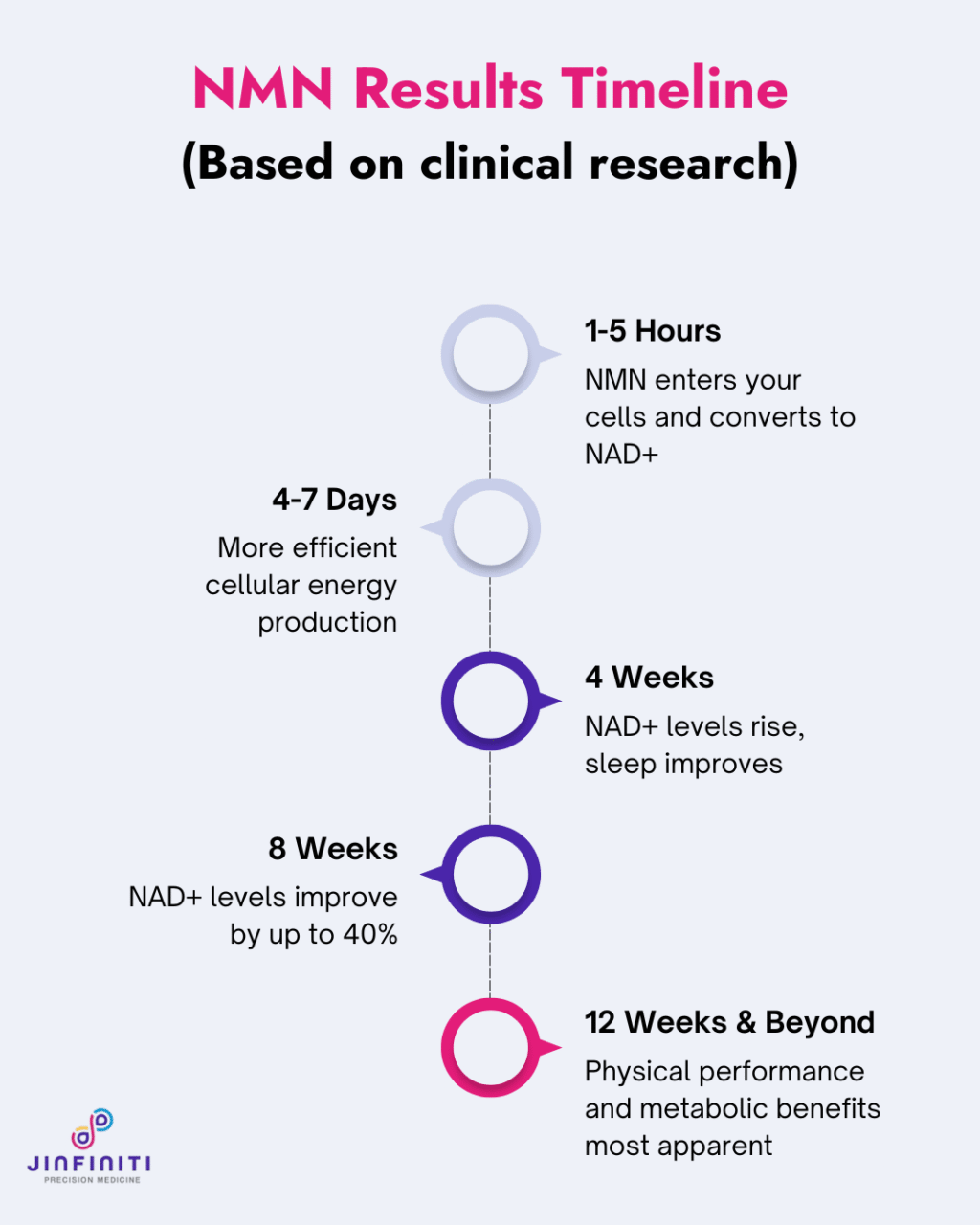
Timeline for NMN Results
NMN work happens gradually, not instantly. Here’s what typically happens based on the latest research:
Hour 1: NMN gets to work converting to NAD+ in your cells
4-7 Days: Your cells start producing energy more efficiently5
4 Weeks: NAD+ levels start to rise in your system. You might notice better endurance and sleep quality6
8 Weeks: NAD+ levels jump by about 40% compared to where you started7. Health scores improve across multiple measures8
12 Weeks: Physical performance and metabolism continue improving with faster walking speed and better muscle function9
This timeline varies between individuals. Your age, current health, and lifestyle all play roles.
Don’t worry if your experience looks different. Everyone responds uniquely.
“In our clinical research, we’ve observed that people typically need 4-6 weeks of consistent supplementation before they notice meaningful changes,” notes Dr. Jin-Xiong She, founder of Jinfiniti. “The timeline really depends on your starting NAD levels and baseline health.”
Early Effects of NMN Supplements
Those first few weeks often bring subtle but noticeable changes.
Here’s what many people experience:
More energy when you wake up
Clearer thinking during the day
Feeling more motivated to do things
Bouncing back faster from workouts
Some people notice changes within days. Others need several weeks. Athletes and fitness enthusiasts may find our guide on NMN for athletic performance particularly helpful.
Don’t get discouraged if results take time. Your cells are doing important work behind the scenes.
NMN Before and After Results
Real results develop over months, not days.
Short-Term Benefits of NMN
During your first 1-3 months, research suggests several potential improvements.
The key word is “potential.” Individual results vary significantly.
Your genetics, lifestyle, and starting health all influence outcomes. Some people see dramatic changes. Others notice subtle improvements.
“What I find interesting from our testing data is how much individual responses vary,” explains Dr. She. “Two people taking the same dose might have completely different NAD increases. That’s why we always recommend testing before and after supplementation.”
Anti-Aging Effects
NMN’s anti-aging potential comes from supporting cellular health.
The supplement may help with:
Maintaining cellular energy production
Supporting DNA repair processes
Activating longevity-related proteins
These cellular changes might translate to feeling more energetic and resilient over time.
Remember, NMN isn’t a fountain of youth. It’s one tool in a broader healthy aging approach.
For more context on supplement benefits, explore our guide on NAD+ supplement benefits and safety considerations.
Tips for Maximizing NMN Benefits
Smart strategies can boost your results.
Take NMN in the morning for best results. Evening doses might interfere with sleep.
Daily use works better than sporadic supplementation. Your cells need steady NAD+ support.
Lifestyle Support
Eat a balanced diet rich in whole foods
Exercise regularly (both cardio and strength training)
Always research interactions before combining supplements. Start with one at a time. Understanding NAD vs NMN differences can help you choose the right approach.
NMN and Resveratrol Combination
This pairing has gained popularity in longevity circles.
Resveratrol may activate sirtuins more effectively when NAD+ levels are higher. The combination could provide synergistic benefits.
Some studies suggest taking them together improves both supplements’ effects. But more research is needed.
If you’re considering other NAD+ precursors, our NMN vs NR comparison explains the differences between these popular options.
NMN Supplement Benefits You Can Track
Monitoring your progress helps assess effectiveness.
Energy Levels and Performance
Track these markers:
Morning energy upon waking
Afternoon energy stability
Exercise performance and recovery
Mental clarity throughout the day
Keep a simple daily log. Rate each area on a 1-10 scale.
Recommended Testing Consider testing your actual NAD levels before and after supplementation. This provides objective data about NMN’s effects.
Some people report skin improvements with NMN use.
Potential changes include:
Better skin texture and appearance
Improved healing from minor cuts or irritation
More youthful-looking skin over time
These effects likely relate to improved cellular repair and energy production. Your skin cells need NAD+ for optimal function.
Document skin changes with photos if you’re tracking this benefit.
Potential Side Effects of Taking NMN Supplements
NMN is well-tolerated by most people. But some experience mild side effects.
Common Initial Side Effects:
Mild stomach discomfort
Temporary headaches
Increased alertness (if taken late)
Minor digestive adjustments
These usually resolve within a few days to weeks.
When to Contact Your Doctor:
Persistent digestive issues
Severe headaches
Allergic reactions
Significant changes in blood sugar or pressure
Studies show excellent safety profiles for NMN. But individual responses vary.
Stop use and consult your healthcare provider if you experience concerning symptoms.
NMN Powder vs Other Forms
Most people wonder about the best form of NMN supplementation.
NMN Powder Advantages:
Often more cost-effective per dose
Flexible dosing options
Fast absorption when taken sublingually
No unnecessary fillers or binders
Other Forms:
Capsules offer convenience
Lozenges provide sublingual delivery
Liquid forms may absorb quickly
Pure NMN powder gives you the most control over your dosing. You can start small and adjust based on your response.
Choose the form that fits your routine best. Consistency matters more than the specific format.
Making the Most of Your NMN Supplementation
Success with NMN supplementation requires the right approach.
Invest in properly tested, pure NMN supplements. Poor quality products won’t deliver expected results.
For those seeking a complete approach, consider products like Vitality↑® NAD+ Booster. This clinically validated formula combines NMN with complementary ingredients like creatine and D-ribose for better cellular energy support.
Real cellular changes take time. Most people need 6-12 weeks to see meaningful benefits.
Monitor energy levels, sleep quality, exercise performance, and overall well-being. This helps you assess whether NMN is working.
NMN could support healthy aging, but it’s not magic. Combine it with proven lifestyle strategies for best results.
Starting NMN: Your Next Steps
Ready to begin your NMN journey? Here’s what to do:
Consult your healthcare provider
Choose a high-quality supplement
Start with a lower dose
Track your baseline energy and performance
Be patient with results
The research on NMN continues expanding. Current studies show promise for supporting cellular health and energy production.
Your experience with NMN will be unique. Some people see dramatic improvements. Others notice subtle but meaningful changes.
The key is approaching NMN supplementation thoughtfully. Choose quality products, start slowly, and track your response over time.
Remember that NAD+ deficiency symptoms can include fatigue, brain fog, and reduced physical performance. If you experience these issues, NMN might help restore optimal cellular function.
Whether you’re just starting to research NMN benefits and basics or ready to begin supplementation, understanding realistic expectations sets you up for success.
Take time to prepare properly. Choose quality supplements. Track your progress consistently. And remember that the best anti-aging approach combines smart supplementation with healthy lifestyle choices.
Millions live with diabetes every day, but new studies have uncovered a fascinating tie to a molecule called NAD. This could shake up the way we manage blood sugar and keep diabetic complications at bay.
Grasping this link might guide smarter health choices. Here’s what the science says about NAD and its role in diabetes.
Key Takeaways
NAD depletion plays a central role in diabetes complications like nerve damage and heart problems
Both type 1 and type 2 diabetes drain NAD stores but through different mechanisms
NAD precursors like NMN show promise for improving insulin sensitivity and glucose control
Testing your NAD levels can help guide personalized treatment decisions
What is NAD and Why Does it Matter for Diabetics?
Nicotinamide adenine dinucleotide, or NAD, is a coenzyme present in every cell of the body. It fuels energy creation, mends broken DNA, and keeps metabolism steady.
NAD comes in two forms your body juggles. There’s NAD+, the oxidized version, and NADH, its reduced twin. Together, they power cellular tasks. When their harmony breaks, things go wrong.
As a helper, NAD teams up with countless enzymes. These enzymes tackle everything—breaking down glucose, lipid metabolism, or mending damaged DNA. If NAD runs low, cells lose their way.
How NAD Metabolism Changes in Diabetes
Diabetes creates a perfect storm that disrupts your body’s NAD balance. High blood glucose levels trigger a cascade of problems that drain your NAD stores1.
The Pseudohypoxia Problem
When glucose levels stay high, your cells produce too much NADH2. This creates what scientists call “pseudohypoxia” – a state where cells act like they’re starving for oxygen even when they’re not.
This imbalance affects how your body processes both sugar and fat. Your cellular machinery starts working less efficiently, making diabetes symptoms worse.
Increased NAD Consumption
Diabetes also increases oxidative stress throughout your body. This damage activates repair enzymes called PARPs3, which consume large amounts of NAD to fix DNA damage.
The result? Your cells run out of NAD just when they need it most. This creates a vicious cycle where cellular damage leads to more NAD depletion.
Type 1 vs Type 2: Different NAD Problems
The way diabetes affects NAD depends on which type you have. Both conditions drain NAD stores, but through different mechanisms.
Type 1 Diabetes and NAD Depletion
In type 1 diabetes, your immune system attacks insulin-producing cells. This creates massive oxidative stress that activates PARP enzymes.
These enzymes rapidly consume NAD to repair DNA damage. The result is energy failure in pancreatic cells and other tissues throughout your body.
Type 2 Diabetes: A Complex Web
Type 2 diabetes mellitus involves a more complex mechanism. High glucose levels activate protein kinase pathways that reduce NAD production.
This happens because key enzymes like NAMPT become less active. Your body literally loses its ability to make enough NAD to meet cellular demands.
The resulting NAD depletion contributes to insulin resistance and worsening blood sugar control.
The Role of NAD in Diabetic Complications
Research shows that NAD depletion contributes to many serious diabetic complications. Understanding these connections could lead to better treatments.
Diabetic Neuropathy
Nerve damage is one of the most common diabetic complications. Studies show that NAD deficiency in nerve cells leads to mitochondrial dysfunction and eventual nerve death4.
When NAD levels drop, protective proteins called sirtuins become less active. This leaves nerve fibers vulnerable to damage from high glucose levels.
Research shows that NAD deficiency symptoms often include nerve problems, fatigue, and reduced cognitive function. Studies demonstrate that NAD precursors can reverse experimental diabetic neuropathy5.
Kidney Disease in Diabetics
Diabetic nephropathy involves complex changes in kidney NAD metabolism6. Research reveals decreased NAD levels in diabetic kidneys, leading to inflammation and tissue damage.
The kidney’s ability to make new NAD becomes impaired. This creates a cycle where kidney function declines as NAD levels drop.
Heart Complications
Diabetic cardiomyopathy is closely linked to NAD imbalance in heart muscle7. The NAD+/NADH ratio becomes disrupted, impairing energy production in cardiac cells.
This leads to progressive heart dysfunction and increased risk of heart failure. Restoring NAD balance could protect heart health in diabetic patients.
Heart problems in diabetes often involve mitochondrial dysfunction, which NAD helps address at the cellular level.
NAD Precursors: A New Hope for Diabetics?
Scientists have discovered that boosting NAD levels might help treat diabetes and its complications. Special molecules called NAD precursors can increase cellular NAD stores.
Nicotinamide Mononucleotide (NMN)
NMN is a direct precursor that your body converts into NAD. Research shows remarkable results in diabetic animal models.
Studies found that NMN completely normalized glucose tolerance in diabetic female mice8. It also improved insulin sensitivity in male diabetic mice and restored NAD levels in key tissues.
Human clinical trials are showing promise too. In postmenopausal women, 250mg daily of NMN improved muscle insulin sensitivity by about 25%9.
Nicotinamide Riboside (NR)
NR is another NAD precursor that has shown benefits in metabolic disorders10. Animal studies demonstrate improved glucose tolerance and reduced liver damage.
But human trials with NR have shown mixed results. Some studies report no meaningful improvement in insulin sensitivity in healthy individuals.
Testing Your NAD Levels: Why It Matters
Understanding your personal NAD status could be key to managing diabetes effectively. NAD levels vary significantly between individuals, and this variation affects treatment response.
Dr. Jin-Xiong She, who led groundbreaking diabetes research at the University of Florida’s Diabetes Center, has pioneered methods to measure cellular NAD levels. His research contributed to major studies like TEDDY (The Environmental Determinants of Diabetes in the Young), which screened over 424,000 newborns11.
Optimal NAD Ranges
Research has established specific NAD level ranges that indicate optimal cellular function:
NAD Level Range
Status
Health Implications
40-100 μM
Optimal
Normal cellular function
30-40 μM
Suboptimal
Mild energy deficiency
20-30 μM
Deficient
Increased disease risk
0-20 μM
Severely deficient
Significant health problems
Levels above 100 μM may not provide additional benefits and could potentially be harmful.
The Intracellular NAD+ Test offers a way to measure your cellular NAD levels accurately. This information can help guide supplement decisions and monitor treatment progress.
For those interested in learning more about the testing process, our guide on how to test your NAD levels provides detailed information.
NAD Supplementation Strategies for Diabetics
If you’re considering NAD supplementation for diabetes, several factors should guide your decision. Individual response varies widely, so personalized approaches work best.
Research suggests effective NMN doses range from 250-500mg daily. For NR, studies have used 300-1000mg daily with varying results.
Starting with lower doses and gradually increasing allows you to assess your response. Some people notice improvements in energy and glucose control within weeks.
Timing and Combination Therapy
Taking NAD precursors on an empty stomach may improve absorption. Some people prefer splitting doses throughout the day.
Combining NAD precursors with other supportive nutrients might boost benefits. Antioxidants can reduce oxidative stress, while exercise naturally boosts NAD production.
The Vitality↑® NAD+ Booster combines NMN with complementary compounds like creatine and D-ribose. This formulation addresses multiple pathways that support cellular energy production.
Lifestyle Factors That Boost NAD Naturally
While supplements can help, lifestyle changes also influence your NAD levels. These approaches work synergistically with supplementation.
Caloric Restriction and Fasting
Limiting calories naturally increases NAD levels and activates protective sirtuin proteins. Intermittent fasting can boost NAD production while improving insulin sensitivity.
Even modest calorie reduction can make a difference. Focus on reducing refined carbohydrates and processed foods rather than drastically cutting calories.
Exercise and NAD Production
Regular physical activity improves your body’s ability to make NAD. Both aerobic exercise and resistance training stimulate NAD biosynthesis pathways.
Exercise also improves insulin sensitivity independent of NAD effects. Physical activity enhances energy metabolism and creates powerful benefits for diabetes management.
The Future of NAD-Based Diabetes Treatment
Research into NAD and diabetes is rapidly advancing. New therapeutic approaches are being developed that target specific aspects of NAD metabolism.
Personalized Medicine Approaches
Future treatments may be tailored based on individual NAD metabolism patterns. Genetic testing could identify people most likely to benefit from specific interventions.
Biomarker development is advancing rapidly. Soon, doctors might routinely test NAD levels alongside traditional diabetes markers like HbA1c.
Combination Therapies
The most promising approaches combine NAD precursors with other interventions. This might include traditional diabetes medications, antioxidants, and lifestyle modifications.
Research is exploring how to optimize these combinations for maximum benefit. The goal is creating complete treatment plans that address multiple pathways simultaneously.
Safety and Considerations for Patients with Diabetes
While NAD precursors appear generally safe, people with diabetes should take certain precautions. Individual responses vary, and some people may experience side effects.
Monitoring and Interactions
Start with professional guidance, especially if you take diabetes medications. NAD precursors might affect blood sugar control and could interact with certain drugs.
Regular monitoring becomes even more important when adding new supplements. Track your blood glucose patterns and watch for any changes.
Who Should Be Cautious
People with advanced diabetic complications should be particularly careful. High doses of NAD precursors may cause adverse effects in some populations.
Pregnant women and people with certain genetic conditions should avoid NAD supplementation until more research is available.
Taking Action: Your Next Steps
Understanding the connection between NAD and diabetes opens new possibilities for managing your health. The research clearly shows that NAD depletion plays a central role in diabetic complications.
Consider starting with NAD level testing to understand your current status. The NAD Optimization® Starter Package includes testing and supplementation to help you get started.
Remember that NAD optimization works best as part of a complete approach. Combine testing, targeted supplementation, and lifestyle changes for the best results.
The future of diabetes care may well include NAD metabolism as a primary therapeutic target. By understanding and addressing NAD deficiency, we might be able to prevent complications and improve quality of life for millions of people with diabetes.
Your journey to better health starts with understanding your body’s unique needs. NAD testing and optimization could be the missing piece in your diabetes management puzzle.
Dr. Jin-Xiong She ranks among genomic medicine’s most distinguished researchers. His scientific work has changed the way we think about diabetes, aging, and cellular health.
From his early research into autoimmune diseases to founding a precision medicine company, his career spans over three decades. He has published more than 400 scientific papers and secured over $100 million in research funding.
Today, he leads the charge in personalized longevity research through his company Jinfiniti Precision Medicine.
Early Life and Scientific Foundation
A strong family focus on schooling and scientific reasoning set Dr. She on his course in biomedical research. This setting nurtured an initial curiosity in biology and genetics, fostering the sort of incisive thought that would define his research efforts.
His academic pursuits led him across continents, exposing him to various outlooks that later informed his research techniques. He finished his undergraduate degree in China, subsequently earning advanced degrees in France.
He obtained his Master of Science from the National School of Agriculture in 1984. Three years later, in 1987, he was awarded his PhD in Molecular Genetics by the University of Montpellier.
This international foundation gave him a special advantage. He came to integrate Eastern philosophical tenets with the precision of Western scientific rigor.
Academic Career at University of Florida
After completing his doctorate, Dr. She moved to the United States for postdoctoral training. He focused on immunogenetics at the University of Florida, studying the genetic basis of autoimmune disorders.
His rise through the academic ranks was remarkably fast. He advanced from Assistant Professor to Associate Professor, then to Full and Endowed Professor in record time.
This rapid progression reflected his immediate impact on the field. His research productivity and new ideas set him apart from his peers early in his career.
Leadership in Diabetes Research
Dr. She took on major leadership roles at the University of Florida. He served as Division Chief of Experimental Pathology and Director of Research at the university’s Diabetes Center.
These positions placed him at the center of diabetes research. He guided the scientific strategy of a leading center dedicated to understanding this complex disease.
Building Genomic Medicine at Augusta University
In 2002, Dr. She received a prestigious appointment as Georgia Research Alliance Eminent Scholar in Genomic Medicine at Augusta University. This position represented a major investment by the state of Georgia to build world-class research programs.
The appointment came with substantial resources and a clear mandate. He was tasked with establishing a center of excellence in genomic medicine from the ground up.
Founding the Center for Biotechnology and Genomic Medicine
As founding director, Dr. She established the Center for Biotechnology and Genomic Medicine (CBGM) at Augusta University. The center became one of the world’s first academic programs dedicated specifically to genomic medicine.
The CBGM’s mission was ambitious and forward-looking. It aimed to advance “predictive, preventive, personalized and participatory medicine” through interdisciplinary research.
This “4P” philosophy became the guiding principle of his work. It provides a direct connection between his academic research and his later business ventures.
Under his leadership, the center attracted four internationally renowned diabetes research programs. These included major studies like TEDDY (The Environmental Determinants of Diabetes in the Young) and PANDA (Prospective Assessment in Newborns of Diabetes Autoimmunity).
The TEDDY Study and Breakthrough Discoveries
Dr. She played a key role in conceiving and launching the landmark TEDDY study in 2003. This massive international project aimed to identify environmental triggers that cause Type 1 diabetes in genetically susceptible children.
The study’s scale was unprecedented. It screened over 424,000 newborns and enrolled nearly 9,000 high-risk children to follow for 15 years.
Landmark Findings About Diabetes
The TEDDY study produced major discoveries under Dr. She’s leadership. The research revealed that Type 1 diabetes is not a single disease but multiple distinct subtypes with different genetic triggers.
His team identified the first clear genetic evidence for diabetes “endotypes.” Children who develop insulin autoantibodies first have different genetic risk factors than those who develop glutamic acid decarboxylase autoantibodies first.
The research also uncovered important environmental factors. The study found that probiotic exposure during infancy decreased diabetes risk, while certain infant formulas increased it.
His work identified several new genetic regions that influence different stages of disease development. These discoveries moved the field beyond simple genetic models to understand diabetes as a complex, multi-stage process.
Jin-Xiong She and the Transition to Longevity
Dr. She’s transition from diabetes research to aging science was both logical and smart. The biological mechanisms underlying Type 1 diabetes—inflammation, metabolic dysfunction, and cellular damage—are central to the aging process itself.
His skills in developing high-throughput testing technologies transferred directly to wellness and healthspan improvement. The same biomarker discovery methods used in disease research could identify aging-related changes before symptoms appeared.
His research into cellular energy and repair mechanisms earned him recognition as the “King of NAD” in wellness circles.
Founder of Jinfiniti Precision Medicine
In 2018, Dr. She founded Jinfiniti Precision Medicine, where he serves as CEO and Chief Scientific Officer. The company represents the direct application of his “4P medicine” philosophy to consumer health.
Jinfiniti Precision Medicine operates on a scientist-led, data-driven approach. The company provides end-to-end solutions for healthy longevity by optimizing healthspan, performance, and lifespan.
Jinfiniti offers proprietary tests for key aging biomarkers including intracellular NAD+ levels, oxidative stress markers, and senescent cell burden. The company then provides targeted supplements like NAD boosters to address deficiencies found through testing.
This approach represents the personalized medicine principles he developed in academia. Jinfiniti targets diverse markets including clinicians, pharmaceutical companies, and the growing community of longevity enthusiasts and biohackers.
NAD Research and Cellular Health
Dr. She’s current work focuses heavily on NAD (Nicotinamide Adenine Dinucleotide) and its role in cellular function. NAD is a molecule involved in over 500 cellular activities and declines significantly with age.
This discovery led to developing the first commercially available intracellular NAD+ test. The test allows individuals to measure their baseline levels and monitor improvement through supplementation.
Scientific Impact and Recognition
Dr. She’s academic record places him among the top biomedical researchers globally. His 400+ peer-reviewed papers have been cited more than 20,000 times, with an H-index ranging from 71 to 79.
His ability to secure large research funding shows the scientific community’s confidence in his work. The $100+ million in competitive grants he has received primarily came from the National Institutes of Health.
His leadership roles included serving as President of the American Diabetes Association’s Council on Immunology, Transplantation, and Immunogenetics, and leading the Chinese Geneticists in America organization.
Beyond metrics, his impact has been life-changing. He shifted the diabetes field from simple genetic models to understanding complex, multi-stage disease processes.
Current Work and Future Directions
Today, Dr. She focuses on a mission close to his heart: helping people extend their healthspan through Jinfiniti’s TAO philosophy. TAO stands for Test, Act, and Optimize—a method that reflects both ancient wisdom and modern science.
His work addresses a critical health challenge facing society. Most people experience a 20-year gap between their healthspan and lifespan—living healthy until about age 60 but surviving until 80 with declining quality of life.
Jinfiniti’s approach aims to close this gap through data-driven interventions. Rather than simply adding years to life, Dr. She’s mission centers on adding life to years.
The company’s philosophy goes beyond typical wellness approaches. It combines rigorous testing with personalized interventions to help individuals maintain vitality, energy, and cognitive function as they age.
His scientific background brings credibility to longevity interventions in a field often lacking solid evidence. This evidence-based approach helps people make informed decisions about their health optimization journey.
A Legacy of Scientific Innovation
Dr. Jin-Xiong She’s career represents the modern scientist-entrepreneur model. He has successfully translated decades of basic research into practical tools for improving human health.
His work has progressed from understanding a devastating autoimmune disease to tackling the fundamental biology of aging itself. Both endeavors share a focus on unraveling biological complexity and converting insights into actionable strategies.
His legacy will be measured not only by his foundational discoveries in diabetes genetics but also by his pioneering efforts in personalized longevity medicine. Through Jinfiniti, he continues working to extend the healthy, vibrant years of human life.
Millions of people hunt for the perfect anti-aging supplement. NAD boosters promise to turn back the clock on cellular aging.
But do these products actually work?
The answer isn’t black and white. Some NAD boosters can raise blood levels of this vital coenzyme. Whether those increases translate to real health benefits is another story.
Key Takeaways
NAD boosters are supplements that increase levels of nicotinamide adenine dinucleotide (NAD+) in the body
Individual responses to these compounds vary a lot, so baseline testing is crucial for personalized dosing and tracking real progress
Studies show NAD boosters can improve exercise performance, heart health markers, and may support DNA repair and fertility
Results tend to happen over 6-12 weeks with consistent use and some populations will see more results than others
Understanding NAD and Its Role in Your Body
Every cell needs nicotinamide adenine dinucleotide (NAD+) to survive. This coenzyme powers over 500 different cellular activities.
NAD+ fuels your mitochondria. It helps turn food into energy and supports DNA repair throughout your body.
Your NAD levels decline with age. Research shows levels can fall by about 50% between ages 40 and 601.
This decline might contribute to many signs of aging. Scientists think restoring youthful NAD levels could slow down aging and boost health.
“The challenge with NAD+ supplementation is that individual responses vary dramatically,” says Dr. Jin-Xiong She, founder of Jinfiniti Precision Medicine. “What works optimally for one person may be ineffective or even excessive for another, which is why we emphasize testing first.”
The Science Behind NAD Decline
Age-related NAD depletion hits multiple body systems. Lower levels hurt mitochondrial function and reduce your cells’ ability to fix damaged DNA2.
NAD also feeds sirtuins. These “longevity proteins” control cellular aging and metabolism.
Studies in mice show that falling NAD contributes to aging signs3:
Muscle weakness
Mental decline
Metabolic problems
Reduced energy production
Types of NAD Booster Supplements
The supplement market offers several precursor compounds that boost NAD levels. Each precursor works through different pathways in your body.
Nicotinamide Riboside (NR)
NR is the most studied NAD booster today. The FDA gave it Generally Recognized as Safe (GRAS) status.
Clinical trials show NR can increase blood NAD+ levels by 40-270%4. The increase depends on dose and individual factors.
Most studies use 300-1000mg daily. Higher doses don’t always work better.
NR shows good safety in healthy adults. Side effects are usually mild:
Occasional fatigue
Mild nausea
Temporary headaches
Nicotinamide Mononucleotide (NMN)
NMN became popular when famous researchers started taking it publicly. This molecule showed promise in early trials.
Some findings suggest NMN might better exercise endurance, improve sleep, and increase cellular energy5. Studies continue, looking into its promise for supporting healthy aging and metabolism.
NMN’s mechanism involves its direct conversion to NAD+ inside cells, making it an efficient precursor. Researchers such as Dr. David Sinclair and Dr. Jin-Xiong She judge it to be one of the most promising compounds for getting NAD+ to optimal levels.
Traditional Vitamin B3 Forms
Niacin and niacinamide are other popular approaches to NAD boosting. These vitamin B3 forms have long safety records.
But they can’t meaningfully raise NAD levels in healthy adults at safe dosages. Niacin also causes uncomfortable flushing at therapeutic doses.
Research shows niacin carries liver toxicity risks at high doses6. Most people can’t tolerate the amounts needed for NAD boosting.
Benefits of NAD Boosters That Really Work
Despite mixed results, certain benefits show consistent evidence. These effects are the most reliable outcomes you can expect.
Increased Blood NAD Levels
The most consistent finding is elevated blood NAD+ levels. Both NR and NMN reliably achieve this change.
Studies show effects typically plateau around 1000mg daily for NR7. Higher doses don’t produce bigger increases.
But higher blood levels don’t guarantee better tissue penetration. The link between blood NAD and cellular benefits remains unclear.
Cardiovascular and Exercise Performance Benefits
NAD boosters show promising results for heart health and physical performance. Benefits appear strongest in middle-aged adults.
A randomized study of 90 people with peripheral artery disease8 found impressive results:
Measurement
Improvement
6-minute walk distance
17.6 meters vs placebo
High adherence group
Over 30 meters
Blood pressure
Reduced
Arterial stiffness
Decreased
Research also suggests NAD+ supplementation may help protect against vascular problems and metabolic issues9.
Limited Anti-Inflammatory Effects
NR supplementation can reduce certain inflammatory markers in older adults. Some studies show 50-70% reductions in inflammatory proteins like IL-610.
These anti-inflammatory effects might contribute to other health benefits. Chronic inflammation plays a role in many age-related diseases and can contribute to premature aging.
But these findings need testing in larger, more diverse groups before we can draw firm conclusions.
DNA Repair and Cellular Protection
NAD+ supports DNA repair mechanisms throughout your body. NAD+ feeds poly(ADP-ribose) polymerases (PARPs) and sirtuins.
These proteins are important for DNA damage response and cell survival.
This function becomes more important with age. DNA damage builds up and cellular repair capacity declines.
Research shows that NAD+ supplementation can partially restore DNA repair capacity in cells with damaged repair systems11.
In animal studies, NR supplementation dramatically improved genomic stability and extended lifespan.
Fertility and Reproductive Health Benefits
New research reveals promising uses for NAD+ boosters in reproductive health. Declining NAD+ levels contribute to age-related fertility decline.
Studies show NMN supplementation can rejuvenate egg quality and quantity in aged animals12. This led to improved fertility outcomes.
Potential fertility preservation during cancer treatment
Enhanced reproductive lifespan
Immune System Enhancement
NAD+ plays an important role in immune function and regulation. NAD+ boosting shows anti-inflammatory effects and can help balance immune responses.
Studies show NR supplementation reduces inflammatory chemicals like IL-613. The immune benefits may extend to autoimmune conditions.
Research suggests NAD+ boosting may work best in people with higher inflammation14. This includes elderly individuals or those with chronic diseases.
Where NAD Boosters Need More Research
Many popular claims about NAD supplementation lack strong clinical support. Understanding these limits helps set realistic expectations.
Metabolic Health and Weight Management
Results for metabolic benefits show mixed outcomes across different studies. Some trials show metabolic improvements while others find minimal effects.
A detailed review of clinical trials15 found mixed results:
Measurement
Result
Total cholesterol
Reduced
Triglycerides
Reduced
Insulin sensitivity
Variable
Body composition
No change
A 12-week trial in obese men taking 2000mg daily of NR showed no improvements in insulin sensitivity or body composition16.
The differences in results may relate to individual factors. Baseline NAD+ status, inflammation levels, and metabolic health all matter.
Cognitive Enhancement Claims
Human trials for cognitive benefits show mixed results. Completed human studies haven’t shown dramatic cognitive improvements.
Animal studies show NAD+ supplementation can reduce brain inflammation and support brain cell energy17. In Alzheimer’s models, NAD+ boosting improved stress response and reduced brain disruption18.
The gap between animal studies and human trials remains large for cognitive benefits. More human research is needed to see if these brain-protective effects translate to real cognitive improvements.
Mitochondrial Function Improvements
Results for mitochondrial function show mixed outcomes in human studies. Some research suggests improvements in mitochondrial health markers19.
But analyses of muscle biopsies from studies show minimal changes10.
The relationship between increased blood NAD levels and improved mitochondrial function in tissues remains unclear:
Some people experience better cellular energy
Others show little change
Blood biomarkers don’t always match tissue improvements
Individual responses vary widely
Safety Concerns You Should Know About
Recent research has uncovered potential risks that challenge assumptions about NAD booster safety. The overall safety profile remains generally good in short-term studies.
Clinical Safety Profile
A study involving 489 participants showed NAD+ supplementation is generally well-tolerated20. Only mild side effects occur.
Common side effects include:
Muscle pain
Fatigue
Headaches
No serious adverse events have been reported in clinical trials. Research shows clinical safety at doses up to 900mg daily for most NAD+ precursors.
Quality Control Problems
Independent testing reveals some quality issues with commercial NAD supplements. One white paper apparently shows 87% of NR products fail to meet their label claims21.
Quality control problems include:
Much less active ingredient than advertised
Contamination with unwanted substances
Complete mislabeling of contents
No pre-market safety testing required
Unlike prescription medications, dietary supplements require no safety testing before sale. Quality control remains largely voluntary.
Drug Interactions and Side Effects of NAD
Certain NAD combinations pose interaction risks with common medications. Resveratrol, often paired with NR, blocks liver enzymes that break down drugs.
This can affect:
Blood thinners
Diabetes medications
Many other prescriptions
Research shows niacin carries the highest interaction risk22.
People with cancer history, autoimmune conditions, or inflammatory diseases should use extra caution. The immune system’s high energy demands during inflammation could be problematically increased.
How to Get NAD Benefits Safely
If you’re considering NAD supplementation, a thoughtful approach maximizes potential benefits while minimizing risks.
Testing Your Current NAD Status
Before starting any supplement, understanding your baseline NAD levels provides valuable guidance. Individually testing NAD levels can reveal whether you’re likely to benefit from supplementation.
“Too many people start supplementing blindly without knowing their baseline status,” explains Dr. Jin-Xiong She. “Testing allows us to personalize dosing and track real improvements instead of guessing.”
The Intracellular NAD+ Test measures your cellular NAD levels through a simple finger-prick blood collection. This clinical-grade testing helps determine the right dosage.
Testing also lets you monitor your response to supplementation. You can measure improvement and adjust doses based on actual results rather than guessing.
Testing Benefits
Clinical Value
Baseline measurement
Identifies deficiency
Personalized dosing
Improves effectiveness
Progress monitoring
Tracks improvement
Safety assessment
Prevents overdosing
Choosing Quality NAD Booster Products
Given the quality control crisis in the supplement industry, selecting third-party tested products becomes important. Look for supplements that provide certificates of analysis.
Vitality↑® NAD+ Booster combines multiple NAD precursors in a clinically validated formula. The powder format allows for precise dosing based on your individual needs.
The formulation includes:
NMN
Creatine monohydrate
D-ribose
Niacinamide
These ingredients work together across multiple metabolic pathways in ratios designed for maximum effectiveness.
NAD IV Therapy Considerations
Some people explore NAD IV therapy as an alternative to oral supplements. This approach delivers NAD directly into your bloodstream.
NAD IV therapy claims to achieve higher blood levels more rapidly than oral supplements. Sessions typically last 2-4 hours and require medical supervision.
But IV therapy costs much more than oral supplements. Most insurance plans don’t cover these treatments.
Side effects of NAD IV can include chest tightness, nausea, and fatigue during infusion. The long-term safety profile remains unclear and most studies on NAD have been done with NMN or NR.
Natural Ways to Boost NAD Production
Your lifestyle choices significantly impact NAD levels in the body. These approaches offer safer alternatives to supplementation.
Exercise and Physical Activity
Regular exercise naturally increases NAD production through multiple pathways. Research on NAD for athletic performance shows that both cardio and resistance training support cellular NAD levels.
Exercise activates enzymes that help boost NAD production. It also improves mitochondrial function independently of supplementation.
The food you eat also influences NAD production. Certain foods contain NAD precursors or compounds that support NAD creation.
Sleep and Stress Management
Quality sleep and stress reduction support healthy NAD levels naturally. Poor sleep and chronic stress deplete NAD through inflammatory pathways.
NAD and sleep quality show two-way relationships. Better NAD status may improve sleep while good sleep supports NAD production.
Meditation, yoga, and other stress-reduction techniques help preserve NAD levels. These approaches offer additional health benefits beyond NAD improvement.
Setting Realistic Expectations for NAD Boosters
NAD boosters can work, but the effects are more limited than marketing suggests. Understanding what to expect helps you make informed decisions.
Who May Benefit from NAD Supplementation
Certain groups show greater responses to NAD boosters:
People with higher inflammation or metabolic problems
Those with specific health conditions
People with great health typically show minimal improvements. Individual genetic factors influence NAD metabolism. Some people naturally maintain higher levels and gain less from supplementation.
Realistic Timeline for Results
Most studies showing benefits use supplementation periods of 6-12 weeks. Don’t expect immediate dramatic changes from NAD boosters.
Energy improvements, if they occur, typically develop gradually over several weeks. Exercise performance gains follow a similar timeline.
“The science shows us that NAD+ optimization is a process, not a quick fix,” notes Dr. Jin-Xiong She. “Patients who understand this timeline and monitor their progress objectively tend to achieve the best long-term results.”
Monitor your response objectively rather than relying on feelings alone. Consider retesting NAD levels after 6-8 weeks of consistent supplementation.
Making an Informed Decision About NAD Boosters
The evidence for NAD boosters reveals modest benefits, significant limitations, and emerging safety concerns.
When NAD Supplementation Makes Sense
Consider NAD boosters if you have documented deficiency through proper testing. Older adults with high inflammation or specific health conditions may see greater benefits.
Always talk with healthcare providers familiar with current research. This becomes particularly important if you have cancer history or take multiple medications.
Complementary Approaches to Consider
Lifestyle changes can amplify the benefits you get from NAD supplementation. Regular exercise, adequate sleep, stress management, and balanced nutrition work together with NAD boosters to support increased energy and healthy aging.
Other longevity supplements may complement your NAD optimization strategy. Consider a comprehensive approach that combines multiple evidence-based interventions for maximum benefit.
Bottom Line on NAD Boosters
NAD boosters are a emerging field in healthy aging. Some products can increase blood NAD levels but the translation of that to meaningful health benefits varies between people.
The evidence shows real benefits in specific areas like heart health, exercise performance and inflammation reduction. DNA repair and potential fertility benefits are added to the growing list of uses.
But more research is needed to understand optimal dosing, ideal candidates and long term safety. Individual responses are very different.
For most people looking for energy or longevity benefits a combined approach is best. Lifestyle changes like exercise, proper nutrition, adequate sleep and stress management provide proven benefits that complement any supplementation strategy.
If you choose to try NAD boosters start with proper testing to establish your baseline. Work with healthcare providers who understand the current research and can monitor your response.
The wellness world seems obsessed with NAD these days. Social media influencers tout it as the fountain of youth. Biohackers swear by its energy-boosting effects. Even celebrities credit NAD treatments for their youthful appearance.
But are NAD-boosting supplements really worth all this attention? As someone who has spent decades in genomic medicine research, Dr. Jin-Xiong She wanted to separate fact from fiction. The answer is more nuanced than most people realize.
Key Takeaways
NAD supplementation has solid scientific support for multiple health benefits
Individual testing provides the foundation for safe, effective use
Realistic expectations lead to better outcomes than hype-driven approaches
What is NAD and Why Does It Matter as We Age?
Nicotinamide adenine dinucleotide (NAD) is a coenzyme found in every cell of your body. Think of it as cellular fuel that powers over 500 different biochemical reactions.
“NAD is absolutely important to cellular function,” explains Dr. Jin-Xiong She, founder of Jinfiniti Precision Medicine and genomic medicine researcher with over 400 peer-reviewed papers. “Without adequate NAD levels, your cells can’t make energy properly, fix DNA damage, or keep up with all the repair work they need to do.”
The problem starts around middle age. Research shows NAD levels decline by up to 50% by age 501. This decline contributes to mitochondrial dysfunction, impaired DNA repair, and reduced cellular energy production.
The NADH Connection
NADH is the reduced form of NAD. While both molecules play important roles, they serve different cellular functions. NAD acts as an electron acceptor in metabolic reactions, while NADH carries electrons to the mitochondria for energy production.
Your body maintains a delicate balance between these two forms. When this balance shifts, cellular metabolism suffers.
The Science Behind NAD Supplements Actually Working
The research supporting NAD supplementation is genuinely impressive. A systematic review of six major clinical studies involving over 400 participants found consistent increases in blood NAD concentrations ranging from 10% to 150%2.
These weren’t small, poorly designed trials. Most studies used dosages between 250-900 mg daily over 8-12 week periods with proper placebo controls.
“What’s most encouraging is the consistency across different study populations,” notes Dr. She. “We’re seeing reproducible results in healthy adults and also those with age-related health concerns.”
Clinical Trial Results
Study Type
Participants
NAD Increase
Duration
Safety Profile
NMN Studies
200+
10-150%
8-12 weeks
Excellent
NR Studies
200+
25-140%
4-52 weeks
Excellent
Combined Analysis
400+
Significant
Variable
Minimal side effects
How NAD Supplement Benefits Compare to the Hype
The most compelling evidence comes from physical performance studies3. NMN supplementation significantly improved aerobic capacity in amateur runners, with measurable increases in VO2 max and oxygen utilization efficiency.
But here’s where we need to be realistic about expectations.
“People expect immediate, dramatic changes,” observes Dr. She. “The reality is that NAD supplementation works at the cellular level. Benefits accumulate gradually over weeks and months, not days.”
What Research Actually Shows
Physical Performance:
Improved exercise capacity and muscle oxygen utilization
Enhanced grip strength and walking speed in older adults
Better recovery times in trained athletes
Metabolic Health:
Improved insulin sensitivity and glucose tolerance4
Reduced cholesterol and triglyceride levels
Enhanced mitochondrial health and cellular repair
Cognitive Function:
Faster brain penetration5 (NMN crosses blood-brain barrier in 15 minutes)
Improved spatial memory in animal studies
Preliminary human studies suggest better mental clarity
Do NAD Supplements Work for Longevity?
The longevity question is where the science becomes both exciting and complicated. The most significant breakthrough came from a recent 2025 clinical trial treating Werner syndrome6, a rare genetic disorder causing premature aging.
Patients receiving 500mg daily nicotinamide riboside (NR) for 52 weeks showed remarkable improvements. NAD levels increased by 140%, skin ulcers healed, arterial stiffness decreased, and kidney function markers improved.
“This trial really excited me because it shows NAD actually reversing aging damage in real people,” says Dr. She. “We’ve all been working toward this for years, but these researchers were the first to get clear proof that fixing NAD deficiency can actually turn back the clock on aging.”
Benefits of NAD: What Research Shows
The mechanisms behind these benefits involve several interconnected pathways:
Sirtuin Activation: NAD serves as fuel for sirtuins, enzymes that regulate metabolism and longevity signaling7
DNA Repair Enhancement: Adequate NAD levels support PARP enzymes responsible for fixing DNA damage8
Mitochondrial Biogenesis: NAD helps create new, healthy mitochondria9
Cellular Senescence Regulation: NAD may help clear dysfunctional “zombie” cells10
Should You Take NAD? A Genomic Medicine Perspective
This is where individual testing becomes essential. NAD metabolism varies significantly between people due to genetic differences, age, lifestyle, and health status.
“I’ve seen two people of the same age have dramatically different baseline NAD levels,” notes Dr. She. “Without testing, you’re really just guessing at the right approach.”
NAD Precursors vs Direct Supplementation
Most supplements contain NAD precursors rather than NAD itself:
NAD injections are another option, though the research supporting oral supplementation is more extensive for long-term use.
Who Should Consider NAD Supplementation?
The research suggests these groups may benefit most:
Adults over 40 experiencing age-related energy decline
Athletes seeking improved performance and recovery
Individuals with metabolic health concerns
Those interested in science-based anti-aging approaches
However, Dr. She emphasizes caution: “Supplementation should always be based on the actual need, not assumptions. Testing provides the roadmap for safe optimization.”
How to Boost NAD Safely and Effectively
Current evidence suggests optimal NAD dosing varies by individual goals:
General Health Support:
NMN: 250-500mg daily
NR: 250-500mg daily
Athletic Performance:
NMN: 300-600mg daily
NR: 300-500mg daily
Metabolic Health:
NMN: 300-900mg daily
NR: 500-1000mg daily
But these are general guidelines. Individual optimization requires knowing your starting point.
The Testing-First Approach
Jinfiniti’s Intracellular NAD Test measures actual cellular NAD levels through a simple finger-prick blood test. This provides the baseline data needed for personalized supplementation.
“The Test, Act, Optimize philosophy isn’t just our company motto,” explains Dr. She. “It’s the most scientifically correct approach to any intervention. You need data to make informed decisions about your health.”
Safety Considerations
The safety profile for NAD precursors is favorable across all published human studies. Side effects are typically mild and limited to occasional gastrointestinal discomfort11.
However, certain populations should exercise extra caution:
Pregnant or breastfeeding women
Individuals with active cancer (theoretical concerns about tumor cell NAD usage)
Those taking multiple medications (potential interactions)
The Verdict: Cautious Optimism Based on Science
After reviewing hundreds of studies and working with thousands of patients, Dr. She’s perspective on NAD supplementation is cautiously optimistic.
The research foundation is solid. Clinical trials consistently demonstrate safety and efficacy13. The mechanisms make biological sense. The Werner syndrome breakthrough provides compelling proof-of-concept.
But NAD isn’t a magic pill. It’s one tool in a comprehensive approach to healthy aging that should include proper nutrition, exercise, stress management and sleep.
“NAD supplementation really works – the science is solid,” says Dr. She. “But like anything that actually works, you need to be smart about how you use it. One size definitely doesn’t fit all.”
The NAD hype has some substance but the real value is in the details. Testing your levels, choosing good supplements and having realistic expectations will help you use this tool safely and effectively.
If you want to try NAD optimization start with baseline NAD+ testing to know your individual needs. The science supports NAD but personal data makes all the difference in getting results.
You’ve probably heard the buzz about NAD IV therapy at your local wellness clinic. Maybe a friend swears by their weekly drip sessions, or you’ve seen social media posts about instant energy boosts.
But before you book that expensive appointment, let’s cut through the hype and examine what science actually tells us about this trendy treatment.
Key Takeaways
NAD+ IV therapy costs $500-2,000 per session but lacks strong scientific evidence for most wellness claims
Oral NAD+ supplements are more affordable, convenient, and backed by solid research showing 22-142% increases in cellular levels
Testing your baseline NAD+ levels first allows for data-driven optimization rather than expensive guesswork
The limited evidence supporting IV therapy doesn’t justify the significant time and financial investment for most people
What is NAD and Why Does Everyone Want More?
Nicotinamide adenine dinucleotide (NAD) is a coenzyme found in every cell of your body. This cellular powerhouse plays a key role in energy production and DNA repair processes.
Think of NAD as your cellular batteries. As you age, these batteries naturally drain. By your 40s, you might have half the NAD+ levels you had in your 20s.
This decline has sparked a massive interest in NAD-boosting therapies. Some people turn to IV clinics for what they hope will be a quick fix.
The Appeal of NAD IV Therapy
NAD IV therapy involves getting nicotinamide adenine dinucleotide delivered directly into your bloodstream through an infusion. Sessions typically last 2-6 hours at specialized wellness centers.
Proponents claim this method bypasses your digestive system for maximum absorption. The theory sounds compelling on paper.
Here’s what clinics commonly promise:
Enhanced energy levels within hours
Improved mental clarity and focus
Anti-aging benefits at the cellular level
Better athletic performance and recovery
Support for addiction recovery
The Promise vs. Reality of Immediate Benefits
Many people report feeling energized after their first drip session. But here’s where things get complicated.
These immediate benefits might not be what they seem. The research supporting NAD+ IV therapy for most wellness applications remains surprisingly thin.
A 2020 comprehensive review1 noted that while IV NAD therapy may help with addiction disorders, more longitudinal studies are necessary to establish its role in other areas.
Most evidence comes from small case studies and patient reports rather than rigorous clinical trials.
Limited Scientific Evidence for NAD IV Therapy
Here’s the reality check: NAD IV therapy isn’t FDA-approved for treating any specific condition. This doesn’t make it illegal, but it does signal a lack of robust clinical validation.
Recent research has focused more on oral NAD+ precursors than IV administration. A 2024 clinical study2 found that intravenous nicotinamide riboside (NR) was safe and well-tolerated.
Interestingly, this same study showed that IV NR appeared to boost NAD levels more effectively than direct NAD+ infusions. Peak levels increased by 20.7% compared to baseline.
Treatment Type
Evidence Level
FDA Status
NAD+ IV Therapy
Limited case studies
Not approved
Oral NAD Precursors
Multiple clinical trials
GRAS status for some
Lifestyle interventions
Extensive research
Recommended
Potential Side Effects and Safety Concerns
IV therapy may cause several uncomfortable side effects that oral supplements typically avoid.
Common reactions include nausea, headaches, dizziness, and fatigue. Some people experience facial flushing or chest tightness during the infusion.
The infusion speed matters too. Experienced practitioners start with slower rates to minimize adverse reactions, but this extends already lengthy session times.
The Cost Factor: Is IV Therapy Worth the Investment?
Let’s talk money. A single NAD IV session typically costs $500-2,000, depending on your location and clinic reputation.
As for NAD IV frequency, most protocols require multiple sessions for optimal results. You might need weekly treatments initially, followed by monthly maintenance sessions.
Session Frequency
Cost Range
Annual Investment
Weekly (12 weeks)
$6,000-24,000
$26,000-52,000
Bi-weekly maintenance
$3,000-12,000
$13,000-26,000
Monthly maintenance
$6,000-24,000
$6,000-24,000
These numbers add up fast. For many people, this represents a significant portion of their healthcare budget.
Recent research shows that oral NAD precursors like nicotinamide riboside and NMN can effectively raise intracellular NAD+ levels. One study found increases of 22% to 142% after just two weeks of supplementation3.
The convenience factor is huge. You can take supplements at home without scheduling lengthy clinic visits or dealing with needle insertions.
Quality oral supplements cost a fraction of IV therapy while providing measurable results over time. You can actually test your NAD+ levels to track your progress objectively.
Who Might Actually Benefit from NAD Infusions?
Despite the limitations, some people might find value in NAD IV therapy under specific circumstances.
The strongest evidence exists for addiction recovery support. Some clinics report success using IV NAD+ to reduce withdrawal symptoms and cravings, though more research is needed.
People with severe chronic fatigue who haven’t found relief through other methods might consider it as part of a comprehensive treatment plan. Athletes looking for recovery support represent another potential group, though evidence remains limited.
If you’re considering IV therapy, work with a knowledgeable healthcare provider who can assess your individual situation and monitor for potential complications.
A Smarter Approach to Wellness Investment
Instead of rushing to expensive IV clinics, consider starting with proven alternatives that won’t break your budget.
A high-quality NAD+ booster like Jinfiniti’s Vitality containing precursors like NMN and nicotinamide can support healthy NAD+ levels when taken consistently. These supplements work gradually but provide sustainable results.
The key is measuring your baseline NAD+ levels first, then tracking your progress over time. This data-driven approach helps you optimize your dosage and confirm that your chosen intervention is actually working.
You can also support your natural NAD+ production through lifestyle changes like regular exercise, intermittent fasting, and adequate sleep.
Bottom Line for Health and Wellness
NAD IV therapy might sound appealing, especially when you’re feeling tired or looking for an edge in your longevity efforts.
But the current evidence doesn’t support the high costs and time investment for most people. The potential benefits rarely justify the significant expense and inconvenience.
NAD supplements offer a more practical, affordable, and research-backed approach to supporting healthy NAD+ levels. They provide gradual but sustainable improvements without the risks and costs of IV treatments.
If you’re serious about optimizing your cellular health, start with testing, choose quality supplements, and focus on proven lifestyle interventions. Save the experimental treatments for when you have solid evidence they’re worth your time and money.
Your wallet and your body will thank you for taking a more measured approach to this trendy wellness treatment.