
Secure • Private • Science-backed
Closeup of doctor's hand holding a model heart and stethoscope

NAD+ and Heart Health: A Review

Cardiovascular disease is the leading cause of death globally: 17.9 million people each year[1]. With aging populations and a rising tide of heart disease, scientists are searching for novel ways to support cardiac health.

One molecule keeps cropping up in the data: NAD+. Short for nicotinamide adenine dinucleotide, this coenzyme does much more than help the cells in your body generate energy. NAD+ regulates DNA repair, inflammation, and oxidative stress—the breakdown of heart tissue over time.

The heart is always on duty. A healthy heart beats about 100,000 times per day, requiring more energy per gram than any other organ. When NAD+ is in short supply—which occurs naturally with aging—your heart can’t keep pace.

Highlights

  • NAD+ powers the mitochondria that generate ATP, the energy currency your heart cells need to contract and relax
  • Between ages 40 and 60, cardiac NAD+ levels can decline by up to 50%, impairing energy production and cellular repair
  • Clinical trials show NAD+ precursors like NR and NMN safely raise NAD+ levels and correlate with improved heart function markers
  • Testing your NAD+ levels removes the guesswork from supplementation and helps you track whether interventions actually work

How Does NAD+ Support Heart Function?

Your heart relies on NAD+ for numerous related processes. Consider NAD+ as backstage support that allows these systems to function—when everything operates smoothly, your heart is robust and resilient.

Energy Production and Metabolism

Your heart cells have the highest demand for ATP in your body of any tissue by a wide margin. If you’ve ever had the experience of your heart “pounding” when you’re exercising or stressed, this is what that’s all about.

NAD+ is at the center of this energy producing machine. NAD+ is the key electron shuttle in glycolysis, the citric acid cycle, and the electron transport chain (the three major processes in your cells that convert your food into usable energy). If there is not enough NAD+ available, these processes cannot run at full speed. The heart cells start getting less fuel, even though demand has not dropped.

Low NAD+ levels are documented in patients with heart failure[2]. This is coupled with lower NAD+/NADH ratios. The combination results in “metabolic rigidity”, where the failing heart loses its metabolic flexibility to burn fats and glucose.

Mitochondrial Health and Quality Control

Mitochondria make up about 30-40% of each heart muscle cell. These cellular “powerhouses” need constant maintenance to function properly, much like engines need oil changes and tune-ups.

NAD+ activates a protein called SIRT3 that maintains healthy mitochondrial function. SIRT3 deacetylates hundreds of mitochondrial proteins, including the proteins that make up your electron transport chain and antioxidant enzymes like manganese superoxide dismutase (one of the enzymes that helps your cells combat free radical damage).

If NAD+ levels get low, SIRT3 activity decreases[3]. Mitochondrial proteins become hyperacetylated (loaded with acetyl groups that disrupt their activity). Damaged mitochondria begin to build up since the process of mitophagy (the way your cells clean out and recycle damaged mitochondria) becomes impaired.

The end result is a buildup of dysfunctional mitochondria in your heart muscle cells that produce less energy and more reactive oxygen species (ROS).

Oxidative Stress Defense

Your heart generates tremendous amounts of ROS as a byproduct of energy production. Small amounts of ROS serve as signaling molecules—they’re actually useful. But too much causes serious damage to proteins, fats, and DNA.

NAD+ supports your cellular antioxidant systems in multiple ways. Through SIRT3, it activates enzymes like MnSOD and catalase that neutralize ROS in mitochondria. Research shows that preserving NAD+ levels increases glutathione—your body’s master antioxidant—and improves the ratio of reduced to oxidized glutathione[4].

When NAD+ depletes, this antioxidant defense weakens. Oxidative damage accelerates, creating a destructive cycle where ROS damages mitochondria, which then produce even more ROS. Breaking this cycle is one reason why restoring NAD+ levels shows such promising results in heart disease.

CLIA-Certified NAD Test Kit

Test your NAD+ levels from home.
Jinfiniti Intracellular NAD Test on purple background

What Happens When NAD+ Levels Drop?

Age is more than a number; it’s a factor that steadily lowers the NAD+ stores in your tissues, including your heart tissue. And this isn’t just a small change—it’s a fundamental difference that changes the ability of your heart to guard and repair itself.

Age-Related Decline in Heart Tissue

A number of different species all show the same trend: NAD+ levels fall as we age[5]. The rate of decline differs by tissue, but for cardiac tissue, the drop-off is consistent.

You can lose up to 50% of your cardiac NAD+ between age 40 and 60[6]. This isn’t a small blip; this is a massive swing that shifts the balance of every NAD+-dependent reaction in your heart.

This decline shows in healthy and disease states alike. Your heart doesn’t lose NAD+ just because it’s sick. It’s more likely to get sick because it’s losing NAD+. This is an important distinction when we consider prevention.

The Inflammation-CD38 Connection

Several processes contribute to age-associated NAD+ loss. One of the primary culprits is the enzyme CD38, an NAD+ destroyer.

CD38 expression and activity increase with age, leading to accelerated NAD+ breakdown[7]. CD38 knockout mice (mice genetically engineered to lack this enzyme) have been found to maintain higher levels of NAD+ and better metabolic health as they age[8].

Chronic low-grade inflammation, a hallmark of aging also known as “inflammaging,” exacerbates this issue. Inflammatory signals upregulate CD38 expression, further depleting NAD+ levels and perpetuating a vicious cycle of inflammation and metabolic decline.

Senescent cells, which are damaged cells that refuse to undergo apoptosis (programmed cell death) and instead secrete harmful compounds, play a role in this process. Senescent cells secrete inflammatory factors that induce CD38 expression in neighboring healthy cells, propagating NAD+ depletion throughout tissues like a virus.

Can NAD+ Help Specific Heart Conditions?

The evidence for a relationship between NAD+ and heart health is more than theoretical. As NAD+ levels are restored, it is possible to measure specific benefits in certain cardiovascular conditions. Here’s what we know so far.

Heart Failure

Millions of people are living with heart failure. If you or a loved one has been diagnosed with this condition, you know just how tiring even mild activity can become. The failing heart is characterized by a host of metabolic dysfunctions, and NAD+ depletion seems to be a common finding in these patients.

Animal studies have shown that NAD+ precursors can prevent or even reverse heart failure[9]. In models of pressure overload (in which the heart must pump against increased resistance, akin to uncontrolled high blood pressure), NR (nicotinamide riboside) supplementation has been shown to reduce cardiac hypertrophy (abnormal growth), fibrosis (scarring), and dysfunction.

In the first human trial in patients with heart failure, 30 people with stable heart failure were given 1,000 mg of NR twice daily for 12 weeks. NR was well-tolerated, safe, and it doubled whole blood NAD+ levels[10].

The first-in-human study was designed primarily to assess safety but did note associations with increased mitochondrial respiration in blood cells and decreases in inflammatory markers. There are now larger trials underway to test whether these biological effects result in improved symptoms and outcomes.

Dr. Jin-Xiong She notes: “NAD+ depletion is one of the most reliable pathological findings in failing hearts. NAD+ restoration would hit multiple pathological pathways at once. This is why NAD+ is so uniquely appealing for heart failure, where single-target therapies have had limited success.”

High Blood Pressure and Vascular Function

If you have high blood pressure, you are in the company of about 1 in 3 American adults. Hypertension harms your cardiovascular system in numerous ways, and NAD+ depletion is directly involved.

Immune cell NAD+ levels in hypertensive patients were 44% lower than in healthy controls, in a first-of-its-kind human study[11]. Lower NAD+ was associated with higher blood pressure and greater arterial stiffness (less NAD+ = higher blood pressure/stiffer arteries), and lower endothelial function (blood vessel dilation).

CD38 is the culprit once again. Pro-inflammatory immune cells migrate into blood vessel walls, where they release IL-1β (an inflammatory signaling molecule), which activates pathways that increase CD38 expression in endothelial cells (cells that line your blood vessels). NAD+ degradation is accelerated where it’s needed most.

Supplementing hypertensive patients and hypertensive mice with NMN lowered blood pressure and improved vascular function. The effect involved restoring endothelial NAD+ levels and increasing nitric oxide production (nitric oxide helps blood vessels relax). Nitric oxide is your blood vessels’ natural chill pill.

Diabetic Heart Complications

Diabetic cardiomyopathy is marked by severe NAD+ redox imbalance. Heart disease is a major killer and if you have diabetes, you want to make sure you are looking after your heart.

We can see a lower NAD+/NADH ratio in the diabetic heart which is indicative of severe metabolic stress[12]. This contributes to protein hyperacetylation (a clogging of proteins with acetyl groups), increased oxidative stress, altered modification of contractile proteins and reduced ATP production.

Experimental data has shown that forcing a lower NAD+/NADH ratio leads to a more rapid development of diabetic heart dysfunction. On the other hand, elevating NAD+ in the diabetic heart by overexpressing NAMPT (the enzyme that synthesizes NAD+ from nicotinamide) normalizes the redox ratio and ameliorates diabetic cardiomyopathy.

Blocking SARM1 (another NAD+ degrading enzyme) also prevents diabetic cardiomyopathy by maintaining cardiac NAD+ levels. You can therefore work from two angles when it comes to NAD+ restoration; upregulating synthesis or downregulating degradation. Therapies in the future will likely target both at the same time.

🧬 MORE READING

How to Restore NAD+ for Heart Health

If NAD+ depletion contributes to cardiovascular disease, can you reverse it? Research suggests yes, through supplementation with NAD+ precursors. Here’s what you need to know.

NR and NMN: What the Research Shows

Two NAD+ precursors have the most clinical support: nicotinamide riboside (NR) and nicotinamide mononucleotide (NMN). Both are forms of vitamin B3 that your body converts into NAD+. Here’s what the research shows for each.

Nicotinamide Riboside (NR)

NR gets converted to NMN inside cells, which then becomes NAD+. Human studies show reliable NAD+ increases[13]:

  • Single doses of 100-1000 mg increase blood NAD+ levels dose-dependently
  • 1000 mg doses produce approximately 2.7-fold increases in NAD+
  • Effects appear within hours and build with consistent use

Research-backed doses for heart health:

  • Heart failure trial: 1,000 mg twice daily for 12 weeks (safe and effective)
  • Blood pressure/arterial stiffness: 500 mg twice daily showed improvements in older adults[14]

Nicotinamide Mononucleotide (NMN)

NMN converts directly to NAD+ and shows rapid absorption. Studies with doses ranging from 250-900 mg daily safely increase NAD+ levels[15].

Cardiovascular benefits seen in research:

  • Reduced blood pressure in hypertensive patients
  • Improved vascular function and endothelial health
  • Enhanced nitric oxide production for better blood vessel flexibility

Safety Profile

Both precursors demonstrate excellent safety across multiple studies. Here’s what to expect:

Common (but mild) side effects:

  • Occasional gastrointestinal discomfort
  • Transient fatigue when starting
  • Neither causes the flushing associated with high-dose niacin (that uncomfortable hot, red feeling)

Which should you choose? The choice between NR and NMN often comes down to individual preference and availability. Both effectively raise NAD+ levels, though they may have slightly different kinetics and tissue distribution. Everyone’s different, so what works best for your friend might not be optimal for you.

Important: If you’re considering NAD+ supplementation, especially if you have existing heart conditions or take medications, consult with your healthcare provider first. NAD+ precursors can interact with certain medications and may not be appropriate for everyone.

Testing Your NAD+ Levels

Here’s the problem with general supplement recommendations: they’re general. What works for one person might be insufficient or excessive for another. Your genetics, lifestyle, diet, stress levels, and existing health conditions all influence your NAD+ status.

Testing removes this guesswork. When you measure your baseline NAD+ levels, you know where you actually stand. Not where you assume you stand based on age or symptoms, but where you objectively are.

The Intracellular NAD+ Test measures NAD+ inside your cells—where it actually does its work. The test uses a simple finger-prick blood sample you collect at home. No lab visits, no appointments.

After supplementing for 3-4 weeks, you retest. This shows whether your chosen precursor and dose are actually working for your unique physiology. If your levels haven’t improved adequately, you can adjust your approach. If they’re optimal (typically 40-100 μM), you know you’re on the right track.

This test-act-optimize cycle transforms supplementation from guesswork into precision. You’re not hoping your intervention works. You’re verifying it with data.

Frequently Asked Questions

Can NAD+ supplements replace heart medications?

No. NAD+ precursors should be viewed as complementary to, not replacements for, prescribed medications. Never stop or modify heart medications without consulting your doctor.

How long does it take to see results from NAD+ supplementation?

Most studies show NAD+ levels increase within 2-4 weeks of starting supplementation. However, the time to notice subjective improvements (like energy or exercise tolerance) varies by individual. Some people report changes within weeks, others take months.

Are there any heart conditions where NAD+ supplementation isn’t recommended?

Current evidence suggests NAD+ precursors are generally safe, but research is still limited. If you have active cancer, severe liver disease, or are pregnant/breastfeeding, discuss supplementation with your healthcare provider before starting.

Does diet affect NAD+ levels?

Yes. Foods rich in NAD+ precursors include milk, fish, poultry, mushrooms, and green vegetables. However, dietary sources alone typically don’t provide therapeutic amounts—that’s where supplementation comes in.

Can I take too much NAD+?

NAD+ levels above 100 μM may not provide additional benefits and could potentially be harmful. This is why testing is valuable—it prevents both under- and over-supplementation.

The Bottom Line

Your heart never stops demanding energy. And NAD+ supports the metabolic processes that keep your heart pumping, repair cellular damage, regulate inflammation, and protect against oxidative stress. Research on NAD+ and heart health includes studies at the cellular level, in animal models, and in human clinical trials.

Larger and longer human trials will help to refine optimal dosing and timing, but the data so far is promising for NAD+ restoration as an approach to cardiovascular health. Whether your goal is to manage a specific heart condition or to support your heart as you age, NAD+ is one piece of the puzzle that can help you have a heart-healthy life.

Your heart beats nonstop, from birth to death. Ensuring that your heart has the NAD+ it needs to do its job isn’t just a matter of adding years to your life—it’s also a matter of adding life to your years.

Referenced Sources

  1. Martin SS, Aday AW, Almarzooq ZI, Anderson CAM, Arora P, Avery CL, et al. 2024 Heart Disease and Stroke Statistics: A Report of US and Global Data From the American Heart Association. Ovid Technologies (Wolters Kluwer Health); 2024. https://doi.org/10.1161/cir.0000000000001209
  2. 2. Lee CF, Chavez JD, Garcia-Menendez L, Choi Y, Roe ND, Chiao YA, et al. Normalization of NAD             +             Redox Balance as a Therapy for Heart Failure. Ovid Technologies (Wolters Kluwer Health); 2016. https://doi.org/10.1161/circulationaha.116.022495
  3. 3. Kane AE, Sinclair DA. Sirtuins and NAD             +             in the Development and Treatment of Metabolic and Cardiovascular Diseases. Ovid Technologies (Wolters Kluwer Health); 2018. https://doi.org/10.1161/circresaha.118.312498
  4. Wang LF, Huang CC, Xiao YF, Guan XH, Wang XN, Cao Q, et al. CD38 Deficiency Protects Heart from High Fat Diet-Induced Oxidative Stress Via Activating Sirt3/FOXO3 Pathway. S. Karger AG; 2018. https://doi.org/10.1159/000492651
  5. Fang EF, Lautrup S, Hou Y, Demarest TG, Croteau DL, Mattson MP, et al. NAD + in Aging: Molecular Mechanisms and Translational Implications. Elsevier BV; 2017. https://doi.org/10.1016/j.molmed.2017.08.001
  6. Yuan Y, Liang B, Liu XL, Liu WJ, Huang BH, Yang SB, et al. Targeting NAD+: is it a common strategy to delay heart aging?. Springer Science and Business Media LLC; 2022. https://doi.org/10.1038/s41420-022-01031-3
  7. Schultz MB, Sinclair DA. Why NAD + Declines during Aging: It’s Destroyed. Elsevier BV; 2016. https://doi.org/10.1016/j.cmet.2016.05.022
  8. Escande C, Nin V, Price NL, Capellini V, Gomes AP, Barbosa MT, et al. Flavonoid Apigenin Is an Inhibitor of the NAD+ase CD38: Implications for Cellular NAD+ Metabolism, Protein Acetylation, and Treatment of Metabolic Syndrome. Diabetes 2013;62:1084-1093. American Diabetes Association; 2014. https://doi.org/10.2337/db14-er04
  9. Ma S, Feng J, Lin X, Liu J, Tang Y, Nie S, et al. Nicotinamide Riboside Alleviates Cardiac Dysfunction and Remodeling in Pressure Overload Cardiac Hypertrophy. Wiley; 2021. https://doi.org/10.1155/2021/5546867
  10. Wang DD, Airhart SE, Zhou B, Shireman LM, Jiang S, Melendez Rodriguez C, et al. Safety and Tolerability of Nicotinamide Riboside in Heart Failure With Reduced Ejection Fraction. Elsevier BV; 2022. https://doi.org/10.1016/j.jacbts.2022.06.012
  11. Qiu Y, Xu S, Chen X, Wu X, Zhou Z, Zhang J, et al. NAD+ exhaustion by CD38 upregulation contributes to blood pressure elevation and vascular damage in hypertension. Springer Science and Business Media LLC; 2023. https://doi.org/10.1038/s41392-023-01577-3
  12. Berthiaume JM, Kurdys JG, Muntean DM, Rosca MG. Mitochondrial NAD+/NADH Redox State and Diabetic Cardiomyopathy. Mary Ann Liebert Inc; 2019. https://doi.org/10.1089/ars.2017.7415
  13. Airhart SE, Shireman LM, Risler LJ, Anderson GD, Nagana Gowda GA, Raftery D, et al. An open-label, non-randomized study of the pharmacokinetics of the nutritional supplement nicotinamide riboside (NR) and its effects on blood NAD+ levels in healthy volunteers. Public Library of Science (PLoS); 2017. https://doi.org/10.1371/journal.pone.0186459
  14. Freeberg KA, Udovich CC, Martens CR, Seals DR, Craighead DH. Dietary Supplementation With NAD+-Boosting Compounds in Humans: Current Knowledge and Future Directions. Oxford University Press (OUP); 2023. https://doi.org/10.1093/gerona/glad106
  15. Yamaguchi S, Irie J, Mitsuishi M, Uchino Y, Nakaya H, Takemura R, et al. Safety and efficacy of long-term nicotinamide mononucleotide supplementation on metabolism, sleep, and nicotinamide adenine dinucleotide biosynthesis in healthy, middle-aged Japanese men. Japan Endocrine Society; 2024. https://doi.org/10.1507/endocrj.ej23-0431
DNA strand with a glowing light indicating DNA damage.

DNA Damage: Types, Symptoms, Repair and Prevention

DNA damage is a normal consequence of life. Every day your genome collects minor mistakes as a result of metabolism, environmental assaults, and ordinary cell processes.

Your cells respond to most of this damage successfully using a variety of repair pathways. Problems begin when repair systems lose capacity, or when damage accumulates faster than the systems can repair.

The balance between damage and repair shifts as we age. Studying this process can help explain some of the more prevalent symptoms of aging, and suggests a number of intervention strategies.

Highlights

  • Your cells experience roughly 1,000 DNA lesions every single hour from normal metabolism and environmental exposure
  • DNA damage comes in several forms, with double-strand breaks being the most dangerous type
  • Declining NAD+ levels after age 40 impair your body’s ability to repair DNA damage efficiently
  • Restoring NAD+ through targeted supplementation can enhance DNA repair capacity and protect cellular health

What is DNA Damage?

DNA damage is any alteration in the structure of genetic material. Your DNA can be thought of as an instruction manual that tells cells how to function.

Damage to this manual can lead to problems. They can be as simple as typos or as serious as entire pages torn out.

Repair mechanisms exist to address these problems:

  • Base excision repair pathway (BER) fixes small errors
  • Nucleotide excision repair pathway (NER) removes bulky DNA adducts
  • Homologous recombination (HR) and non-homologous end joining (NHEJ) repair double-strand breaks (DSBs)

The problem isn’t that damage occurs. The challenge is to keep repair systems working at full capacity throughout your life.

Dr. Jan Vijg at Albert Einstein College of Medicine puts it directly: “Based on an abundance of evidence, DNA damage is now considered as the single most important driver of the degenerative processes that collectively cause aging.”

The Scale of the Problem: 1,000 DNA Hits Every Hour

A study published in Oxidative Medicine and Cellular Longevity calculated that mammalian genome could sustain up to 1,000 lesions per hour per cell. This is 24,000 hits per day in each of your trillions of cells[1].

Nobel Prize laureate Dr. Tomas Lindahl, whose work on DNA repair earned him the 2015 Nobel Prize in Chemistry, confirmed this scale: “The number of DNA damages in a single human cell exceeds 10,000 every day and must be counteracted by special DNA repair processes.”

Fortunately, most of these lesions are repaired. Your cells use multiple DNA repair pathways that work 24/7 to maintain genetic integrity.

Problems start when repair systems cannot keep up with damage. Studies find that DNA damage accumulates more quickly in older people and associates more strongly with frailty than chronological age alone[2].

Repair machinery requires adequate cellular resources, especially NAD+ (nicotinamide adenine dinucleotide). This coenzyme provides fuel for the enzymes that fix DNA damage.

At-Home Longevity Blood Test

Measure what matters for healthy aging and longevity.

Jinfiniti AgingSOS green gradient background

Types of DNA Damage

DNA damage isn’t a single event. Different types of lesions affect your genetic material in distinct ways.

1. Oxidative Base Damage

Reactive oxygen species (ROS) created as byproducts of normal cellular metabolism attack the nitrogen bases that make up DNA. The most common outcome is 8-hydroxy-2′-deoxyguanosine (8-OHdG), which results when ROS oxidizes guanine[3].

This particular damage is highly mutagenic. When unrepaired, it causes guanine to thymine transitions that can affect protein production.

Oxidative base damage is responsible for a significant fraction of daily DNA lesions. Your cells use base excision repair to remove and replace modified bases.

2. Single-Strand Breaks

Single-strand breaks (SSBs) are the most common type of DNA damage. As their name implies, one strand is cut, but the other strand remains intact.

SSBs happen when ROS attack the sugar-phosphate backbone of DNA[4]. They can also occur during normal DNA repair and when specific enzymes don’t work properly.

On the whole, SSBs are less harmful than other types of damage. The reason is that your cells use the other strand as a template for repair. Your cells can fix SSBs quickly using the undamaged strand as a guide.

3. Double-Strand Breaks

Double-strand breaks (DSBs) represent the most life-threatening form of DNA damage. Both strands of the double helix break at nearby locations, leaving no intact template for repair.

Research indicates that unrepaired DSBs can lead to chromosomal aberrations, loss of genetic material, and cell death[5]. They occur less frequently than other types but carry serious consequences.

DSBs result from severe oxidative stress, ionizing radiation, or the collision of DNA replication machinery with unrepaired single-strand breaks. Your body has two main pathways to fix them: homologous recombination (accurate but slower) and non-homologous end joining (faster but error-prone).

4. DNA Adducts and Crosslinks

Chemical agents can bind directly to DNA, forming abnormal structures called adducts. These modifications interfere with DNA replication and transcription[6].

Crosslinks occur when two bases become covalently bonded together, either on the same strand (intrastrand) or between strands (interstrand). These connections prevent the DNA strands from separating during replication.

Environmental toxins, certain medications, and metabolic byproducts can all create these types of damage[7]. They require specialized repair pathways to remove.

What Causes DNA Damage?

DNA damage comes from two directions: internal processes within your cells and external factors from your environment.

Internal Sources of DNA Damage

Your mitochondria produce ROS as a normal byproduct of energy production. They are the major endogenous source of DNA damage.

Research published in AGING MEDICINE identified several endogenous (made by the body) DNA-damaging agents[2]:

  • Reactive oxygen species from the electron transport chain
  • Alkylating compounds from normal metabolism
  • Lipid peroxidation products
  • Nitric oxide metabolites
  • Spontaneous chemical reactions like depurination

DNA replication errors also contribute to genetic damage. Even with proofreading mechanisms, your cellular machinery occasionally inserts the wrong base during DNA copying.

External Sources of DNA Damage

Environmental factors add to the damage burden your cells face daily. UV radiation from sunlight creates thymine dimers and other photoproducts in skin cells[8].

Ionizing radiation from medical imaging, air travel, and natural background sources causes direct DNA strand breaks. The damage from a single CT scan can be substantial[9].

Tobacco smoke contains over 70 known carcinogens that directly damage DNA[10]. Air pollution, dietary toxins, and industrial chemicals add to your exposure load.

Lifestyle choices matter. Diet quality, exercise habits, sleep patterns, and stress levels all influence how much oxidative damage your cells experience.

🧬 MORE READING

  • DNA damage is just one of the 12 hallmarks of aging. See how different aging mechanisms interact to affect healthspan.
  • Scientists call Klotho the “longevity protein” because it protects against DNA damage. Discover how this remarkable protein influences healthspan.
  • DNA damage drives visible signs of premature aging in skin and body. Learn which factors accelerate aging and how to prevent them.
  • Free radicals from oxidative stress cause most DNA damage. Understand what creates oxidative stress and proven prevention strategies.

How Your Body Repairs DNA Damage

Your cells possess an impressive toolkit for fixing genetic damage. These repair systems work continuously to maintain the integrity of your genome.

The DNA Repair Toolkit

Think of your cells as having a maintenance crew that fixes different types of damage. Some repairs involve swapping out a single damaged building block. Others require cutting out entire damaged sections and rebuilding them.

For the most serious damage (double-strand breaks), your cells have two options: a slow, accurate repair method that uses a backup copy as reference, or a quick fix that simply glues the broken ends together. The quick method works faster but can introduce errors.

Here’s what matters most: all these repair systems run on NAD+. The enzymes that coordinate DNA repair (PARP1 and sirtuins) need NAD+ as fuel. Research shows that when NAD+ runs low, repair efficiency drops across all pathways[11].

When Repair Systems Decline With Age

Studies in Clinical and Translational Discovery found that age-related decline in DNA repair capacity creates conditions that promote disease[12].

Dr. Laura Niedernhofer, Director of the Institute on the Biology of Aging and Metabolism at the University of Minnesota, explains the consequence well: “We demonstrated that removing DNA repair defenses causes accelerated aging. This supports the conclusion that DNA damage can drive aging, if not repaired.”

NAD+ levels drop by roughly 50% between ages 40 and 60[13]. This decline directly impairs DNA repair because PARP and sirtuin enzymes need NAD+ to function.

Lower PARP1 and SIRT1 expression in older tissues compounds the problem. You have less enzyme activity and less fuel for the enzymes you do have.

The result is progressive DNA damage accumulation. Research links this accumulation more closely to frailty than to chronological age[2], suggesting that maintaining repair capacity might be more important than the passage of time itself.

Signs and Symptoms of DNA Damage

DNA damage manifests in ways both visible and invisible. Some symptoms you can see in the mirror. Others you feel but can’t observe directly.

1. Visible Signs in Your Skin

Your skin has visible evidence of DNA damage.

DNA damage from UV light directly strikes the skin. In time, the cumulative effect of this damage becomes visible as photoaging (wrinkles, rough texture, and sagging due to genetic damage accumulated in skin cells over time)[14].

Signs of visible DNA damage include:

  • Age spots: Occur when damaged DNA interferes with the normal function of melanocytes (pigment cells)
  • Actinic keratoses (rough scaly patches) occur where damaged DNA has caused cells to begin to grow abnormally
  • Skin may become either thin and papery, or thickened, depending on how the cells respond to genetic damage and stress

The rough patches are more than just unsightly. They are precancerous lesions.

DNA repair systems in skin cells become less efficient with age. It’s one reason why wound healing takes longer as you age. The cut you got in a day at age 25 may take weeks to heal at 65.

Different aging patterns of skin (thin and fragile vs. thick and leathery) is a result of how individual cells respond to DNA damage.

2. Systemic Symptoms

DNA damage can accumulate throughout your body, affecting areas beyond what is visible. For instance, mitochondrial DNA damage can lead to chronic fatigue by impairing energy production in cells.

In neurons, DNA damage can result in neurodegeneration and memory loss, as these cells have high metabolic demands and produce significant reactive oxygen species (ROS), making them susceptible to damage.

Accumulation of DNA damage in your immune system may increase vulnerability to infections. Research in Aging Cell indicates that DNA damage in immune cells rises with age, compromising their function[15].

Additionally, a study in The Journals of Gerontology shows that frail individuals have greater DNA damage in their immature cells in the bone marrow, suggesting that DNA integrity in these stem cells may reflect overall health status[16].

3. Cellular Warning Signs

When cells sustain damage they can’t repair, they enter a state called senescence (permanent growth arrest). One sign? Beta-galactosidase activity shoots up in these retired cells.

What happens to damaged cells:

  • Cell cycle checkpoints activate more often to stop damaged cells from dividing
  • Telomeres (the protective caps on chromosome ends) wear down faster when repair systems fail
  • Chromosomes develop structural abnormalities visible under a microscope

This checkpoint activation works like a safety brake. It prevents damaged cells from multiplying, which sounds good—but it also means your tissues gradually lose function.

Telomere shortening is its own form of DNA damage that speeds up aging. Scientists can measure this in blood samples.

Chromosomal breaks and micronuclei (fragments of broken chromosomes) show up in blood cells when genomic instability occurs. These serve as measurable markers for DNA damage.

What You Can Do About DNA Damage

Your DNA repair capacity isn’t fixed. Research has identified several approaches that can enhance repair systems and reduce damage accumulation.

Restore Your NAD+ Levels

NAD+ restoration represents the most direct way to support DNA repair. Multiple studies show that elevating NAD+ levels through precursor supplementation enhances DNA repair mechanisms[17].

Key research findings:

  • NMN supplementation in mice reduced DNA damage markers and improved repair capacity[18]
  • A twin study using NR found 50% NAD+ increases with 250-1000mg doses[19]
  • Elevated NAD+ translated to improved double-strand break repair efficiency

Multi-pathway NAD+ supplementsthatcombine several precursors may work better than single-ingredient formulas. Supporting NAD+ production through multiple routes gives your repair enzymes the fuel they need.

Protect Your DNA With Antioxidants

Antioxidantsneutralize ROS before they damage DNA. Research in journal Cancer Medicine found that dietary antioxidants reduce genomic instability by enhancing repair pathway efficiency[20].

Top protective compounds:

  • Quercetin inhibits CD38 (which degrades NAD+) and upregulates repair genes
  • Resveratrol activates antioxidant enzymes and scavenges ROS directly[21]
  • Curcumin provides potent antioxidant effects when paired with absorption enhancers
  • Vitamins C and E work with your body’s endogenous antioxidant systems

Lifestyle Strategies That Work

Research shows that lifestyle choices directly influence DNA repair capacity and damage accumulation rates[22].

Evidence-based approaches:

  • Exercise moderately to stimulate repair systems without excess oxidative stress
  • Prioritize sleep quality when most DNA repair happens
  • Eat antioxidant-rich foods like berries, leafy greens, and nuts
  • Minimize toxin exposure through UV protection and air quality awareness
  • Manage stress to reduce inflammation-driven DNA damage

Finding balance matters more than perfection. Small, consistent changes in daily habits compound over time to reduce your overall damage burden.

Clear Damaged Cells

Some cells accumulate irreparable DNA damage and enter senescence. These “zombie cells” don’t die but secrete inflammatory factors that harm neighboring cells.

The senolytic approach:

Removing cells beyond repair allows healthy cells to function better and reduces chronic inflammation throughout your body.

Testing Your DNA Damage Status

You can get an indication of your DNA damage and repair capacity with a test. The AgingSOS® panels from Jinfiniti test for multiple biomarkers of genomic stability.

The comprehensive panels test for oxidative stress, inflammatory proteins, and markers of cellular senescence. NAD+ is highly correlated with your DNA repair capacity, so an intracellular NAD+ test can be particularly useful.

Our Intracellular NAD® Test accurately measures your cellular NAD+ levels. Understanding your NAD+ status will help you decide if and when NAD+ supplementation can boost your DNA repair machinery.

Measurement creates a baseline against which to track your progress. At Jinfiniti, we embrace the Test, Act, Optimize (TAO) philosophy of using objective measures to guide interventions and assess their impact.

Retesting in 3-4 months of targeted supplementation will tell you if your approach is working. Personalized dosing based on testing yields superior results compared to generic, one-size-fits-all protocols.

Bottom Line

Everyone has a buildup of DNA damage, but it can accumulate rapidly or slowly based on repair capacity. Your ability to have effective DNA repair capacity throughout your life relies heavily on having adequate NAD+ and antioxidant support.

Repair efficiency can begin to go down around age 40, but this doesn’t have to be the case. Restoring NAD+ levels with targeted supplementation, giving your body antioxidant protection, making smart lifestyle choices, and eliminating damaged cells can keep repair systems operating well. Testing can show you where you are at and which interventions are right for you.

Referenced Sources

  1. Santos AL, Sinha S, Lindner AB. The Good, the Bad, and the Ugly of ROS: New Insights on Aging and Aging‐Related Diseases from Eukaryotic and Prokaryotic Model Organisms. Wiley; 2018. https://doi.org/10.1155/2018/1941285
  2. Bisset ES, Howlett SE. The biology of frailty in humans and animals: Understanding frailty and promoting translation. Wiley; 2019. https://doi.org/10.1002/agm2.12058
  3. Goh XX, Tang PY, Tee SF. 8-Hydroxy-2’-Deoxyguanosine and Reactive Oxygen Species as Biomarkers of Oxidative Stress in Mental Illnesses: A Meta-Analysis. Korean Neuropsychiatric Association; 2021. https://doi.org/10.30773/pi.2020.0417
  4. Hegde ML, Izumi T, Mitra S. Oxidized Base Damage and Single-Strand Break Repair in Mammalian Genomes. Elsevier; 2012. https://doi.org/10.1016/b978-0-12-387665-2.00006-7
  5. Clarke TL, Mostoslavsky R. DNA repair as a shared hallmark in cancer and ageing. Wiley; 2022. https://doi.org/10.1002/1878-0261.13285
  6. Hwa Yun B, Guo J, Bellamri M, Turesky RJ. DNA adducts: Formation, biological effects, and new biospecimens for mass spectrometric measurements in humans. Wiley; 2018. https://doi.org/10.1002/mas.21570
  7. Moretton A, Loizou JI. Interplay between Cellular Metabolism and the DNA Damage Response in Cancer. MDPI AG; 2020. https://doi.org/10.3390/cancers12082051
  8. Vechtomova Y, Telegina T, Buglak A, Kritsky M. UV Radiation in DNA Damage and Repair Involving DNA-Photolyases and Cryptochromes. MDPI AG; 2021. https://doi.org/10.3390/biomedicines9111564
  9. Borrego-Soto G, Ortiz-López R, Rojas-Martínez A. Ionizing radiation-induced DNA injury and damage detection in patients with breast cancer. FapUNIFESP (SciELO); 2015. https://doi.org/10.1590/s1415-475738420150019
  10. Tang M shong, Lee HW, Weng M wen, Wang HT, Hu Y, Chen LC, et al. DNA damage, DNA repair and carcinogenicity: Tobacco smoke versus electronic cigarette aerosol. Elsevier BV; 2022. https://doi.org/10.1016/j.mrrev.2021.108409
  11. Mark PR, Dunwoodie SL. Viewing teratogens through the lens of nicotinamide adenine dinucleotide (NAD+). Wiley; 2022. https://doi.org/10.1002/bdr2.2089
  12. Husain L. Molecular mechanisms of ageing in cancer development and therapeutic response: Translational implications for precision oncology. Wiley; 2025. https://doi.org/10.1002/ctd2.70065
  13. Camacho-Pereira J, Tarragó MG, Chini CCS, Nin V, Escande C, Warner GM, et al. CD38 Dictates Age-Related NAD Decline and Mitochondrial Dysfunction through an SIRT3-Dependent Mechanism. Elsevier BV; 2016. https://doi.org/10.1016/j.cmet.2016.05.006
  14. Pellacani G, Argenziano G. New insights from non‐invasive imaging: from prospection of skin photodamages to training with mobile application. Wiley; 2022. https://doi.org/10.1111/jdv.18197
  15. Keenan CR, Allan RS. Epigenomic drivers of immune dysfunction in aging. Wiley; 2018. https://doi.org/10.1111/acel.12878
  16. Grasselli C, Bombelli S, Eriani S, Domenici G, Galluccio R, Tropeano C, et al. DNA Damage in Circulating Hematopoietic Progenitor Stem Cells as Promising Biological Sensor of Frailty. Oxford University Press (OUP); 2022. https://doi.org/10.1093/gerona/glac034
  17. Ruszkiewicz JA, Bürkle A, Mangerich A. Fueling genome maintenance: On the versatile roles of NAD+ in preserving DNA integrity. Elsevier BV; 2022. https://doi.org/10.1016/j.jbc.2022.102037
  18. Rahman SU, Qadeer A, Wu Z. Role and Potential Mechanisms of Nicotinamide Mononucleotide in Aging. Aging and Disease; 2024. https://doi.org/10.14336/ad.2023.0519-1
  19. Lapatto H, Kuusela M, Heikkinen A, Muniandy M, van der Kolk BW, Gopalakrishnan S, et al. Nicotinamide riboside improves muscle mitochondrial biogenesis, satellite cell differentiation and gut microbiota composition in a twin study. Cold Spring Harbor Laboratory; 2022. https://doi.org/10.1101/2022.04.27.22274380
  20. Merlin JPJ, Rajan SS, Abrahamse H. Photodynamic Therapy and Dietary Antioxidants: A Dual Strategy for Genome Stability and DNA Damage Repair. Wiley; 2025. https://doi.org/10.1002/cam4.71032
  21. Nikfarjam S, Singh KK. DNA damage response signaling: A common link between cancer and cardiovascular diseases. Wiley; 2022. https://doi.org/10.1002/cam4.5274
  22. Goh J, Wong E, Soh J, Maier AB, Kennedy BK. Targeting the molecular & cellular pillars of human aging with exercise. Wiley; 2022. https://doi.org/10.1111/febs.16337
Liposomal NAD capsules on a white background.

Liposomal NAD: The Truth About Absorption

You’ve probably seen them. Those sleek bottles promising “revolutionary liposomal NAD+” with claims about absorption so good it sounds like science fiction. The price tag? Often double or triple what you’d pay for standard NAD supplements.

But here’s the uncomfortable question nobody in the supplement aisle wants to answer: Does wrapping NAD+ in tiny lipid bubbles actually work, or are you paying premium prices for premium marketing?

The science tells a story that most manufacturers would rather you didn’t hear.

Quick Takeaways

  • Direct NAD+ supplementation faces a fundamental problem: the molecule is too large and charged to cross cell membranes effectively
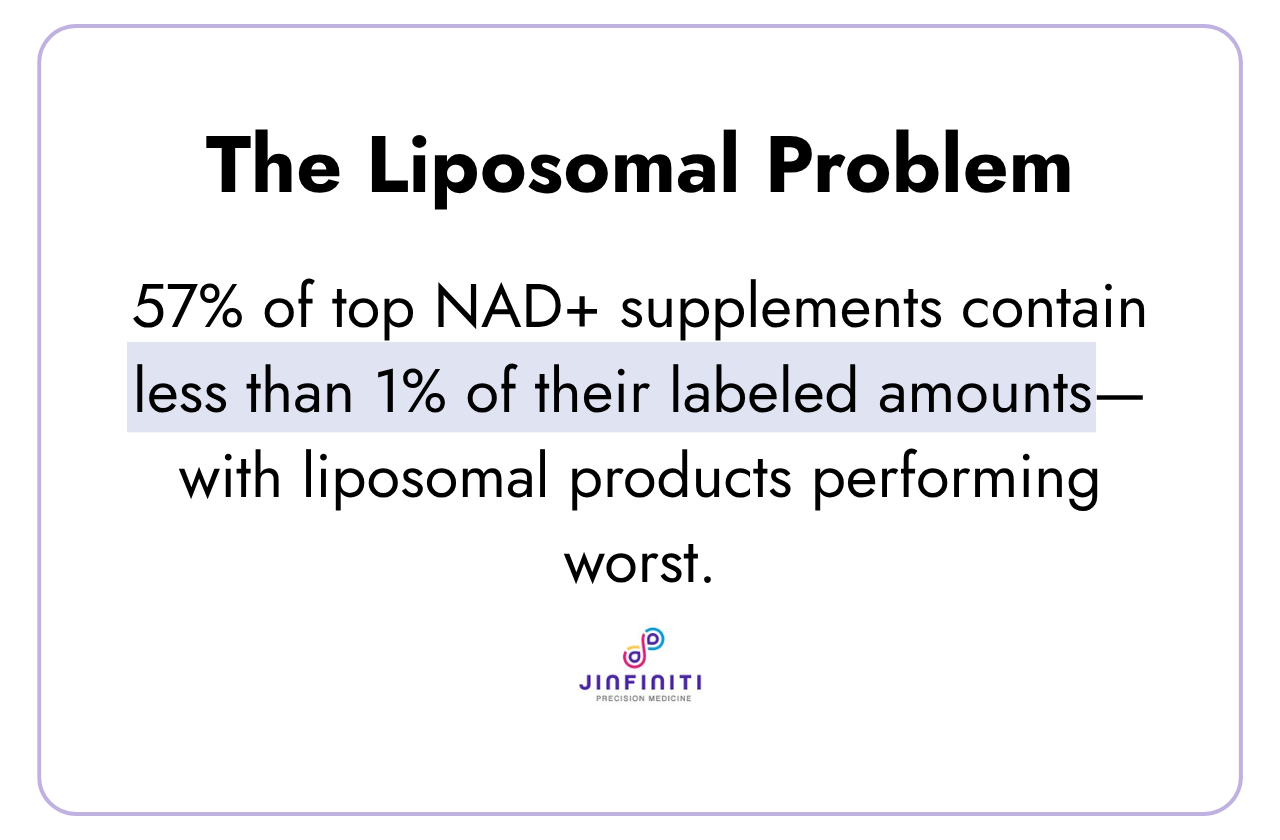
  • Independent testing found 57% of top NAD+ supplements contained less than 1% of their labeled amounts, with liposomal products performing particularly poorly
  • Manufacturing processes typically break down liposomal structures in powder and capsule forms, rendering the “liposomal” claim meaningless
  • NAD+ precursors like NMN and NR have substantial clinical evidence showing they actually raise cellular NAD+ levels

Why Can’t You Just Take NAD+ Directly?

NAD+ (nicotinamide adenine dinucleotide) is a coenzyme your body uses for cellular health and longevity. It fuels hundreds of different enzymes, provides the energy to keep you going, and supports the mechanisms responsible for DNA repair.

The catch? Your body won’t let it in through the front door.

NAD+ faces multiple biological barriers that prevent effective supplementation:

  • Size and charge: NAD+ molecules carry two negatively charged phosphate groups and clock in at more than twice the molecular weight of their smaller precursor cousins. This combination creates an insurmountable barrier at the cell membrane.
  • Membrane penetration: As one scientific review explains, NAD+ simply cannot passively pass through cellular membranes due to its size and charged nature[1].
  • Stability problems: NAD+ breaks down rapidly when exposed to moisture, light, or heat. An FDA briefing document notes that NAD+ is unlikely to remain stable in capsule form under normal storage conditions.
  • Digestive breakdown: Your digestive system’s acidic environment finishes off whatever managed to survive the bottle.

Dr. Eric Verdin, President of the Buck Institute for Research on Aging, puts it bluntly: “NAD+ is too big to enter cells and is mostly broken down into nicotinamide when injected. Oral precursors like NMN or NR are a better bet for most people.”

Think of it like trying to push a beach ball through a chain-link fence. The structure just doesn’t cooperate.

The Liposomal Technology Promise

What could go wrong with liposomal delivery systems? Liposomes encapsulate your active ingredient in microscopic phospholipid spheres. They’re little bubbles with a double lipid layer. Your cells’ membranes are made of the same stuff.

On paper, this all sounds great. Liposomes shield compounds from digestion and readily fuse with cells to release their cargo.

Studies on vitamin C back this up for some nutrients. In one 2024 clinical trial, liposomal vitamin C had a 27% greater peak concentration and 21% higher total exposure than regular vitamin C[2].

For other nutrients that have a tough time getting absorbed, liposomal technology can definitely provide an advantage. The real question is: Does it help with NAD+? 

And does it even matter if the root absorption issue is still there?

Informational image explaining the problem with liposomal NAD products.

The Problem With Liposomal NAD Products

This is where the slick marketing meets manufacturing reality. Liposomal NAD+ has two problems. 

Manufacturing breakdown 

First, liposomes are delicate structures. Tablet and capsule manufacturing uses harsh compression, heat, and drying. They break those fragile structures apart. 

Dry or powder-based liposomes are particularly vulnerable, according to industry analysts. These formulations break up during the manufacturing process, losing the very structural integrity that made liposomes useful in the first place.

The stability paradox 

Second, NAD+ is exceptionally unstable and breaks down very quickly in water. Liquid liposomal products need water to keep the liposomal structure stable, but that same water destroys the NAD+ inside.

You’re left with a lose-lose situation: liquid products maintain liposomal structure but destroy the active ingredient. Powder products preserve the ingredient but destroy the liposomes.

Even injectable NAD+ faces challenges. A recent pilot study found that NAD+ IVs didn’t elevate blood NAD+ until 24 hours after infusion, and then only by about 2% compared to baseline. The study also revealed elevated white blood cell counts in recipients, suggesting an inflammatory immune response as the body interprets extracellular NAD+ as a danger signal[3].

“The supplement industry has gotten very good at selling delivery systems that sound impressive on paper but fail in practice,” says Dr. Jin-Xiong She, founder of Jinfiniti Precision Medicine. “What matters isn’t the delivery vehicle. It’s whether the molecule can actually enter your cells and convert to NAD+ where it’s needed. No amount of fancy encapsulation solves the problem if you’re supplementing with the wrong form.”

What Independent Supplement Testing Found

The numbers are sobering. Independent verification reveals widespread quality control failures:

  • SuppCo testing: Tested 11 products labeled as “liposomal” NAD+. Eight softgels contained no detectable NAD+ whatsoever. The remaining three contained sunflower oil or lecithin—components used to make liposomes—but testing revealed no functional liposomal structures.
  • Amazon bestsellers: A broader analysis found that 57% of the top 21 NAD+ supplements sold on Amazon contained less than 1% of the NAD+ stated on their labels. Eleven products showed no detectable NAD+ at all.
  • High-dose claims: Among products in liposomal form claiming 1,500mg of active ingredient per serving, multiple returned “non-detectable” results.

You’re not getting what you’re paying for—and you’re definitely not getting what the label promises.

The Better Alternative: NAD+ Precursors

The scientific consensus points to a different approach: skip direct NAD+ supplementation and use precursors your cells can actually absorb.

Nicotinamide riboside (NR) and nicotinamide mononucleotide (NMN) are smaller molecules that enter cells through specific transporters, then convert to NAD+ inside where it’s needed.

Clinical evidence for NR:

  • One randomized study showed participants taking 100mg daily experienced a 22% increase in whole blood NAD+ after two weeks, while those taking 1,000mg saw levels rise by 142%[4]
  • Another study demonstrated that NR supplementation increased NAD+ levels in the human brain[5]—the first evidence that oral supplementation could cross the blood-brain barrier
  • NR has extensive human clinical trial data backing its safety and efficacy[6]

Clinical evidence for NMN:

  • An 8-week clinical trial in healthy middle-aged adults found 250mg daily was well-tolerated and effectively boosted NAD+ biosynthesis[7]
  • Research in postmenopausal women with prediabetes showed NAD+ levels increased approximately 50% in certain blood cells with the same 250mg daily dose[8]
  • NMN sits one enzymatic step closer to NAD+ in the biosynthetic pathway[9]

The difference? These precursors actually work.

What Dr. Jin-Xiong She Recommends

At Jinfiniti, the approach centers on measurement rather than guesswork.

“We see clients spending hundreds of dollars on products that promise the moon but deliver nothing measurable,” Dr. She explains. “That’s why we developed the Intracellular NAD® Test so people can actually see if their supplement is working or if they’re flushing money down the drain.”

This embodies Jinfiniti’s TAO philosophy: Test your baseline levels, Act with targeted supplementation, and Optimize by retesting to confirm improvement. It’s the difference between hoping a supplement works and knowing it does.

Our Vitality ↑® NAD+ Booster takes a multi-pathway approach, combining NMN with niacinamide, creatine monohydrate, and D-ribose in a clinically validated formulation. Rather than relying on a single precursor, this combination works through multiple metabolic pathways to raise NAD+ levels more effectively than standalone ingredients.

Clinical data backs this up: 85% of participants reached optimal NAD+ levels (40-100μM) within four weeks, with an average 100% increase in NAD+ levels.

CLIA-Certified NAD Test Kit

Test your NAD+ levels from home.

Jinfiniti Intracellular NAD Test on purple background

How to Choose Real NAD+ Support

When shopping for NAD+ supplementation, look for these evidence-based criteria:

  • Skip “liposomal NAD+” products unless the manufacturer provides third-party verification of both liposomal structure and active ingredient content. Most can’t.
  • Avoid liquid or water-based formulations: The molecules break down too rapidly in aqueous environments to remain effective by the time you consume them.
  • Choose NAD precursors: Look for NMN or NR instead of direct NAD+. These smaller molecules have clinical evidence showing they actually raise cellular NAD+ levels.
  • Demand third-party testing: With over half of tested products failing to contain their labeled amounts, independent verification by ConsumerLab, USP, or NSF International isn’t optional—it’s necessary.
  • Start with evidence-based doses: 250-500mg daily of NR or NMN. Studies show benefits at these levels, and higher doses don’t necessarily provide proportional improvements.
  • Test your levels: Measuring your NAD+ levels removes the guesswork and confirms whether your investment is actually working.

If you have underlying health conditions or take medications, consult with a healthcare professional before starting any new supplement.

Bottom Line

The marketing around liposomal NAD+ might sound good, but the reality is less appealing. Liposomes are destroyed during manufacturing. Liquid formulations are unable to hold their ingredients in solution. Testing by independent labs is revealing that most products do not contain what is stated on their label.

The solution to the challenges that liposomal NAD+ manufacturers are facing is not more hype, but instead a focus on clinically proven NAD+ precursors that the body can absorb and convert to NAD+ in the places you need it most.

You can combine this with testing that you can use to measure your results. This is the one thing that liposomal products simply cannot deliver: tangible evidence that your supplementation regimen is working as it should.

Referenced Sources

  1. Vinten KT, Trętowicz MM, Coskun E, van Weeghel M, Cantó C, Zapata-Pérez R, et al. NAD+ precursor supplementation in human ageing: clinical evidence and challenges. Springer Science and Business Media LLC; 2025. https://doi.org/10.1038/s42255-025-01387-7
  2. Purpura M, Jäger R, Godavarthi A, Bhaskarachar D, Tinsley GM. Liposomal delivery enhances absorption of vitamin C into plasma and leukocytes: a double-blind, placebo-controlled, randomized trial. Springer Science and Business Media LLC; 2024. https://doi.org/10.1007/s00394-024-03487-8
  3. Hawkins J, Idoine R, Kwon J, Shao A, Dunne E, Hawkins E, et al. Randomized, placebo-controlled, pilot clinical study evaluating acute Niagen®+ IV and NAD+ IV in healthy adults. Cold Spring Harbor Laboratory; 2024. https://doi.org/10.1101/2024.06.06.24308565
  4. Trammell SAJ, Schmidt MS, Weidemann BJ, Redpath P, Jaksch F, Dellinger RW, et al. Nicotinamide riboside is uniquely and orally bioavailable in mice and humans. Springer Science and Business Media LLC; 2016. https://doi.org/10.1038/ncomms12948
  5. Nanga RPR, Wiers CE, Elliott MA, Wilson NE, Liu F, Cao Q, et al. Acute nicotinamide riboside supplementation increases human cerebral NAD+ levels in vivo. Wiley; 2024. https://doi.org/10.1002/mrm.30227
  6. Freeberg KA, Udovich CC, Martens CR, Seals DR, Craighead DH. Dietary Supplementation With NAD+-Boosting Compounds in Humans: Current Knowledge and Future Directions. Oxford University Press (OUP); 2023. https://doi.org/10.1093/gerona/glad106
  7. Yamaguchi S, Irie J, Mitsuishi M, Uchino Y, Nakaya H, Takemura R, et al. Safety and efficacy of long-term nicotinamide mononucleotide supplementation on metabolism, sleep, and nicotinamide adenine dinucleotide biosynthesis in healthy, middle-aged Japanese men. Japan Endocrine Society; 2024. https://doi.org/10.1507/endocrj.ej23-0431
  8. Yoshino M, Yoshino J, Kayser BD, Patti GJ, Franczyk MP, Mills KF, et al. Nicotinamide mononucleotide increases muscle insulin sensitivity in prediabetic women. American Association for the Advancement of Science (AAAS); 2021. https://doi.org/10.1126/science.abe9985
  9. 9. Yoshino J, Baur JA, Imai S ichiro. NAD+ Intermediates: The Biology and Therapeutic Potential of NMN and NR. Elsevier BV; 2018. https://doi.org/10.1016/j.cmet.2017.11.002

NAD Injections vs. Oral NAD Supplements: How Do They Compare?

When it comes to NAD injections vs oral supplements, the research is in. The clinical trials showing NMN and NR are safe and can boost intracellular NAD+ levels are quite robust.

Even if injectable NAD+ has superior bioavailability claims, leading researchers are skeptical, asking if it enters the cells or breaks down into other compounds.

Quick Takeaways

  • Oral NMN and NR supplements are backed by multiple randomized controlled trials showing they safely increase NAD levels inside cells
  • Leading longevity researchers question whether injectable NAD+ actually enters cells, as the molecule may be too large and breaks down before reaching cellular targets
  • Injectable NAD+ costs 3-10x more than oral supplements ($100-700 monthly vs. $30-80 monthly) with less scientific evidence
  • Testing your NAD levels before and after supplementation is the only way to know if your chosen method actually works for your body

Understanding NAD+ and Why It Matters

NAD+ (Nicotinamide Adenine Dinucleotide) serves as a coenzyme in every cell of your body. It powers hundreds of metabolic reactions, from energy production to DNA repair.

Your NAD levels decline dramatically with age. Research shows levels drop in a number of tissues as a function of aging and overnutrition[1].

This decline contributes to the symptoms many people associate with aging: fatigue, brain fog, and reduced physical recovery. You can see why NAD+ supplementation has become a focal point in longevity medicine.

A Critical Difference: NAD+ vs. NAD+ Precursors

Before comparing delivery methods, you need to understand what you’re actually taking.

This distinction matters more than most marketing materials let on.

What Researchers Say About NAD Injections vs Pills

Dr. Eric Verdin, President of the Buck Institute for Research on Aging, stated clearly: “My opinion is that NAD+ intravenously is not something that should be done… NAD+ is too big to enter cells and is mostly broken down into nicotinamide when injected. Oral precursors like NMN or NR are a better bet for most people.”

This isn’t a minor technical detail. If injected NAD+ can’t enter your cells, it doesn’t matter how high the bioavailability appears on paper.

This challenges a common assumption that injectable NAD+ is automatically more effective than oral forms simply because absorption rates look better.

Dr. Amanda Kahn, a board-certified internist, offers a different perspective. She notes that NAD+ injections “give you back a molecule that you had when you were younger, which is responsible for keeping the cells optimized, particularly the mitochondria.”

The disagreement among experts reveals the current state of the science: promising anecdotal reports but limited rigorous research.

CLIA-Certified NAD Test Kit

Test your NAD+ levels from home.

Jinfiniti Intracellular NAD Test on purple background

Comparing Absorption and Bioavailability

Let’s look at what actually happens when you take NAD+ through different routes.

Delivery MethodAbsorption RateTime to EffectClinical Evidence Level
Oral NR/NMN10-20% average2-4 weeksHigh (multiple RCTs)
IM/SubQ Injection70-80% claimedDaysLow (case reports)
IV TherapyUp to 100% claimedImmediateLow (observational)

Clinical trials with oral NR have demonstrated 22-142% increases in blood NAD+ levels after 2-4 weeks of supplementation[2]. These studies followed rigorous protocols with placebo controls.

Injectable NAD+ shows higher absorption rates in theory. But here’s the catch: higher blood levels don’t automatically mean higher intracellular levels where NAD+ actually does its work.

It’s worth noting that no FDA-approved protocols exist for NAD+ injections. Current dosage regimens are based on clinical experience and expert consensus, not large-scale trials.

Full Comparison: Injections vs. IV vs. Oral NAD Supplements

Looking at all three NAD therapy delivery methods side by side reveals important practical differences.

FeatureOral Supplements (NMN/NR)Injections (IM/SubQ)NAD IV Therapy (Infusion)
AbsorptionLow-Moderate (2-60%)Very High (70-80%)Maximum (~100%)
Time to EffectWeeksHours-DaysMinutes-Hours
ConvenienceMost convenientSelf-administered, quickRequires clinic visit
CostLow ($30-80/month)Mid-High ($100-500/month)High ($250-700/session)
Use CaseLong-term maintenanceRegular support, faster resultsAcute needs, medical protocols
Expert ConsensusSufficient for most, safestHigh blood levels, cellular uptake unclearMost potent delivery, limited evidence

The myth that “more is always better” doesn’t hold up. Exceeding recommended doses can risk adverse effects, and higher doses don’t guarantee better long-term results. Your body has limits on how much NAD+ it can use at once.

The Evidence for Oral NAD+ Precursors

Multiple peer-reviewed studies support oral NMN and NR supplementation.

Research published in Nature Communications showed that oral NR safely increased NAD+ metabolites in humans[2]. Another study in NPJ Aging found NMN was well-tolerated up to 2,000 mg daily[3].

These aren’t small pilot studies. They’re randomized, double-blind, placebo-controlled trials with measurable outcomes.

The clinical benefits documented include:

  • Improved cardiovascular markers[4]
  • Better metabolic function[5]
  • Enhanced cellular energy production[6]
  • Support for healthy aging processes[7]

The Evidence Gap for NAD+ Injections

A woman preparing to receive a NAD injection.

Injectable NAD+ therapy has a different evidence profile. Most supporting data comes from case reports and observational studies, not controlled trials.

One systematic review noted that most evidence focuses on raising NAD+ levels, not long-term disease outcomes[8].

While injections may increase blood NAD+ measurements, proven reductions in disease rates or significant anti-aging effects in humans remain less robust.

The research that does exist for injectable NAD+ centers on addiction treatment. Studies suggest high-dose IV NAD+ may help with withdrawal symptoms[9], but these protocols differ significantly from wellness applications and should only be used under medical supervision.

No large-scale clinical trials have demonstrated that NAD+ injections increase intracellular NAD+ levels more than oral precursors.

Safety Profiles and Side Effects

Oral Supplements

Clinical trials show oral NMN and NR are remarkably safe[6]. Side effects are rare and mild, typically limited to:

  • Mild nausea (uncommon)
  • Flushing (rare)
  • Digestive discomfort (minimal)

Doses up to 2,000 mg daily have been tested without serious adverse events[3].

Injectable NAD+

Injections carry different risks:

  • Injection site reactions (pain, bruising)
  • Lightheadedness during or after administration
  • Nausea if administered too quickly
  • Rare allergic reactions
  • Risk of infection with improper technique

Standard operating procedures for NAD+ injections emphasize medical supervision precisely because of these concerns.

Cost Comparison

Money matters when you’re making a long-term health investment.

  • Oral NMN/NR Supplements: $30-80 per month for quality products
  • NAD+ Injections: $100-500 per month depending on frequency
  • IV Therapy: $250-700 per session

If you’re planning to supplement long-term (which makes sense for age-related NAD+ decline), oral supplements offer better value.

Testing: The Missing Piece Most People Ignore

Dr. Jin-Xiong She, founder of Jinfiniti Precision Medicine and a genomic scientist with over 400 peer-reviewed publications, emphasizes a point most people overlook.

“You cannot optimize what you don’t measure. NAD+ levels vary dramatically between individuals, and the same dose of any supplement could be optimal for one person, ineffective for another, or even excessive for a third. Testing is the only way to know if your intervention is working.”

This applies whether you choose injections or oral supplements.

Jinfiniti’s Intracellular NAD+ Test measures your actual cellular NAD+ levels, not just blood markers. According to Dr. She’s clinical research, optimal levels fall between 40-100 μM.

Without testing, you’re making expensive guesses about what your body needs.

When Injections Might Make Sense

To be fair, injectable NAD+ isn’t without its uses.

Some situations where injections may be considered:

  • Severe malabsorption issues preventing oral supplement absorption
  • Acute situations requiring rapid intervention (under medical supervision)
  • As part of addiction treatment protocols in clinical settings
  • When oral supplementation has been tried and tested without results

Even in these cases, medical supervision is recommended.

It’s a common misconception that only older adults benefit from NAD+ support. While age-related decline is well-documented, younger individuals under chronic stress, in recovery from illness, or with low baseline NAD+ levels may also see benefits. The magnitude of effect may differ, but NAD+ optimization isn’t exclusively for aging populations.

Natural Ways to Support NAD+ Production

Supplements aren’t your only option. Lifestyle factors significantly impact NAD+ levels.

  • Exercise stimulates NAD+ production through metabolic stress[10]. Both aerobic and resistance training show benefits.
  • Intermittent fasting activates cellular pathways that preserve NAD+. Research suggests fasting periods trigger NAD+ conservation mechanisms[11].
  • Sleep quality affects NAD+ metabolism. Poor sleep disrupts circadian rhythms that regulate NAD+ synthesis[12].

Foods high in NAD+ precursors include fish, turkey, mushrooms, and green vegetables. While diet alone won’t fully compensate for age-related decline, it provides foundational support.

The Bottom Line

The scientific consensus leans toward oral NAD+ precursors for most people.

NMN and NR have robust clinical evidence showing they safely increase NAD+ levels. They’re convenient, cost-effective, and well-studied.

Injectable NAD+ may deliver higher blood concentrations, but leading researchers question whether it effectively enters cells. The lack of controlled trials comparing intracellular NAD+ levels after injection versus oral supplementation leaves a significant evidence gap.

For addiction treatment under medical supervision, high-dose IV protocols may have a role. For general wellness and longevity, the data supports oral precursors.

Which Should You Choose?

Consider these factors:

Choose oral supplements if you:

  • Want the best-researched option
  • Prefer convenience and lower cost
  • Are focused on long-term wellness
  • Can commit to consistent daily use

Consider injections if you:

  • Have documented severe malabsorption
  • Are working with a qualified physician on acute issues
  • Have tried oral supplements with testing confirmation of no response
  • Accept higher costs for potentially faster results

How to Safely Start Taking NAD

Start with testing your baseline NAD levels to remove the guesswork from supplementation.

If you choose oral supplements, select high-quality NMN or NR from reputable manufacturers. Look for third-party testing and pharmaceutical-grade production.

Retest after 4-6 weeks to confirm your protocol is working. Adjust dosing based on results, not marketing promises.

If you’re considering injections, work with a licensed healthcare provider who can monitor your response and watch for adverse effects.

Remember that NAD+ optimization works best as part of a comprehensive approach including exercise, nutrition, sleep, and stress management.

The goal isn’t just to raise a number on a test. It’s to support your body’s cellular function so you can maintain energy, mental clarity, and physical vitality as you age.

Ready to measure your NAD+ levels and start optimizing? Jinfiniti’s NAD Optimization® Starter Package includes testing and our scientifically formulated Vitality NAD+ Booster to help you achieve optimal cellular health.

Referenced Sources

  1. Verdin E. NAD+ in aging, metabolism, and neurodegeneration. American Association for the Advancement of Science (AAAS); 2015. https://doi.org/10.1126/science.aac4854
  2. Martens CR, Denman BA, Mazzo MR, Armstrong ML, Reisdorph N, McQueen MB, et al. Chronic nicotinamide riboside supplementation is well-tolerated and elevates NAD+ in healthy middle-aged and older adults. Springer Science and Business Media LLC; 2018. https://doi.org/10.1038/s41467-018-03421-7
  3. Henderson JD, Quigley SNZ, Chachra SS, Conlon N, Ford D. The use of a systems approach to increase NAD+ in human participants. Springer Science and Business Media LLC; 2024. https://doi.org/10.1038/s41514-023-00134-0
  4. Vreones M, Mustapic M, Moaddel R, Pucha KA, Lovett J, Seals DR, et al. Oral nicotinamide riboside raises NAD+ and lowers biomarkers of neurodegenerative pathology in plasma extracellular vesicles enriched for neuronal origin. Wiley; 2022. https://doi.org/10.1111/acel.13754
  5. She J, Sheng R, Qin ZH. Pharmacology and Potential Implications of Nicotinamide Adenine Dinucleotide Precursors. Aging and Disease; 2021. https://doi.org/10.14336/ad.2021.0523
  6. Yi L, Maier AB, Tao R, Lin Z, Vaidya A, Pendse S, et al. The efficacy and safety of β-nicotinamide mononucleotide (NMN) supplementation in healthy middle-aged adults: a randomized, multicenter, double-blind, placebo-controlled, parallel-group, dose-dependent clinical trial. Springer Science and Business Media LLC; 2022. https://doi.org/10.1007/s11357-022-00705-1
  7. Conlon NJ. The Role of NAD+ in Regenerative Medicine. Ovid Technologies (Wolters Kluwer Health); 2021. https://doi.org/10.1097/prs.0000000000009673
  8. Freeberg KA, Udovich CC, Martens CR, Seals DR, Craighead DH. Dietary Supplementation With NAD+-Boosting Compounds in Humans: Current Knowledge and Future Directions. Oxford University Press (OUP); 2023. https://doi.org/10.1093/gerona/glad106
  9. Braidy N, Villalva MD, Eeden S van. Sobriety and Satiety: Is NAD+ the Answer?. MDPI AG; 2020. https://doi.org/10.3390/antiox9050425
  10. Walzik D, Joisten N, Schenk A, Trebing S, Schaaf K, Metcalfe AJ, et al. Acute exercise boosts NAD+ metabolism of human peripheral blood mononuclear cells. Elsevier BV; 2025. https://doi.org/10.1016/j.bbi.2024.11.004
  11. Poljsak B, Kovač V, Milisav I. Healthy Lifestyle Recommendations: Do the Beneficial Effects Originate from NAD+ Amount at the Cellular Level?. Wiley; 2020. https://doi.org/10.1155/2020/8819627
  12. Cuenoud B, Huang Z, Hartweg M, Widmaier M, Lim SongI, Wenz D, et al. Effect of circadian rhythm on NAD and other metabolites in human brain. Frontiers Media SA; 2023. https://doi.org/10.3389/fphys.2023.1285776
nad shots

NAD Injections Guide: Benefits, Risks and Costs

Nicotinamide adenine dinucleotide (NAD+) injections give cells extra fuel without the long wait of an IV drip. A shot into muscle or under the skin puts NAD+ building blocks straight into tissue before the gut has a chance to break them down first.

People choose NAD shots for many reasons. Some want more energy and better mental clarity. Others want support during addiction recovery or help with chronic fatigue.

However most research on NAD+ benefits comes from studies using oral NMN and NR supplements, not injections. Clinical trials that examine NAD+ injections in humans remain limited.

Quick Takeaways

  • NAD+ injections deliver the coenzyme directly into fat or muscle tissue.
  • Most evidence for NAD+ benefits comes from oral NMN and NR supplementation studies, which show improvements in energy levels, cognitive function, and metabolic health markers.
  • Common side effects include injection site soreness, headache, and nausea, but serious reactions are rare when administered properly under medical supervision.
  • Costs range from $25 to $205 per injection depending on location and provider, making them more affordable than IV therapy sessions that run $250 to $1,500.

What Are NAD Injections?

NAD+ injections deliver nicotinamide adenine dinucleotide directly into muscle or fat tissue. This coenzyme exists in every living cell and is a driving force for hundreds of metabolic reactions.

Your body uses NAD+ for:

  • Converting food into cellular energy (ATP)
  • Repairing damaged DNA
  • Activating sirtuins (proteins that regulate cellular health)
  • Controlling circadian rhythms and gene expression

Research shows NAD levels decline with age across the pancreas, skeletal muscle, liver, skin, and brain[1]. Studies link this decline to mitochondrial decline, reduced cognitive performance, and metabolic diseases[2].

How NAD+ Injections Work in Your Body

NAD+ molecules are too large to cross cell membranes intact. Here’s how NAD injections work:

  • Enzymes (CD38 and CD157) break down NAD+ into smaller molecules like nicotinamide
  • Cells absorb these smaller molecules
  • Your cells rebuild them into NAD+ through biosynthetic pathways
  • Some specialized tissues like heart muscle can absorb NAD+ directly

A pilot study found urine NAD+ levels jumped 538% during IV infusion, showing substantial amounts pass through unabsorbed[3].

Whether you use injections or oral supplements, NAD+ precursors convert to NAD+ through the same pathways.

CLIA-Certified NAD Test Kit

Test your NAD+ levels from home.

Jinfiniti Intracellular NAD Test on purple background

Types of NAD+ Injections: SubQ vs. IM

You can receive NAD injection through subcutaneous (SubQ) or intramuscular (IM) routes.

Subcutaneous Injection (SubQ)

  • Injection site: Fatty tissue under skin (abdomen, thigh, upper arm)
  • Needle: Short (25-27 gauge, half inch or less)
  • Absorption: Slow over several hours
  • Comfort: Less soreness, easier self-administration

Intramuscular Injection (IM)

  • Injection site: Muscle tissue (thigh, glute, shoulder)
  • Needle: Longer (one to one and a half inches), 90-degree angle
  • Absorption: Faster (effects within 1-2 hours)
  • Comfort: More potential soreness

Both routes bypass digestive metabolism and deliver NAD+ precursors into circulation. Clinical research comparing SubQ versus IM for NAD+ is limited.

What Are the Benefits of NAD+ Injections?

NAD injection needle

Though the benefits of NAD+ are extensively documented, it is important to consider that the majority of studies analyzing the benefits of NAD+ therapy are based on oral supplementation studies done with NMN and NR.

There is a lack of clinical trials investigating NAD+ injections in human subjects. The benefits outlined in the following sections are primarily from research on oral NAD+ precursors and studies involving animals.

1. Increased Energy and Cellular Function

Multiple preclinical studies show that NAD+ restoration improves mitochondrial health and ATP production. Research in mice found NAD+ treatment reversed age-related decline, boosted muscle function and endurance, and improved muscle stem cell quality[4].

A 12-week randomized trial of healthy middle-aged adults taking oral NR showed it increased blood NAD+ levels by 60% in a dose-dependent manner[5].

Another study confirmed that oral NR supplementation is well-tolerated and efficiently stimulates NAD+ metabolism in middle-aged and older adults[6].

A trial of 207 patients with chronic fatigue syndrome found that 200 mg CoQ10 plus 20 mg NADH daily reduced cognitive fatigue and improved quality of life[7].

Researchers suggest ME/CFS patients have compromised NAD+ levels, which may explain their cellular energy production failures.

2. Brain Health and Mental Clarity

NAD+ plays an important role in keeping neurons healthy.

Early evidence suggests NAD+ may support cognitive function in people with neurodegenerative conditions[8].

A study on oral NR supplementation (500 mg twice daily for 6 weeks) raised NAD+ levels in plasma and decreased Alzheimer’s biomarkers including Aβ42 and phosphorylated proteins[9].

Clinical research shows oral NAD+ precursors can cross the blood-brain barrier and increase neuronal NAD+ levels[10].

A 2025 trial in patients with Werner syndrome found that 1,000 mg daily oral NR improved arterial stiffness and showed trends toward better cognitive markers[11].

Dr. Sapna Patel at the University of Colorado cautions that more research is needed to confirm whether supplements deliver on anti-aging and disease prevention claims.

3. Support for Addiction Recovery

NAD+ therapy has been used in addiction treatment since 2001. A Louisiana clinic developed protocols using IV NAD+ for patients with acute withdrawal symptoms from chronic opioid and alcohol abuse.

A 2022 study of 50 patients receiving NAD+ infusions found reductions in craving scores, anxiety, and depression. The results showed strong statistical significance across all three measures[12].

Dr. Mark Collins, who works in addiction medicine, states: “I have now witnessed its use in many patients and am very impressed with the short-term results.” He adds that longer-term outcome studies are needed.

Patient testimonials suggest NAD+ helps reduce withdrawal symptoms and cravings. Experts stress it must combine with therapy and other treatments, not serve as a standalone solution.

4. DNA Repair and Cellular Health

Your cells need NAD+ for DNA repair through multiple pathways. The enzyme PARP1 handles about 90% of total repair activity and consumes large amounts of cellular NAD+ when fixing DNA damage.

Proteins called sirtuins (especially SIRT1, SIRT6, and SIRT7) require NAD+ to maintain genomic stability. Research in Nature shows that restoring NAD+ improves cellular antioxidant capacity and reduces oxidative stress markers[13].

This repair work happens constantly in your body. NAD+ gives your cells the fuel they need to fix damage before it accumulates. Studies suggest that maintaining NAD+ levels through supplementation may help preserve these protective mechanisms[14].

💉 MORE ON NAD THERAPY

What Are the Risks and Side Effects?

NAD+ injections are generally well-tolerated, but you should know the possible reactions before starting therapy.

Common Side Effects

Most side effects are mild and temporary. The injection site may feel sore, burn, or look red. Some people develop firm lumps where the NAD+ fluid hasn’t dispersed properly or a sterile abscess (a non-infectious fluid pocket).

Systemic reactions include:

  • Headache (pressure or throbbing)
  • Nausea or stomach upset
  • Facial flushing or warmth
  • Dizziness or lightheadedness
  • Tiredness

A systematic review examining NAD+ supplementation safety found the most common side effects were muscle pain, nervous system issues, fatigue, sleep problems, and headaches. Adverse events did not create serious health risks for participants[15].

Rare but serious reactions include heart palpitations, blood pressure changes, and allergic reactions ranging from rashes to anaphylaxis in extreme cases. Infection at the injection site happens rarely with proper sterile technique.

High doses can potentially disrupt metabolic balance. Some research suggests decreased insulin sensitivity, raising concerns for people with prediabetes or diabetes. Potential liver strain with excessive dosing remains under investigation.

Who Should Avoid NAD+ Injections?

Several groups should not receive NAD+ therapy or need medical clearance first.

Absolute contraindications:

  • Known allergy to NAD+ or its components
  • Severe liver or kidney disease
  • History of cancer (including skin cancer)
  • Pregnancy or breastfeeding

Relative contraindications (require doctor consultation):

  • Heart disease or bleeding disorders
  • Autoimmune conditions
  • Liver or kidney problems
  • Children and teens (insufficient safety data)

NAD+ supplements may interact with several medication classes. Diabetes medications might have altered effects due to insulin sensitivity changes. Blood pressure drugs could combine with NAD+ to lower pressure too much. Anticoagulants like warfarin may have affected metabolism. Cancer treatments might be less effective, and antidepressants could interact with NAD+ production pathways.

Always discuss your medications and health conditions with a doctor before starting NAD injection therapy.

How Much Do NAD+ Injections Cost?

Pricing varies widely based on where you get treatment and whether you choose online or in-person options.

Online vs. In-Person Pricing

The most affordable route is through online telehealth clinics. Monthly costs typically range from $105 to $350.

Provider TypeCost RangeDetails
Online Telehealth$105-$350/monthIncludes prescription and supplies shipped to you
Single IM/SubQ Injection (clinic)$25-$190One-time or pay-per-visit pricing
IV Therapy Session$250-$1,500Requires 1-4 hours at clinic
Loading Phase Packages$1,500-$6,000Typically 4-6 sessions over weeks

Location affects pricing. Major cities like Chicago charge $600 to $1,000 per IV session. Smaller towns offer more budget-friendly options at $300 to $500.

NAD injection costs less than IV therapy while offering a different delivery method than oral supplements. You can self-administer after proper training, saving both time and money compared to clinic visits.

NAD+ Injections vs. Other Delivery Methods

Different NAD+ delivery methods have distinct advantages and limitations. Keep in mind that clinical evidence varies significantly by delivery route.

How Do Injections Compare to IV Therapy?

IV therapy delivers higher doses (typically 500-1,000 mg) directly into your bloodstream with immediate availability. Sessions last 1 to 4 hours but provide rapid delivery for people needing fast intervention.

Injections offer several practical advantages:

  • Takes minutes instead of hours
  • Costs much less per treatment
  • You can do it yourself at home after training
  • Fewer side effects from lower peak blood concentrations
  • Regular smaller doses provide steadier NAD+ levels

The main benefit of IV therapy is the higher dose and immediate bloodstream access. Some people prefer that intensity for acute situations like severe fatigue or addiction recovery support.

Both IV and injection methods share a limitation: minimal published clinical research compared to oral supplementation studies.

How Do Injections Compare to Oral Supplements?

Oral NAD+ precursors like NR and NMN have been extensively studied in human clinical trials. Research shows that oral administration of these precursors effectively raises NAD+ levels in a dose-dependent manner[16].

Clinical trials demonstrate that oral NR supplementation significantly increases blood NAD+ within 2 weeks, with effects maintained throughout multi-week studies[6]. A randomized trial found that 1,000 mg of oral NR raised NAD+ levels by approximately 60% in healthy adults[17].

Dr. Charles Brenner discovered NR as a NAD+ precursor and led the first human trial showing safe oral availability[18]. His work at City of Hope focuses on NAD+ metabolism in metabolic diseases.

Oral supplements have the most extensive clinical evidence base. Injections may appeal to those seeking alternatives to pills or IV therapy, though research on injections remains limited.

What’s the Recommended Dosage?

Clinical protocols for injections vary based on what you’re trying to achieve, though these recommendations are adapted largely from IV therapy protocols and oral supplementation research rather than injection-specific studies.

Health GoalDosage RangeFrequencyDuration
General Wellness50-100 mg2-3x per weekOngoing
Loading Phase100-200 mgDaily7-10 days
Athletic Recovery200-500 mg2-3x per week2-4 weeks
Cognitive Support100-250 mg1-2x per week4-6 weeks

For subcutaneous injections, most protocols start conservatively. Begin with 0.1 mL (20 mg) to check your tolerance. Gradually increase to 0.25 mL up to three times weekly. The target dose is usually 0.5 mL (100 mg), typically 2-3 times weekly.

Never exceed 0.5 mL within any 24-hour period.

Some intensive protocols involve 500-1,000 mg daily for four consecutive days, followed by twice-weekly injections for one month. After that, you transition to a maintenance schedule.

Dose needs differ between people based on age, weight, metabolism, and baseline NAD+ levels. Working with a healthcare provider helps you find the right amount for your health goals.

See our NAD injection dosage chart for a more detailed breakdown.

The Bottom Line

NAD+ injections offer an alternative delivery method for boosting cellular NAD+ levels, though most clinical evidence comes from oral supplementation studies rather than injection research. Before starting any NAD+ therapy, test your baseline levels to understand where you stand.

Jinfiniti’s CLIA-Certified Intracellular NAD+ Test measures your cellular NAD+ and provides personalized dosage recommendations. This data-driven approach helps you avoid guessing and ensures your intervention matches your actual needs.

Work with a healthcare provider to interpret results and choose the right therapy for your health goals.

Referenced Sources

  1. Xie N, Zhang L, Gao W, Huang C, Huber PE, Zhou X, et al. NAD+ metabolism: pathophysiologic mechanisms and therapeutic potential. Springer Science and Business Media LLC; 2020. https://doi.org/10.1038/s41392-020-00311-7
  2. Mills KF, Yoshida S, Stein LR, Grozio A, Kubota S, Sasaki Y, et al. Long-Term Administration of Nicotinamide Mononucleotide Mitigates Age-Associated Physiological Decline in Mice. Elsevier BV; 2016. https://doi.org/10.1016/j.cmet.2016.09.013
  3. Grant R, Berg J, Mestayer R, Braidy N, Bennett J, Broom S, et al. A Pilot Study Investigating Changes in the Human Plasma and Urine NAD+ Metabolome During a 6 Hour Intravenous Infusion of NAD+. Frontiers Media SA; 2019. https://doi.org/10.3389/fnagi.2019.00257
  4. Zhang H, Ryu D, Wu Y, Gariani K, Wang X, Luan P, et al. NAD+ repletion improves mitochondrial and stem cell function and enhances life span in mice. American Association for the Advancement of Science (AAAS); 2016. https://doi.org/10.1126/science.aaf2693
  5. Dellinger RW, Santos SR, Morris M, Evans M, Alminana D, Guarente L, et al. Repeat dose NRPT (nicotinamide riboside and pterostilbene) increases NAD+ levels in humans safely and sustainably: a randomized, double-blind, placebo-controlled study. Springer Science and Business Media LLC; 2017. https://doi.org/10.1038/s41514-017-0016-9
  6. Tannous C, Booz GW, Altara R, Muhieddine DH, Mericskay M, Refaat MM, et al. Nicotinamide adenine dinucleotide: Biosynthesis, consumption and therapeutic role in cardiac diseases. Wiley; 2020. https://doi.org/10.1111/apha.13551
  7. Castro-Marrero J, Segundo MJ, Lacasa M, Martinez-Martinez A, Sentañes RS, Alegre-Martin J. Effect of Dietary Coenzyme Q10 Plus NADH Supplementation on Fatigue Perception and Health-Related Quality of Life in Individuals with Myalgic Encephalomyelitis/Chronic Fatigue Syndrome: A Prospective, Randomized, Double-Blind, Placebo-Controlled Trial. MDPI AG; 2021. https://doi.org/10.3390/nu13082658
  8. Zhao Y, Zhang J, Zheng Y, Zhang Y, Zhang XJ, Wang H, et al. NAD+ improves cognitive function and reduces neuroinflammation by ameliorating mitochondrial damage and decreasing ROS production in chronic cerebral hypoperfusion models through Sirt1/PGC-1α pathway. Springer Science and Business Media LLC; 2021. https://doi.org/10.1186/s12974-021-02250-8
  9. Vreones M, Mustapic M, Moaddel R, Pucha KA, Lovett J, Seals DR, et al. Oral nicotinamide riboside raises NAD+ and lowers biomarkers of neurodegenerative pathology in plasma extracellular vesicles enriched for neuronal origin. Wiley; 2022. https://doi.org/10.1111/acel.13754
  10. Palmer RD, Elnashar MM, Vaccarezza M. Precursor comparisons for the upregulation of nicotinamide adenine dinucleotide. Novel approaches for better aging. Wiley; 2021. https://doi.org/10.1002/agm2.12170
  11. Shoji M, Kato H, Koshizaka M, Kaneko H, Baba Y, Ishikawa T, et al. Nicotinamide Riboside Supplementation Benefits in Patients With Werner Syndrome: A Double‐Blind Randomized Crossover Placebo‐Controlled Trial. Wiley; 2025. https://doi.org/10.1111/acel.70093
  12. Badgaiyan RD, Blum K, Han D, Baron D, Kazmi S, Elman I, et al. Nicotinamide Adenine Dinucleotide (NAD+) and Enkephalinase Inhibition (IV1114589NAD) Infusions Significantly Attenuate Psychiatric Burden Sequalae in Substance Use Disorder (SUD) in Fifty Cases. Bentham Science Publishers Ltd.; 2022. https://doi.org/10.2174/2666082218666220527114427
  13. Ryu D, Zhang H, Ropelle ER, Sorrentino V, Mázala DAG, Mouchiroud L, et al. NAD+ repletion improves muscle function in muscular dystrophy and counters global PARylation. American Association for the Advancement of Science (AAAS); 2016. https://doi.org/10.1126/scitranslmed.aaf5504
  14. Kang BE, Choi J, Stein S, Ryu D. Implications of NAD+ boosters in translational medicine. Wiley; 2020. https://doi.org/10.1111/eci.13334
  15. Gindri I de M, Ferrari G, Pinto LPS, Bicca J, dos Santos IK, Dallacosta D, et al. Evaluation of safety and effectiveness of NAD in different clinical conditions: a systematic review. American Physiological Society; 2024. https://doi.org/10.1152/ajpendo.00242.2023
  16. Yang X, Lu A, Guan X, Ying T, Pan J, Tan M, et al. An Updated Review on the Mechanisms, Pre‐Clinical and Clinical Comparisons of Nicotinamide Mononucleotide (NMN) and Nicotinamide Riboside (NR). Wiley; 2024. https://doi.org/10.1002/fft2.511
  17. Martens CR, Denman BA, Mazzo MR, Armstrong ML, Reisdorph N, McQueen MB, et al. Chronic nicotinamide riboside supplementation is well-tolerated and elevates NAD+ in healthy middle-aged and older adults. Springer Science and Business Media LLC; 2018. https://doi.org/10.1038/s41467-018-03421-7
  18. Belenky P, Bogan KL, Brenner C. NAD+ metabolism in health and disease. Elsevier BV; 2007. https://doi.org/10.1016/j.tibs.2006.11.006
AN image of B3 food sources

Niacin Dosage Guide: Optimal Amounts, Timing and Safety

Niacin, also known as vitamin B3 or nicotinic acid, supports energy metabolism and cellular health. While this important vitamin offers valuable benefits, getting the dosage right is important for both safety and effectiveness.

Understanding proper niacin dosage becomes especially important when you consider its complex effects on the body. Too little won’t provide therapeutic benefits, while too much can cause serious adverse effects.

Key Takeaways

  • Adults need only 14-16 mg daily, while therapeutic doses range between 1,500-3,000 mg
  • Above 35 mg daily can cause flushing, liver damage, and blood sugar problems
  • Niacin may raise NAD+ beyond optimal ranges, requiring testing to avoid side effects
  • Studies show niacin may increase stroke risk despite improving cholesterol

Recommended Daily Amounts for Niacin (Vitamin B3)

The basic nutritional requirements for niacin vary depending on your age, sex, and life stage. These amounts ensure you meet your body’s basic needs for this important vitamin.

Adults need different amounts based on their circumstances:

  • Men: 16 mg per day
  • Women: 14 mg per day
  • Pregnant women: 18 mg per day
  • Breastfeeding women: 17 mg per day

Children have lower requirements that increase with age. Infants need only 2-4 mg daily, while teenagers require up to 12 mg per day.

Most people can easily meet these recommended dietary allowances through food sources. However, therapeutic uses require much higher doses1.

Therapeutic Niacin Dosages

An image of a blackboard with 'B3' written on it, surrounded by various foods that are sources of vitamin B3.

Doctors sometimes prescribe niacin to treat high cholesterol or other cardiovascular conditions. In these cases, the dosage requirements jump dramatically above basic nutritional needs.

The standard therapeutic range varies from 1,500 to 3,000 mg per day. This represents a 100-fold increase over basic nutritional requirements.

Starting Protocol for Taking Niacin Supplements

Healthcare providers typically begin with conservative dosing to minimize side effects. The standard approach involves2:

  • Starting dose: 250 mg at bedtime
  • Increase by 250 mg every 4-7 days
  • Target: 2,000 mg per day initially
  • Maximum: Up to 6,000 mg per day (rarely needed)

This gradual escalation helps your body adjust to higher doses of niacin while reducing the risk of uncomfortable flushing reactions.

Maintenance Niacin Dosage

Most patients achieve the best lipid benefits at maintenance doses between 1,000-2,000 mg daily. Research shows that 1 gram per day produces modest HDL cholesterol increases, while 2 grams per day delivers substantial LDL cholesterol reduction of approximately 25%3.

The key is finding the lowest effective dose that provides the desired cardiovascular benefits while minimizing adverse effects.

Optimal Niacin Dose Timing and Administration

An image of a woman on a bed taking supplement

When and how you take niacin impacts both its effectiveness and the severity of side effects you might experience.

Best Times to Take Niacin

Extended-release niacin works best when taken once daily at bedtime after a low-fat snack. This timing strategy helps minimize the notorious niacin flush while maintaining therapeutic effectiveness.

Immediate-release formulations require different timing, typically taken 2-3 times daily with meals.

Food Interactions and Dietary Considerations

Taking niacin with food dramatically reduces side effects, particularly flushing and stomach upset. A low-fat snack proves best because high-fat meals can interfere with absorption of extended-release formulations.

Foods and substances to avoid near dosing time:

  • Alcohol
  • Hot beverages
  • Spicy foods
  • Large, fatty meals

These items can intensify flushing reactions and make the experience more uncomfortable.

Understanding Niacin Formulations

Not all niacin supplements are created equal. The different formulations have distinct safety profiles and effectiveness levels.

Formulation TypeFlushing RateLiver RiskRecommended Use
Immediate-ReleaseNearly 100%LowestSafest option
Extended-Release50-70%ModerateMost prescribed
Sustained-ReleaseVariableHighestAvoid completely

Sustained-release formulations should be avoided entirely due to greatly increased liver toxicity risk. Studies show 52% of patients develop liver problems with sustained-release niacin compared to 0% with immediate-release forms4.

Safety Considerations and Niacin Adverse Effects

An image of a man facing his laptop with supplements

Understanding niacin’s safety profile helps you make informed decisions about supplementation and recognize when doses might be too high.

Tolerable Upper Intake Levels

For healthy adults, the Tolerable Upper Intake Level stands at 35 mg per day. This represents the maximum daily intake unlikely to cause adverse health effects from dietary sources.

Above this level, flushing reactions become increasingly common and uncomfortable.

Managing Niacin Flush

The common niacin flush typically occurs within 30 minutes of taking the supplement and lasts about 60 minutes. While harmless, this reaction causes many people to discontinue treatment.

Effective strategies to reduce flushing include:

  • Taking 325 mg aspirin 30 minutes before niacin
  • Starting with low doses and increasing slowly
  • Taking niacin with food or a light snack
  • Eating an apple before dosing (pectin may help reduce flushing)

Serious Adverse Effects from High Doses

High-dose niacin therapy (above 2-3 grams daily) can cause serious health problems that require medical monitoring.

Potential complications include:

  • Liver damage with potential liver failure
  • Blood sugar problems and glucose intolerance
  • Elevated uric acid levels leading to gout attacks
  • Increased bleeding risk due to reduced platelet function
  • Vision problems including macular edema

These risks underscore why therapeutic doses should only be used under medical supervision.

The Hidden Risk: Niacin May Raise NAD+ Levels Too High

An image of blood testing conducted through finger pricking.

Here’s something most people don’t know about high-dose niacin supplementation. While niacin can boost NAD+ levels, it may actually raise them beyond the healthy range.

This creates a concerning situation where more isn’t necessarily better. Excessive NAD+ levels can disrupt cellular processes and cause unexpected health issues.

Why Testing Your NAD+ Matters

Unlike basic nutritional uses, taking niacin to boost NAD+ requires precise monitoring. Your body’s response to niacin varies dramatically based on genetics, metabolism, and other factors.

Some people achieve the best NAD+ levels with modest niacin doses, while others see levels spike dangerously high. Without testing, you’re essentially flying blind.

Our Intracellular NAD® Test provides the precise measurements needed to improve your approach safely and effectively.

Recent Research Findings Challenge Niacin’s Heart Benefits

An image of a doctor holding a heart and a stethoscope

New research has dramatically shifted our understanding of niacin’s role in cardiovascular health, revealing some concerning findings.

Cardiovascular Efficacy Questions

Large-scale trials including AIM-HIGH and HPS2-THRIVE showed that niacin therapy doesn’t reduce cardiovascular events despite improving cholesterol numbers. Even more concerning, the HPS2-THRIVE study found niacin increased stroke risk by 78%5 6.

The 4PY Discovery

Groundbreaking 2024 research from Cleveland Clinic uncovered why niacin often fails despite improving cholesterol profiles. When your body breaks down excess niacin, it produces a metabolite called 4PY that triggers vascular inflammation7.

Approximately 25% of Americans have excess niacin levels that double their cardiovascular disease risk. This discovery helps explain the disconnect between improved cholesterol numbers and unchanged heart disease outcomes.

Dietary vs Supplemental Niacin

Interestingly, dietary niacin intake shows protective cardiovascular effects in population studies. Higher dietary intake correlates with lower mortality risk, with the best intake appearing around 22-25 mg per day from food sources.

This suggests getting niacin from NAD+ foods rather than high-dose supplements may offer better long-term benefits.

Current Medical Recommendations

Most cardiovascular specialists no longer recommend niacin as first-line therapy for treating high cholesterol. Statins and other medications are preferred due to superior safety profiles and proven cardiovascular benefits.

For patients who do use therapeutic doses, careful monitoring becomes important:

  • Baseline and periodic liver function tests
  • Blood glucose monitoring, especially for diabetic patients
  • Platelet counts and bleeding assessments
  • Patient education about flushing and warning signs

Testing: The Key to Safe NAD+ Boosting

If you’re considering niacin for NAD+ benefits rather than cholesterol management, testing becomes absolutely important for safety and effectiveness.

Our precision approach involves:

Initial Assessment:

  • Personalized dosing recommendations based on your unique biology

Ongoing Monitoring:

  • Follow-up testing at 2-4 weeks to assess response
  • Dose adjustments based on results
  • Periodic monitoring to maintain the right levels safely

This data-driven approach helps you achieve the benefits of improved NAD+ levels while avoiding the pitfalls of excessive supplementation.

Bottom Line

Understanding proper niacin dosage requires balancing potential benefits against real risks. For basic nutritional needs, dietary sources typically provide adequate amounts safely.

For therapeutic uses, medical supervision becomes important due to the noteworthy risk profile at higher doses. Recent research questioning niacin’s cardiovascular benefits makes this supervision even more important.

If you’re interested in NAD+ supplements for longevity purposes, consider safer alternatives like our Vitality↑® NAD+ Booster, which provides effective NAD+ support without the risks associated with high-dose niacin.

Remember, when it comes to niacin and NAD+ boosting, precision testing isn’t just helpful—it’s important for both safety and effectiveness.

Reference Sources:

  1. https://ods.od.nih.gov/factsheets/Niacin-HealthProfessional/ ↩︎
  2. https://www.ncbi.nlm.nih.gov/books/NBK541036/ ↩︎
  3. https://jamanetwork.com/journals/jamainternalmedicine/fullarticle/216937 ↩︎
  4. https://pubmed.ncbi.nlm.nih.gov/8309029/ ↩︎
  5. https://pmc.ncbi.nlm.nih.gov/articles/PMC4829575/ ↩︎
  6. https://www.ncbi.nlm.nih.gov/books/NBK559137/ ↩︎
  7. https://newsroom.clevelandclinic.org/2024/02/19/cleveland-clinic-led-study-discovers-link-between-high-levels-of-niacin-a-common-b-vitamin-and-heart-disease ↩︎
An image of an aging woman

Spermidine Benefits for Longevity, Side Effects and Limitations

Spermidine has caught the eye of longevity researchers as one of nature’s most promising anti-aging compounds. This naturally occurring polyamine shows up in foods like wheat germ and aged cheese. It shows real potential for extending healthspan and protecting against age-related diseases.

Research suggests that spermidine may hold the key to cellular renewal, heart protection, and even cognitive improvement. But like any supplement, it comes with important considerations about safety, dosage, and limitations that you need to understand before adding it to your routine.

Key Takeaways

  • Spermidine boosts autophagy, helping cells clear damage and potentially extending lifespan
  • Studies show 40% reduction in heart failure risk with higher dietary intake
  • Oral supplements may convert to spermine rather than increasing spermidine levels directly
  • Natural dietary sources offer better safety profiles than synthetic supplements

What is Spermidine and How Does It Work?

Spermidine is a naturally occurring polyamine that your body produces and obtains from food sources. This cellular compound plays a key role in cell growth, DNA stability, and protein synthesis throughout your body.

The magic happens through a process called autophagy. Spermidine boosts autophagy by blocking certain enzymes that normally suppress this cellular housekeeping mechanism. When autophagy works properly, your cells can clear out damaged proteins and broken organelles that build up with age.

Recent studies reveal that spermidine is essential for fasting-mediated autophagy and longevity. The compound works through the polyamine-hypusination axis. This allows processes that extend lifespan across multiple species.1

Your body naturally produces polyamines, but levels drop as you age. This decline contributes to reduced cellular function and increased susceptibility to age-related diseases.

Benefits of Spermidine for Longevity and Anti-Aging

Graphic with the text 'Benefits of Spermidine' overlaid on green plant powder and a wooden spoon, featuring spermidine’s molecular structure, representing its natural origins and role in longevity and anti-aging

The health benefits of spermidine extend far beyond basic cellular maintenance. Research shows notable anti-aging effects that could change how we approach healthy aging.

Cellular Renewal and DNA Protection

Spermidine helps maintain cellular health by:

  • Improving the removal of damaged cellular components
  • Protecting DNA integrity and preventing mutations
  • Supporting mitochondrial function and energy production

A study showed that spermidine has been shown to extend lifespan in different organisms, from yeast to mice, by improving cellular quality control mechanisms.2

Anti-Inflammatory Effects

Spermidine can also help reduce inflammation linked with cellular aging. By boosting autophagy and removing damaged cellular components, the compound helps minimize chronic inflammatory processes that contribute to age-related diseases.

Metabolic Health Support

The compound supports healthy metabolism by improving energy production at the cellular level. This translates to better overall health and reduced risk of metabolic disorders commonly associated with aging.

Research suggests that spermidine may help maintain healthy blood sugar levels and support optimal metabolic function as you age.

Heart Health and Cardiovascular Protection

Illustration of the human cardiovascular system highlighting the heart, arteries, and veins, symbolizing heart health and circulatory function.

Heart health represents one of spermidine’s most impressive benefits. The compound shows major cardioprotective effects that contribute directly to longevity.

Blood Pressure and Heart Function

Human studies from the Bruneck cohort reveal that higher dietary spermidine intake correlates with:3

  • Approximately 40% reduction in fatal heart failure risk
  • Much lower systolic and diastolic blood pressures
  • Improved cardiac biomarker profiles

In aged mice, spermidine supplementation improves cardiac diastolic function. It also reduces cardiac hypertrophy and improves the mechanical properties of heart muscle cells.

Vascular Health Benefits

The cardiovascular disease protection extends beyond the heart muscle to include improved blood vessel function. Spermidine can improve arterial flexibility and support healthy blood flow throughout your body.

These heart health benefits make spermidine particularly valuable for individuals concerned about heart disease risk as they age.

Brain Function and Cognitive Benefits

Spermidine provides neuroprotective benefits through multiple pathways that support long-term brain health and cognitive function.

Memory and Learning Enhancement

Studies in aged mice show that spermidine supplementation restores levels of key autophagy proteins in the brain. The compound protects against age-related changes in hippocampal regions needed for memory formation.4

Research suggests that spermidine:

  • Improves clearance of brain cellular debris
  • Protects synaptic connections between neurons
  • Supports long-term potentiation for memory formation
  • May delay neurodegeneration processes

Cognitive Decline Protection

While animal studies show promising results, human clinical trials present mixed findings. Some studies show modest memory improvements. Others found no notable cognitive benefits in healthy older adults.

The potential for brain health support remains an active area of research, particularly for individuals experiencing early cognitive changes.

Hair Growth and Aesthetic Benefits

Close-up of a woman parting her hair to reveal thinning at the scalp, representing hair loss and the potential benefits of treatments for hair growth and aesthetics.

Emerging research suggests spermidine may offer unexpected benefits for hair growth and overall appearance. This area needs more investigation.

Hair Follicle Health

Preliminary studies indicate that spermidine’s role in cellular regeneration may extend to hair follicles. The compound’s ability to promote autophagy and cellular renewal could theoretically support healthy hair growth cycles.

Strong clinical evidence for hair growth benefits remains limited. Most current research focuses on spermidine’s internal health benefits rather than cosmetic applications.

Skin Health Considerations

The cellular renewal properties of spermidine may contribute to healthier skin aging. Research on dermatological benefits is still developing.

Foods High in Spermidine: Natural Sources

A collection of natural foods rich in spermidine, including wheat stalks, a wooden spoon and bowl filled with soybeans, a wedge of blue cheese, fresh green pea pods, and several white mushrooms arranged on a light background

Food sources provide the safest way to increase spermidine intake. Spermidine-rich foods provide additional nutrients and polyamines that work synergistically.

Top Dietary Sources

Food SourceSpermidine Content (per 100g)
Wheat germ2-5 mg
Aged cheese1.5-3 mg
Soybeans1-2 mg
Mushrooms0.5-1 mg
Green peas0.3-0.8 mg

Other Rich Sources Include:

  • Fermented foods like miso and kimchi
  • Certain fruits and vegetables including broccoli
  • Legumes and whole grains
  • Different mushroom varieties

Foods like aged cheeses and fermented products naturally provide the highest concentrations. The Mediterranean diet pattern naturally provides higher spermidine intake and has been associated with improved longevity outcomes.

Gut Health and Spermidine Production

Your gut bacteria also contribute to spermidine production. This makes gut health important for maintaining optimal levels. A healthy microbiome supports natural polyamine synthesis, which complements dietary sources of spermidine.

Food vs. Supplement Considerations

Food-derived spermidine has undergone more wide-ranging safety testing compared to synthetic forms. Natural sources also provide accompanying polyamines that create a beneficial recycling loop within your body.

Spermidine Intake: Dosage and Recommendations

A collection of medication containers and pills on a pink surface. There are two blister packs with pink tablets, a blue weekly pill organizer, two white medicine bottles, a brown pill bottle, and a glass of water partially visible on the left side.

Determining optimal spermidine intake requires understanding current research guidelines. You also need to know the safety parameters established by health authorities.

Established Safety Limits

The European Food Safety Authority (EFSA) has established a safe upper intake limit of 6 mg per day for food-derived spermidine. This guideline reflects findings from human clinical trials using daily doses of 1-1.2 mg.

Most effective research dosages range from 1-6 mg daily. Some studies suggest 10 mg may provide optimal benefits for certain health outcomes.

Clinical Trial Dosages

Human studies have primarily used:

  • 1-1.2 mg daily in combination with other polyamines
  • Up to 40 mg daily in short-term safety studies
  • 6 mg as the established upper safe limit for regular use

Research suggests that spermidine doses below 15 mg/day are unlikely to produce short-term effects based on pharmacokinetic studies.5

Timing and Administration

Most studies give spermidine with meals to minimize potential gastrointestinal effects. Starting with lower doses allows you to assess individual tolerance before increasing intake.

Side Effects and Safety Profile

An image shows a person sitting on a bed, clutching their stomach with both hands, which suggests they might be experiencing mild gastrointestinal discomfort or abdominal pain.

Spermidine supplementation shows an excellent safety profile in human studies. Most adverse effects are mild and temporary.

Common Side Effects

When side effects occur, they typically include:

  • Mild gastrointestinal symptoms (nausea, digestive discomfort)
  • Occasional diarrhea, particularly at higher doses
  • Rare allergic reactions in sensitive individuals

A detailed 12-month Phase II trial involving 100 healthy older adults found comparable rates of adverse events between spermidine and placebo groups.6

Laboratory Parameter Considerations

Animal studies at extremely high doses (600 mg/kg body weight) showed changes in kidney function markers. These included creatinine, calcium, and phosphate levels. These effects occurred at doses far exceeding typical human supplementation.

Special Population Considerations

Limited safety data exists for:

  • Pregnant and nursing women
  • Children and adolescents
  • Individuals with certain medical conditions

Healthcare provider consultation is needed before starting any new supplement regimen. This is especially important for these populations.

Limitations and Important Considerations

Despite promising research, several important limitations affect spermidine’s practical application for longevity and health benefits.

Recent pharmacokinetic research reveals that oral spermidine supplementation may not meaningfully increase circulating spermidine levels. Instead, supplemented spermidine appears to convert to spermine before entering systemic circulation.7

This finding suggests spermidine could function as a “prodrug” for spermine. The beneficial effects may be attributable to increased spermine concentrations rather than spermidine itself.

Research Gaps and Long-term Effects

Several important research gaps remain:

  • Most clinical trials have been relatively short-term (3-12 months)
  • Optimal dosing for different health conditions needs clarification
  • Individual variability in response requires better characterization
  • Long-term safety data beyond one year is limited

Cancer and Fertility Considerations

While spermidine may have anticancer effects through autophagy improvement, elevated polyamine levels are also found in many cancer types. Spermidine could potentially stimulate cellular proliferation in existing tumors.

Some research suggests that spermidine may support fertility through cellular health mechanisms. This area requires more thorough study before drawing definitive conclusions.

This dual nature requires careful consideration, particularly for individuals with cancer history or active disease.

Drug Interactions and Contraindications

An image of a woman taking supplements

Potential drug interactions with spermidine are not well-characterized. This necessitates caution when combining with certain medications.

Spermidine plays a role in cellular metabolism. It may interact with:

  • Medications influencing cellular metabolism
  • Drugs affecting autophagy pathways
  • Blood pressure medications
  • Immune-modulating therapies

One observational study identified a potential link between higher blood spermidine levels and increased stroke risk. This finding requires careful interpretation. The study was observational and cannot establish causation.

The association may reflect elevated spermidine levels as a biomarker of underlying pathology rather than direct causation.

NAD+ and Cellular Health: A More Proven Approach

While spermidine shows promise, NAD+ optimization offers a more established path to cellular health and longevity benefits. NAD+ (nicotinamide adenine dinucleotide) is needed for over 500 cellular processes and declines meaningfully with age.

Why NAD+ May Be Superior

NAD+ provides several advantages over spermidine supplementation:

  • More extensive human research and safety data
  • Direct involvement in cellular energy production
  • Proven bioavailability through proper precursor supplementation
  • Measurable results through intracellular testing

Our Vitality NAD+ Booster contains clinically validated NAD+ precursors that actually work. Unlike spermidine supplements with questionable bioavailability, our formula includes:

  • NMN (nicotinamide mononucleotide) for direct NAD+ conversion
  • Creatine monohydrate for improved cellular energy
  • D-ribose for ATP synthesis support
  • Niacinamide for additional NAD+ pathway support

The key difference is measurability. With our NAD+ test, you can actually verify whether your intervention is working. This precision approach removes guesswork and ensures you’re getting real benefits from your investment in longevity supplements.

Making the Right Choice for Your Health

Spermidine represents an interesting compound with potential longevity benefits. Notable limitations and unknowns remain. The safest approach currently involves obtaining spermidine through food sources rather than supplements.

If you’re interested in spermidine’s potential benefits:

  • Focus on incorporating spermidine-rich foods into your diet
  • Consult healthcare providers before supplementation
  • Start with lower doses if choosing supplements
  • Monitor for any adverse reactions
  • Consider food-derived sources over synthetic alternatives

Bottom Line

While spermidine research continues to evolve, the compound’s role in healthy aging appears promising. It needs more long-term human studies. The excellent safety profile makes dietary sources a reasonable addition to a complete longevity strategy.

For proven cellular health benefits with measurable results, NAD+ optimization through proper testing and supplementation offers a more reliable path to extending your healthspan and supporting healthy aging.

Referenced Sources:

  1. https://www.nature.com/articles/s41556-024-01468-x ↩︎
  2. https://pubmed.ncbi.nlm.nih.gov/28118075/ ↩︎
  3. https://www.ncbi.nlm.nih.gov/pmc/articles/PMC5806691/ ↩︎
  4. https://www.nature.com/articles/s41598-019-56133-3 ↩︎
  5. https://www.ncbi.nlm.nih.gov/pmc/articles/PMC10143675/ ↩︎
  6. https://jamanetwork.com/journals/jamanetworkopen/fullarticle/2792725 ↩︎
  7. https://www.ncbi.nlm.nih.gov/pmc/articles/PMC10143675/ ↩︎
White and yellow capsules are arranged in a perfect circle pattern on a soft blue background.

Sirtuin Supplements: Types, Benefits and Risks

Sirtuin supplements are compounds designed to activate specific cellular proteins that regulate aging and metabolism. NAD precursors like NMN show proven benefits in human trials, while direct activators like resveratrol fail due to poor bioavailability.

The supplement market promotes sirtuins as anti-aging solutions, but clinical evidence reveals significant differences between compound types. NAD precursors reliably increase cellular fuel for sirtuins, while direct activators struggle to reach therapeutic levels in human studies.

Key Takeaways

  • Sirtuins are proteins that use NAD to repair cells and fight aging
  • Two main supplement categories exist: direct activators (like resveratrol) and indirect activators (like NMN)
  • NAD precursor supplements work better than direct activators because they have superior bioavailability
  • Exercise, caloric restriction, and quality sleep naturally activate sirtuins

What are Sirtuins?

Sirtuins are NAD-dependent proteins (SIRT1 through SIRT7) that function as cellular guardians regulating DNA repair, metabolism, and inflammation. These longevity proteins require NAD as fuel and become less active with age, contributing to cellular dysfunction.

Your body contains 7 different sirtuins with specific cellular locations:

  • Nuclear sirtuins (SIRT1, SIRT6, SIRT7) protect DNA and regulate gene expression
  • Mitochondrial sirtuins (SIRT3, SIRT4, SIRT5) control energy production and metabolism
  • Cytoplasmic sirtuin (SIRT2) manages cell division and cellular processes

Research shows that sirtuins handle critical jobs like DNA repair, inflammation control, metabolic homeostasis, and protection against oxidative damage1. They’re like quality control managers for your cells.

These enzyme systems become less active as you age. This decline has been linked to many age-related diseases and metabolic disorders.

How Sirtuins and NAD Work Together

A 3D DNA double helix structure glows with orange light against a dark background with particles.

Sirtuins consume one NAD molecule for every enzymatic reaction they perform, making NAD the required fuel for sirtuin function. NAD levels decline by approximately 50% between ages 20 and 50, creating insufficient fuel for optimal sirtuin activity.

NAD functions as both fuel and metabolic sensor for sirtuins. When NAD levels are high, sirtuins activate to promote cellular repair and stress resistance.

The cellular relationship operates through this mechanism:

  • Healthy NAD levels = Active sirtuins = Better cellular health
  • Low NAD levels = Reduced sirtuin activity = Accelerated aging

Your NAD levels drop with age, explaining why many people experience increased energy when they restore NAD through supplementation.

Want to Know Your NAD Levels?

You can’t fix what you don’t measure. Since NAD levels vary between people, the same supplement dose might work perfectly for your friend but do nothing for you.

Jinfiniti’s Intracellular NAD® test measures your actual cellular NAD levels with a simple finger-prick blood test at home. You’ll discover whether your levels fall in the optimal range (40-100 μM) and get personalized dosage recommendations.

Can Supplements Activate Sirtuins?

Scientists have used two strategies to boost sirtuin function: direct allosteric activators that bind to sirtuin enzymes, and indirect NAD precursors that increase cellular fuel supply. NAD precursors show superior results in human trials compared to direct activators.

Direct Activators

Direct activators physically bind to sirtuin proteins and increase their enzymatic activity. Resveratrol represents the most studied direct activator, isolated from red wine and grape skin.

Animal studies reveal impressive benefits from direct activators, but human clinical trials produce inconsistent results due to bioavailability limitations2.

Indirect Activators

Indirect activators increase NAD supply, providing more fuel for natural sirtuin function. This approach works with your body’s regulatory systems rather than overriding them.

Methods to increase NAD levels include:

  • Nicotinamide riboside (NR)
  • Nicotinamide mononucleotide (NMN)
  • Regular exercise and caloric restriction

Clinical evidence favors the indirect approach because it supports physiological sirtuin regulation.

Sirtuin Supplementation for Longevity

A glowing red DNA double helix structure with visible base pairs floats against a dark background.

The longevity supplement market promotes sirtuins as fountain-of-youth molecules. But what does the actual research show?

The Promise

Laboratory studies reveal that activating sirtuins can:

  • Extend lifespan in yeast, worms, and mice
  • Improve stress resistance and DNA repair
  • Enhance metabolic health and energy production
  • Reduce inflammation and oxidative stress

The Reality

Human studies show mixed results. Clinical trials often fail to reproduce the dramatic benefits seen in lab animals3.

Several factors explain this gap:

  • Poor bioavailability of some compounds
  • Short study durations for age-related outcomes
  • Differences between healthy people and those with health problems

The supplements that boost NAD levels show more consistent human benefits than direct sirtuin activators.

Types of Sirtuin Supplements

There are four main sirtuin supplements available: resveratrol (20% bioavailability), pterostilbene (80% bioavailability), nicotinamide riboside, and nicotinamide mononucleotide. NAD precursors show superior human clinical outcomes compared to direct activators.

Resveratrol

Resveratrol is a polyphenol compound extracted from grape skin that was the first discovered sirtuin activator. Extensive human studies consistently show disappointing results despite resveratrol’s proven antioxidant properties, due to extremely poor bioavailability4.

Oral resveratrol achieves only 20% bioavailability because liver enzymes rapidly break down the compound before it reaches target tissues. This major pharmacological limitation prevents therapeutic blood concentrations in human subjects.

Pterostilbene

Pterostilbene is a resveratrol analog also found in blueberries with improved lipophilicity that achieves 80% bioavailability and 105-minute half-life compared to resveratrol’s 14-minute half-life.

The primary human safety trial revealed that pterostilbene markedly increases LDL cholesterol levels, creating safety concerns for cardiovascular health5. Limited human efficacy data exists for pterostilbene.

NAD Precursors

NMN and NR are the most scientifically validated approach to sirtuin support through NAD improvement.

Human clinical trials confirm that NR safely and reliably increases blood NAD+ levels. Some studies found benefits like reduced blood pressure and decreased inflammatory markers in older adults6.

Human studies with NMN show more consistent results7. A recent meta-analysis concluded that NMN has positive effects on muscle function and insulin resistance in middle-aged and elderly adults8.

Sirtuin Supplements Compared

CompoundBioavailabilityNAD BoostHuman StudiesSafety Profile
NRHighProvenMixed resultsExcellent
NMNHighProvenPromisingExcellent
ResveratrolVery lowUncertainDisappointingGood
PterostilbeneHighUncertainLimitedConcerning

SIRT1: The Most Studied Sirtuin

SIRT1 gets the most attention from researchers and supplement companies. This nuclear sirtuin regulates metabolism, inflammation, and stress responses.

SIRT1 activation provides several cellular benefits9:

  • Improves insulin sensitivity and glucose metabolism
  • Reduces inflammatory signaling pathways
  • Supports DNA repair mechanisms
  • Supports mitochondrial function

Most sirtuin supplements target SIRT1 specifically. However, the other 6 sirtuins also play important roles in cellular health.

A broader approach focuses on boosting NAD levels to support all sirtuins simultaneously. This strategy may provide wider benefits than targeting SIRT1 alone.

Do Sirtuin Supplements Slow the Aging Process?

Two elderly men playfully compete for a football in a park, with one in blue and one in gray athletic wear.

The aging process involves multiple cellular pathways, not just sirtuins. While sirtuin activation can help, it’s not a magic bullet for aging.

What Works

Lifestyle habits that support sirtuin activation remain the gold standard:

  • Caloric restriction or intermittent fasting
  • Regular physical exercise
  • Adequate sleep and stress management

These approaches naturally boost NAD levels and activate sirtuins without supplements.

Supplement Reality

For people who can’t or won’t make lifestyle changes, NAD precursors offer a reasonable alternative. Clinical studies show these supplements can:

  • Safely increase blood NAD levels
  • Improve some markers of metabolic health
  • Support physical performance in older adults

However, the benefits are usually modest compared to diet and exercise changes.

The Science Behind Sirtuin Activity

Sirtuins function as metabolic sensors. When your cellular energy runs low (high NAD+/NADH ratio), sirtuins activate to help your cells adapt to stress.

This explains why caloric restriction and exercise are so effective. These interventions naturally create the metabolic conditions that activate sirtuins.

Direct activator supplements try to bypass this natural regulation. They force sirtuins to work even when cellular conditions don’t call for activation. This approach often backfires or produces inconsistent results.

NAD precursor supplements work more gently. They provide the raw materials your cells need to make NAD when required. This allows your natural regulatory systems to control sirtuin activity appropriately.

Choosing the Right Approach

If you’re considering sirtuin supplementation, focus on NAD precursors rather than direct activators.

Our Recommendation: Vitality NAD+ Booster

Jinfiniti’s Vitality NAD+ Booster combines NMN with synergistic compounds:

  • NMN as the primary NAD precursor
  • Creatine for cellular energy support
  • D-ribose for energy metabolism
  • Niacinamide for additional NAD synthesis

This formulation addresses the root cause of declining sirtuin activity – insufficient NAD levels. By supporting your cellular fuel supply, you allow natural sirtuin function to occur.

Testing Your NAD Levels

Before starting any NAD supplement, consider testing your NAD levels to establish your baseline. Jinfiniti’s Intracellular NAD Test can help you:

  • Establish your baseline NAD status
  • Determine if supplementation is needed
  • Monitor your response to interventions

Safety and Side Effects

Sirtuin supplements generally show good safety profiles in human studies.

NAD Precursors (NR and NMN)

  • Well-tolerated at doses up to 1,000-2,000 mg daily
  • No serious adverse effects reported in clinical trials10
  • May cause mild digestive upset in some people

Direct Activators

  • Resveratrol is safe at typical doses (up to 1,000 mg daily)
  • Pterostilbene may increase LDL cholesterol levels
  • Long-term effects of high-dose direct activators remain unknown

The Bottom Line

NAD precursors like NMN show proven safety and biochemical efficacy in human trials, while direct sirtuin activators like resveratrol fail due to poor bioavailability. Lifestyle interventions including exercise and caloric restriction remain the most effective methods for sirtuin activation.

NAD precursors like NMN provide the best combination of safety, proven mechanism, and emerging clinical efficacy data. These compounds address the root cause of declining sirtuin function: insufficient cellular NAD levels.

Sirtuin supplements work most effectively when combined with healthy lifestyle practices. Regular exercise, proper nutrition, and adequate sleep provide the foundation for sirtuin activation and healthy aging processes.

Quick Review:

  • Sirtuins require NAD as fuel for enzymatic function
  • NAD levels decline 50% between ages 20 and 50
  • NAD precursors outperform direct sirtuin activators in human studies
  • Lifestyle interventions activate sirtuins most effectively
  • NAD testing allows personalized supplementation approaches

Combining NAD level testing with targeted supplementation offers the most scientific approach to cellular health improvement.

References

  1. Michan S, Sinclair D. Sirtuins in mammals: insights into their biological function. Portland Press Ltd.; 2007. p. 1–13. https://doi.org/10.1042/bj20070140. doi:10.1042/bj20070140
  2. Dai H, Sinclair DA, Ellis JL, Steegborn C. Sirtuin activators and inhibitors: Promises, achievements, and challenges. Elsevier BV; 2018. p. 140–154. https://doi.org/10.1016/j.pharmthera.2018.03.004. doi:10.1016/j.pharmthera.2018.03.004
  3. Brown K, Theofanous D, Britton RG, Aburido G, Pepper C, Sri Undru S, Howells L. Resveratrol for the Management of Human Health: How Far Have We Come? A Systematic Review of Resveratrol Clinical Trials to Highlight Gaps and Opportunities. MDPI AG; 2024. p. 747. https://doi.org/10.3390/ijms25020747. doi:10.3390/ijms25020747
  4. Cucuz V, Cvejic J, Gojkovic-Bukarica L. Clinical trials of resveratrol efficacy and safety. National Library of Serbia; 2022. p. 613–618. https://doi.org/10.2298/vsp201126006c. doi:10.2298/vsp201126006c
  5. Riche DM, McEwen CL, Riche KD, Sherman JJ, Wofford MR, Deschamp D, Griswold M. Analysis of Safety from a Human Clinical Trial with Pterostilbene. Hindawi Limited; 2013. p. 1–5. https://doi.org/10.1155/2013/463595. doi:10.1155/2013/463595
  6. Mehmel M, Jovanović N, Spitz U. Nicotinamide Riboside—The Current State of Research and Therapeutic Uses. MDPI AG; 2020. p. 1616. https://doi.org/10.3390/nu12061616. doi:10.3390/nu12061616
  7. Okabe K, Yaku K, Uchida Y, Fukamizu Y, Sato T, Sakurai T, Tobe K, Nakagawa T. Oral Administration of Nicotinamide Mononucleotide Is Safe and Efficiently Increases Blood Nicotinamide Adenine Dinucleotide Levels in Healthy Subjects. Frontiers Media SA; 2022. https://doi.org/10.3389/fnut.2022.868640. doi:10.3389/fnut.2022.868640
  8. Wang J, Wang L, Wang T, Zhang Y, Zhou A, Wang Z, Xiong Z. Effects of Nicotinamide Mononucleotide Supplementation on Muscle and Liver Functions Among the Middle-aged and Elderly: A Systematic Review and Meta-analysis of Randomized Controlled Trials. Bentham Science Publishers Ltd.; 2025. p. 2141–2152. https://doi.org/10.2174/0113892010306242240808094303. doi:10.2174/0113892010306242240808094303
  9. Nakagawa T, Guarente L. Sirtuins at a glance. The Company of Biologists; 2011. p. 833–838. https://doi.org/10.1242/jcs.081067. doi:10.1242/jcs.081067
  10. Song Q, Zhou X, Xu K, Liu S, Zhu X, Yang J. The Safety and Antiaging Effects of Nicotinamide Mononucleotide in Human Clinical Trials: an Update. Elsevier BV; 2023. p. 1416–1435. https://doi.org/10.1016/j.advnut.2023.08.008. doi:10.1016/j.advnut.2023.08.008
A woman receiving a NAD+ injection drip by the pool at a wellness clinic

NAD+ Injection Dosage Chart, Protocol, and Safety

CLIA-Certified NAD Test Kit

Test your NAD+ levels from home.

Jinfiniti Intracellular NAD Test on purple background

NAD+ injection dosage per day ranges from 50mg to 1,000mg depending on your overall health goals and current cellular energy status.

Clinical protocols start most people at 50-100mg injections administered 2-3 times per week for general wellness. Your specific needs depend on your health goals and current NAD levels. Doses above 200mg require medical supervision to prevent adverse effects and liver stress.

Daily NAD Injection Dosage Chart and Protocols

Daily NAD+ injection dosage varies from 50mg for wellness to 1,000mg for addiction recovery protocols under medical supervision.

Standard Dose Ranges by Health Goals

Clinical protocols establish specific dosages for 5 main therapeutic applications including general wellness, loading phases, and addiction recovery.

Health GoalDaily Dose RangeFrequencyDuration
General Wellness50-100mg2-3x per weekOngoing
Loading Phase100-200mgDaily7-10 days
Athletic Recovery200-500mg2-3x per week2-4 weeks
Cognitive Enhancement100-250mg1-2x per week4-6 weeks
Addiction Recovery*500-1,000mgDaily7-10 days

*Requires medical supervision

Your cellular energy needs change based on stress levels, exercise intensity, and age-related decline. NAD levels naturally decline with age, dropping approximately 50% every 20 years after age 401.

Conservative doses minimize potential side effects while your cellular function adapts to increased NAD availability.

Loading Phase vs Maintenance Protocol

The loading protocol saturates depleted cellular reserves with 100-200mg daily injections for 7-10 consecutive days.

Maintenance dosing maintains stable levels with 50-100mg injections administered 1-2 times per week for ongoing cellular health support.

Healthcare providers monitor your response during loading phases through blood work that tracks metabolic responses to higher NAD concentrations.

Infographic showing standard NAD+ injection dosage per day in a chart

IV Drip vs Injection: Understanding Your Options

IV drip and subcutaneous injections both deliver NAD directly into your bloodstream, bypassing digestive breakdown for immediate cellular uptake.

IV Therapy Administration Methods

NAD IV therapy delivers 250mg to 1,000mg per session through slow infusion over 2-4 hours in clinical settings.

Extended infusion time allows cellular NAD absorption without rapid administration side effects like nausea and flushing.

IV sessions cost $300-800 each and require 4-10 clinic sessions over several weeks according to standard protocols.

Subcutaneous Injections vs Other Routes

Subcutaneous injections (sometimes called NAD shots) offer more convenience and lower costs. You inject NAD into fatty tissue under your skin, typically in your abdomen or upper arm.

These injections take 30-60 seconds to administer. The injection site may experience mild redness or swelling that resolves within hours.

Many people prefer subcutaneous injections because you can:

  • Self-administer after proper training
  • Use smaller volumes (1-2ml vs 250-500ml for IV)
  • Avoid lengthy clinic appointments
  • Pay less per dose

Timing and Frequency for Optimal Results

Morning injections provide optimal results because NAD boosts cellular energy production without interfering with sleep cycles.

Best Times Per Week for Injections

Morning administration prevents sleep interference from NAD’s energizing effects on cellular metabolism.

Injection frequency follows these 3 patterns:

  • 2-3 times per week: Allows cellular recovery between doses
  • Every other day: Supports loading phases
  • Weekly: Maintains levels in sensitive individuals

Your qualified healthcare professional can help personalize the timing based on your energy patterns and health status.

Dosage and Frequency Considerations

Cellular NAD processing capacity limits optimal dosing, making higher doses counterproductive and potentially hepatotoxic.

Dosage and frequency follow these established patterns:

  • Higher doses: Require longer intervals between injections
  • Lower doses: Allow more frequent administration
  • Loading doses: Use daily administration for 7-10 days maximum

Dose schedules account for natural NAD recycling processes that maintain consistent cellular energy rather than dramatic fluctuations.

Potential Health Benefits and Cellular Impact

A woman receiving a NAD+ injection drip by the pool at a wellness clinic

NAD injections target cellular mechanisms that decline with age and stress through direct mitochondrial function support.

Cellular Energy Production

NAD serves as an essential cofactor in mitochondrial ATP production, converting nutrients into usable cellular energy.

Wellness clinics often claim these NAD injection effects:

  • Energy level increases within hours of administration
  • Mental clarity and cognitive function improvements
  • Healthy aging process support
  • Better exercise recovery and performance

The benefits of NAD appear with consistent dosing over weeks rather than single injections.

Mitochondrial Function and DNA Repair

NAD’s role in cellular health extends beyond energy production. NAD activates sirtuins, proteins that repair DNA damage and regulate cellular stress responses.

These processes support:

  • Reduced cellular inflammation
  • Better stress resilience
  • Improved metabolic flexibility
  • Enhanced cellular repair mechanisms

Age-related medical conditions often involve NAD depletion. Restoring adequate levels through injection can help reverse some cellular dysfunction, though individual results vary significantly.

Safety Guidelines and Healthcare Provider Oversight

NAD injection risks increase proportionally with dosage and poor administration technique.

Common Side Effects at Injection Site

Injection sites experience these 4 common reactions lasting 2-4 hours:

  • Redness and swelling lasting 2-4 hours
  • Mild pain or tenderness when touched
  • Small bruising in sensitive individuals
  • Temporary warmth or tingling sensation

Rotating injection sites prevents irritation buildup. Clean technique prevents infections that could cause serious complications.

Systemic side effects include nausea, flushing, and headaches. These typically occur with doses above 200mg and resolve within 1-2 hours.

Medical Supervision Requirements

Higher doses require monitoring to catch problems early. Your healthcare provider should track:

MonitoringFrequencyWhy Important
Liver function testsEvery 3-6 monthsDetects enzyme elevation
Blood pressureEach visitNAD can lower BP
Injection site assessmentEach administrationPrevents complications
Symptom trackingOngoingIdentifies adverse reactions

Never exceed 1,000mg daily without medical supervision. These doses can overwhelm your liver’s processing capacity and cause serious complications.

Understanding NAD IV therapy side effects helps you recognize when to seek medical attention vs normal treatment responses.

Safer Alternatives: Why Oral Supplementation Wins

While injections deliver NAD directly to your bloodstream, they come with significant drawbacks compared to high-quality oral supplements.

Our Vitality NAD powder supplement offers a safer, more convenient approach to raising your NAD levels. This powder supplement contains a clinically validated blend of NMN, creatine, D-ribose, and niacinamide that work together to boost cellular energy production.

Advantages over injections:

  • No injection site reactions or infection risk
  • Lower cost per dose over time
  • Easy daily use without clinic visits
  • Proven effective in numerous clinical studies2
  • Gradual NAD increase that’s gentler on your system
  • Can combine with our Intracellular NAD Test to track progress

The powder format allows you to adjust your dose gradually. Start with half a scoop daily and increase based on your energy response and NAD testing results.

When comparing NAD supplements vs IV therapy, oral supplementation provides sustained NAD support without the risks and inconvenience of repeated injections.

The Bottom Line

NAD injection dosage per day ranges from 50mg for wellness to 1,000mg for medical applications, with conservative starting doses under medical supervision providing optimal safety and efficacy. High-quality oral supplements like our Vitality NAD+ Booster offer safer, more practical long-term cellular energy support than repeated injections.

Referenced Sources

  1. https://pmc.ncbi.nlm.nih.gov/articles/PMC7442590/ ↩︎
  2. https://pmc.ncbi.nlm.nih.gov/articles/PMC7238909/ ↩︎
An image showing a sick woman lying in bed with lemon tea on bedside table for cold relief.

Can Vitamin C and Zinc Prevent or Shorten Your Cold?

You’ve probably heard it countless times: “Take some vitamin C and zinc when you feel a cold coming on.” But does this age-old advice actually work?

The relationship between these nutrients and the common cold has been studied for decades. The research tells a more nuanced story than most people realize.

Key Takeaways

  • Neither vitamin C nor zinc prevents colds in healthy adults
  • Zinc lozenges may shorten cold duration by 2-3 days if started within 24 hours
  • Vitamin C helps prevent colds in athletes under extreme physical stress
  • Both nutrients provide modest treatment benefits but aren’t miracle cures

What Mayo Clinic and Research Tell Us About Fighting Colds

The Mayo Clinic and major research institutions have spent years examining whether vitamin C and zinc can prevent or treat colds. A systematic review of the evidence reveals their findings might surprise youThe Mayo Clinic and major research institutions have spent years examining whether vitamin C and zinc can prevent or treat colds. A systematic review of the evidence reveals their findings might surprise you1.

The short answer? These nutrients won’t prevent colds in most people. But they may offer some help once you’re already sick.

Does Vitamin C Actually Fight Colds?

An image showing vitamin C-rich foods displayed on a table, including oranges, banana, kiwi, bell peppers, and leafy greens.

Cold Prevention

Here’s what the science shows: vitamin C doesn’t prevent colds in the general population. A massive Cochrane review looked at 29 trials with over 11,000 people. Regular vitamin C supplementation showed virtually no difference in cold prevention compared to placebo2.

Athletes and people under extreme physical stress saw their cold risk cut in half when taking vitamin C. This benefit applied to marathon runners, skiers, and soldiers in harsh conditions.

Cold Duration and Recovery

When taken regularly before getting sick, vitamin C can shorten cold duration by about 8% in adults and 14% in children. That translates to roughly 13 fewer hours of misery during a week-long cold.

Research suggests vitamin C may work by helping reduce illness duration. It’s not a guaranteed remedy for everyone, though.

Recent research shows vitamin C works better on severe cold symptoms than mild ones. It reduced severe symptom intensity by 15%, with the biggest impact on the worst symptoms3.

Starting Vitamin C After Symptoms Begin

Unfortunately, waiting until you feel sick to start taking vitamin C shows little benefit. Seven studies found no consistent effect when people began supplementation after cold symptoms started4.

Can You Take Zinc for Colds?

An image showing a variety of zinc-rich foods arranged on a table, including avocado, lobster, meet, pumpkin seeds, chickpeas, mushroom, and almonds.

Let’s take a look at the evidence for zinc.

Cold Prevention

Like vitamin C, zinc doesn’t prevent colds in healthy adults. The 2024 Cochrane review concluded there’s insufficient evidence to recommend zinc for cold prevention5.

How Zinc May Reduce Cold Duration

Here’s where zinc gets interesting. When taken as lozenges within 24 hours of symptom onset, zinc can reduce cold duration by approximately 2.25 days6.

Zinc acetate lozenges work best, reducing cold duration by 37% in adults when properly formulated. Research suggests zinc may inhibit viral replication in the nose and throat area. The key factors include:

  • High zinc content (at least 75mg elemental zinc daily)
  • Zinc acetate rather than zinc gluconate
  • Starting within 24 hours of first symptoms
  • Avoiding additives like citric acid that bind the zinc

Zinc Side Effects to Consider

Zinc lozenges commonly cause unpleasant side effects. These include bad taste, nausea, and mouth irritation. More concerning, intranasal zinc products have been linked to permanent loss of smell and should be avoided completely.7

NutrientPreventionTreatmentSide Effects
Vitamin CBenefit for athletesModest duration reductionGenerally safe
ZincNo effect2-3 day reductionBad taste, nausea

Taking Vitamin C and Zinc Together

An image showing vitamin C on the left side and zinc on the right side.

Limited research exists on combining these nutrients for cold treatment. Two small studies found that 1000mg of vitamin C plus 10mg of zinc daily reduced runny nose duration, with one showing 27% faster symptom relief.8

A larger study of 360 people examined a combination product containing echinacea, zinc, and vitamin C. Participants recovered 1.39 days faster with 17% lower symptom severity scores compared to placebo.

While promising, this evidence remains insufficient for firm recommendations about vitamin C and zinc combinations.

Natural Support for Your Immune System

Your immune system needs consistent support year-round, not just when you’re fighting off a virus. Oxidative stress from free radicals can weaken your body’s natural defenses, making you more susceptible to infections.

Jinfiniti’s Natural Vitamin C + Zinc provides whole food vitamin C from amla extract plus bioavailable zinc chelate. This combination supports antioxidant activity and immune function without the synthetic additives found in many supplements.

Unlike isolated nutrients, whole food sources provide cofactors that enhance absorption and utilization. The amla-derived vitamin C in our formula delivers powerful antioxidant support while the chelated zinc ensures better bioavailability.

Consider pairing immune support with cellular health supplements that address the root causes of weakened immunity. When your cells function well, your entire immune system performs better.

The Science on Flu vs Cold

The research focuses primarily on common colds rather than influenza. There’s currently no strong scientific evidence that vitamin C or zinc helps against the flu virus.

Vaccination remains your best protection against influenza. Natural antihistamines may help with seasonal allergy symptoms that people sometimes mistake for cold symptoms.

Dosage and Safety Guidelines

An image of a close-up of liquid medicine being carefully poured from a bottle into a measuring spoon.

Vitamin C:

  • Generally safe up to 2000mg daily
  • Higher doses may cause digestive upset
  • Best absorbed in divided doses throughout the day

Zinc:

  • Don’t exceed 40mg daily for long-term use
  • Take with food to reduce stomach irritation
  • Avoid nasal zinc products

Important Considerations:

People with chronic fatigue or compromised immune systems should consult healthcare providers before starting any supplement regimen. What works for healthy adults may not apply to those with underlying health conditions.

🧬 MORE INSIGHTS ON VITAMIN C

Bottom Line

The evidence shows vitamin C and zinc have modest benefits for cold management. They’re not miracle cures, though. Here’s what you can reasonably expect:

  • Prevention: Neither nutrient prevents colds in most people. Athletes under extreme stress may benefit from vitamin C.
  • Treatment: Zinc lozenges started within 24 hours may reduce cold duration by 2-3 days. Regular vitamin C supplementation provides minor duration reduction.
  • Combination: Limited evidence suggests potential benefits, but more research is needed.

The effects are modest and must be weighed against potential side effects and costs. For better immune support, focus on proven strategies like adequate sleep, regular exercise, stress management, and a nutrient-dense diet.

When you do supplement, choose high-quality products with bioavailable forms and avoid the hype around mega-doses. Your immune system works best when supported consistently, not just when you’re already sick.

Remember, if cold symptoms persist beyond 10 days or get noticeably worse, consult a healthcare provider. This helps rule out bacterial infections or other complications that may require medical treatment.

Referenced Sources:

  1. https://newsnetwork.mayoclinic.org/discussion/mayo-clinic-minute-can-vitamin-c-keep-the-common-cold-away/ ↩︎
  2. https://doi.wiley.com/10.1002/14651858.CD000980.pub3 ↩︎
  3. https://pubmed.ncbi.nlm.nih.gov/38082300/ ↩︎
  4. https://www.cochranelibrary.com/cdsr/doi/10.1002/14651858.CD000980.pub2/full ↩︎
  5. https://www.cochrane.org/about-us/news/inconclusive-evidence-suggests-zinc-may-slightly-shorten-common-cold ↩︎
  6. https://pmc.ncbi.nlm.nih.gov/articles/PMC7356429/ ↩︎
  7. https://www.nccih.nih.gov/health/tips/tips-natural-products-for-the-flu-and-colds-what-does-the-science-say ↩︎
  8. https://journals.sagepub.com/doi/10.1177/147323001204000104 ↩︎

Account Access

Welcome back

Continue your health journey with a secure login.