NAD+ vs Peptides: The Differences, Explained
Written on . Posted in NAD+, Supplements.
What You Should Know
- NAD+ is not a peptide. They work through completely different mechanisms in the body.
- Most longevity peptides (BPC-157, MOTS-c, GHK-Cu) have been studied mainly in animals, not humans. NAD+ has multiple human clinical studies behind it.
- Some compounds frequently compared to NAD+ (MOTS-c, 5-amino-1MQ) actually depend on NAD+ to do their job, making them complementary rather than competing options.
- You can measure your NAD+ levels with a blood test and confirm whether they change after treatment. You cannot do that with most peptides.
Walk into any longevity clinic or scroll through enough biohacking content, and you’ll find NAD+ and peptides listed in the same breath. Sermorelin. BPC-157. GHK-Cu. MOTS-c. NAD+ injections. They appear together on clinic menus, in wellness stacks, on podcasts. The implication is that they’re roughly the same kind of thing and you’re choosing between them.
They’re not the same kind of thing. NAD+ is a molecule your cells use to make energy. It’s inside every cell in your body right now. Peptides are short chains of amino acids that act like biological text messages, sending specific instructions to specific parts of the body. These two things work differently, have different amounts of research behind them, and solve different problems.
Grouping them together causes real confusion about what each does and when, or whether, either is worth pursuing. This article untangles the distinction and walks through six specific comparisons to help you think clearly about each one.
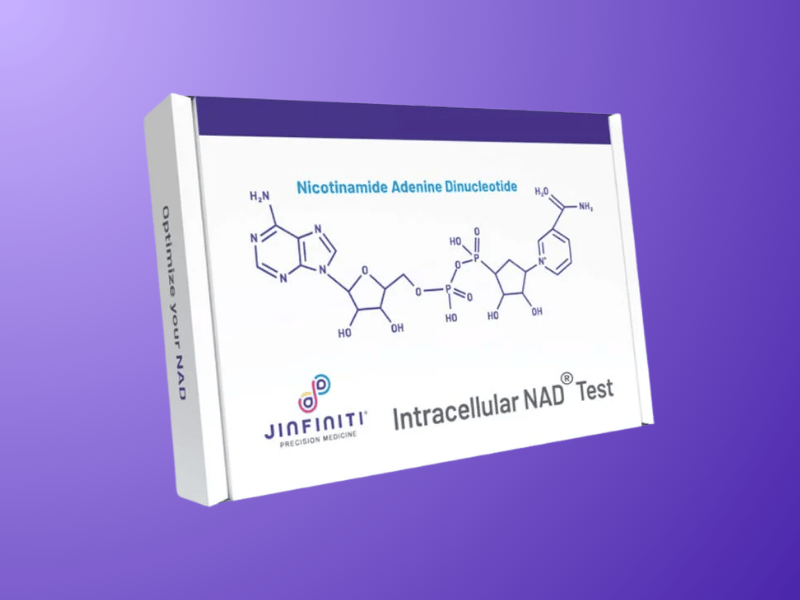
CLIA-Certified NAD Blood Test
Find out if your NAD+ is in the healthy range.
NAD+ Is Not a Peptide
The confusion makes sense. Both NAD+ and peptides come up constantly in anti-aging and longevity conversations, and some clinics sell them side by side. But they are chemically different things that do different jobs.
NAD+ (nicotinamide adenine dinucleotide) is a helper molecule your cells rely on to convert food into usable energy. Think of it as the fuel gauge for your cells. Every cell in your body needs it, all the time, to repair DNA, produce energy, and keep basic functions running. It is not built from amino acids and is not a peptide.
Peptides are different. They’re short chains of amino acids (the same building blocks that make up proteins) that carry targeted instructions. A peptide might tell your pituitary gland to release more growth hormone, or signal skin cells to produce more collagen. The scope is narrow by design. That is both their strength and their limitation.
As Eric Verdin documented in a 2015 review, NAD+ is involved in energy production, DNA repair, and activating proteins called sirtuins (which help regulate how cells age) in virtually every cell in the body. No single peptide does that. Each peptide has one job. NAD+ has hundreds.[1]
NAD+ also declines with age. By midlife, many adults have 40 to 50% less NAD+ than they did in their 20s. That drop tracks closely with the kind of fatigue, brain fog, and slower recovery that most people write off as just getting older. The good news is that NAD+ levels can be tested and raised.
How Peptides Work and Why the Evidence Varies
The word “peptide” just describes a molecular structure: a short chain of amino acids. It does not tell you what the peptide does. Your body makes thousands of them, and they serve completely different purposes. Insulin is a peptide. So are endorphins. The GLP-1 medications used for weight loss, like Ozempic, are also peptides, and they have some of the most rigorous human research of any drug in recent memory.
The peptides that come up in longevity clinics are a different category. Most of them are experimental. Many are sold as research compounds rather than regulated supplements, and their evidence comes almost entirely from animal studies, not human trials. That does not mean they do nothing. It means we do not yet know what they do in people, at what dose, or over what time frame.
The Regulatory Picture
Not all peptides have the same legal status, and that matters when you’re deciding what to put in your body.
| Regulatory Category | Examples |
|---|---|
| FDA-approved medications | Semaglutide (Wegovy), tirzepatide (Zepbound) |
| Prescription-only compounded drugs | Sermorelin, ipamorelin, CJC-1295 |
| FDA-flagged substances (safety concerns raised) | BPC-157, MOTS-c |
| Unregulated research compounds | 5-amino-1MQ |
BPC-157 and MOTS-c have both been flagged by the FDA for potential safety concerns, and both appear on WADA’s list of banned substances (the organization that oversees drug testing in competitive sports). This does not automatically make them dangerous. But it is information that most influencers leave out entirely.
NAD+ vs. Specific Peptides: A Side-by-Side Breakdown
Each peptide targets something different. The right question is not which one wins against NAD, but what problem you are actually trying to solve.
Here is an overview before the detailed comparisons:
| Compound | What It Is | What It Targets | Human Research | Can You Test It? |
|---|---|---|---|---|
| NAD+ | Energy molecule found in all cells | Energy, cell repair, metabolism, cognition | Multiple controlled human trials | Yes, via blood test |
| BPC-157 | Synthetic peptide | Tissue repair, gut healing, injury recovery | Almost none (mainly animal studies) | No |
| Sermorelin | Synthetic peptide | Growth hormone production | Moderate (growth hormone studies) | Yes, via IGF-1 blood test |
| GHK-Cu | Naturally occurring copper peptide | Skin, collagen, wound healing | Moderate (mostly topical studies) | No |
| MOTS-c | Peptide from mitochondrial DNA | Blood sugar regulation, metabolism | Early stage (mainly animal studies) | No |
| 5-amino-1MQ | Small synthetic molecule | Slowing NAD+ breakdown, fat metabolism | Animal studies only | No |
BPC-157 vs. NAD+
BPC-157 is a synthetic peptide originally derived from a protein found in stomach juice. In animal studies, it has shown the ability to speed up healing in tendons, ligaments, and the gut lining, likely by encouraging the growth of new blood vessels and stimulating the cells that build connective tissue.[2]
The problem is that those results are almost entirely from animals. There are a handful of small human case reports, but no proper clinical trials. The FDA does not recognize BPC-157 as a legal supplement, and it cannot be sold as one.[3]
NAD+ does not repair a torn tendon the way BPC-157 is supposed to. What it does is keep the energy supply running in the cells doing the repair work. These are different tools:
- BPC-157 may be worth a conversation with a doctor if you are dealing with a specific injury or chronic gut issues, with realistic expectations about the limited evidence
- NAD+ is the stronger choice for energy, mental clarity, metabolic health, and overall cellular function, with human data to back it up
Sermorelin vs. NAD+
Sermorelin is a synthetic peptide that tells your pituitary gland (a small gland at the base of your brain) to release more growth hormone. Growth hormone naturally declines with age, which can contribute to muscle loss, fat gain, poor sleep, and slower recovery. Sermorelin works by mimicking the body’s own signal for growth hormone release rather than replacing the hormone directly.
The evidence for sermorelin is stronger than for most longevity peptides. Studies on growth hormone restoration in older adults have shown real improvements in muscle mass, body fat, and sleep quality. It requires a prescription and is administered through a compounding pharmacy.[4]
NAD+ and sermorelin work at different levels of the body:
- Sermorelin works in the hormonal system, addressing growth hormone decline
- NAD+ works inside individual cells, maintaining the energy supply that all hormones and repair processes depend on
Someone with both low and declining growth hormone might benefit from addressing both, but in the right order. They are not alternatives to each other.
GHK-Cu vs. NAD+
GHK-Cu is a small copper-containing peptide that naturally exists in your blood, saliva, and urine. Levels drop significantly as you age, and research has found that this decline is connected to things like thinning skin, slower wound healing, and hair loss. GHK-Cu works by activating the cells that produce collagen and elastin (the proteins that keep skin firm and elastic) and by helping regulate genes involved in tissue repair.
One analysis identified more than 4,000 human genes that GHK-Cu appears to influence. Among the peptides in this article, it has some of the more credible evidence, particularly for skin health.[5]
GHK-Cu and NAD+ are not competitors:
- GHK-Cu targets structural repair in the skin and connective tissue
- NAD+ targets energy production and cell maintenance across the entire body
Using both makes sense if both goals are relevant. They address different things.
MOTS-c vs. NAD+
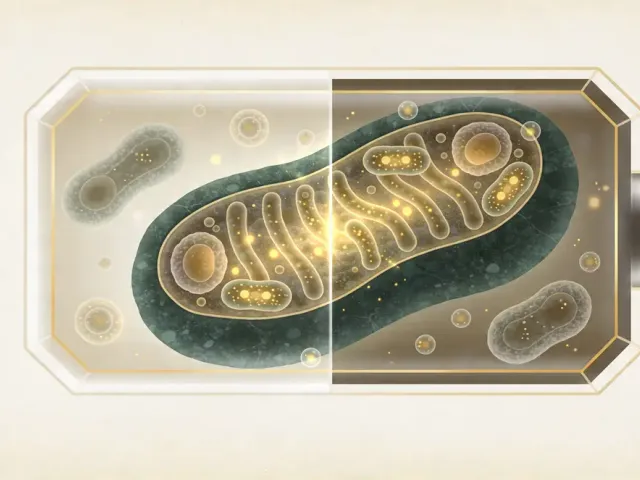
MOTS-c is a small peptide produced inside your mitochondria (the parts of your cells that generate energy). Most peptides are encoded in the DNA inside your cell’s nucleus. MOTS-c is unusual because it comes from the DNA inside the mitochondria itself.
A 2015 study in Cell Metabolism found that it plays a role in regulating blood sugar and metabolism, and that it can mimic some of the metabolic benefits of exercise in animal models.[6]
MOTS-c works inside mitochondria. Mitochondria need NAD+ to function. The two are not alternatives. MOTS-c depends on adequate NAD+ to do its job. Low NAD+ undermines the very system MOTS-c is trying to support.
MOTS-c is also banned by WADA, has no published human clinical trials, and is sold as an unregulated research compound. For anyone interested in metabolic health, building a foundation with NAD+ first is the more sensible and evidence-backed approach.
For more context on how NAD+ compares to other mitochondrial health compounds, see Urolithin A vs. NAD+.
5-Amino-1MQ vs. NAD+
One clarification upfront: 5-amino-1MQ is not a peptide. It is a small synthetic molecule, and it shows up in longevity content because of its relationship to NAD+, not because it belongs in the same category as BPC-157 or sermorelin.
Here is what it does. Your body has an enzyme called NNMT that breaks down a building block your cells use to make NAD+. When NNMT is overactive, your NAD+ gets depleted faster than your body can replenish it. 5-amino-1MQ blocks that enzyme, slowing the breakdown.
In fat cell studies published on PubMed, it raised intracellular NAD+ levels by 1.2 to 1.6 times. Most interest has focused on fat loss and blood sugar regulation.[7]
There are no published human trials. It is sold as a research compound.
The relationship with NAD+ is synergistic:
- 5-amino-1MQ slows how fast NAD+ gets used up
- NAD+ precursors like NMN and NR increase how much NAD+ your body produces
These two approaches work on the same problem from different angles. Direct NAD+ supplementation has considerably more human research behind it.
Peptide Therapy vs. NAD Injections
Someone comparing peptide therapy to NAD+ injections is usually weighing two clinical options: a full peptide protocol from a longevity or regenerative medicine clinic, versus NAD+ delivered by injection (either directly into a vein or under the skin).
Peptide therapy protocols at clinics typically combine several different peptides at once. A common stack might include one peptide to raise growth hormone, another to help with injury recovery, and another to support skin or collagen. Each peptide delivers a targeted message to one specific system. That specificity is the appeal. But it also means that the protocol as a whole has almost never been studied, and the evidence for each individual component varies from moderate to essentially nonexistent.
NAD+ injections deliver one molecule that every cell in your body uses. The effect is broad rather than targeted. When your NAD+ levels are low, cells across multiple systems are running below capacity. An injection addresses that deficit everywhere at once, not just in one tissue or organ.
| Peptide Therapy | NAD+ Injections | |
|---|---|---|
| How it works | Each peptide sends a signal to one specific system | Restores a molecule that all cells need to function |
| Scope | Narrow and targeted per peptide | Broad effect across the whole body |
| Protocol | Multiple compounds, each with a different purpose | One molecule, one mechanism |
| Research quality | Varies widely; many compounds have no human trials | Growing body of human clinical data |
| Can you test outcomes? | Rarely, for most peptides | Yes, via intracellular NAD+ blood test |
| Legal status | Ranges from prescription to FDA-flagged | Administered clinically; not FDA-approved as a drug |
Peptide therapy protocols can run several hundred to over a thousand dollars a month depending on what is included. NAD+ injections carry their own clinic-dependent cost. Before committing to either, knowing your baseline NAD+ level tells you whether NAD+ deficiency is part of what you’re dealing with, which changes how any protocol should be sequenced.
For a closer look at what NAD+ injections involve clinically, see NAD injection side effects and what they mean.
How to Choose What to Address First
There is no single right answer, but starting with your goal, then looking at what the evidence actually supports, gets you further than starting with whichever treatment sounds most interesting.
| Your Goal | Where to Start | What to Know |
|---|---|---|
| Recovering from an injury, tendon damage, or gut issues | BPC-157 (with a doctor) | Human evidence is very limited; manage expectations |
| Improving growth hormone, body composition, or sleep | Sermorelin (prescription required) | Better evidence than most longevity peptides |
| Skin health, collagen production, wound healing | GHK-Cu | Moderate evidence, particularly for topical use |
| Energy, mental clarity, metabolic health | NAD+ | Strongest human evidence; results can be verified with a test |
| Not sure what is causing your symptoms | Test your NAD+ first | Establishes a baseline before spending money on any protocol |
As Dr. Jin-Xiong She, founder of Jinfiniti Precision Medicine, explains: “Most people assume their NAD+ is fine until they test it. The data tells a different story. Intracellular NAD+ is deficient in the majority of adults we see, and that deficiency is affecting energy, recovery, and cellular function in ways they’ve learned to accept as normal aging.”
One thing that separates NAD+ from every peptide on this list: you can measure it. A simple NAD blood test shows your intracellular NAD+ level before you start and again after treatment, so you know whether anything actually changed.
There is no equivalent test for most peptides. You cannot measure whether BPC-157 rebuilt your tendon or whether MOTS-c improved your blood sugar at the cellular level. That difference matters when you are deciding where to put your money and your trust.
Frequently Asked Questions
Is NAD a Peptide?
No. NAD+ is a molecule your cells use to make energy and repair themselves. Peptides are short chains of amino acids that carry targeted signals to specific parts of the body. These are different structures that work in completely different ways. The confusion comes from both being discussed in longevity medicine, not from any real similarity between them.
Can You Take NAD+ and Peptides at the Same Time?
In most cases, yes. NAD+ and the compounds discussed in this article target different systems, so they generally do not interfere with each other. Some of them (MOTS-c, 5-amino-1MQ) actually depend on NAD+ to work properly. That said, any protocol that combines multiple compounds should be supervised by a clinician who can look at your full health picture and flag anything that might interact.
Which Has More Clinical Evidence: NAD+ or Peptide Therapy?
NAD+ has meaningfully more human clinical evidence. Multiple controlled trials in people have looked at NAD+ supplementation, including studies that measured actual intracellular levels before and after. BPC-157 and MOTS-c have almost no human trial data. Sermorelin has more than most, because growth hormone research is more developed. GHK-Cu has moderate evidence, primarily from topical skin studies.
Is 5-Amino-1MQ a Peptide?
No. Despite often being grouped with peptides in longevity content, 5-amino-1MQ is a small synthetic molecule that works by blocking an enzyme that breaks down a building block of NAD+. It is not made of amino acids and does not work the way peptides do.
Do I Need a Prescription for NAD+ Supplementation?
No. NAD+ boosters like NMN and NR are available as supplements without a prescription. NAD+ therapy by injection requires a clinical setting. Most people start with supplements, which have strong clinical trial support and can be taken at home.
Read More