7 Supplements That Naturally Increase GLP-1 Levels
What You Should Know
- GLP-1 is a gut hormone that regulates blood sugar, slows digestion, and signals fullness to the brain — and your body makes it naturally after eating.
- Berberine has the most human trial evidence for supporting GLP-1 activity among natural supplements, though results vary by dose and formulation.
- Curcumin, psyllium, cinnamon, and ginseng each have human RCT evidence supporting their metabolic effects.
- Natural GLP-1 support works best as part of a broader metabolic approach, not as a standalone substitute for prescription therapy or root-cause investigation.
By now, most people have heard of Ozempic. Whether you’re on it, curious about it, or actively trying to avoid it, you’ve probably wondered the same thing: if GLP-1 is a hormone your body already makes, is there a way to produce more of it without a prescription?
The short answer is yes — with meaningful caveats. Certain supplements do appear to influence GLP-1 secretion. But the evidence is uneven, the effects are modest compared to pharmaceutical GLP-1 receptor agonists, and a lot of what gets marketed as a “natural Ozempic” alternative doesn’t hold up to scrutiny.
Here’s what the research actually supports.
Metabolic Support
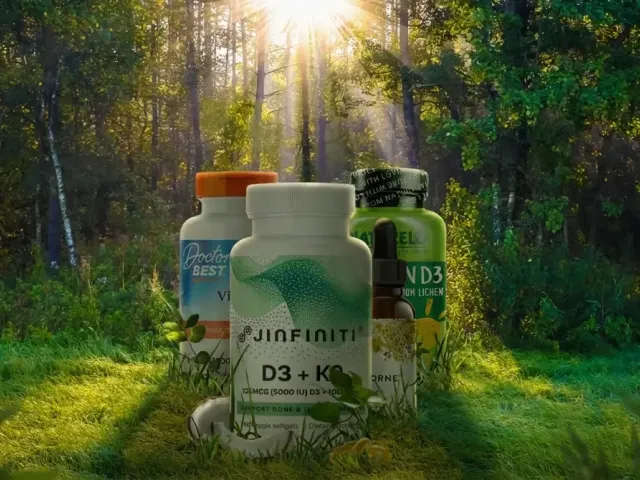
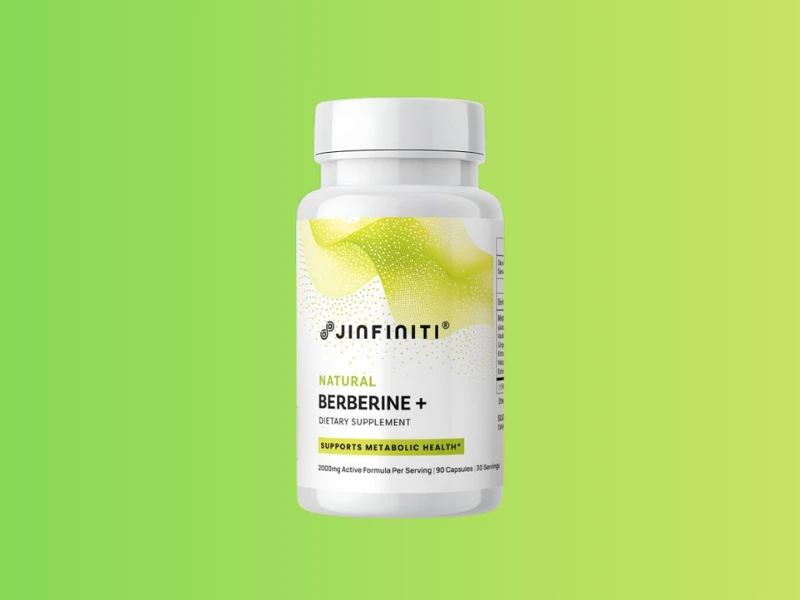
Enhanced absorption Berberine with GLP-activating metabolic blend.
What Is GLP-1 and Why Does It Matter?
GLP-1 — glucagon-like peptide-1 — is a hormone released by specialized cells in the gut lining called L-cells, primarily in response to food. A landmark review in Cell Metabolism found that GLP-1 boosts insulin secretion, inhibits glucagon, slows gastric emptying, and reduces food intake. Together, these effects regulate blood sugar, reduce appetite, and support metabolic balance.
This is exactly why GLP-1 receptor agonist drugs became a cultural phenomenon. The STEP 1 clinical trial, published in the New England Journal of Medicine, found that once-weekly semaglutide produced an average body weight reduction of 14.9% over 68 weeks. That reflects just how powerful this hormonal pathway is when pharmacologically activated.
But the underlying biology isn’t synthetic. GLP-1 is something your gut produces every time you eat. The question is whether targeted supplements can meaningfully support that natural output.
Can Supplements Actually Raise GLP-1?
The honest answer: modestly, and in ways that differ meaningfully from what pharmaceutical GLP-1 agonists do.
Natural approaches — fiber, certain plant compounds, probiotics — act upstream. They stimulate L-cells to secrete more GLP-1, or they improve the gut environment that supports GLP-1 secretion. Prescription drugs directly bind to GLP-1 receptors throughout the body at concentrations far beyond what natural production achieves. The mechanisms overlap, but the magnitudes don’t.
That said, meaningful metabolic support doesn’t require pharmaceutical-level effects. For people managing blood sugar, working on weight, or supporting a GLP-1 medication they’re already on, these supplements can contribute — when chosen based on actual evidence.
“The goal isn’t to replace one pathway with a supplement. It’s to understand what your metabolic system actually needs, measure it, and then act. GLP-1 is one signal in a much larger picture.”
— Dr. Jin-Xiong She, Founder, Jinfiniti Precision Medicine
Which Supplements Have the Strongest Evidence for Raising GLP-1?
Not all candidates are equal. Here’s what the research actually says about the most-studied options.
1. Berberine
Berberine is the most evidence-backed natural compound in this category. It’s the one most often called “nature’s Ozempic” — a comparison that’s both instructive and overstated.
A 2023 review in Archives of Physiology and Biochemistry found that berberine stimulates GLP-1 secretion by modulating gut microbiota and influencing insulin signaling pathways. The mechanism involves AMPK activation — the same cellular energy-sensing pathway metformin uses. It also involves bitter taste receptors expressed on gut enteroendocrine cells. Research in Biochemical Pharmacology showed that berberine triggers GLP-1 release specifically through this bitter taste receptor pathway. This explains why gut-expressed receptors respond to the compound even before it’s absorbed systemically.
The clinical evidence is substantial. A 2022 meta-analysis of 37 RCTs involving 3,048 patients, published in Frontiers in Pharmacology, found that berberine significantly reduced fasting plasma glucose by an average of 0.82 mmol/L and HbA1c by 0.63% — without significantly increasing hypoglycemia risk.
Dose matters. Studies showing meaningful effects generally used 1,000mg or more per day. Absorption is also a genuine issue with standard berberine formulations.
Berberine also pairs naturally with alpha-lipoic acid for metabolic support.
2. Curcumin (Turmeric)
Curcumin has more human evidence than most GLP-1 supplement articles give it credit for.
A study in Biochimie found that curcumin stimulates GLP-1 secretion from intestinal L-cells through an oxidation-dependent mechanism. Importantly, the bioactive metabolites of curcumin — not curcumin itself — are responsible for the effect. This matters practically: the form and stability of curcumin in a supplement determines whether you get the relevant metabolites at all. A 2023 study in Molecular Nutrition & Food Research found that curcumin increased GLP-1 secretion in obese mice by expanding the L-cell population in the gut via the microbiota-bile acid axis.
On the human side, a 12-month RCT in Nutrition Journal — 272 subjects with type 2 diabetes receiving 1,500mg curcumin daily — found that curcumin extract significantly reduced fasting blood glucose, HbA1c, and insulin resistance while improving beta-cell function. GLP-1 wasn’t the primary endpoint, but improved beta-cell function is consistent with incretin pathway involvement.
Worth including in a metabolic stack. The direct GLP-1 evidence in humans is still emerging, but the broader metabolic data is solid.
3. Soluble Fiber (Psyllium)
Soluble fiber — particularly from psyllium husk — may not be glamorous, but its metabolic effects are among the better-supported in the literature.
The mechanism is well-defined. Fermentation of soluble fiber in the colon produces short-chain fatty acids (SCFAs). These SCFAs activate G-protein-coupled receptors on L-cells to trigger GLP-1 release. Research published in Diabetes confirmed that SCFAs stimulate GLP-1 secretion via the receptor FFAR2. Mice lacking this receptor showed impaired glucose tolerance — establishing the chain from fiber to GLP-1 to blood sugar control.
A 2024 meta-analysis in BMC Endocrine Disorders confirmed that psyllium produces measurable improvements in fasting blood sugar, HbA1c, and insulin resistance across randomized controlled trials. Psyllium also slows gastric emptying, which prolongs the GLP-1 response to meals independently of the SCFA pathway.
If you’re building a supplement stack for metabolic support, fiber is often the most underrated piece.
4. Probiotics
Certain probiotic strains have real, mechanistically grounded evidence for supporting GLP-1 secretion — and it’s stronger than the typical “gut health” framing suggests.
Research in the Journal of Biological Chemistry demonstrated that the probiotic VSL#3 promotes GLP-1 release from intestinal L-cells via butyrate, a short-chain fatty acid produced when gut bacteria ferment fiber. This established the gut flora → SCFA → GLP-1 chain in preclinical models. Human data followed: a prospective, double-blind RCT in Diabetes Care found that daily administration of Lactobacillus reuteri SD5865 increased glucose-stimulated GLP-1 release by 76% compared to placebo, with corresponding increases in insulin secretion.
Strain specificity remains the practical caveat. Look for documented strains over generic blends if metabolic support is your intent.
5. Cinnamon
Cinnamon’s GLP-1 evidence is stronger than its reputation suggests. A randomized crossover trial in The American Journal of Clinical Nutrition found that 3g of cinnamon significantly increased the postprandial GLP-1 response in 15 healthy subjects. It also reduced the insulin area under the curve — meaning better glucose handling with less insulin demand. That’s controlled human data, not an animal model.
The effect was dose-dependent: 1g produced no significant change, but 3g did. The mechanism likely involves slowed gastric emptying plus incretin stimulation. Cinnamon appears in Jinfiniti’s Natural Berberine+ formula specifically because of these complementary metabolic effects.
6. Ginseng
Red ginseng has moved from traditional use into rigorous clinical research. A 12-week, double-blind, placebo-controlled trial published in Medicine found that red ginseng extract powder improved glycemic control in prediabetic Korean adults, with effects on blood glucose and insulin response consistent with incretin pathway involvement. This is one of the better-designed human studies in this category — and the prediabetic population makes it directly relevant to the metabolic support use case.
Ginseng appears in Jinfiniti’s Natural Berberine+ formula as part of the MetabolicAid blend for this reason.
7. Resveratrol
Resveratrol — found in red wine, grapes, and certain berries — has a plausible mechanism for supporting GLP-1 and a growing evidence base. A study in Metabolism Open found that resveratrol and probiotic supplementation both increased GLP-1 levels and reduced oxidative stress in the intestines of diabetic rats. The combination produced additive effects. Worth flagging: this was animal data. Human trial evidence for resveratrol’s GLP-1 effects specifically remains limited.
Bioavailability is a known limitation of standard resveratrol supplements, which constrains real-world translation without enhanced delivery forms. Treat it as a supporting compound in a broader metabolic stack rather than a primary intervention.
Is GLP-1 Support Enough on Its Own?
Here’s what often gets lost in the supplement conversation: GLP-1 is one hormonal signal in a complex metabolic system. Supporting it in isolation — without addressing blood sugar stability, cellular energy production, inflammation load, or gut health — leaves most of the leverage on the table.
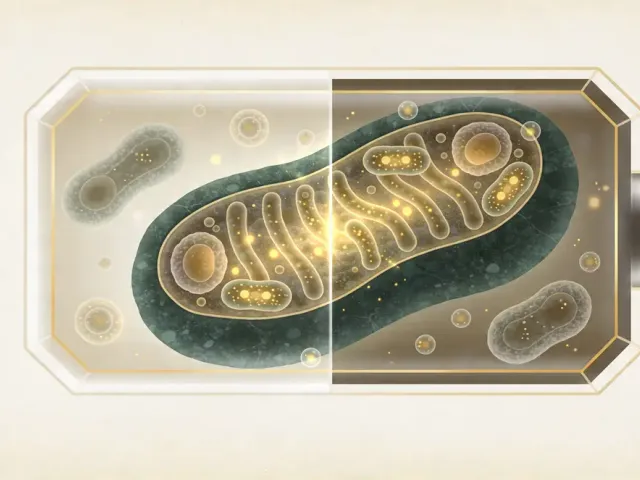
This is especially relevant for people who are on GLP-1 medications and want to support their results, or who have stopped them and are trying to maintain outcomes. The medication addresses GLP-1 receptor activation. It doesn’t address NAD+ levels, mitochondrial function, inflammatory burden, or any of the other cellular factors that shape metabolic health over time.
If you’re curious about how NAD+ and GLP-1 interact metabolically, that overlap is covered in detail. And if you’re experiencing brain fog after eating — a common sign of post-meal blood sugar dysregulation — that article walks through the mechanisms worth investigating.
What Should You Look for in a Berberine Supplement?
If berberine is your primary choice — and based on the evidence, it’s a reasonable one — formulation details matter more than most people realize.
A review in Drug Metabolism Reviews found that berberine undergoes extensive first-pass metabolism after oral administration, resulting in very low plasma exposure. Studies showing meaningful metabolic effects typically used doses at or above 1,000mg daily. Standalone berberine also works through a single pathway. Multi-ingredient formulas that address AMPK activation, absorption, and complementary metabolic mechanisms tend to produce more consistent results.
If you’re comparing options, our berberine supplement guide covers what to look for across the market. Jinfiniti’s Natural Berberine+ contains 1,200mg of high-potency berberine combined with a MetabolicAid blend — including Panax ginseng, cinnamon bark, and astragalus root — with black pepper extract for enhanced absorption. It addresses both the dose and the bioavailability problem simultaneously.
As always: talk with your clinician before starting berberine, particularly if you’re managing blood sugar or taking medications that affect glucose metabolism. The NIH Office of Dietary Supplements maintains current safety profiles for many of these compounds.
Frequently Asked Questions
What is the best supplement to increase GLP-1 naturally?
Berberine has the strongest human evidence for supporting GLP-1 secretion among natural supplements. It works through multiple mechanisms — AMPK activation and bitter taste receptor pathways in the gut — and a meta-analysis of 37 RCTs confirms meaningful glucose-lowering effects. Soluble fiber (psyllium) is a close second, with the SCFA → GLP-1 pathway well-established in the literature. Cinnamon and probiotics also have human RCT support that most articles overlook.
Can berberine replace Ozempic?
No. Pharmaceutical GLP-1 receptor agonists work by directly binding to GLP-1 receptors throughout the body at sustained concentrations far beyond what natural production achieves. The STEP 1 trial showed nearly 15% average weight reduction with semaglutide — effects that natural supplements cannot replicate. Berberine supports GLP-1 secretion upstream and has meaningful metabolic benefits, but the mechanisms and magnitudes are categorically different. It’s a useful complement, not a substitute.
How long does it take for natural GLP-1 supplements to work?
There’s no clean universal answer. Berberine studies showing blood sugar effects typically run 8–12 weeks. The curcumin RCT showing significant HbA1c improvements ran 12 months. Gut microbiome changes from probiotics and fiber take several weeks to develop. The realistic expectation is gradual metabolic support over months, not acute effects within days. Testing relevant biomarkers before and after gives you actual data rather than guesswork.
Are natural GLP-1 boosters safe?
The supplements covered here — berberine, curcumin, psyllium, probiotics, cinnamon — are generally well-tolerated at studied doses. Berberine warrants a clinician conversation if you’re on blood sugar medications, since additive glucose-lowering effects are possible. “Natural” doesn’t mean without consideration, especially at therapeutic doses.
Does fiber really affect GLP-1 levels?
Yes — and the mechanism is one of the most clearly established in this category. When soluble fiber is fermented by gut bacteria, the resulting short-chain fatty acids bind to FFAR2 receptors on intestinal L-cells and directly trigger GLP-1 release. Research in Diabetes confirmed that mice lacking these receptors show both reduced SCFA-triggered GLP-1 secretion and impaired glucose tolerance, demonstrating the pathway’s significance for blood sugar control.
Read More