Brain Fog After Eating: Why Meals Can Leave You Mentally Drained
What You Should Know
- Brain fog after eating is distinct from ordinary post-meal tiredness — it involves slowed thinking, difficulty concentrating, and reduced processing speed, not just drowsiness.
- Blood sugar spikes and crashes are a common trigger, but don’t explain why fog persists in people who already eat low-glycemic, balanced meals.
- Mitochondria require NAD+ to convert glucose into usable brain energy — when NAD+ is depleted, that conversion stalls regardless of what you ate.
- Persistent post-meal fog is worth measuring, not just eating around.
You ate a reasonable meal — maybe some pasta, a sandwich, a normal lunch. Thirty minutes later, you’re at your desk and your thinking has turned to mud. Words are slower, concentration is gone, and a task that should take 10 minutes is taking 45.
Post-meal brain fog — sometimes called postprandial cognitive impairment — is a real and measurable phenomenon, and the causes are more layered than most explanations acknowledge. Blood sugar gets most of the attention. For many people, though, the bottleneck is happening deeper, at the level of cellular energy conversion itself.
CLIA-Certified NAD Blood Test
Find out if your NAD+ is in the healthy range.
What Is Post-Meal Brain Fog, Exactly?
Post-meal fatigue and post-meal brain fog are not the same thing, and conflating them points toward the wrong fixes.
Post-meal fatigue is largely physical: heaviness, drowsiness, the pull toward a couch. That’s normal to a degree, driven by blood flow shifting toward digestion and certain amino acids (like tryptophan from protein) crossing into the brain.
Post-meal brain fog is cognitive. A 2007 study tracking postprandial glycemia and cognitive function in healthy middle-aged adults found measurable declines in processing speed, attention, and working memory after meals — with sharper glucose drops producing worse cognitive outcomes. And a 2025 study in Medicina found that gastrointestinal symptom severity was positively correlated with brain fog scores, with gut health serving as a significant predictor of cognitive symptoms after meals.
If you’re losing your train of thought mid-sentence or feel like you’re thinking through wet cement for an hour or two after eating, that pattern is the one worth understanding.
How Long Does Post-Meal Brain Fog Last?
Typically 1–3 hours, depending on the trigger and your baseline metabolic health. Blood sugar-driven fog tends to peak 30–60 minutes after eating and clears as glucose restabilizes. Inflammation-driven fog — from food sensitivities — can persist several hours longer.
If it’s happening consistently after most meals, that frequency is itself a data point. It means something in the energy conversion process isn’t keeping pace with demand.
Why Does Blood Sugar Only Tell Part of the Story?
Blood sugar is the most frequently cited cause of post-meal brain fog, and the mechanism is real.
When you eat refined carbohydrates — white bread, pasta, processed foods, added sugar — glucose enters the bloodstream rapidly. The pancreas releases insulin to clear it. If that response overshoots, blood glucose drops sharply, and the brain — which consumes roughly 20% of the body’s total energy and runs almost exclusively on glucose — finds itself temporarily underfueled. That’s what produces the fog.
The problem is that this explanation doesn’t account for people who still experience post-meal fog after cleaning up their diet. The issue in those cases isn’t just upstream (what they’re eating) — it’s downstream: what cells can do with the glucose once it arrives.
Insulin Resistance as an Underlying Cause
When insulin resistance is present, cells become less responsive to insulin’s signals. Glucose circulates in the bloodstream but can’t enter cells effectively — including neurons. The fuel is available but can’t be used.
A 2023 review published in Frontiers in Endocrinology showed that insulin resistance combined with chronic low-grade inflammation disrupts brain function in ways consistent with brain fog symptoms. This matters because according to the CDC, roughly 80% of people with prediabetes don’t know they have it. Post-meal cognitive symptoms can be one of the earliest signs.
Why Doesn’t Low-GI Eating Always Fix It?
The standard advice — lower-glycemic meals, protein and fat to slow glucose absorption, less refined sugar — is sound and does reduce fog frequency for people whose primary issue is blood sugar reactivity. For those whose fog persists despite those changes, the bottleneck is usually cellular, not dietary.
What Role Do Your Mitochondria Play?
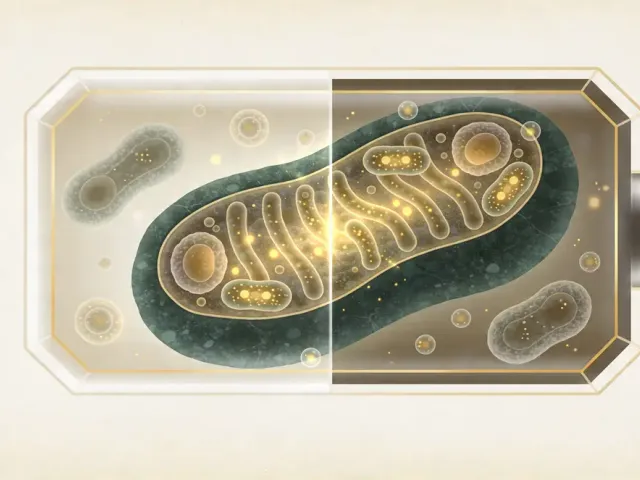
Getting glucose into the bloodstream is only the first step. The brain doesn’t run on glucose directly — it runs on ATP, the molecule cells use to power virtually every function. The conversion from glucose to ATP happens inside mitochondria, through a chain of reactions that requires a specific coenzyme at multiple steps: NAD+.
NAD+ and the Mitochondrial Energy Chain
NAD+ (nicotinamide adenine dinucleotide) is an essential electron carrier in mitochondrial energy production. During oxidative phosphorylation — the process by which mitochondria generate the bulk of cellular ATP — NAD+ accepts and transfers electrons down the respiratory chain. When NAD+ is insufficient, that chain slows, ATP output drops, and the brain is among the first organs to register the deficit.
The implication: even after a reasonable meal, if NAD+ levels are too low to support efficient energy conversion, cognitive performance suffers in the postprandial window. The glucose is present. The machinery to process it is underperforming.
What Is NAD and Why Does It Matter for Your Energy? covers the full mechanism in more detail.
Who NAD+ Depletion Hits Hardest
NAD+ declines naturally with age, with levels typically becoming clinically relevant in the 30s and 40s. Metabolic stress, chronic inflammation, poor sleep, and high caloric load all accelerate the decline — conditions that also, predictably, make post-meal brain fog worse.
A 2022 review in Nutrients found that NAD+ depletion is a consistent factor in cognitive decline across multiple conditions, including diabetes and age-related impairment. A separate preclinical study found that restoring NAD+ levels via NMN in diabetic models preserved mitochondrial oxidative phosphorylation function, prevented hippocampal neuron loss, and maintained cognitive performance. These are animal models — human data on NAD+ and post-meal cognition specifically remains limited — but the mechanism is well-established.
“When people tell me they feel mentally sluggish after eating and dietary changes haven’t resolved it, the first question I ask is what their intracellular NAD+ levels look like,” says Dr. Jin-Xiong She, founder of Jinfiniti Precision Medicine. “Glucose metabolism and NAD+ availability are deeply linked. You can’t separate post-meal cognitive energy from what’s happening in the mitochondria.”
What Else Worsens Post-Meal Brain Fog?
The cellular energy bottleneck rarely operates alone. Several common factors compound it, and identifying which ones are active matters for choosing the right response.
| Cause | Typical Pattern | Who It Affects Most |
|---|---|---|
| Blood sugar crash | Fog 30–60 min after high-carb meals; clears within an hour | Anyone eating refined carbohydrates regularly |
| Insulin resistance | Fog even after moderate meals; worsens over time | Adults 35+, sedentary, metabolically stressed |
| NAD+ depletion | Fog despite clean eating; worsens with age or chronic fatigue | Adults 40+, anyone with known metabolic decline |
| Food sensitivity | Fog 1–4 hours post-meal; tied to specific trigger foods | People with gut symptoms or autoimmune history |
| Cortisol dysregulation | Fog worse on high-stress days, independent of food choice | Chronic stress, poor sleep, shift workers |
Food Sensitivities and the Gut-Brain Axis
For people with gluten sensitivity, certain FODMAPs, or lactose intolerance, eating a trigger food initiates an immune response that sends inflammatory signals through the gut-brain axis to the brain. The cognitive effect can outlast blood sugar-related fog by several hours.
An estimated 6% of the population has non-celiac gluten sensitivity, and celiac disease prevalence has risen five-fold over the past 50 years — though many cases go undiagnosed. Identifying sensitivities requires systematic elimination, not intuition.
Chronic inflammatory burden also amplifies the cellular energy problem. The Best Anti-Inflammatory Supplements for Calming Inflammation covers how inflammatory load affects energy and cognition.
How Does Stress Make Post-Meal Fog Worse?
Cortisol, the body’s primary stress hormone, directly regulates blood sugar. When cortisol levels are chronically elevated or following an abnormal diurnal rhythm, glucose management after meals becomes less stable — spikes are more pronounced, and the subsequent drop is steeper.
If post-meal fog reliably worsens on high-stress days regardless of what you eat, cortisol dysregulation may be a primary contributor rather than a secondary one. How to Test Cortisol Levels: Methods, Timing, and Next Steps explains what testing looks like and how to interpret it.
Meal Size and Blood Flow Redistribution
Large meals trigger a significant increase in blood flow to the gastrointestinal tract to support digestion. This transient redistribution can mildly reduce cerebral perfusion at exactly the moment mitochondria are being asked to ramp up ATP production. The effect is minor on its own but amplifies all other causes.
What Actually Helps With Post-Meal Brain Fog?
The right intervention depends on which cause is active. For most people, at least two or three of these factors are overlapping.
Food and Lifestyle Changes to Try First
These apply broadly and carry low risk. Start here before testing or supplementing.
- Lower the glycemic load of your meals. Replacing refined carbohydrates with whole grains, legumes, and fiber-rich vegetables reduces glucose spikes and smooths the insulin response. This is the most effective starting point for people whose fog correlates with high-carb meals.
- Add protein and fat to every meal. Both slow gastric emptying and moderate glucose absorption. If your meals are primarily carbohydrate-based, this is an easy adjustment with a measurable effect.
- Eat smaller portions. This reduces the blood flow redistribution effect and lessens the simultaneous demand on mitochondrial energy systems.
- Walk for 10 minutes after eating. Postprandial movement significantly improves glucose clearance — a finding that has replicated consistently across studies and requires no equipment.
- Identify food triggers systematically. If fog follows certain foods reliably, eliminate one at a time and reintroduce after two to three weeks. Avoid eliminating broad food groups simultaneously.
Talk with your clinician before making significant dietary changes, especially if you’re managing a metabolic condition or taking medications that affect blood sugar.
What Should You Do If Diet Changes Don’t Fix It?
If fog persists after a few weeks of dietary adjustment, the problem is most likely cellular rather than dietary — and the appropriate response is measurement, not more elimination.
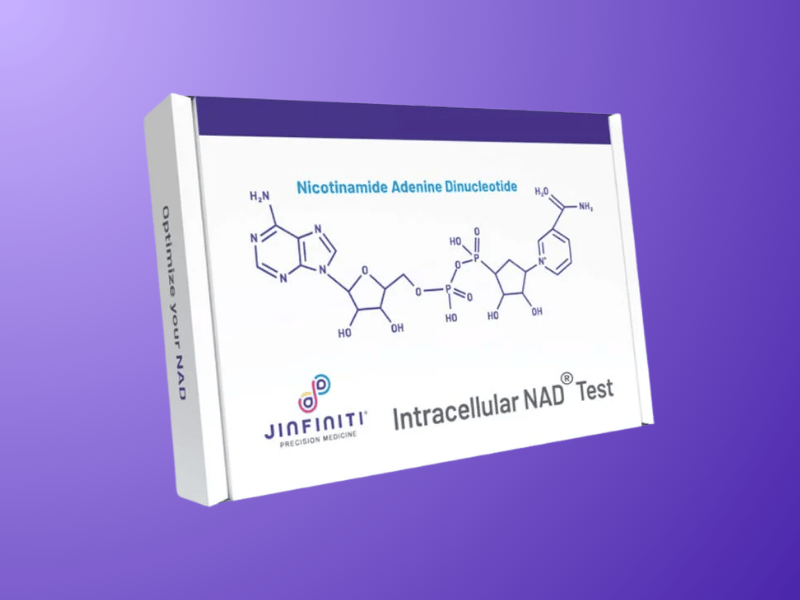
Intracellular NAD+ levels are measurable through an at-home finger-prick test, the Intracellular NAD panel. Optimal levels fall between 40–100 μM; below that range, mitochondrial energy conversion is likely compromised. This is distinct from what standard blood panels measure — conventional tests don’t assess NAD+ or cellular energy status, which is why post-meal fog so often persists despite “normal” results.
Our article on being tired all the time despite normal blood tests covers why conventional testing misses cellular-level dysfunction, and what to look for instead.
NAD+ supplementation isn’t a solution for everyone with post-meal fog. For people whose fog is primarily driven by food sensitivities or cortisol dysregulation, it won’t be the primary lever. But for those with cellular energy bottlenecks — especially adults over 40 with persistent fog despite a clean diet — measuring NAD+ is the most direct way to know whether mitochondrial function is a limiting factor.
Frequently Asked Questions
Why Do I Get Brain Fog After Eating Carbs?
Refined carbohydrates cause rapid glucose spikes followed by an insulin-driven drop that temporarily cuts the brain’s fuel supply. This is the blood sugar mechanism — the most common explanation and often a real contributing factor. It’s compounded when insulin resistance is present, or when NAD+ levels are too low to efficiently convert the glucose that does make it into cells.
How Long Does Brain Fog After Eating Last?
Typically 1–3 hours. Blood sugar-related fog often resolves within an hour as glucose stabilizes. Inflammation-driven fog from food sensitivities can persist for several hours. Fog lasting consistently beyond 2–3 hours suggests something other than a simple glucose response.
Can Brain Fog After Eating Be a Sign of Something Serious?
Persistent post-meal fog can be an early signal of insulin resistance or prediabetes, conditions most people aren’t aware of until they’re further along. It can also indicate significant NAD+ depletion, thyroid dysfunction, or celiac disease. Consistent symptoms after meals — especially if they don’t improve with dietary changes — are worth evaluating with biomarker testing.
Does Intermittent Fasting Help With Post-Meal Brain Fog?
For some people, yes. Fasting periods allow insulin to reset and may improve insulin sensitivity over time, reducing the severity of post-meal crashes. People who report sharper thinking in a fasted state than after eating are often experiencing a glucose-dependency issue rather than a true cellular energy ceiling — a meaningful distinction for choosing the right intervention.
What Foods Cause the Most Post-Meal Brain Fog?
Refined carbohydrates and added sugar are the most consistent triggers, with cognitive effects peaking 30–60 minutes after eating. Gluten (in people with sensitivity), dairy, and high-FODMAP foods are the next most common culprits. The specific pattern — which foods, how soon afterward, and how long it lasts — is useful diagnostic information worth tracking.
Read More