Why You’re Still Tired After 8 Hours of Sleep
You went to bed at a reasonable hour. You didn’t drink. You got a full eight hours. And you still woke up feeling like you hadn’t slept at all.
If that sounds familiar, you’re not doing something wrong. You’re running into something that a lot of health content glosses over: the difference between sleeping and actually recovering. Duration is only half of the equation. What happens inside your cells during those eight hours — whether your body can actually use that time to restore itself — is the half most people never hear about.
That gap between sleeping and recovering is where a lot of persistent morning fatigue lives. And for many people, especially those in their 30s, 40s, and 50s, it has less to do with habits than with cellular energy.
What You Should Know
- Sleep duration and sleep quality are different problems — 8 hours in bed doesn’t guarantee 8 hours of restoration.
- Sleep apnea affects roughly 30 million Americans and is one of the most common causes of non-restorative sleep.
- Alcohol, caffeine, and circadian misalignment can fragment sleep significantly without reducing total hours.
- NAD+ levels decline naturally and are directly linked to the biological clock that governs how restorative your sleep actually is.
CLIA-Certified NAD Test Kit
Waking up tired? Measure the cellular energy your bloodwork misses.
Sleeping Eight Hours and Recovering Are Not the Same Thing
Most adults need somewhere between seven to nine hours of sleep, and that range comes from decades of research on what duration supports normal cognitive and physical function.
But getting enough sleep — hitting that number consistently — doesn’t guarantee you’ll feel rested. What the recommendation doesn’t capture is the quality of what’s happening while you’re there.
Sleep isn’t a single state. It’s a sequence of distinct stages — light sleep, deep slow-wave sleep, and REM — that your brain cycles through roughly every 90 minutes.
Each sleep stage serves a different function:
- Deep sleep is where your body repairs tissue, consolidates memory, and clears metabolic waste from the brain.
- REM is where emotional processing and certain types of learning happen. You need both, in sufficient quantity, to wake up feeling restored.
The catch is that these stages can be disrupted in ways you’d never notice. A brief arousal — lasting seconds — is enough to knock you out of deep sleep and restart the cycle. Do that dozens of times a night and you’ve technically slept eight hours while getting very little of the sleep your body actually needed. That’s a form of sleep deprivation even without a reduction in total hours.
Why Sleep Quality Isn’t Just About Sleep Habits
Sleep hygiene — consistent bedtimes, dark rooms, no screens before bed — matters, but it targets the conditions around sleep rather than the mechanisms inside it. You can do everything right environmentally and still have fragmented, unrestorative sleep if something is interrupting your cycles at a biological level. Restorative sleep isn’t just about when you go to bed — it’s about what your body can actually accomplish once you’re there.
Research from the American Academy of Sleep Medicine puts roughly one in three adults in the category of non-restorative sleep — meaning they wake feeling unrefreshed despite logging adequate hours. And a large study in the JAMA Network found that 27% of adults reported daytime sleepiness despite averaging 7.5 to 8.2 hours of sleep per night.
The problem, in most of those cases, is what’s happening during sleep — not how long it lasts. Magnesium plays a meaningful sleep supporting role here, particularly magnesium glycinate, which supports the transition into deeper sleep stages for some people. But magnesium is a piece of a larger picture.
Common Reasons You’re Still Tired After 8 Hours of Sleep

Once you understand that sleep quality and sleep duration are different problems, the next question is: what’s actually disrupting yours? Several possibilities are worth working through in order, because some are more common — and more correctable — than others.
1. Sleep Apnea
Estimated to affect nearly 30 million Americans, most of whom are undiagnosed. The airway collapses repeatedly during sleep, and the brain wakes the body just long enough to restore breathing — often without any conscious memory of it. Those micro-arousals produce fragmented sleep, dramatically reducing time in deep restorative stages and leaving people exhausted regardless of time in bed. Loud snoring, morning headaches, and waking with a dry mouth are common signals worth discussing with a clinician.
2. Circadian Misalignment
Your internal clock is programmed to a specific sleep window based on your chronotype. If you’re a natural night owl sleeping from 10 PM to 6 AM to meet a work schedule, your body may be spending the first several hours trying to enter sleep it isn’t biologically ready for yet. The sleep you do get is less efficient — not because you slept less, but because the timing was off.
3. Alcohol and Caffeine
Alcohol helps people fall asleep faster but significantly disrupts REM in the second half of the night. Caffeine has a half-life of around five to seven hours, meaning an afternoon coffee is still circulating through your system at midnight — blunting deep sleep even if you fall asleep without difficulty.
4. Chronic Stress and Elevated Cortisol
Mental hypervigilance at night is a real physiological state. Sustained stress keeps the nervous system in a lower-level alert mode that makes deep sleep harder to achieve and easier to interrupt. This is often the hardest category to address because it requires more than a behavioral change.
5. Underlying Medical Conditions
Iron deficiency, hypothyroidism, depression, and anemia can all impair sleep quality and produce daytime fatigue that looks like a sleep problem. Certain sleep disorders — including restless legs syndrome and hypersomnia — can also leave people exhausted despite logging adequate hours, and often go undiagnosed for years. If the basics aren’t explaining your fatigue, a standard panel with your clinician is a sensible next step.
If you’ve worked through this list and still feel tired after a full night in bed — or if you’ve already had these ruled out — there’s a less commonly explored explanation worth understanding.
When the Problem Runs Deeper Than Sleep Itself
Here’s a useful distinction: most of the causes above explain why sleep gets interrupted. But there’s a separate question — one that gets less attention — about whether your cells have the fuel to carry out recovery in the first place, even when sleep isn’t interrupted.
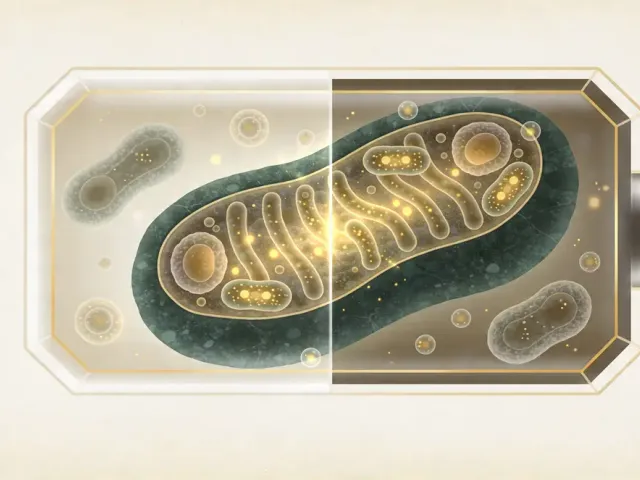
Sleep is metabolically active. During deep sleep, your brain clears metabolic waste, your cells repair DNA, and your mitochondria — the energy-producing structures in every cell — do some of their most important work. That work requires energy. And energy, at the cellular level, requires NAD+.
NAD+ and the Cellular Machinery Behind Sleep Recovery
NAD+ — nicotinamide adenine dinucleotide, a molecule your cells use to convert food into usable energy — doesn’t just power your waking hours. It’s directly woven into the biological mechanism that governs your circadian clock.
Research published in Science showed that intracellular NAD+ levels cycle with a 24-hour rhythm, driven by the circadian clock itself — specifically through CLOCK and BMAL1, two proteins that act as the master timekeepers of your biology. Those clock proteins regulate NAMPT, an enzyme that controls NAD+ production. And SIRT1 — an NAD+-dependent enzyme — feeds back into the clock, helping to maintain its precision.
Translation: NAD+ and your circadian clock are in a continuous feedback loop. Each depends on the other to function properly. When NAD+ levels are adequate, the clock runs with fidelity, sleep cycles are well-organized, and overnight repair happens efficiently. When NAD+ falls, that loop weakens — and with it, the restorative quality of sleep.
The problem is that NAD+ levels decline naturally with age, often beginning in the 30s and dropping by roughly 50% by the 60s. Poor sleep accelerates that decline. Chronic stress does too. The result, for many people in middle age, is a cycle: declining NAD+ disrupts sleep quality, and poor sleep further depletes NAD+.
The Circadian Clock–NAD+ Feedback Loop, Simply Explained
Your body’s master clock — housed in a region of the brain called the suprachiasmatic nucleus — keeps time using a cycle of proteins that switch each other on and off across a 24-hour period. SIRT1, which requires NAD+ to function, is one of the key regulators of that switching. A 2013 study published in Cell found that SIRT1 activity in the brain activates the transcription of BMAL1 and CLOCK — the two foundational proteins of the circadian loop — and that this activity declines with age as NAD+ falls.
In older animals, dampened BMAL1 activity was associated with disrupted activity patterns and a reduced ability to adapt to schedule changes. When NAD+ was restored through supplementation, those rhythms recovered toward younger patterns.
None of this means NAD+ is the only answer to morning fatigue. It’s one mechanism in a complex system. But it’s a mechanism that’s measurable — which matters.
How to Tell If Your Fatigue Is Sleep-Based
Sleep-based fatigue typically responds to improvements in sleep conditions. You fix the sleep apnea, cut the alcohol, get consistent about your sleep schedule — and the morning grogginess lifts over a few weeks.
Cellular fatigue is stickier. The hallmark of NAD+ deficiency is fatigue that persists despite consistently adequate sleep — exhaustion that isn’t explained by what you did the night before. Other signals in this category include:
- Brain fog in the morning that doesn’t fully clear, even after coffee
- Energy that improves slightly through the day but never fully rebounds
- Slower recovery from exercise, stress, or illness than you’d expect
- The sense that you used to bounce back faster — and no longer do
This pattern is consistent across patients who come in having already addressed the obvious factors. The sleep hygiene is fine. The bloodwork is normal. And they’re still dragging. That’s often a sign we need to look one level deeper.
What Standard Bloodwork Won’t Show You
A standard CBC, metabolic panel, or even a thyroid screen won’t tell you your intracellular NAD+ levels. That measurement requires a specific test — one that captures NAD+ inside the cells themselves, rather than in blood serum.
“Most people are surprised to learn that their cellular energy status is entirely invisible on a standard health panel,” says Dr. Jin-Xiong She, founder of Jinfiniti Precision Medicine. “NAD+ deficiency can be significant enough to explain persistent fatigue and sleep disruption while showing up on absolutely nothing that a standard doctor’s visit would catch.”
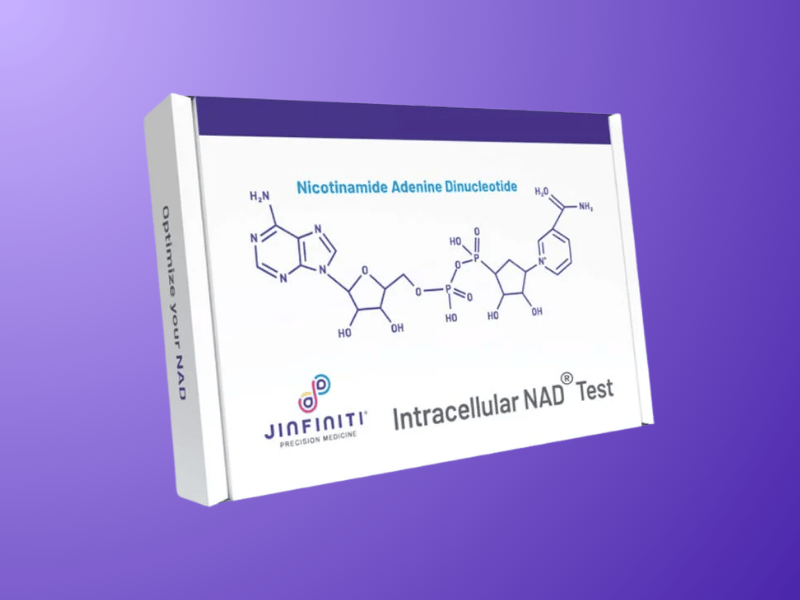
Jinfiniti’s Intracellular NAD® Test — the first consumer test of its kind — measures NAD+ inside cells using an at-home finger-prick collection, processed in a CLIA-certified lab with results in about a week. It’s the only way to know whether NAD+ deficiency is a factor in your fatigue, rather than assuming it either is or isn’t.
🧬 MORE SLEEP INSIGHTS
- Creatine does more than build muscle. Here’s what the research shows about creatine and sleep deprivation and how it may support cognitive function when rest falls short.
- Not sure which form of magnesium to take? The answer matters for sleep depth. Here’s a breakdown of magnesium glycinate vs. citrate for sleep support.
- NAD+ is only part of how your cells produce energy. Learn about the best mitochondrial supplements and how they work together.
What Can Actually Help You Sleep Better?
Addressing morning fatigue effectively means working through causes in order, not adding interventions at random.
If you want to sleep better and haven’t been consistent about the basics, that’s the first place to look:
- A fixed sleep and wake time, including weekends — your body’s clock responds to consistency
- A cool, dark, quiet sleep environment
- No alcohol within two to three hours of bed
- Caffeine cutoff by early afternoon (1–2 PM is a reasonable default for most people)
- Magnesium glycinate in the evening, which some people find meaningfully supports sleep depth
If you suspect sleep apnea — particularly if you snore, wake with headaches, or feel unrefreshed regardless of hours — talk to your clinician about a sleep study before doing much else. It’s one of the most common and most underdiagnosed causes of non-restorative sleep.
Beyond Sleep Hygiene: When Better Sleep Habits Aren’t Enough
Once the basics are solid and fatigue persists, measuring your intracellular NAD+ levels is the logical next step. If levels come back below the optimal range (40–100 μM), targeted supplementation is worth considering.
In a clinical trial of 26 adults aged 35–65, participants taking Jinfiniti’s Vitality↑® NAD+ Booster reached optimal NAD+ levels in 85% of cases within four weeks, with an average doubling of intracellular NAD+. Many reported improvements in energy and sleep quality within that window.
A few things to keep in mind:
- Improvements in energy are often noticeable within two to four weeks; sleep quality tends to follow on a similar timeline
- If NAD+ levels are low but energy doesn’t fully rebound after optimization, hormones, thyroid function, or sleep architecture are usually the next place to investigate
- Talk with your clinician before starting any new supplement protocol, particularly if you’re managing chronic conditions or taking medications
For more on how to test your NAD+ levels and what the results actually mean, and on how NAD+ supplementation affects sleep quality specifically, both of those are worth reading alongside this one.
Eight hours of sleep should mean something. When it doesn’t, that’s not a personality problem or a discipline failure — it’s a signal worth investigating with some precision.
Better sleep starts with addressing the obvious: sleep apnea, circadian timing, alcohol. But for a meaningful percentage of people who’ve already handled the obvious, the root is cellular. It can be measured. And when it’s addressed in the right order, the results tend to be real.
Frequently Asked Questions
Why am I still tired after 8 hours of sleep?
Usually it’s a sleep quality issue — sleep apnea, circadian misalignment, alcohol, or chronic stress — rather than insufficient hours. If those have been addressed and fatigue persists, declining intracellular NAD+ levels are worth investigating.
Is it normal to wake up tired after a full night of sleep?
It’s common, but it shouldn’t be accepted as normal. It typically signals that something is disrupting sleep quality, or that cellular energy production is insufficient to support overnight repair.
Why am I so tired in the morning even when I sleep enough?
Morning-specific fatigue often points to disrupted deep sleep — the phase where most physical restoration happens — which can be fragmented by sleep apnea, alcohol, or circadian misalignment without you realizing it.
Can oversleeping make you more tired?
Yes — regularly sleeping over nine hours can disrupt circadian timing and leave you feeling groggier than a shorter, better-timed sleep. If long sleep still leaves you exhausted, the more likely explanation is a quality issue, not a quantity one.
Why do I dream too much and wake up tired?
High dream activity usually means more time in REM at the expense of deep slow-wave sleep, often driven by alcohol, stress, or sleep fragmentation. It’s worth raising alongside other fatigue symptoms when speaking to a clinician.
Could low NAD+ levels be why I wake up tired?
Possibly, particularly if you’re over 35 and other explanations have been ruled out. NAD+ is integral to the circadian clock machinery that governs sleep quality, and testing intracellular levels is the only way to know whether it’s a factor.
How do I know if my fatigue is cellular rather than sleep-related?
Sleep-based fatigue typically improves once you address the obvious disruptors. Cellular fatigue is stickier — it persists despite consistently adequate sleep and doesn’t respond to behavioral changes alone.
Read More