Is Ergothioneine the Next Big Longevity Nutrient?
Written on . Posted in Supplements, Aging, Cardiovascular Diseases, Cellular Health, Muscle Loss and Weakness, NAD+, Neurological Diseases.
Until recently, ergothioneine was an obscure amino acid derivative hiding in plain sight in everyday foods. Now some leading scientists are calling it a potential “longevity vitamin” because of how specifically the body absorbs and distributes it.
New data suggest it doesn’t just act as an antioxidant — it may also elevate NAD+ in a unique way, linking it directly to multiple aging mechanisms.
What You Should Know
- Your body can’t make ergothioneine and must get it entirely through diet, mostly from mushrooms
- A dedicated transporter protein specifically moves ergothioneine to tissues most vulnerable to age-related damage
- Recent studies show it boosts NAD+ levels, improves exercise endurance, and protects cognitive function
- Studies link higher blood levels to 21% lower cardiovascular mortality and 50% reduced cognitive decline risk
What is Ergothioneine?
Ergothioneine (L-ergothioneine or EGT) is a naturally occurring, sulfur-containing amino acid derivative. It was originally extracted in 1909 from the fungus Claviceps purpurea. Unlike common vitamins, humans and animals cannot produce this compound internally.
Ergothioneine can only be taken in through food. It is produced naturally by specific fungi (particularly mushrooms), bacteria, and actinomycetes.
What makes ergothioneine different from thousands of other compounds you eat is that your body developed a specialized transporter protein for it called OCTN1 (also SLC22A4). This gives reason to believe it has evolutionary importance.
Why Scientists Consider It a “Longevity Vitamin”
Ergothioneine was proposed as a “longevity vitamin” by Dr. Bruce Ames, one of the most frequently cited biochemists in history, in his seminal 2018 paper on the Triage Theory[1]. His theory asserts that even adequate intake of known vitamins may not be sufficient for extending healthspan if certain compounds like ergothioneine are deficient.
Ergothioneine meets several criteria for longevity vitamin classification:
- Diet-derived (cannot be synthesized by humans)
- Has a dedicated evolutionary conserved transporter
- Accumulates in stress-vulnerable tissues
- Is inversely associated with markers of aging and disease risk
Dr. Linda May-Zhang, Vice President of Science & Innovation at Blue California, explained: “Inside our cells, ergothioneine helps neutralize harmful free radicals, bind to excess metals like iron and copper and activate Nrf2, the body’s master switch for antioxidant defenses. It also helps protect mitochondria, the ‘powerhouses’ of our cells, to keep energy and function strong.”
Food Sources of Ergothioneine

Mushrooms are by far the richest dietary source of ergothioneine. Concentrations vary significantly among species, with some varieties containing extraordinarily high amounts.
The highest ergothioneine content is found in:
- Golden Oyster mushrooms: 2,010 μg/g (dry weight)
- Porcini mushrooms: 1,812 μg/g
- King Oyster mushrooms: 1,720 μg/g
- Maitake mushrooms: 1,130 μg/g
- Shiitake mushrooms: High levels (values vary by growing conditions)
Unlike plants and animals, mushrooms can naturally produce ergothioneine themselves. This makes them the most efficient dietary delivery system for obtaining meaningful amounts.
A single serving of oyster mushrooms can provide more ergothioneine than most people consume in an entire week from other sources.
Other Dietary Sources Worth Noting
While concentrations are considerably lower than in mushrooms, ergothioneine can also be found in:
Animal products:
- Liver (especially kidney and red blood cells contain moderate amounts)
- These levels reflect the ergothioneine animals consumed from their own diets
Legumes:
- Black beans, kidney beans, and red beans (especially when grown with mycorrhizal fungi)
- A 2023 study found black beans showed up to 72 times more ergothioneine when grown with beneficial soil fungi[2]
Grains and fermented foods:
- Oat bran and wheat (particularly when cultivated with specific soil fungi)
- Tempeh, natto, miso, kimchi, and sauerkraut contain small amounts
- Spirulina contains relatively high amounts compared to other non-fungal sources
Typical dietary intake ranges from 5-20 mg per day depending on mushroom consumption patterns.
How Ergothioneine Works at the Cellular Level
In 2005 Dr. Dirk Gründemann, then at the University of Cologne, made a key discovery regarding the ergothioneine transporter OCTN1. He showed that OCTN1 transports ergothioneine with an efficiency that was nearly 100-fold higher than for previously thought possible substrates[3].
The transporter binds ergothioneine with high affinity (Km of 21 μM). A 1 μM concentration of ergothioneine increased OCTN1 expression by as much as 600-fold in terms of its capacity to increase cellular uptake.
This degree of specificity is quite extraordinary. Gründemann suggested naming OCTN1 the “ergothioneine transporter” (ETT) to reflect its predominant biological role.
It Concentrates Where You Need It Most
Once absorbed, ergothioneine is transported via OCTN1 and concentrates in tissues most vulnerable to oxidative stress:
- Erythrocytes (red blood cells)
- Eye lens
- Liver and kidney
- Brain (particularly mitochondria and nucleus)
- Skin
- Bone marrow and semen
This preferential accumulation in stress-vulnerable tissues strongly supports its protective role. Your cells can maintain millimolar concentrations of ergothioneine in certain tissues, suggesting they actively work to retain it.
The compound persists in tissues with relatively long residence times. After supplementation stops, whole blood levels remain elevated for weeks.
The Breakthrough NAD+ Discovery
One of the most significant recent discoveries came from 2024-2025 research that identified ergothioneine’s direct impact on mitochondrial function and NAD+ levels.
Research published in Cell Metabolism found that ergothioneine accumulates in muscle mitochondria during exercise training and binds to the enzyme 3-mercaptopyruvate sulfurtransferase (MPST)[4].
This binding activates MPST, which produces hydrogen sulfide (H₂S) and pyruvate, boosting mitochondrial respiration. The mechanism works as follows:
- Ergothioneine binds to MPST with high affinity (Kd of 3.2 μM)
- MPST activation increases H₂S production
- H₂S causes persulfidation of glycerol-3-phosphate dehydrogenase (GPDH)
- Persulfidated GPDH shows enhanced activity for NAD+ regeneration
- Elevated NAD+ supports muscle vascularization and stem cell health
In middle-aged rats, three weeks of ergothioneine supplementation (20 mg/kg) nearly doubled exercise endurance and running distance while increasing muscle mass and NAD+ levels[5].
“The antioxidant potential of ergothioneine itself is not strong because it doesn’t readily gain or lose electrons,” researchers noted. “Instead, ergothioneine functions as an indirect antioxidant by activating cellular defense pathways.”
This challenges earlier assumptions about how ergothioneine provides its benefits.
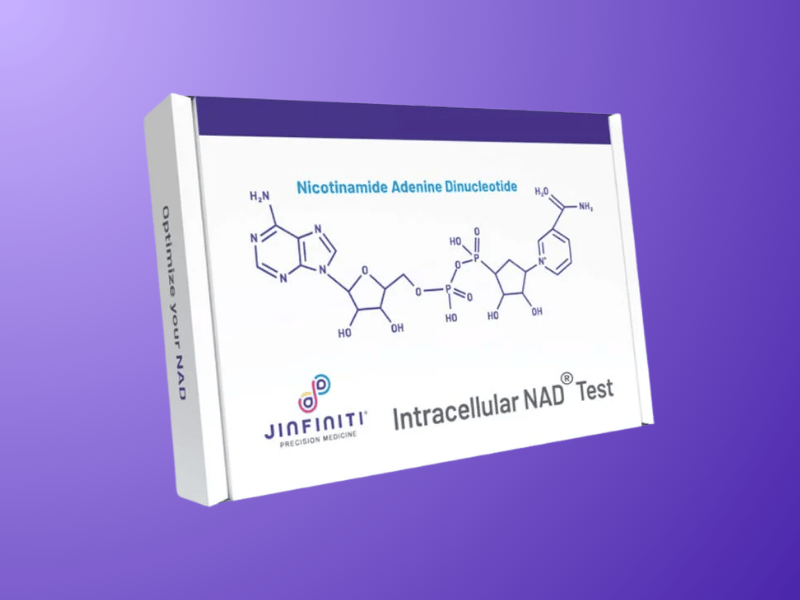
CLIA-Certified NAD Test Kit
Test your NAD+ levels from home.
8 Research-Backed Benefits of Ergothioneine
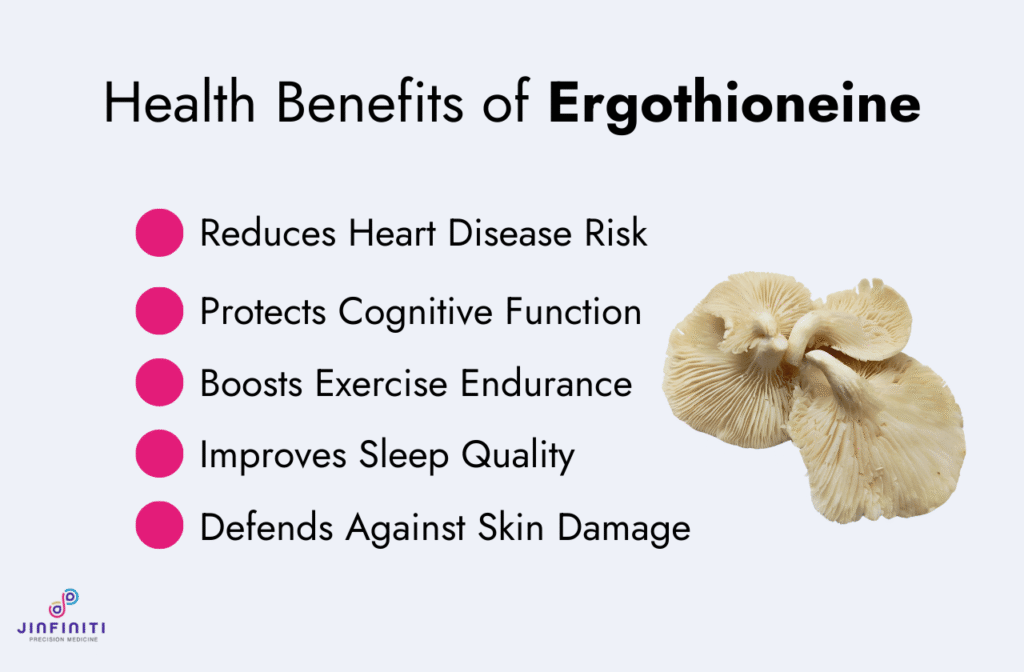
1. Reduces Heart Disease and Mortality Risk
One of the most compelling human studies followed 3,236 participants in Sweden for a median of 21.4 years[6]. The results were striking:
- 21% lower cardiovascular mortality per 1 standard deviation increase in levels of ergothioneine in the blood
- 14% lower overall mortality
- 15% lower coronary disease risk
Ergothioneine emerged as “the metabolite most strongly connected to a healthy food pattern” among all measured compounds in the study. This long-term data suggests that maintaining adequate ergothioneine levels may be one of the most important dietary factors for heart health.
Blood ergothioneine levels above 462 ng/mL (90th percentile) were associated with the lowest disease risk.
2. Protects Cognitive Function as You Age
Multiple studies have linked ergothioneine levels to brain health. A Singapore-based study of 470 elderly subjects attending memory clinics found that low plasma ergothioneine predicted subsequent cognitive and functional decline[7].
Those with higher ergothioneine levels showed:
- 50% reduced risk of cognitive decline over five years
- Better memory performance across all age groups
- Brain activity patterns more similar to younger individuals on cognitive tasks
Professor Barry Halliwell, one of the world’s leading experts on antioxidants at the National University of Singapore, explained the mechanism: “Ergothioneine gets into mitochondria and preserves mitochondrial function in disease. It promotes neurogenesis and enhances the action of neurotrophic factors.”
An ongoing clinical trial (NCT03641404) testing ergothioneine supplementation (25 mg three times weekly) in elderly individuals with mild cognitive impairment shows promising preliminary results:
- Significant increases in blood ergothioneine levels
- Improvements in global cognitive performance scores
- Trending improvements across multiple cognitive assessments
- Reduction in neurofilament light protein (a marker of neuronal injury)
Recent 2025 research revealed that ergothioneine significantly increases brain-derived neurotrophic factor (BDNF) expression in nerve cells[8]. BDNF plays a key role in learning, memory, and overall brain function.
3. Doubles Exercise Endurance and Muscle Performance
The 2024 research on ergothioneine’s effects on NAD+ revealed remarkable improvements in physical performance[5]. In middle-aged rats, ergothioneine supplementation led to:
- Nearly 100% increase in exercise exhaustion time
- Nearly doubled running distance
- Increased muscle mass and vascularization
- Elevated muscle stem cell populations
A 2022 study found that ergothioneine supplementation improved aerobic performance in athletes without impairing muscle recovery signaling[9]. The mechanism involves Nrf2 pathway activation, which provides antioxidant benefits without blocking the beneficial stress signals needed for training adaptation.
This makes ergothioneine particularly interesting for anyone concerned about maintaining muscle function and physical performance during aging.
4. Improves Sleep Quality
A 2025 Japanese study found that 20 mg/day ergothioneine for four weeks significantly improved sleep quality in healthy adults[10]. The effective dose was lower than previously tested, suggesting benefits at moderate supplementation levels.
Sleep quality declines with age for many people, affecting everything from cognitive function to metabolic health. If ergothioneine can support better sleep through its effects on cellular energy and stress response, that adds another dimension to its longevity potential.
The mechanisms behind this sleep improvement likely involve ergothioneine’s effects on mitochondrial function, oxidative stress reduction, and cellular energy metabolism.
5. Activates Your Body’s Master Antioxidant Switch
The antioxidant ergothioneine activates the Nrf2 (nuclear factor erythroid 2-related factor 2) pathway, often called the master regulator of cellular antioxidant defenses[11]. This activation leads to:
- Increased expression of antioxidant genes including heme oxygenase-1 (HO-1)
- Enhanced glutathione production and regeneration
- Protection of cellular components from oxidative damage
- Activation at concentrations as low as 125-500 nM
Research has found ergothioneine induces Nrf2 activity at physiologically relevant doses. In other words, the amounts you can get from diet or reasonable supplementation are enough to trigger these protective pathways.
The Nrf2 pathway also interacts with sirtuins, a family of NAD+-dependent enzymes that regulate aging. Studies show that ergothioneineupregulates SIRT1 and SIRT6 expression, most notably in endothelial cells exposed to high glucose conditions[12].
6. Slows Telomere Shortening
A 2022 study examined ergothioneine’s effects on telomeres (the protective caps on chromosome ends that shorten with age)[13]. Using cultured human fibroblasts under oxidative stress conditions:
- Ergothioneine treatment resulted in significantly longer median telomere length after 8 weeks
- The percentage of short telomeres was significantly reduced across all tested concentrations
- The rate of telomere shortening was decreased
- Effects were dose-dependent at physiologically relevant concentrations
Dr. Priscilla Samuel, who led the research, stated: “Our results suggest that ergothioneine as part of a healthy diet could potentially mitigate the negative effects of oxidative stress and support healthy aging by helping to preserve telomere length and reduce the rate of shortening.”
Telomere length is considered one of the key biomarkers of biological age, making this finding pretty significant for longevity research.
7. Protects Skin from Aging and UV Damage
Ergothioneine builds up in skin cells through the OCTN-1 transporter and helps counter several key drivers of skin aging:
- Sun damage: Absorbs UV light and helps prevent UV-triggered DNA damage[14]
- Collagen loss: Inhibits MMP-1, the enzyme that breaks down collagen[15]
- Uneven tone: Clinical data show reduced wrinkles, age spots, and hyperpigmentation by suppressing excess melanin[15]
- Loss of firmness: Protects collagen and elastin and supports better hydration and elasticity[15]
- Inflammation: Its anti-inflammatory properties help calm acne, rosacea, psoriasis, and atopic dermatitis, and in some models it outperforms coenzyme Q10 and vitamin C against free radicals[15]
These benefits have been observed with both topical ergothioneine and oral supplementation.
8. Defends Against Frailty
Research on frailty markers revealed that ergothioneine levels decline significantly in frail elderly individuals. A 2020 study of blood metabolites found[16]:
- Ergothioneine was among 22 key markers distinguishing frailty from non-frailty
- The compound is “neuroprotective” and its decline correlates with cognitive impairment and reduced mobility
- Oxidative stress from diminished antioxidant levels is “a key vulnerability for the pathogenesis of frailty”
Animal studies support these findings. Ergothioneine-rich mushroom extract prevented locomotor decline during aging in mice, improving physical performance while reducing inflammation markers in the hippocampus[17].
Frailty represents one of the most significant threats to quality of life in older adults and is closely tied to the hallmarks of aging. Interventions that can preserve physical and cognitive function simultaneously are especially valuable.
🧬 MORE LONGEVITY
- These NAD+ boosting foods support cellular energy from multiple angles.
- Learn the optimal NAD+ dosage and frequency for your goals.
- Discover other longevity supplements with clinical evidence behind them.
How Much Ergothioneine Should You Take?
No official recommended daily allowance exists yet, but research and expert consensus provide useful guidance. Typical dietary intake ranges from 5-20 mg per day depending on mushroom consumption.
To maximize dietary ergothioneine:
- Eat oyster, porcini, shiitake, or maitake mushrooms several times per week
- A 100-gram serving (about 3.5 ounces) of oyster mushrooms can provide 20-40 mg
- Include legumes grown with beneficial soil fungi
- Consider fermented foods as minor supplementary sources
Combined intake analysis suggests 1.7 mg/kg body weight per day for adults (about 120 mg for a 70 kg person) and 3.7 mg/kg for children from food sources would be well within the safety range.
Supplementation Ranges That Research Supports
Clinical trials have tested 5-30 mg daily with excellent results. The European Food Safety Authority (EFSA) considers up to 30 mg/day for adults safe (20 mg/day for children).
Research-supported ergothioneine supplement dosing protocols:
- Cognitive support: 25 mg three times weekly (Singapore study)
- Sleep quality: 20 mg daily
- General longevity support: 5-25 mg daily
- Athletic performance: 5-10 mg daily
Supplement manufacturers typically recommend 5-25 mg daily. For specific health goals like cognitive support or anti-aging benefits, higher doses (25 mg) may be beneficial.
A pharmacokinetic study in 45 healthy adults found[18]:
- Ergothioneine is rapidly absorbed after oral supplementation
- It’s largely retained by the body with minimal urinary excretion (<4%)
- Blood levels increased substantially with 5 or 25 mg daily for 7 days
- After supplementation stopped, whole blood levels continued to increase for 3 weeks and remained elevated at 4 weeks
This indicates efficient cellular uptake and retention. Your body actively accumulates and preserves ergothioneine once you provide it.
Safety and Potential Interactions
Ergothioneine has an excellent safety record with no significant adverse effects reported in clinical studies. The European Food Safety Authority (EFSA) established a no-observed-adverse-effect level (NOAEL) of 800 mg/kg body weight per day based on rat studies.
This provides substantial margins of safety:
- 470-fold margin for adults
- 216-fold margin for children
The FDA has granted ergothioneine Generally Recognized as Safe (GRAS) status. No adverse effects were observed in a 7-day human study using 25 mg daily, and high-dose animal studies showed no toxic effects.
Theoretical medication interactions to be aware of:
- Blood-thinning medications (warfarin, aspirin): May enhance effects by influencing platelet function
- Immunosuppressive drugs: Could oppose desired effects through immune support
- Antidiabetic medications: May improve insulin sensitivity, potentially requiring dose adjustment
Beneficial combinations include:
- Other antioxidants (vitamin C, E, glutathione): May work synergistically
- Metformin: One study showed ergothioneine combined with metformin effectively reduced kidney damage in diabetic rats
- NAD+ precursors: May provide complementary benefits through different pathways
The research on ergothioneine and NAD+ suggests these compounds work through distinct but complementary mechanisms. While NAD+ precursors like NMN or NR directly increase NAD+ synthesis, ergothioneine enhances NAD+ regeneration via enzyme persulfidation.
Always consult your healthcare provider before starting new supplements, especially if you take prescription medications or have existing health conditions.
Bottom Line
Ergothioneine represents a diet-derived compound with a dedicated cellular transport system that may be necessary for optimal aging and disease prevention. Strong epidemiological data links blood levels to reduced mortality and disease risk, while compelling mechanistic research explains its cellular actions, including the breakthrough discovery about NAD+ enhancement.
Emerging clinical evidence shows benefits for cognition, physical performance, sleep, and skin health with an excellent safety profile. For individuals interested in optimizing healthspan, increasing ergothioneine intake through mushroom consumption or supplementation (5-25 mg daily) appears to be a safe, evidence-based strategy.
Dr. Jin-Xiong She, founder of Jinfiniti Precision Medicine, notes: “Compounds like ergothioneine that support NAD+ metabolism while activating protective cellular responses may offer more comprehensive benefits than single-pathway interventions.”
Testing your current levels gives you a baseline to work from. The AgingSOS® Advanced Panel measures multiple longevity biomarkers to help you understand where you stand.
Referenced Sources
- Ames BN. Prolonging healthy aging: Longevity vitamins and proteins. Proceedings of the National Academy of Sciences; 2018. https://doi.org/10.1073/pnas.1809045115
- Carrara JE, Lehotay SJ, Lightfield AR, Sun D, Richie JP, Smith AH, et al. Linking soil health to human health: Arbuscular mycorrhizae play a key role in plant uptake of the antioxidant ergothioneine from soils. Wiley; 2023. https://doi.org/10.1002/ppp3.10365
- Gründemann D, Harlfinger S, Golz S, Geerts A, Lazar A, Berkels R, et al. Discovery of the ergothioneine transporter. Proceedings of the National Academy of Sciences; 2005. https://doi.org/10.1073/pnas.0408624102
- Sprenger HG, Mittenbühler MJ, Sun Y, Van Vranken JG, Schindler S, Jayaraj A, et al. Ergothioneine controls mitochondrial function and exercise performance via direct activation of MPST. Elsevier BV; 2025. https://doi.org/10.1016/j.cmet.2025.01.024
- Petrovic D, Slade L, Paikopoulos Y, D’Andrea D, Savic N, Stancic A, et al. Ergothioneine improves healthspan of aged animals by enhancing cGPDH activity through CSE-dependent persulfidation. Elsevier BV; 2025. https://doi.org/10.1016/j.cmet.2024.12.008
- Smith E, Ottosson F, Hellstrand S, Ericson U, Orho-Melander M, Fernandez C, et al. Ergothioneine is associated with reduced mortality and decreased risk of cardiovascular disease. BMJ; 2019. https://doi.org/10.1136/heartjnl-2019-315485
- Wu LY, Kan CN, Cheah IK, Chong JR, Xu X, Vrooman H, et al. Low Plasma Ergothioneine Predicts Cognitive and Functional Decline in an Elderly Cohort Attending Memory Clinics. MDPI AG; 2022. https://doi.org/10.3390/antiox11091717
- Shi C, Asaba S, Nakamura S, Matsui T. Ergothioneine Stimulates Ca2+-Mediated Brain-Derived Neurotrophic Factor Expression in NE-4C Nerve Cells. American Chemical Society (ACS); 2025. https://doi.org/10.1021/acsomega.4c09920
- Fovet T, Guilhot C, Delobel P, Chopard A, Py G, Brioche T. Ergothioneine Improves Aerobic Performance Without Any Negative Effect on Early Muscle Recovery Signaling in Response to Acute Exercise. Frontiers Media SA; 2022. https://doi.org/10.3389/fphys.2022.834597
- Okumura H, Araragi Y, Nishioka K, Yamashita R, Suzuki T, Watanabe H, et al. Estimation and Validation of an Effective Ergothioneine Dose for Improved Sleep Quality Using Physiologically Based Pharmacokinetic Model. Wiley; 2025. https://doi.org/10.1002/fsn3.70382
- Hseu YC, Vudhya Gowrisankar Y, Chen XZ, Yang YC, Yang HL. The Antiaging Activity of Ergothioneine in UVA-Irradiated Human Dermal Fibroblasts via the Inhibition of the AP-1 Pathway and the Activation of Nrf2-Mediated Antioxidant Genes. Wiley; 2020. https://doi.org/10.1155/2020/2576823
- D’Onofrio N, Servillo L, Giovane A, Casale R, Vitiello M, Marfella R, et al. Ergothioneine oxidation in the protection against high-glucose induced endothelial senescence: Involvement of SIRT1 and SIRT6. Elsevier BV; 2016. https://doi.org/10.1016/j.freeradbiomed.2016.04.013
- Samuel P, Tsapekos M, de Pedro N, Liu AG, Casey Lippmeier J, Chen S. Ergothioneine Mitigates Telomere Shortening under Oxidative Stress Conditions. Informa UK Limited; 2020. https://doi.org/10.1080/19390211.2020.1854919
- Hanayama M, Mori K, Ishimoto T, Kato Y, Kawai J. Effects of an ergothioneine-rich Pleurotus sp. on skin moisturizing functions and facial conditions: a randomized, double-blind, placebo-controlled trial. Frontiers Media SA; 2024. https://doi.org/10.3389/fmed.2024.1396783
- Liu HM, Tang W, Wang XY, Jiang JJ, Zhang W, Wang W. Safe and Effective Antioxidant: The Biological Mechanism and Potential Pathways of Ergothioneine in the Skin. MDPI AG; 2023. https://doi.org/10.3390/molecules28041648
- Kameda M, Teruya T, Yanagida M, Kondoh H. Frailty markers comprise blood metabolites involved in antioxidation, cognition, and mobility. Proceedings of the National Academy of Sciences; 2020. https://doi.org/10.1073/pnas.1920795117
- Roda E, De Luca F, Ratto D, Priori EC, Savino E, Bottone MG, et al. Cognitive Healthy Aging in Mice: Boosting Memory by an Ergothioneine-Rich Hericium erinaceus Primordium Extract. MDPI AG; 2023. https://doi.org/10.3390/biology12020196
- Tian X, Thorne JL, Moore JB. Ergothioneine: an underrecognised dietary micronutrient required for healthy ageing? Cambridge University Press (CUP); 2023. https://doi.org/10.1017/s0007114522003592
Read More