NAD+ vs Glutathione: What’s the Difference?
NAD+ and glutathione are two different molecules that both decrease as we age and have unique but supporting roles in cellular health.
NAD+ is your cellular fuel system. It helps produce ATP (the energy currency your cells run on) and activates repair proteins called sirtuins. Glutathione is your detox system. It binds to toxins and neutralizes free radicals before they damage your DNA.
Here’s what confuses people: they sound similar, they both decrease as you age, and they’re both promoted for longevity. But they work through entirely different mechanisms.
What You Should Know
- NAD+ functions as a coenzyme for energy metabolism and activates repair proteins called sirtuins
- Glutathione neutralizes free radicals and supports detoxification as your primary antioxidant defense
- From ages 20 to 60, NAD+ drops by 50%, while glutathione synthesis decreases by 45%
- The molecules support one another through NADPH production pathways that regenerate active glutathione.
What Are NAD+ and Glutathione?
NAD+ and glutathione are molecules that perform distinct functions in your cells — one generates energy while the other protects against oxidative damage.
NAD+: Your Cellular Energy Molecule
NAD+ (nicotinamide adenine dinucleotide) is a coenzyme that carries electrons during chemical reactions that produce ATP (adenosine triphosphate), your cells’ energy currency[1].
Your mitochondria — the cellular “powerhouses” — contain two to four times more NAD+ than other cellular areas. This concentration makes sense because energy production happens primarily in mitochondria[2].
NAD+ also fuels proteins called sirtuins that regulate DNA repair, inflammation, and metabolism. When NAD+ levels drop, these repair mechanisms slow down.
Glutathione: The Master Antioxidant
Glutathione is a tripeptide made from three amino acids: glutamic acid, cysteine, and glycine.
Your body produces glutathione naturally in your cells. It directly neutralizes reactive oxygen species (free radicals) before they damage DNA, proteins, and cell membranes. This protection prevents oxidative stress that accelerates aging.
Dr. John P. Richie Jr., professor at Penn State University College of Medicine, describes glutathione as “one of the most important molecules in all of biology.”
Glutathione also acts as a cofactor for detoxification enzymes that eliminate toxins and heavy metals[3].
How Do NAD+ and Glutathione Decline with Age?
Both molecules decrease as you age through different mechanisms and at different rates, with NAD+ dropping by approximately 50% and glutathione synthesis slowing by 45% between ages 20 and 60.
NAD+ Levels Drop by Half After 50
Muscle tissue experiences 15-65% NAD+ reductions with aging, while brain NAD+ decreases 10-25% between young adulthood and old age[4].
Studies on whole blood show approximately 40-50% reduction by age 50. Some research on plasma found steeper declines of 80-90% between young adults and elderly individuals, though that represents an extreme finding.
Dr. Shin-Ichiro Imai, NAD+ researcher at Washington University, notes that “NAD+ levels decline during the aging process and may be an Achilles’ heel, causing defects in nuclear and mitochondrial functions and resulting in many age-associated pathologies.”[5]
Glutathione Synthesis Slows Down Over Time
Glutathione doesn’t just decrease — your body loses the ability to make it efficiently.
A 2011 study found that elderly subjects had 44.9% slower glutathione synthesis rates compared to young adults[6]. The ratio of reduced glutathione (GSH) to its oxidized form (GSSG) dropped from 18.9 in young adults to 7.4 in elderly subjects. A lower ratio indicates more oxidative stress.
Liver glutathione declines 35-50% in aged animals[7], while brain glutathione drops by at least 50% over adult aging[8]. Red blood cells also show lower glutathione concentrations in older individuals.
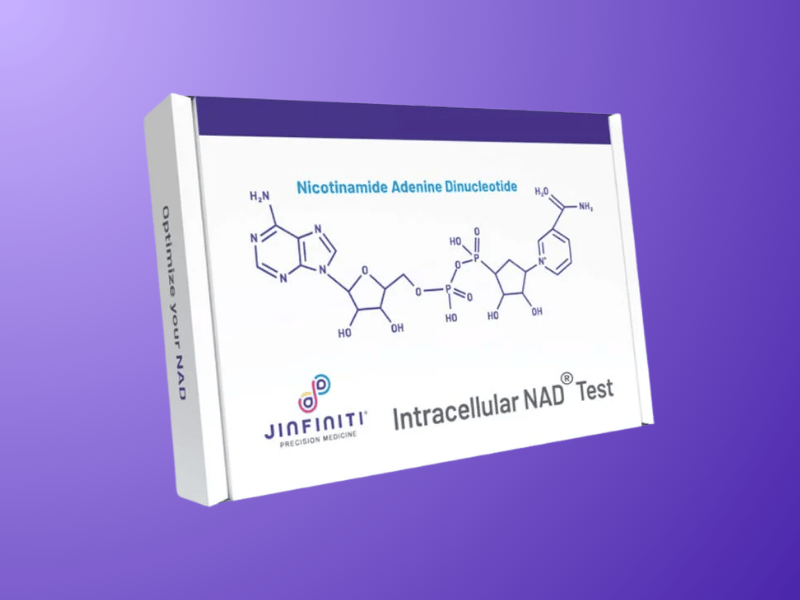
CLIA-Certified NAD Test Kit
Test your NAD+ levels from home.
Do NAD+ and Glutathione Work Together?
NAD+ and glutathione support each other through interconnected biochemical pathways, with NAD+ metabolism producing NADPH that regenerates active glutathione from its oxidized form.
The NADPH Connection
The most direct link involves NADPH (the phosphorylated version of NAD+). An enzyme called glutathione reductase needs NADPH to regenerate active glutathione from its oxidized form.
The reaction works like this: NADPH + GSSG → NADP+ + 2GSH.
Without enough NADPH, your cells can’t keep glutathione in its active, protective form.
NAD+ metabolism supports NADPH production through several pathways. The pentose phosphate pathway generates NADPH from glucose, while mitochondrial enzymes produce NADPH to support glutathione recycling inside mitochondria[9].
The mitochondrial sirtuin SIRT3, which requires NAD+ to function, activates enzymes that generate NADPH for glutathione regeneration[10]. This creates a direct pathway from NAD+ availability to antioxidant defense.
Why You Need Both for Cellular Protection
The synergy operates bidirectionally—glutathione protects NAD+ by reducing oxidative DNA damage, which limits activation of PARP enzymes that are major consumers of NAD+.
When cells experience oxidative stress, PARPs consume NAD+ for DNA repair[11]. By preventing this damage, glutathione preserves cellular NAD+ pools.
A 2023 clinical trial demonstrated this relationship: high-dose nicotinamide riboside supplementation at 3,000 mg daily increased blood NAD+ levels five-fold while maintaining stable glutathione and GSSG levels[12]. This suggests that robust NAD+ repletion helps preserve antioxidant capacity.
Dr. Jin-Xiong She, founder of Jinfiniti Precision Medicine, explains: “When we optimize NAD+ levels through targeted supplementation, we’re not just supporting energy production but also enabling the entire antioxidant defense system to function properly. This is why our Vitality NAD+ Booster includes multiple pathway activators rather than just a single precursor.”
What Are the Big Differences Between NAD+ and Glutathione?
NAD+ and glutathione have different cellular functions, locations, mechanisms of action, and therapeutic applications, though both decline substantially with age.
| Characteristic | NAD+ | Glutathione |
|---|---|---|
| Function | Energy metabolism, DNA repair, cellular signaling | Antioxidant defense, detoxification |
| Main Cellular Location | Highest in mitochondria; also in nucleus and cytoplasm | Throughout cytosol, mitochondria, nucleus, endoplasmic reticulum |
| Mechanism of Action | Cofactor for redox reactions; substrate for sirtuins, PARPs, and CD38 | Direct free radical scavenging; cofactor for detox enzymes; protein modification |
| Age-Related Decline | 40-50% by age 50 | 35-50% in tissues with reduced synthesis capacity |
| What Depletes Them | Chronic inflammation, DNA damage, high PARP activity, poor diet | Oxidative stress, toxin exposure, poor nutrition, alcohol consumption |
| Therapeutic Focus | Energy enhancement, cognitive function, metabolic health, anti-aging | Detoxification, immune support, skin health, liver protection |
Should You Supplement NAD+ or Glutathione?
NAD+ precursor supplements (NR or NMN) and direct glutathione supplementation both increase their respective molecules, with clinical trials showing 40-90% increases in blood levels at appropriate doses.
NAD+ Precursor Supplements
You can’t effectively take NAD+ directly because it breaks down in your digestive system. Supplements use precursors like nicotinamide riboside (NR) or nicotinamide mononucleotide (NMN) that your cells convert into NAD+.
Clinical trials show NR at doses up to 2,000 mg daily is safe for up to 20 weeks and consistently increases blood NAD+ by 40-90%[13]. NMN supplementation at 250-1,000 mg daily increased whole blood NAD+ by 75% to six-fold in various trials[13].
Dr. Charles Brenner, who discovered nicotinamide riboside as an NAD+ precursor, conducted a 2016 clinical trial showing oral NR supplementation safely increased human blood NAD+ levels up to 2.7-fold[14].
Test your levels first for the most effective approach. Jinfiniti’s Intracellular NAD+ Test measures your actual cellular NAD+ so you know exactly where you stand and can track progress. This proves especially helpful if you’re experiencing chronic fatigue or other symptoms of NAD+ deficiency.
Glutathione Supplements
Oral glutathione absorption is now supported by recent evidence when using appropriate formulations.
Dr. Richie’s 2015 randomized controlled trial found that daily oral glutathione supplementation at 250 mg or 1,000 mg for six months increased GSH levels by 30-35% in red blood cells, plasma, and immune cells[15]. Natural killer cell function increased more than two-fold in the high-dose group.
Liposomal glutathione shows 40% increases in whole blood GSH after two weeks[16]. Sublingual administration achieves superior absorption — over 80% direct entry versus less than 10% via oral routes[17].
You can also support glutathione production with precursors. GlyNAC (glycine plus N-acetylcysteine) supplementation improved multiple aging markers in elderly adults including oxidative stress and mitochondrial function[18].
What About NAD+ and Glutathione IV Therapies?
Both NAD+ and glutathione are available as intravenous (IV) treatments at wellness clinics, delivering molecules directly into your bloodstream and bypassing digestion.
NAD IV therapy coststypically range from $400-1,500 per session. Most protocols recommend weekly sessions for 4-8 weeks, then monthly maintenance. That adds up to $2,000-6,000+ annually.
Glutathione IV therapy usually runs $75-300 per session. Like NAD+, it requires regular visits to maintain levels.
Research on IV versus oral NAD+ precursors shows similar blood NAD+ increases. Some studies show NAD IV benefits for energy and cognitive function, but clinical trials comparing IV to oral NAD+ precursors found comparable results.
Glutathione IV therapy shows better absorption than standard oral capsules. The molecule breaks down in stomach acid, which is why liposomal or sublingual forms work better for oral supplementation.
The practical reality: IV therapy requires clinic visits, carries needle stick risks, and costs far more than oral options. Jinfiniti’s Vitality NAD+ Booster costs under $150 monthly and clinical trials show 85% of users reach optimal NAD+ levels in four weeks.
Test your NAD+ levels first, try oral supplementation, then retest to confirm it’s working. Save IV therapy for situations where oral options haven’t moved the needle.
🧬 RELATED INSIGHTS
- Learn the difference between NMN and NAD+ and which works better for your goals.
- Discover how to increase glutathione levels naturally through diet and supplementation.
- Read about oxidative stress biomarkers that reveal how well your antioxidant systems work.
Can You Take NAD+ and Glutathione Together?
Taking NAD+ and glutathione together creates a reinforcing cycle of cellular protection because NAD+ metabolism generates NADPH for glutathione recycling while glutathione protects against oxidative damage that depletes NAD+.
Since NAD+ metabolism generates NADPH for glutathione recycling, and glutathione protects against oxidative damage that depletes NAD+, maintaining both creates a reinforcing cycle of cellular protection.
Dr. She recommends practical strategies: consume sulfur-rich foods (cruciferous vegetables, onions, garlic), supplement with quality whey protein containing glutathione precursors, engage in regular exercise that boosts both NAD+ and glutathione, and consider targeted supplementation based on your individual needs.
Jinfiniti’s multi-pathway approach addresses this synergy directly. The Vitality NAD+ supplement combines NMN, niacinamide, creatine, and D-ribose to support NAD+ through multiple pathways while enabling your antioxidant systems to function optimally.
The scientific consensus recognizes that both NAD+ and glutathione decline are core aspects of the aging process. Understanding their distinct yet complementary roles gives you a roadmap for evidence-based interventions to support healthspan and longevity. The question isn’t NAD+ versus glutathione — it’s how to support both for maximum cellular resilience.
Referenced Sources
- Ames BN. Prolonging healthy aging: Longevity vitamins and proteins. Proceedings of the National Academy of Sciences; 2018. https://doi.org/10.1073/pnas.1809045115
- Carrara JE, Lehotay SJ, Lightfield AR, Sun D, Richie JP, Smith AH, et al. Linking soil health to human health: Arbuscular mycorrhizae play a key role in plant uptake of the antioxidant ergothioneine from soils. Wiley; 2023. https://doi.org/10.1002/ppp3.10365
- Gründemann D, Harlfinger S, Golz S, Geerts A, Lazar A, Berkels R, et al. Discovery of the ergothioneine transporter. Proceedings of the National Academy of Sciences; 2005. https://doi.org/10.1073/pnas.0408624102
- Sprenger HG, Mittenbühler MJ, Sun Y, Van Vranken JG, Schindler S, Jayaraj A, et al. Ergothioneine controls mitochondrial function and exercise performance via direct activation of MPST. Elsevier BV; 2025. https://doi.org/10.1016/j.cmet.2025.01.024
- Petrovic D, Slade L, Paikopoulos Y, D’Andrea D, Savic N, Stancic A, et al. Ergothioneine improves healthspan of aged animals by enhancing cGPDH activity through CSE-dependent persulfidation. Elsevier BV; 2025. https://doi.org/10.1016/j.cmet.2024.12.008
- Smith E, Ottosson F, Hellstrand S, Ericson U, Orho-Melander M, Fernandez C, et al. Ergothioneine is associated with reduced mortality and decreased risk of cardiovascular disease. BMJ; 2019. https://doi.org/10.1136/heartjnl-2019-315485
- Wu LY, Kan CN, Cheah IK, Chong JR, Xu X, Vrooman H, et al. Low Plasma Ergothioneine Predicts Cognitive and Functional Decline in an Elderly Cohort Attending Memory Clinics. MDPI AG; 2022. https://doi.org/10.3390/antiox11091717
- Shi C, Asaba S, Nakamura S, Matsui T. Ergothioneine Stimulates Ca2+-Mediated Brain-Derived Neurotrophic Factor Expression in NE-4C Nerve Cells. American Chemical Society (ACS); 2025. https://doi.org/10.1021/acsomega.4c09920
- Fovet T, Guilhot C, Delobel P, Chopard A, Py G, Brioche T. Ergothioneine Improves Aerobic Performance Without Any Negative Effect on Early Muscle Recovery Signaling in Response to Acute Exercise. Frontiers Media SA; 2022. https://doi.org/10.3389/fphys.2022.834597
- Okumura H, Araragi Y, Nishioka K, Yamashita R, Suzuki T, Watanabe H, et al. Estimation and Validation of an Effective Ergothioneine Dose for Improved Sleep Quality Using Physiologically Based Pharmacokinetic Model. Wiley; 2025. https://doi.org/10.1002/fsn3.70382
- Hseu YC, Vudhya Gowrisankar Y, Chen XZ, Yang YC, Yang HL. The Antiaging Activity of Ergothioneine in UVA-Irradiated Human Dermal Fibroblasts via the Inhibition of the AP-1 Pathway and the Activation of Nrf2-Mediated Antioxidant Genes. Wiley; 2020. https://doi.org/10.1155/2020/2576823
- D’Onofrio N, Servillo L, Giovane A, Casale R, Vitiello M, Marfella R, et al. Ergothioneine oxidation in the protection against high-glucose induced endothelial senescence: Involvement of SIRT1 and SIRT6. Elsevier BV; 2016. https://doi.org/10.1016/j.freeradbiomed.2016.04.013
- Samuel P, Tsapekos M, de Pedro N, Liu AG, Casey Lippmeier J, Chen S. Ergothioneine Mitigates Telomere Shortening under Oxidative Stress Conditions. Informa UK Limited; 2020. https://doi.org/10.1080/19390211.2020.1854919
- Hanayama M, Mori K, Ishimoto T, Kato Y, Kawai J. Effects of an ergothioneine-rich Pleurotus sp. on skin moisturizing functions and facial conditions: a randomized, double-blind, placebo-controlled trial. Frontiers Media SA; 2024. https://doi.org/10.3389/fmed.2024.1396783
- Liu HM, Tang W, Wang XY, Jiang JJ, Zhang W, Wang W. Safe and Effective Antioxidant: The Biological Mechanism and Potential Pathways of Ergothioneine in the Skin. MDPI AG; 2023. https://doi.org/10.3390/molecules28041648
- Kameda M, Teruya T, Yanagida M, Kondoh H. Frailty markers comprise blood metabolites involved in antioxidation, cognition, and mobility. Proceedings of the National Academy of Sciences; 2020. https://doi.org/10.1073/pnas.1920795117
- Roda E, De Luca F, Ratto D, Priori EC, Savino E, Bottone MG, et al. Cognitive Healthy Aging in Mice: Boosting Memory by an Ergothioneine-Rich Hericium erinaceus Primordium Extract. MDPI AG; 2023. https://doi.org/10.3390/biology12020196
- Tian X, Thorne JL, Moore JB. Ergothioneine: an underrecognised dietary micronutrient required for healthy ageing? Cambridge University Press (CUP); 2023. https://doi.org/10.1017/s0007114522003592
Read More