5 Promising Benefits of NAD Supplements (and Side Effects)
NAD supplements are often sold with claims of reversing aging, boosting energy, and improving mental clarity. Many of these sound too good to be true.
Your body’s NAD+ levels drop byabout 50% between ages 40 and 60[1]. NAD is a coenzyme that metabolizes food, repairs damaged DNA, and converts nutrients into energy for your cells. Supplements like NMN or NR (nicotinamide mononucleotide or nicotinamide riboside) can boost your levels if you’re deficient.
Benefits are most apparent in people over 40 or with metabolic issues. A baseline test can also help you determine if you need them or not.
What You Should Know
- NAD supplements show the most benefits in people with existing deficiencies or metabolic dysfunction
- Studies suggest benefits for blood sugar control, heart health, brain function, physical performance, and DNA repair
- Side effects are generally mild (nausea, bloating, headache) and resolve quickly in most people
- Testing your NAD+ levels before and after supplementing removes all guesswork about effectiveness
What Are NAD Supplements?
NAD supplements supply precursors, or building blocks, that your cells can use to make NAD+ (nicotinamide adenine dinucleotide).
NAD+ is the energy source for all the cells in your body. You can think of it as a rechargeable battery used for hundreds of different processes within your cells.
Your cells use NAD+ for two main jobs:
- Turning food into ATP, the fuel your cells run on
- Powering sirtuins and PARPs, enzymes that play key roles in DNA repair, stress response, and aging
An enzyme called CD38, which literally nibbles away at NAD+, increases as you age. This, along with a decline in your body’s own production of NAD+, results in a drop in levels as we get older[2].
The two most studied forms of NAD supplements are NMN and NR, which take slightly different paths to boosting your levels.
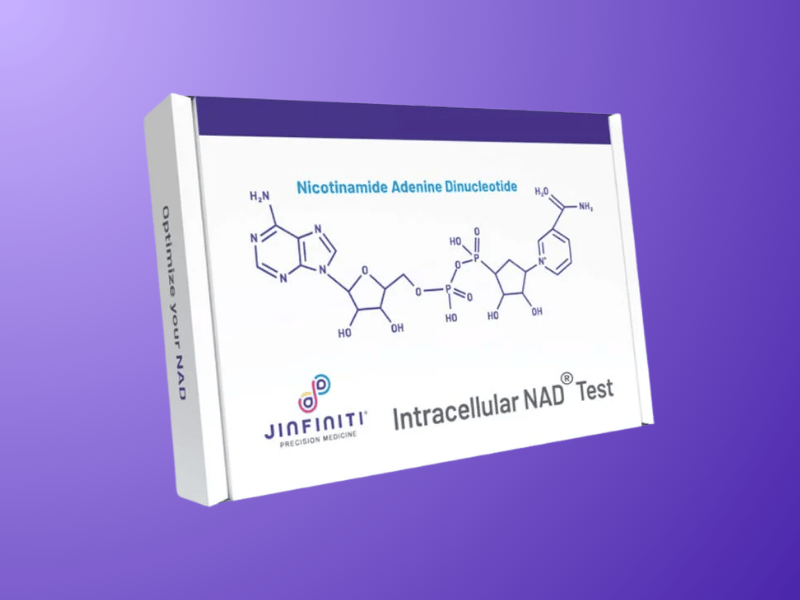
CLIA-Certified NAD Test Kit
Test your NAD+ levels from home.
5 Promising Benefits of NAD Supplements
Supplementing with NAD precursors can help replenish your body’s NAD levels when they’re low. Here are the 5 benefits of NAD supplements that have the most clinical support.

1. Better Blood Sugar Control and Insulin Sensitivity
Your muscle cells need to react to insulin so they can remove sugar from your blood. If this process stops working well, prediabetes or type 2 diabetes can develop.
A 2021 clinical trial published in Science gave 250 mg of NMN daily to postmenopausal women with prediabetes for 10 weeks. Using a standard test for insulin sensitivity, researchers saw clear improvements in how muscle responded to insulin[3].
Muscle samples showed that the cells were better at processing insulin signals. Genes related to muscle function were more active. These changes happened even though there was no weight loss.
NAD+ helps by turning on a protein called SIRT1, which helps cells respond to insulin and burn fat in the mitochondria. When NAD+ levels fall, this process weakens, and fat can build up in muscles and the liver, making it harder for insulin to work.
One thing to note: Studies in healthy young adults show little effect on blood sugar. The benefits seem to be greater when you already have problems with your metabolism[4].
2. Improved Heart Health and Blood Pressure
Stiff arteries and high blood pressure increase the risk of heart disease. When blood vessels become less flexible, the heart has to work harder to move blood through the body.
In a pilot study with 1000 mg of NR daily for 6 weeks, middle-aged adults with high blood pressure saw their systolic readings drop by an average of 8 mmHg[5]. This drop is similar to what some people get from blood pressure medications or major diet changes like sodium restriction.
The reason is that NR activates SIRT1 in the cells lining blood vessels. SIRT1 increases nitric oxide, which helps blood vessels relax. More NAD+ means more SIRT1 activity and better blood flow.
Other research shows NAD+ can lower inflammation markers like IL-6 and TNF-alpha in people with heart failure. These markers are linked to stiffer arteries[6].
3. Brain Function and Memory Support
Your brain uses about 20% of your body’s energy, even though it only makes up 2% of your body weight. Brain cells need a steady supply of energy and are easily affected by damage from oxidation.
NAD+ helps protect brain cells in several ways. SIRT1 and SIRT3, proteins activated by NAD+, help reduce oxidative stress and affect how certain brain proteins are processed, which may lower the risk of forming plaques linked to Alzheimer’s disease.
In animal studies on Alzheimer’s, NR supplements lowered brain inflammation, DNA damage, and tau tangles, while helping restore memory[7]. Early human studies show similar effects, with better cognitive scores and improved brain metabolism on scans[8].
A Phase I trial in people with Parkinson’s gave 3000 mg of NR daily for 4 weeks. Brain scans showed higher NAD+ levels in the brain[9].
NAD+ also regulates your sleep-wake cycle by helping control circadian rhythm. Studies in older adults found that NMN improved sleep quality and reduced daytime sleepiness, especially when taken in the afternoon[10].
4. Increased Energy and Physical Performance
As people get older, they often lose muscle, which can lead to weakness. NAD+ precursors may help the body in ways similar to exercise.
NAD+ turns on SIRT1, which then activates PGC-1alpha. This process helps the body make more mitochondria. It also changes muscle fibers from fast-twitch (which tire quickly) to slow-twitch (which last longer and burn fat better).
One study with amateur runners found that taking up to 1200 mg of NMN daily helped increase VO2 max (aerobic fitness) and the point where breathing becomes hard during exercise[11]. This happened because muscles used oxygen more efficiently, not because the heart pumped more.
For older adults, NMN supplements helped them walk faster and stand up from a chair more easily[10]. These improvements are linked to autonomy and longevity with age.
“We’ve seen that restoring NAD+ can help people feel more energetic,” says Dr. Jin-Xiong She, founder of Jinfiniti Precision Medicine. “How well it works depends on your baseline levels and overall health.”
5. DNA Repair and Cellular Protection
Your DNA is constantly getting damaged by things like sunlight, stress, and normal cell activity. To fix this damage, your cells need NAD+ to power their repair systems[12].
One of these repair helpers, PARP1, acts quickly when DNA strands break. It uses NAD+ to send out signals for other repair tools to come help. If your cells run low on NAD+, PARP1 can’t work properly, and DNA errors start to build up.
Research shows that when cells have less NAD+, they’re more easily harmed by radiation, but restoring NAD+ helps them fix DNA damage faster. This helps protect cells from stressors like environmental stress and medical scans[13].
Another enzyme, SIRT6, also relies on NAD+ to keep chromosome ends (telomeres) stable and to help fix serious DNA breaks. Sirtuins like SIRT6 also help keep the cell’s genetic instructions in order, which helps cells stay healthy as you get older.
Supplement Safety Note
Supplements receive minimal FDA regulation and may not be safe for everyone. They can interact with medications and other supplements. Always consult your doctor before starting any supplement regimen.
NAD Supplement Side Effects: What to Watch For
Clinical trials have shown that NAD supplements generally have a strong safety record. Most side effects tend to be mild and depend on the dose you take.
The most common side effects reported with NMN and NR supplements are:
- Nausea
- Bloating
- Loose stools or diarrhea
- Mild headache
- Stomach discomfort
These symptoms usually show up at higher doses and often fade within a few days as your body gets used to the supplement. Unlike niacin, NMN and NR do not cause the skin flushing reaction that many find uncomfortable.
Clinical studies have tested NR in amounts up to 3000 mg daily for four weeks and NMN up to 1250 mg daily for twelve weeks. Even at these higher doses, participants did not experience serious adverse events. Liver enzyme levels and kidney function remained normal throughout the studies[14].
Before starting NAD supplements, we recommend talking with your healthcare provider if you:
- Take medications for diabetes or blood sugar management
- Use blood thinners
- Have active cancer or a history of cancer
- Are pregnant or breastfeeding
- Have liver or kidney disease
NAD supplements can interact with certain medications, so it’s wise to share your full supplement list with your doctor to help prevent any unwanted interactions.
Some individuals with MTHFR genetic variants choose to combine NMN with TMG (trimethylglycine) to support methylation pathways. However, research using 1000 mg of NR daily found no significant change in homocysteine levels among healthy adults.
NMN vs NR: Which NAD Supplement Should You Choose?
Both NMN and NR will help you boost NAD levels, though they follow different pathways to reach that goal.
NR enters your cells using certain transporters. Once inside, it first becomes NMN and then converts to NAD+. NR research points to benefits for heart health, blood pressure regulation, and brain function.
NMN may enter cells directly thanks to a newly discovered transporter in the gut. Clinical studies here suggest especially strong outcomes for muscle health, physical performance, and sleep quality.
| Feature | NR | NMN |
|---|---|---|
| Human Safety Data | Extensive (multiple Phase I/II trials) | Growing (several recent RCTs) |
| Stability | Good as chloride salt | Moderate (heat sensitive, requires stabilization) |
| Best Clinical Evidence | Blood pressure, inflammation, neuroprotection | Insulin sensitivity, aerobic performance, sleep quality |
| Cell Entry | Specific transporters | Slc12a8 transporter plus conversion pathway |
| Cost | High | High (variable purity) |
NR has been studied in humans for a longer period. NMN offers some unique benefits for metabolism, but it needs to be stored carefully so it doesn’t break down into plain nicotinamide, which can actually block the enzymes you want to support.
When looking for the best NAD supplement, think about your health goals and which benefits are most important to you.
Should You Take NAD Supplements?
Whether you should take NAD+ supplements really depends on your current NAD+ levels. Clinical trials consistently show that the most significant benefits appear in individuals who already have a deficiency.
People with prediabetes, high blood pressure, older adults, or those with impaired metabolic function notice the greatest improvements. Healthy young adults tend to see minor changes.
Testing your NAD+ levels transforms supplementation from guesswork into precision health optimization:
- Test your baseline NAD+ levelsto see if you actually have a deficiency. The optimal range is 40-100 basedon our clinical research. Many people over 40 fall into suboptimal or deficient ranges.
- Supplement based on your resultswith targeted dosing if needed. Your NAD dosageshouldbe personalized based on your levels rather than following one-size-fits-all approaches.
- Retest after 4-8 weeksto see if the intervention is working. This removes all uncertainty about whether your supplement is effective or if you need to adjust your approach.
As Dr. She notes, “Testing transforms supplementation from hope to data. We process 90% of the world’s NAD+ tests because people finally have access to this information. You can see exactly how your body responds.”
If you supplement without testing, you’re left relying on marketing claims, never truly knowing whether your NAD+ levels are increasing. You might end up spending money on supplements that have no effect — or taking doses too low to matter.
Testing gives you clear, objective data. You know where you started. You know if your supplement works. You know when you’ve reached optimal levels.
Understanding what to expect before and after helps you set realistic goals and track meaningful changes as your NAD+ levels improve.
Frequently Asked Questions About NAD Supplements
Can I boost NAD levels naturally without supplements?
Exercise, calorie restriction, and not overindulging in alcohol are some of the ways to preserve NAD+ levels. Consuming B vitamins (found in foods such as chicken, fish, and mushrooms) can also support your body’s natural NAD+ production.
Are NAD supplements better than NAD injections?
Oral supplements are the better choice for most people. NAD injections cost 3-10x more with less research supporting them.
What forms do NAD supplements come in?
NAD precursor supplements are available as:
- Powder (mix with water or take sublingually)
- Capsules (convenient for consistent dosing)
- Lozenges (dissolve under tongue for sublingual absorption)
- Liposomal formulas (claim better absorption but not well supported)
Powder and capsule forms have the most clinical research behind them. Sublingual NMN may offer some benefits but hasn’t been proven in head-to-head studies.
What happens if you take NAD supplements every day?
Daily NAD supplementation has been found to be safe in trials up to several months in duration. You will likely begin to plateau on benefits at 4-8 weeks as you enter your optimal level. Some people cycle their supplementation or lessen their dosage once their levels have been optimized. Repeat testing will allow you to know when you are in your desired range.
Who should avoid NAD supplements?
Do not take NAD supplements if you have active cancer, are pregnant or breastfeeding, or have severe liver or kidney disease. Consult with your doctor first if you take diabetes medications, blood thinners, or chemotherapy. Those with a personal or family history of cancer should consult their oncologist before supplementing.
Does NAD reverse aging?
NAD+ won’t make you 20 again. However, it may help restore some cellular functions that tend to decline with age. You might notice improvements in your energy levels, sleep quality, cognitive function and metabolic health.
Referenced Sources
- McReynolds MR, Chellappa K, Baur JA. Age-related NAD+ decline. Elsevier BV; 2020. https://doi.org/10.1016/j.exger.2020.110888
- Alegre GFS, Pastore GM. NAD+ precursors nicotinamide mononucleotide (NMN) and nicotinamide riboside (NR): potential dietary contribution to health. Springer Science and Business Media LLC; 2023. https://doi.org/10.1007/s13668-023-00475-y
- Yoshino M, Yoshino J, Kayser BD, Patti GJ, Franczyk MP, Mills KF, et al. Nicotinamide mononucleotide increases muscle insulin sensitivity in prediabetic women. American Association for the Advancement of Science (AAAS); 2021. https://doi.org/10.1126/science.abe9985
- Kuerec AH, Wang W, Yi L, Tao R, Lin Z, Vaidya A, et al. Towards personalized nicotinamide mononucleotide (NMN) supplementation: nicotinamide adenine dinucleotide (NAD) concentration. Elsevier BV; 2024. https://doi.org/10.1016/j.mad.2024.111917
- Freeberg KA, Craighead DH, Martens CR, You Z, Chonchol M, Seals DR. Nicotinamide riboside supplementation for treating elevated systolic blood pressure and arterial stiffness in midlife and older adults. Frontiers Media SA; 2022. https://doi.org/10.3389/fcvm.2022.881703
- Abdellatif M, Sedej S, Kroemer G. NAD+ metabolism in cardiac health, aging, and disease. Ovid Technologies (Wolters Kluwer Health); 2021. https://doi.org/10.1161/circulationaha.121.056589
- Hou Y, Lautrup S, Cordonnier S, Wang Y, Croteau DL, Zavala E, et al. NAD+ supplementation normalizes key Alzheimer’s features and DNA damage responses in a new AD mouse model with introduced DNA repair deficiency. Proceedings of the National Academy of Sciences; 2018. https://doi.org/10.1073/pnas.1718819115
- Alghamdi M, Braidy N. Supplementation with NAD+ precursors for treating Alzheimer’s disease: a metabolic approach. SAGE Publications; 2024. https://doi.org/10.3233/jad-231277
- Berven H, Kverneng S, Sheard E, Søgnen M, Af Geijerstam SA, Haugarvoll K, et al. NR-SAFE: a randomized, double-blind safety trial of high dose nicotinamide riboside in Parkinson’s disease. Springer Science and Business Media LLC; 2023. https://doi.org/10.1038/s41467-023-43514-6
- Kim M, Seol J, Sato T, Fukamizu Y, Sakurai T, Okura T. Effect of 12-week intake of nicotinamide mononucleotide on sleep quality, fatigue, and physical performance in older Japanese adults: a randomized, double-blind placebo-controlled study. MDPI AG; 2022. https://doi.org/10.3390/nu14040755
- Benjamin C, Crews R. Nicotinamide mononucleotide supplementation: understanding metabolic variability and clinical implications. MDPI AG; 2024. https://doi.org/10.3390/metabo14060341
- Croteau DL, Fang EF, Nilsen H, Bohr VA. NAD+ in DNA repair and mitochondrial maintenance. Informa UK Limited; 2017. https://doi.org/10.1080/15384101.2017.1285631
- Svetlova M, Solovjeva L, Kropotov A, Nikiforov A. The impact of NAD bioavailability on DNA double-strand break repair capacity in human dermal fibroblasts after ionizing radiation. MDPI AG; 2023. https://doi.org/10.3390/cells12111518
- Yamaguchi S, Irie J, Mitsuishi M, Uchino Y, Nakaya H, Takemura R, et al. Safety and efficacy of long-term nicotinamide mononucleotide supplementation on metabolism, sleep, and nicotinamide adenine dinucleotide biosynthesis in healthy, middle-aged Japanese men. Japan Endocrine Society; 2024. https://doi.org/10.1507/endocrj.ej23-0431
Read More