How to Reduce ApoB Levels: Diet, Lifestyle & Supplements
Written on . Posted in Lipid Metabolism, At-Home Testing, Berberine, Cardiovascular Diseases, Exercise, Nutrition.
Your ApoB came back elevated. Maybe your doctor flagged it. Maybe you ordered a panel yourself and the number surprised you — especially if your LDL looked unremarkable. Either way, you’re in the right place.
The question you probably have now is the one this article will answer: what actually reduces ApoB, and what order should you tackle it in? The solution is less of a checklist than it is dependent on why your ApoB is high. Two people can have the same ApoB number but have completely different causes — and what works best for one will do little for the other.
What You Should Know
- ApoB counts every dangerous particle, including LDL, VLDL, and remnant cholesterol — one ApoB per particle, no exceptions.
- You can have a “normal” LDL and still have high ApoB, meaning standard testing may underestimate your cardiovascular risk.
- Diet, exercise, and targeted supplementation can meaningfully lower ApoB — but the most effective approach depends on what’s driving your levels.
- Testing ApoB before and after intervention is the only way to know if what you’re doing is working.
Metabolic Support for Elevated ApoB
Berberine is clinically shown to lower ApoB, LDL, and triglycerides.
What Is ApoB and Why Does It Matter More Than LDL?
Every atherogenic lipoprotein particle — LDL, VLDL, IDL, and remnant cholesterol — carries exactly one molecule of apolipoprotein B on its surface. This means ApoB functions as a direct particle count: the higher your ApoB, the more particles are available to penetrate arterial walls and accelerate plaque buildup.
LDL-C, by contrast, estimates the total cholesterol mass inside LDL particles. That’s a different number, and in a meaningful subset of people, a misleading one. Someone with many small, dense LDL particles can have a normal LDL-C but a high ApoB — and carry substantially more cardiovascular disease risk than their standard results suggest.
A 2025 systematic review in the Journal of Clinical Lipidology, which compiled 15 discordance studies involving 593,354 participants, found that ApoB outperformed LDL-C as a predictor of atherosclerotic cardiovascular disease in every comparison — 9 out of 9 studies.[1]
A 2024 consensus statement published in Circulation reinforced this, noting that in patients where ApoB and LDL-C diverge, only ApoB reliably predicts adverse cardiovascular events.[2]
Despite this evidence, ApoB still isn’t part of standard routine bloodwork for most people. Which means a lot of risk goes undetected.
What’s a Healthy ApoB Level?
ApoB is measured in mg/dL. Based on clinical trial data and expert consensus:
- Below 80 mg/dL — general population target, associated with lower cardiovascular risk
- Below 70 mg/dL — recommended for high-risk individuals
- Below 60 mg/dL — target for very high-risk patients, such as those with existing cardiovascular disease or familial hypercholesterolemia
The National Lipid Association’s Expert Consensus on ApoB supports these thresholds and recommends ApoB measurement not only at baseline but also in patients already on lipid-lowering therapy, where it can identify residual risk that LDL-C misses.[3]
If you haven’t had your ApoB tested, it’s included in Jinfiniti’s AgingSOS panels alongside a broader set of cardiovascular and metabolic biomarkers — which is a more useful context for interpreting the number anyway.
You can learn more about what ApoB testing measures and why it matters before deciding which panel makes sense for you.
What Causes High ApoB Levels?
Before reaching for interventions, it helps to understand what’s actually driving your number. Elevated ApoB has two distinct metabolic profiles, and they respond best to different approaches.
Triglyceride-Driven Elevation (VLDL-Heavy)
When insulin resistance is present, the liver overproduces VLDL particles — which are loaded with triglycerides and each carry one ApoB molecule. More VLDL means more ApoB, even before LDL is considered. This pattern typically shows up as elevated triglycerides alongside high ApoB.
The encouraging news: this type of elevation tends to respond strongly to lifestyle changes. Sugar restriction, reduced alcohol intake, regular exercise, and even modest weight loss can lower VLDL production — and bring ApoB down with it.
LDL Particle-Driven Elevation
Some people have normal or low triglycerides but still carry a high number of LDL particles, reflected in elevated ApoB. This pattern is more influenced by genetics, saturated fat intake, and the composition of dietary fat. It can persist even in people who eat reasonably well and exercise regularly.
Both drivers can coexist. Knowing which is dominant — or whether it’s both — is an argument for testing rather than guessing.
Diet Changes That Lower ApoB
Dietary interventions are the foundation of ApoB management. The most effective changes aren’t about eating less — they’re about shifting the composition of what you eat.
Reduce Saturated Fat and Refined Carbohydrates
Saturated fat raises LDL particle number. Refined carbohydrates and added sugars increase VLDL production by driving insulin resistance. Both push ApoB in the wrong direction.[4]
Research indicates that replacing just 5% of calories from saturated fat with polyunsaturated fat can reduce ApoB by approximately 10%. One underrated swap: replacing unfiltered coffee (French press, espresso) with filtered coffee. Unfiltered coffee contains cafestol and kahweol, compounds that measurably raise both LDL-C and ApoB.[5]
Add Soluble Fiber
Soluble fiber forms a gel in the digestive tract that binds to bile acids and dietary cholesterol, reducing their absorption and prompting the liver to pull more LDL particles from circulation. Oats, barley, beans, lentils, and psyllium husk are the most well-studied sources. Supplemental psyllium at doses of 10–25g/day has been shown to produce meaningful reductions in LDL-C, with likely downstream effects on ApoB.[6]
Increase Omega-3 Fatty Acids
High-dose EPA/DHA — typically 2–4 grams daily — reduces VLDL production in the liver, which is particularly useful in triglyceride-driven ApoB elevation. Fatty fish (salmon, mackerel, sardines) are the food sources with the strongest evidence. For people who don’t eat fish regularly, a quality fish oil supplement provides a consistent dose.[7]
Plant Sterols and Stanols
Plant sterols block cholesterol absorption in the small intestine. A 2014 research review found that up to 3 grams of plant sterols daily can reduce LDL cholesterol levels by roughly 12%. Fortified foods and supplements are the practical sources, since the amounts found in unfortified plant foods are too small to meaningfully affect levels.[8]
Lifestyle Changes With Measurable Impact
Here are some lifestyle changes that have the most impact on lowering your ApoB.
Aerobic Exercise and Resistance Training
Aerobic exercise improves insulin sensitivity, which lowers the VLDL overproduction that drives triglyceride-rich ApoB elevation. Resistance training improves body composition and metabolic function through a different pathway. Both contribute, and the research supports combining them rather than prioritizing one.
High-intensity interval training shows the strongest effect per session in small trials, but consistency over time matters more than intensity. Moderate aerobic activity for at least 12 weeks produces the most consistently replicated ApoB reductions in clinical data.[9]
Weight Loss, Particularly Visceral Fat
Visceral fat — the kind that accumulates around abdominal organs — is metabolically active in ways that subcutaneous fat isn’t. It promotes insulin resistance, increases VLDL production, and drives systemic inflammation that compounds cardiovascular risk. Losing visceral fat, even in modest amounts, has outsized effects on triglycerides and ApoB compared to the same amount of fat lost from elsewhere.[10]
Sleep and Stress
Sleep deprivation worsens insulin sensitivity and disrupts lipid metabolism. Chronic stress elevates cortisol, which over time contributes to insulin resistance and dyslipidemia. Neither of these is a primary lever for ApoB reduction, but both compound the effects of other risk factors — and addressing them makes dietary and exercise interventions work better.[11]
Supplements With Evidence for Lowering ApoB
Supplements don’t replace diet and lifestyle changes. When the foundation is solid, certain supplements can add meaningful reductions on top of it.
Berberine
Berberine activates AMPK — the body’s master metabolic switch — which suppresses the liver’s production of ApoB-containing lipoproteins. It functions through a mechanism similar to metformin, though without the prescription requirement.
A 2023 meta-analysis pooled 18 randomized controlled trials involving 1,788 participants and found that berberine produced significant reductions in ApoB (−0.25 g/L), LDL cholesterol, total cholesterol, and triglycerides. No serious adverse events were reported across the included studies.[12]
The mechanism matters here. Berberine lowers ApoB by reducing the number of particles the liver produces — which is the same upstream target as pharmaceutical lipid-lowering agents. That’s different from simply blocking cholesterol absorption.
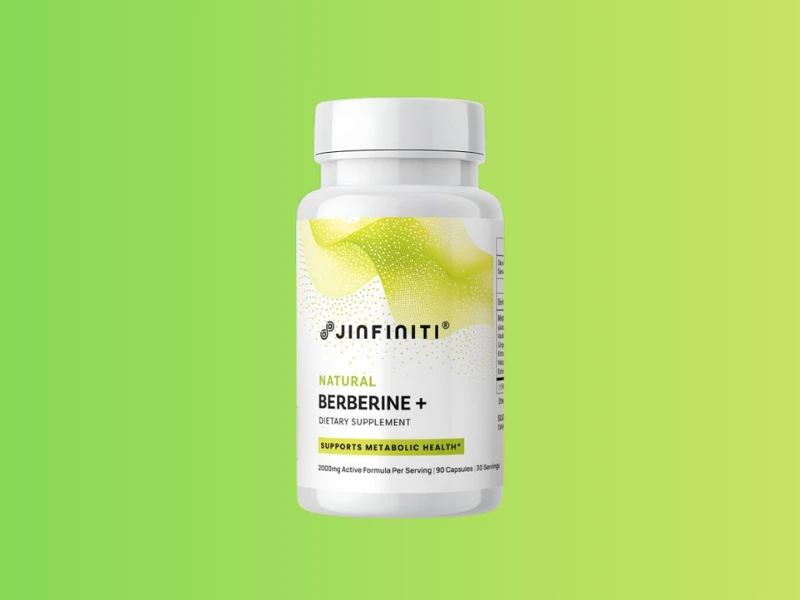
Jinfiniti’s Natural Berberine+ combines 1,200mg of high-potency berberine (95%) with a MetabolicAid blend — astragalus, panax notoginseng, ginger, cinnamon, and artichoke leaf — along with black pepper extract for significantly improved absorption. If you’re looking to include berberine as part of a cardiovascular support protocol, see our guide to choosing a berberine supplement for a breakdown of what to look for in a quality formula.
As Dr. Jin-Xiong She, founder of Jinfiniti and researcher behind the company’s supplement formulations, has noted: “Berberine’s ability to activate AMPK means it’s working at a metabolic level — not just masking numbers, but addressing the underlying processes that drive particle overproduction.”
Omega-3 Supplements
If dietary omega-3 intake is inconsistent, supplementing with EPA/DHA at 2–4 grams daily is a practical way to achieve the doses associated with VLDL and ApoB reduction. Quality and purity vary significantly between products — look for third-party testing and triglyceride form for better absorption.
Niacin and Plant Sterol Supplements
Niacin (vitamin B3) can reduce ApoB by 15–25% at therapeutic doses, but it requires medical supervision due to side effects and interactions. Plant sterol supplements offer a more accessible option with a more modest effect size. Red yeast rice deserves an honest note: it contains monacolin K, which functions like a natural statin, but the quality and monacolin content of commercially available products is inconsistently regulated. It may work — the regulatory complexity around it is worth understanding before using it.[13]
When to Consider Medication
Lifestyle changes and supplements can meaningfully lower ApoB, but for some people — particularly those with familial hypercholesterolemia, existing cardiovascular disease, or persistently high levels despite intervention — medication is often necessary and appropriate.
Statins reduce ApoB by 19–42% depending on dose and agent. Ezetimibe blocks intestinal cholesterol absorption and adds further reduction when combined with a statin. PCSK9 inhibitors, typically reserved for high-risk patients who don’t respond adequately to first-line treatment, can achieve 40–56% ApoB reductions.[14]
These aren’t signs of failure. ApoB has a meaningful genetic component, and for many people, medication is the most effective tool available. Your clinician is the right person to evaluate when that threshold has been reached.
🧬 RELATED READING
- Turmeric’s anti-inflammatory effects may extend to lipid health. Here’s what the research says about turmeric and cholesterol.
- Niacin is one of the most potent natural tools for improving lipid profiles but carries risks. Read the evidence on niacin for cholesterol before using it.
- Creatine has an underappreciated relationship with cardiovascular markers. See what the data shows on creatine and cholesterol.
The Case for Measuring ApoB Before and After Intervening
All of the above — the dietary changes, the exercise, the supplements — works best when you can actually see whether it’s working. Without a baseline, you’re making decisions without data. Without follow-up testing, you have no way to know if your ApoB responded, plateaued, or needs a different approach.
ApoB is available through most commercial laboratories and is included in Jinfiniti’s AgingSOS® Advanced Panel, which also measures 27 additional biomarkers — including inflammatory markers, heart health indicators, and the longevity protein Klotho.
For those managing cardiovascular health risk as part of a broader longevity protocol, having ApoB in context with other markers gives you a much clearer picture of where to prioritize. The approach that’s most likely to produce durable results is the one that’s least common: measure first, intervene precisely, then measure again to see what moved.
Frequently Asked Questions
How long does it take to lower ApoB?
Meaningful dietary changes typically produce measurable ApoB reductions within 6–12 weeks. Berberine trials in the clinical literature have run for as short as 4 weeks with measurable effects. Medication produces faster reductions, often within 4–8 weeks. The timeline depends heavily on what’s driving elevation in the first place — people with triglyceride-driven ApoB often see faster dietary responses than those with LDL particle-driven elevation.
Can you lower ApoB levels without medication?
Yes, in many cases. Diet, exercise, and targeted supplementation can produce clinically meaningful ApoB reductions — particularly in people whose elevation is primarily driven by insulin resistance, high triglycerides, or dietary factors. For some individuals, especially those with genetic predisposition or very high baseline levels, medication is also needed to reach target ranges. It depends on where you’re starting and what your risk level is.
Is ApoB the same as LDL?
No. LDL-C measures the total cholesterol mass inside LDL particles. ApoB counts the number of all atherogenic particles, including LDL, VLDL, IDL, and remnant cholesterol. They often correlate, but not always — particularly in people with insulin resistance, high triglycerides, or low-HDL patterns. When they diverge, ApoB is the more accurate predictor of cardiovascular risk.
What foods raise ApoB the most?
Saturated fats (red meat, butter, full-fat dairy, tropical oils) raise LDL particle number and ApoB. Refined carbohydrates, added sugars, and alcohol raise VLDL production and contribute to ApoB through the triglyceride pathway. Unfiltered coffee — French press, espresso — contains compounds that measurably raise ApoB and is often overlooked. Trans fats, where still present in processed foods, are also significant contributors.
How often should I test my ApoB?
If you’re actively working to lower your ApoB through diet, lifestyle, or supplementation, retesting every 3–4 months gives you enough time to see a real response. Once levels are stable and within your target range, annual testing is generally sufficient. If you start a new intervention — a supplement, a medication, or a significant dietary change — retesting after 8–12 weeks helps confirm whether it’s working.
Read More