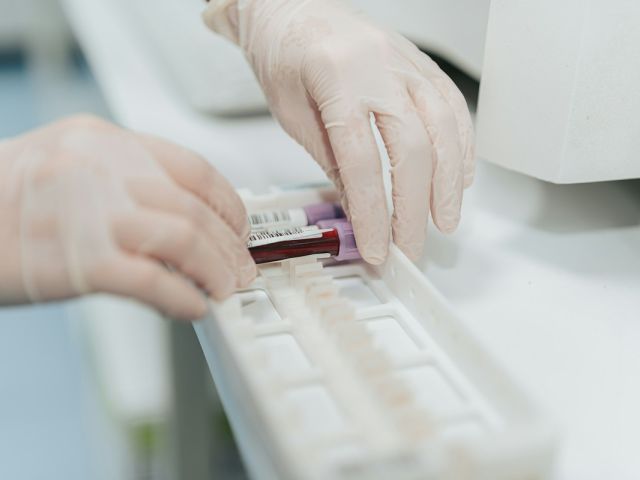
Creatine Kinase Test Levels: Normal, High, and What It Means
Your doctor may have ordered a creatine kinase (CK) test for you, and you’re wondering what this enzyme says about your health. CK can indicate all sorts of things, from a recent workout to severe muscle damage, so it can be hard to know what’s normal without any context.
This guide explains what creatine kinase testing is and what it measures, what levels of CK are normal, and when elevated CK levels are a concern and when they are not.
Highlights
- Normal CK ranges vary widely by gender, race, age, and physical activity level, making one-size-fits-all reference ranges unreliable
- Exercise can triple your CK levels for up to a week, so timing matters when testing
- Levels above 5,000-10,000 U/L may signal rhabdomyolysis, a medical emergency requiring immediate treatment
- African Americans naturally have CK levels approximately 70% higher than other groups without any health concerns
What is Creatine Kinase?
Creatine kinase is an enzyme found mainly in your heart, brain, and skeletal muscles. It helps produce cellular energy by converting creatine and ATP to phosphocreatine, which serves as a reserve for tissues with high energy needs.
When muscle or other CK-rich tissues get damaged, the enzyme leaks into your bloodstream. It’s this release that makes it a valuable diagnostic marker.
How CK Works in Your Body
You can think of creatine kinase as a battery charger in your cells. It helps regenerate ATP to keep your muscles and brain energized during exertion[1].
There are three types:
- CK-MM (skeletal muscle)
- CK-MB (heart muscle)
- CK-BB (brain muscle)
The ratio of each type in the blood can help determine which tissue is damaged.
Why Doctors Test CK Levels
If you have muscle weakness, unexplained pain, or signs of a heart attack, your doctor may order a CK blood test. It’s also used to monitor people who take statins and develop muscle problems[2].
CK testing is used to diagnose muscular dystrophy, inflammatory muscle diseases and other neuromuscular disorders. It involves taking a simple blood sample.
Comprehensive Health Assessment
Track CK with 27 other longevity markers.

Normal Creatine Kinase Ranges
The range of “normal” for CK levels can vary considerably, which is why reference ranges are not as helpful as one might think.
CK Reference Ranges for Adults
Most labs report a normal range of 22-198 U/L for adults. But that broad range doesn’t account for individual differences.
Your baseline could sit comfortably at 50 U/L or 250 U/L depending on your muscle mass, activity level, and genetics. Context matters more than the number alone.
How Gender Affects Your Numbers
Men typically show higher CK levels than women due to greater muscle mass. Research shows mean levels of 127.3 U/L in males versus 85.5 U/L in females.
Gender-specific ranges include:
- Males: 39-308 U/L
- Females: 26-192 U/L
Women’s CK levels drop sharply around the time of first menstruation and remain lower throughout adulthood.
Population Differences
African Americans consistently show substantially higher baseline CK levels than other racial groups. Black men have median levels of 135-146 U/L compared to 51-64 U/L in white men.
Studies indicate serum CK levels are approximately 70% higher in healthy Black individuals. For asymptomatic African American men, CK levels up to 1,200 U/L can fall within normal range[3].
“The most notable factor that contributed to higher CK levels was Black race,” according to research published in Medicine. Differences in levels are due to the differential production or clearance of CK and not due to differences in muscle mass.
Age-Related Changes
CK levels shift throughout your lifespan. Newborns can have levels up to 500 U/L due to birth trauma, while children aged 1-15 typically show 60-305 U/L.
In adults, CK tends to decrease with age as muscle mass declines. Boys see sharp increases at puberty, reaching 14.48 µkat/L by age 18, while girls plateau around 5.74 µkat/L[4].
Athletes Have Higher Baselines
Regular training naturally elevates your baseline CK. Athletes can have normal ranges up to 300-400 U/L, substantially higher than sedentary individuals.
Peak CK level is reached 24-72 hours after exercise and can take up to a week to return to baseline, especially after eccentric exercise such as downhill running. Exercise can increase CK up to three times the normal level[5].

What Causes Elevated Creatine Kinase?
Dozens of factors can raise your CK levels. Some are harmless and temporary, while others signal serious medical conditions.
Exercise and Physical Activity
Physical activity remains the most common cause of CK elevation. Your workout intensity, type of exercise, and recovery time all influence how high levels climb.
Eccentric exercises cause the biggest spikes. If you lifted weights, ran hills, or tried a new activity, expect CK to rise without any medical concern.
Muscle Injury and Damage
Direct trauma to muscles releases CK into circulation. Falls, accidents, prolonged immobility, or even vigorous massage can temporarily elevate levels.
Intramuscular injections and recent vaccinations also cause mild, transient increases. These resolve on their own within days to weeks.
Medical Conditions That Raise CK
Numerous health issues affect CK levels:
- Hypothyroidism (60-90% of patients show elevation)[6]
- Muscular dystrophy (10-100 times normal)
- Inflammatory muscle diseases
- Certain infections
- Some medications, particularly statins
Your doctor will consider symptoms, medical history, and other test results to determine the cause.
🧬 MORE READING
- Building strength after 40 requires different approaches. These anti-aging exercises for longevity support healthy muscle mass without excessive strain.
- Scientists call Klotho the “longevity protein” because it protects against DNA damage. Discover how this remarkable protein influences healthspan.
- Energy production depends on more than exercise. Mitochondrial health supplements provide cellular support when CK levels suggest muscle stress.
- Recovery matters as much as training. Learn which natural remedies for muscle pain can help without masking serious problems.
When High CK Levels Signal Danger
While many CK elevations are benign, some require immediate medical attention. Understanding when to worry can be lifesaving.
Rhabdomyolysis: A Medical Emergency
Rhabdomyolysis involves rapid muscle breakdown, with CK levels reaching 50,000-200,000 U/L or higher. This condition is diagnosed when CK reaches at least five times normal, though levels above 5,000 U/L raise serious concern[7].
The released muscle content, including myoglobin, can cause acute kidney injury. Symptoms include severe muscle pain, weakness, and dark urine, though many patients don’t show all three.
Causes range from extreme exertion and heat exposure to certain medications, alcohol abuse, and infections. Treatment requires aggressive IV hydration and close kidney function monitoring.
Statin-Related Muscle Problems
Statins can cause muscle effects ranging from mild aches to severe breakdown. The incidence of myopathy with statin monotherapy is 0.1-0.5%, while rhabdomyolysis occurs in less than 0.2% of cases[2].
Here’s something surprising: research published in Annals of Internal Medicine showed “some patients who develop muscle symptoms while receiving statin therapy have demonstrable weakness and histopathologic findings of myopathy despite normal serum creatine kinase levels.”
Normal CK doesn’t rule out statin-induced muscle injury. Muscle biopsies revealed mitochondrial dysfunction even when CK remained normal.
Hypothyroidism and CK Elevation
Underactive thyroid is a commonly missed cause of elevated CK. Approximately 60-90% of hypothyroid patients show elevated CK activity, with levels averaging five-fold greater than normal.
Severe cases can present remarkably high numbers. Case reports document CK of 9,000 U/L completely normalizing after three months of thyroid hormone replacement[8].
“Adequate therapy leads to complete recovery, including myopathy,” according to research from the Ludwig Boltzmann Institute. If your CK is elevated without clear cause, ask your doctor about checking thyroid function.
When Should You Get a CK Test?
Knowing when CK testing makes sense helps you advocate for appropriate care.
Dr. Jin-Xiong She explains: “Creatine kinase testing serves as an important window into muscle health and metabolic function. When interpreted correctly alongside other biomarkers, it helps us understand not just muscle damage, but overall cellular energy status.”
Common Symptoms to Watch For
Several signs warrant CK testing:
- Unexplained muscle weakness or pain
- Severe muscle tenderness
- Dark-colored urine (tea or cola-colored)
- Extreme fatigue with muscle soreness
- Difficulty climbing stairs or lifting objects
If you’re taking statins and develop any muscle complaints, request testing even if symptoms seem mild. Early detection prevents progression to more serious problems.
Who Needs Regular Monitoring
Certain people benefit from routine CK checks:
- Anyone taking statins or fibrates
- Athletes in intense training programs
- People with known muscle diseases
- Those with a family history of muscular dystrophy
- Individuals with chronic fatigue and muscle symptoms
Regular monitoring can establish your personal baseline, making it easier to spot meaningful changes.
Understanding Your Serum CK Test Results
Raw numbers tell only part of the story. Proper interpretation requires considering multiple factors together.
What Do the Numbers Mean?
CK levels fall into broad categories:
- Normal to mildly elevated (up to 500 U/L): Often related to recent exercise, minor trauma, or neuropathies. Repeat testing after a week of rest usually clarifies the picture.
- Moderate elevation (500-5,000 U/L): May indicate inflammatory muscle diseases, thyroid problems, or medication effects. Requires investigation but isn’t typically an emergency.
- Severe elevation (5,000-10,000+ U/L): Suggests rhabdomyolysis or severe muscle disease. Needs immediate medical evaluation to prevent kidney damage.
Remember that African Americans may have levels up to 1,200 U/L while remaining completely healthy.
When to See a Doctor
Seek immediate care if you have:
- CK above 10,000 U/L with any symptoms
- Dark urine with muscle pain
- Severe muscle weakness affecting daily activities
- Muscle symptoms after starting new medications
For persistently elevated levels above 1,000 U/L, schedule a non-urgent appointment. Your doctor can order additional tests to identify the underlying cause and determine if treatment is needed.
Testing CK alongside other longevity biomarkers provides a more complete picture of your health status. Our AgingSOS Advanced Panel measures CK along with 27 other markers related to inflammation, oxidative stress, and cellular senescence.
Referenced Sources
- Weiss RG, Gerstenblith G, Bottomley PA. ATP flux through creatine kinase in the normal, stressed, and failing human heart. Proceedings of the National Academy of Sciences; 2005. https://doi.org/10.1073/pnas.0408962102
- Vinci P, Panizon E, Tosoni LM, Cerrato C, Pellicori F, Mearelli F, et al. Statin-Associated Myopathy: Emphasis on Mechanisms and Targeted Therapy. MDPI AG; 2021. https://doi.org/10.3390/ijms222111687
- Brewster LM, Coronel CMD, Sluiter W, Clark JF, van Montfrans GA. Ethnic Differences in Tissue Creatine Kinase Activity: An Observational Study. Public Library of Science (PLoS); 2012. https://doi.org/10.1371/journal.pone.0032471
- Lane RJM, Roses AD. Variation of serum creatine kinase levels with age in normal females: implications for genetic counselling in Duchenne muscular dystrophy. Elsevier BV; 1981. https://doi.org/10.1016/0009-8981(81)90442-3
- Totsuka M, Nakaji S, Suzuki K, Sugawara K, Sato K. Break point of serum creatine kinase release after endurance exercise. American Physiological Society; 2002. https://doi.org/10.1152/japplphysiol.01270.2001
- Prakash A, Lal A, Negi K. Serum Creatine Kinase Activity in Thyroid Disorders. 2007.
- Torres P, Helmstetter JA, Kaye A, Kaye A. Rhabdomyolysis: pathogenesis, diagnosis, and treatment. Ochsner Journal 2015;15 1:58–69.
- Finsterer J, Stöllberger C, Grossegger C, Kroiss A. Hypothyroid Myopathy with Unusually High Serum Creatine Kinase Values. S. Karger AG; 1999. https://doi.org/10.1159/000023462
Read More