




Glucosamine is likely the first supplement people think of when it comes to knee pain. For years it’s been the gold standard, found on every drugstore shelf and written about in every article on joint health.
Here’s the issue: clinical research supporting glucosamine is much weaker than you’ve been led to believe — and there are far better alternatives backed by consistent research.
In this guide, we cover the best supplements for joint pain that actually have research supporting them, what the research says for each supplement, and the importance of absorption.
What You Should Know
- Curcumin combined with Boswellia has the strongest clinical backing of any natural joint supplement, with multiple meta-analyses showing it outperforms NSAIDs for knee osteoarthritis pain.
- Glucosamine and chondroitin remain the most popular knee supplements, but the evidence is mixed, and the American College of Rheumatology no longer recommends them for knee or hip osteoarthritis.
- Results with joint supplements take time; curcumin may show effects within weeks, while structural-support compounds like collagen typically need 2 to 4 months of consistent use.
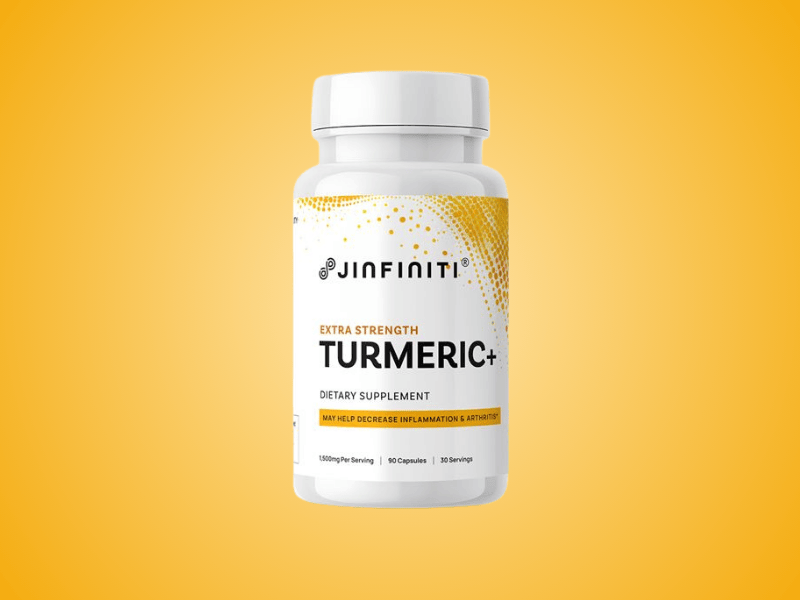
Joint Health Support Formula
Extra strength Turmeric + Boswellia for joint health.
What Causes Knee Pain and Inflammation?
Your knees are the most load-bearing joints in the body. Every pound of body weight translates to roughly 3 to 4 pounds of force across the knee joint when you walk, and up to 8 times your body weight when you run or climb stairs. That mechanical stress, layered on top of age-related decline in cartilage repair and increasing systemic inflammation, is why knee pain is the most common joint complaint in adults over 40.
Cartilage has no blood supply of its own, which makes it slow to repair and especially vulnerable to cumulative damage. Supplements that target inflammation, support cartilage structure, or slow degradation work best as a consistent, long-term strategy — not a quick fix.
The Best Supplements for Knee Joint Pain — Ranked
The supplements below are ranked by the quality and consistency of clinical evidence. Research strength matters more than popularity here.
1. Curcumin and Boswellia
Curcumin — the active compound in turmeric — has more peer-reviewed research behind it for knee osteoarthritis than any other natural supplement. A 2021 meta-analysis of 11 randomized controlled trials involving 1,258 participants found curcuminoids were more effective than comparators on both pain and function scores — and produced fewer GI side effects than ibuprofen.[1]
Boswellia serrata (Indian frankincense) adds a different mechanism. It directly inhibits 5-LOX, an enzyme that produces a class of inflammatory molecules called leukotrienes. A 2025 meta-analysis of 21 studies confirmed curcumin lowered CRP and TNF-alpha — two key inflammation markers — at statistically significant levels compared to placebo.[2]
The combination matters. One randomized trial involving 210 osteoarthritis patients found curcumin alone produced a 3.6-fold improvement in WOMAC joint scores compared to placebo — and the curcumin-plus-Boswellia group produced a 2.7-fold improvement through a different but complementary anti-inflammatory pathway.[3]
The catch with curcumin is absorption. Standard curcumin has poor bioavailability — less than 1% gets absorbed without help. Piperine, the active compound in black pepper, increases curcumin absorption by up to 2,000%.
Learn more about turmeric dosage and absorption strategies that actually make a difference.
2. Methylsulfonylmethane (MSM)
Methylsulfonylmethane (MSM) is a sulfur compound found naturally in plants, animals, and humans. Sulfur is a building block of connective tissue, including the collagen and proteoglycans that make up cartilage. Research on MSM for knee osteoarthritis shows consistent reductions in pain and swelling, typically at doses of 1,000 to 3,000 mg daily.[4]
Unlike curcumin, MSM doesn’t need a bioavailability enhancer — it absorbs reasonably well on its own. It’s also well-tolerated, with side effects limited to mild GI discomfort at higher doses. It pairs well with other anti-inflammatory compounds and is often included in combination joint formulas.
3. Type II Collagen
Collagen is the primary structural protein in cartilage. Type II collagen specifically comes from cartilage tissue, making it more targeted for joint health than the more common Type I found in skin supplements. Clinical studies show it can reduce joint stiffness and improve function, with benefits typically appearing after 2 to 3 months of consistent use.[5]
The mechanism is somewhat counterintuitive. Oral collagen undergoes digestion, but research suggests that small peptides reach the joint tissue and may stimulate chondrocytes (the cells that maintain cartilage) to increase their own collagen production. The evidence is modest but consistent, particularly in people with early-to-moderate osteoarthritis.
4. Glucosamine and Chondroitin
These two are the most widely sold joint supplements in the world — and arguably the most misrepresented. Glucosamine is a cartilage-building molecule; chondroitin helps maintain its structure and retain water. The theory is sound. The clinical results are inconsistent.
The American College of Rheumatology now recommends against glucosamine and chondroitin for knee or hip osteoarthritis, citing the quality of available evidence.[6]
Some studies do show modest benefit for moderate-to-severe pain specifically, and the combination may slow cartilage breakdown over periods longer than 3 years. But as a first-line recommendation, the evidence doesn’t support their widespread use.[7]
If you’ve been taking glucosamine for years and feel it helps, there’s no strong reason to stop. But if you’re starting fresh, the options above have clearer clinical support.
5. Omega-3 Fatty Acids
EPA and DHA from fish oil don’t target cartilage directly, but they address the systemic inflammation that accelerates joint breakdown. Omega-3s reduce the production of prostaglandins and cytokines — the upstream inflammatory messengers that drive joint pain and stiffness.[8]
For knee pain specifically, fish oil works better as a foundation than a primary treatment. It reduces morning stiffness and may lower NSAID requirements over time. Doses of 2 to 3 grams of combined EPA + DHA daily appear in most positive trials.[9]
It’s worth noting that the ACR does not recommend fish oil as a standalone treatment for knee osteoarthritis — but as part of a broader anti-inflammatory strategy, it adds meaningful support.
Knee Joint Health Supplement Comparison
Here’s how these supplements compare on the factors that matter most.
| Supplement | Primary Benefit | Evidence Level | Time to Effect |
|---|---|---|---|
| Curcumin + Boswellia | Reduces inflammation and pain | Strong (multiple meta-analyses) | 2-6 weeks |
| MSM | Reduces pain and swelling | Moderate | 4-6 weeks |
| Type II Collagen | Supports cartilage structure | Moderate | 2-3 months |
| Glucosamine + Chondroitin | May slow cartilage breakdown | Mixed | 2-4 months |
| Omega-3 Fatty Acids | Reduces systemic inflammation | Moderate (indirect) | 4-8 weeks |
The Supplement Absorption Problem
The best ingredients on paper can still fail in practice if your body can’t absorb them. This is especially true for curcumin, which has notoriously poor standalone bioavailability. It metabolizes and gets eliminated quickly, meaning a high-dose supplement without a delivery system may produce very little effect at the tissue level.
Piperine (black pepper extract) is the most well-studied solution, shown to increase curcumin absorption by up to 2,000% by slowing liver metabolism. Fat co-ingestion also helps, since curcumin is fat-soluble. The same principle applies across joint supplements — formulas designed with absorption in mind outperform equivalent-dose single ingredients. You can read more about what drives this at the cellular level in our overview of supplements for inflammation.
“Getting the dose right is only half the equation,” says Dr. Jin-Xiong She, founder of Jinfiniti Precision Medicine and professor of genomic medicine. “A joint supplement that your body can’t absorb doesn’t matter how good the ingredients are on paper — bioavailability is the bridge between the research and the actual result you feel.”
🧬 MORE JOINT HEALTH
- Curcumin gets most of the attention for joint pain, but creatine and joint health is a connection worth understanding — especially if you’re also dealing with muscle weakness around the knee.
- Knee pain rarely lives in isolation. Explore natural remedies for muscle pain that work alongside a joint supplement routine.
- If you’re trying to reduce reliance on ibuprofen or naproxen, see how the supplements in this article stack up against other NSAID alternatives backed by research.
How Long Before You Notice Results?
Anti-inflammatory supplements like curcumin and MSM tend to work faster — many people notice a difference within 2 to 6 weeks. Structural-support supplements that work on cartilage, like Type II collagen or glucosamine, require at least 2 to 4 months before you’re likely to see meaningful change.
This is one of the more common reasons people quit joint supplements too soon. Consistent daily use at an adequate dose matters more than high-dose occasional use. If you’ve been at a consistent dose for 3 months without any improvement, that’s a reasonable point to reassess.
Frequently Asked Questions
Here are answers to the questions that come up most often about joint supplements for knees.
Can you take multiple joint supplements together?
Yes, and combination approaches often work better than single ingredients. Curcumin + Boswellia is a well-studied pairing. Adding MSM or collagen doesn’t create known interactions. The main thing to watch is blood-thinning effects — both curcumin and omega-3s have mild anticoagulant properties, so those taking warfarin or other blood thinners should check with their doctor first.
Are joint supplements safe for long-term use?
The supplements listed here have good long-term safety profiles. Curcumin studies extend beyond 12 months without significant adverse events. MSM, collagen, and omega-3s are considered safe for ongoing use at standard doses. Glucosamine may affect blood sugar in some people with diabetes. As with any supplement, start at a lower dose and work up gradually.
Do joint supplements work for knee osteoarthritis?
Most of the strongest research is specifically in knee osteoarthritis populations. For general exercise-related knee discomfort or inflammation without structural damage, anti-inflammatory supplements like curcumin and omega-3s likely still help through the same pathways. Understanding the difference between acute inflammation and chronic joint degeneration can help you choose the right approach — read more about the mechanisms in our piece on turmeric vs ginger.
Referenced Sources
- Hsiao AF, Lien YC, Tzeng IS, Liu CT, Chou SH, Horng YS. The efficacy of high- and low-dose curcumin in knee osteoarthritis: A systematic review and meta-analysis. Elsevier BV; 2021. https://doi.org/10.1016/j.ctim.2021.102775
- Hsueh HC, Ho GR, Tzeng SI, Liang KH, Horng YS. Effects of curcumin on serum inflammatory biomarkers in patients with knee osteoarthritis: a systematic review and meta-analysis of randomized controlled trials. Springer Science and Business Media LLC; 2025. https://doi.org/10.1186/s12906-025-04951-6
- Ameyde MV, Hodgden J. In patients with osteoarthritis, is curcumin, compared to placebo, effective in reducing pain? The Journal of the Oklahoma State Medical Association. 2022;115(1):28–30.
- Toguchi A, Noguchi N, Kanno T, Yamada A. Methylsulfonylmethane Improves Knee Quality of Life in Participants with Mild Knee Pain: A Randomized, Double-Blind, Placebo-Controlled Trial. MDPI AG; 2023. https://doi.org/10.3390/nu15132995
- Carrillo-Norte JA, Gervasini-Rodríguez G, Santiago-Triviño MÁ, García-López V, Guerrero-Bonmatty R. Oral administration of hydrolyzed collagen alleviates pain and enhances functionality in knee osteoarthritis: Results from a randomized, double-blind, placebo-controlled study. Elsevier BV; 2025. https://doi.org/10.1016/j.conctc.2024.101424
- Kolasinski SL, Neogi T, Hochberg MC, Oatis C, Guyatt G, Block J, et al. 2019 American College of Rheumatology/Arthritis Foundation Guideline for the Management of Osteoarthritis of the Hand, Hip, and Knee. Wiley; 2020. https://doi.org/10.1002/art.41142
- Reginster JY, Neuprez A, Lecart MP, Sarlet N, Bruyere O. Role of glucosamine in the treatment for osteoarthritis. Springer Science and Business Media LLC; 2012. https://doi.org/10.1007/s00296-012-2416-2
- Kar A, Ghosh P, Patra P, Chini DS, Nath AK, Saha JK, et al. Omega-3 fatty acids mediated Cellular signaling and its regulation in Human Health. Elsevier BV; 2023. https://doi.org/10.1016/j.nutos.2023.10.004
- Rajaei E, Mowla K, Ghorbani A, Bahadoram S, Bahadoram M, Dargahi-Malamir M. The Effect of Omega-3 Fatty Acids in Patients With Active Rheumatoid Arthritis Receiving DMARDs Therapy: Double-Blind Randomized Controlled Trial. Canadian Center of Science and Education; 2015. https://doi.org/10.5539/gjhs.v8n7p18
