




Free radicals damage your DNA constantly during normal metabolism. Your cells work to fix this damage around the clock.
A biomarker called 8-OHdG can tell you how effectively your body manages this repair work.
The biomarker of oxidative stress 8-OHdG has been studied in relation to cancer, heart disease, diabetes and aging. It’s also used by doctors to help assess oxidative stress and disease risk.
What You Should Know
- 8-OHdG measures oxidized DNA damage from free radicals throughout your body
- Higher levels connect to increased risk of cancer, cardiovascular disease, and neurodegeneration
- Urine or blood tests reveal your 8-OHdG status with results typically ranging from 0-5.2 ng/mg creatinine for optimal health
- Antioxidants, better diet, regular exercise, and stress reduction can lower elevated levels
What is 8-OHdG (8-Hydroxy-2-deoxyguanosine)?
When free radicals damage guanine (a DNA building block), they create a modified molecule called 8-hydroxy-2′-deoxyguanosine (8-OHdG). Your body generates these free radicals naturally through metabolism, and they multiply when you face stress or toxin exposure[1].
Guanine takes more hits from oxidation than the other three DNA bases. Free radicals target a specific location on guanine and transform it into 8-OHdG.
Your cellular repair machinery identifies this DNA damage and “cuts” it away. The removed 8-OHdG circulates through your blood and gets filtered into your urine in its original form.
Testing urine samples for levels of 8-OHdG paints a picture of how much oxidative damage to DNA you may be experiencing[2]. The concentration reflects both the rate of DNA damage and how hard your cells work to fix it.
Comprehensive Health Assessment
Test 8-OHdG with 27 other longevity markers.
Why 8-OHdG Testing Matters
Elevated 8-OHdG levels have been linked to a number of significant health issues. The biomarker acts as an early warning system, before symptoms manifest.
As one review noted: “The biomarker 8-OHdG has been used widely in many studies not only as a measurement of endogenous oxidative DNA damage but also as a risk factor for many diseases including cancer.”[1]
Cancer Risk Assessment
People with urinary 8-OHdG concentrations above 1.5 nmol/mmol creatinine face 3.68 times higher colorectal cancer risk compared to those with lower levels. Cancer tissue consistently shows elevated 8-OHdG compared to healthy adjacent tissue[3].
The damage becomes dangerous when 8-OHdG escapes repair before cell division. It can mispair with the wrong DNA base during replication, causing mutations that drive cancer development.
Breast cancer and prostate cancer patients both show significantly higher 8-OHdG than healthy controls[4]. The marker increases with cancer progression and metastasis.
Heart and Brain Health
A systematic review of 18 studies found elevated 8-OHdG consistently associated with atherosclerosis, heart failure, and stroke[5]. Blood and urine levels correlate with heart disease severity.
In Parkinson’s disease, cerebrospinal fluid 8-OHdG rises significantly[6]. The biomarker may help with early diagnosis of neurodegenerative conditions before major symptoms develop.
Elderly people with elevated plasma 8-OHdG face increased risk of motoric cognitive risk syndrome. This suggests value as an early detection tool for cognitive and motor decline.
Diabetes and Aging
Type 2 diabetics show significantly increased oxidative DNA damage[7]. Levels climb higher in patients with advanced complications like proliferative retinopathy and nephropathy.
The marker rises even in prediabetes, making it potentially more sensitive than traditional indicators. Studies suggest 8-OHdG helps monitor disease progression and complication risk.
Dr. Jin-Xiong She, founder of Jinfiniti Precision Medicine, explains: “8-OHdG levels can tell us how well someone is aging at the cellular level. Your DNA repair systems slow down as you get older, and 8-OHdG shows the mounting damage that eventually leads to age-related diseases.”
🧬 MORE BIOMARKERS
- Kidney function markers tell their own story. Understanding cystatin C levels reveals filtration capacity beyond standard tests.
- Protein status affects cellular repair. Learn what albumin blood test results mean for overall health.
- Muscle and heart health show up in the numbers. Discover why creatine kinase levels matter for tissue damage assessment.
Understanding Your 8-OHdG Results
Test results vary based on measurement method and units used. Knowing what’s normal helps you interpret your numbers.
Research on healthy populations established typical reference ranges[2]:
- Women: 43.9 ± 42.1 ng/mg creatinine (urinary)
- Men: 29.6 ± 24.5 ng/mg creatinine (urinary)
- Optimal range: 0-5.2 ng/mg creatinine
Healthy people show an eleven-fold variation in levels. Your values also fluctuate throughout the day, ranging from 3.76 ng/mg in early morning to 6.46 ng/mg in early afternoon for men.
The type of test matters for interpretation:
- Plasma 8-OHdG: Instantaneous balance between damage and repair
- Urinary 8-OHdG: Total body damage over time
Results above optimal ranges warrant identifying oxidative stress sources. This includes evaluating antioxidant status and inflammatory markers.
What Raises 8-OHdG Levels?
Multiple factors influence your oxidative DNA damage. Some you can control, others require awareness and protection.
Certain lifestyle habits drive DNA damage higher:
- Smoking: Smokers show significantly higher levels[8]
- Long working hours: Work-related stress predicts increased 8-OHdG independent of other factors[9]
- Stress hormones: The biomarker correlates with evening cortisol and inflammation markers[10]
Your surroundings contribute to oxidative stress:
- Radiation workers and interventional physicians show elevated levels[11]
- Air pollution in high-traffic areas increases oxidative damage
- Industrial chemical exposure drives up DNA damage markers
Physical activity affects 8-OHdG differently based on intensity:
- Resistance training temporarily increases circulating 8-OHdG in all people[12]
- Long-duration aerobic exercise decreases levels in untrained individuals
- Regular moderate activity provides the best protection[13]
What you eat plays a protective role:
- Low meat intake paradoxically increases 8-OHdG[13]
- Soybeans, rice, and light-colored vegetables correlate with lower levels
- Vitamin intake significantly decreases damage
Managing chronic stress is one of the most important things you can do for DNA protection.
How to Reduce High 8-OHdG
When testing reveals elevated oxidative DNA damage, several evidence-based approaches can help restore healthy levels.
Research demonstrates measurable benefits from specific antioxidants:
- Vitamin E (200 IU daily): 33.8% reduction in smokers[14]
- Vitamin C (500 mg): Significant decrease in oxidative markers
- Red ginseng (1.8 g daily): 31.7% reduction in 8-OHdG
- Coenzyme Q10: Mean reduction of 2.9 ± 2.9 pg/ml[15]
- High-dose folic acid (0.8 mg): Dose-response protective effects
Simple dietary adjustments make a real difference:
- Increase fruit and vegetable intake consistently
- Orange juice helped metabolic syndrome patients lower levels and lose weight[16]
- Fish oil (EPA/DHA) helps smokers with high 8-OHdG[17]
Basic lifestyle changes provide strong protection:
- Regular moderate exercise: Studies show significant 8-OH-dG reduction
- Smoking cessation: Damage reverses over time after quitting
- Stress management: Lower cortisol to protect DNA
Supporting your body’s master antioxidant glutathionethroughdiet or N-acetyl cysteine may help address core antioxidant defenses. This becomes particularly helpful when multiple oxidative stress markers are elevated.
Bottom Line
8-OHdG measures oxidative damage to your DNA and predicts disease risk years before symptoms appear. Testing reveals your cellular stress burden and guides targeted interventions to protect your genetic material and extend your healthspan.
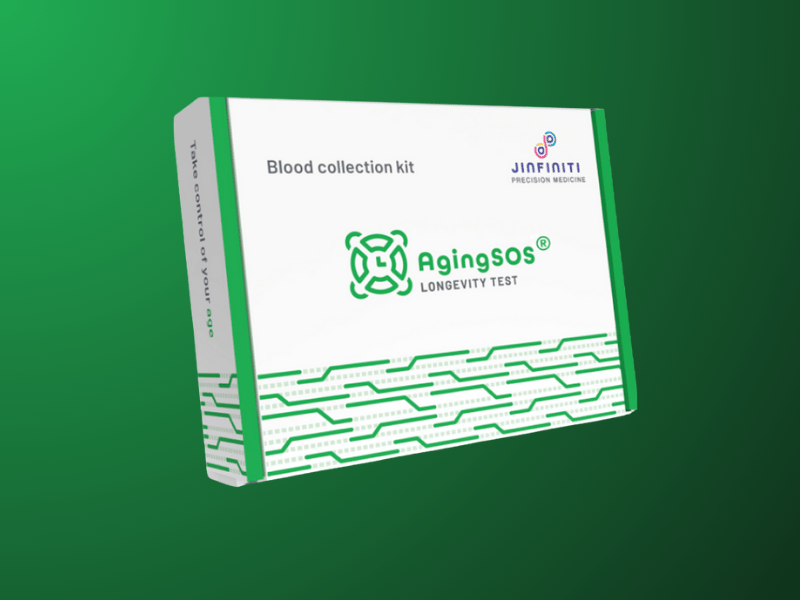
Jinfiniti’s AgingSOS panel includes 8-OHdG alongside 27 other longevity biomarkers, giving you a complete picture of cellular aging. Get tested, identify your risks early, and take action based on real data.
Referenced Sources
- VALAVANIDIS A, VLACHOGIANNI T, FIOTAKIS C. 8-hydroxy-2′ -deoxyguanosine (8-OHdG): A Critical Biomarker of Oxidative Stress and Carcinogenesis. Informa UK Limited; 2009. https://doi.org/10.1080/10590500902885684
- Wu LL, Chiou CC, Chang PY, Wu JT. Urinary 8-OHdG: a marker of oxidative stress to DNA and a risk factor for cancer, atherosclerosis and diabetics. Elsevier BV; 2004. https://doi.org/10.1016/j.cccn.2003.09.010
- Guo C, Li X, Wang R, Yu J, Ye M, Mao L, et al. Association between Oxidative DNA Damage and Risk of Colorectal Cancer: Sensitive Determination of Urinary 8-Hydroxy-2′-deoxyguanosine by UPLC-MS/MS Analysis. Springer Science and Business Media LLC; 2016. https://doi.org/10.1038/srep32581
- Kuo HW, Chou SY, Hu TW, Wu FY, Chen DJ. Urinary 8-hydroxy-2′-deoxyguanosine (8-OHdG) and genetic polymorphisms in breast cancer patients. Elsevier BV; 2007. https://doi.org/10.1016/j.mrgentox.2007.04.009
- Kroese LJ, Scheffer PG. 8-Hydroxy-2′-Deoxyguanosine and Cardiovascular Disease: a Systematic Review. Springer Science and Business Media LLC; 2014. https://doi.org/10.1007/s11883-014-0452-y
- Dai Q, Ma Y, Liu C, Zhao R, Chen Q, Chen W, et al. Association of 8-hydroxy-2′-deoxyguanosine with motoric cognitive risk in elderly Chinese people: RUGAO longevity and aging cross-sectional study. Springer Science and Business Media LLC; 2024. https://doi.org/10.1186/s12877-024-04943-0
- Shin CS, Moon BS, Park KS, Kim SY, Park SJ, Chung MH, et al. Serum 8-Hydroxy-Guanine Levels Are Increased in Diabetic Patients. American Diabetes Association; 2001. https://doi.org/10.2337/diacare.24.4.733
- Ajileye AB, Akinbo FO. Oxidative DNA damage estimated by urinary 8-Hydroxy-2′ –Deoxyguanosine (8-OHdG) and 8-Oxoguanine DNA Glycosylase (OGG1) in cigarette and non-cigarette smokers in South West Nigeria. SAGE Publications; 2023. https://doi.org/10.3233/jcb-230120
- Watanabe S, Li YS, Kawasaki Y, Ootsuyama Y, Kawai K. Health examination results and work environment factors affecting urinary 8-hydroxy-2′-deoxyguanosine levels. Oxford University Press (OUP); 2021. https://doi.org/10.1002/1348-9585.12210
- Irie M, Tamae K, Iwamoto‐Tanaka N, Kasai H. Occupational and lifestyle factors and urinary 8‐hydroxydeoxyguanosine. Wiley; 2005. https://doi.org/10.1111/j.1349-7006.2005.00083.x
- AbuArrah M. 8-Hydroxy-2-Deoxyguanosine as Oxidative DNA Damage Biomarker of Medical Ionizing Radiation: A Scoping Review. Salvia Medical Sciences Ltd; 2021. https://doi.org/10.31661/jbpe.v0i0.2101-1258
- Ye M, Dewi L, Liao YC, Nicholls A, Huang CY, Kuo CH. DNA oxidation after exercise: a systematic review and meta-analysis. Frontiers Media SA; 2023. https://doi.org/10.3389/fphys.2023.1275867
- Kasai H, Iwamoto‐Tanaka N, Miyamoto T, Kawanami K, Kawanami S, Kido R, et al. Life Style and Urinary 8‐Hydroxydeoxyguanosine, a Marker of Oxidative DNA Damage: Effects of Exercise, Working Conditions, Meat Intake, Body Mass Index, and Smoking. Wiley; 2001. https://doi.org/10.1111/j.1349-7006.2001.tb01041.x
- Lee BM, Lee SK, Kim HS. Inhibition of oxidative DNA damage, 8-OHdG, and carbonyl contents in smokers treated with antioxidants (vitamin E, vitamin C, β-carotene and red ginseng). Elsevier BV; 1998. https://doi.org/10.1016/s0304-3835(98)00227-4
- Biglan KM, Dorsey ER, Evans RVV, Ross CA, Hersch S, et al. Plasma 8-hydroxy-2′-deoxyguanosine Levels in Huntington Disease and Healthy Controls Treated with Coenzyme Q10. SAGE Publications; 2012. https://doi.org/10.3233/jhd-2012-120007
- Rangel-Huerta OD, Aguilera CM, Martin MV, Soto MJ, Rico MC, Vallejo F, et al. Normal or High Polyphenol Concentration in Orange Juice Affects Antioxidant Activity, Blood Pressure, and Body Weight in Obese or Overweight Adults. Elsevier BV; 2015. https://doi.org/10.3945/jn.115.213660
- Ghorbanihaghjo A, Safa J, Alizadeh S, Argani H, Rashtchizadeh N, Taghinia MV, et al. Protective Effect of Fish Oil Supplementation on DNA Damage Induced by Cigarette Smoking. Springer Science and Business Media LLC; 2013. https://doi.org/10.3329/jhpn.v31i3.16826