The 6 Best Creatine Supplements of 2026, Reviewed by Experts
Disclaimer: This article is for informational purposes only and does not constitute medical advice. The products reviewed have not been evaluated by the FDA and are not intended to diagnose, treat, cure, or prevent any disease. Always consult a qualified healthcare professional before starting any new supplement regimen.
Creatine is the most researched performance supplement in existence, with over 1,000 studies documenting its effects on muscle strength, cognitive function, and cellular energy production. The right creatine supplement can restore your ATP levels, helping you train harder, think clearer, and recover faster.
We’ve evaluated the top creatine supplements of 2026 based on formulation quality, absorption technology, third-party testing, and research alignment. Whether you’re an athlete requiring drug-test compliance or someone seeking better energy and mental clarity, this guide identifies the best option for your goals.
Top 6 Creatine Supplements at a Glance
Best Overall & For Athletes: Jinfiniti Creatine + ATP
Best for Energy: Vitality NAD+ Booster
Best Creatine HCl: CON-CRĒT® Creatine HCl Powder
Best Creatine Monohydrate: Myprotein Creapure®
Best Micronized Creatine: Thorne Creatine
Best for Women: Bloom Nutrition Creatine Gummies
🧬About our reviewer
This guide was reviewed by Dr. Jin-Xiong She, PhD, genomic medicine researcher. Dr. She has published 400+ papers and leads the CLIA-certified laboratory at Jinfiniti Precision Medicine.
Best Creatine Supplements in 2026 Reviewed
Best Overall & For Athletes: Jinfiniti Creatine + ATP
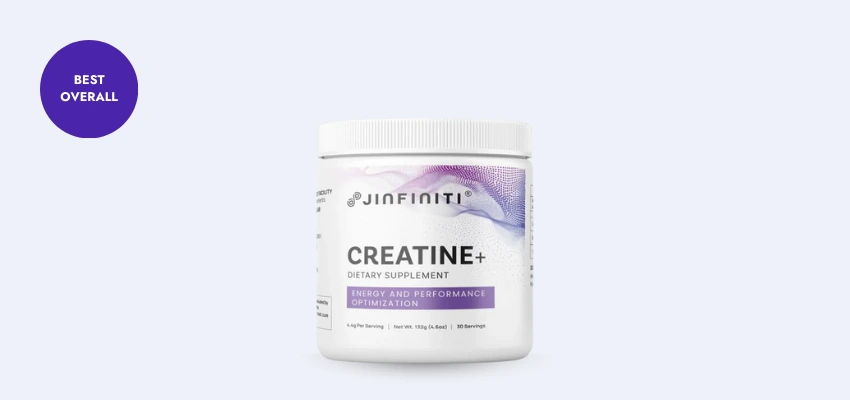
Creatine per serving: 4g Pure Creatine Monohydrate
Additional ingredients: 400mg Disodium ATP
Form: Powder
Certifications: Third-party tested, GMP-certified
Jinfiniti Creatine + ATP earns our top pick by combining creatine monohydrate with disodium ATP, creating a dual-pathway approach to cellular energy that outperforms single-ingredient formulas.
The 4g creatine dose falls within the clinically validated 3-5g daily range established by decades of research. What sets this formula apart is the addition of 400mg disodium ATP—a form of adenosine triphosphate that your body can absorb directly.
Disodium ATP reduces fatigue during training by providing immediate energy substrates to working muscles. Studies show ATP supplementation increases strength and power output while supporting lean muscle mass gains. The compound also improves recovery through enhanced blood flow, better nutrient delivery to muscle tissue, and increased muscle cell excitability.[1]
Think of creatine as your energy reserve tank and ATP as the immediate fuel supply. Creatine helps regenerate ATP between high-intensity efforts, while supplemental ATP provides direct energy molecules your muscles can use right now. This combination supports both immediate performance and sustained energy output.
The formula is developed by Dr. Jin-Xiong She, a genomic scientist with over 400 published papers and extensive experience in cellular metabolism research. Manufacturing takes place in GMP-certified facilities with third-party testing to verify purity and potency.
“Cellular energy production isn’t a single pathway, but a network of interconnected systems,” says Dr. She. “Combining creatine with ATP addresses both the regeneration of energy and the immediate availability of ATP, creating a more complete approach to performance enhancement.”
| ✓ Pros | ✗ Cons |
|---|---|
| Dual-pathway energy support (creatine + direct ATP) | Higher price point than basic monohydrate |
| Research-backed doses for both ingredients | Requires daily mixing (powder form) |
| Supports immediate and sustained performance | May take 2-4 weeks for full creatine saturation |
| Enhanced recovery through improved blood flow | |
| Third-party tested for purity | |
| Created by scientist with metabolic expertise |
Best for: Athletes seeking maximum performance gains, anyone wanting to both build muscle and support exercise endurance, those willing to invest in a scientifically advanced formula.
Best for Energy: Vitality NAD+ Booster
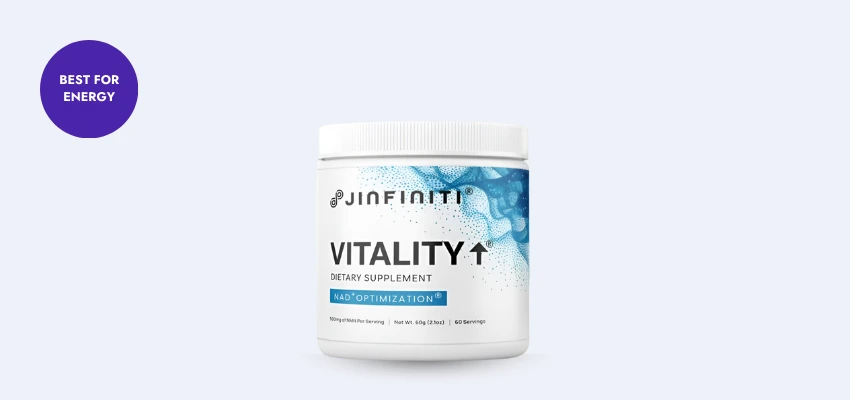
Creatine per serving: Creatine Monohydrate (as part of 4-ingredient synergistic formula)
Additional ingredients: NMN, Niacinamide, D-Ribose
Form: Powder and Lozenge
Certifications: Clinically validated, third-party tested, GMP-certified
Vitality NAD+ Booster takes a different approach to cellular energy by combining creatine with NAD+ precursors, targeting the fundamental energy production systems in your mitochondria.
This formula addresses energy depletion at multiple levels. NAD+ (nicotinamide adenine dinucleotide) is a coenzyme required for cellular energy production, DNA repair, and mitochondrial function. Your NAD+ levels decline by roughly 50% between ages 40 and 60, directly impacting energy, recovery, and cognitive function.
Clinical trials on Vitality NAD+ Booster showed that 85% of participants reached optimal NAD+ levels within 4 weeks. The average NAD+ increase was 100%, with participants reporting improvements in energy, sleep quality, mental clarity, and recovery time.
The inclusion of creatine alongside NMN (nicotinamide mononucleotide), niacinamide, and D-ribose creates what the research team calls a “multi-pathway energy protocol.” While creatine supports the ATP-phosphocreatine system for rapid energy regeneration, the NAD+ precursors fuel the mitochondrial production of ATP itself.
This makes Vitality particularly effective for people experiencing age-related energy decline, not just workout fatigue. If you struggle with afternoon crashes, slow recovery, or mental fog alongside physical fatigue, addressing NAD+ levels alongside creatine stores may provide more complete results.
The formula is available in both powder and lozenge forms, with the lozenge designed for sublingual absorption that may bypass some digestive degradation of NAD+ precursors.
| ✓ Pros | ✗ Cons |
|---|---|
| Clinical trial data showing 85% reach optimal NAD+ in 4 weeks | Premium pricing reflects multi-ingredient formula |
| Addresses cellular energy at mitochondrial and ATP-PCr levels | More ingredients means more variables to track |
| Average 100% increase in NAD+ levels | Best results require consistent daily use |
| Improves energy, sleep, recovery, and cognitive function | 2 scoops/lozenges daily (not single-serving) |
| Available in powder and lozenge forms | |
| Formulated by longevity research scientist |
Best for: People experiencing age-related energy decline (especially over 40), those seeking comprehensive cellular health support beyond muscle performance, anyone dealing with fatigue, poor recovery, and cognitive symptoms together.
Best Creatine HCl: CON-CRĒT® Creatine HCl Powder
Creatine per serving: 750mg
Form: Powder (unflavored)
Certifications: NSF Certified for Sport®, GMP, SQF, Vegan
CON-CRĒT uses creatine hydrochloride instead of the standard monohydrate form, creating a more soluble compound that the company claims allows for lower effective doses.
The 750mg serving size is substantially smaller than the 3-5g monohydrate standard. CON-CRĒT’s rationale centers on solubility—creatine HCl dissolves more easily in water, which theoretically could improve absorption and reduce the total amount needed for results.
The manufacturer suggests a micro-dosing protocol based on body weight: one serving per 100 pounds for normal training, or 1-2 servings per 100 pounds for intense sessions. This would mean a 150-pound person takes about 1.1g daily, compared to the 3-5g backed by monohydrate research.
CON-CRĒT earned NSF Certified for Sport® designation in July 2024, making it suitable for professional and collegiate athletes subject to drug testing. The certification involves testing for 280+ banned substances, heavy metals, and contaminants, with ongoing batch verification and facility audits.
The product is manufactured in the first and only commercial creatine production facility in the United States, located in Plattsmouth, Nebraska. It holds GMP certification, SQF certification from NSF, and Vegan Action certification.
The company emphasizes benefits like no loading phase required, no bloating or water retention, and no cramping when used as directed. They claim users can feel benefits within 1-3 workouts due to rapid absorption.
| ✓ Pros | ✗ Cons |
|---|---|
| NSF Certified for Sport (verified for athletes) | 750mg dose well below research-backed 3-5g range |
| Made in USA (only US creatine manufacturing facility) | May require multiple servings to match clinical protocols |
| No reported bloating or water retention | Higher cost per gram of actual creatine |
| Vegan certified | Limited long-term research on HCl vs monohydrate efficacy |
| Claims no loading phase needed | Micro-dosing approach contradicts most research |
| GMP and SQF certified |
Best for: Athletes requiring NSF certification for competition, people who experience water retention with monohydrate (though this is often beneficial), those who prefer smaller doses and are willing to try an alternative form.
Best Creatine Monohydrate: Myprotein Creapure®
Creatine per serving: 5g
Form: Powder (unflavored)
Certifications: Creapure® (pharmaceutical-grade), Cologne List, Informed Choice
Myprotein Creapure® delivers pure pharmaceutical-grade creatine monohydrate manufactured in Germany under the strictest quality standards in the supplement industry.
Creapure® represents the gold standard for creatine purity at 99.9%+. Each batch undergoes testing before leaving the AlzChem facility in Trostberg, Germany. The manufacturing process includes daily internal quality controls and regular external audits by independent laboratories.
What sets Creapure apart is rigorous screening for synthesis byproducts that can contaminate lower-quality creatine. The testing protocol identifies dicyandiamide (DCD), dihydrotriazine (DHT), and creatinine—compounds that indicate poor manufacturing or degradation. Creapure maintains undetectable levels of harmful byproducts that have been found at concerning levels in some competitor products.
The 5g serving delivers the exact dose used in hundreds of clinical trials over 25+ years of creatine research. This is the amount proven to saturate muscle creatine stores and improve strength, power output, muscle growth, and recovery.
Creapure holds FSSC 22000 certification (Food Safety System Certification), Cologne List® registration (tested for doping substances), and both Kosher and Halal certifications. The creatine is micronized into smaller particles for improved dissolution and mixing.
The unflavored format allows for versatile use—mix into protein shakes, pre-workout drinks, smoothies, or even plain water without altering taste.
| ✓ Pros | ✗ Cons |
|---|---|
| 99.9%+ pharmaceutical-grade purity | No added absorption enhancers |
| German manufacturing with strictest standards | Standard creatine powder form (not gummies or capsules) |
| Screened for harmful synthesis byproducts | Requires measuring and mixing |
| 5g dose matches decades of research | May cause mild water retention (this is normal) |
| Cologne List registered for athlete safety | |
| Micronized for better mixing | |
| FSSC 22000 food safety certified |
Best for: Purity-focused consumers, people wanting the most researched and validated form of creatine, those seeking German pharmaceutical-grade manufacturing, anyone prioritizing proven efficacy over novel delivery systems.
Best Micronized Creatine: Thorne Creatine
Creatine per serving: 5g
Form: Micronized powder (unflavored)
Certifications: NSF Certified for Sport®, Gluten-free, Dairy-free, Soy-free
Thorne Creatine combines the research-backed 5g monohydrate dose with NSF Certified for Sport® verification and micronized processing for improved solubility.
The NSF Certified for Sport designation means every batch undergoes testing for 280+ banned substances according to World Anti-Doping Agency (WADA) standards. This includes screening for anabolic agents, stimulants, hormones, and heavy metals like lead, arsenic, cadmium, and mercury.
Professional leagues including MLB, NHL, NBA, NFL, and UFC recommend NSF Certified for Sport products to their athletes. For competitive athletes who risk scholarships, contracts, or eligibility through contaminated supplements, this certification provides essential protection.
Thorne’s manufacturing facilities hold NSF certification, TGA certification (Australia’s regulatory agency, considered among the world’s strictest), and GMP compliance. The company conducts four rounds of testing on every supplement to verify quality standards.
The micronization process breaks creatine particles into smaller sizes, improving how well the powder dissolves in liquid. While not as critical as the 5g dose or third-party testing, better solubility means less grittiness and easier consumption.
Thorne recommends taking 5g micronized creatine monohydrate in the morning to support cognitive function or near workouts to enhance muscle performance.
| ✓ Pros | ✗ Cons |
|---|---|
| NSF Certified for Sport (essential for tested athletes) | Premium price point for monohydrate |
| 5g dose matches clinical research exactly | Powder form requires mixing |
| Micronized for improved mixing and solubility | Some users report reformulated version differs from original |
| Four rounds of testing per batch | |
| Suitable for gluten, dairy, soy restrictions | |
| TGA certified (Australia’s strict standards) | |
| Recommended by professional sports leagues |
Best for: Competitive athletes requiring verified drug-test compliance, people with dietary restrictions (gluten/dairy/soy), those wanting maximum transparency in third-party testing, consumers willing to pay premium for regulatory assurance.
Best for Women: Bloom Nutrition Creatine Gummies
Creatine per serving: 5g (3 gummies)
Form: Gummies (Berry Boost, Orange Squeeze flavors)
Certifications: Sugar-free, Gluten-free, Non-GMO, Vegan-friendly
Bloom Nutrition Creatine Gummies deliver the research-backed 5g creatine dose in a convenient, pre-portioned format that eliminates measuring, mixing, and the taste of unflavored powder.
Each serving consists of 3 gummies providing 5g of creatine monohydrate—the same form and dose used in clinical trials. The gummy format addresses the main barriers many women report when considering creatine: the inconvenience of powder, concerns about taste, and uncertainty about proper dosing.
Co-founder Mari Llewellyn designed these specifically for women entering strength training who want creatine’s benefits without powder protocols. The messaging emphasizes “lean muscle without bulk or bloat”—addressing common misconceptions that creatine causes excessive muscle gain or water retention in women.
Research shows women have 70-80% lower baseline creatine stores than men, potentially making supplementation even more impactful for female athletes and fitness enthusiasts. The 5g dose is identical for both sexes—there’s no physiological reason for women to take less creatine than men.
The gummies use sugar alcohols (maltitol, isomalt, xylitol) to achieve zero-sugar status while maintaining gummy texture. Each serving contains 25 calories and 9g total carbohydrates, primarily from these polyols. Some people may experience mild digestive adjustment when first introducing sugar alcohols into their diet.
The product is manufactured in GMP-certified facilities and tested to meet FDA standards. Bloom states all products are “rigorously tested for safety and quality,” though the gummies don’t carry NSF Certified for Sport or Informed Sport designation.
The convenience premium is significant—gummies cost roughly 8X more per serving than powder forms. You’re paying for grab-and-go portability and taste, not superior absorption or enhanced efficacy.
| ✓ Pros | ✗ Cons |
|---|---|
| 5g dose matches research protocols | Significantly higher cost than powder (about 8X) |
| Convenient grab-and-go format (no mixing) | Contains sugar alcohols that may cause digestive discomfort |
| Pre-portioned servings eliminate measuring | No NSF or Informed Sport certification |
| Flavored gummy taste vs unflavored powder | Industry-wide quality concerns with creatine gummies |
| Sugar-free, gluten-free, vegan-friendly | Limited long-term stability data for gummy format |
| Addresses barriers specific to women starting creatine | 12 servings per bottle (shorter supply) |
Best for: Women new to strength training who prioritize convenience, people who struggle with powder consumption, those willing to pay premium for taste and portability, anyone who finds gummy format more approachable than traditional supplements.
Comparison Table
| Product | Creatine Dose | Additional Ingredients | Key Feature | Price | Third-Party Tested |
|---|---|---|---|---|---|
| Jinfiniti Creatine + ATP | 4g | Disodium ATP (400mg) | Dual-pathway energy support | Check Price | Yes (GMP) |
| Vitality NAD+ Booster | Creatine Monohydrate | NMN, Niacinamide, D-Ribose | Multi-pathway cellular energy | Check Price | Yes (GMP) |
| CON-CRĒT HCl | 0.75g | None | NSF Certified, Made in USA | Check Price | Yes (NSF Sport) |
| Myprotein Creapure® | 5g | None | 99.9% pharmaceutical purity | Check Price | Yes (Creapure) |
| Thorne Creatine | 5g | None | NSF Certified + Micronized | Check Price | Yes (NSF Sport) |
| Bloom Gummies | 5g | Sugar alcohols, natural flavors | Convenient gummy format | Check Price | Yes (GMP) |
What is Creatine?
Creatine is a compound your body makes naturally from three amino acids: glycine, arginine, and methionine. About 95% of your body’s creatine is stored in skeletal muscle, with the remaining 5% in your brain, kidneys, and liver.
Your muscles use creatine to regenerate ATP (adenosine triphosphate), the energy currency that powers every cellular process in your body. Think of ATP as a rechargeable battery—creatine is what allows that battery to recharge quickly during high-intensity activity.
You can get small amounts of creatine from food. Red meat contains about 1-2g per pound, and fish provides similar amounts. Your body also synthesizes roughly 1-2g daily in the liver and kidneys.
The problem is that food sources and natural production don’t provide enough creatine to saturate your muscle stores. You’d need to eat several pounds of meat daily to reach the levels shown to improve performance and recovery.
Supplementation allows you to maintain elevated muscle creatine levels that exceed what diet and natural synthesis can achieve. Research shows this increases the phosphocreatine stored in your muscles by up to 40%.
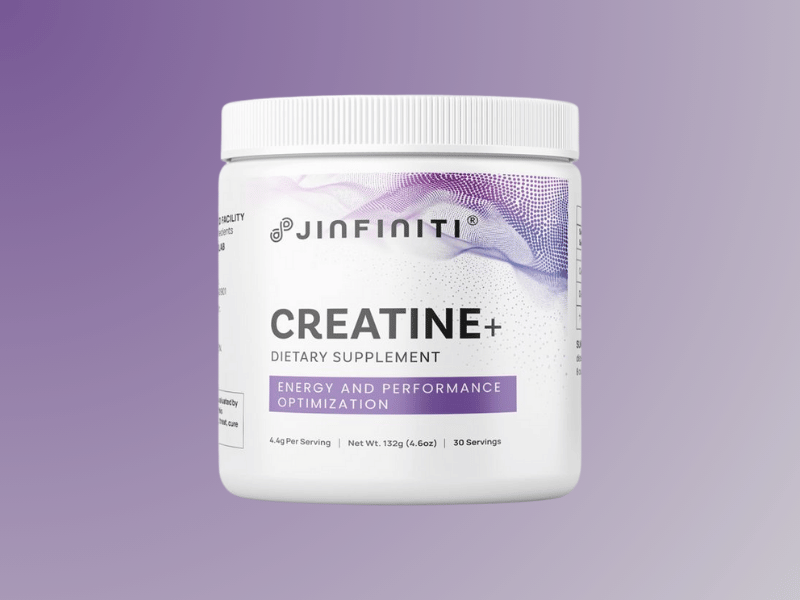
Dr. She’s Creatine Formula
Pure creatine with ATP for total body performance.
How Does Creatine Work?
Your cells store energy in the form of ATP—a molecule with three phosphate groups. When your muscles need energy, they break one phosphate group off ATP, creating ADP (adenosine diphosphate) and releasing energy for muscle contraction.
This process happens constantly during exercise. The problem is that your muscles only store enough ATP for about 3-10 seconds of maximum effort. You’d run out almost immediately without a system to regenerate ATP from ADP.
That’s where the phosphocreatine system comes in. Phosphocreatine stores an extra phosphate group that can be donated to ADP, quickly converting it back to ATP. This regeneration happens within milliseconds, allowing you to sustain high-intensity effort for longer periods.
Creatine supplementation increases your muscle phosphocreatine stores, giving you a larger reserve of these phosphate groups. More phosphocreatine means you can regenerate ATP faster and for longer during intense activity.
This mechanism explains why creatine improves performance in exercises lasting 3-30 seconds (sprints, weightlifting sets, high-intensity intervals). It also supports recovery between sets—higher phosphocreatine levels mean faster ATP restoration between efforts.
Your brain also uses the ATP-phosphocreatine system, particularly in regions requiring high energy like the prefrontal cortex. This is why creatine supplementation can improve cognitive function, especially during sleep deprivation or mentally demanding tasks.
Health Benefits of Creatine
Muscle Performance and Growth
Research published in Nutrients found that creatine supplementation with resistance training significantly increased upper-body strength (average 4.43 kg gain) and lower-body strength (average 11.35 kg gain) compared to placebo in adults under 50 years old.[2]
The mechanism works through multiple pathways. Better ATP regeneration means you can complete more repetitions at a given weight or lift heavier loads. This increased training volume leads to greater muscle growth over time.
A 2025 meta-analysis in the European Review of Aging and Physical Activity showed that creatine combined with resistance training significantly improved lower limb strength and increased lean tissue mass in older adults, particularly in interventions lasting up to 32 weeks.[3]
Cognitive Function and Brain Health
Your brain consumes roughly 20% of your body’s total energy despite representing only 2% of body weight. This high energy demand makes brain function particularly sensitive to ATP availability.
According to research published in Molecular Neurobiology, creatine supplementation supports hippocampal neurogenesis and cognitive function, with potential benefits for spatial learning, memory consolidation, and emotional regulation in aging populations.[4]
A systematic review in Psychiatry Research examining lifestyle interventions for cognitive function in bipolar disorder found that creatine supplementation was associated with improved verbal fluency in clinical trials.[5]
Creatine may protect brain cells from oxidative stress and support mitochondrial function in neurons. Research is examining potential applications for traumatic brain injury recovery, neurodegenerative diseases, and age-related cognitive decline.
Recovery and Reduced Fatigue
Creatine supplementation reduces markers of muscle damage and inflammation following intense exercise. Studies show lower levels of creatine kinase (a marker of muscle damage) and faster recovery of strength between training sessions.[6]
The faster ATP regeneration between sets means shorter rest periods needed for the same performance. Athletes report being able to maintain higher training volume when supplementing with creatine.
This enhanced recovery isn’t limited to muscles. People report reduced mental fatigue and better sustained attention during cognitively demanding work when taking creatine.
Bone Density and Metabolic Health
Evidence on bone health effects is mixed. A 2-year randomized controlled trial published in Medicine and Science in Sports and Exercise found that creatine supplementation (0.14 g/kg/day) combined with resistance training improved some bone geometric properties at the proximal femur in postmenopausal women, though it did not significantly affect overall bone mineral density.[7]
Research on metabolic effects is ongoing. Some studies suggest creatine may influence glucose metabolism, though more research is needed to establish clear clinical benefits for metabolic health.
Current evidence supports creatine primarily for muscle performance, cognitive function, and recovery rather than bone or metabolic outcomes. The longevity benefits of creatine appear to stem from maintaining muscle mass, cognitive function, and cellular energy as you age.
How to Choose a Creatine Supplement
Creatine Form: What Actually Matters
Creatine monohydrate remains the gold standard with 25+ years of safety data and hundreds of clinical trials. It’s the form used in nearly all research showing benefits for muscle, brain, and performance.
Creatine HCl (hydrochloride) offers higher solubility in water, which manufacturers claim allows for lower effective doses. Research comparing HCl to monohydrate shows similar performance outcomes when both reach equivalent total creatine intake.
Formulas combining creatine with ATP provide both the phosphate donor system (creatine) and direct ATP molecules. This dual approach may offer benefits for immediate energy and sustained performance that single-ingredient products can’t match.
Multi-ingredient formulas pairing creatine with NAD+ precursors target cellular energy production at multiple levels. These combinations make sense for people addressing age-related energy decline, not just workout performance.
Buffered creatine, ethyl ester, and other novel forms have limited research showing advantages over standard monohydrate. Most comparison studies find no significant differences in absorption or results.
Dosage: Clinical Range vs Marketing Claims
Research consistently supports 3-5g daily as the maintenance dose for creatine monohydrate. This amount increases muscle creatine stores to near-saturation levels in most people.
The loading protocol involves 20g daily (split into 4 doses of 5g) for 5-7 days, followed by 3-5g daily maintenance. This saturates muscle stores faster—about 1 week versus 3-4 weeks with standard dosing. Loading is optional, not required.
Some creatine HCl products suggest much lower doses (750mg-1g), claiming enhanced absorption allows for smaller amounts. You need to consider whether these doses approach the 3-5g range established by research, or if you’d need multiple servings to match clinical protocols.
Body weight can influence ideal dosing—larger individuals may benefit from doses at the higher end of the 3-5g range or slightly above it. But the difference isn’t dramatic; a 250-pound athlete doesn’t need twice the dose of a 125-pound person.
Absorption Enhancement: What Works
Micronization reduces creatine particle size, improving how well it dissolves in liquid. This makes consumption easier but doesn’t change absorption once the creatine reaches your digestive system. Standard and micronized monohydrate have similar bioavailability.
Taking creatine with carbohydrates may improve muscle uptake through insulin-mediated transport. A study found 5g creatine with 93g carbohydrates increased muscle creatine accumulation compared to creatine alone. Simple carbs like dextrose or fruit juice work for this purpose.
Combining creatine with protein after training may provide similar benefits, as protein intake also stimulates insulin release. Many people mix creatine into post-workout protein shakes for convenience and potential synergy.
Timing appears less critical than consistency. Research shows similar results whether you take creatine before workouts, after workouts, or at completely different times of day. What matters is daily intake, not precise timing.
Quality Markers That Actually Protect You
Third-party testing certifications like NSF Certified for Sport or Informed Sport verify products are tested for banned substances and contaminants. These are non-negotiable for competitive athletes but provide peace of mind for anyone concerned about product purity.
Creapure® designation indicates German pharmaceutical-grade manufacturing with 99.9%+ purity and rigorous testing for synthesis byproducts. This brand of creatine monohydrate represents the highest purity standard available.
GMP (Good Manufacturing Practice) certification means facilities follow FDA guidelines for quality control, though this doesn’t verify the finished product itself undergoes third-party testing.
Certificates of Analysis (COA) published by manufacturers show batch-specific testing results. Companies that make these readily available demonstrate transparency about product quality.
Form and Convenience Factors
Powder offers the best value per serving and allows flexible dosing. You can adjust amounts easily and mix into beverages of your choice. The main downside is needing to measure and mix daily.
Capsules and tablets provide pre-measured doses and travel convenience. You’ll pay more per gram of creatine, and some people dislike swallowing multiple large pills daily (5g requires several capsules).
Gummies eliminate mixing and offer palatability but cost significantly more than powder. Quality control can be more challenging with gummy formats, as creatine stability in water-based matrices isn’t as well-established as in powders.
Combination formulas with additional ingredients (ATP, NAD+ precursors, etc.) make sense if you want comprehensive cellular support and are willing to pay premium pricing. Single-ingredient products work better for people who want to control each supplement separately.
How We Tested
Independent Evaluation Disclaimer: The products reviewed in this article were evaluated independently based on publicly available information, published research, and product specifications. We have no affiliation with any of the brands mentioned except Jinfiniti, and product inclusion does not constitute endorsement by any manufacturer. Our evaluations represent our analysis only.
We used a systematic methodology to evaluate these creatine supplements based on research alignment, quality verification, and practical considerations for different user needs.
Formula Analysis
We examined each product’s ingredients and dosing:
- Creatine dose: Does it match research-supported ranges (3-5g monohydrate) or provide justification for alternative dosing?
- Form selection: Is the creatine form backed by research, or does it rely primarily on marketing claims?
- Additional ingredients: Do combination ingredients have evidence supporting synergistic benefits, or are they unnecessary additions?
- Purity and fillers: Are there excessive additives, artificial ingredients, or common allergens that limit who can use the product?
We prioritized formulas that align with clinical research protocols and provide clear rationale for any deviations from standard 3-5g monohydrate dosing.
Quality Verification
We assessed each brand’s commitment to transparency and testing:
- Third-party testing: Does the product carry NSF Certified for Sport, Informed Sport, or equivalent verification?
- Published testing results: Can consumers access Certificates of Analysis showing batch-specific purity testing?
- Manufacturing standards: Are facilities GMP-certified with documented quality control procedures?
- Purity standards: For monohydrate products, does the creatine meet pharmaceutical-grade specifications like Creapure®?
Products with publicly verifiable quality testing scored higher than those relying solely on manufacturer claims.
Value Assessment
We considered cost-effectiveness across multiple factors:
- Price per effective dose: What does it cost to get the research-backed amount of creatine daily?
- Additional beneficial ingredients: If combination formulas cost more, do the added ingredients provide meaningful value?
- Convenience premium: For higher-priced formats like gummies, is the convenience worth the cost differential?
- Supply duration: How long does one container last at recommended dosing?
We calculated true per-dose costs accounting for absorption claims and dosing requirements, not just the price on the label.
Research Alignment
We evaluated whether each product’s approach reflects current scientific evidence:
- Form selection: Is there research supporting claimed advantages of alternative forms over monohydrate?
- Dosing protocols: Do recommendations match clinical trial dosing or diverge from established protocols?
- Claimed benefits: Are the advertised benefits supported by research on the specific form and dose provided?
- Novel ingredients: If combining creatine with other compounds, is there evidence these combinations enhance results?
Products that stay closest to proven protocols scored higher than those emphasizing unproven approaches.
The TAO Standard
At Jinfiniti, our TAO philosophy (Test, Act, Optimize) emphasizes data-driven approaches to supplementation. While we couldn’t conduct biomarker testing on every product, we evaluated how well each formula’s design might support measurable improvements based on existing research.
The most effective supplementation includes baseline testing, targeted intervention, and follow-up assessment to verify whether your individual response matches expected outcomes. None of these products can guarantee results without that verification step.
Frequently Asked Questions
What is the recommended creatine dosage?
Research supports 3-5g daily for maintenance. You can reach saturation faster with a loading phase (20g daily for 5-7 days, then 3-5g maintenance), but it’s optional—standard dosing achieves the same saturation in 3-4 weeks versus 1 week with loading.
Should I take creatine daily or cycle it?
Daily intake works best. Research shows creatine benefits continue with consistent use, and cycling off leads to gradual decline in muscle creatine stores over 4-6 weeks. There’s no evidence that cycling prevents tolerance or enhances results.
How long does creatine take to work?
With loading, you’ll likely notice performance improvements within 5-7 days. Without loading, expect 3-4 weeks of consistent daily intake before muscle stores saturate. Individual responses vary based on baseline creatine levels, diet, and muscle mass.
Does creatine cause water retention?
Creatine increases water content inside muscle cells (intracellular water), which contributes to the lean mass gains seen in research. This is different from the bloating or puffiness associated with subcutaneous water retention. The intracellular water is part of creatine’s performance benefits. Some people do report increased urination as their body adjusts to hydration changes.
Can women take creatine?
Women benefit identically from creatine supplementation at the same 3-5g daily dose. Research shows no gender-specific differences in safety or results. Women may actually have more room for improvement, as female baseline creatine stores are 70-80% lower than male stores.
Is creatine safe for long-term use?
Studies show creatine monohydrate is safe for up to 5 years of continuous use at 3-10g daily. Research in healthy individuals finds no adverse effects on kidney or liver function. People with pre-existing kidney conditions should consult their healthcare provider before supplementing.
Can I combine creatine with other supplements?
Creatine combines well with protein, pre-workouts, and other performance supplements. Combining creatine with ATP provides dual-pathway energy support. Adding NAD+ precursors addresses cellular energy at multiple levels.
Creatine and caffeine can be taken together, though some early research suggested potential interaction—current evidence shows no significant issues. Check with your healthcare provider if you take medications or have health conditions.
Does creatine help with brain function?
Research shows creatine improves working memory, processing speed, and cognitive performance under stress (sleep deprivation, mental fatigue). Your brain uses the ATP-phosphocreatine system like muscles do, and supplementation increases brain phosphocreatine levels.
Do I need to take creatine with food?
Creatine absorbs effectively with or without food. Taking it with carbohydrates or protein may enhance muscle uptake through insulin response, but the difference is modest. Consistency matters more than timing or food pairing.
What’s the difference between creatine monohydrate and HCl?
Monohydrate has 25+ years of research backing and 100% bioavailability. HCl dissolves more easily in water, which manufacturers claim allows for lower doses. Research shows similar performance outcomes when both forms reach equivalent creatine intake. Monohydrate remains the gold standard with vastly more evidence.
Can I take creatine if I’m vegan?
Yes. Creatine supplements are typically synthetic (not animal-derived) and suitable for vegans. Vegans and vegetarians often have lower baseline creatine levels than meat-eaters, making supplementation potentially more impactful for plant-based diets.
Will creatine keep me awake at night?
Creatine doesn’t contain stimulants and shouldn’t directly interfere with sleep. Some people report sleep changes when starting supplementation, but this is uncommon. If you experience sleep disruption, try taking creatine earlier in the day.
Can I take creatine while cutting or dieting?
Yes. Creatine helps preserve muscle mass during calorie restriction, making it valuable during fat loss phases. The slight water retention is intramuscular (inside muscle cells), not subcutaneous bloating, and helps maintain performance during training on reduced calories.
Important Medical Disclaimer
This article is intended for informational and educational purposes only and should not be construed as medical advice. The information provided is based on currently available research and product specifications, but individual results may vary.
Consult Your Healthcare Provider: Always consult with a qualified healthcare professional before starting any new supplement regimen, especially if you:
- Have existing medical conditions (particularly kidney or liver disease)
- Take prescription medications
- Are pregnant, nursing, or planning pregnancy
- Have a history of kidney stones
- Are under 18 years old
Not FDA Evaluated: The dietary supplements discussed in this article have not been evaluated by the Food and Drug Administration. These products are not intended to diagnose, treat, cure, or prevent any disease.
Research Limitations: Much of the creatine research involves healthy adults engaging in resistance training or high-intensity exercise. Results from these studies may not directly translate to all populations. Individual responses to supplementation vary based on baseline creatine levels, diet, genetics, training status, and other factors.
Brand Independence: This article provides independent product analysis based on publicly available information. Except for Jinfiniti products, we have no affiliation with the manufacturers mentioned. Product inclusion does not constitute brand endorsement or medical recommendation.
Individual Results Vary: Responses to creatine supplementation depend on factors including baseline muscle creatine stores (influenced by meat intake), muscle mass, training intensity, and genetic variations in creatine transporters. Not everyone experiences the same degree of benefit.
Testing Recommended: We recommend working with a healthcare provider and considering appropriate biomarker testing before and during supplementation to monitor your individual response and ensure supplements are supporting your health goals.
Pricing and Availability: Prices and product availability are subject to change. Formulations may be updated by manufacturers. Please verify current product specifications before purchasing.
For personalized supplement recommendations and health advice tailored to your individual needs, please consult a licensed healthcare professional.
Referenced Sources
- Wilson JM, Joy JM, Lowery RP, Roberts MD, Lockwood CM, Manninen AH, et al. Effects of oral adenosine-5′-triphosphate supplementation on athletic performance, skeletal muscle hypertrophy and recovery in resistance-trained men. Springer Science and Business Media LLC; 2013. https://doi.org/10.1186/1743-7075-10-57
- Wang Z, Qiu B, Li R, Han Y, Petersen C, Liu S, et al. Effects of Creatine Supplementation and Resistance Training on Muscle Strength Gains in Adults <50 Years of Age: A Systematic Review and Meta-Analysis. MDPI AG; 2024. https://doi.org/10.3390/nu16213665
- Liu S, Huang N, Wu W, OuYang X, Luo Y, Zhong Y, et al. The impact of creatine supplementation associated with resistance training on muscular strength and lean tissue mass in the aged: a systematic review and meta-analysis. Springer Science and Business Media LLC; 2025. https://doi.org/10.1186/s11556-025-00392-9
- Zhang Y, Peng Y, Pu J. The Emerging Role of L-Arginine and Creatine Supplementation Combined with Exercise on Hippocampal Neurogenesis, Spatial Learning, and Cognitive Flexibility in Aging and Neurodegenerative Diseases. Springer Science and Business Media LLC; 2026. https://doi.org/10.1007/s12035-025-05586-x
- Balanzá-Martínez V, Galdámez-Huertas A, Sánchez-Ortí JV, Kapczinski F, De Boni RB, Pomarol-Clotet E, et al. Lifestyle-based interventions targeting neurocognition in bipolar disorders – a systematic review of randomized controlled trials. Elsevier BV; 2025. https://doi.org/10.1016/j.psychres.2025.116618
- Wax B, Kerksick CM, Jagim AR, Mayo JJ, Lyons BC, Kreider RB. Creatine for Exercise and Sports Performance, with Recovery Considerations for Healthy Populations. MDPI AG; 2021. https://doi.org/10.3390/nu13061915
- CHILIBECK PD, CANDOW DG, GORDON JJ, DUFF WRD, MASON R, SHAW K, et al. A 2-yr Randomized Controlled Trial on Creatine Supplementation during Exercise for Postmenopausal Bone Health. Ovid Technologies (Wolters Kluwer Health); 2023. https://doi.org/10.1249/mss.0000000000003202
Read More