




You take your creatine scoop and suddenly worry: will this keep me up all night? It’s a common concern, especially if you’ve been told creatine is a “pre-workout” supplement.
Creatine is not a stimulant. It will not rev up your nervous system or raise your heart rate. Recent studies suggest creatine may even improve sleep quality and support recovery overnight.
The misconception that creatine could keep you awake typically comes from it getting lumped together with caffeinated pre-workouts. But the way creatine works in your body has nothing to do with keeping you alert.
What You Should Know
- Creatine contains zero stimulants and won’t prevent you from falling asleep.
- Recent clinical trials show it improves subjective sleep quality, not disrupts it.
- Taking it before bed is safe and may support muscle recovery while you rest.
- The sleep concerns usually stem from mixing creatine with caffeinated supplements.
Does Creatine Affect Your Sleep?
Creatine does affect sleep, but in a positive way. A 2025 clinical trial tested this directly in 14 physically active men over seven days.[1]
Participants took 20 grams of creatine monohydrate daily (split into four servings). Sleep quality scores improved significantly compared to placebo. The effect size was 0.81, which researchers consider large.
What’s interesting: participants naturally went to bed earlier. They weren’t forced to change their sleep schedule. Their bodies simply felt ready for rest sooner.
The study found zero negative effects on sleep latency (time to fall asleep), sleep efficiency, or total sleep time. Your body gets the same amount of quality rest, potentially even better.
The mechanism makes sense. Creatine supports ATP production in the brain without stimulating your nervous system. Think of it as charging a battery, not flipping a light switch.
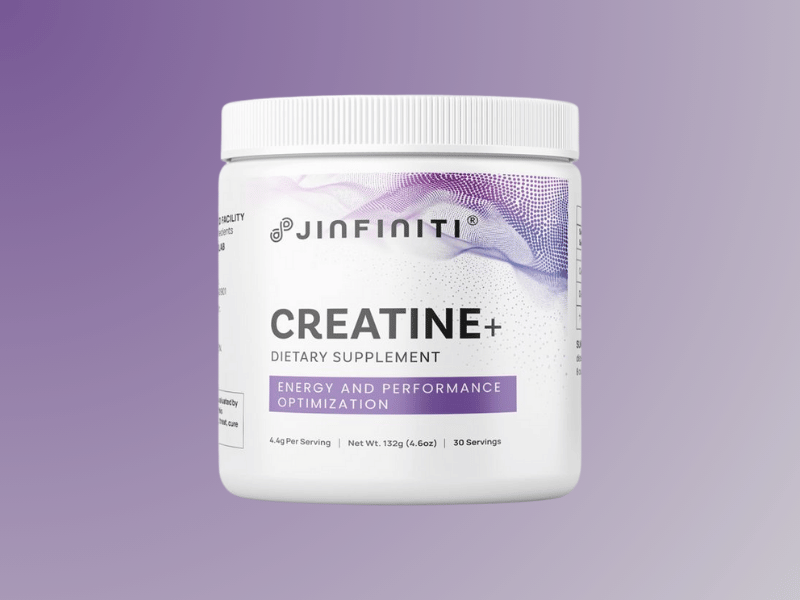
Dr. She’s Creatine Formula
Pure creatine with ATP for muscle and brain health.
Will Creatine Keep You Awake?
No. Creatine is not a stimulant. It doesn’t contain caffeine, doesn’t block adenosine receptors, and doesn’t trigger adrenaline release.
The confusion comes from supplement marketing. Many pre-workout formulas combine creatine with 200-300mg of caffeine. When people feel wired after taking these products, they blame the creatine.
How creatine actually works: it regenerates ATP (adenosine triphosphate), your cells’ energy currency. This happens at the cellular level, not through your nervous system. Your muscles and brain get better energy availability without any stimulant effect.
Creatine vs. Caffeine: What’s the Confusion?
Caffeine blocks adenosine receptors in your brain. Adenosine builds up during the day and makes you sleepy. Block it, and you feel alert. This effect lasts 6-8 hours and directly interferes with sleep.
Creatine supports phosphocreatine stores in your muscles and brain. It helps recycle ATP faster during high-energy demands. This has zero impact on sleep-wake signals.
Timing matters for caffeine. Taking it after 2 PM can disrupt sleep that night. Combining creatine and caffeine works fine for morning workouts, but the caffeine needs to clear your system by evening.
Creatine timing doesn’t matter for sleep. You can take it morning, noon, or night without any wakefulness issues.
Can You Have Creatine Before Bed?

Creatine is completely safe before bed. You won’t lie awake staring at the ceiling.
The same 2025 study that showed improved sleep quality had participants taking creatine throughout the day, including evening doses. No sleep disruptions occurred.[1]
Nighttime dosing actually offers benefits. Your body does serious recovery work while you sleep. Muscle protein synthesis peaks during deep sleep. Brain cleanup processes remove metabolic waste.
Creatine supports all of this. It provides the energy substrate your cells need for repair and regeneration. You’re essentially fueling overnight recovery.
“Creatine acts as a temporal and spatial energy buffer,” explains Dr. Jin-Xiong She, founder of Jinfiniti Precision Medicine. “It helps maintain ATP availability when cells face high metabolic demands, including during sleep’s intensive restorative processes.”
Some people prefer taking creatine before bed because they forget morning supplements. That’s fine. Consistency matters more than timing.
Best Times to Take Creatine
Any time works. Your creatine stores build up gradually over weeks, not hours. The specific timing of each dose matters far less than taking it every single day.
Morning works well if you want it with breakfast. Post-workout makes sense if you’re already making a protein shake. Before bed is convenient for nighttime routine builders.
The “best” time is whenever you’ll remember to take it consistently. Creatine needs to reach saturation levels in your muscles (typically after 4-6 weeks of daily use). Missing doses slows this process more than any timing optimization helps.
🧬 MORE CREATINE INSIGHTS
- Sleep isn’t the only myth about creatine timing. Understanding when and how to take creatine helps you get the most from supplementation.
- Choosing the right supplement matters too. Learn how taurine compares to creatine for different health goals.
- Even if you don’t exercise, taking creatine without working out still supports brain function and healthy aging.
Can Creatine Cause Insomnia?
No credible research links creatine monohydrate to insomnia. The clinical data shows the opposite.
Sleep deprivation research from 2025 found something surprising: when people went 24 hours without sleep, their serum creatine levels increased (note this is different from creatinine). Your body naturally mobilizes more creatine as a protective mechanism during sleep loss.[2]
This suggests creatine helps buffer against the metabolic stress of insufficient sleep, rather than causing it.
When people do report sleep issues after starting creatine, the culprit is usually other ingredients. Beta-alanine causes tingling sensations that some find uncomfortable at night. Caffeine from pre-workout mixes is the obvious sleep disruptor.
Pure creatine monohydrate, taken alone, does not interfere with sleep architecture or cause insomnia.
What About Vivid Dreams?
Some users report more vivid or memorable dreams after starting creatine. There’s no published research confirming this effect.
The possible mechanism, if real, relates to brain energy metabolism. Creatine crosses the blood-brain barrier and supports neural ATP production. Enhanced brain metabolism during REM sleep could theoretically affect dream intensity or recall.
How Creatine Actually Improves Sleep Quality
Your brain uses massive amounts of energy during sleep. That sounds backwards, but sleep isn’t passive rest. Your brain actively consolidates memories, clears metabolic waste, and performs cellular repairs.
All of this requires ATP. Lots of it.
Creatine helps maintain ATP availability throughout the night. Research on high-energy phosphate consumption during sleep deprivation shows creatine balances hemispheric brain activity. When people stayed awake 21 hours, their right hemisphere showed greater ATP depletion. Creatine supplementation (0.35g/kg) helped restore balance.[3]
This energy support translates to better neurotransmitter synthesis. Serotonin and dopamine production require ATP. These neurotransmitters regulate mood, stress response, and sleep-wake cycles.
The 2025 clinical trial also found creatine reduced muscle soreness. Less physical discomfort means fewer sleep disruptions from tossing and turning. You rest more comfortably.[1]
These benefits extend to cognitive function the next day. The same study showed improved performance on the digit cancellation test, which measures attention and processing speed. Better sleep quality plus enhanced brain energy metabolism equals sharper thinking.
“The brain has limited storage capacity for creatine compared to skeletal muscle,” notes Dr. She. “But the creatine that does accumulate in neural tissue plays an important role in maintaining cognitive function, especially when sleep quality is compromised.”
Taking creatine won’t replace the need for adequate sleep. But it may help your brain and body make the most of the rest you do get, particularly for older adults who experience natural declines in both sleep quality and creatine synthesis.
Referenced Sources
- 1. Ben Maaoui K, Delleli S, Mahdi N, Jebabli A, Del Coso J, Chtourou H, et al. Effects of Creatine Monohydrate Loading on Sleep Metrics, Physical Performance, Cognitive Function, and Recovery in Physically Active Men: A Randomized, Double-Blind, Placebo-Controlled, Crossover Trial. MDPI AG; 2025. https://doi.org/10.3390/nu17243831
- 2. Todorovic N, Nedeljkovic D, Panic J, Ostojic SM. Sleep deprivation elevates circulating creatine levels in healthy adults: a pilot study. Springer Science and Business Media LLC; 2025. https://doi.org/10.1007/s41105-025-00587-8
- 3. Gordji-Nejad A, Matusch A, Kleedörfer S, Patel HJ, Drzezga A, Elmenhorst D, et al. Hemispheric asymmetry in high-energy phosphate consumption during sleep-deprivation is balanced by creatine. Frontiers Media SA; 2025. https://doi.org/10.3389/fnins.2025.1515761
