




Have you ever looked up creatine supplements online and found yourself on a page about creatinine lab results? Yeah, us too. They sound almost identical, and since both exist in your body, the mix-up is common.
Creatine helps fuel your muscles (and supports brain function). Creatinine is the leftover waste your body makes after using creatine.
So when creatinine shows up elevated on bloodwork, it can look like a red flag for kidney issues, even if the real culprit is a supplement or a tough workout. Let’s sort out the difference.
What You Should Know
- Creatine powers high-intensity muscle contractions and brain energy needs through ATP regeneration
- Creatinine is the waste product created during the breakdown of creatine
- Blood creatinine levels help doctors check kidney health but can rise naturally from exercise or supplementation
- Taking creatine supplements may slightly increase creatinine without indicating kidney problems in healthy people
Key Differences Between Creatine and Creatinine
The easiest way to understand creatine vs creatinine is through their roles in your body.
Creatine is an energy source for your cells. Your body produces about 1 gram of it each day in your liver and kidneys from three amino acids (glycine, arginine, and methionine). You also get it from eating meat and fish, which contain about 1 gram per pound of meat or fish.
About 95% of your body’s creatine is in your muscles, where it is used to regenerate ATP (adenosine triphosphate). ATP is the molecule that provides energy for all of your cell functions. The other 5% is in your brain, heart, and other organs that require immediate energy bursts.
Creatinine is a metabolic waste product. Approximately 1.7-2.5% of your body’s total creatine content is spontaneously converted to creatinine every day. This is a non-enzymatic reaction which requires no biological signal, just chemistry doing its thing[1].
Creatinine is then transported by your blood until your kidneys filter it out into your urine. It has no biological purpose outside of its use as a convenient indicator of kidney function.
Creatinine is directly related to creatine. The more creatine there is in your body, the more creatinine there will be. This is not a defect in your body, this is how your body is supposed to work. An athlete, especially someone who supplements, will have higher levels of creatinine than a couch potato. This is normal and acceptable as long as the kidneys are functioning normally.
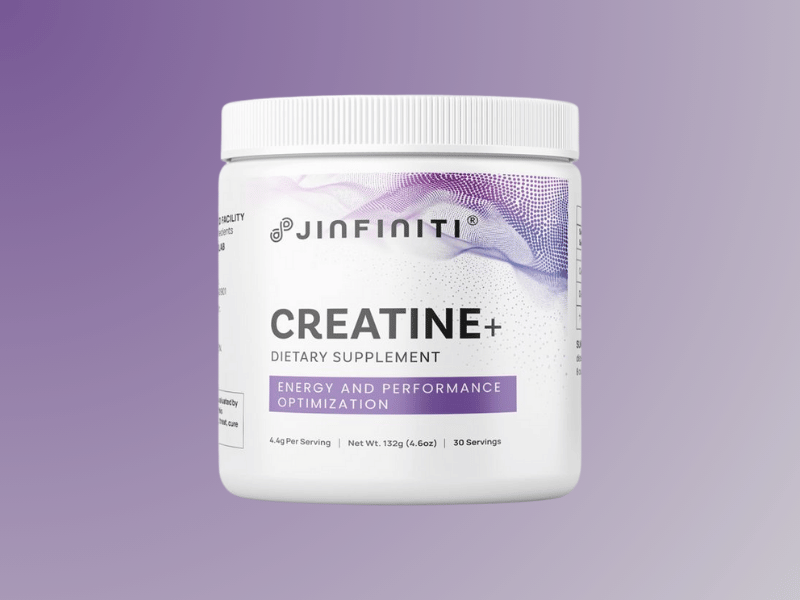
Dr. She’s Creatine Formula
Pure creatine with ATP for total body performance.
What Does Creatine Do in Your Body?
Creatine’s reputation as a muscle supplement barely scratches the surface of what this molecule does for your cells.
Energy Production and ATP
Remember high school biology? ATP is the battery in our cells. ATP is used in virtually all cellular functions from muscle contraction to nerve impulses in the brain. Anytime we sprint, lift weights or even think, we are depleting ATP.
Creatine’s job is ATP regeneration. Your muscles store creatine as phosphocreatine, which donates its phosphate group back to spent ATP molecules, instantly recharging them. This system works about 10 times faster than burning glucose or fat for energy[2].
But phosphocreatine stores are limited. They only last 5-8 seconds during all-out effort. That’s why creatine matters most for explosive, high-intensity activities like sprinting, heavy lifting, or jumping.
Dr. Richard Kreider, who’s spent 30+ years studying creatine at Texas A&M University, puts it this way: “When the body is stressed, like in exercise or under metabolic conditions like some diseases, creatine phosphate is needed to maintain energy in the cell, and therefore has a lot of protective and health benefits.”
Performance Benefits Beyond the Gym
Creatine loading generally results in a 10-40% increase in skeletal muscle creatine[3]. A few real-life examples of this performance effect are:
- Strength and power: On average, multiple studies have reported 5-15% greater improvements in strength training performance when supplementing with creatine compared to placebo[4].
- Muscle mass: Creatine use contributes to increased lean tissue growth when combined with resistance exercise[5].
- Recovery capacity: Your muscles refill their energy tanks faster between sets or training sessions, letting you maintain quality work even when fatigue sets in.
Most research points to 3-5 grams daily for maintenance, with an optional loading phase of 20-25 grams per day for 5-7 days to saturate stores faster. Creatine monohydrate is the gold standard — it has more than 1,000 supporting studies, unlike fancier forms of creatine that cost more but work no better.
Cognitive and Brain Health Effects
Your brain uses 20% of the body’s energy despite being only 2% of your weight. Creatine can increase the energy available to your brain.
One 2024 meta-analysis in Frontiers in Nutrition that included 16 randomized controlled trials showed creatine supplementation improved memory, attention span, and speed of information processing in adults[6]. These benefits are most pronounced during metabolic stress, including sleep deprivation, mental fatigue, or aging.
In a 2003 study, vegetarians who took 5 grams of creatine daily for six weeks performed better on intelligence tests and had better working memory compared to a placebo group. The authors concluded the effect was more marked in subjects having low creatine stores at baseline[7].
What Does Creatinine Tell You About Your Health?
Creatinine is a mostly inert molecule. It serves no biological function except as a marker, which is why it’s useful to clinicians measuring kidney function.
As a small molecule that doesn’t bind to proteins, creatinine gets freely filtered through your kidneys’ glomeruli. The kidneys don’t reabsorb it or break it down, so measuring how much creatinine sits in your blood tells doctors how well your kidneys are clearing waste.
The normal range for serum creatinine is 0.5-1.1 mg/dL for women and 0.6-1.2 mg/dL for men. There are a few factors that can change these ranges, including muscle mass, age, sex, and race.
If kidney function begins to decline, serum creatinine will rise. When filtration is inefficient, creatinine backs up and accumulates in your blood. Clinicians measure creatinine to calculate your estimated glomerular filtration rate (eGFR), the primary measure used to stage chronic kidney disease.
The issue with creatinine as a marker is that it’s a lagging indicator. You must lose about 50% of kidney function before creatinine begins to rise enough to notice.
Normal vs Elevated Creatinine Levels
Doctors stage kidney disease using eGFR calculated from your creatinine:
- Stage 1: eGFR ≥90 mL/min/1.73m² with signs of kidney damage
- Stage 2: eGFR 60-89 mL/min/1.73m²
- Stage 3a: eGFR 45-59 mL/min/1.73m²
- Stage 3b: eGFR 30-44 mL/min/1.73m²
- Stage 4: eGFR 15-29 mL/min/1.73m²
- Stage 5: eGFR <15 mL/min/1.73m² (kidney failure)
The big problem with using creatinine alone to assess kidney function is that the amount of creatinine your body produces is almost entirely dependent on how much muscle mass you have. Bodybuilders produce more creatinine than couch potatoes, for example, because they have more muscle (breaking down more creatine).
Creatinine production is also affected by what you eat or supplement (steak dinner, creatine supplements, etc.) on a temporary basis.
For these reasons, many doctors now test cystatin C in addition to creatinine to estimate kidney function more accurately. Cystatin C is not affected by muscle mass or diet.
🧬 MORE CREATINE INSIGHTS
- Muscle gains aren’t creatine’s only benefit. Taking creatine without working out still supports brain function and cellular energy.
- Plant-based diet? Learn why creatine for vegans delivers even better results than for meat-eaters.
- New to supplementation? Our creatine starter guide breaks down loading phases, timing, and dosing strategies.
Does Creatine Increase Creatinine Levels?
Creatine supplementation increases serum creatinine, but this is not an indicator of kidney damage.
A 2023 systematic review and meta-analysis of 21 creatine supplementation trials found an average 0.07 µmol/L increase in serum creatinine (p < 0.01). This was a statistically significant effect, but also a clinically very small one. The same meta-analysis found no change in measured GFR, which supports the conclusion of preserved kidney function[8].
Why does creatine increase serum creatinine? When more creatine is stored in your muscles, it means that more creatine is converted into creatinine through normal metabolism. It’s an indicator of increased creatine turnover, not kidney damage.
A 2020 study directly tested this in humans using novel renal biomarkers. In this study, 19 healthy subjects were randomized to 3 or 5 g of creatine daily for 35 days. Creatinine increased as expected, but cystatin C, proteinuria, albuminuria, and markers of tubular injury did not change. In other words, the kidneys were perfectly healthy[9].
NHANES data of 2,955 U.S. adults found no association between dietary creatine intake (≥2.0 g/day) and kidney dysfunction[10].
Should You Worry About Higher Creatinine?
For healthy people taking creatine at recommended doses (3-5 grams daily), elevated creatinine is expected physiology, not pathology.
Dr. Morgan Grams emphasizes measuring both creatinine and cystatin C to have a better understanding of kidney function: “Our findings highlight the importance of measuring both creatinine and cystatin C to gain a true understanding of how well the kidneys are working, particularly among older and sicker adults.”
If your creatinine rises while supplementing with creatine:
- Don’t panic: Your kidneys are likely fine, you’re just producing more creatinine.
- Check cystatin C: This will tell you whether kidney function is actually declining.
- Consider context: Did you exercise hard recently? Eat a protein-heavy meal? These temporarily raise creatinine too.
- Review medications: Some drugs (like certain antibiotics) can affect creatinine levels.
If you have pre-existing kidney disease, consult your doctor before starting creatine. While research suggests creatine is safe for those with healthy kidneys, data is limited for those with compromised renal function[11].
How to Use Creatine Safely
Creatine monohydrate is the supplement form backed by more than 1,000 peer-reviewed studies. Other forms (hydrochloride, ethyl ester, buffered) cost more but don’t perform better.
Standard dosing follows two approaches:
With loading phase:
- Days 1-7: 20-25 grams daily, split into 4-5 doses
- Day 8 onward: 3-5 grams daily for maintenance
- Saturates muscles in one week
Without loading phase:
- 3-5 grams daily from day one
- Saturates muscles in 3-4 weeks
- Same endpoint, just slower
Both work. The loading phase gets you results faster but isn’t required.
You can also dose by body weight: 0.10-0.14 grams per kilogram daily. A 70-kilogram person would take 7-9.8 grams, which falls in the 3-5 gram standard range for most people.
Should I Take a Creatine Supplement?
Creatine is a good idea for anyone with muscles, but it may be especially effective for the following groups of people:
Vegetarians and vegans: Creatine only occurs naturally in animal products, so vegetarians and vegans get no creatine from their diet. Studies show vegetarians have 20-30% lower muscle creatine stores compared to omnivores[12].
Older adults: A 2021 meta-analysis showed that creatine supplementation, combined with resistance training, resulted in increased lean tissue mass and strength in older adults[13].
Athletes and active people: Anyone doing high-intensity, short-duration activities (weightlifting, sprinting, martial arts, basketball) will see performance gains.
People with cognitive stress: Sleep deprivation, mental fatigue, long study sessions or other periods where your brain is working hard seem to benefit the most from creatine supplementation.
Dr. Jin-Xiong She emphasizes that creatine isn’t just for athletes: “Creatine is very safe, and it’s important for everybody, not just athletes and bodybuilders.”
Frequently Asked Questions
These are the questions people ask most often when they discover the creatine-creatinine connection.
Does creatine damage your kidneys?
Lots of research shows that creatine at recommended doses (3-5 grams per day) does not negatively affect kidney function in healthy people. A 2025 review found no meaningful difference in side effect rates between creatine and placebo groups. Long-term studies lasting up to 21 months found no adverse effects on kidney or liver function[14].
The misunderstanding is related to increased creatinine levels in creatine users. As we mentioned above, higher creatinine simply means there is more creatine turnover. It’s not an indication of kidney damage. If you’re worried about this, ask your doctor to check cystatin C with creatinine to get a more accurate reading of your kidney function.
Can I take creatine if I have high creatinine levels?
It depends on why your creatinine is elevated. If you have diagnosed kidney disease, talk to your doctor before supplementing. If you have normal kidneys that just run high creatinine due to muscle mass or exercise, creatine supplementation is likely safe, but be sure to get clearance from a doctor first.
Your doctor should order additional tests (cystatin C, measured GFR, urinalysis) to see if your kidneys actually have problems or whether you’re just producing more creatinine.
Is creatine safe for long-term use?
Yes. Studies extending up to 21 months show no adverse effects from continuous creatine use. The International Society of Sports Nutrition states that creatine monohydrate is one of the most well-researched supplements with an excellent safety profile[15].
Common myths about creatine causing dehydration, cramping, or hair loss lack scientific support. Evidence actually suggests creatine may prevent cramping by improving cellular hydration and electrolyte balance.
Referenced Sources
- Kashani K, Rosner MH, Ostermann M. Creatinine: From physiology to clinical application. Elsevier BV; 2020. https://doi.org/10.1016/j.ejim.2019.10.025
- Guimarães-Ferreira L. Role of the phosphocreatine system on energetic homeostasis in skeletal and cardiac muscles. FapUNIFESP (SciELO); 2014. https://doi.org/10.1590/s1679-45082014rb2741
- Kreider RB, Stout JR. Creatine in Health and Disease. MDPI AG; 2021. https://doi.org/10.3390/nu13020447
- Wax B, Kerksick CM, Jagim AR, Mayo JJ, Lyons BC, Kreider RB. Creatine for Exercise and Sports Performance, with Recovery Considerations for Healthy Populations. MDPI AG; 2021. https://doi.org/10.3390/nu13061915
- Chilibeck P, Kaviani M, Candow D, Zello GA. Effect of creatine supplementation during resistance training on lean tissue mass and muscular strength in older adults: a meta-analysis. Informa UK Limited; 2017. https://doi.org/10.2147/oajsm.s123529
- Gordji-Nejad A, Matusch A, Kleedörfer S, Jayeshkumar Patel H, Drzezga A, Elmenhorst D, et al. Single dose creatine improves cognitive performance and induces changes in cerebral high energy phosphates during sleep deprivation. Springer Science and Business Media LLC; 2024. https://doi.org/10.1038/s41598-024-54249-9
- Rae C, Digney AL, McEwan SR, Bates TC. Oral creatine monohydrate supplementation improves brain performance: a double-blind, placebo-controlled, cross-over trial. The Royal Society; 2003. https://doi.org/10.1098/rspb.2003.2492
- Naeini EK, Eskandari M, Mortazavi M, Gholaminejad A, Karevan N. Effect of creatine supplementation on kidney function: a systematic review and meta-analysis. Springer Science and Business Media LLC; 2025. https://doi.org/10.1186/s12882-025-04558-6
- de Oliveira Vilar Neto J, da Silva CA, Meneses GC, Pinto DV, Brito LC, da Cruz Fonseca SG, et al. Novel renal biomarkers show that creatine supplementation is safe: a double-blind, placebo-controlled randomized clinical trial. Oxford University Press (OUP); 2020. https://doi.org/10.1093/toxres/tfaa028
- Ostojic SM. Dietary creatine and kidney function in adult population: NHANES 2017–2018. Wiley; 2021. https://doi.org/10.1002/fsn3.2200
- Taner B, Aysim O, Abdulkadir U. The effects of the recommended dose of creatine monohydrate on kidney function. Oxford University Press (OUP); 2010. https://doi.org/10.1093/ndtplus/sfq177
- Kaviani M, Shaw K, Chilibeck PD. Benefits of creatine supplementation for vegetarians compared to omnivorous athletes: a systematic review. MDPI AG; 2020. https://doi.org/10.3390/ijerph17093041
- Forbes SC, Candow DG, Ostojic SM, Roberts MD, Chilibeck PD. Meta-analysis examining the importance of creatine ingestion strategies on lean tissue mass and strength in older adults. MDPI AG; 2021. https://doi.org/10.3390/nu13061912
- Gil A, Gonzalez DE, Hines K, Bonilla DA, Kreider RB. Safety of creatine supplementation: analysis of the frequency of reported side effects in clinical trials. Informa UK Limited; 2025. https://doi.org/10.1080/15502783.2025.2533688
- Kreider RB, Kalman DS, Antonio J, Ziegenfuss TN, Wildman R, Collins R, et al. International Society of Sports Nutrition position stand: safety and efficacy of creatine supplementation in exercise, sport, and medicine. Informa UK Limited; 2017. https://doi.org/10.1186/s12970-017-0173-z
