
Vitamin B3 Test: Measuring Niacin Metabolites and Ranges
You asked your doctor for a blood test for Vitamin B3. Finally, you thought, some answers as to why you were feeling so out of energy.
The issue: blood tests for niacin (vitamin B3) can miss the mark. Levels can change dramatically based on what you ate for breakfast that morning. This is why they are the least reliable marker for assessing your nutritional status.
Want to know what your Vitamin B3 status is really saying about your health? Learn which test to request and what the numbers mean.
What You Should Know
- Vitamin B3 blood tests measure current levels but miss long-term nutritional status
- Urine metabolite tests give the most accurate picture of your B3 stores
- Testing makes sense only for specific symptoms or high-dose supplementation
- Your NAD+ levels matter more than isolated niacin measurements for cellular health
What Does a Vitamin B3 Test Measure?
Testing for Vitamin B3 isn’t as straightforward as checking cholesterol or blood sugar. You’re actually measuring different forms and breakdown products that tell different stories about your health.
The main challenge? Your body processes niacin so quickly that a snapshot measurement rarely tells the full story.
Blood Testing Methods
Blood tests look for two forms of B3 in your plasma or serum: nicotinic acid (the form that causes flushing) and nicotinamide (the non-flushing form).
These tests work well for one thing: catching toxicity in people taking high-dose niacin therapy for cholesterol. A cardiologist might use them to check if your therapeutic dose is pushing into dangerous territory.
But for everyday nutritional status? They’re nearly useless. According to the National Institutes of Health, “levels of niacin in the blood are not reliable indicators of niacin status.”
Your blood niacin levels jump after eating anything with B3 or after taking niacin supplements. Two hours later, they’ve dropped again.
Urine Metabolite Analysis (The Gold Standard)
Your body breaks down niacin into specific compounds that end up in your urine. These metabolites paint a much clearer picture than blood tests ever could.
Labs look for two key metabolites:
- N1-methylnicotinamide (NMN): Not to be confused with the NAD+ precursor, this methylated form shows how much niacin your body processed recently.
- 2-pyridone (2-Pyr): Another breakdown product that, when measured alongside NMN, reveals your true niacin stores.
Why does urine work better? Your kidneys excrete these metabolites consistently over 24 hours, smoothing out the spikes and drops you see in blood. Low levels of both metabolites directly signal depleted body stores.
Research published in the Journal of Nutrition confirms that urinary metabolites are “the most sensitive and reliable measure of niacin status[1].”
You’ll need either a 24-hour urine collection (the gold standard) or a spot urine test with creatinine correction. The 24-hour test gives the most accurate reading but requires you to collect every drop of urine for a full day.
CLIA-Certified NAD Test Kit
Test your NAD+ levels from home.
Normal Vitamin B3 Reference Ranges
Lab ranges vary depending on the testing method and laboratory, so always check your specific lab report first. These are typical ranges you’ll encounter.
Blood Test Ranges
| Analyte | Normal Range | What High Levels Mean |
|---|---|---|
| Nicotinic Acid | < 5.0 – 20 ng/mL | Taking supplements or therapeutic doses |
| Nicotinamide | 5.0 – 48.0 ng/mL | Recent niacin intake |
| Therapeutic Levels | Can exceed 1,000 ng/mL | Used for cholesterol management |
Source: Mayo Clinic Laboratories
Urine Test Ranges
| Metabolite Levels | Status | What It Means |
|---|---|---|
| Combined (NMN + 2-Pyr) > 17.5 micromol/day | Adequate | Body stores are healthy |
| Combined 5.8 – 17.5 micromol/day | Low | Heading toward deficiency |
| Combined < 5.8 micromol/day | Deficient | Serious depletion |
| NMN < 0.5 mg/g creatinine | Deficient | Spot test showing depletion |
Source: Principles of Nutritional Assessment
These cutoffs come from population studies tracking niacin status against pellagra symptoms. If your combined metabolites drop below 5.8 micromol per day, your body is running on fumes.

When Should You Get Tested?
Most people never need a niacin test. The vitamin is so widespread in foods that deficiency is rare in developed countries. Testing makes sense only in specific situations.
Signs of Deficiency (Pellagra)
Pellagra presents with “the 4 Ds,” a collection of symptoms that get worse without treatment:
- Dermatitis: Thick, scaly rashes appear on sun-exposed skin, often called “Casal’s necklace” when it circles your neck. The skin darkens and becomes rough.
- Diarrhea: Chronic digestive issues, including a bright red, swollen tongue (glossitis). Your GI tract basically shuts down properly processing nutrients.
- Dementia: Mental confusion, memory loss, depression, or even hallucinations. Your brain needs niacin to function.
- Death: Without treatment, pellagra kills. That’s how serious severe deficiency becomes.
You’re at higher risk if you’re an alcoholic, have malabsorption disorders like Crohn’s disease, or rely heavily on corn as a dietary staple without proper preparation. Carcinoid syndrome also depletes niacin because tumor cells hijack tryptophan (which normally converts to niacin) for their own purposes.
If you see these symptoms, your doctor will likely test urinary metabolites to confirm pellagra before starting treatment. Treatment is straightforward: high-dose niacin supplementation reverses symptoms quickly.
Symptoms of Niacin Toxicity
On the flip side, taking too much niacin causes its own set of problems. This usually happens from supplements, not food.
The most common issue? Niacin flushing. Your skin turns red, burns, and itches intensely minutes after taking nicotinic acid supplements over 50 mg. This happens because niacin triggers prostaglandin release, dilating your blood vessels.
More serious toxicity symptoms include:
- Hepatotoxicity (liver damage showing up as jaundice or elevated liver enzymes)
- Hyperglycemia (high blood sugar, a problem for diabetics)
- Elevated uric acid (triggering gout attacks)
- Gastrointestinal distress (nausea, vomiting, stomach pain)
People taking therapeutic doses of 1-3 grams daily for cholesterol need regular monitoring. Blood tests every few months check liver function and blood sugar alongside niacin levels.
According to Mayo Clinic Laboratories, “testing of nonfasting specimens can result in elevated plasma vitamin B3 concentrations, particularly in patients with dietary supplement use.”
🧬 MORE VITAMIN B3 INSIGHTS
- Wondering about niacin side effects? Research shows potential risks of high-dose supplementation you should know before starting.
- Struggling with cardiovascular health? Learn how niacin affects heart disease risk according to recent studies.
- Planning to supplement? Get the details on safe niacin dosing ranges for different health goals.
Why Blood Tests Can Mislead You
Blood niacin levels are like checking your bank account five minutes after depositing your paycheck. Sure, it looks great right now, but that snapshot doesn’t show how you’ve managed money all month.
You take a vitamin B complex with breakfast. Two hours later, your blood test shows elevated niacin. Your doctor might think you’re taking too much or have excellent status.
Fast forward six hours. Those same blood levels have dropped dramatically because your kidneys filtered out the excess and your cells grabbed what they needed. That morning spike meant nothing for your long-term nutritional status.
This is why the NIH specifically calls out blood tests as unreliable. The transient nature of blood measurements creates false positives and false negatives constantly.
Urine tests average your niacin processing over many hours, smoothing out these fluctuations. That 24-hour collection captures your body’s actual handling of niacin rather than a random moment in time.
The NAD+ Connection: Why Testing Matters When Supplementing
Here’s where things get interesting for anyone taking niacin supplements: the goal isn’t just having enough Vitamin B3. You want optimal NAD+ levels.
Niacin is a precursor to NAD+ (nicotinamide adenine dinucleotide), a coenzyme every cell in your body needs for energy production, DNA repair, and healthy aging. To convert niacin to NAD+, your cells use several biochemical pathways.
Some people take niacin specifically to drive up their NAD+. However, you can take too much.
“The only way to know if your NAD+ is at an ideal level or if you are overdoing it with niacin supplements is to test,” says Dr. Jin-Xiong She, the founder of Jinfiniti Precision Medicine. “We see people who are taking high-dose niacin and getting NAD+ levels over 100 μM. At that level, you’re not necessarily adding any benefits. You may also be causing problems.”
Jinfiniti’s proprietary research has found that the optimal range of NAD+ is 40-100 μM. Too little and your cells have limited energy. Too much and you run into problems similar to niacin toxicity.
The answer is to test your NAD+ levels directly. This way, you don’t have to guess if your niacin supplement is turning into the coenzyme you want at the cellular level.
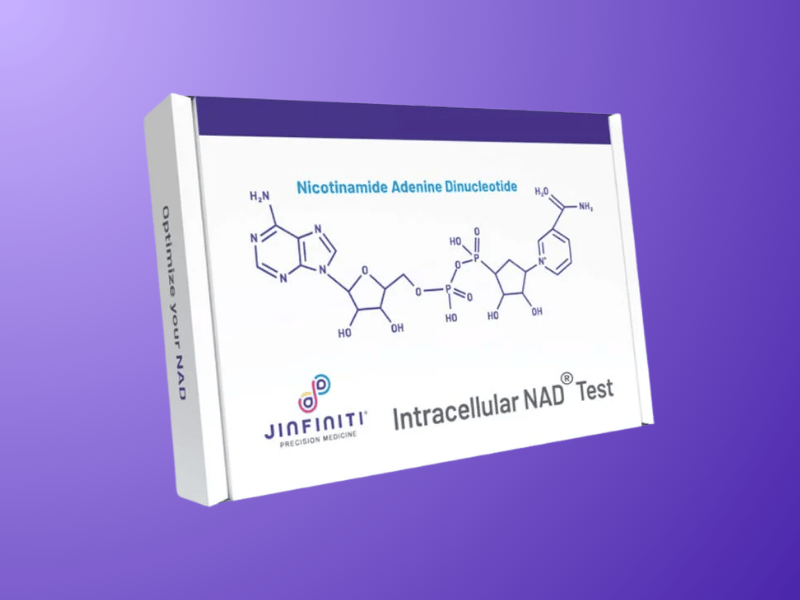
Jinfiniti’s CLIA-Certified Intracellular NAD+ Test measures the actual NAD+ level in your cells. It gives you the real data you need to adjust your supplementation. Testing niacin metabolites tells you if you’re deficient. Testing NAD+ tells you if your cells are actually using that niacin effectively.
How to Prepare for Your Test
Preparation depends on the test ordered by your doctor.
If your doctor has ordered a blood test, you will need to fast for 8-12 hours for the most accurate baseline. This ensures no recent food or supplement spike will skew the results.
Stop taking niacin supplements 24 hours before your blood draw unless your doctor specifically wants to measure therapeutic levels.
For urine metabolite testing, you’ll need special collection containers from your lab. The 24-hour collection starts with discarding your first morning urine, then collecting everything after that for exactly 24 hours.
Keep the collection container in a cool, dark place (some labs provide refrigeration instructions). Don’t add anything to your urine sample, and make sure the container stays sealed between uses.
Maintain your normal diet and medication schedule unless your doctor says otherwise. The goal is measuring your typical niacin status, not creating an artificial situation.
If you’re testing for toxicity and are on high-dose niacin therapy, your doctor will want to see what your normal therapeutic levels look like. Take all medications as directed before the test.
Interpreting Your Results
Your test results come back with numbers, but understanding what they mean for your health takes some context.
- Deficient ranges: If your combined urinary metabolites are below 5.8 micromol/day or your blood NMN is under 0.5 mg/g creatinine, you have confirmed niacin deficiency. Treatment starts immediately with therapeutic niacin doses, typically 100-500 mg daily until symptoms resolve.
- Low normal ranges: Metabolites between 5.8-17.5 micromol/day suggest your stores are declining. You’re not pellagra-level deficient, but you’re heading that direction. Increasing dietary niacin or adding modest supplementation (15-35 mg daily) prevents further decline.
- Optimal ranges: Combined metabolites above 17.5 micromol/day indicate healthy niacin status. Your diet provides enough, or your supplementation is working. No changes needed.
- High ranges: Blood levels above 48 ng/mL for nicotinamide or very high urinary metabolites. You may be over-supplementing, and this is where testing can be useful in people taking therapeutic niacin doses for cholesterol management.
One lesser-known marker they sometimes check is the Niacin Number, which is the NAD/NADP ratio in red blood cells. If it is less than 1.0, the body is headed towards developing a deficiency even before there are signs or symptoms. It’s an early warning system for pellagra, so you can address it before it happens.
Bear in mind, though, that testing B3 in isolation does not give you the full picture. A homocysteine test can be a helpful companion to niacin testing, because B3 is one of the methyl group metabolizers.
If you’re supplementing to boost NAD+ levels, niacin testing alone won’t tell you if your approach is working. You’ll need direct NAD+ testing to be certain that those precursors are being absorbed and utilized.
Think of niacin testing as determining if you’re putting gas in your tank. NAD+ testing is to see if your engine is actually running, and if it’s running efficiently.
Referenced Sources
- Jacob RA, Swendseid ME, McKee RW, Fu CS, Clemens RA. Biochemical Markers for Assessment of Niacin Status in Young Men: Urinary and Blood Levels of Niacin Metabolites. Elsevier BV; 1989. https://doi.org/10.1093/jn/119.4.591
Read More