Turmeric Toxicity: Is It Possible to Overdose on Turmeric?
Yes, you can overdose on turmeric or curcumin. While rare when using the spice in food, high-dose turmeric and curcumin supplements can cause serious side effects. Liver damage, digestive problems, and increased bleeding risk top the list.
Highlights
- Cooking with turmeric is safe, but dietary supplements above 2,000 mg daily can cause liver damage and other serious effects.
- The WHO recommends roughly 200 mg of curcumin per day for a 150-pound person.
- Black pepper extract increases curcumin absorption by 2,000%, making overdose more likely with enhanced supplements.
- Most safe turmeric supplementation studies use 500-2,000 mg daily for short periods (up to 8 weeks).
What is a Turmeric Overdose?
The World Health Organization defines safe daily intake as 0-3 mg of curcumin per kilogram of body weight. For a 150-pound person, that’s roughly 200 mg per day.
Research shows doses up to 8,000 mg of curcumin daily are generally tolerated for short periods[1]. That’s about 40 times the WHO recommendation.
But “tolerated” doesn’t mean “safe.” Recent cases tell a different story.
Real Cases of Turmeric Toxicity
A New Jersey woman nearly lost her liver to a high-dose dietary supplement of turmeric.
The 57-year-old started taking 2,250 mg daily after seeing an Instagram doctor tout health benefits for joint pain. Within weeks, she developed stomach pain, nausea, and dark urine. Her liver enzyme levels spiked to 60 times the normal limit.
Doctors said she was one step away from needing a transplant.
Dr. Dina Halegoua-De Marzio from Jefferson Health explains that cooking with turmeric poses no problem. But supplements at 2,000 mg-plus represent very high doses. When combined with black pepper (added to boost absorption), your liver can’t break down these amounts fast enough.
This isn’t an isolated case.
The National Institutes of Health’s LiverTox database now documents several dozen cases of liver injury from turmeric products. Most involve high-dose supplements but not culinary use. The pattern is clear and concerning.
Why High-Dose Turmeric Can Be Dangerous
Your liver processes curcumin (the active compound in turmeric responsible for its yellow color and therapeutic effects) through a series of chemical reactions. At normal doses, this system handles the workload just fine.
At extremely high doses, the system gets overwhelmed.
Think of it like a water filter. Pour a glass through and it works perfectly. Dump a bucket at once and it can’t keep up.
A 90-day study in rats found that overdose intake of curcumin triggered oxidative stress, inflammation, and metabolic disorders[2]. These changes induced liver injury. The researchers recommended intermittent dosing rather than continuous high-dose administration.
Your liver doesn’t have unlimited processing capacity. Push it too hard and it starts to fail.
Clinical-Grade Formula
Your daily safe dose of turmeric.
What Are the Side Effects of Too Much Turmeric?
The side effects of turmeric at large doses may include stomach upset, acid reflux, diarrhea, constipation, and dizziness. These are your body’s early alert system telling you to back off.
More serious adverse effects include:
1. Liver Stress or Damage
A 55-year-old woman developed progressive jaundice and elevated liver enzymes after taking high-dose turmeric supplements[3]. Her liver function took two full months to normalize after stopping the supplement.
2. Increased Bleeding Risk
Turmeric acts as a blood thinner. This becomes problematic if you’re taking anticoagulant medications or need surgery soon.
The combination can lead to excessive bleeding that’s difficult to control.
3. Kidney Stone Formation
Turmeric is high in oxalates, compounds that can increase urinary oxalate secretion in susceptible people. Calcium oxalate stones make up nearly 80% of all kidney stones.
If you’ve had kidney stones before, high-dose turmeric raises your risk of recurrence.
4. Blood Sugar Drops
If you’re diabetic and taking medication, high-dose turmeric can lower blood sugar too much. The combination might drop your levels into dangerous territory.
5. Heart Rhythm Issues
One case report documented a person experiencing atrioventricular block (a serious heart rhythm disorder) after taking 1,500-2,250 mg of a curcumin-containing supplement[4]. Symptoms resolved within three days of stopping.
They started again when the person resumed the supplement.
How Much Turmeric Is Safe Daily?
For cooking? Use as much as tastes good.
Up to 3 grams (1½ teaspoons) of turmeric powder per day appears to be safefor most adults who consume turmeric in food amounts. You’ll have a hard time eating dangerous amounts of turmeric. It’s simply too dilute.
The daily dose of turmeric supplements gets more complicated.
Most studies suggest that500-2,000 mg of curcumin per day is safe for short-term use(up to 8 weeks). Turmeric products delivering up to 8 grams of curcumin per day appear safe when used for up to 2 months.
The catch is that these high doses of turmeric are well-tolerated in the short term, but may cause some gastrointestinal side effects. Safety of long-term high-dose use is not yet well-established.
No one has conducted studies to prove that it’s safe for years.
🫚 MORE TURMERIC INSIGHTS
- Wondering if turmeric or ginger works better? Compare their anti-inflammatory effects to choose the right option for your needs.
- Nerve pain keeping you up at night? Learn how turmeric helps with neuropathy and what dosage works best for pain relief.
- Discover how turmeric affects cholesterol levels and cardiovascular markers backed by research.
- Choosing between supplements? Find out whether curcumin or turmeric is better for inflammation and which form your body absorbs best.
The Bioavailability Problem Makes Overdose More Likely
Curcumin has notoriously poor absorption. Your body doesn’t naturally take it up well. Most of what you swallow gets metabolized and eliminated before reaching your bloodstream.
So supplement makers add enhancers like piperine (black pepper extract).
Black pepper can increase curcumin absorption by 2,000%. That sounds great for getting benefits. But it also means you’re absorbing far more curcumin than your liver might handle safely at already-high doses.
Compounds like piperine added to enhance bioavailability may be contributing to turmeric’s toxicity. The combination creates a perfect storm: high doses plus dramatically increased absorption.
This is where testing becomes important. You can’t know if your supplementation is helping or hurting without measuring your body’s response.
Who Should Avoid High-Dose Turmeric?
Certain people face higher risks from turmeric supplements.
- Pregnant women. Culinary amounts are fine. High-dose supplements during pregnancy haven’t been adequately studied. Don’t gamble with unknowns while growing a baby.
- People taking blood thinners. Turmeric amplifies these effects, raising bleeding risk. The combination can be dangerous.
- Anyone with gallbladder issues. Turmeric stimulates gallbladder contractions. This can worsen symptoms if you have gallstones or bile duct obstruction.
- People with iron deficiency. High doses can interfere with iron absorption. This makes existing deficiency worse.
- Diabetics on medication. The combination might drop blood sugar too low. Monitor closely if you use both.
- Anyone taking multiple medications. Turmeric may affect how your body processes certain medications. This includes drugs for heart disease, blood pressure, diabetes, and liver conditions.
If any of these apply to you, talk with your doctor before starting turmeric supplements. The risks outweigh potential benefits for many people.
How to Use Turmeric Safely
Smart supplementation starts with a conservative approach.
- Start low and go slow. Begin with 500 mg of curcumin daily (or ¼ teaspoon of turmeric powder in food). See how your body responds over 2-3 weeks before increasing.
- Take it with meals. Food improves absorption and reduces stomach upset. Never take turmeric supplements on an empty stomach.
- Pair strategically. If your supplement doesn’t already include piperine, you can combine turmeric with black pepper and healthy fats (olive oil, avocado, nuts). This improves absorption. But remember this also means you’re getting more curcumin into your system.
- Split your dose. Taking turmeric twice daily (morning and evening) helps maintain steady levels. This approach may reduce side effects compared to one large dose.
- Choose quality products. Look for third-party testing from USP, NSF International, or Informed Choice. Some cheap turmeric powders contain undisclosed fillers like cassava starch or wheat flour. These adulterants can cause problems for people with gluten sensitivity.
- Listen to your body. Digestive discomfort, nausea, or unusual fatigue are signs to reduce your dose or stop temporarily. Don’t push through warning signals.
What Makes Jinfiniti’s Turmeric Different?
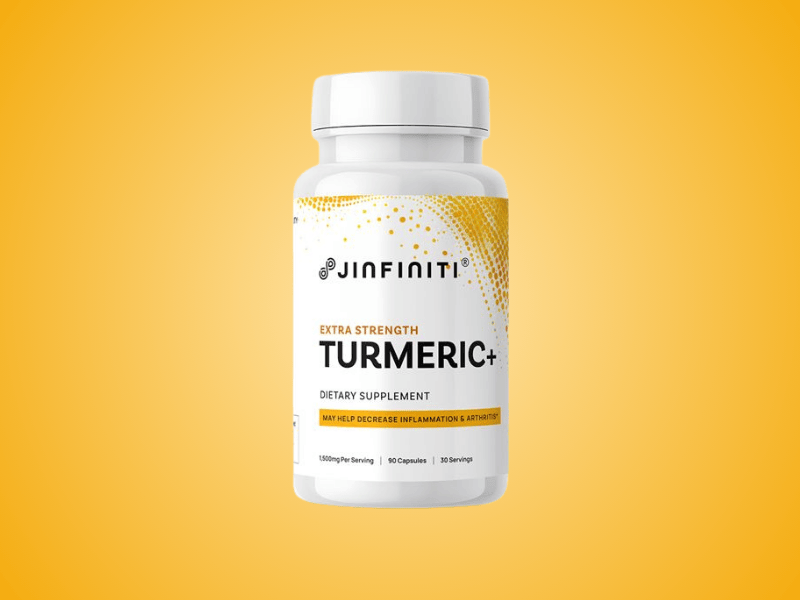
Our turmeric supplement Extra Strength Turmeric+ combines 1,000 mg of turmeric extract (95% curcuminoids) with synergistic compounds. You get Boswellia extract, ginger extract, quercetin, and black pepper extract working together.
The formulation emphasizes balance over mega-dosing. Each capsule contains 333mg of turmeric extract, making it easy to control dosage.
Each ingredient amplifies the others’ anti-inflammatory effects. This allows therapeutic benefits at moderate doses rather than requiring amounts that stress your liver.
The black pepper extract increases bioavailability, but the overall dose stays in the safe, well-studied range. You get effectiveness without excess.
Should You Test Your Response to Turmeric?
Here’s something most supplement users never consider. You’re taking turmeric for a reason—probably to reduce inflammation or support joint health.
But how do you know it’s working?
You might feel better. Or you might be experiencing a placebo effect while inflammation quietly continues.
Jinfiniti’s AgingSOS® longevity panels measure inflammatory markers like C-reactive protein (CRP) and senescence-associated proteins (damaged cells that drive chronic inflammation). These biomarkers tell you whether your anti-inflammatory approach is actually moving the needle.
You can establish a baseline, supplement for 2-3 months, then retest. Real data beats guesswork every time.
Bottom Line on Turmeric Side Effects
Turmeric overdose is rare but real. It happens almost exclusively with high-dose supplements (2,000 mg and above), not from cooking with the spice. Your liver can handle moderate amounts just fine.
But when you combine high doses with bioavailability enhancers, you can overwhelm your body’s processing capacity. The liver gets flooded with more curcumin than it can safely metabolize.
The sweet spot for most people sits between 500-1,500 mg of curcumin daily, taken with food. Stay in this range, choose quality products, and pay attention to your body’s signals.
If you have underlying health conditions or take medications, get medical guidance before supplementing. Some people develop serious complications even at commonly recommended doses.
Natural doesn’t always mean safe at any dose. Even beneficial compounds have limits your liver must respect. Talk to your healthcare provider to know if supplements are safe to take for you.
Referenced Sources
- Howells LM, Iwuji COO, Irving GRB, Barber S, Walter H, Sidat Z, et al. Curcumin Combined with FOLFOX Chemotherapy Is Safe and Tolerable in Patients with Metastatic Colorectal Cancer in a Randomized Phase IIa Trial. Elsevier BV; 2019. https://doi.org/10.1093/jn/nxz029
- Qiu P, Man S, Li J, Liu J, Zhang L, Yu P, et al. Overdose Intake of Curcumin Initiates the Unbalanced State of Bodies. American Chemical Society (ACS); 2016. https://doi.org/10.1021/acs.jafc.6b00053
- Ashika Ajitkumar AA, Mohan G, Ghose M, Yarrarapu S, Afiniwala S. Drug-induced liver injury secondary to turmeric use. SMC Media; 2023. https://doi.org/10.12890/2023_003845
- Lee SW, Nah SS, Byon JS, Ko HJ, Park SH, Lee SJ, et al. Transient complete atrioventricular block associated with curcumin intake. Elsevier BV; 2011. https://doi.org/10.1016/j.ijcard.2009.09.530
Read More