TSH (Thyroid-Stimulating Hormone) Blood Test: Normal Ranges and Results
The TSH test is the most sensitive test for diagnosing thyroid disease. TSH stands for thyroid stimulating hormone, which is secreted by your pituitary gland to signal your thyroid how much thyroid hormone to produce. When your thyroid is under stress your TSH levels change significantly, sometimes before you have any other symptoms.
What You Should Know
- TSH is far more sensitive than other thyroid tests, detecting problems that T4 tests miss 87% of the time
- Normal TSH ranges from 0.4 to 5.0 mIU/L, but optimal levels may sit between 0.45 and 2.5 mIU/L
- High TSH (above 5.0) signals an underactive thyroid, while low TSH (below 0.5) indicates an overactive thyroid
- Your TSH naturally fluctuates throughout the day by up to 2.0 mIU/L, peaking in early morning
CLIA-Certified Longevity Testing
Measure your TSH with our Ultimate Longevity Panel.

What is a TSH Test?
A TSH test measures thyroid-stimulating hormone (TSH), a signal made by your pituitary gland (a small gland at the base of your brain).
Think of it as your thyroid’s “thermostat.” When your body senses thyroid hormone is running low, the pituitary sends out more TSH to tell your thyroid to make more.
TSH is often the first test doctors order because it changes fast when thyroid hormone levels start to drift. Even a small dip in free T4 (one of your main thyroid hormones) can trigger a much bigger jump in TSH. That “amplifier effect” is why TSH can catch early thyroid slowdown before other numbers look clearly abnormal.
Studies comparing TSH to T4 testing have found TSH is generally more sensitive for picking up mild thyroid dysfunction. For example, when T4 drops by about 20%, TSH can rise sharply (one analysis estimated around a 466% increase). That big swing is the clue your clinician is looking for.[1]
As endocrinologist Michael T. Sheehan, MD (Marshfield Clinic) puts it: “A rise in TSH from 1.0 mIU/mL to 5.0 mIU/mL reflects a drop in free T4 from 1.0 ng/dL to just 0.9 ng/dL.”
In other words, in people without pituitary or hypothalamic disease, TSH is often the earliest, most sensitive marker that thyroid function is shifting.
What Are Normal TSH Levels?
Most labs use a reference range of roughly 0.4 to 4.5 mIU/L for TSH (some use 0.4 to 5.0 mIU/L). But “normal” simply means your result falls within a broad population range, not necessarily the level where you feel your best.
Research also suggests that about 95% of healthy adults without thyroid disease have a TSH below ~2.5 mIU/L, which is why some clinicians consider the lower end of the lab range a more “optimal” target for well-being, especially when symptoms are a concern.
TSH Levels (mIU/L) and What Results Mean
| TSH Level (mIU/L) | Interpretation | What It Means |
|---|---|---|
| Below 0.1 | Overt hyperthyroidism | Thyroid signaling is very low, often because thyroid hormone levels are too high. |
| 0.1–0.4 | Subclinical hyperthyroidism | Mildly low TSH while thyroid hormone levels may still be normal. |
| 0.4–1.9 | Often “optimal” (many people feel best here) | Commonly associated with the lowest rates of thyroid dysfunction in population data. |
| 1.0–2.0 | Common “target” zone (often cited) | Frequently used as a practical symptom-management target, especially for people on thyroid medication. |
| Up to ~2.5 | Typical for most healthy adults | Many healthy people without thyroid disease fall below this level. |
| 0.4–4.5 (or 5.0) | Normal (standard lab range) | The broad reference range most labs report. “In range” doesn’t always match symptoms. |
| 2.5–4.5 | High-normal (watch zone for some) | Still “normal,” but can overlap with early thyroid issues in some people, especially if symptoms or thyroid antibodies are present. |
| 4.6–8.0 | Subclinical hypothyroidism | Mildly high TSH while thyroid hormone levels may still be normal. |
| 8.0 and above | Overt hypothyroidism | TSH is high, often because thyroid hormone levels are too low. |
| Up to ~7.5 (age 80+) | Age-adjusted normal (in some labs) | The upper “normal” limit can rise with age depending on the lab and clinician. |
TSH can also vary from day to day (often 40–50% within your personal range) based on time of day, sleep, illness, stress, and certain medications or supplements. That’s why clinicians often confirm results and look at patterns over time, along with free T4 (and sometimes free T3 and thyroid antibodies), rather than relying on a single test.
What Does High TSH Mean?
TSH above 5.0 mIU/L signals hypothyroidism (an underactive thyroid). Your pituitary gland pumps out extra TSH trying to compensate for sluggish thyroid hormone production.
The severity breaks down into two categories:
- Subclinical hypothyroidism: TSH between 4.6 and 8.0 mIU/L with normal free T4 levels. You might not have obvious symptoms yet, but your thyroid is starting to struggle.
- Overt hypothyroidism: TSH at or above 8.0 mIU/L. At this point, you’ll likely notice symptoms like persistent fatigue, weight gain, cold sensitivity, and brain fog.
Between 3.9% and 8.5% of the population has subclinical hypothyroidism. About 52% of people with mildly elevated TSH (5.0-9.9 mIU/L) see their levels normalize on their own without treatment.
The risk of progression to overt hypothyroidism runs about 2.6% per year. That risk jumps to 4.3% per year if you also test positive for anti-TPO antibodies (thyroid peroxidase antibodies).
Common symptoms of high TSH include:
- Unexplained weight gain despite normal eating habits
- Chronic fatigue that doesn’t improve with rest
- Feeling cold when others feel comfortable
- Dry skin and brittle hair
- Constipation and slow digestion
- Depression or mood changes
- Brain fog and memory problems
What Does Low TSH Mean?
TSH below 0.5 mIU/L indicates hyperthyroidism (an overactive thyroid). Your thyroid produces too much hormone, so your pituitary gland cuts back on TSH production.
Like hypothyroidism, hyperthyroidism has subclinical and overt forms:
- Subclinical hyperthyroidism: TSH between 0.1 and 0.4 mIU/L with normal thyroid hormone levels. Only 0.2% to 0.9% of people have this condition.
- Overt hyperthyroidism: TSH below 0.1 mIU/L. Your metabolism runs in overdrive, burning through energy faster than you can replace it.
The progression rate from subclinical to overt hyperthyroidism stays relatively low at 0.5-0.7% over five years. Low TSH becomes more concerning in elderly patients due to increased risks for heart problems and bone loss.
Common symptoms of low TSH include:
- Unexplained weight loss despite eating normally or more
- Racing heart or irregular heartbeat
- Anxiety, nervousness, or irritability
- Hand tremors
- Difficulty sleeping
- Feeling hot and sweating excessively
- Frequent bowel movements
TSH Blood Test vs Thyroid Panels
In patients with subclinical hypothyroidism, 87% of TSH measurements fell outside the normal range. Only 3% of T4 measurements showed abnormalities.[1]
TSH showed less than 10% overlap between healthy people and those with mild hypothyroidism. T4 showed more than 90% overlap. That massive difference means T4 testing misses most cases of early thyroid dysfunction.
The positive predictive value (the likelihood that an abnormal result means you actually have a thyroid problem) reached 100% for TSH compared to 87.5% for T4.
Dr. Sheehan puts it simply: “The increasingly maligned TSH is still the best, and often only, thyroid function test that is needed in the assessment of most patients.”
That said, TSH isn’t perfect. Some people need additional testing for free T4, free T3, and thyroid antibodies. Your doctor might order these tests if your TSH doesn’t match your symptoms or if you’re already on thyroid medication.
Dr. Antonio C. Bianco from the University of Chicago notes a limitation: “Treatment with LT4 that normalizes serum TSH levels does not restore thyroid hormone economy in all patients with hypothyroidism. There is always a relative insufficiency of T3 and, in about 15% of the patients, T3 levels are below the normal reference range.”
🧬 MORE BIOMARKER TESTING
- Prolactin affects thyroid function through multiple pathways. Learn about prolactin testing and what your levels mean.
- DHEAS declines with age and impacts metabolism. Discover what DHEAS testing reveals about aging and stress.
- Antioxidant status protects thyroid cells from damage. Find out why total antioxidant capacity matters for long-term health.
What Affects Your TSH Levels?
Your TSH follows a daily rhythm, peaking in the early morning hours and dropping to its lowest point in late afternoon and evening. This circadian pattern can cause variations of 0.95 to 2.0 mIU/L throughout the day.
Testing your TSH in the morning gives the most consistent results. If you’re monitoring levels over time, try to test at the same time of day each time.
Pregnancy requires different reference ranges for each trimester. Your thyroid works harder during pregnancy to support fetal development, shifting normal TSH ranges lower than usual.
Acute illness can temporarily suppress or elevate TSH even when your thyroid functions normally. Wait until you’ve recovered from major illness or surgery before drawing conclusions from thyroid tests.
Certain medications affect TSH levels:
- Biotin supplements can interfere with test accuracy (stop taking 2-3 days before testing)
- Lithium and amiodarone can alter thyroid function
- Steroids and dopamine can suppress TSH temporarily
When Should You Test Your TSH?
Test your TSH if you experience unexplained symptoms like persistent fatigue, unexpected weight changes, mood shifts, or temperature sensitivity. Many people blame aging for these symptoms when thyroid dysfunction is the real culprit.
Women should consider testing more frequently. Thyroid problems affect women 5-8 times more often than men, especially during and after menopause.
Screening recommendations suggest testing every 5 years starting at age 35. Test more often if you have:
- A family history of thyroid disease
- Other autoimmune conditions
- Type 1 diabetes
- Previous thyroid problems
- Radiation exposure to your neck or head
If you already take thyroid medication, test every 6-12 months or whenever your dose changes. Your body’s needs shift over time, and your medication might need adjustment.
Track Your Thyroid With AgingSOS
TSH tells you about thyroid function, but it’s just one piece of your metabolic health puzzle. Thyroid problems rarely occur in isolation.
Your thyroid, hormones, inflammation markers, and cellular energy systems all work together. Tracking just TSH misses the bigger picture of what’s happening inside your cells.
“Testing single biomarkers gives you single answers,” says Dr. Jin-Xiong She, founder of Jinfiniti Precision Medicine. “Your body doesn’t work in isolation. Thyroid function affects and is affected by dozens of other metabolic processes. We need to see the complete picture to make informed decisions.”
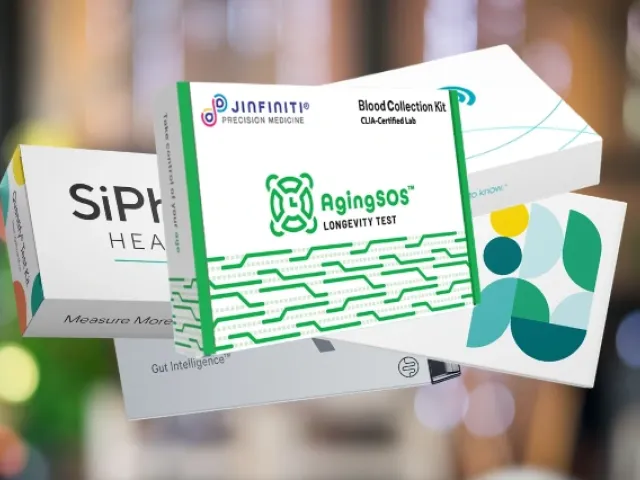
Jinfiniti’s AgingSOS Ultimate Panel measures 48 biomarkers including TSH, free T4, and free T3. This comprehensive view shows how your thyroid fits into your overall health status.
Referenced Sources
- Karar N, Datta S, Datta S, Biswas S, Hussain S, Sen P, et al. Comparison of fasting versus postprandial thyroid function test and growth hormone status in known subclinical hypothyroid patients based on hormonal changes in medical college and hospital, Kolkata. ScopeMed; 2024. https://doi.org/10.5455/njppp.2024.13.072842024202082024
Read More