T4 (Thyroxine) Blood Test: What It Measures and Normal Ranges
A T4 blood test measures thyroxine, the main hormone your thyroid gland produces. Doctors use this thyroid function test to diagnose thyroid disorders, monitor treatment, and catch problems that TSH testing alone might miss.
Your thyroid makes T4 as an inactive storage form that must convert to active T3 before your cells can use it. Testing both TSH and T4 together gives a complete picture of thyroid health.
Low T4 levels can explain persistent fatigue, brain fog, weight gain, and metabolic problems even when TSH looks normal. High T4 levels signal an overactive thyroid that needs treatment.
What You Should Know
- Free T4 tests measure usable thyroid hormone, while total T4 includes inactive, protein-bound hormone
- Normal ranges shift dramatically from infancy through old age and during pregnancy
- Biotin supplements create falsely abnormal results that mimic serious thyroid disease
- Taking your thyroid medication before the test skews results and leads to incorrect dosing
CLIA-Certified Longevity Testing
Check your thyroid health with our Ultimate Longevity Panel.

What is a T4 Test and What Does it Measure?
A T4 test measures thyroxine, the primary hormone your thyroid gland produces. Your thyroid makes T4 using iodine and the amino acid tyrosine through a process orchestrated by an enzyme called thyroid peroxidase.
About 90% of what your thyroid secretes is T4. However, T4 isn’t active. It’s a storage hormone that needs to be converted into the active hormone T3 (triiodothyronine) in your liver, kidneys and other tissues before being used by cells throughout your body.
Your blood contains two forms of T4:
- Bound T4: Between 99.9% and 99.97% is bound to transport proteins like thyroxine-binding globulin (TBG), transthyretin, and albumin. This bound pool acts as a reservoir, protecting your body from sudden hormone swings.
- Free T4: Only the tiny free (unbound) fraction can enter cells or convert to active T3.
That’s why measuring free T4 gives a more accurate picture of thyroid function than measuring total T4.
Think of bound T4 as money in a savings account and free T4 as cash in your wallet. You need savings for stability, but only the cash you can actually spend affects your day-to-day life.
Free T4 vs. Total T4: Which Test Is Better?
Your doctor can order two different T4 tests, and the distinction matters for accurate diagnosis.
Total T4 measures everything, both protein-bound and free hormone. Free T4 measures only the unbound, biologically active fraction. Free T4 is preferred for diagnosing hypothyroidism because it reflects the hormone available to your tissues.
Here’s why that preference exists:
| Test Type | What It Measures | Affected by Protein Changes? | Best Use |
|---|---|---|---|
| Total T4 | Bound + free hormone | Yes, highly sensitive to TBG fluctuations | Screening when free T4 unavailable |
| Free T4 | Unbound hormone only | Minimally, reflects true tissue status | Diagnosis and monitoring |
Why protein binding matters:
Pregnancy, birth control pills, liver disease, and certain medications dramatically change TBG levels. This shifts total T4 up or down while free T4 stays normal. Testing the wrong marker leads to misdiagnosis.
A pregnant woman might have total T4 that looks high but free T4 that’s perfectly normal. Her body simply made more binding protein to support the pregnancy. Treating her for hyperthyroidism based on total T4 alone would be dangerous.
The 2021 ASCO guidelines specifically recommend free T4 over total T4 for this reason. You want to know how much hormone your cells can actually use, not how much is sitting in storage.
Why Your Doctor Orders a T4 Test
Doctors typically order T4 testing for four main reasons:
1. Follow up on an abnormal TSH result
TSH tells you something is wrong with your thyroid axis, but T4 reveals the severity and helps pinpoint where the problem lives.
2. Monitor thyroid medication
If you’re taking levothyroxine for hypothyroidism, your doctor checks both TSH and free T4 every 6 weeks after dose changes and annually once you’re stable. The T4 level shows whether your replacement dose is working.
3. Diagnose the type and severity of thyroid dysfunction
- High TSH with low free T4 = primary hypothyroidism (underactive thyroid)
- Low TSH with high free T4 = hyperthyroidism (overactive thyroid)
The T4 number tells your doctor how aggressive treatment needs to be.
4. Catch central hypothyroidism
This is the overlooked one. When your pituitary or hypothalamus fails to produce enough TSH or TRH (thyrotropin-releasing hormone), your thyroid gets no signal to make hormone. TSH might be low, normal, or only slightly elevated while free T4 is severely deficient.
Relying solely on TSH screening misses these patients. That’s why many laboratories now run TSH and free T4 together as a first-line test.
You might also get T4 testing if you’re on immune reconstitution therapy for multiple sclerosis or being monitored for thyroid cancer recurrence.
Normal T4 Ranges by Age and Life Stage
Thyroid hormone needs change dramatically from birth through old age. Using a one-size-fits-all reference range leads to misdiagnosis at both ends of life.
Pediatric ranges:
Newborns experience a TSH surge after birth that temporarily elevates T4. This is a necessary part of brain development. These levels are highest in the first month and decline continuously through childhood and adolescence.[1]
| Age | Free T4 (ng/dL) | TSH (mU/L) |
|---|---|---|
| At birth | 1.1 – 4.2 | 3.84 – 11.75 |
| 1 month | 0.8 – 2.8 | 1.18 – 3.57 |
| 1 year | 0.8 – 2.8 | 1.17 – 3.55 |
| 5 years | 0.8 – 2.8 | 1.15 – 3.47 |
| 12 years | 0.8 – 2.1 | 1.09 – 3.31 |
| 16-17 years (male) | 0.8 – 2.8 | 1.05 – 3.16 |
| 16-17 years (female) | 0.8 – 1.5 | 1.05 – 3.16 |
| Adult (>18 years) | 0.9 – 1.7 | 0.4 – 4.1 |
Pregnancy ranges:
Pregnancy creates its own set of complications. Your body needs 40% to 100% more thyroid hormone to support both you and your developing baby.
Key changes during pregnancy:
- Estrogen surges increase TBG, raising total T4
- Human chorionic gonadotropin (hCG) acts as a weak TSH mimic, temporarily suppressing TSH while elevating T4
Trimester-specific reference ranges are required to avoid misdiagnosis:[2]
| Pregnancy Stage | TSH (mIU/L) | Free T4 (pmol/L) | Total T4 (μg/dL) |
|---|---|---|---|
| First Trimester | 0.1 – 2.5 | 12.2 – 20.8 | 5.9 – 12.9 |
| Second Trimester | 0.2 – 3.0 | 10.8 – 20.7 | 7.4 – 15.2 |
| Third Trimester | 0.3 – 3.0 | 9.5 – 16.0 | 7.9 – 14.9 |
Thyroid hormone deficiency during the first trimester increases risks of low fetal intelligence, nervous system problems, and stillbirth.
Elderly ranges:
Older adults present another diagnostic challenge. Analysis of the NHANES III database shows the upper limit of normal TSH increases from 3.5 mIU/L in 20-29-year-olds to 7.5 mIU/L in those over 80.[3]
This rise may be adaptive. Studies suggest that as TSH declines within the normal range in elderly people, mortality risk actually increases.
Treating a mildly elevated TSH in an 85-year-old with normal free T4 might do more harm than good.
How to Prepare for Your T4 Test
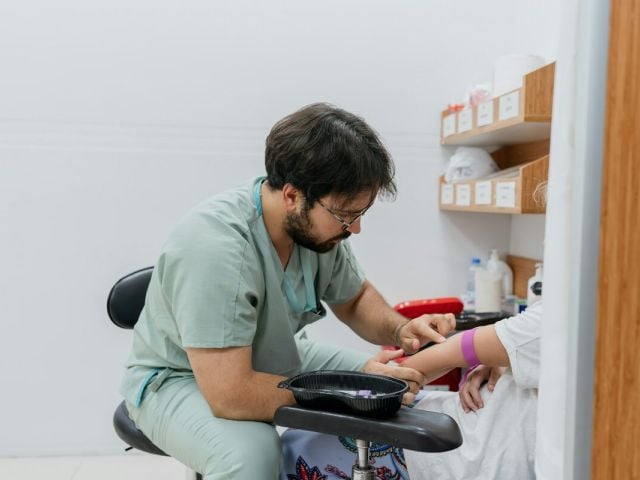
Most T4 tests require no fasting, but several preparation steps are critical for accurate results. Your doctor will order a blood sample drawn from a vein in your arm, typically at a lab or medical office.
Stop biotin supplements 2 to 5 days before testing:
This is not optional. Biotin (vitamin B7) interferes with laboratory assays that use biotin-streptavidin technology. Hair, skin, and nail supplements often contain 5,000 to 10,000 mcg of biotin, well above the 30 mcg recommended daily allowance.[4]
Excess biotin disrupts the binding of immune complexes to magnetic microparticles in the lab test. This creates:
- Falsely low TSH
- Falsely high free T4 and free T3
- A biochemical pattern that perfectly mimics hyperthyroidism or Graves’ disease
Patients have been wrongly diagnosed with serious thyroid conditions and even scheduled for surgery based on biotin-skewed results. Some researchers suggest even a single 10 mg dose can produce inaccurate results for up to 24 hours.
Additional preparation steps:
- Delay your morning levothyroxine dose until after the blood draw (taking it before causes a transient free T4 peak that doesn’t reflect your steady-state level)
- Use the same laboratory for repeated tests when possible (different labs use different assays with slightly different reference ranges)
- Tell your doctor about all medications and supplements you take
🧬 MORE BIOMARKER TESTING
- TSH testing reveals pituitary function. Understanding TSH blood test ranges helps you interpret T4 results correctly.
- Prolactin affects thyroid hormone balance. High prolactin can interfere with thyroid function—learn about prolactin blood test levels.
- Hormone imbalances often occur together. Check your DHEAS levels alongside thyroid tests for complete endocrine health.
What Can Affect Your T4 Results?
A vast array of medications and health conditions can interfere with T4 testing.
Medications that reduce thyroid hormone absorption:
If you take levothyroxine with any of these, your body gets less hormone than the dose suggests, potentially elevating TSH:
- Proton pump inhibitors (PPIs)
- Calcium carbonate
- Ferrous sulfate
- Sucralfate
Medications that change binding protein levels:
These affect total T4 while free T4 stays normal:
- Increase TBG (raising total T4): Estrogens, birth control pills, tamoxifen, methadone
- Decrease TBG (lowering total T4): Androgens, anabolic steroids, glucocorticoids
Medications that displace T4 from proteins:
These create falsely elevated free T4 readings:
- Heparin
- High-dose salicylates (over 2 grams daily)
- High-dose furosemide (over 80 mg IV)
- NSAIDs
Special medication considerations:
Amiodarone, a common heart rhythm medication, deserves special mention. It contains 37% iodine by weight and blocks the conversion of T4 to T3 in tissues. This creates complex patterns, either amiodarone-induced hypothyroidism or thyrotoxicosis, that confuse diagnosis.
Anticonvulsants like phenytoin and carbamazepine speed up how fast your liver metabolizes thyroid hormones. This drops both total and free T4 even though you’re clinically euthyroid (normal thyroid function).[5]
How liver disease affects T4:
Your liver converts most T4 to T3 and makes TBG. In cirrhosis:
- Free T3 drops significantly
- Free T4 and TSH often stay normal or slightly elevated
- Some patients need higher levothyroxine doses because impaired bile secretion reduces tablet absorption
How kidney disease affects T4:
Chronic kidney disease (CKD) creates multiple problems:
- Impaired kidney function means less iodine excretion, which can trigger hypothyroidism through the Wolff-Chaikoff effect (iodine overload)
- CKD reduces deiodinase enzyme production, causing “low T3 syndrome” where T4 doesn’t convert properly
- Lower free T4 levels in CKD patients are associated with worse kidney function and higher mortality risk[6]
Severe illness effects:
Non-thyroidal illness syndrome (NTIS) or “euthyroid sick syndrome” occurs during critical illness, starvation, or trauma. Your body downregulates the thyroid axis to conserve energy.
The most common finding is low T3, but when T4 drops too, the prognosis is grim. When total T4 falls below 3 μg/dL, mortality risk is about 50%. Below 2 μg/dL, the risk exceeds 80%.
Understanding Your T4 Test Results
Free T4 results make sense only in the context of TSH levels.
Common test result patterns:
| TSH Level | Free T4 Level | Diagnosis | What It Means | Common Symptoms |
|---|---|---|---|---|
| High | Low | Primary hypothyroidism | Your thyroid gland isn’t making enough hormone, so your pituitary pumps out more TSH trying to stimulate it | Fatigue, cold intolerance, low heart rate, weight gain |
| Low or normal | Low | Central hypothyroidism | Your pituitary or hypothalamus isn’t signaling properly, so your thyroid doesn’t get the message to produce hormone | Same as primary hypothyroidism, but often missed if only TSH is checked |
| Low | High | Hyperthyroidism | Your thyroid is overproducing hormone, so your pituitary shuts down TSH to try slowing it | Unexplained weight loss, rapid or irregular heartbeat, increased bowel movements |
| Normal | Abnormal | Early disease or binding issues | Can happen early in disease or during recovery from illness; may signal protein binding problems rather than true thyroid dysfunction | Variable depending on underlying cause |
The T4 to T3 conversion problem:
“T4 is not an active substance. It needs to be activated in the body by conversion into T3,” explains Dr. Antonio Bianco, a leading thyroid researcher at the University of Chicago. About 15% of hypothyroid patients on standard levothyroxine therapy have T3 levels below the normal range despite “normal” TSH and T4. This happens because their bodies don’t convert T4 to T3 efficiently.
A genetic polymorphism in the DIO2 gene makes it harder for some people to convert T4 to T3. “This deficiency can be aggravated, in some people, because the deiodinase does not function well due to a genetic polymorphism,” notes Dr. Bianco. These patients need combination T4/T3 therapy, not just T4 alone.
Reverse T3 considerations:
Some practitioners also measure reverse T3 (rT3), an inactive byproduct of T4 metabolism. Under high stress, fasting, or chronic illness, your body preferentially converts T4 into rT3 rather than active T3. High rT3 can compete with T3 at cellular receptors, creating hypothyroid symptoms even when TSH and T4 look normal.
When “Normal” Isn’t Optimal
The debate over optimal versus normal thyroid ranges continues to evolve.
Conventional labs use reference ranges like 0.9 to 1.7 ng/dL for free T4 and 0.4 to 4.5 mIU/L for TSH. Functional medicine practitioners often aim for narrower targets:
- Free T4 in the upper third of the range (1.2 to 1.8 ng/dL)
- TSH between 1.0 and 2.0 mIU/L
They argue that many patients at the low-normal end of conventional ranges still suffer brain fog, fatigue, and metabolic dysfunction.
Recent research complicates the picture. A systematic review in Lancet Diabetes Endocrinology found that people with free T4 in the 20th to 40th percentile of normal had the least risk of death and heart disease.[7] Those in the 80th to 100th percentile (high-normal) showed:
- 57% higher risk of heart disease-related death
- 22% higher risk of heart disease
- 34% higher risk of death from any cause
This suggests that pushing free T4 into the high-normal range, especially in older adults, may be counterproductive.
Normal ranges represent population averages, not individual optimization. Some people feel great at the low end. Others need levels in the upper third. Testing, symptoms, and individual response matter more than hitting an arbitrary target.
Test Your Thyroid Health with AgingSOS
Your thyroid controls energy production, metabolism, brain function, and cellular repair. A comprehensive thyroid panel reveals the complete picture.
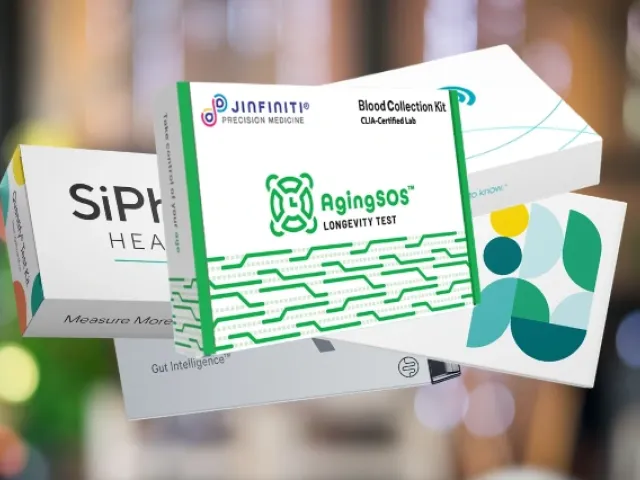
The AgingSOS® Ultimate Panel includes TSH, free T3, and free T4—the three markers you need to understand thyroid function fully. You’ll also get 45 additional biomarkers covering inflammation, metabolic health, cardiovascular risk, and cellular aging.
This is the most complete longevity assessment available. You get precise NAD+ measurement, rare markers like Klotho, senescence indicators, and advanced cardiovascular testing—all from a single blood draw.
Every panel includes a free expert consultation to interpret your results and create a personalized optimization plan. Mobile phlebotomy is available if you prefer testing at home.
Referenced Sources
- Soldin OP, Jang M, Guo T, Soldin SJ. Pediatric Reference Intervals for Free Thyroxine and Free Triiodothyronine. SAGE Publications; 2009. https://doi.org/10.1089/thy.2009.0037
- Alexander EK, Pearce EN, Brent GA, Brown RS, Chen H, Dosiou C, et al. 2017 Guidelines of the American Thyroid Association for the Diagnosis and Management of Thyroid Disease During Pregnancy and the Postpartum. SAGE Publications; 2017. https://doi.org/10.1089/thy.2016.0457
- Sheehan MT. Biochemical Testing of the Thyroid: TSH is the Best and, Oftentimes, Only Test Needed – A Review for Primary Care. Marshfield Clinic Research Institute; 2016. https://doi.org/10.3121/cmr.2016.1309
- Effraimidis G, Maria Hilsted L, Feldt-Rasmussen U. Biotin Use Can Interfere with the Management of Thyroid Diseases, Including Thyroid Cancer. SAGE Publications; 2021. https://doi.org/10.1089/ct.2021;33.520-522
- Dong BJ. How medications affect thyroid function. BMJ; 2000. https://doi.org/10.1136/ewjm.172.2.102
- Narasaki Y, Sohn P, Rhee CM. The Interplay Between Thyroid Dysfunction and Kidney Disease. Elsevier BV; 2021. https://doi.org/10.1016/j.semnephrol.2021.03.008
- Xu Y, Derakhshan A, Hysaj O, Wildisen L, Ittermann T, Pingitore A, et al. The optimal healthy ranges of thyroid function defined by the risk of cardiovascular disease and mortality: systematic review and individual participant data meta-analysis. Elsevier BV; 2023. https://doi.org/10.1016/s2213-8587(23)00227-9
Read More