


Secure • Private • Science-backed

AgingSOS® – Klotho Test


Klotho is one of the most studied longevity proteins in biology — and one of the last things your doctor will ever test for. Now you can measure it yourself. Know your level, understand your trajectory, and have something real to track.

  • 50k+ satisfied customers
  • Free Shipping above $200
  • Cancel Subscription Anytime
Select Purchase Type
Choose Pack
Frequently Bought Together

What’s Included
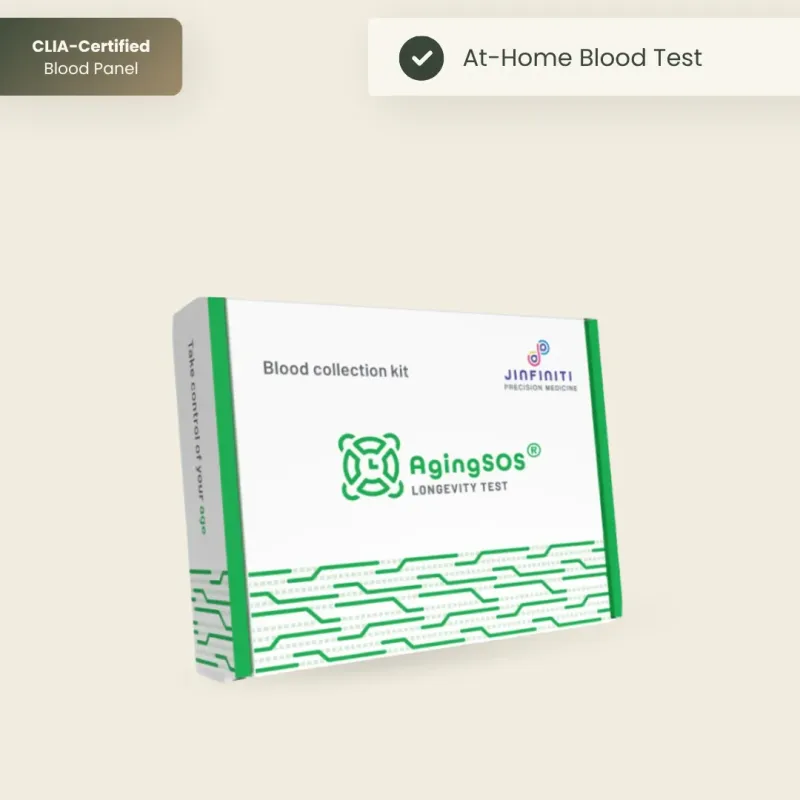
  • At-home blood collection kit
  • CLIA-certified Klotho measurement in pg/mL
  • Personalized results with clear interpretation
  • Context on what your level means for biological aging
  • Results delivered in 7–10 days
Key Benefits
  • Test a longevity biomarker most standard panels don’t include
  • Get a real data point on a protein directly linked to biological aging rate
  • Establish a baseline you can track over time — and actually move
  • Understand how lifestyle, supplementation, and kidney health may be affecting your longevity trajectory
  • No lab visit required — mobile blood draw or nearby collection site
How It Works
  • Order your test kit and receive your at-home collection materials by mail
  • Schedule your blood draw — at home with mobile phlebotomy, or at a nearby collection site
  • Return your sample with the prepaid shipping label included in your kit
  • Receive your results in 7–10 days — your Klotho level in pg/mL with a plain-language interpretation
  • Use your results to establish a baseline, adjust your protocol, and retest as you make changes
What Is Klotho —

and Why Does It Matter?

Klotho is a protein named after one of the Greek Fates — specifically Clotho, who spins the thread of life. The name was chosen deliberately. When researchers first discovered it in 1997, mice lacking the gene aged dramatically faster than normal. Mice with extra copies lived significantly longer. The connection to longevity was unmistakable.

In humans, Klotho is produced primarily in the kidneys and functions as both a circulating hormone and a co-receptor for fibroblast growth factor 23 (FGF-23), which regulates phosphate and calcium balance. Beyond that, it protects cells from oxidative stress, supports cardiovascular endothelial function, and plays a documented role in maintaining cognitive function as we age.

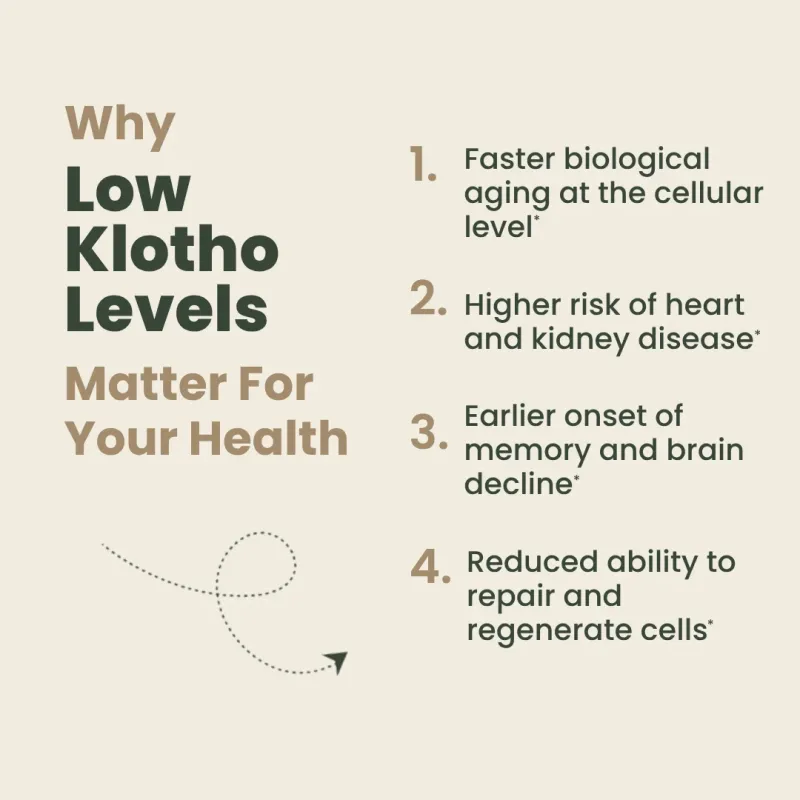
The critical fact: Klotho levels decline measurably with age. Large population studies involving thousands of adults show a consistent drop across decades — and lower levels correlate with faster biological aging, greater cardiovascular risk, and steeper cognitive decline. It is not a marker of any single disease. It is a marker of how quickly you are aging at the cellular level.

Most physicians never order it. It doesn’t appear on standard metabolic panels, annual bloodwork, or most longevity assessments. That means most people have no idea where they stand.

agingsos%E2%80%93klotho test what is klotho
What Your Klotho Level Means

Klotho is measured in picograms per milliliter (pg/mL) from a serum blood sample. The research base is substantial — NHANES population studies across thousands of American adults provide a consistent picture of where levels tend to fall, how they change with age, and what lower readings are associated with clinically.

There is no single universally established “optimal” cut-off the way there is for, say, blood glucose. What the research does show clearly is directional: higher is generally better, levels decline with age, and certain thresholds are meaningfully associated with increased risk.

Here’s how to interpret your result in context:

Favorable Range
Above 800–1000 pg/mL
Large population studies show healthy middle-aged and older adults averaging 800–850 pg/mL. Levels in this range are associated with better cognitive performance, lower cardiovascular disease prevalence, and markers of healthier biological aging. Maintaining this range as you get older is the goal.
Moderate
700-800 pg/mL
Within or near population averages for adults in their 50s and 60s, but trending toward the lower end of what’s associated with good outcomes. Worth monitoring — and worth evaluating the lifestyle and metabolic factors that influence Klotho production, including kidney function, vitamin D status, and aerobic fitness.
Clinically Relevant Low
Below 700 pg/mL
NHANES research shows Klotho levels below ~700 pg/mL are linked to higher cardiovascular mortality risk. A 2024 study identified 660.9 pg/mL as a key cut-off, with risk rising significantly below this level—making clinical evaluation important.
What Influences Your Level?
Klotho is not fixed. The research on what moves it — in both directions — is growing:
icon aerobic
Aerobic Exercise
Strongest natural booster
icon vitamin d status
Vitamin D Status
Direct genetic upregulator
icon adequate sleep
Adequate Sleep
Circadian rhythm sync
icon kidney health
Kidney Health
Main production site
icon lower inflammation
Lower Inflammation
Primary suppressant
icon plant diet
Plant Diet
Plant-powered nutrition
icon advancing age
Advancing age
Natural decline
icon kidney disease
Chronic Kidney Disease
Reduced kidney function
icon smoking
Smoking
Toxic exposure
icon kidney health
High Uric Acid
Crystal buildup
icon lower inflammation
Elevated Inflammatory Markers
Ongoing inflammation
icon sedentary behavior
Sedentary Behavior
Low physical activity
klotho test biomarker responsiveness
A longevity marker you can actually move

Most aging biomarkers are informative but passive — they tell you how old your cells look, without giving you a clear feedback loop. Klotho is different. Because it responds to modifiable factors — exercise, nutrition, sleep quality, kidney health, inflammation management — it functions as a genuine readout of your lifestyle trajectory.

Testing it once gives you a reference point. Testing it over time gives you a feedback mechanism. That’s the difference between data you file away and data you use.

For a complete picture of biological aging that includes Klotho alongside 27 additional markers — NAD+, inflammation cytokines, metabolic health, hormone panels, and more — the AgingSOS® Advanced Panel is the more comprehensive option.

Your path to 20+ extra
healthy years begins here

Simple. Science-backed. Designed around you.
test step 1 03ac703a
1

Order Your Kit

Purchase online and receive your at-home collection kit within days.

test step 2 b6e017de
2

Collect Your Sample

Schedule a convenient at-home blood draw or visit a nearby lab.
No fasting required.
test step 3 5024cab0
3

Get Your Results

Your Klotho level arrives in 7–10 days with a plain-language interpretation of where you stand.
test step 4 a58e7b5d
4

Track and Adjust

Use your result to establish a baseline — then retest after 3–6 months of targeted lifestyle changes to see whether your level is moving.
JINFINITI’S PROMISE

Backed by 40 years of research & innovation.

Our scientific advisory board includes a dozen leading scientists and medical experts, such as presidents or officers of prominent medical societies, including Anti-Aging (A4M), Diabetes (ADA), Chiropractors (ACARC), Gerontology (GRG), and Sports Medicine.

Trusted by over 2,000 doctors and recommended to their patients, our supplements are endorsed by elite athletes like Olympian Celera Barnes, the world’s 16th fastest runner, and Tez Steinberg, the ultra-endurance athlete who solo-rowed from California to Hawaii.

40+
Academic research
22,000+
Citations by peers
$100M+
Research funding
icon guarantee

Efficacy guarantee

If Vitality Boost doesn’t raise your NAD levels in 30 days, we’ll help you figure out why and guide you toward the right solution.
icon 60 day

60 day money back guarantee

If your NAD level can not be increased by our Vitality Boost, we will be glad to refund your supplement purchase.
icon gmp certified

cGMP Certified

Our supplements are produced at a GMP-certified manufacturing facility, ensuring quality, safety and consistency.

Your questions,
answered.

Helpful explanations to give you a deeper
understanding of Jinfiniti’s tests, results, and
science.
Curious About NAD? Let’s Talk.
Talk to Us
Start Chat
Email Us
hello@jinfiniti.com
What is Klotho and why should I measure it?

Klotho is a protein produced primarily by the kidneys that circulates throughout the body and influences biological aging rate, cardiovascular function, kidney health, and cognitive performance. It declines predictably with age, and lower levels are associated with faster aging and higher disease risk. Most standard blood panels don’t include it — this test gives you direct visibility into a marker most people never see.

How is this test different from what my doctor orders?
Standard metabolic panels, annual physicals, and even most functional medicine panels don’t include Klotho. It requires a specific ELISA-based assay. Jinfiniti’s CLIA-certified laboratory measures soluble α-Klotho from a serum blood sample — the same methodology used in major population research studies, including NHANES.
How do I collect my sample?
This test requires a blood draw — not a finger prick. Your kit includes instructions for scheduling either a mobile phlebotomy visit at home or a draw at a nearby collection site. The process takes only a few minutes.
How long until I receive my results?
Results are typically delivered within 7–10 days of your sample arriving at the lab.
My level came back low. What should I do?
Start with your clinician — low Klotho can reflect kidney function changes, high inflammatory load, or other modifiable factors worth investigating. The good news is that Klotho responds to lifestyle intervention. Regular aerobic exercise, optimizing vitamin D levels, reducing systemic inflammation, and supporting kidney health have all been associated with higher Klotho levels in research. Retesting after 3–6 months of focused changes gives you a meaningful feedback loop.
Can I get Klotho as part of a larger panel?

Yes. Klotho is included in the AgingSOS® Advanced Panel alongside 27 additional aging biomarkers — NAD+, inflammation markers, metabolic and cardiovascular risk markers, organ function, and more. For most people, the Advanced Panel gives a more complete and actionable picture than a standalone Klotho reading.

How often should I retest?
Every 3–6 months is a reasonable interval if you’re actively making lifestyle changes and tracking the response. For baseline monitoring without active intervention, annually is sufficient for most people.

Account Access

Welcome back

Continue your health journey with a secure login.